Gut Health
Posted: August 18, 2015 Filed under: Food and it's Impact on Our Health, Going Green; How and Why..., In The Kitchen with Millie- How To's, Products | Tags: #Beyond-Paleo, #BeyondPaleo, #Kombucha, Paleo Leave a comment
Most Americans have a compromised Immune System. Most also have leaky gut. If you have allergies, get frequent colds, ear infections, are overweight, have arthritis..you have leaky gut.
Healing a leaky gut means following a nutritional protocol to enable it to heal. Replenishing gut bacteria is crucial; to heal the lining of the stomach, to properly digest foods so that you can actually absorb the nutrients…in order to repair the immune system and enjoy optimal health.
One way to do this is to take probiotics, but they are very pricy and do not really survive the stomach acids to get into the colon where they will do you the most good.
So what should you do?
Eat fermented foods! Sauerkraut, wine, pickles, coconut milk yogurt (you should avoid dairy in all forms for optimal health), and Kombucha tea are great ways to do this.
I began fermenting Kombucha tea about a year ago, it is easy and fun to make…and is very inexpensive. I also now make my own organic Apple Cider Vinegar.
Beginning next week I will begin selling Kombucha tea with my other Culinary Items. I make a mild, very slightly sweet Raspberry Kombucha. It will be on the menu each week.
The Strange Link Between Junk Food and Depression
Posted: June 30, 2015 Filed under: Food and it's Impact on Our Health | Tags: #BeyondPaleo, #sugar, Paleo Leave a comment Elizabeth Renstrom for TIME
From Time Magazine
Some—but not all—sugars were associated with depressive disorders
Of our many modern diseases, one of the biggest burdens on society is an unexpected one: depression,according to the World Health Organization. And what we eat may be contributing, finds a new study published in the American Journal of Clinical Nutrition.
James E. Gangwisch, PhD, assistant professor at Columbia University in the department of psychiatry, wanted to find out whether foods with a higher glycemic index (GI)—a scale that ranks carbohydrate-containing foods by how much they raise your blood sugar—would be associated with greater odds of depression. “When I was a kid, I was almost like a candy junkie,” Gangwisch says. “I noticed for myself, if I eat a lot of sugar, it makes me feel down the next day.” Gangwisch says he stopped eating added sugar years ago but remained curious about whether a junk food diet could make people depressed.
He and a team of researchers looked at data from food questionnaires and a scale that measures symptoms of depressive disorders from postmenopausal women in the Women’s Health Initiative Observational Study. The data came from roughly 70,000 women, none of whom suffered from depression at the study’s start, who had baseline measurements taken between 1994 and 1998, and then again after a three-year follow-up.
Diets higher on the glycemic index, including those rich in refined grains and added sugar, were associated with greater odds of depression, the researchers found. But some aspects of diet had protective effects against developing depression, including fiber, whole grains, whole fruits, vegetables and lactose, a sugar that comes from dairy products and milk that sits low on the glycemic index.
Added sugars—but not total sugars or total carbohydrates—were strongly associated with depression.
Though the authors couldn’t pinpoint a mechanism from this study—it was associative—they note that one possibility is that the overconsumption of sugars and refined starches is a risk factor for inflammation and cardiovascular disease, both of which have been linked to the development of depression.This kind of diet could also lead insulin resistance, which has been linked to cognitive deficits similar to those found in people with major depression.
Further research is needed, Gangwisch says, and it’s not yet known whether the results would translate to a broader group of people, including men and younger women. But even now, diet may be worth discussing with people who suffer from depression, Gangwisch says—even though doing so may be difficult. “It’s hard enough to get the general public to avoid those kinds of foods, but it’s even harder to get someone who suffers from depression to avoid them and give them up,” he says. “You don’t want people to feel guilty either…to say, ‘Your diet’s bad and you should change it,’ would take kind of a soft sell approach.” Still, he believes the effort is worth it. “I think it’s important and I think it has a big effect on your mood and how you feel and your energy level,” he says. “If it’s something that people can change, they really would benefit from it.”
Eating Chocolate Gets Another Thumbs-up for Heart Attack, Stroke Prevention
Posted: June 24, 2015 Filed under: Food and it's Impact on Our Health | Tags: #BeyondPaleo, #Chocolate Leave a comment
More good news for chocoholics: New research has found that devoted consumers of chocolate — including some who consume the equivalent of about two standard candy bars a day — are 11% less likely than those who eat little to no chocolate to have heart attacks and strokes, and 25% less likely to die of cardiovascular disease.
Chemists discover secret to dark chocolate’s health benefits
That news emerged from a long-running British study that tracked nearly 21,000 adults in and around Norfolk, England, for an average of 12 years, making frequent surveys of their consumption habits, lifestyles and health. Those in the top one-fifth of chocolate consumers owned up to eating the equivalent of about a half an American-sized candy bar; those whose chocolate consumption landed them in the bottom 20th percentile averaged a paltry 1.1 gram per day.
Those in the highest chocolate-consuming group not only had lower rates of heart attack and stroke, but they also had, on average, lower body-mass indexes, lower systolic blood pressure and inflammation, and lower rates of diabetes. They also tended to exercise more.
The study was published Monday in the BMJ journal Heart.
Those findings jibe with a welter of other “observational” studies, those that track people over lengthy periods and draw links between some factor or habit or input — in this case chocolate — and a specific outcome. Indeed, the authors of the Norfolk study also lashed together the findings of nine other such studies — a so-called meta-analysis reflecting the outcomes of 159,809 people — to undergird and provide further context for their findings.
That meta-analysis found that compared with chocolate abstainers, heavy chocolate consumers were 25% less likely to suffer a wide range of cardiovascular ills and 45% less likely to die of those ills.
But Dr. Farzaneh Aghdassi Sorond of Brigham and Women’s Hospital in Boston says it’s time for such observational studies to give way to trials that probe deeper questions: Is it chocolate, or something else that comes with a chocolate-eating life, that makes people healthier? And if it is chocolate, what is it specifically about this long-consumed bean that confers better health?
Studies like this one, Sorond says, can’t draw a clear line of cause and effect between eating chocolate and better health.
-
One shouldn’t jump to conclusions from observational studies without supporting data/studies. Hormone replacement therapy (HRT) was associated with lower risk of cardiovascular disease in observational studies, but when a randomized, blinded trial was finally done, it was found that HRT…
“Causality is the issue that remains unanswered and that’s going to have to be explored through clinical trials and interventions,” said Sorond, whose research has shown that when elderly people at high risk of stroke and dementia were given high quantities of cocoa to consume, the blood flow to their brains improved.
Sorond noted that in the current study, authors did little to distinguish grades of chocolate — and thus, the cocoa content of that chocolate — in their reckoning. Much of what was reported consumed appears to have been milk chocolate, which contains low levels of the plant flavonoids in cocoa that many researchers have focused on as chocolate’s beneficial ingredient.
That makes the findings all the more perplexing, she said, because “the brown stuff that is sweet doesn’t necessarily have any chocolate in it.”
“Are we really chasing the right thing focusing on the flavonols?” Sorond asked. “Or is there something else? Does chocolate consumption represent a socioeconomic status or some other kind of healthy factor? This paper underscores the issue we face.”
Such work is underway on a broad front, with scientists, confectioners and pharmaceutical companies all vying to play a role in chocolate’s next chapter.
Sorond says that may take four to five years to produce results, so it may be best to sit back, crack open a bar of dark chocolate and take heed of the advice dispensed by the authors of the latest research: “There does not appear to be any evidence to say that chocolate should be avoided in those who are concerned about cardiovascular risk.”
A Path to Health
Posted: June 18, 2015 Filed under: Food and it's Impact on Our Health, Going Green; How and Why..., Non-Toxic Choices | Tags: #BeyondPaleo, #healing, #health, Paleo 1 Comment
1. Eat whole, natural foods. Nothing from cans or boxes.
2. Eat only foods that will spoil, but eat them before they do.
3. Eat naturally-raised meat including fish, seafood, poultry, beef, lamb, game and eggs.
4. Drink filtered water, NOT distilled. A reverse Osmosis water filter is the most cost effective way to get clean water. You can get one that filters your kitchen sink water, or a system for the whole house. If you do not have water filters on your shower heads, then bath with the window or door open, to minimize breathing chlorine.
5. Avoid dairy, grains, flours.
6. Utilize the glycemic index, work off the bottom half.
7. Use only traditional fats and oils including butter and other animal fats, Minimize the use of extra virgin olive oil, expeller expressed sesame and flax oil. Get these delicate, fragile oils in the foods they came in; olives, avocadoes, green leafy vegetables, sesame seeds.
8. Eat lots of fresh fruits and vegetables.
9. Prepare homemade meat stocks from the bones of chicken, beef, lamb or fish and use liberally in soups and sauces.
10. Make demi-glace, use it for depth of flavor and nutrients.
11. Use filtered water for cooking and drinking.
12. Use unrefined Celtic sea salt and a variety of herbs and spices for food interest and appetite stimulation.
13. Make your own salad dressing using raw vinegar, whole foods like carrots, avocadoes, tomatoes, coconut oil.
14. Use natural sweeteners in moderation, such as raw honey, maple syrup, dehydrated cane sugar juice and stevia powder.
15. Use only unpasteurized wine or beer in strict moderation with meals.
16. Cook only in stainless steel, cast iron, glass or good quality enamel.
17. Store food in glass or stainless steel containers, NOT plastic.
18. Use only natural supplements from FOOD sources.
19. Get plenty of sleep, do what it takes to be able to awaken naturally at dawn. Open the windows, get your circadian rhythm going by letting the brain get the light it needs to become awake quickly and effortlessly, looking forward to your day. This becomes normal after the initial detox.
20. Get plenty of exercise, yoga, core body work, walking, dancing, hula hooping, swimming…the more in motion you stay, the better you feel.
21. Get plenty of natural sunlight, for happiness, for Vitamin D.
22. Normal bathing should not require soap. A loofah will do…maybe in strategic spots like under your arms, but use an all-natural soap. I use Dr. Bonners.
23. Sleep on chemical free beddings; a organic wool and cotton futon topped with a feather bed costs less than $500.00 and is heaven to sleep on!! The fire retardant chemicals in a normal mattress is 100 times more carcinogenic than nicotine and contributes to lowered sperm count, infertility and interferes with normal hormone production.
24. Use 100% natural fibers to wear and to sleep on.
25. Think positive thoughts and minimize stress.
26. Practice forgiveness.
27. Choose peace, and happiness in every moment.
Millie’s One a Day
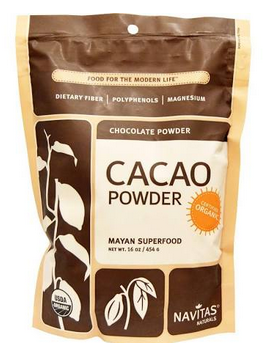
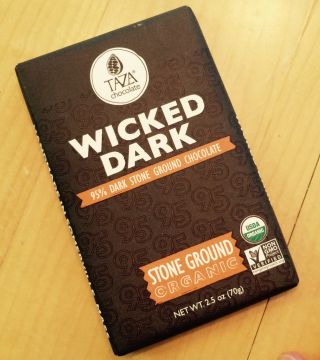
Posted: June 18, 2015 Filed under: Food and it's Impact on Our Health, Non-Toxic Choices | Tags: #antidepressant, #antioxidants, #Chocolate, #Healthy, #paleodessert, Paleo Leave a commentEat More Chocolate! Make it organic, raw, dark and from sustainable sources that are Free Trade!
New research has found that devoted consumers of chocolate — including some who consume the equivalent of about two standard candy bars a day — are 11% less likely than those who eat little to no chocolate to have heart attacks and strokes, and 25% less likely to die of cardiovascular disease.
Chocolate is rich in antioxidants, is a powerful euphoric and is a great antidepressant.
Here are my favorites;
 My Fave!
Lulu’s Soy Free, organic, Fair Trade, low glycemic, dark…and awesome! Available locally at Grassroots Market in 5 Points.


Millie’s One a Day
Posted: June 9, 2015 Filed under: Food and it's Impact on Our Health, Recipes | Tags: #BeyondPaleo, #smoothies, Paleo Leave a comment
For most people the idea of getting in shape or improving our health is a daunting and intimidating task…unachievable. Every choice we makes takes us further or closer to our goals.
Many need to lose weight, improve health, be more active. EVERYONE needs to improve their nutrition. No exceptions. In working with clients for 32 years, I have seen ONE food diary where the woman met all of her needs fir all nutrients. Even calcium and iron..
In this continuing column, I will give you one small item a day to tweak or choose. Achievable goals, one at a time…
One day at a time. Follow along daily, you’ll be shocked at how much healthier you are in a few months!
For today; Add a hand full of spinach to your morning smoothie.
Here’s my favorite smoothie recipe
Tropical Smoothie
1 cup frozen blueberries
1 frozen banana
1 cup frozen mango
1/3 cup coconut cream (I use Thai Kitchen organic)
1 teaspoon Metagenics Ultra Potent-C®
1 Tablespoon Amazing Grass Orac Green Superfood Powder
3 cups Coconut water
1 Tablespoon lime juice
large handful of baby spinach- I use baby spinach because of it’s mild taste. Any baby greens except kale work- it has a too strong a taste.
Blend all in blender.
Science Confirms Turmeric As Effective As 14 Pharmaceutical Drugs
Posted: June 2, 2015 Filed under: Food and it's Impact on Our Health | Tags: #anti-inflammatory, #cancer, #inflammation, #painrelief, #turmeric, Paleo Leave a commentFrom WakeUpWorld

This last year I had 5 eye surgeries and self treated with black salve for skin cancer. While the eye surgeries were scary, expensive and really uncomfortable the skin cancer treatments were excruciating. Because I self treated there was no medical support for me as far as pain management.
What REALLY helped was turmeric and quercetin. Both are amazing anti-inflammatory agents and offer a serious depth of pain relief!
By Sayer Ji
Contributing Writer for Wake Up World
Turmeric is one the most thoroughly researched plants in existence today. Its medicinal properties and components (primarily curcumin) have been the subject of over 5600 peer-reviewed and published biomedical studies. In fact, our five-year long research project on this sacred plant has revealed over 600 potential preventive and therapeutic applications, as well as 175 distinct beneficial physiological effects. This entire database of 1,585 ncbi-hyperlinked turmeric abstracts can be downloaded as a PDF at our Downloadable Turmeric Document page, and acquired either as a retail item or with 200 GMI-tokens, for those of you who are already are members and receive them automatically each month.
Given the sheer density of research performed on this remarkable spice, it is no wonder that a growing number of studies have concluded that it compares favorably to a variety of conventional medications, including:
Lipitor/Atorvastatin (cholesterol medication): A 2008 study published in the journal Drugs in R & D found that a standardized preparation of curcuminoids from Turmeric compared favorably to the drug atorvastatin (trade name Lipitor) on endothelial dysfunction, the underlying pathology of the blood vessels that drives atherosclerosis, in association with reductions in inflammation and oxidative stress in type 2 diabetic patients. [i] [For addition curcumin and ‘high cholesterol’ research – 8 abstracts]
Corticosteroids (steroid medications): A 1999 study published in the journal Phytotherapy Research found that the primary polyphenol in turmeric, the saffron colored pigment known as curcumin, compared favorably to steroids in the management of chronic anterior uveitis, an inflammatory eye disease.[ii] A 2008 study published in Critical Care Medicine found that curcumin compared favorably to the corticosteroid drug dexamethasone in the animal model as an alternative therapy for protecting lung transplantation-associated injury by down-regulating inflammatory genes.[iii] An earlier 2003 study published in Cancer Letters found the same drug also compared favorably to dexamethasone in a lung ischaemia-reperfusions injury model.[iv] [for additional curcumin and inflammation research – 52 abstracts]
Prozac/Fluoxetine & Imipramine (antidepressants): A 2011 study published in the journalActa Poloniae Pharmaceutica found that curcumin compared favorably to both drugs in reducing depressive behavior in an animal model.[v] [for additional curcumin and depression research – 5 abstracts]
Aspirin (blood thinner): A 1986 in vitro and ex vivo study published in the journalArzneimittelforschung found that curcumin has anti-platelet and prostacyclin modulating effects compared to aspirin, indicating it may have value in patients prone to vascular thrombosis and requiring anti-arthritis therapy.[vi] [for additional curcumin and anti-platelet research]
Anti-inflammatory Drugs: A 2004 study published in the journal Oncogene found that curcumin (as well as resveratrol) were effective alternatives to the drugs aspirin, ibuprofen, sulindac, phenylbutazone, naproxen, indomethacin, diclofenac, dexamethasone, celecoxib, and tamoxifen in exerting anti-inflammatory and anti-proliferative activity against tumor cells.[vii] [for additional curcumin and anti-proliferative research – 15 abstracts]
Oxaliplatin (chemotherapy drug): A 2007 study published in the International Journal of Cancer found that curcumin compares favorably with oxaliplatin as an antiproliferative agent in colorectal cell lines.[viii] [for additional curcumin and colorectal cancer research – 52 abstracts]
Metformin (diabetes drug): A 2009 study published in the journal Biochemitry and Biophysical Research Community explored how curcumin might be valuable in treating diabetes, finding that it activates AMPK (which increases glucose uptake) and suppresses gluconeogenic gene expression (which suppresses glucose production in the liver) in hepatoma cells. Interestingly, they found curcumin to be 500 times to 100,000 times (in the form known as tetrahydrocurcuminoids(THC)) more potent than metformin in activating AMPK and its downstream target acetyl-CoA carboxylase (ACC). [ix]
Another way in which turmeric and its components reveal their remarkable therapeutic properties is in research on drug resistant- and multi-drug resistant cancers. We have two sections on our site dedicated to researching natural and integrative therapies on these topics, and while there are dozens of substances with demonstrable efficacy against these chemotherapy- and radiation-resistant cancers, curcumin tops both lists:
We have found no less than 54 studies indicating that curcumin can induce cell death or sensitize drug-resistant cancer cell lines to conventional treatment.[x]
We have identified 27 studies on curcumin’s ability to either induce cell death or sensitize multi-drug resistant cancer cell lines to conventional treatment.[xi]
Considering how strong a track record turmeric (curcumin) has, having been used as both food and medicine in a wide range of cultures, for thousands of years, a strong argument can be made for using curcumin as a drug alternative or adjuvant in cancer treatment.
Or, better yet, use certified organic (non-irradiated) turmeric in lower culinary doses on a daily basis so that heroic doses won’t be necessary later in life after a serious disease sets in. Nourishing yourself, rather than self-medicating with ‘nutraceuticals,’ should be the goal of a healthy diet. [learn more at Sayer Ji’s new collaborative project EATomology]
Your Brain on Chocolate- It Has to be DARK!
Posted: June 2, 2015 Filed under: Food and it's Impact on Our Health | Tags: #brainhealth, #Chocolate, #cognativeability, #darkchocolate Leave a commentCocoa has the potential for numerous beneficial effects on the brain.
Post published by Emily Deans M.D. on May 31, 2015 in Evolutionary Psychiatry
Chocolate, a fermented extract of the seed pods of the Theobroma cacao plant, is one of the world’s most popular foods. Given the caffeine, theobromides, and rich number of flavanols in chocolate, it’s no surprise that cocoa has been used as a medicine for at least 3000 years for varying conditions such as fatigue, rheumatism, and even syphilis*. Could these chemical compounds have a beneficial effect on thebrain?
If we look at observational studies(link is external)tracking chocolate consumption anddepression, the outlook is gloomy, with more depressed individuals reporting consuming more servings of chocolate per month. An older study linked consumption of chocolate to a higher suicide rate (1). The quality of chocolate is certainly at issue here…highly active flavanols and caffeine are found in the cocoa itself, so white chocolate will have none, and sweeter milk chocolates have far less beneficial compounds than rich quality dark chocolate. Many chocolate snack products historically contained trans fats, which are linked with detrimental effects in the brain. Other studies have famously linked chocolate consumption with better cognition. Even the number of Nobel Prizes awarded in a country has a positive correlation to the amount of chocolate consumed(link is external). These studies are a good example of why observational data is good at tracking trends but can’t tell us anything about causality. Does chocolate cause depression, or is a plate of brownies the first thing you reach for when you are feeling blue? And does coffee make you smarter, or do wealthier countries with higher chocolate consumption have a greater number of Nobel winners?
Controlled trials of cocoa (the unsweetened powdered magic left after the fermentation and drying of the cacao pods) tell us more directly about the effects of chocolate on the brain, and give us the actual mechanism as to why chocolate might be beneficial. First, the flavanols in cocoa (and also many other fruits, berries, coffee, and tea) activate anti-anxietyreceptors while caffeine has direct antidepressant effects. That means you get the benefits of a stimulant that is calming at the same time…a calmer energy than caffeine alone.
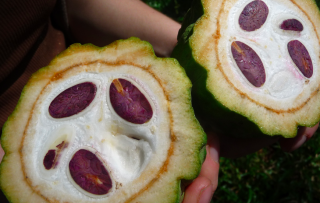
Source: Flickr Creative commons
Cocoa flavanols have also been shown to have anti-inflammatory effects helping all sorts of body systems, reducing blood pressure, reducing measures of inflammation such as C reactive protein, increasing cerebral blood flow, and improving the function of blood vessels, particularly in animal studies(link is external). Flavanols seem to enhance signaling to improve neuron regeneration and repair and help long-term memory. They also increase the abiity of the neurons to get fuel and oxygen and to remove waste products better. A randomized trial(link is external) using a placebo in healthy middle aged human subjects showed the administration of high dose cocoa (500mg of polyphenols) improved mood over the course of 30 days.
In the US, chocolate products are the third highest source of dietary antioxidants, whereas chocolate happy countries like the Netherlands and France get huge amounts of flavanols from cocoa. Dark chocolate has cocoa, some beneficial minerals(link is external), and is the way to go if you are rationalizing sweets consumption for better health. A diet rich in all sorts of different polyphenols and flavanols found from eating a rainbow of fruits and vegetables can round out that chocolate consumption and is a safe bet for building and supporting a healthy brain.
*like chocolate, another export from the New World…I recommend penicillin as therapy in lieu of chocolate
(1) Lester D. National consumption of chocolate and rates of personal violence (suicide and homicide) Orthomolecular Medicine. 1991;6(2):81–82
Image Credit: personal photo
Image Credit: flickr creative commons
You Can’t Give From an Empty Well
Posted: May 22, 2015 Filed under: Food and it's Impact on Our Health | Tags: #Covey method, #Goal setting, #happiness, #productivity Leave a commentnourish – transitive v. To provide with food or other substances necessary for life and growth; feed.
- to foster the growth or development of;

Earlier this week I posted about taking good care of yourself, making time and getting organized so you can nourish yourself. It is crucial to prioritize what is most important to you. I realized early in life, and especially when I became a single parent, how crucial it was to put myself first in order to have enough energy to meet all of my responsibilities. I began my business 32 years ago and became a single parent at the same time. I remember standing in a group of young mothers one time and saying that it was important to put your needs first, in order to better meet the needs of your family. It got heated, everyone pretty much went in to attack mode…saying that kids come first…no matter what! I disagreed, still do.
You cannot give from an empty well. In our culture, women are taught to put others first, to nurture, to always be available emotionally. But this takes a toll, both emotionally and physically. I am NOT saying to be self centered, to but your needs way above others. But being selfish means meeting your needs as well as others…and that takes energy and patience. We have those when we are mature, well rested, fulfilled.
What that takes is learning to say NO! It is an acquired skill, we have to practice it, hone it. Let’s face it, we all want to be liked, to be accepted, to please people. But we cannot do so at our own expense.
This is especially true when we run our own businesses, have busy careers.
Here’s the scene: you’re busy as all heck working your buns off.
Through your blood, sweat and tenacity — you’ve gained a lot of experience and expertise. Things are really starting to come together. Everyone you know is taking notice, but unfortunately…
You’re now drowning in constant requests from friends who want to “have coffee and pick your brain.”
But the truth is…You don’t have time for coffee right now. You don’t want to have your brain picked. And, if you did, you’d wanna get paid for it!
If you’re tired of ignoring these emails and feeling guilty about it, here are some ways to handle it;
- When a friend calls and asks to pick your brain or a prospective client wants to p[ick your brain you can ask, “Do you want to become a client or do you just have a quick question.
- When someone wants to interview you or pick your brain..refer them to your blog or list of services or ask them if they would like to book a consultation. Refer them to the info and payment methods on your business site.
- Tell them that would be great and to pick a payment method.
I am a Chef and Nutrition Coach. I cannot tell you how often people call or email to ask if they can pick my brain about how I started my business, can I email a recipe, what are my recommendations for cookware, knives, brands of food. Twice this month I have received looong emails from college students asking me to answer their list of questions as to how I run my business. I get friends asking me to help them research and buy phones and computers.
And a never ending list of requests, mostly from perfect strangers, asking how to heal, how to go gluten free. People want to tell me how they eat, ask for advice…many times while I am out socially. or while I am working. People ask me to give speeches, lectures…mostly for free!
Don’t get me wrong, I LOVE helping people heal, motivating others, BUT I NEED TO MAKE A LIVING. And I need to time to do yoga, sit in the sun, enjoy my children and friends…in other words..live my life.
So practice saying no. Ask yourself what you really want. Use a goal setting method (I personally have used the Covey method for 22 years and LOVE IT), and stick to it.
Plan YOUR time first, then plan work and family stuff. Find balance by putting yourself first..it leads to happiness and you’ll be more productive!
Get Organized…To Get Healthy!
Posted: May 20, 2015 Filed under: Food and it's Impact on Our Health, In The Kitchen with Millie- How To's | Tags: #, #cooking from scratch, #saving time, Paleo Leave a comment
One of the reasons people give the most often, when I mention making all my own food from scratch, is that they do not have time to cook. I say you don’t have time not to!
Let me explain that.. Not eating correctly and truly nourishing yourself means not having as much energy, not sleeping as well, not having the mental acuity and emotional poise that reflects great health. You will get sick more often, experience colds and allergies more often, you will gain weight, be tired…all the things that most of my clients tell me they experience.. that people think are normal as we mature!
Eat better gives you great health and high energy. This save saves lot of time! You will wake up early, raring to go, have high playful energy all day, have the energy to exercise and then sleep well at night. Since radically changing my diet 29 years ago, becoming truly well nourished I wake up raring to go on about 6 to 7 hours sleep.
Getting up early means sipping tea of coffee as the sun comes up, enjoying the morning as I start work, without rushing. Plenty of time to cook breakfast. I turn the pan on, shower, cook bacon while getting dressed. Then eggs, cut up an avocado maybe, or get some coconut milk yogurt I made over the weekend. Sit and eat breakfast while reading. Off and running for the day, or gardening…I stop for lunch about 2-is. Whatever I made for dinner the evening before; or some roasted chicken. With some leftover greens and sliced tomato. Dinner will be a steak, roasted chicken, salmon, whatever I have or have defrosted fro dinner. It doesn’t have to be ornate.
Making all my own food from scratch and hardly ever eating out means I have to stay organized. But feeling WAY better through making ME a priority allows me to feel great all the time. never run out of energy.
I few things you can do that help get through the week;
It takes a little planning ahead, but that allows you to eat well all week and actually feel great…
Sunday Is Not a Day of Rest
If you are going to cook dinner every day of the week, you will have to do most of your shopping and some preparing ahead of time. This is particularly the case if you have a very busy schedule.
Yes, this means planning menus for the week. Don’t wince. This is good. It means freedom from the painfully frequent question, “What are we going to eat tonight?” By Sunday, you will know.
Getting some meals ready ahead of time makes sense for people who like to cook, because weekend preparation can be as languorous as you allow.
In spring and summer, when I want to go dancing, or am swamped at work…or my herb garden calls for fussing, I keep it simple. Advance work might include buying the ingredients for a composed salad and chopping and roasting whatever can be done ahead of time without sacrificing freshness. I might use the most basic techniques: steaming artichokes, for example, instead of braising them.
In winter, depending on my mood, I could make a chuck roast in wine and herbs (10 minutes of browning and stirring, three hours in the oven) instead of concocting a stew that demands that the meat be cubed, floured and browned and copious vegetables be diced. Or, I could do just the reverse.
As often as not, I don’t cook the food right away but prepare it for the moment it is to be popped into the oven. For food that looks great and entices children, I find it is easy to stuff a flank steak or chicken breasts ahead of time, secure them with twine, wrap them well and just roast them when I walk in the door.
Whatever the season, my habit is to get at least two meals done on Sunday. For at least one of these meals I make a double portion and freeze half to serve a week from the coming Tuesday. Among my standbys are stews (chicken and vegetable, or beef), Chicken breast; grilled or pan seared, fish cakes, pesto (in ice cube trays) and soups, especially lentil-vegetable, minestrone and butternut squash.
If you are disciplined, shopping and cooking (not including time in the oven) can be kept to two hours on Sunday, setting you up for dinners through Tuesday.
Also, make salad dressings and mayonnaise for the week; they only take 5 minutes apiece as most of the work is in the blender or food processor.
The Foods of My GrandMother
As a child, in my grandmother’s house, there was always a leftover roast chicken, meatloaf or pot roast in our refrigerator. Always. The reliability of these offerings was something of a joke among my friends, but they did end up in my kitchen stuffing themselves after every school event. Who could blame them? Even today few foods are more satisfying than my grandmothers warmed brisket!
Naturally, when I began to cook I disdained such pedestrian offerings or reconfigured them to epicurean standards.
I have now come full circle, and appreciate the genius of my grandmother’s approach. I have four core dishes: marinated flank steak, pot roast, roast chicken and chicken stew. I could now do each of these dishes in my sleep. Perhaps I have. My basic roast chicken is covered in butter and sprinkled with kosher salt and paprika, pepper and that’s that.
Every week I make at least one of those dishes and leave it in the back of the fridge to do emergency duty. And like a great friend, it never fails me in a crisis.
Perhaps by now you have noticed we are not all the way through the week. I’ve helped you plan Sunday, Monday and Tuesday. If you’ve done your job well, Thursday will be leftovers night. On Saturday everybody’s eating Friday nights leftovers.
But what about Wednesday?
This is why you must memorize five or six dishes that can be prepared in a snap. If you use only one a week, say on Wednesday, they will not get old or tired.
As someone who watches carbs, I make here a painful admission: baked sweet potatoes are the best bet. I can use stocks or leftover soups on them; baked or mashed. Olives, sautéed red peppers and onions are favorite additions. My older daughter is partial to potatoes carbonara with turkey bacon and eggs.
Quickly seared meats like lamb chops, seafood and thin steaks are satisfying (cooked with little more than butter, kosher salt, fresh ground pepper and a few seasoning) and just right over spicy prewashed greens and served with a sweet potato (pop that in the oven the minute you walk in the door). (Children may omit greens and go straight for the baby carrots.) The trick for flavor here is a salad dressing with an extra twist, like puréed sun-dried tomatoes or chipotle peppers. The dressing, of course, is the ones you made ahead, on Sunday.
Fast vegetables are also important. Asparagus can be tossed with coconut oil and roasted in seven minutes. Prewashed baby spinach can be tossed in the wok and on the table in about as much time. Shredded coleslaw or broccoli stem mix from bags can be assembled in under five (remember that mayo you made Sunday??)
See it is possible!!


 Meal Delivery Service by Millie Barnes