Yellow Tomato Salad with Lemongrass
Posted: April 26, 2017 Filed under: Recipes Leave a comment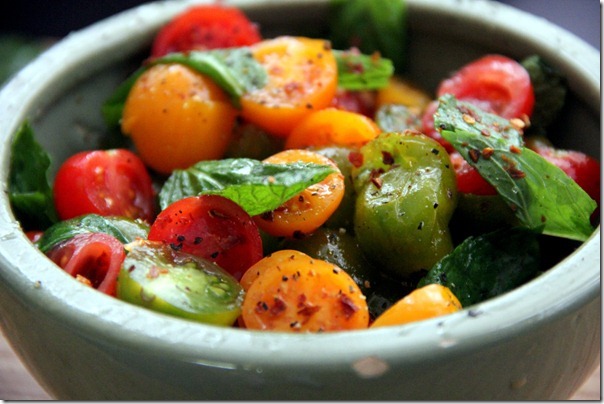
- 1/2 cup extra virgin olive oil
- 8 stalks of lemongrass (available at Asian markets and some specialty produce markets), the outer leaves discarded, ends trimmed, and 5 inches of the lower stalks, minced
- 4 shallots, minced
- 2 tablespoons fresh lemon juice, or to taste
- 1 garlic clove, minced
- 1/4 teaspoon finely grated fresh lemon zest
- 1/4 teaspoon ground coriander seeds
- cayenne to taste
- 6 medium yellow tomatoes (about 3 pounds), sliced crosswise
- whole pear and currant tomatoes (available at specialty produce markets) and cherry tomatoes for garnish
In a small bowl whisk together the oil, the lemongrass, the shallots, the lemon juice, the garlic, the zest, the coriander, the cayenne, and salt to taste. Divide the tomato slices among 6 salad plates, spoon the dressing over them, and let the salad stand at room temperature for at least 30 minutes and up to 1 hour. Garnish each serving with some of the whole tomatoes.
Roasted Rainbow Carrot Salad (With Citrus Cumin Dressing)
Posted: April 26, 2017 Filed under: Recipes Leave a comment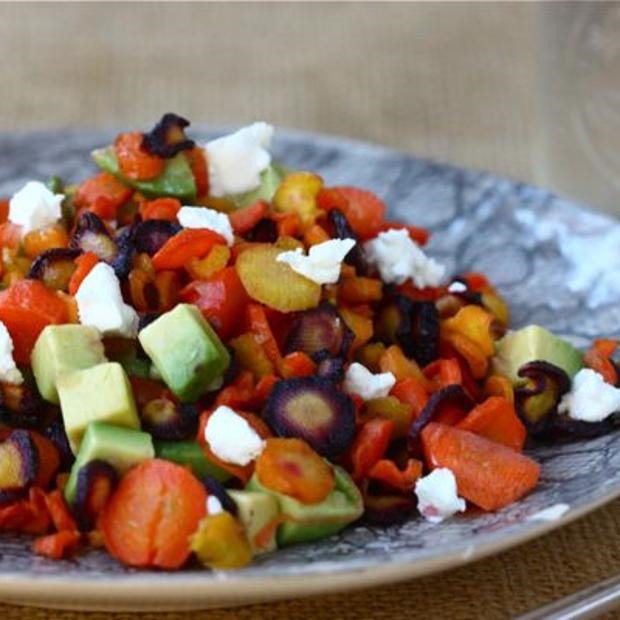
15 carrots (peeled, trimmed and thinly sliced)
1 avocado, cubed
1 shallot, minced
2 tangelo oranges
1 Meyer lemon
1/3 cup extra virgin olive oil
1/2 teaspoon ground cumin
1 teaspoon garlic powder
1/2 teaspoon smoked paprika
Salt
Ground pepper
1. Preheat oven to 375F. Evenly divide sliced carrots between two lined (important!) baking sheets and place in oven for 15 minutes. Remove carrots and let cool on baking sheets. You’ll find them slightly rubbery. This is good. You don’t want a carrot chip salad, ya know?
2. Meanwhile, make the dressing. Place the minced shallots in a small bowl. Squeeze the juice from the oranges and lemon, being sure to catch any seeds. Whisk in extra virgin olive oil. Add cumin and add salt and pepper to taste.
3. To assemble the salad, add the carrots, cubed avocado to a medium bowl. Pour half of the dressing over top and gently toss. Add more and more dressing until it’s to the point of your liking. Divide salad between two plates and crumble goat cheese on top. BOOM! Eat the rainbow.
Are Frozen Vegetables as Nutritious as Fresh? We Took a Look at the Science
Posted: April 26, 2017 Filed under: Food and it's Impact on Our Health Leave a comment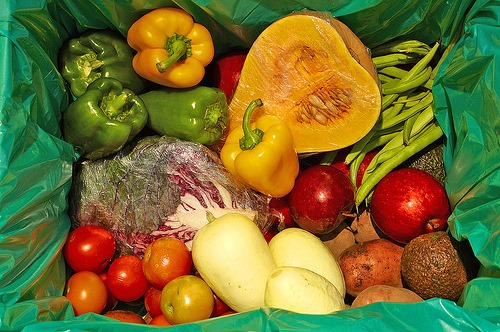
We all know the health perks of eating more vegetables: A wealth of research has found diets rich in fruits and vegetables lower blood pressure, decrease risk of heart disease, can reduce blood cholesterol levels, and may offer protection against certain types of cancers.
But all that means just fresh vegetables, right? Frozen veggies must not be as nutritious as plants plucked straight off the farm. Well, not so fast, says science.
The Claim: Frozen Food Is Just as Good as Fresh
Research from the University of Georgia, funded by the Frozen Food Foundation, looked at the nutritional value of supermarket produce over the course of two years at various stages: when they were fresh; in the fridge for five days; and frozen. The Frozen Food Foundation selected the nutritional variables to look at as well as the produce (broccoli, cauliflower, corn, green beans, green peas, spinach, blueberries, and strawberries were studied).
The resulting study, published in the Journal of Food Composition and Analysis, found that all three methods of storing for the selected produce are generally nutritionally equal to one another.
Read more: Selected Nutrient Analyses of Fresh, Fresh-Stored, and Frozen Fruits and Vegetables from Journal of Food Composition and Analysis
The goal of the study, said corresponding author Ron Pegg, is to disprove the assumption that frozen produce is significantly less nutritious than fresh produce.
“There is a misconception out there that if you freeze [produce], you are losing the nutrients, the vitamins, and the minerals,” says Pegg, who designed the study. “And that fresh is much better than the frozen. That is not the case at all.”
One surprising finding, however, was that some frozen vegetables — like English green peas and green beans — actually offered higher levels of nutrients than their fresh counterparts stored in the fridge. Pegg, who calls the freezing process “Mother Nature’s pause button,” explains that frozen produce arrives at the processing plant “at the peak of ripeness.” Because of this, sometimes produce has higher values of nutrition than what is found in the supermarket. Green peas, for example, have been found to lose 52 percent of their “wet weight” 24 to 48 hours after being picked.
“To us this is very intuitive, because the produce is taken at their peak ripeness and frozen right away,” says Pegg.
Does This (Industry-Funded!) Claim Hold Up?
Now, we know what you’re thinking. This study was funded by the frozen food industry itself. Are the results suspect? Can we trust them?
The best way to evaluate is to look at other, similar research. Science usually moves forward not in huge leaps and breakthroughs but through slow, iterative accumulation of research findings building on each other, after all. What do other studies say?
When it comes to frozen vegetables, other research does support much of this industry-funded study. A 2015 study from University of California Davis looked into the nutritional profiles (fiber, vitamins, minerals, etc.) of eight fresh and frozen fruits and vegetables — corn, carrots, broccoli, spinach, peas, green beans, strawberries, and blueberries — and found no significant differences between the fresh and frozen produce. According to lead author Ali Bouzari, whenever fresh or frozen produce had an edge over the other, it was “slight.”
In other words, fresh and frozen are going to be quite similar in nutritional profile; the industry-funded study’s findings that some frozen food had more nutrition is probably dependent on many variables. At the end of the day, there are marginal differences between fresh and frozen produce, and much of the disparities can be accredited to an array of external variables like what point in harvest is the produce frozen or how long fresh produce has been sitting out before being purchased — fresh produce can sometimes be traveling for weeks before it makes it to a grocery store.
Bouzari, co-founder of Pilot R+D and author of Ingredient, says there’s “no clear answer” in the fresh versus frozen debate, but frozen produce is not inherently worse.
“Frozen foods are not, by definition, less nutritious than fresh food,” says Bouzari. “They can be, but it can also go the other way.”
The Really Important Thing? Just Eat More Fruits & Veggies
While the exact amount of fruits and vegetables recommended for adults varies based on several variables (age, sex, and level of physical activity), the USDA’s MyPlate — an updated advisory standard that replaced the food pyramid — recommends half a consumer’s plate to be filled with fruits and vegetables. In a 2013 report, the Center for Disease Control found that 33 percent of American adults consumed less than one serving of fruits and veggies a day.
In this context, the consumer victory lies in eating fruits and veggies to begin with. “If you’re eating fresh or frozen produce, in the grander scheme of making healthier choices, you’ve made one of the healthiest choices you can,” says Bouzari.
“Something is better than none, but a combination of fresh and frozen — you can throw some canned and 100 percent fruit juice in there too — is best,” says Marjorie Cohn, RD, CDN, and a national spokesperson for the Academy of Nutrition & Dietetics.
When it comes to fresh and frozen vegetables, there’s a shifting trend among younger diners: According to The NPD Group, millennials and Gen Zs are responsible for the growth in fresh and frozen vegetable consumption. Specifically, those under the age of 40 have increased their annual intake of fresh veggies by 52 percent and frozen vegetables by 59 percent over the past 10 years.
In comparison, those 60 and older have decreased their consumption by 30 percent and 4 percent for fresh and frozen vegetables, respectively.
When it Comes to Fresh or Frozen, Flavor Is King
While the nutritional composition of fruits and vegetables may fluctuate, consumers can rely on a different scale when deciding whether to go frozen or fresh: flavor.
“A good litmus test and a good metric is the overall quality and deliciousness of produce,” says Bouzari.
Cohn, on the other hand, recommends eating fresh produce when it’s in season and not shying away from frozen alternatives. “My general rule of thumb is that if the fruit or veggie is in peak season, eat it fresh — it’ll probably be more nutritious that time of year,” he says. “For the rest of the year, simply try to get variety and more veggies and fruits overall. Peak season and local will likely always win out on the nutrient scale.”
13 Foods That Help You Stay Hydrated
Posted: April 25, 2017 Filed under: Food and it's Impact on Our Health, Health and Happiness Leave a commentHumans are not natural water lappers. We are supposed to get our need for moisture from the foods we eat. Since, meat, dairy and especially grains dehydrate us, we should be eating plenty of foods likes fruits, salads and veggies. The advice that we hear about drinking 8 eight ounce glasses of water is bad advice if you eat well. If you are on a Standard American Diet you DO need that much water to protect the kidneys. But on a healthy diet of low protein consumption, healthy fats and lots of fruits and veggies, you do not need to drink much water. Doing so will wash a lot of nutrients from the body, especially minerals.

By Amanda MacMillanPosted April 24, 2017
These high-water-content foods are refreshing, filled with nutrients, and naturally low in calories.
According to the old rule of thumb, you’re supposed to drink eight glasses of water per day (and some experts recommend even more). That can seem like a daunting task on some days, but here’s the catch: You don’t have to drink all that water. Roughly 20% of our daily H2O intake comes from solid foods, especially fruits and vegetables.
It’s still important to drink plenty of water—especially in the summertime—but you can also quench your thirst with these 15 hugely hydrating foods, all of which are at least 90% water by weight.
Cucumber
Water content: 96.7%
This summer veggie—which has the highest water content of any solid food—is perfect in salads, or sliced up and served with some hummus, says Keri Gans, RD, author of The Small Change Diet: 10 Steps to a Thinner and Healthier You and a consultant to Mindbloom, a technology company that makes life-improvement apps.
Want to pump up cucumber’s hydrating power even more? Try blending it with nonfat yogurt, mint, and ice cubes to make cucumber soup. “Soup is always hydrating, but you may not want to eat something hot in the summertime,” Gans says. “Chilled cucumber soup, on the other hand, is so refreshing and delicious any time of year.”
Iceberg lettuce
Water content: 95.6%
Water content: 95.6%
Iceberg lettuce tends to get a bad rap, nutrition-wise. Health experts often recommend shunning it in favor of darker greens like spinach or romaine lettuce, which contain higher amounts of fiber and nutrients such as folate and vitamin K. It’s a different story when it comes to water content, though: Crispy iceberg has the highest of any lettuce, followed by butterhead, green leaf, and romaine varieties.
So when the temperature rises, pile iceberg onto sandwiches or use it as a bed for a healthy chicken salad. Even better: Ditch the tortillas and hamburger buns and use iceberg leaves as a wrap for tacos and burgers.
Celery
Water content: 95.4%
That urban legend about celery having negative calories isn’t quite true, but it’s pretty close. Like all foods that are high in water, celery has very few calories—just 6 calories per stalk. And its one-two punch of fiber and water helps to fill you up and curb your appetite.
This lightweight veggie isn’t short on nutrition, however. Celery contains folate and vitamins A, C, and K. And thanks in part to its high water content, celery neutralizes stomach acid and is often recommended as a natural remedy for heartburn and acid reflux. MILLIE ; If you have these symptoms you have leaky gut!)
Radishes
Water content: 95.3%
These refreshing root vegetables should be a fixture in your spring and summer salads. They provide a burst of spicy-sweet flavor—and color!—in a small package, and more importantly they’re filled with antioxidants such as catechin (also found in green tea).
A crunchy texture also makes radishes a perfect addition to healthy summer coleslaw—no mayo required. Slice them up with shredded cabbage and carrots, sliced snow peas, and chopped hazelnuts and parsley, and toss with poppy seeds, lemon juice, olive oil, salt, and pepper.
Tomatoes
Water content: 94.5%
Sliced and diced tomatoes will always be a mainstay of salads, sauces, and sandwiches, but don’t forget about sweet cherry and grape varieties, which make an excellent hydrating snack, Gans says. “They’re great to just pop in your mouth, maybe with some nuts or some low-sodium cheese,” she says. “You get this great explosion of flavor when you bite into them.”
Having friends over? Skewer grape tomatoes, basil leaves, and small chunks of mozzarella on toothpicks for a quick and easy appetizer.
Green peppers
Water content: 93.9%
Bell peppers of all shades have a high water content, but green peppers lead the pack, just edging out the red and yellow varieties (which are about 92% water). And contrary to popular belief, green peppers contain just as many antioxidants as their slightly sweeter siblings.
Peppers are a great pre-dinner or late-night snack, Gans says. “We tell people to munch on veggies when they have a craving, but a lot of people get bored of carrots and celery pretty quickly,” she says. “Peppers are great to slice up when you get home from work, while you’re making or waiting for dinner.”
Cauliflower
Water content: 92.1%
Don’t let cauliflower’s pale complexion fool you: In addition to having lots of water, these unassuming florets are packed with vitamins and phytonutrients that have been shown to help lower cholesterol and fight cancer, including breast cancer. (A 2012 study of breast cancer patients by Vanderbilt University researchers found that eating cruciferous veggies like cauliflower was associated with a lower risk of dying from the disease or seeing a recurrence.)
“Break them up and add them to a salad for a satisfying crunch,” Gans suggests. “You can even skip the croutons!”
Watermelon
Water content: 91.5% water
It’s fairly obvious that watermelon is full of, well, water, but this juicy melon is also among the richest sources of lycopene, a cancer-fighting antioxidant found in red fruits and vegetables. In fact, watermelon contains more lycopene than raw tomatoes—about 12 milligrams per wedge, versus 3 milligrams per medium-sized tomato.
Although this melon is plenty hydrating on its own, Gans loves to mix it with water in the summertime. “Keep a water pitcher in the fridge with watermelon cubes in the bottom,” she says. “It’s really refreshing, and great incentive to drink more water overall.”
Spinach
Water content: 91.4% water
Iceberg lettuce may have a higher water content, but spinach is usually a better bet overall. Piling raw spinach leaves on your sandwich or salad provides nearly as much built-in hydration, with an added nutritional punch.
Spinach is rich in lutein, potassium, fiber, and brain-boosting folate, and just one cup of raw leaves contains 15% of your daily intake of vitamin E—an important antioxidant for fighting off the damaging molecules known as free radicals.
Strawberries
Water content: 91.0%
All berries are good foods for hydration, but juicy red strawberries are easily the best of the bunch. Raspberries and blueberries both hover around 85% water, while blackberries are only slightly better at 88.2%.
“I love strawberries blended in a smoothie or mixed with plain nonfat yogurt—another hydrating food,” Gans says. Strawberries add natural sweetness to the yogurt, she adds, and the combo of carb
Broccoli
Water content: 90.7%
Like its cousin cauliflower, raw broccoli adds a satisfying crunch to a salad. But its nutritional profile—lots of fiber, potassium, vitamin A, and vitamin C—is slightly more impressive.
What’s more, broccoli is the only cruciferous vegetable (a category that contains cabbage and kale, in addition to cauliflower) with a significant amount of sulforaphane, a potent compound that boosts the body’s protective enzymes and flushes out cancer-causing chemicals
Grapefruit
Water content: 90.5%
This juicy, tangy citrus fruit can help lower cholesterol and shrink your waistline, research suggests. In one study, people who ate one grapefruit a day lowered their bad (LDL) cholesterol by 15.5% and their triglycerides by 27%.
In another, eating half a grapefruit—roughly 40 calories—before each meal helped dieters lose about three and a half pounds over 12 weeks. Researchers say that compounds in the fruit help fuel fat burn and stabilize blood sugar, therefore helping to reduce cravings.
Cantaloupe
Water content: 90.2%
This succulent melon provides a big nutritional payoff for very few calories. One six-ounce serving—about one-quarter of a melon—contains just 50 calories but delivers a full 100% of your recommended daily intake of vitamins A and C.
“I love cantaloupe as a dessert,” Gans says. “If you’ve got a sweet tooth, it will definitely satisfy.” Tired of plain old raw fruit? Blend cantaloupe with yogurt and freeze it into sherbet, or puree it with orange juice and mint to make a refreshing soup.
Orange Sabayon
Posted: April 25, 2017 Filed under: Food and it's Impact on Our Health, Recipes Leave a comment
There is no better breakfast or dessert than fruit sabayon! This very low sugar dessert can be made with stevia so that it is sugar free! You can make it with a nice white wine, or my preference, lemon and orange juice.
Serves 4
1/3 cup granulated sugar OR 1/3 teaspoon stevia
Zest from 1 orange
6 egg yolks- save the whites, freeze in ice cube trays and use for meringue (they make better meringue after being frozen.
1/3 cup orange juice
2 Tablespoons lemon juice
1 tablespoons orange zest
1 teaspoon lemon zest
2 cups of berries of your choice. I mix strawberries, blueberries and raspberries.
1) Whisk yolks and sugar (or stevia) until they are pale yellow and frothy.
2) Using a double boiler pan, add enough water so the top pan does not touch the water when placed on top. Bring water to boiling.
3. Place pan with egg yolk mixture over boiling water. Turn heat down to medium to low and whisk continuously for about 7 minutes, until thickened. . You can alternate between slow and vigorous whisking but if you need to stop whisking, remove the pan from the heat. If at all possible, try not to break the cooking cycle.
4) When thickened, add juice and zest mixture and continue whisking until thickened again.
4. You know the sabayon is ready when the mixture becomes thick and when you lift the whisk, the sabayon can hold its shape.
5. Remove from heat and spoon the warm sabayon over fresh berries
Avocado Mayo is the Delicious Answer to all Your Sandwich Needs
Posted: April 24, 2017 Filed under: Food and it's Impact on Our Health, Non-Toxic Choices, Recipes Leave a comment
NO ONE should eat the chemical mess that store bought mayo has become. It is made with soy oil (it’s cheap!) You should make your own. Just replace half of the oil in your homemade mayo with avocado.
Mayo is one of those love it or hate it condiments. Some folks put it on everything; others can’t be within arm’s length of the stuff. But what about avocado mayo?
Made with avocados and olive oil, this earthy green spread is honest-to-goodness good for you.
The recipe, created by Lauren Gallucci of Sweet Laurel, is super easy. Furthermore, it’s slim on ingredients, and on steps. Additionally, it’s lower on calories than regular mayo. And, because of the addition of lemon juice, a jar of this creamy heaven will last for up to a week in your fridge.
Furthermore, it’s egg-free, but still a great source of healthy fats. You can check out the full recipe over at Sweet Laurel.
Put it on your sandwiches, in your deviled egg mix, on bruschetta, in tuna salad, chicken salad… anywhere you’d usually use mayo, use this instead. Gallucci also recommends using it as a veggie dip, salad dressing, or burger spread. She writes:
“This mayo doubles as salad dressing, veggie dip, toast topper, you name! Enjoy this avo mayo as a condiment any day of week! I love it on a lettuce wrapped bison burger. Delish!”
So give it a try. Your taste buds will probably thank you.
Carrot Dogs with Grilled Onions
Posted: April 23, 2017 Filed under: Food and it's Impact on Our Health, In The Kitchen with Millie- How To's, Recipes Leave a commentRemember that fried foods eaten occasionally are fine as far as health goes, as long as you use traditional fats, NOT vegetable oils! I use duck or beef fat.

10 carrots, ends trimmed to make hot dog-size shape
1 cup soy sauce – since soy is so toxic I use Coconut Aminos or you can use Braggs Liquid Aminos
2 cups white wine
2 Tablespoons dill
minced fresh ginger root
2 cloves garlic, minced
ground pepper to taste
2 large yellow onions, sliced, grilled or sautéed in heavy iron pan on medium high heat.
1) Steam carrots until about half way cooked, should still be hard in the very middle.
2) Place carrots in marinade for two hours or overnight if you have the time.
3) In heavy iron skillet, with butter hot, brown on all sides.
4) Serve with onions and condiments of your choice.
5) My family uses toasted Ezekiel bread as buns but there are gluten free buns available.
Smoky Glazed Asparagus
Posted: April 23, 2017 Filed under: Recipes Leave a commentComing up week after next on the menu!

Chef Nate Appleman of A16 and SPQR restaurants in San Francisco swears by coating vegetables with a mayonnaise-based marinade; it creates a beautifully blistered crust when grilled. Here he offers a marinade for asparagus that is also fabulous on broccoli and fennel.
- 1/2 cup mayonnaise
- 1/4 cup extra-virgin olive oil
- 3 tablespoons fresh lemon juice
- 1 garlic clove, crushed
- 1 tablespoon sweet smoked paprika
- 2 teaspoons kosher salt
- 1 teaspoon cumin seeds
- 1 pound thick asparagus, trimmed
1. Light a grill. In a shallow dish, whisk the mayonnaise with the oil, lemon juice, garlic, paprika, salt and cumin. Add the asparagus and toss; let stand for 30 minutes.
-
2. Grill the asparagus over moderately high heat, turning, until tender and blistered in spots, 6 minutes; serve.
Burgers With Caramelized Onions, And Red Pepper Mayonnaise
Posted: April 23, 2017 Filed under: Recipes Leave a commentOn the menu for two weeks from now!

Burgers
- 3/4 pound ground sirloin
- 3/4 pound ground chuck
- 1/2 pound raw Mexican chorizo, casings removed and crumbled
- 1 large yellow onion, grated
- 1/2 cup gluten free breadcrumbs (Publix now carries a great brand!)
- 1 tablespoon adobo seasoning
Mayonnaise
- 2 medium jarred roasted red bell peppers, drained
- 3/4 cup mayonnaise (I make my own as there are no mayos available any more in grocery stores that use healthy, extra virgin olive oil)
- kosher salt
- freshly ground black pepper
- To make the red pepper mayonnaise, purée the red peppers in a blender or food processor. Add the mayonnaise and process until smooth. Season with salt and pepper. Transfer to a bowl, cover and refrigerate for at least 4 hours or preferably overnight.
2. To prepare the burgers, thoroughly mix the ground sirloin, ground chuck, chorizo, onion, bread crumbs and adobo seasoning in a large bowl by hand. Form the burgers into 6 patties without pressing them too much, or they can become tough. Line a baking pan with waxed paper and put the burgers side by side in a single layer. Cover and refrigerate for at least 30 minutes. This will help the burgers hold together.
3. To cook the burgers, preheat an outdoor grill to medium heat. Brush the grill grates clean. Lightly oil the grate. Place the burgers on the grate and cover with the grill lid. Cook, flipping the burgers every 5 minutes, until they are medium well and feel firm when pressed on top with a finger, 15 to 20 minutes (due to the raw chorizo, do not cook for less time. Or heat a grill pan over medium-high heat.)
4. Add the burgers and cover. Cook, lowering the heat as needed and flipping the burgers every 5 minutes, until medium well, 15 to 20 minutes. During the last few minutes, top each burger with a cheese slice. Remove from the grill.
5. Serve with onions and mayo.
Why You Can’t Have Organic Food Without Soil
Posted: April 23, 2017 Filed under: Food and it's Impact on Our Health Leave a comment
BY ELIOT COLEMAN | Agroecology, Commentary
04.13.15
Long time supporters of organic food need to realize that the ground is shifting beneath their feet. Rapidly. Ever since the U.S. Department of Agriculture (USDA) was given control of the word in 2000, the integrity of the “USDA Certified Organic” label has been on a downhill slope.
We now have 4,000-cow dairies with very limited access to pasture and 1,000-acre vegetable fields fed fertilizers of suspicious provenance producing food that is called organic. But, even more dismaying, we also now have certified organic hydroponics.
What’s wrong with that?
For starters, there isn’t any soil in hydroponic production. One of the appeals of organic food is that it is grown in a biologically active, fertile soil. That type of soil adds immeasurably to the plants’ nutritional value.
In an ideal farming system, soils are nourished, as in the natural world, with farm-derived organic matter and mineral particles from ground rock. Green manures and cover crops are included within crop rotations to maintain biological diversity. It’s a “plant positive” rather than “pest negative” philosophy, focused on growing vigorous, healthy plants and animals imbued with all their natural powers of resistance.
The original USDA definition of “organic” stressed “soil biological activity” as one of the processes enhanced by organic practices. But to many farmers’ dismay, the agency rewrote that definition in 2002 to remove any reference to the word soil.
Then, in 2010, the National Organic Standards Board (NOSB), the group of farmers, scientists, and public interest advocates in charge of recommending changes to the organic standards, strenuously objected to the inclusion of soil-free farming in the standards. In their recommendation, they wrote:
The abundance of organisms in healthy, organically maintained soils form a biological network, an amazing and diverse ecology that is ‘the secret,’ the foundation of the success of organic farming accomplished without the need for synthetic insecticides, nematicides, fumigants, etc.
Despite this objection, Miles McEvoy, the director of the National Organic Program (NOP), has unilaterally allowed organic hydroponics. And many of the organic certifying agencies have jumped right on the bandwagon and started certifying hydroponic operations.
Now, investors are pouring money into hydroponic “vertical farms” where production is hermetically sealed in huge warehouses filled with LED lights and nutrient pumps.
Some of the regional certifying agencies have refused to certify hydroponic operations. That’s a step in the right direction, but what will they do when the produce from “vegetable factories” begins putting their local soil-based growers out of business?
Back in the 1990s, I engaged in long conversations with many of the organic bureaucrats who participated in establishing federal organic standards. I told them that organic should be left alone as the historical word for the overall concept. The quest to figure out how to grow the most nutritious food with the least environmental stress is still a continuing process.
I suggested that anyone selling food without chemicals should create their own label and explain the standards enforced by that label. Such a system was in use in Europe up until the late 1990s. Labels like Nature et Progres, BioFarm, Lemaire-Boucher, Demeter, and even the Swiss supermarket chain Migros, all published the standards to which their chemical-free labels adhered and enrolled farmers who sold under their label. Customers had a range of choices as to how much purity they wished to pay for.
The benefit of that system was that when new research came out, the customers could see which labels had responded, and shift their purchases as they saw fit, forcing the other labels to shape up. In other words, it was a system driven by customer pressure. If one of the labels allowed hydroponics, the customers would know and could decide for themselves, and customers who were aware of the nutritional benefits of plants grown in soil, would patronize the other labels.
Under present organic standards, customers who believe in a soil-based agriculture don’t know when their food is produced hydroponically because that information is nowhere on the label.
Fertile soil is the most important factor in organic growing because of all its known and yet to be discovered benefits on the nutritional quality of crops. Hydroponic growing removes the crucial soil factor and replaces it with soluble nutrient solutions that can in no way duplicate the complex benefits of soil.
The traditional motto of organic growing is “Feed the soil, not the plant.” Hydroponic growing is based on the opposite strategy. 2015 is International Year of Soils. Let’s mark this important milestone by insisting that the USDA keep the soil in organic farming.


 Meal Delivery Service by Millie Barnes