Imitation Foods …I call ‘em “Products”…
Posted: October 7, 2009 Filed under: Food and it's Impact on Our Health, In The Kitchen with Millie- How To's Leave a commentMany of ya”ll may not have been born by 1969. Those of us who were adults at that time know the extent to which the "new foods" really are imitation foods even though they are not labeled as such.
Crisco- a crappy, dangerous version of lard.
Margarine- A mix of vegetable oils chemically hardened to make it seem like butter..kinda.
Bouillon cubes- nothing like real stocks. Yucky and salty, and they sure don’t have that same mouth feel..mmmm.
Soy- one of the most dangerous foods; highly processed, too many dangers to go into here.

And all the other hellish stuff that man has created and people have actually learned to like..; shake and bake chicken, TV dinners, instant mashed potatoes, Kool-aid, Hawaiian punch…eeeoooowww. I learned to cook at a young age because my mom couldn’t…and I love great food, like at my grandmothers house..it was filling, healthy…at my parents I was always hungry. I whined to get apple juice instead of Kool-aid, honey instead of sugar, butter instead of margarine, Roman Meal bread instead of all the white stuff. Turns out that traditional is best..that’s why it’s a tradition. Pretty basic.
And it turns out that yes, those kitchen arts that are almost lost, stock making, canning, rendering fats, soap making…doing it from scratch is best, healthiest and saves the environment…and us. And my kids have made fun of me for loving to do things from scratch..but I love it all, paper-making, distilling flowers, making my own skin care products, using a clothesline, sewing…just has always made sense to me…and is immensely satisfying.
My next class is on Traditional Arts; Eat a Traditional Diet, How and Why, Stock and Sauce Making, Yogurt making, The Right Fats and how to use them.
24 Hours into the Beef Stock Making…
Posted: October 5, 2009 Filed under: Food and it's Impact on Our Health, In The Kitchen with Millie- How To's Leave a commentThe huge bones are simmering on the stove..I felt like a cave woman in my kitchen last night…browning huge beef shank bones in my Dutch oven, in luscious coconut oil. So tonight it has been sloowly bubbling for 24 hours..I added carrots, onions, celery..all organic, with bay leaves, crushed peppercorns…Celtic salt.
And as I just tasted it for the first time…I realized that I have never tasted a true beef stock before…the mouth feel is nothing like the insipid, salty stuff I have had. The grass fed beef is heavenly to cook with…amazingly nutritious. The gelatin is developing, it’s silky texture is amazingly satisfying.
Another 24 hours to go…the house smells amazing.
I’m making beet salad from beets I grew, then roasted with the beef bones in the oven last night. I added dill and rice vinegar, light salt. Mmmm
While it’s bubbling….I’m making a flourless chocolate cake. Here’s the recipe;
Flourless Chocolate Cake Topped with Raspberries

- 12 oz semisweet chocolate chips
- 1/2 cup butter
- 1/4 cup sugar
- 1/4 cup water
- 1 teaspoon instant coffee granules
- 3 eggs
Preheat the oven to 425 F.
Butter the bottom and sides of a 9 inch pie plate.
Place a 12 inch square sheet of waxed paper in the plate and butter the waxed paper.
In a medium sized saucepan, combine the chocolate chips, 1/2 cup butter, sugar, water, and coffee granules. Heat over medium heat for 2 to 3 minutes, until the chocolate and butter are melted, stirring constantly.
Remove from the heat and stir in the eggs until the mixture is smooth. Pour into the waxed paper-lined pie plate. Bake for 10 minutes; the cake will not be completely set in the middle. Cool, cover loosely, then chill for 6 to 8 hours, or overnight.
When ready to serve, remove the cake from the refrigerator and allow to sit for 10 minutes. Invert the cake onto a large flat serving dish and remove the waxed paper.
Top with raspberries across the whole top, begin in the middle and work out…letting the raspberry tips straight up.



The Beef Bones Adventure…
Posted: October 4, 2009 Filed under: Food and it's Impact on Our Health, In The Kitchen with Millie- How To's 1 Comment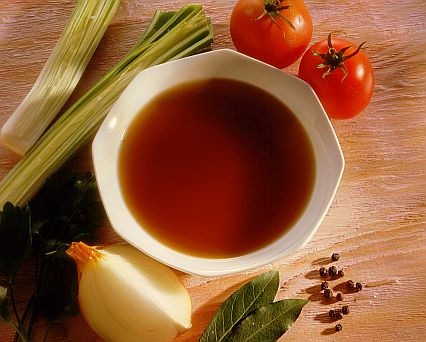 I have been happily making chicken stock for quite some time now.. About a year and a half ago, while working at Native Sun, I kept bugging the employees in the meat department about finding me a case of grass fed beef shank bones. Months this went on, to no avail. They said they couldn’t get an answer…then they said no.
I could find them on the internet, but I’ll go to extremes to keep from having something shipped to me..for environmental reasons mainly..but also wanting really fresh bones. The local co-ops want 35. to 50. to join.. What to do? I finally sucked up and went to Whole Foods…whom I certainly don’t trust for lots of reasons, preferring to shop local, not chains..
But a friend called and said she had asked them about the bones and they had them…so I got up the next morning and schlepped all the way out there. and was told they didn’t have them. They apologized and gave me the meat managers card, who would be in the next afternoon. So I waited til then and called, spoke to him and made arrangements to drive out the next afternoon to get them..he would hold them for me.
He didn’t…or rather when I got there, again, the next afternoon in 5 o’clock traffic…he wasn’t there. Seems he had been taken to the hospital for diabetes. Why don’t health food stores teach people how to eat? Classes on nutrition? Anyway, I whine, they look all over, can’t find them. They talked to the store manager, who had them cut 4 the meat off of 3 shanks…a 40 minutes wait…but t5hey did it. While hanging out at the meat counter, I noticed that bison was on sale for 3.99 a POUND. Wow… bought three pounds… Finally heaved the bones out to the car, with help…and at a great price.
The burger I had that night was the best bison burger I’ve ever had, very fresh, perfect. Wow.
And this afternoon I came home and browned, then slow roasted all those shanks and they are gently simmering for the next 2 days..mmmmmmmm.
Beef Stock

about 5 pounds beef shank bones
2 Tablespoons coconut oil
3 pounds meaty rib or neck bones
5 or more quarts cold filtered water
1/2 cup vinegar
3 onions, coarsely chopped
3 carrots, coarsely chopped
several sprigs of fresh thyme, tied together
Heat coconut oil to slightly above medium heat, place shanks bones in oil to brown. Brown on all sides, even the ends of marrow. Then place in a roasting pan, covered, and brown at 325 degrees in the oven for 1 hour.
Place the knuckle and marrow bones in a large pot with vinegar and cover with water. Let stand for one hour.
Place roasted bones the water with them knuckles and stuff. Slowly bring up to a soft simmer and simmer, covered for…the longer the better..up to 72 hours.
Pour the fat out of the roasting pan. Deglaze the roasting pan, add liquid to pot., Add additional water, if necessary, to cover the bones; but the liquid should come no higher than within one inch of the rim of the pot, as the volume expands slightly during cooking. Bring to a boil.
A large amount of scum will come to the top, and it is important to remove this with a spoon. After you have skimmed, reduce heat and add the thyme and crushed peppercorns.
Simmer stock for at least 12 and as long as 72 hours. You will now have a pot of rather repulsive-looking brown liquid containing globs of gelatinous and fatty material. It doesn’t even smell particularly good. But don’t despair. After straining you will have a delicious and nourishing clear broth that forms the basis for many other recipes.
After you have made the stock and reduced it as much as you want, place the pot in the refrigerator and let it cool overnight. All the fat will rise to the top. Boil that fat with twice the amount of water as fat, let it solidify again, and THEN store it in the fridge or freezer. This removes a good amount of the meaty taste, and whatever sediment is in the fat will sink to the bottom of the pot. Use it like you would schmaltz or any other solid fat — especially for frying or in pie crusts!
You can do this with bacon grease, too, although I don’t know why you would want to get RID of bacon flavor!! 🙂
I’m opening a Brothel..Read on…
Posted: September 30, 2009 Filed under: Food and it's Impact on Our Health, In The Kitchen with Millie- How To's Leave a commentYep, it’s true…I’m opening a brothel…LOL!
About a month ago I began offering beef and chicken stocks to my clients. They are an essential part of eating a traditional human diet..there is simply no other way to get the calcium you so desperately need. Since the 50’s people have stopped making stocks. All those stupid commercials for drugs like Boniva say, “when diet and exercise are not enough”….
Guess what? Diet and exercise ARE ALWAYS ENOUGH!! Period! No exceptions..
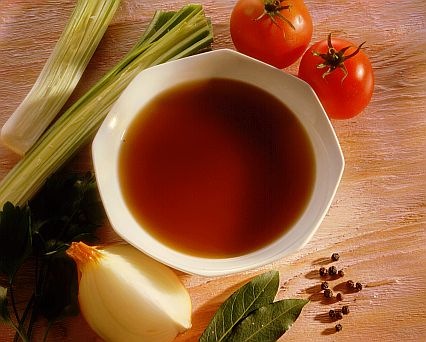
The response has been incredible, I am now making close to 15 quarts of stock each week. I offer them for pick-up each Monday evening…so let me know what you want…go to my webpage for details.. Please order by Thursday of the week before… Optimum Nutrition – Meat Stocks
I also offer raw butter, coconut milk yogurt, salad dressings and fresh mayonnaise, along with gluten free wedding cakes and desserts.
Coconut crème brûlée
Posted: September 28, 2009 Filed under: In The Kitchen with Millie- How To's Leave a comment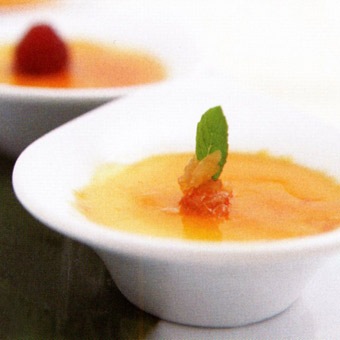
Any excuse to use real vanilla beans….and what better way than a perfect creme brulee…healthy organic eggs, coconut milk…enough fat and protein to make the sugar not spike the blood sugar too bad…mmmmmmm.
3 cups coconut cream
1 cup coconut milk
½ cup sugar
1 whole vanilla bean
6 egg yolks
1-2 tsp. superfine sugar, per ramekin
In a heavy-bottomed saucepan on low, heat the coconut cream and milk, and sugar. Stir the sugar to dissolve and then add the vanilla bean. Continue to heat until small bubbles appear around the edges, but do not allow it to boil. Remove from heat and cool for 10-15 minutes, while letting the vanilla bean soften.
Remove the vanilla bean from the cream, split open lengthwise with a sharp knife, and scrape the tiny seeds from the pod. Add the seeds to the cream, and discard the pod. Boil a few quarts of water.
Whisk the egg yolks into the cooled cream mixture, and then strain through a sieve to remove any unbeaten egg. Pour about ½ cup of the mixture into each of eight ramekins. Set the ramekins in a deep-sided baking dish. Pour enough boiling water into the baking dish to come halfway up the sides of the ramekins. Bake at 325ºF for 50-60 minutes, or until a toothpick comes out clean.
Remove the baking dish from the oven, and let the ramekins cool. Transfer to the refrigerator and let the crème cool completely overnight, or for at least four hours.
Just before serving, remove the crème from the refrigerator and sprinkle the custard in each ramekin evenly with 1-2 tsp. superfine sugar. Using a handheld torchière, caramelize the sugar until golden brown. Let the ramekin set for a few minutes before serving so the sugar can cool and harden.

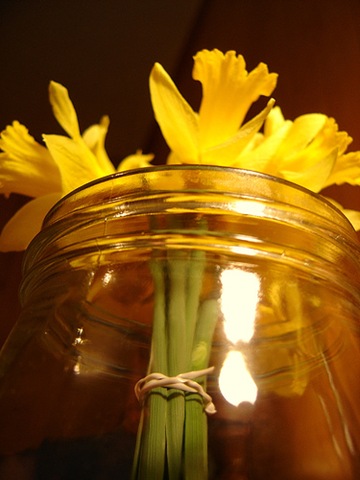
In Praise of Mason Jars
Posted: September 26, 2009 Filed under: In The Kitchen with Millie- How To's Leave a commentI grew up with a grandmother who put up tomatoes every yerar, squash, guava jelly and butter, all in mason jars. They were used to catch fireflies at night in the orange grove, lady bugs during the day, to hold marbles, make tea…
I do love mason jars, ..this from Apartment Therapy’s Re-Nest
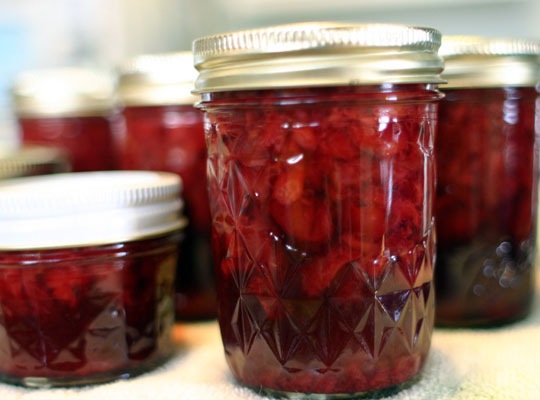
We know that having such a fondness for an inanimate object is a little strange. But growing up with a mom who pickled every vegetable in sight and spent entire days during the summer months turning lugs of fruit into gleaming jars of strawberry, apricot, and boysenberry jam — well, we can’t help ourselves. We love Mason jars. And from making your own kombucha to growing your own alfalfa sprouts, there are so many ways to love them. We’re rounding up a quick list after the jump (please add your own!)
Coconut Fudge Sauce To Die For…..
Posted: September 23, 2009 Filed under: In The Kitchen with Millie- How To's 1 Comment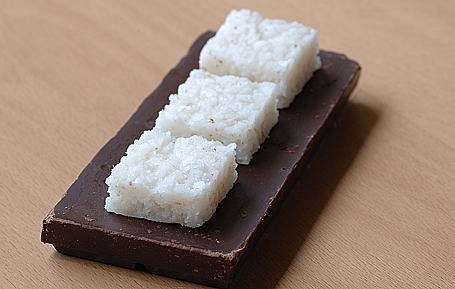 This is my version of fudge sauce, without dairy…making it far healthier and for those who are lactose intolerant..
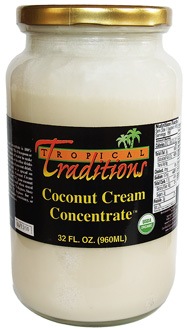
- 2/3 cup cashew or coconut cream (you have to make the cashew cream, you can buy coconut cream from Tropical Traditions).
- 1/3 cup honey
- 1/2 cup packed organic dark brown sugar
- 1/2 cup unsweetened Dutch-process cocoa powder
- 1/4 teaspoon salt
- 6 oz fine-quality Organic Fair Trade bittersweet chocolate (not unsweetened), finely chopped (I use Black & Gold Brand)
- 2 tablespoons organic raw butter
- 1 teaspoon vanilla
To make the cashew cream; place 1 1/2 cups of raw cashews in your blender, blend to a very fine powder, add 2/3 cups water, blend…you want it very thick while it is blending otherwise it will not be smooth enough. If it won’t barely go through the blades and blend properly, add small amounts of water until it will. Blend til very smooth. Then add water until it is he consistency of heavy cream or a tad thicker.
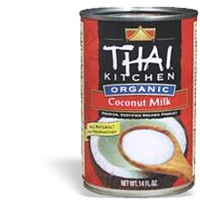
If you do not have coconut cream, buy Thai Kitchen coconut milk (not lie!)…and leave it in your cabinet for a few days to let it separate completely. Then very carefully, without shaking the can at ALL, open the can…and skim off the heavy cream on top…reserve coconut water for another use (like mixing with fresh pineapple juice to drink..
Bring cream, honey, sugar, cocoa, salt, and half of chocolate to a boil in a 1 to 1 1/2-quart heavy saucepan over moderate heat, stirring, until chocolate is melted. Reduce heat and cook at a low boil, stirring occasionally, 5 minutes, then remove from heat. Add butter, vanilla, and remaining chocolate and stir until smooth. Cool sauce to warm before serving.
Cooks’ note: Sauce can be made 1 week ahead and cooled completely, then chilled in an airtight container or jar. Reheat before using.

Mango-Guava Lime Tarts with Tropical Nut Crust
Posted: September 17, 2009 Filed under: In The Kitchen with Millie- How To's Leave a comment
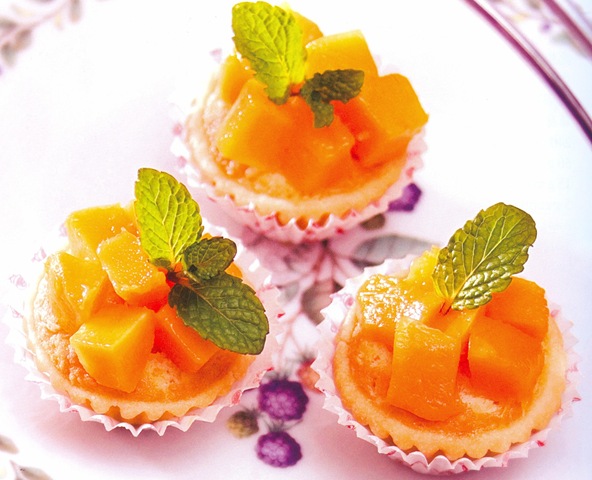 These tarts are one of my favorite desserts, a perfect combination of sweet and tart, soft and crunchy. They are easy to do but are very elegant to serve. I use 4 inch tart tins.
Serves 8
Preparation time; 1 ½ hr.
1 cup macadamias
1 cup almonds
2 cups coconut flakes
¾ cup Succanat or organic sugar
3 large egg whites
1/2 cup apple juice
½ cup coconut milk
1 T agar agar
1/3 cup lime juice
1 t arrowroot
1 mango
4 T guava jelly
1 T. butter
1) Combine nuts in food processor to coarse grind. Add coconut and buzz briefly. Beat egg whites to stiff peaks, adding sugar when whites are still soft. Fold in to nuts.
2) Place mixture into buttered tart tins. Bake at 350° until moderately brown. Cool well before removing from tins.
3) Place apple juice and coconut milk in saucepan, gently heat to right before it comes to a simmer. Mix arrowroot and lime juice, add to pan, stirring until arrowroot is melted. Cool and let set ( putting it in freezer speeds this up ) about ½ way, then spoon into shells.
4) Place sliced mango on top of each tart.
5) Melt guava jelly and butter in a small pan and use a pastry brush to glaze mangoes.
Enjoy….
Coconut Milk Yogurt
Posted: September 11, 2009 Filed under: In The Kitchen with Millie- How To's Leave a comment
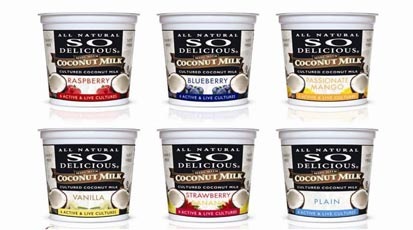
You can now buy coconut milk yogurt in Publix and your local health food store, but at 2.79 for 6 ounces AND having to buy all those little plastic cup thingies with it….blechh! And expensive. Mine comes out to 42 cents a serving! It takes me about 25 minutes to make a batch, 12 hours to ferment…and fresh yogurt the next day…
(of course you can double or triple this recipe)
2 cans (15 oz.) coconut milk (Make sure that you are using coconut milk with no preservatives, or you won’t grow the acidophilus culture.
3 T. of yogurt from last batch
1 T. gelatin
Sugar to taste (I use about a teaspoon per can of organic cane sugar)
Tools Needed:
6 one- cup canning jars for yogurt
 2 quart glass pitcher (I like this one from Pampered Chef)
4 cup Pyrex measuring cup or glass pitcher (needs to fit in microwave)
whisk
kitchen thermometer
Small lamp or light – I used this one the first time I made it, worked great. – 
Now- I use my crock pot base with a cooling rack on top, then sit the pot on that, wrap it in towels to insulate overnight. You’ll have to play with the settings to find out what setting holds it at 115°.
- First, take one can of coconut milk and pour it into the 2 qt. glass measuring bowl. Next, whisk in the sugar, then sprinkle the gelatin over the surface of the milk. Let it sit about 5 minutes, then whisk real well. Then microwave the milk in the glass bowl for approximately 60-90 seconds, until it is 140°.
- Now pour the second can into your 4 cup Pyrex measuring cup. Then microwave it for approximately 60-90 seconds. Take it out to check the temperature. It should be 110 degrees. If it has not yet reached the correct temperature, microwave it on 15 second intervals until it is.
- Add 3 tablespoons of store bought yogurt or from your last batch to the heated coconut milk in the Pyrex measuring cup and stir until it dissolves, and then add it to the coconut milk in the 2 quart glass bowl. Recheck the temperature, and if it is not still 115 degrees, place the bowl in the microwave, and bring it back to 115 degrees.
Now that you have the properly mixed yogurt base at the correct temperature, cover it with a plate and set it in the slightly warm oven (turn it on for about 2 minutes, then turn it off). Place a small lamp or turn your oven light on if you have the option, and place the yogurt in the oven. Or do the crock pot set-up and adjust til it stays at 115. I insulate inside with a tablecloth and wrap a towel around the outside.
Let the yogurt ferment for 8-14 hours. The longer you let it set, or the higher the temperature (it can go to 120°, but no higher), the firmer the yogurt will be. You can incubate at a higher temperature. Try 120F-125F. (but not over 128F) The bacteria are thermophilic, they love heat. The warmer temps get the bacteria working faster.
After the allotted time has passed, check the coconut milk yogurt. It will be runny, pour it into jars and let it cool off in the fridge for 2 to 3 hours before eating. It will get firmer a after a day.
Incubation time changes the taste results: Longer = more tart, Shorter=Less tart. Try shorter or longer times to find your desired amount of tartness.
Broth is Beautiful
Posted: September 8, 2009 Filed under: Food and it's Impact on Our Health, In The Kitchen with Millie- How To's Leave a commentFrom Weston Price Foundation;
"Good broth will resurrect the dead," says a South American proverb. Said Escoffier: "Indeed, stock is everything in cooking. Without it, nothing can be done."
A cure-all in traditional households and the magic ingredient in classic gourmet cuisine, stock or broth made from bones of chicken, fish and beef builds strong bones, assuages sore throats, nurtures the sick, puts vigor in the step and sparkle in love life–so say grandmothers, midwives and healers. For chefs, stock is the magic elixir for making soul-warming soups and matchless sauces.
Meat and fish stocks play a role in all traditional cuisines-French, Italian, Chinese, Japanese, African, South American, Middle Eastern and Russian. In America, stock went into gravy and soups and stews. That was when most animals were slaughtered locally and nothing went to waste. Bones, hooves, knuckles, carcasses and tough meat went into the stock pot and filled the house with the aroma of love. Today we buy individual filets and boneless chicken breasts, or grab fast food on the run, and stock has disappeared from the American tradition.
Grandmother Knew Best
Science validates what our grandmothers knew. Rich homemade chicken broths help cure colds. Stock contains minerals in a form the body can absorb easily-not just calcium but also magnesium, phosphorus, silicon, sulphur and trace minerals. It contains the broken down material from cartilage and tendons–stuff like chondroitin sulphates and glucosamine, now sold as expensive supplements for arthritis and joint pain.
Fish stock, according to traditional lore, helps boys grow up into strong men, makes childbirth easy and cures fatigue. "Fish broth will cure anything," is another South American proverb. Broth and soup made with fishheads and carcasses provide iodine and thyroid-strengthening substances.
When broth is cooled, it congeals due to the presence of gelatin. The use of gelatin as a therapeutic agent goes back to the ancient Chinese. Gelatin was probably the first functional food, dating from the invention of the "digestor" by the Frenchman Papin in 1682. Papin’s digestor consisted of an apparatus for cooking bones or meat with steam to extract the gelatin. Just as vitamins occupy the center of the stage in nutritional investigations today, so two hundred years ago gelatin held a position in the forefront of food research. Gelatin was universally acclaimed as a most nutritious foodstuff particularly by the French, who were seeking ways to feed their armies and vast numbers of homeless in Paris and other cities. Although gelatin is not a complete protein, containing only the amino acids arginine and glycine in large amounts, it acts as a protein sparer, helping the poor stretch a few morsels of meat into a complete meal. During the siege of Paris, when vegetables and meat were scarce, a doctor named Guerard put his patients on gelatin bouillon with some added fat and they survived in good health.
The French were the leaders in gelatin research, which continued up to the 1950s. Gelatin was found to be useful in the treatment of a long list of diseases including peptic ulcers, tuberculosis, diabetes, muscle diseases, infectious diseases, jaundice and cancer. Babies had fewer digestive problems when gelatin was added to their milk. The American researcher Francis Pottenger pointed out that as gelatin is a hydrophilic colloid, which means that it attracts and holds liquids, it facilitates digestion by attracting digestive juices to food in the gut. Even the epicures recognized that broth-based soup did more than please the taste buds. "Soup is a healthy, light, nourishing food" said Brillant-Savarin, "good for all of humanity; it pleases the stomach, stimulates the appetite and prepares the digestion."
Attention to Detail
Stock or broth begins with bones, some pieces of meat and fat, vegetables and good water. For beef and lamb broth, the meat is browned in a hot oven to form compounds that give flavor and color–the result of a fusion of amino acids with sugars, called the Maillard reaction. Then all goes in the pot–meat, bones, vegetables and water. The water should be cold, because slow heating helps bring out flavors. Add vinegar to the broth to help extract calcium–remember those egg shells you soaked in vinegar until they turned rubbery.
Heat the broth slowly and once the boil begins, reduce heat to its lowest point, so the broth just barely simmers. Scum will rise to the surface. This is a different kind of colloid, one in which larger molecules–impurities, alkaloids, large proteins called lectins–are distributed through a liquid. One of the basic principles of the culinary art is that this effluvium should be carefully removed with a spoon. Otherwise the broth will be ruined by strange flavors. Besides, the stuff looks terrible. "Always Skim" is the first commandment of good cooks.
Two hours simmering is enough to extract flavors and gelatin from fish broth. Larger animals take longer–all day for broth made from chicken, turkey or duck and overnight for beef broth.
Broth should then be strained. The leavings, picked over, can be used for terrines or tacos or casseroles. Perfectionists will want to chill the broth to remove the fat. Stock will keep several days in the refrigerator or may be frozen in plastic containers. Boiled down it concentrates and becomes a jellylike fumée or demi-glaze that can be reconstituted into a sauce by adding water.
Cutting Corners
Research on gelatin came to an end in the 1950s because the food companies discovered how to induce Maillard reactions and produce meat-like flavors in the laboratory. In a General Foods Company report issued in 1947, chemists predicted that almost all natural flavors would soon be chemically synthesized. And following the Second World War, food companies also discovered monosodium glutamate (MSG), a food ingredient the Japanese had invented in 1908 to enhance food flavors, including meat-like flavors. Humans actually have receptors on the tongue for glutamate. It is the protein in food that the human body recognizes as meat.
Any protein can be hydrolyzed to produce a base containing free glutamic acid or MSG. When the industry learned how to make the flavor of meat in the laboratory, using inexpensive proteins from grains and legumes, the door was opened to a flood of new products including bouillon cubes, dehydrated soup mixes, sauce mixes, TV dinners and condiments with a meaty taste. "Homemade" soup in most restaurants begins with a powdered soup base that comes in a package or can and almost all canned soups and stews contain MSG, often found in ingredients called hydrolyzed porteins. The fast food industry could not exist without MSG and artificial meat flavors to make "secret" sauces and spice mixes that beguile the consumer into eating bland and tasteless food.
Short cuts mean big profits for producers but the consumer is short changed. When homemade stocks were pushed out by cheap substitutes, an important source of minerals disappeared from the American diet. The thickening effects of gelatin could be mimicked with emulsifiers but the health benefits were lost.
Most serious, however, were the problems posed by MSG, problems the industry has worked very hard to conceal from the public. In 1957, scientists found that mice became blind and obese when MSG was administered by feeding tube. In 1969, MSG-induced lesions were found in the hypothalamus region of the brain. Other studies all point in the same direction–MSG is a neurotoxic substance that causes a wide range of reactions, from temporary headaches to permanent brain damage.
Why do consumers react to factory-produced MSG and not to naturally occurring glutamic acid found in food? One theory is that the glutamic acid produced by hydrolysis in factories contains many isomers in the right-handed form, whereas natural glutamic acid in meat and meat broths contains only the left-handed form. L-glutamic acid is a precursor to neurotransmitters, but the synthetic form, d-glutamic acid, may stimulate the nervous system in pathological ways.
A "Brothal" in Every Town
Peasant societies still make broth. It is a necessity in cultures that do not use milk because only stock made from bones and dairy products provides calcium in a form that the body can easily assimilate. It is also a necessity when meat is a luxury item, because gelatin in properly made broth helps the body use protein in an efficient way.
Thus, broth is a vital element in Asian cuisines–from the soothing long-simmered beef broth in Korean soups to the foxy fish broth with which the Japanese begin their day. Genuine Chinese food cannot exist without the stockpot that bubbles perpetually. Bones and scraps are thrown in and mineral-rich stock is removed to moisten stir-frys. Broth-based soups are snack foods from Thailand to Manchuria.
Asian restaurants in the US are likely to take shortcuts and use a powdered base for sweet and sour soup or kung pau chicken but in Japan and China and Korea and Thailand, mom-and-pop businesses make broth in steamy back rooms and sell it as soup in store fronts and on street corners.
What America needs is healthy fast food and the only way to provide this is to put brothals in every town, independently owned brothals that provide the basic ingredient for soups and sauces and stews. And brothals will come when Americans recognize that the food industry has prostituted itself to short cuts and huge profits, shortcuts that cheat consumers of the nutrients they should get in their food and profits that skew the economy towards industrialization in farming and food processing.
Until our diners and carryouts become places that produce real food, Americans can make broth in their own kitchens. It’s the easy way to produce meals that are both nutritious and delicious-and to acquire the reputation of an excellent cook.
Sidebar Articles
Heads and Feet
If you’ve ever shopped in Europe, you’ve noticed that calves feet are displayed at the local butchers and chickens come with their heads and feet attached. Hooves, feet and heads are the most gelatinous portions of the animal and fetch high prices in traditional economies. In fact, Tysons exports the feet from American chickens to China. Jewish folklore considers the addition of chicken feet the secret to successful broth.
It’s hard to find these items in America. Asian and Latin American markets sometimes carry whole birds and some butchers in ethnic neighborhoods carry calves feet. If you have freezer space, you can buy frozen chicken feet and calves feet in bulk from meat wholesalers that cater to the restaurant trade. Have the butcher cut the calves feet into one-inch cubes and package them in 1-quart bags. For the most satisfactory results, use 2-4 chicken feet for chicken stock and about 2 pounds calves feet pieces for a large pot of beef stock.
Sauce Basics
Meat sauces are made from stocks that have been flavored and thickened in some way. Once you have learned the technique for making sauces-either clear sauces or thick gravies-you can ignore the recipe books and be guided by your imagination.
Reduction Sauces are produced by rapid boiling of gelatinous stock to produce a thick, clear sauce. The first step is to "deglaze" coagulated meat juices in the roasting pan or skillet by adding 1/2 cup to 1 cup wine or brandy, bringing to a boil and stirring with a wooden spoon to loosen pan drippings. Then add 3 to 4 cups stock, bring to a boil and skim. (Use chicken stock for chicken dishes, beef stock for beef dishes, etc.) The sauce may now be flavored with any number of ingredients, such as vinegar, mustard, herbs, spices, fresh orange or lemon juice, naturally sweetened jam, garlic, tomato paste, grated ginger, grated lemon rind, creamed coconut, whole coconut milk or cultured cream. Let sauce boil vigorously, uncovered, until reduced by at least one half, or until desired thickness is achieved. You may add about 1-2 teaspoons gelatin to promote better thickening, although this should be avoided by those with MSG sensitivities (as gelatin contains small amounts of MSG). Another way to thicken is to mix 2 tablespoons arrowroot powder with 2 tablespoons water. Gradually add this to the boiling sauce until the desired thickness is obtained. If sauce becomes too thick, thin with a little water. The final step in sauce-making is to taste and add sea salt if necessary.
Gravies are thickened with flour rather than by reduction. They are suitable for meats like roast chicken and turkey, which drip plenty of fat into the pan while cooking. After removing the roasting fowl and roasting rack, place pan on a burner. You should have at least 1/2 cup good fat drippings-if not, add some butter, goose fat or lard. Add about 1/2 cup unbleached flour to the fat and cook over medium high heat for several minutes, stirring constantly, until the flour turns light brown. Add 4 to 6 cups warm stock, bring to a boil and blend well with the fat-flour mixture, using a wire whisk. Reduce heat and simmer 10 minutes or so. Check for seasonings and add sea salt and pepper if necessary. You may also add herbs, cream, butter, whole coconut milk or creamed coconut.
Recipes
Chicken Stock
1 whole free-range chicken or 2 to 3 pounds of bony chicken parts, such as necks, backs, breastbones and wings*
gizzards from one chicken (optional)
2-4 chicken feet (optional)
4 quarts cold filtered water
2 tablespoons vinegar
1 large onion, coarsely chopped
2 carrots, peeled and coarsely chopped
3 celery stalks, coarsely chopped
1 bunch parsley
*Note: Farm-raised, free-range chickens give the best results. Many battery-raised chickens will not produce stock that gels.
If you are using a whole chicken, cut off the wings and remove the neck, fat glands and the gizzards from the cavity. Cut chicken parts into several pieces. (If you are using a whole chicken, remove the neck and wings and cut them into several pieces.) Place chicken or chicken pieces in a large stainless steel pot with water, vinegar and all vegetables except parsley. Let stand 30 minutes to 1 hour. Bring to a boil, and remove scum that rises to the top. Reduce heat, cover and simmer for 6 to 8 hours. The longer you cook the stock, the richer and more flavorful it will be. About 10 minutes before finishing the stock, add parsley. This will impart additional mineral ions to the broth.
Remove whole chicken or pieces with a slotted spoon. If you are using a whole chicken, let cool and remove chicken meat from the carcass. Reserve for other uses, such as chicken salads, enchiladas, sandwiches or curries. Strain the stock into a large bowl and reserve in your refrigerator until the fat rises to the top and congeals. Skim off this fat and reserve the stock in covered containers in your refrigerator or freezer.
Beef Stock
about 4 pounds beef marrow and knuckle bones
1 calves foot, cut into pieces (optional)
3 pounds meaty rib or neck bones
4 or more quarts cold filtered water
1/2 cup vinegar
3 onions, coarsely chopped
3 carrots, coarsely chopped
3 celery stalks, coarsely chopped
several sprigs of fresh thyme, tied together
1 teaspoon dried green peppercorns, crushed
l bunch parsley
Place the knuckle and marrow bones and optional calves foot in a very large pot with vinegar and cover with water. Let stand for one hour. Meanwhile, place the meaty bones in a roasting pan and brown at 350 degrees in the oven. When well browned, add to the pot along with the vegetables. Pour the fat out of the roasting pan, add cold water to the pan, set over a high flame and bring to a boil, stirring with a wooden spoon to loosen up coagulated juices. Add this liquid to the pot. Add additional water, if necessary, to cover the bones; but the liquid should come no higher than within one inch of the rim of the pot, as the volume expands slightly during cooking. Bring to a boil. A large amount of scum will come to the top, and it is important to remove this with a spoon. After you have skimmed, reduce heat and add the thyme and crushed peppercorns.
Simmer stock for at least 12 and as long as 72 hours. Just before finishing, add the parsley and simmer another 10 minutes. You will now have a pot of rather repulsive-looking brown liquid containing globs of gelatinous and fatty material. It doesn’t even smell particularly good. But don’t despair. After straining you will have a delicious and nourishing clear broth that forms the basis for many other recipes in this book.
Remove bones with tongs or a slotted spoon. Strain the stock into a large bowl. Let cool in the refrigerator and remove the congealed fat that rises to the top. Transfer to smaller containers and to the freezer for long-term storage.
Fish Stock
3 or 4 whole carcasses, including heads, of non-oily fish such as sole, turbot, rockfish or snapper
2 tablespoons butter
2 onions, coarsely chopped
1 carrot, coarsely chopped
several sprigs fresh thyme
several sprigs parsley
1 bay leaf
1/2 cup dry white wine or vermouth
1/4 cup vinegar
about 3 quarts cold filtered water
Ideally, fish stock is made from the bones of sole or turbot. In Europe, you can buy these fish on the bone. The fish monger skins and filets the fish for you, giving you the filets for your evening meal and the bones for making the stock and final sauce. Unfortunately, in America sole arrives at the fish market preboned. But snapper, rock fish and other non-oily fish work equally well; and a good fish merchant will save the carcasses for you if you ask him. As he normally throws these carcasses away, he shouldn’t charge you for them. Be sure to take the heads as well as the body-these are especially rich in iodine and fat-soluble vitamins. Classic cooking texts advise against using oily fish such as salmon for making broth, probably because highly unsaturated fish oils become rancid during the long cooking process.
Melt butter in a large stainless steel pot. Add the vegetables and cook very gently, about 1/2 hour, until they are soft. Add wine and bring to a boil. Add the fish carcasses and cover with cold, filtered water. Add vinegar. Bring to a boil and skim off the scum and impurities as they rise to the top. Tie herbs together and add to the pot. Reduce heat, cover and simmer for at least 4 hours or as long as 24 hours. Remove carcasses with tongs or a slotted spoon and strain the liquid into pint-sized storage containers for refrigerator or freezer. Chill well in the refrigerator and remove any congealed fat before transferring to the freezer for long-term storage.
 Sally Fallon is the author of Nourishing Traditions: The Cookbook that Challenges Politically Correct Nutrition and the Diet Dictocrats (with Mary G. Enig, PhD), a well-researched, thought-provoking guide to traditional foods with a startling message: Animal fats and cholesterol are not villains but vital factors in the diet, necessary for normal growth, proper function of the brain and nervous system, protection from disease and optimum energy levels. She joined forces with Enig again to write Eat Fat, Lose Fat, and has authored numerous articles on the subject of diet and health. The President of the Weston A. Price Foundation and founder of A Campaign for Real Milk, Sally is also a journalist, chef, nutrition researcher, homemaker, and community activist. Her four healthy children were raised on whole foods including butter, cream, eggs and meat.


 Meal Delivery Service by Millie Barnes