Easy Durable Raised Bed Trellising
Posted: April 8, 2012 Filed under: Gardening 1 CommentClimbing towards the sun.
Many of our favorite vegetables in the Beekman Heirloom Vegetable Garden require some sort of trellising – tomatoes, beans, peas, melons, cucumbers. When we put in our raised garden two years ago, we were determined to devise a trellising system that was easy to assemble, and would last for years. We were sick of weaving together bamboo sticks, and snapping together plastic cages. We learned that if something was cheap, it wouldn’t last more than a month, and if it had any sort of moving parts, it wouldn’t last more than a week. (If we could figure it out in the first place.)
We think we’ve perfected the perfect solution – and it’s relatively inexpensive to boot. (especially considering that we haven’t had to replace anything in three years.)
Our secret weapon? Livestock panels.
These lengths of panels are 12′ long, and come in a variety of heights. Made of thick welded galvanized steel, they don’t get rusty or bent out of shape very easily. (If only the same could be said for us.) How do we use them? In many different ways…
Our most ingenious discovery was that if we inserted one end of the panel into the soil on one end of the bed, and then bent it over, we could insert the other end of the panel into the opposite end of the bed. This forms a sort of “hoop” over the bed. We call it our “Calistoga Wagon Trellis.”

By mid-summer, this trellis is covered with bean vines.
How to Turn a Pallet into a Garden
Posted: April 8, 2012 Filed under: Gardening Leave a comment

CLICK HERE to go to complete DIY Instruction…
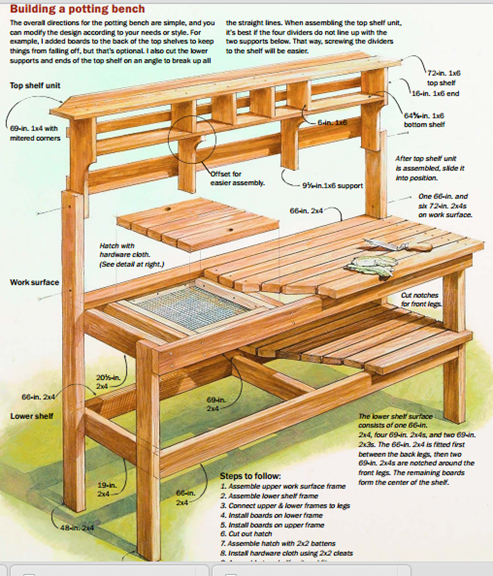
Awesome Potting Bench Plans
Posted: April 6, 2012 Filed under: Gardening Leave a commentClick here- Potting Bench Plans
Monsanto Threatens to Sue Vermont if Legislators Pass a Bill Requiring GMO Food to Be Labeled
Posted: April 5, 2012 Filed under: Gardening, Non-Toxic Choices Leave a commentApril 4, 2012 |

The world’s most hated corporation is at it again, this time in Vermont.
Despite overwhelming public support and support from a clear majority of Vermont’s Agriculture Committee, Vermont legislators are dragging their feet on a proposed GMO labeling bill. Why? Because Monsanto has threatened to sue the state if the bill passes.
The popular legislative bill requiring mandatory labels on genetically engineered food (H-722) is languishing in the Vermont House Agriculture Committee, with only four weeks left until the legislature adjourns for the year. Despite thousands of emails and calls from constituents who overwhelmingly support mandatory labeling, despite the fact that a majority (6 to 5) of Agriculture Committee members support passage of the measure, Vermont legislators are holding up the labeling bill and refusing to take a vote.
Instead, they’re calling for more public hearings on April 12, in the apparent hope that they can run out the clock until the legislative session ends in early May.
What happened to the formerly staunch legislative champions of Vermont’s “right to know” bill? They lost their nerve and abandoned their principles after Monsanto representative recently threatened a public official that the biotech giant would sue Vermont if they dared to pass the bill. Several legislators have rather unconvincingly argued that the Vermont public has a “low appetite” for any bills, even very popular bills like this one, that might end up in court. Others expressed concern about Vermont being the first state to pass a mandatory GMO labeling bill and then having to “go it alone” against Monsanto in court.
What it really comes down to this: Elected officials are abandoning the public interest and public will in the face of corporate intimidation.
Monsanto has used lawsuits or threats of lawsuits for 20 years to force unlabeled genetically engineered foods on the public, and to intimidate farmers into buying their genetically engineered seeds and hormones. When Vermont became the first state in the nation in 1994 to require mandatory labels on milk and dairy products derived from cows injected with the controversial genetically engineered Bovine Growth Hormone, Monsanto’s minions sued in Federal Court and won on a judge’s decision that dairy corporations have the first amendment “right” to remain silent on whether or not they are injecting their cows with rBGH – even though rBGH has been linked to severe health damage in cows and increased cancer risk for humans, and is banned in much of the industrialized world, including Europe and Canada.
Monsanto wields tremendous influence in Washington, DC and most state capitals. The company’s stranglehold over politicians and regulatory officials is what has prompted activists in California to bypass the legislature and collect 850,000 signatures to place a citizens’ Initiative on the ballot in November 2012. The 2012 California Right to Know Act will force mandatory labeling of GMOs and to ban the routine practice of labeling GMO-tainted food as “natural.”
All of Monsanto’s fear mongering and intimidation tactics were blatantly on display in the House Agriculture Committee hearings March 15-16.
During the hearings the Vermont legislature was deluged with calls, letters, and e-mails urging passage of a GMO labeling bill – more than on any other bill since the fight over Civil Unions in 1999-2000. The legislature heard from pro-labeling witnesses such as Dr. Michael Hansen, an expert on genetic engineering from the Consumers Union, who shredded industry claims that GMO’s are safe and that consumers don’t need to know if their food is contaminated with them.
On the other side of the fence, Monsanto’s lobbyist and Vermont mouthpiece, Margaret Laggis employed inaccurate, unsubstantiated, fear-mongering claims to make Monsanto’s case. She warned during the hearings that if this law were passed, there would not be enough corn, canola, and soybean seed for Vermont farmers to plant.
Laggis lied when she said that the U.S. Food and Drug Administration (FDA) had done exhaustive feeding tests on genetically modified foods. Hansen corrected her, testifying that all of the GMO feeding tests submitted to the FDA were conducted by Monsanto and other GMO corporations and that the FDA had not done any GMO testing of its own.
Laggis lied again when she claimed that a recent Canadian study showing that more than 90% pregnant women had high levels of a genetically modified bacterial pesticide in their blood resulted from them “eating too much organic food” during pregnancy. Again, Hansen refuted this nonsense by pointing out that the Bacillus thuingensis (Bt) bacterium spray used by organic growers is chemically and materially different from the GMO Bt bacterium which showed up in the pregnant women’s blood and the umbilical cords of their fetuses. Hanson pointed that the high levels of Monsanto’s mutant Bt in the women’s blood was due to the widespread cultivation of GMO corn, cotton, soy, and canola.
The committee heard testimony that European Union studies have been conducted which showed that even short-term feeding studies of GMO crops caused 43.5% of male test animals to suffer kidney abnormalities, and 30.8% of female test animals to suffer liver abnormalities. Studies also have shown that the intestinal lining of animals fed GMO food was thickened compared to the control animals. All of these short-term results could become chronic, and thus precursors to cancer.
Studies like these have prompted 50 nations around the world to pass laws requiring mandatory labels on GMO right foods.
In the end, none of the scientific testimony mattered. Monsanto operatives simply reverted to their usual tactics: They openly threatened to sue the state.
Unfortunately in the US, industry and the government continue to side with Monsanto rather than the 90% of consumers who support labeling. Monsanto’s biotech bullying is a classic example of how the 1% control the rest of us, even in Vermont, generally acknowledged as the most progressive state in the nation.
Vermont activists are organizing a protest at the state capital on April 12 to coincide with the next round of hearings on H-722, and are asking residents to write letters, make calls, and e-mail their legislators and the Governor. For more information, please go to the website http://www.vtrighttoknow.org or the Facebook page http://www.facebook.com/vtrighttoknow of the Vermont Right to Know Campaign.
Will Allen is the co-manager of Cedar Circle Farm in East Thetford, Vermont. He is also the Author of The War on Bugs, a history of farm pesticides and fertilizers since 1810. He is on the policy advisory boards of The Organic Consumers Association and Willing Hands. He has attended all of the agriculture committee hearings on H-722, where the testimony referred to above was delivered.
Ronnie Cummins is the National Director of the Organic Consumers Association and its Millions Against Monsanto campaign. He also is a member of the Steering Committee of the California Ballot Initiative to Label Genetically Engineered Foods, and co-author of the book, Genetically Engineered Food: A Self-Defense Guide for Consumers.
Help NationofChange Stand Up Against Monsanto!
Posted: March 30, 2012 Filed under: Food and it's Impact on Our Health, Gardening, Non-Toxic Choices Leave a commentThe multinational biotech giant Monsanto is the world’s leading producer of genetically modified seeds and crops, responsible for 90 percent of the genetically engineered seed on the United States market. Researchers found that consumption of GMO corn or soybeans may lead to significant organ disruptions in rats and mice-particularly in the liver and kidneys.
Monsanto, the company that brought the world Agent Orange, is also the creator of the best-selling herbicide Roundup, which has spawned over 120 million hectares of herbicide-resistant super weeds while damaging massive amounts of soil.
Monsanto has created several varieties of “superbugs”. Monsanto engineered genetically modified crops containing Bt, a toxin incorporated in GMO crops which has spawned insect populations which are resistant to bio pesticide. Insect populations have and are mutating to resist the bio pesticide. So far, at least 8 insect populations have developed resistance, with 2 populations resistant to Bt sprays and at least 6 species resistant to Bt crop as a whole. Farmers are therefore forced to use even more pesticides to combat the resistant bugs.
Monsanto may be destroying the planet’s soil. Certain bacteria essential as “food starters” such as L cremoris, used in raw and fermented dairy products have begun to disappear in certain geographic regions. The case has been found to be an element of Monsanto’s Roundup herbicide, glyphosate that is destroying and/or altering the microbial biodiversity of the soil, jeopardizing the fertility of the entire biosphere.
Help us speak truth to power. Donate what you can afford to support NationofChange.
Monsanto has been caught running “slave-like” rings, holding off pay, and forcing undocumented workers to buy their food only from the Monsanto company store. The company not only “hired” all of the workers illegally, but also prevented them from leaving the farm premises and withheld their salaries.
Monsanto effectively owns most US diplomats, and is currently using this political capital to start “Trade Wars” against nations opposed to Monsanto’s destructive policies. France, Hungary, and Peru are a few of the countries that have decided to stand up to Monsanto, going as far as destroying 1000 acres of maize found to have been grown with GMOs.
Peru has passed a monumental 10-year ban on modified foods and French legislatures are planning to launch new restrictions regarding the use of Monsanto’s 810 maize on French soil.
Monsanto poses one of the greatest threats on the planet to human health and the environment. NationofChange is teaming up with activists across the country for an ongoing campaign to fight back against one of the worst corporations in the world.
The first step: raise awareness about Monsanto’s crimes against human health and the environment.
This month, we are raising $6,200 for an educational and enlightening billboard campaign targeted in Monsanto’s home county of St. Louis Missouri.
Learn more at NotionofChange.org/armsrace

Garden Update- Building More Grow Buckets
Posted: March 24, 2012 Filed under: Gardening Leave a comment
Most of the plants I started under grow lights I got into grow buckets today. I had to build 6 new ones this week.
From bottom of pic on left; an orange tree, Roma tomatoes, strawberries, cherry tomatoes. Off to left; Malabar spinach, then Swiss chard, beets, more Swiss chard, and in blue barrel is sweet potatoes.
So this week I will get more 5 gallon buckets and plant the cucumbers, kale, larger cukes, more Malabar spinach and spinach.

Malabar spinach is one of the most beautiful plants I’ve grown. It grows in a spiral and twists around the supports. The berries that came off of it last year sprout really easy so I have years worth of plants!
Here last years plant; I only got one, I ordered it from Neem Tree Farm. This is where I get Neem Powder for brushing my teeth.
Malabar Spinach Seedlings…
Posted: February 26, 2012 Filed under: Gardening Leave a commentThe cold got my Malabar spinach, but not 3 weeks ago I had put the berries I had gotten off of it in between wet paper towels. They didn’t sprout for a week or two so I sat them on top of the grow lights. Frankly, I forgot about them.
But when I realized my plant was dead I had an immediate aha! The sprouts, maybe! And sure enough…they had sprouted and were robust;
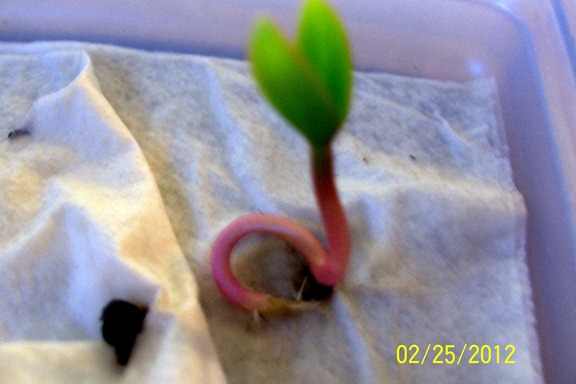

Will go in waiting grow buckets…sub-irrigated containers. They’ll twine and crawl up the tomato cage and look like this;

A beautiful plant and the leaves are edible, slightly mucagenic, but good sautéed in butter with garlic and caramelized onions with a hint of nutmeg and black pepper.
No Room for a Garden? Build up!
Posted: February 26, 2012 Filed under: Gardening 1 CommentFrom Apartment Therapy

Millie; Not just on roofs! You can use your fence or patio for Vertical Gardening. I use the pillars on my front porch for growing morning glories and cucumbers..
If lack of yard space is preventing you from having a garden this spring, a roof garden may be the perfect solution. While it might seem intimidating to set up, the outcome is not only beautiful but also ripe with benefits including rain water management, temperature moderation and space to grow food.
If you think a roof garden is right for you, Natural Home and Garden offers detailed instructions on the building and maintenance of these beautiful home additions.

A rooftop garden typically includes six layers: the roof, a waterproof barrier, insulation, drainage/root barrier, substrate and vegetation.
Worm Farm and New Rabbit Cage
Posted: February 22, 2012 Filed under: Gardening, Non-Toxic Choices Leave a comment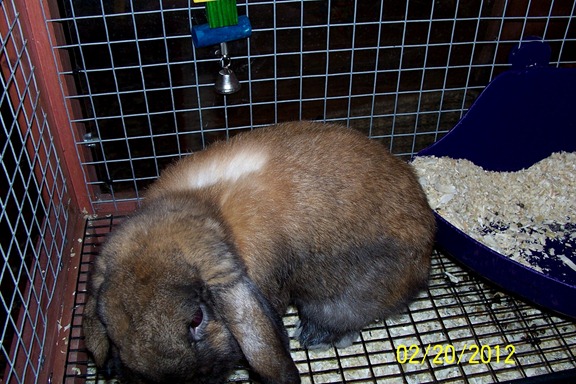
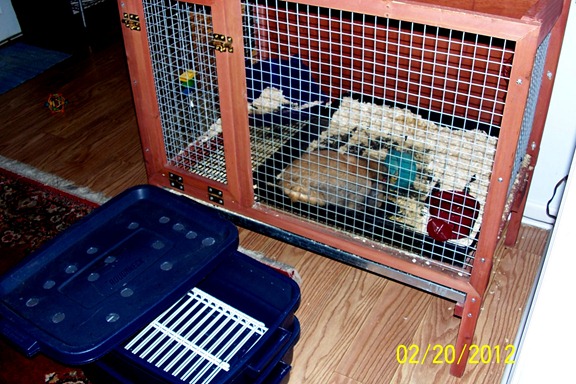
My Holland Lop bunny, Cornelius, is 1 year old. He just went from cage to condo. I found it for cheap on Craigslist! I also built a worm farm this last weekend; 2 Rubbermaid Tote, heavy ones, two small sections of wire shelving held together by 3 zip-ties so that the newspaper will stay damp and allow the liquid to run off into the bottom tub. The top one has holes drilled on the bottom and up near the sides for ventilation. The worms eat the newspaper and just about everything you put in there. Along with some soil, rabbit droppings mixed with sawdust from the rabbit cage and food scraps will be ready for the red worms soon. I’ll have great fertilizer and a ready source of worm farm material.
Killing Weeds: Skip The Agent Orange And Bring On The Boiled Water And Vinegar.
Posted: February 19, 2012 Filed under: Gardening, Non-Toxic Choices 2 CommentsWeed eradication programs for most starts in the herbicide aisle of the local home and garden type store but the visit may not be necessary. You might have everything you already need in your kitchen – water and vinegar.
Boiled Water: I read about this on Ecomii.com and had to try it. Boil a kettle of water and pour it on your weeds. It’s that simple. Literally, within 30 minutes, the base of the weeds will turn a brown color and soon flattened on your patio like limp lettuce.
 Vinegar: The active, natural weed killer in vinegar is acetic acid. Careful application via spray bottle or focused pour is important because vinegar is indiscriminate and can kill your grass. Normal grocery store vinegar is 5% acetic acid and may have to be applied several times in order to kill your weeds. You can get vinegar with acetic acid concentrations of 10%+ from a restaurant or farmer’s supply store but you magnify the risk to the nearby plants.
Boiled Vinegar: Why not connect with both weed cheeks with one kick by boiling your vinegar? The scalding water will start the process and the concentrated acetic acid in the boiled vinegar will take care of the rest.
If your neighbor comes out every couple days looking like a retired Ghostbuster spraying the Agent Orange on everything green and unwelcome, mention the scalding water and/or vinegar trick. You probably won’t convince him to change over to boiled anything so do your best to avoid operation weeding thunder.
Give any combo of boiled water, vinegar or boiled vinegar a shot and see if you get the results you want. You will have to invest a little extra time to kill your weeds but atleast you won’t have to face the possible collateral damage and long-term risks associated with herbicides.


 Meal Delivery Service by Millie Barnes