The Only Safe Vaccines Are The Ones Never Used
Posted: March 15, 2010 Filed under: Non-Toxic Choices Leave a commentTue, 06 Feb 2007 04:13 UTC

Dr. James R. Shannon, former director of the National institute of health declared, “the only safe vaccine is one that is never used.”
Cowpox vaccine was believed able to immunize people against smallpox. At the time this vaccine was introduced, there was already a decline in the number of cases of smallpox. Japan introduced compulsory vaccination in 1872. In 1892 there were 165,774 cases of smallpox with 29,979 deaths despite the vaccination program. A stringent compulsory smallpox vaccine program, which prosecuted those refusing the vaccine, was instituted in England in 1867. Within 4 years 97.5 % of persons between 2 and 50 had been vaccinated. The following year England experienced the worst smallpox epidemic[1] in its history with 44,840 deaths. Between 1871 and 1880 the incidence of smallpox escalated from 28 to 46 per 100,000. The smallpox vaccine does not work.
Much of the success attributed to vaccination programs may actually have been due to improvement in public health related to water quality and sanitation, less crowded living conditions, better nutrition, and higher standards of living. Typically the incidence of a disease was clearly declining before the vaccine for that disease was introduced. In England the incidence of polio had decreased by 82 % before the polio vaccine was introduced in 1956.
Babies Don’t Need Much Equipment
Posted: March 14, 2010 Filed under: Going Green; How and Why... Leave a commentGreen Baby Care from Planet Green.com
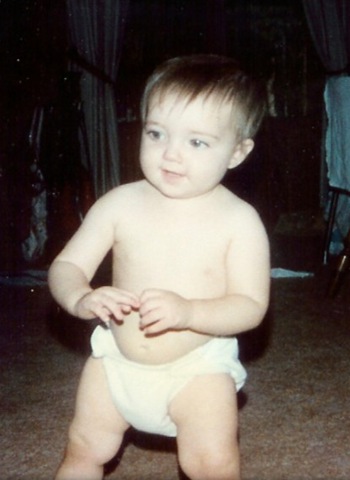 Katie’s first step
I read the above article and was struck recently…or I should say, again…at how accessorized we are. The whole idea of buying a fortune in equipment to raise a baby always struck me as weird. I never used cribs, all my kids slept with me until they were ready and secure enough to sleep with the next oldest sibling. I used a cloth front pack, then a backpack when they about 6 months old……keeping them close…and happy. I breastfed the last 4, I swear I could leave the house with some cloth diapers and just the kids…no bottles…and those big ole cloth diapers were perfect as a blanket, a changing pad, a burp pad… The first year you have all the food you need already “on board”…what could be easier??
All those “products”? Who needs them?
Soda: A Sin We Sip Instead of Smoke?
Posted: February 15, 2010 Filed under: Food and it's Impact on Our Health Leave a comment
Is soda the new tobacco?
By MARK BITTMAN From the NYTimes

In their critics’ eyes, producers of sugar-sweetened drinks are acting a lot like the tobacco industry of old: marketing heavily to children, claiming their products are healthy or at worst benign, and lobbying to prevent change. The industry says there are critical differences: in moderate quantities soda isn’t harmful, nor is it addictive.
The problem is that at roughly 50 gallons per person per year, our consumption of soda, not to mention other sugar-sweetened beverages, is far from moderate, and appears to be an important factor in the rise in childhood obesity. This increase is at least partly responsible for a rise in what can no longer be called “adult onset” diabetes — because more and more children are now developing it.
Attention is being paid: Last week, the Obama administration announced a plan to ban candy and sweetened beverages from schools. A campaign against childhood obesity will be led by the first lady, Michelle Obama. And a growing number of public health advocates are pushing for even more aggressive actions, urging that soda be treated like tobacco: with taxes, warning labels and a massive public health marketing campaign, all to discourage consumption.
A tax on soda was one option considered to help pay for health care reform (the Joint Committee on Taxation calculated that a 3-cent tax on each 12-ounce sugared soda would raise $51.6 billion over a decade), and President Obama told Men’s Health magazine last fall that such a tax is “an idea that we should be exploring. There’s no doubt that our kids drink way too much soda.”
But with all the junk food and U.F.O.’s (unidentifiable food-like objects) out there, why soda? Why a tax? And, most important, would it work?
To the beverage industry, the idea is not worth considering. Susan Neely, the president of the American Beverage Association, acknowledges that obesity is a problem but says: “If you’re trying to manage people being overweight you need a variety of behavior changes to achieve energy balance — it can’t be done by eliminating one food from the diet.”
Even if soda consumption were to drop, say critics of the tax, a drop in childhood obesity isn’t guaranteed. “Simply pricing one product higher,” says Derek Yach, a senior vice president of global health policy at PepsiCo, the big food company that has spoken the most seriously about building a healthier portfolio, “would lead to unknown effects on total dietary consumption. It may even lead to worse situations: people may stop spending on one food and eat more of another, so taxing high levels of sugar may lead to eating higher levels of fat.”
Still, the idea of a special tax on soda, similar to those on tobacco, gasoline and alcoholic beverages, is attracting more interest. Advocates of a tax note that sugared beverages are the No. 1 source of calories in the American diet, representing 7 percent of the average person’s caloric intake, according to government surveys, and up to 10 percent for children and teenagers. These calories, they point out, are worse than useless — they’re empty, and contribute to a daily total that is already too high.
“What you want,” says Kelly Brownell, director of Yale’s Rudd Center for Food Policy and Obesity, “is to reverse the fact that healthy food is too expensive and unhealthy food is too cheap, and the soda tax is a start. Unless food marketing changes, it’s hard to believe that anything else can work.”
Advocates argue that a soda tax would reduce consumption and pay for anti-obesity campaigns. In an opinion piece in The New England Journal of Medicine last year, Dr. Brownell and Thomas R. Frieden, the director of the C.D.C. and former New York City health commissioner, estimated that in New York State alone a penny-per-ounce soda tax would raise $1.2 billion annually.
Small excise taxes on soda are already in place in Arkansas, Tennessee, Virginia, Washington and West Virginia, and Chicago imposes a 3 percent retail tax on soft drinks. Soda taxes were proposed in at least 12 other states in 2009, though none were approved. Mississippi is considering legislation that would tax the syrup used to sweeten soda; the mayor of Philadelphia is weighing a tax on soda and other sugar-sweetened drinks, and Gov. David Paterson of New York has indicated that he will recommend a penny-per-ounce tax on sugared beverages in his 2011 budget.
The penny-per-ounce tax, favored by Dr. Brownell and others, would produce a significant increase in retail costs: the 12-pack of Coke on sale for $2.99 would go for $4.43 and a 75-cent can would rise to 87 cents. These increases, Dr. Brownell estimates, would reduce the annual per capita consumption of soda by more than 11 gallons, to 38.5 gallons. “And the revenue,” he says, “could be used to subsidize fruits and vegetables, fund obesity prevention programs for children and home economic classes in schools, and more.”
The model, clearly, is tobacco. Dr. Frieden, who promoted a soda tax when he was a health commissioner, sees further parallels between soda and tobacco: “There are aspects of the food industry that are reminiscent of tobacco — the sowing of doubt where there’s no reasonable doubt, funding of front groups, use of so-called experts, claims that new products which are safer for consumers are available, and the claim that they are not marketing to children.”
The public war against tobacco has worked, if imperfectly: Americans smoke at half the rate they once did, half of all smokers have quit, and the tobacco companies finance strong antismoking campaigns.
In the case of tobacco, the health risks of smoking were clear. But the beverage industry contends that science does not back up the assertion that childhood obesity is even partly caused by soda consumption, and has sought to make the discussion about personal choice and freedom. “Soda has calories, and food with calories causes people to put on weight when consumed in excess,” says J. Justin Wilson a self-described “libertarian consumer advocate” and senior research analyst for the Center for Consumer Freedom, an industry-sponsored advocacy group. “But there is no unique link between soda and obesity.”
Besides, says Ms. Neely, the industry is taking measures: “The beverage industry supports real solutions to obesity and continues to step up to do its part. We’ve removed full-calorie soft drinks from schools across the country and, in support of Mrs. Obama’s initiative, will place the full calories for our products on the front of our containers.”
Perhaps the process of reducing the drinking of sweetened beverages need not be so contentious. “There are parts of the industry that want to be constructive” says Dr. Frieden. “Big Food doesn’t have to become the next tobacco.”
With this Dr. Yach agrees, and though he clearly thinks a soda tax won’t work, he’d like to see a greater government role. “The overall governmental voice and investment in solutions required has been stunningly weak. They need to forcibly say, ‘The fundamental issue is one of calorie balance, and here’s what you need to do.’ ”
The problem, says Dr. Frieden, is that, “Obesity is a major health problem that’s getting worse, and it’s clear that exhorting individuals to eat less and exercise more is not going to turn things around.”
It may be time to try something a little more forceful.
Mark Bittman writes the Minimalist column for the The Times and is the author, most recently, of “Food Matters: A Guide to Conscious Eating.”

Non-Toxic Way to Kill Fire Ants
Posted: February 14, 2010 Filed under: Gardening, Non-Toxic Choices Leave a comment 
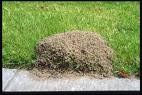
I know fire ants are picky eaters and any type poison that is effective takes seven feeding steps before the queen receives it. Plus, if the bait is stored in close proximity to any petroleum or fertilizer products they won’t touch it. Contact poisons that are on the market just cause the colony to move away. A well developed colony can be as deep as 30 feet and spread out some 20 to 50 feet from the mound center. This was documented by studies done in the early 60’s when they were first sited in South Alabama.
An environmentally friendly cure for fire ants has been announced by Walter Reeves on his Georgia Gardener radio program.
Simply pour two cups of CLUB SODA (carbonated water) directly in the center of a fire ant mound. The carbon dioxide in the water is heavier than air and displaces the oxygen which suffocates the queen and the other ants. The whole colony will be dead within about two days.
Besides eliminating the ants, club soda leaves no poisonous residue, does not contaminate the ground water, and does not indiscriminately kill other insects. It is not harmful to your pets, soaks into the ground. Each mound must be treated individually and a one liter bottle of club soda will kill 2 to 3 mounds. Spread the word.
Creating community is easier than you think.
Posted: February 12, 2010 Filed under: Gardening 1 CommentFrom Good.Is

Is it just me or, is the modern urban neighborhood getting remarkably old-fashioned? In the Los Feliz (locals pronounce this los-FEE-liz) community of Los Angeles where I live, it feels like everything that was old is new (and smart) again. Things my grandparents in Kentucky have always done—checking in on neighbors, sharing a new crop of tomatoes—seem not so much folksy as generally just a good way to live, even if you are in the big city.
1.Turn your front yard into a farm.
Grass is an expensive, water-intensive waste of space. Rip out the sod and start a small front yard farm to produce food for your household and some of your favorite neighbors. Sounds daunting (or don’t have a yard)? Organize some other like-minded urban agrarians and transform a vacant lot into a community garden. You may even get a tax credit.
2. Make every Sunday a block party.
Sundays are lazy time, and the worldwide movement Ciclovia has taken advantage of our weekend sloth. “There’s less traffic on Sunday,” says Tim Joe Linton, one of the organizers of cicLAvia an initiative to bring the car free days to the car capital of the world. Aside from the obvious benefits of music and picnics in the street, letting the bikes take over can be a boon to the local economy. “Many local shops see their business double,” Linton says.
3. Throw a potluck with your neighbors.
All of them. This may mean inviting people you may not know, like, or otherwise find interesting, but that’s what makes this fun: everyone is invited. If you want to ,add some entertainment.
4. Install a bench in front of your house (and create other types of informal public spaces).
Temporary dog parks, hop scotch zones, and dumpster pools work too.
5. Say hi to your neighbors.
Now that one’s not so hard, is it?
Here’s to dynamic neighborhoods, smarter communities, and the treehouse making a comeback. How are you breathing life back into your neighborhood?
Forget Recycling, Save Time with Precycling
Posted: February 12, 2010 Filed under: Food and it's Impact on Our Health Leave a commentFrom GOOD Blog

Although recycling is crucial to the future of our planet, it still contributes to pollution. Recycled waste builds up and produces toxins when melted down. By precycling, you lower the amount of products that need to be recycled. This involves purchasing products with minimal packaging and maximum reusability. When you precycle, you save waste from landfills by reusing, repairing, and donating what you already have.
Learn how to precycle with these simple lifestyle switches:
Carry reusable bags. Bring your own bags when running errands. If you forget your bags always choose paper over plastic. Paper bags can be reused and can be recycled much easier than plastic ones. Some grocery stores will even enter you into a weekly drawing for free groceries if you bring your own bags. Who doesn’t want to be a winner? Baggu make an amazing assortment of reusable shopping bags in more than 30 colors.
Pick products with minimal packaging. Avoid buying items that have multi-layer packaging bigger than the product itself. In most cases you can’t avoid packaging all together, so purchase products made from recycled materials.
Refuse junk mail. Be the boss of your mailbox with services like Tonic Mail Stopper and Proquo.
Give away, don’t throw away. Donate old clothing, toys, and electronics to your local Goodwill or community center. If you have old magazines and books you want to get rid of donate them to local hospitals and libraries.
Repair broken items. Always try and repair before you throw away. How to Mend It is a wonderful resource for how to fix just about anything. For further repair advice, read Platform21’s Repair Manifesto.
Drink from refillable bottles and mugs. Kick your water bottle addiction by buying a Sigg. If you buy a coffee every morning, bring your own reusable mug or try I’m Not a Paper Cup for coffee shop trips.
Dispose your disposable habit. Eliminate the use of one-time use products such as razors, plastic eating utensils, and cigarette lighters. Instead buy reusable, refillable, and washable items.
Rent it, don’t buy it. Borrow or rent tools you wont use everyday. Many hardware stores have the rent option instead of buy.
Gluten Free Almond Berry Tarts
Posted: February 8, 2010 Filed under: In The Kitchen with Millie- How To's Leave a comment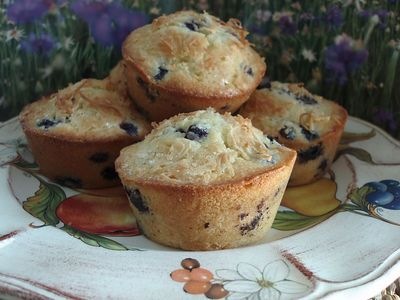
These little tarts are rich like pound cake but very crispy on the outside.
1 cup almonds
3 whole eggs
1/2 cup rice flour
1 cup sugar
1 drop of almond extract
1/2 cup blueberries
1/2 cup butter
Place almonds in food processor, grind to a fine meal.
Add all other ingredients except blueberries. Blend well.
Fill buttered muffin tins halfway. Drop 5 or 6 blueberries on top.
Bake about 17 minutes, until top is lightly browned.
Cool on rack completely, then remove from tins.
Takeoutwithout: Refuse, Retake and Reconsider
Posted: February 8, 2010 Filed under: Going Green; How and Why..., Non-Toxic Choices Leave a commentFrom Treehugger
by Lloyd Alter, Toronto  on 01.25.10

Americans toss out enough paper and plastic cups, forks and spoons every year to circle the equator 300 times, and K.B. Lee is trying to do something about it. He has founded Takeoutwithout to convince restaurants to encourage and accommodate people who bring their own containers.
Borden Communications and Design, a firm specializing in "eco-logical" services, put together the snappy graphics. TOWO has its own 3Rs, as explained by Ellen Moorhouse in the Star:
Refuse (Do you really need all of those straws, plastic cutlery and napkins?); Retake (Bring your own containers, cups and bags.); and Reconsider (Take a look at your eating habits, and maybe, like Lee, make some changes.)
It is a new campaign, where they are inviting restaurants to encourage people to bring their own containers (many resist, worried about health and safety) and urging patrons to cut back. It is perhaps a good first step, although I would rather see deposits on everything and producer responsibility.
Retake and Reconsider: Two more to add to our seven R’s. One might also try the 25 Take-Out Foods You Can Make at Home For Cheaper
But if you can’t do that, at least try to bring your own. More at Takeoutwithout
I say; take a glass jar, get a Wrap n Mat from Reusablebags.com, get some Stainless steel jars, cloth napkins…stop eating fast food.
Join the Slow Food Revolution!!! Think Traditional Human Diet with no fast food, nothing in cans or boxes, whole foods…chickens, veggies, butter, fats, fruits, grass fed beef. Compost what you don’t use, make great soil, grow more veggies…no waste….
London is Good Enough to Eat
Posted: February 8, 2010 Filed under: Food and it's Impact on Our Health 1 CommentFrom Treehugger

Image from mail on line
There is something so irresistible about these vegetable "foodscapes". Examining the detail and the ingenuity can provide endless minutes (surely not hours) of fun. The Houses of Parliament are built from asparagus, green beans and runner beans, mixed with baby sweet corn to depict the intricate stonework. Look out for the watermelon dome.
This depiction of London’s skyline took three weeks and used 26 different types of fruit and vegetables. Carl Warner and his team of five model makers call them still life pictures. They have an ulterior motive: they are promoting healthy eating as well as their art.

Images from mail on line
The London Eye has green beans as spokes and its pods are carefully crafted out of baby cherry tomatoes. Check out the radishes, runner beans, rhubarb and a lemon as well.

Then there’s the iconic Tower Bridge. It’s made made from runner beans, celery, and Shredded Wheat, and sits on pineapple bases.
Warner does moving pictures as well. The Caramel Sea is a sea of yummy sauce flowing gently over apple rocks and croissant cliffs. It’s all in good fun and you can buy the prints if you are really obsessed, or make your own.
It’s not that easy. First Warner sketches out a traditional landscape scene before introducing the food. Each scene is then captured in separate layers to prevent the food from wilting. He then uses computer technology to combine them into a single final print. To give a realistic 3-D feel to the photos, each still life is composed on an 8 foot by 4 foot table. The foreground is only about 2 feet across.
Cucumbers Have Sprouted! Finally, a Garden Update…
Posted: February 4, 2010 Filed under: Gardening Leave a comment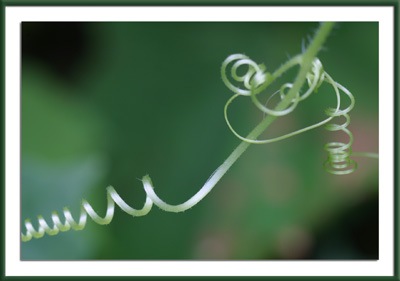 I’ve always liked cucumbers, not loved them..but enjoyed them. Just not to the degree to which I love , say…tomatoes..or onions.. until this year. As I have begun growing them, and making pickles…I have grown to love them. Mainly because they are such beautiful, delightful plants..to grow. They pop right up out of the soil, quickly…looking robust and they just burst forth in growth immediately…and they are so beautiful…the delicate leaves and tiny vines that twist around everything are such a gorgeous shade of green.
Then there are the flowers. The sweetest yellowiest delicate little things, they just make me happy to look at them. I grew them indoors last year, didn’t get much fruit…mainly because I didn’t get the hang of helping them pollinate..but I had hundreds of beautiful flowers in my living room!
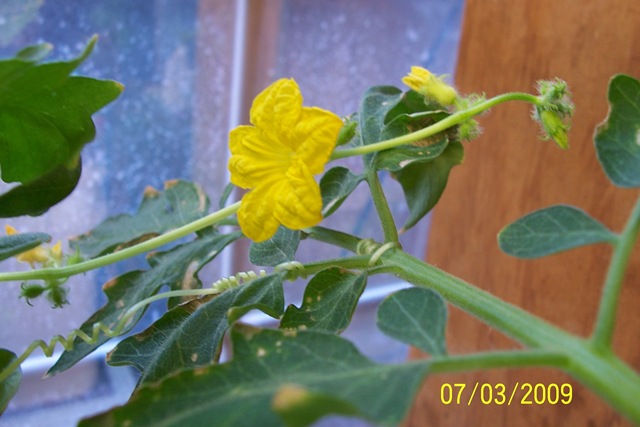
Then I sat a grow bucket on my front step…the plant loved it, it grew up a chain by my front door. All I had to do was reach out and grab one or two.
I used to think February was such a drab month, always overcast and cold…but now inside my house are seedlings popping out; Beefsteak and Roma tomatoes, cucumbers, Swiss chard, beets, scallions, Stevia, lettuces red and green. Outdoors the greens are recovering from the cold of a few weeks ago…

Gotta get these strawberries planted, I’m making growing bags out of burlap, like hanging shoe pocket things…will keep you posted…..


 Meal Delivery Service by Millie Barnes