Luscious Truffles- Low Carb!
Posted: March 31, 2013 Filed under: Food and it's Impact on Our Health, Recipes | Tags: #Healthy, #Low Carb, dairy free, Paleo Leave a comment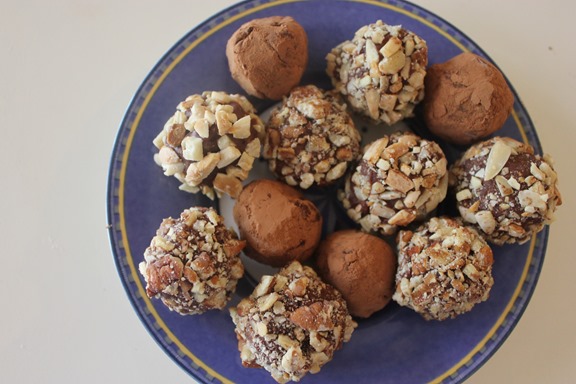
These luscious truffles are only 73 Calories apiece and get only 16% of their calories from carbs…this makes them a great Paleo snack. Use raw chocolate and get way more anti-oxidants!
Raw chocolate can promote cardiovascular function & health- The antioxidant power of flavonoids and essential minerals and vitamins found in cacao can support healthy heart functioning by lowering blood pressure, improving blood flow, lowering LDL cholesterol, and reducing plaque buildup on artery walls.
Raw chocolate Can Neutralize free radicals- High levels of antioxidants protect the body from a buildup of free radicals from sun exposure, pollution, cigarette smoking, etc., which may damage healthy body tissue giving rise to cancer and cardiovascular disease.
Truffles
2 cups (12 ounces) bittersweet chocolate, roughly chopped- preferably raw
1/2 cup coconut cream
1 tablespoons honey
2 Tablespoons Kahlua
1/2 teaspoons vanilla extract
Pinch salt
1 1/2 tablespoons unsalted butter, cut into 8 pieces and softened
For coating;
About 1 cup (3 ounces) raw cocoa powder
1 Teaspoon Stevia
About 1 cup of crushed nuts, if you’re using them
Lightly coat 8-inch baking dish with butter. Make parchment sling by folding 2 long sheets of parchment (or non-stick foil) so that they are as wide as baking pan. Lay sheets of parchment in pan perpendicular to each other, with extra hanging over edges of pan. Push parchment into corners and up sides of pan, smoothing flush to pan.
Microwave chocolate in medium bowl at 50 percent power, stirring occasionally, until mostly melted and few small chocolate pieces remain, 2 to 3 minutes; set aside. Microwave coconut cream in measuring cup until warm to touch, about 30 seconds. Stir honey, vanilla, and salt into coconut cream and pour mixture over chocolate. Cover bowl with plastic wrap, set aside for 3 minutes, and then stir with wooden spoon to combine. Stir in butter, one piece at a time, until fully incorporated.
Using rubber spatula, transfer ganache to prepared pan and set aside at room temperature for 2 hours. Cover pan and transfer to refrigerator; chill for at least 2 hours. (Can be stored, refrigerated, for up to 2 days.)
For coating; Sift cocoa and sugar through fine-mesh strainer into large bowl. Sift again into large cake pan and set aside. If using nuts, crush them up.
Gripping overhanging parchment, lift ganache from pan. Cut ganache into sixty-four 1-inch squares (8 rows by 8 rows). (If ganache cracks during slicing, let sit at room temperature for 5 to 10 minutes and then proceed.) Dust hands lightly with cocoa mixture to prevent ganache from sticking and roll each square into ball. Transfer balls to cake pan with cocoa mixture and roll to evenly coat. Lightly shake truffles in hand over pan to remove excess coating. Transfer coated truffles to airtight container and repeat until all ganache squares are rolled and coated. Cover container and refrigerate for at least 2 hours or up to 1 week. Let truffles sit at room temperature for 5 to 10 minutes before serving.
Why Fish Is Better Than Supplements: Omega-3s from Fish Vs. Fish Oil
Posted: March 19, 2013 Filed under: Food and it's Impact on Our Health | Tags: Paleo Leave a comment
Mar. 5, 2013 — Omega-3 fatty acids found in oily fish may have diverse health-promoting effects, potentially protecting the immune, nervous, and cardiovascular systems. But how the health effects of one such fatty acid — docosahexaenoic acid (DHA) — works remains unclear, in part because its molecular signaling pathways are only now being understood.
Toshinori Hoshi, PhD, professor of Physiology, at the Perelman School of Medicine, University of Pennsylvania, and colleagues showed, in two papers out this week in the Proceedings of the National Academy of Sciences, how fish oils help lower blood pressure via vasodilation at ion channels. In vascular smooth muscle cells, such as those that line blood vessels, ion channels that span the outer membrane of a cell to let such ions as sodium, calcium, and potassium in and out, are critical to maintaining proper vessel pressure.
The researchers found that DHA rapidly and reversibly activates these channels by increasing currents by up to 20 fold. DHA lowers blood pressure in anesthetized wild type mice but not in mice genetically engineered without a specific ion channel subunit.
In comparison, the team found that a dietary supplement, DHA ethyl ester, found in most fish oil pills fails to activate the same channels, and even antagonizes the positive effect of DHA from natural sources, on the cells. The DHA ethyl ester seems to compete with the natural form of DHA for binding sites on the ion channel.

The team concluded that these channels have receptors for long-chain omega-3 fatty acids, and that DHA — unlike its ethyl ester cousin — activate the channels and lower blood pressure.
The findings have practical implications for the use of omega-3 fatty acids as nutraceuticals for the general public and also for critically ill patients who may receive omega-3-enriched formulas as part of their nutrition.
Michael Bauer from Jena University Hospital in Germany, who studies sepsis in a clinical setting, says the findings may encourage physicians to have a closer look at the specific formulations given to sepsis patients as they may contain either the free omega-3 acid or the ester.
The findings also underscore the importance of obtaining omega-3 fatty acids from natural food sources such as oily fish.
Remember also that the less we heat these oils the healthier they are for us. So eat Sushi!!
Great Info To Have While Shopping!
Posted: March 17, 2013 Filed under: Food and it's Impact on Our Health, Non-Toxic Choices | Tags: #organic, Paleo 2 CommentsFrom Wholesome Style

Balancing Carbs with Fats and Proteins
Posted: March 13, 2013 Filed under: Food and it's Impact on Our Health, Recipes | Tags: Paleo 3 Comments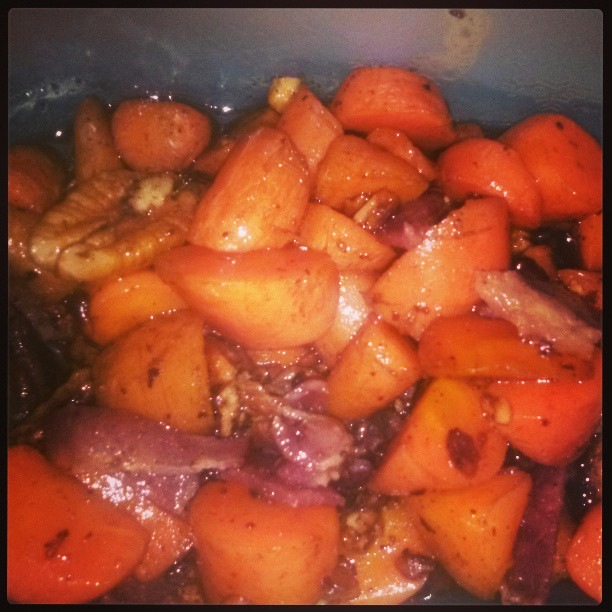
Eating a healthy diet that allows you to lose or maintain weight requires balancing carbohydrates, fats and proteins. You need 50% of your daily caloric intake of 2000% a day to come from fat, 30% from protein and 20% from carbs.
You should never eat carb alone. When eaten on their won your blood sugar rises rapidly, then plunges…leaving you tired and hungry. And craving more carbs. And it causes weight gain. Eat those carbs with plenty of healthy fats and protein…and you ingest and burn them nice and slow.
Though the following recipe is a carrot dish, and carrots being very high in carbs (97% of it’s calories are from carbs), when combin3ed with butter, pecans and bacon, it reduces the carb load to a acceptable percentage.
Glazed Carrots With Bacon And Pecans
4 slices of thick cut bacon
1/2 cut pecans- coarsely chopped
1 pound carrots- roll cut
2 tablespoons honey
1/2 cup chicken stock
1 teaspoon thyme
2 Tablespoons butter
2 teaspoons lemon juice
salt and pepper to taste
1. Cook the bacon in a 12-inch iron skillet over medium-high heat until crisp. Transfer the cooked bacon to a paper towel-lined plate to drain. Add the pecans and cook until fragrant and slightly browned, about 3 minutes. Transfer the pecans to the plate with the bacon.
2. Add the carrots, salt, honey, the chicken broth, and thyme to the skillet. Bring to a boil, covered, over medium-high heat. Reduce the heat to medium and simmer, stirring occasionally, until the carrots are almost tender when poked with the tip of a paring knife, about 7 minutes. Uncover, increase the heat to high, and simmer rapidly, stirring occasionally, until the liquid is reduced to about 2 tablespoons, 1 to 2 minutes.
3. Add the butter to the skillet. Toss the carrots to coat and cook, stirring frequently, until the carrots are completely tender, about 3 minutes. Off heat, add the lemon juice and toss to coat. Transfer the carrots to a serving dish, scraping the glaze from the pan into the dish. Season to taste with pepper, sprinkle the bacon and pecans on top and serve immediately.
Simple Chocolate Custard
Posted: February 14, 2013 Filed under: Recipes | Tags: Paleo, real food 2 Comments Nourished Kitchen posted this beautiful article today…
I would simply replace the heavy cream with coconut milk, mostly the thick part where it has separated.

As Valentine’s Day approaches, my thoughts turn to sweet things, chocolatey things (though I’ve a love for fresh oysters on Valentine’s Day, too). This week we’ll be celebrating with a Simple Chocolate Custard. It’s impossibly easy to make, and the sweetness of chocolate is tempered by eggs and cream which bring with it their luxuriant richness. It’s a delightful, real food indulgence.
Get the recipe for Simple Chocolate Custard here, and if you’re fond of sweet things, you might read the story behind these Mayan Chocolate Truffles, too.
Thai Spices Shrimp Salad With Asian Greens, Pesto Dressing
Posted: February 13, 2013 Filed under: Recipes | Tags: Paleo Leave a comment
1/3 cup dry roasted peanuts
2 Tablespoon rice vinegar
a few drop[s of toasted sesame oil
1/4 cup coconut milk
1/8 teaspoon red curry paste
1 pound shrimp
1/2 head Chinese cabbage
small head Bok Choy
4 each scallions
1/2 cup cilantro
1/2 teaspoon cumin
2 tablespoons lime juice
1) Grind peanuts in food processor, add rice vinegar, oil, cilantro, salt and pepper.
2) Heat coconut milk with red curry paste, cumin whisked in. add shrimp and cook until shrimp are bright pink. chill, in freezer, leaving shrimp in sauce.
3) Remove from freezer. drain, retaining coconut milk for a sauce.
4) When you cut the Bok Choy, separate the greens from the white part. steam white part of bok choy about 5 minutes, then add greens and Napa cabbage. just allow to get bright green, you want them crisp.
5) Spread greens on plate, top with sauce. Add pesto on top and garnish with scallion and cilantro.
Sautéed Chicken Breast with Lemon and Prosciutto Sauce
Posted: February 13, 2013 Filed under: Food and it's Impact on Our Health, Recipes | Tags: Paleo Leave a comment
2 organic chicken breasts, skin on
4 Tablespoons sweet rice flour
2 Tablespoons arrowroot powder
3 Tablespoons organic butter
2 teaspoons garlic, minced
1 tablespoon dried sage
3 Tablespoons lemon juice
3 Tablespoons butter
2 slices thick cut prosciutto, cubed
salt and pepper to taste
1) Generously season both sides of each breast with salt and pepper and dredge one at a time in flour placed in a shallow dish; shake gently to remove excess flour and set aside.
2) Heat butter and coconut oil in 12-inch heavy-bottomed skillet over high heat, swirling to melt butter. When foam subsides and butter begins to color, place cutlets in skillet, skinned side up. Reduce heat to medium-high and sauté without moving until nicely browned, about 4 minutes. Turn cutlets over and cook on other side until meat feels firm when pressed and clotted juices begin to emerge around tenderloin, 3 to 4 minutes.
3) Leaving fat in skillet, transfer cutlets to plate, cover loosely with foil, and keep warm in 200-degree oven while preparing the sauce.
For the Sauce:
1) Set skillet over medium heat. Add garlic and sage leaves; sauté until garlic is fragrant and sage crisps, 1 to 2 minutes. Add lemon juice and bring to boil, scraping up browned bits from bottom of skillet with wooden spoon. Add chicken stock, increase heat to medium-high and bring to boil, stirring occasionally, until reduced to 1/4 cup, about 8 minutes. Off heat, swirl in butter, and add prosciutto. Season to taste with salt and pepper. Spoon sauce over cutlets; serve immediately.
RIBBONED ZUCCHINI SALAD
Posted: February 13, 2013 Filed under: Recipes | Tags: Paleo Leave a comment
2 medium sized zucchini, ends trimmed
1 teaspoon salt
2 tablespoons extra-virgin olive oil
2 teaspoons finely grated fresh lemon zest
2 teaspoons fresh lemon juice
1 teaspoons Dijon mustard
1/2 teaspoon anchovy paste
1/4 teaspoon black pepper
1/2 cup loosely packed fresh basil leaves, torn into small pieces
1 small red onion, halved lengthwise and cut paper thin slices crosswise (1/2 cup)
Cut zucchini lengthwise into 1/8-inch-thick slices and then cut in very thin strips. and transfer to a colander set over a bowl. Sprinkle zucchini with salt and toss to coat. Let stand 5 minutes, then rinse under cold running water. Transfer zucchini to a clean kitchen towel and spread in 1 layer, then gently roll up towel to absorb excess water and let stand 5 minutes more.
Whisk together oil, zest, juice, mustard, anchovy paste, and pepper in a large bowl until combined.
Add zucchini, herbs, and onion and toss to coat. Serve immediately.
Nutrition For Life Seminar
Posted: February 10, 2013 Filed under: In The Kitchen with Millie- How To's | Tags: #Nutrition, Paleo Leave a comment
Paleo Tomato Ketchup
Posted: January 22, 2013 Filed under: Recipes | Tags: Paleo Leave a commentHere’s a ketchup recipe without sugar from The Paleo Network
by SUZ on DECEMBER 27, 2012
It is so hard to find a tomato ketchup recipe that doesn’t add in lots of sugar! Finally with a lot of tweaking, I’ve come up with my favorite Paleo tomato sauce recipe. A home made burger just isn’t the same without tomato ketchup.

Paleo Tomato Ketchup Ingredients:
- 15 Medium Tomatoes
- 2 Onions, Chopped and Fried in Coconut Oil
- 4 Garlic Cloves, Crushed and Fried in Coconut Oil
- 1 Red Capsicum (Bell Pepper)
- 100ml (4floz) Red Wine Vinegar
- 1 Teaspoon Celtic Sea Salt
- 1 Teaspoon Paprika
- Pinch Cayenne Pepper
- 1 Teaspoon Mustard Seeds
- 1 Teaspoon Black Peppercorns
- 6 Cloves
- 3cm (1 inch) Peeled & Chopped Ginger
Paleo Tomato Ketchup How To:
Chop up the tomatoes and capsicum and along with the onion and garlic, bring to the boil in a pan of the red wine vinegar.
Stir occasionally, allow the mixture to reduce to a thicker consistency.
Remove from the heat and puree in a blender to your desired level of smoothness, before returning to the pan over the heat.
In some muslin or a tea strainer, add the seeds, peppercorns, cloves and ginger and add to the pan.
Reduce the heat to simmer and cover until it thickens up to your liking.
Once ready, remove the muslin or strainer and bottle the ketchup and store in the fridge.


 Meal Delivery Service by Millie Barnes