Doctors Required to Study Nutrition ONLY 25 HOURS????
Posted: September 21, 2010 Filed under: Food and it's Impact on Our Health, In The Kitchen with Millie- How To's 1 CommentAnd most don’t meet that requirement!!
I was having a conversation recently with someone who just quit smoking. A friend of her commented that a doctor has told her the body cleans out nicotine from the system in 3 days. When I commented that that was simply not true, she said, “Well, I guess you think you know more about that than a doctor would?”
In a word, yes. In the early part of my career teaching applied nutrition I was very surprised that doctors were not educated about nutrition!
I’m no longer surprised…….
by the doctor who told me she was uninterested in teaching her patients to heal to the degree that I teach my clients…she said that they would not have to see her as often, which would affect her income.
by doctors who continue to tell patients that nutrition has no affect on treating and recovering from cancer.
by a doctor who got up and walked out of a class I was teaching on nutrition after commenting that if a person had a gene for cancer then NOTHING they did as far as lifestyle choices would keep them from getting cancer.
an Endocrinologist who recently told a client that he just didn’t know much about nutrition.
Mayo clinic recently told a client of mine (a young man who had gone into diabetic shock with no warning signs or history of diabetes)…to just keep eating what he had been all his life, just eat HALF THAT AMOUNT OF FOOD FOR THE REST OF HIS LIFE!
the doctor that told me my chronic ear infections were due to my getting my ears wet when I showered…and his suggestion? To put Silly Putty in my ears! A month later when I went off of dairy completely, that ear infection cleared up and I’ve NEVER had another one (going on 24 years now!)
I could go on and on with these stories…
Research has increasingly pointed to a link between the nutritional status of Americans and the chronic diseases that plague them. Between the growing list of diet-related diseases and a burgeoning obesity epidemic, the most important public health measure for any of us to take is watching what we eat.
Researchers from the University of North Carolina at Chapel Hill asked nutrition educators from more than 100 medical schools to describe the nutrition instruction offered to their students. While the researchers learned that almost all schools require exposure to nutrition, only about a quarter offered the recommended 25 hours of instruction, a decrease from six years earlier, when almost 40 percent of schools met the minimum recommendations. In addition, four schools offered nutrition optionally, and one school offered nothing at all. And while a majority of medical schools tended to intersperse lectures on nutrition in standard, required courses, like biochemistry or physiology, only a quarter of the schools managed to have a single course dedicated to the topic.
Vitamin D deficiency now so widespread that rickets is on the rise once again
Posted: March 15, 2010 Filed under: Food and it's Impact on Our Health, In The Kitchen with Millie- How To's 1 CommentSubmitted by vermont on March 14, 2010
 (NaturalNews) A clinical review paper published in the British Medical Journal is warning the public that widespread vitamin D deficiency is resurrecting the once-obsolete disease called rickets. According to Professor Simon Pearce and Dr. Time Cheetham, authors of the paper, people are getting far too little sunlight exposure which is necessary for the body to produce adequate levels of vitamin D.
Nowadays, children spend most of their time indoors staring at computer and television screens rather than playing outside in the sunlight. On the rare occasion that they venture outside, zealous parents are quick to apply UV-blocking sunscreen that prevents the sun’s useful UVB rays from penetrating their skin and producing vitamin D. The result is an epidemic of vitamin D deficiency that is leading to all sorts of illness and disease.
Rickets, a disease in which a person’s bones do not properly develop and harden, results when a person is getting too little vitamin D and most likely not enough calcium. The U.S. Recommended Daily Allowance (RDA) for vitamin D is a mere 400 IU, an amount that is said to be adequate for preventing rickets.
To put this amount into perspective, however, exposure to the summer sun for about 20 minutes is enough to produce up to 20,000 IU of vitamin D in the body. At this level, far more optimal health can be achieved. Yet the fact that children are beginning to develop rickets suggests that they are not even getting 400 IU a day, an amount that should be relatively easy to attain through a moderately healthy diet or a few minutes in the sun every day.
In the U.K., there are several hundred cases of rickets reported every year. According to statistics, more than 50 percent of the adult population in the U.K. is deficient in vitamin D as well. During the winter and spring months, more than 15 percent experience severe deficiency.
Researchers suggest that people with darker skin pigmentation are at a higher risk for rickets because they do not assimilate vitamin D from the sun’s UVB rays as easily as those with lighter skin do. Some experts believe that the changing ethnic profile of the U.K. may play a significant role in the onset of rickets while others point primarily to an overall lack of vitamin D among all ethnic groups.
Either way, the changing lifestyles among all people are partially to blame as people are not spending enough time outside and, when they do they are using too much sunscreen to obtain any sort of benefit from the sun. Overuse of sunscreen can be blamed on government health authorities, regulatory agencies, medical professionals, and mainstream media outlets that continually exaggerate the threat of developing skin cancer from sunlight exposure to the point that some people are afraid of getting any at all.
Sources for this story include:
http://www.guardian.co.uk/society/2…
http://www.naturalnews.com/028329_vitamin_D_rickets.html
Gluten Free Almond Berry Tarts
Posted: February 8, 2010 Filed under: In The Kitchen with Millie- How To's Leave a comment
These little tarts are rich like pound cake but very crispy on the outside.
1 cup almonds
3 whole eggs
1/2 cup rice flour
1 cup sugar
1 drop of almond extract
1/2 cup blueberries
1/2 cup butter
Place almonds in food processor, grind to a fine meal.
Add all other ingredients except blueberries. Blend well.
Fill buttered muffin tins halfway. Drop 5 or 6 blueberries on top.
Bake about 17 minutes, until top is lightly browned.
Cool on rack completely, then remove from tins.
How to Protect Yourself Against Cancer With Food (The Only Way, Actually!)
Posted: January 28, 2010 Filed under: Food and it's Impact on Our Health, In The Kitchen with Millie- How To's 1 CommentI was reading an article on cancer in the New York Times the other day when this paragraph jumped out at me.. I did a double take. The last part of the sentence made me mad.
“So some researchers are taking a fresh look at ideas that were dismissed as folklore — a blow to the breast might spur cancer, an infection might fuel cancer cells, a weak immune system might let cancer spread.”.
Folklore that a weak immune system lets cancer spread? They have to be kidding! What ELSE would let a cancer spread?
Our protection against disease is a healthy immune system. A healthy immune system is maintained by meeting our nutrient needs.
A vegetarian diet does NOT protect us from cancer; it is devoid of the proper fats we need to build an immune system. It is also far too high in carbohydrates. It takes 2000 calories a day from whole foods, not grains, products, sugar, food colorings, added hormones.
Those 2000 calories a day should be composed of approximately 50% fat, of which 75% of that fat should be from organic saturated fats. 30% should be from HIGH QUALITY protein; grass fed meat, free range chickens, eggs. It should include rich meat stocks, coconut oil, raw butter. The amount of carbohydrates (and I mean ONLY vegetables and fruit, NOT grains)) should make up 20% of our daily intake.
THIS is the only way to protect ourselves from cancer, and it is the only way to heal from cancer. Our medical system (notice I do not call it a healthcare system!), has no idea what great nutrition is; they are still screaming low-fat, vegetarianism, caloric restriction, eating high amounts of vegetables and fruits. We are a nation of fat, sick, unhealthy people. The only way to change this is to stop eating products and get back to eating real, whole, unprocessed food.
Here’s what The Weston Price Foundation has to say about preventing cancer;
How to Protect Yourself Against Cancer With Food
Once a rare disease, cancer is now widespread, affecting as much as one-third of the population. The rise in cancer in the West has paralleled the rise in factory farming and the use of processed foods containing vegetable oils and additives.
Orthodox methods for treating cancer (radiation and chemotherapy) do not prolong life. The best approach to cancer is prevention.
Traditional diets, containing animal and plant foods farmed by nontoxic methods, are rich in factors that protect against cancer. Many of these protective factors are in the animal fats.
Vegetarianism does not protect against cancer. In fact, vegetarians are particularly prone to cancers of the nervous system and reproductive organs.
Nutrients in Whole Foods that Protect Against Cancer
Vitamin A: Strengthens the immune system. Essential for mineral metabolism and endocrine function. Helps detoxify. True vitamin A is found only in animal foods such as cod liver oil; fish and shellfish; and liver, butter and egg yolks from pasture-fed animals. Traditional diets contained ten times more vitamin A than the typical modern American diet.
Vitamin C: An important antioxidant that prevents damage by free radicals. Found in many fruits and vegetables but also in certain organ meats valued by primitive peoples.
Vitamin B6: Deficiencies are associated with cancer. Contributes to the function of over 100 enzymes. Most available from animal foods.
Vitamin B12: Deficiencies are associated with cancer. Found only in animal foods.
Vitamin B17: Protects against cancer. Found in a variety of organically grown grains, legumes, nuts and berries.
Vitamin D: Required for mineral absorption. Strongly protective against breast and colon cancer. Found only in animal foods such as cod liver oil, lard, shellfish and butterfat, organ meats and egg yolks from grass-fed animals. Traditional diets contained ten times more vitamin D than the typical modern American diet.
Vitamin E: Works as an antioxidant at the cellular level. Found in unprocessed oils as well as in animal fats like butter and egg yolks.
Conjugated Linoleic Acid (CLA): Strongly protective against breast cancer. Found in the butterfat and meat fat of grass-fed ruminant animals.
Cholesterol: A potent antioxidant that protects against free radicals in cell membranes. Found only in animal foods.
Minerals: The body needs generous amounts of a wide variety of minerals to protect itself against cancer. Minerals like zinc, magnesium and selenium are vital components of enzymes that help the body fight carcinogens. Minerals are more easily absorbed from animal foods.
Lactic Acid and Friendly Bacteria: Contribute to the health of the digestive tract. Found in old fashioned lacto-fermented foods.
Saturated Fats: Strengthen the immune system. Needed for proper use of the essential fatty acids. The lungs cannot function without saturated fats. Found mostly in animal foods.
Long-Chain Fatty Acids: Arachidonic acid (AA), eicosapentaenoic acid (EPA) and docosahexaenoic acid (DHA) help fight cancer on the cellular level. They are found mostly in animal foods such as butter, organ meats, cod liver oil and seafood.
Co-enzyme Q10: Highly protective against cancer. Found only in animal foods.
Compounds in Processed Foods that Can Cause Cancer
Trans Fatty Acids: Imitation fats in shortenings, margarines and most commercial baked goods and snack foods. Strongly associated with cancer of the lungs and reproductive organs.
Rancid fats: Industrial processing creates rancidity (free radicals) in commercial vegetable oils.
Omega-6 fatty acids: Although needed in small amounts, an excess can contribute to cancer. Dangerously high levels of omega-6 fatty acids are due to the overuse of vegetable oils in modern diets.
MSG: Associated with brain cancer. Found in almost all processed foods, even when "MSG" does not appear on the label. Flavorings, spice mixes and hydrolyzed protein contain MSG.
Aspartame: Imitation sweetener in diet foods and beverages. Associated with brain cancer.
Pesticides: Associated with many types of cancer. Found in most commercial vegetable oils, fruit juices, vegetables and fruits.
Hormones: Found in animals raised in confinement on soy and grains. Plant-based hormones are plentiful in soy foods.
Artificial Flavorings and Colors: Associated with various types of cancers, especially when consumed in large amounts in a diet of junk food.
Refined Carbohydrates: Sugar, high fructose corn syrup and white flour are devoid of nutrients. The body uses up nutrients from other foods to process refined carbohydrates. Tumor growth is associated with sugar consumption.
So here, is what a perfect day ,nutritionally ,would look like;
2 organic eggs, fried or scrambled with butter
2 slices turkey bacon
½ cup blueberries
3 chicken legs
1 cup chicken stock
2 cups Swiss chard, sautéed with onions and butter
2 slices tomato
7 ounce grass fed steak
1 cup sweet potato with butter
1 cup French onions soup made with beef stock
2 cups beet greens sautéed with onions and coconut oil
Here is the nutrient levels for this day. As you can see, there is slightly more than 600 mg. of Vitamin C just from food, almost 70,000 IU of Vitamin A, 141% of needed calcium, 481% of needed iron! I challenge you to show me a perfect day from a Standard American Diet (SAD), or a vegetarian diet that can stack up to this amount of great nutrition!
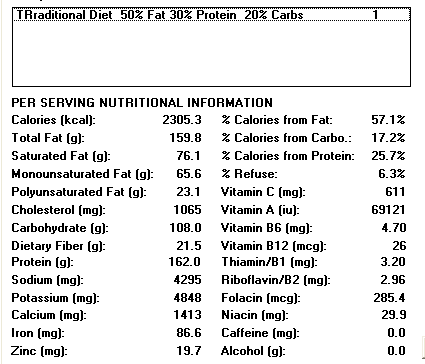

I recently took our governments Food Pyramid and composed a day based on thier recommendations. They say emphasize plant based proteins and keep our saturated fats to a minimum,they recommend 5 servings of grains a day, tell us to limit red meat and butter. I could not keep the calories to 1800 (thier recommendation) AND come anywhere near getting enough nutrition! Carbs came out to 60% of the calories, vegetable fats made up far too much of the fat content (almost 80%), Vitamins A, D, E and C were all low.
It takes fats and proteins from healthy, organic choices to build an immune system. Americans are unhealthy and drastically overweight on our governments recommendations. Lacking enough nutrition in our daily food intake leaves us hungry and without enough energy to run on. It causes us to crave more food, the wrong foods.
We cannot build healthy bodies with intact immune systems on a low fat diet. The fats are crucial, they contain the depth of nutrients we need; enough Vitamins A,D and E to build that immune system that will protect us from cancer.
Blueberries Pack a Nutritional Wallop
Posted: January 26, 2010 Filed under: Food and it's Impact on Our Health, In The Kitchen with Millie- How To's Leave a commentFrom the NYTimes;
By MARTHA ROSE SHULMAN
 Published: January 25, 2010
Blueberries are the king of fruits when it comes to micronutrients. They may not have the vitamin C of oranges and grapefruit, or the potassium found in bananas. But blueberries do have an abundance of phytonutrients, whose strong antioxidant and anti-inflammatory properties, some scientists believe, may help protect against heart disease, colon cancer and other maladies.
The beneficial phytonutrients in blueberries are anthocyanins, a type found in other fruits and vegetables with red, blue and purple pigments. Scientists use a test called the O.R.A.C. (short for oxygen radical absorbance capacity) to rate the antioxidant capacity in foods, and by this measure blueberries always come out on top. So if red wine is off limits and beets just aren’t your thing, try adding a half cup of blueberries to your cereal or yogurt in the morning, throw a half cup of frozen blueberries into your breakfast smoothie.
Millie; I think a smoothie is far too many carbs at once, especially for breakfast. I usually have a handful of blueberries with my organic eggs and turkey bacon. That way the carbs in your breakfast are balanced with enough fat and protein…always a great thing, especially if you struggle with your weight. I also cook down a few cups of blueberries and use a tablespoon or so in the coconut milk yogurt I make. Click here for the very easy recipe for making coconut milk yogurt.
Make Drool-Worthy Bacon Cups for Your Holiday Party
Posted: January 3, 2010 Filed under: In The Kitchen with Millie- How To's Leave a commentFrom LifeHacker
 When it comes to party appetizers, pigs in a blanket are yesterday’s news. If you really want to wow your guests, we have two words for you: bacon cups.
Make sure you have lunch before you check out home project weblog Not Martha’s post on how to make these knock-your-socks-off bacon cups, because you will get hungry. The author experimented with different ways to weave mini bacon baskets together and plop them on the bottom of a foil-lined muffin tin to hold their shape in the oven.
She went through loads of bacon and tried several methods before landing on the perfect way to make two different sized baskets. The larger size is perfect for holding a lettuce and tomato salad, while the smaller version is perfect for bite-size appetizers or finger food.
Making these little goodies is a bit more involved than just opening a bag of chips and dumping them in a bowl. Morgan, the post’s author, cautions:
This all took three hours and my house filled with smoke, but it was worth it. Be sure to put a cookie sheet with a rim below the cooking bacon in the oven, there was a lot of dripping fat and I saw a few flames. Watch your oven carefully!
We love her idea of making tiny BLTs out of the cups. What else would make a good filling? Scrambled eggs? Diced toast? More bacon? Lets hear your ideas in the comments.
How To;
I had an occasion calling for bacon themed food and my mind immediately turned towards the famed bacon mat. I needed something a little more single-serving though, so I decided to attempt bacon cups. In the bacon mat instructions there is mention of draping the mat over an overturned metal bowl and cooking it so that it would turn out in as a bowl shape. I decided to try using the backs of various muffin and mini cake pans, I ran out of bacon before I got to try as many as I would have liked so I’ll have to try more at a later date. Any excuse for more bacon.
I set the oven at 400 degrees and carefully formed foil over the back of the muffin pan. I did not coat with cooking spray, it would have been easier to remove but I suspect that the bacon would not have held the form as well if the foil was oiled and would have popped apart half way through cooking. On the other hand some bacon did break when I was peeling away the foil. I cooked the bacon, moving the pans around, until it was crisp looking and waited for it to cool before removing the foil and shaped bacon.
This all took three hours and my house filled with smoke, but it was worth it. Be sure to put a cookie sheet with a rim below the cooking bacon in the oven, there was a lot of dripping fat and I saw a few flames. Watch your oven carefully!
For cup shapes I used the back of this Wilton King-Size Muffin Pan. These are the width of jumbo muffins but are almost twice as tall (see this cupcake for a visual).
For the first try I used two layers of bacon on the sides and wove it like a basket, or at least like I imagine a basket would be woven:

I turned out to not be enough after the bacon cooked and shrank:


It held its structure very well though:

The next time I used three layers of bacon on the sides, this worked out better:


For as floppy as the bacon is when trying to weave it, it keeps its shape really well once cooked to the point that it is crisp.
I also tried to make small round bowls using the back of a Betty Crocker mini filled cake pan.

It shrank up quite a lot, leaving more of a shallow rounded shape:


Going for a breadless BLT I filled the cups with lettuce (the arugula was the best) and sliced cherry tomato. After some serious investigation it was determined that the shallow bowls were the easiest to eat as finger food, while the cups were dramatic.

I had hoped to make a mayo-based salad dressing to really fill out my the BLT theme but I completely ran out of time. Overall, a success!
35 Ways to Never Waste Food Again
Posted: December 2, 2009 Filed under: Gardening, In The Kitchen with Millie- How To's 2 Comments-
Simple ideas that make a big difference in your budget and help save resources too.
-
 By Colleen Vanderlinden
From Planet Green


"Use it up, wear it out, make do, or do without" is a favorite adage in both frugal and green circles, and it is something I strive to live by. One of the best ways to "use it up" is to think differently about our food and ways to avoid wasting it. Lloyd wrote a great post a while back about the statistics for how much food we waste in the U.S., and the numbers are, frankly, appalling. On average, we waste 14% of our food purchases per year, and the average American family throws out over $600 of fruit per year. Most of the food we waste is due to spoilage; we’re buying too much and using too little of it.
We’ve all had it happen: half the loaf of bread goes stale because no one wants to eat sandwiches today, and the grapes we bought as healthy snacks for the kids’ lunches languish in the crisper. With a little creativity, and an eye toward vanquishing waste in our lives, we can make use of more of our food before it goes to waste. Here are a few ideas for you.
Millie; The most important step you can take to save money is make everything from scratch! I make my own coconut milk yogurt, Kombucha tae, meat stocks, mayonnaise, granola (gluten free), salad dressings, literally everything- see How I eat and Shop Organically AND Economically.
Using Up Vegetables
1. Leftover mashed potatoes from dinner? Make them into patty shapes the next morning and cook them in butter for a pretty good "mock hash brown."
2. Don’t toss those trimmed ends from onions, carrots, celery, or peppers. Store them in your freezer, and once you have a good amount saved up, add them to a large pot with a few cups of water and make homemade vegetable broth. This is also a great use for cabbage cores and corn cobs.
Use all the food clippings in your traditional meat stocks; I keep them in a large zip-lock bag in the freezer. Onion skins are great for flavor, too!
3. Don’t toss broccoli stalks. They can be peeled and sliced, then prepared just like broccoli florets.
4. If you have to dice part of an onion or pepper for a recipe, don’t waste the rest of it. Chop it up and store it in the freezer for the next time you need diced onion or peppers.
5. Roasted root vegetable leftovers can be turned into an easy, simple soup the next day. Add the veggies to a blender, along with enough broth or water to thin them enough to blend. Heat and enjoy.
6. If you’re preparing squash, don’t toss the seeds. Rinse and roast them in the oven, just like you would with pumpkin seeds. The taste is pretty much the same.
7. Celery leaves usually get tossed. There’s a lot of good flavor in them; chop them up and add them to meatloaf, soups, or stews.
8. Use up tomatoes before they go bad by drying them in the oven. You can then store them in olive oil in the refrigerator (if you plan on using them within a week) or in the freezer.
9. Canning is always a good option. If you’re doing tomatoes, you can use a boiling water bath. If you’re canning any other type of veggie, a pressure canner is necessary for food safety.
10. Before it goes bad, blanch it and toss it in the freezer. This works for peas, beans, corn, carrots, broccoli, brussels sprouts, cauliflower, and leafy greens like spinach and kale.
11. Too many zucchini? Make zucchini bread or muffins. If you don’t want to eat the bread now, bake it and freeze it, then defrost when you’re ready to eat it.
12.Pickle it. Cucumbers are the first veggie most of us think of pickling, but in reality, just about any vegetable can be preserved through pickling.
Ideas for Cutting Down on Fruit Waste
13. Make smoothies with fruit before it goes bad. Berries, bananas, and melons are great candidates for this use-up idea.
14. Jam is really easy to make, and will keep for up to a year if you process the jars in a hot water bath. If you don’t do the water processing part, you can keep the jam in the refrigerator for a month, which is a lot longer than the fruits would have lasted.
I make apple butter and freeze it in amounts I will use in a week (about a cup).
15. Dry your fruit and store it in the freezer or in airtight containers.
16. Make fruit spreads.
17. Make a big fruit salad or "fruit kebabs" for your kids. For some reason, they seem to eat more fruit if it’s in these "fancier" forms.
18. Use up the fall bounty of apples by making applesauce or apple butter.
19. Don’t throw out those watermelon rinds! Pickled watermelon rind is a pretty tasty treat.
20. Make a fruit crumble out of almost any fruit you have on hand. Assemble and bake it now, or leave it unbaked and store it in the freezer for a quick dessert.
Make the Most of Meat
21. Use organic chicken carcasses and bones to make traditional meat stocks. (there is an art to making stocks, you do not just boil the bones!). Chicken Stock 101
22. Ditto for bones from beef! Beef Stock 101
23. The fat you trim from beef can be melted down and turned into suet for backyard birds. If it’s organic and/or grass fed beef bones, use it to fry with…it makes the best French fries in the world!!
24. Turn leftover bits of cooked chicken into chicken salad for sandwiches the next day.
25. Use leftover roast beef or pot roast in an easy vegetable beef soup the next day by adding veggies, water, and stock.
Herbs and How to Get the Most Out of Them
26. Chop herbs and add them to ice cube trays with just a little water. Drop whole cubes into the pan when a recipe calls for that type of herb.
27. You can also freeze herbs by placing them in plastic containers. Certain herbs, such as basil, will turn black, but the flavor will still be great.
28. Make pesto with extra basil or parsley.
29. Dry herbs by hanging them by their stems in a cool, dry location. Once they’re dry, remove them from the stems and store them in airtight containers.
Don’t Waste a Drop
30. Leftover coffee in the carafe? Freeze it in ice cube trays. Use the cubes for iced coffee or to cool down too-hot coffee without diluting it. You can do the same with leftover tea.
31. If there’s a splash or two of wine left in the bottle, use it to de-glaze pans to add flavor to whatever you’re cooking.
32. If you have pickle juice left in a jar, don’t pour it down the drain. Use it to make a fresh batch of refrigerator pickles, or add it to salad dressings (or dirty martinis).
33. You can also freeze broth or stock in ice cube trays, and use a cube or two whenever you make a pan sauce or gravy.
34. If there’s just a bit of honey left in the bottom of the jar, add a squeeze or two of lemon juice or hot water and swish it around. The lemon juice will loosen up the honey, and you have the perfect addition to a cup of tea.
35. Grow your own herbs, lettuce, tomatoes and green peppers. They are easy to grow and will save you a bunch!
36. Do not buy paper towels, buy more dish cloths and use them for years! Also use cloth napkins.
Finally….
37. If you can’t think of any way to use that food in the kitchen, compost it. Everything, even meat and dairy will work in a compost pile if you do thermal composting, and at least your extra food can be used for something useful. Such as growing more food!
PRETTY Quick Dutch Apple Crisp- gLUTEN fREE
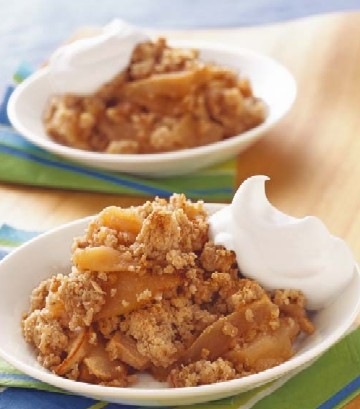
Posted: November 16, 2009 Filed under: In The Kitchen with Millie- How To's Leave a commentThis quick variation on Dutch Apple Pie eliminates the pie crust, allowing you to have dessert on the table in less than an hour.
Apple Filling
2 1/2 pounds Granny Smith apples (about 5 medium)
2 pounds McIntosh apples (about 4 medium)
1/4 cup granulated sugar
1/2 teaspoon ground cinnamon
1/8 teaspoon table salt
2 tablespoons unsalted butter
3/4 cup golden raisins
1/2 cup coconut cream or buy canned coconut milk, use just the creamy part, after letting the can settle.
Streusel Topping
1 cup Rice flour
1/4 cups Tapioca flour
1/3 cup packed light brown sugar
1/3 cup granulated sugar
1 tablespoon cornmeal
7 tablespoons unsalted butter , melted
1. Adjust oven rack to lower-middle position and heat oven to 425 degrees.
2. For the apple filling: Peel, quarter, and core apples; slice each quarter crosswise into pieces 1/4-inch thick. Toss apples, sugar, cinnamon, and salt in large bowl to combine. Heat butter in large Dutch oven over high heat until foaming subsides; add apples and toss to coat. Reduce heat to medium-high and cook, covered, stirring occasionally, until apples are softened, about 5 minutes. Stir in raisins; cook, covered, stirring occasionally, until Granny Smith apple slices are tender and McIntosh apple slices are softened and beginning to break down, about 5 minutes longer.
3. Set large colander over large bowl; transfer cooked apples to colander. Shake colander and toss apples to drain off as much juice as possible. Bring drained juice and coconut cream to boil in now-empty Dutch oven over high heat; cook, stirring occasionally, until thickened and wooden spoon leaves trail in mixture, about 5 minutes. Transfer apples to 8-inch square baking dish; pour reduced juice mixture over and smooth with rubber spatula.
4. For the streusel topping: Combine flour, sugars, and cornmeal in medium bowl; drizzle with melted butter and toss with fork until evenly moistened and mixture forms many large chunks with pea-sized pieces mixed throughout. Line rimmed baking sheet with parchment paper and spread streusel in even layer on baking sheet. Bake streusel until golden brown, about 5 minutes; cool baking sheet with streusel on wire rack until cool enough to handle, about 5 minutes. Sprinkle streusel evenly over pie filling. Set pie plate on now-empty baking sheet and bake until streusel topping is deep golden brown, about 10 minutes. Cool on wire rack and serve.
Brine Your Thanksgiving Turkey for Juicier Results
Posted: November 10, 2009 Filed under: In The Kitchen with Millie- How To's Leave a commentFrom LifeHacker

Thanksgiving’s just around the corner, which means many of us will try our hand at cooking a turkey in hopes we don’t dry it out. It only takes a little know-how in combination with some science to produce the juiciest results possible.
For those new to brining, the basic idea behind the process is that by soaking a meat that is low in fat (turkey, pork, chicken) in a mixture of salt and water, you’re increasing your meat’s ability to retain its moisture. Over at food weblog Serious Eats, they’ve put together the ultimate guide to brining your turkey to score the best and juiciest results for your Thanksgiving feast. The post does side-by-side testing of turkey breasts soaked in brine, regular water, and one not treated at all. As expected, the brined turkey loses the least of its weight when cooked and turns out juiciest.
If you’re a science nerd like us, you’ll appreciate the Alton Brown approach to brining this post takes, and your table is sure to benefit from it. If you swear by brining, let’s hear your best tips in the comments.
The Food Lab: Turkey Brining Basics [Serious Eats]
HOW TO MAKE ESSENE FLAT BREAD
Posted: October 28, 2009 Filed under: In The Kitchen with Millie- How To's Leave a commentFollowing is the recipe for Sprouted Flat Bread…I have tried several times to figure it out had some friends who were baker’s played around with sprouts…all we accomplished was was charred sprouts., I like making everything from scratch, so it is better quality and cheaper. Give this a try…
Use only fresh, organic ingredients. Don’t skimp on this. Purchase organic, whole wheat berries and soak 3 cups (not flour) in water for at least 8 hours. It’s best to do this over night. Soak them in a large stainless steel or ceramic bowl. In the morning, drain and discard the soak water. Rinse the soaked berries a couple of times again and drain well. Spread the berries out as best you can in the bowl, cover with a clean cloth and let it sit in a warm place. The berries will soon start to sprout. If they don’t, throw them away and locate another source. Down here in Louisiana (especially in the summer), the berries sprout in about 10 hours. During the winter it usually takes about 24 hours. It might take 48 hours in Canada, I don’t know. But you have to watch the wheat and you have to rinse it with clean water a couple of times a day. And as soon as it is ready you have to bake it right then. If you don’t catch it at the right time you will soon discover what living food is. Instead of sprouted wheat, you’ll have baby grass and it won’t make sweet, tasty bread. When the sprouts are ready, you will see the tiny root poking out of the seed. As soon as it is about 1/16" or 1/8" long, it is ready for the next step.
When the wheat sprouts are ready, rinse them one more time with clean water and drain. Place them in a Cuisinart food processor. (You need a strong food processor like the Cuisinart. It has a strong motor and you need that because you want the dough to "chase itself around". Process the berries well. Scrape the sides of the food processor if you have to, but blend the mixture well until it forms a sticky dough ball. If you want to make a sweeter bread, add 1/4 cup of raw honey and 1 teaspoon of Celtic salt. This is optional of course, but you may want to try it with these additions the first time, especially for kids. Traditionally, Essene Flat Bread contained only sprouted wheat and nothing else. During the sprouting process, the starch is converted into simple sugars which makes a sweet tasting dough. This kind of bread metabolizes slowly and helps you feel satisfied on less; it also improves digestion and elimination. This is quite an improvement over refined flours which produce complex carbohydrates that can elevate blood sugar levels.
Preheat your oven to 325 degrees F. Now spread the dough out onto a non-stick baking pan, such as T-FAL or some similar type of pan. Get a good non-stick (11" x 17" x 1") pan. That is the size of the ‘Wilton’ brand non-stick pan we use that we got from Wal-Mart. The three cups of sprouted wheat dough fits perfectly in this size pan, spread to 1/4 inch thickness. Don’t use aluminum. It will stick terribly and you’d have to use oil, and there is nothing worse for your health than heated oils.
Spread the dough to about 1/4 inches thick and bake it for no longer than 35 minutes at 325 degrees. When you place the pan in the preheated oven you may want to steam the oven with a little water and then shut the oven door right away. Don’t keep peeking at it, but do turn the pan at least once during the process to help the bread bake evenly.
Allow it to cool and set for several minutes before scoring the bread into 2"x2" squares. Remove the squares from the pan and store them in a plastic bag. Do not refrigerate! That will only make it stale really quickly. It can, however, be frozen. Best of luck with this and let us know how it goes.
From http://www.earthstar.newlibertyvillage.com/essenebread.htm


 Meal Delivery Service by Millie Barnes