The Flavonoid Rutin May Suppress Senescent Cells (slowing down aging of cells)
Posted: August 5, 2023 Filed under: Food and it's Impact on Our Health, Health and Happiness | Tags: #delivery, #glutenfree, #healthyeating, #Lactosefree, #mealdelivery, #MillieBarnes, #nutritioncoaching, #Ortega, #pescatarian, #Riverside, #SanMarco, #soyfree. #freedelivery, #Springfield, #vegetarian, #weightloss Leave a comment Ginko Bilboa
In this study, the researchers place rutin among the many other natural compounds that have demonstrated effectiveness in the lab against cellular senescence, including fisetin and quercetin. Rutin, a fat-soluble compound [1] that is also known as quercetin-3-O-rutinoside, has been found to have anti-inflammatory and antioxidant properties [2] and is produced by the well-known Ginkgo Biloba plant [3]. However, whether or not rutin does anything regarding senescent cells is a topic that has only been lightly explored.
For their experiments, the researchers chose a line of prostate stromal cells, PSC27, that was chemically driven senescent through administration of bleomycin. They then exposed these cells to 37 natural medicinal agents (NMAs) and observed the effects.
None of these NMAs were senolytic: they did not have the ability to destroy senescent cells. Rather, some of these agents showed signs of being senomorphic, which refers to their ability to suppress the effects of cellular senescence. Among the NMAs tested, rutin stood out in its ability to suppress the inflammatory factor interleukin 8 (IL-8).
Further testing revealed that rutin suppresses many other SASP factors as well, including other interleukins, CXCL3, and MMP3. An RNA analysis confirmed these results, showing that rutin had decreased the expression of these genes.
Interestingly, rutin did not decrease the amount of SA-ß-gal, a key biomarker of cellular senescence. The cells were just as senescent as they were before rutin administration; it was only the SASP that was suppressed.
The researchers also noted rutin’s effects against the acute stress-associated phenotype: the ASAP. Through multiple experiments and a process of elimination, they identified the specific biochemical pathway, finding that rutin prevents ASAP-activated ATM from activating HIF1a and TRAF6, two compounds that are key to the ASAP’s progression to the SASP.
Potential against cancer
The SASP has been documented to encourage malignancy in cancer cells [4]. Combining senescent prostate cells with prostate cancer cells confirmed these findings, showing that exposure to the SASP approximately doubled the invasiveness, cell number, and migration of multiple lines of prostate cancer cells. While rutin did nothing against cancer cells that had not been exposed to the SASP, combining rutin with the senescent and cancerous cells reduced the cancer’s proliferative abilities nearly to that of the SASP-unexposed cells.
With these findings in hand, the researchers then went to animal testing. Injecting combinations of cancer cells and other compounds into mice, the researchers found that, while still being effective, the chemotherapy drug MIT encourages cellular senescence and that the senescent PSC27 cells encourage tumor growth. Rapamycin was effective in blunting PSC27’s effects, but rutin was statistically even more effective.
Not a panacea but an addition
The researchers offer two potential uses for rutin. First, of course, is to quell the SASP in general, preventing out-of-control senescent cells from driving even more cells senescent, particularly in the context of aging. The second would be to include rutin in conventional chemotherapy treatments, limiting the SASP and the related cancer growth that such compounds can inadvertently promote. As always, clinical trials are necessary to determines if this works in people as well as mice.
Post Traumatic Stress Disorder: How Yoga and Physiotherapy Can Help in PTSD
Posted: July 22, 2023 Filed under: Health and Happiness Leave a comment
Bringing his expertise to the same, Dr Sumit Gupta PT, HOD- Department of Physiotherapy and Rehabilitation at Regency Health, highlighted that PTSD can also increase stress and anxiety leading to tension in the body but revealed how Yoga and physiotherapy is very helpful to prevent this condition:
1. So many time patient complaint pain. Physiotherapist set goals. Strengthening exercise, stability exercise, joint mobilisation, needling and motion exercise is help to reduce pain.
2. Breathing exercise – Physiotherapist can give their patient different breathing exercise (deep breathing, chest mobilisation, diaphragmatic breathing) which help to reduce stress or anxiety.
3.Anxiety-regular exercise is an effective method in management anxiety and stress follow a prescribe exercise plan will allow the body to release chemical that can help in reducing stress and anxiety.
He listed the benefits of regular exercise on PTSD symptoms as:
- A few positive results physiotherapy can have on your physical health including generate mobility and flexibility increase strength weight loss and improvement in cardiovascular health.
- Regular exercise can also have a positive effect on your mental health through the reduce the of depression and anxiety feelings.
A traumatic event can cause a person to experience post-traumatic stress disorder (PTSD), a mental health condition that is characterised by signs like anxiety, intrusive thoughts, nightmares and flashbacks. While therapy and medication are frequently used as traditional PTSD treatments, health experts insist that complementary modalities like Yoga and physiotherapy have shown promise in helping people manage their symptoms.
In an interview with HT Lifestyle, Dr Amit Deshpande, Founder and Director of Activist, shared, “Post-traumatic stress disorder (PTSD) is a debilitating mental health condition that can occur after experiencing or witnessing a traumatic event. Fortunately, Yoga and physiotherapy offer promising avenues for healing and managing PTSD symptoms. Yoga provides a holistic approach by combining physical postures, breathing exercises and meditation, helping to regulate the nervous system and reduce anxiety and stress.”
He gushed, “The mindful movements and deep breathing foster a sense of calmness and self-awareness, enhancing emotional resilience. Physiotherapy, on the other hand, focuses on restoring physical function and mobility through targeted exercises and manual therapy. It can address physical symptoms associated with trauma, such as muscle tension and pain. Additionally, both yoga and physiotherapy offer a safe and supportive environment, fostering a sense of community and connection, which can aid in the recovery process.”
Dr Rajeev Rajesh, Chief Yoga Officer at Jindal Naturecure Institute in Banglore, explained, “Yoga is a mind-body discipline with its roots in the ancient Indian subcontinent. It combines physical postures, breathing techniques and meditation. It has been discovered to be successful in lowering anxiety, enhancing sleep, and fostering general wellbeing. Yoga can give people with PTSD a safe place to re-connect with their body and process their trauma in a nurturing setting. Yoga’s physical asanas and deliberate breathing techniques work to control the autonomic nervous system, lowering hyperarousal and enhancing relaxation. Additionally, yoga’s emphasis on mindfulness encourages people to be in the present moment, which helps to lessen intrusive thoughts and improve self-awareness.”
He added, “On the other hand, physiotherapy focuses on enhancing functional movement and physical rehabilitation. Physiotherapy can help people with PTSD deal with the somatic symptoms, chronic pain, and other physical effects of trauma. Physiotherapy can assist people in releasing tension, restoring proper movement patterns, and improving body awareness through a variety of techniques like manual therapy, exercise, and body awareness training. Physiotherapy can indirectly reduce psychological distress and improve general wellbeing by addressing physical symptoms. Yoga and physiotherapy both provide holistic approaches to healing and can support existing PTSD treatments. It is crucial to remember that these methods might not be appropriate for everyone and should only be used under the supervision of trained experts. However, incorporating yoga and physical therapy into PTSD treatment plans can give patients more coping skills and tools to manage their symptoms and enhance their quality of life.”
7 ways to help extend the healthy years of your life
Posted: June 2, 2023 Filed under: Health and Happiness Leave a comment
“We’re living longer, but we’re kind of grinding our way through the last maybe 25% of our life with some form of health condition,” Macpherson says.
About 65% of people over the age of 60 are living with multiple health issues, he adds.
Here’s why Macpherson says our healthspan isn’t increasing at the same rate as our lifespan. Plus, seven ways you can help lengthen the healthiest years of your life.
Here are a few practices Macpherson encourages to add more years to your healthspan.
Don’t skip catching up with your doctor. Regularly check in and get blood tests annually to catch any potential health issues.
Ditch sugar. “We cause our body a lot of problems when it has to deal with too much sugar, and it ages us and affects our healthspan,” he says.
Maintain a healthy diet. Stick to a Mediterranean diet or plant-based diet, with meat occasionally for extra protein.
Sit less: “Sitting is bad, standing is good,” so consider a standing desk while you work, he suggests.
Exercise often. Walk every day if that’s all you can manage, but aim to exercise 30 minutes a day.
Remember to hydrate. “Generally healthy people” should drink four to six glasses of water each day, according to Harvard Health Publishing. Consult your doctor if you aren’t sure how much water you should be drinking daily.
Practice gratitude and mindfulness. “Gratitude, mindfulness and a great social circle, I think, can add years, if not a decade to your life,” says Macpherson.
What Is a Pescatarian and What Do They Eat?
Posted: June 26, 2022 Filed under: Food and it's Impact on Our Health, Health and Happiness | Tags: #delivery, #glutenfree, #healthyeating, #Lactosefree, #mealdelivery, #MillieBarnes, #Ortega, #pescatarian, #Riverside, #SanMarco, #vegetarian, #weightloss Leave a commentIn this article I will be discussing the benefits of Pescatarian Diet and a few pitfalls people run into in following it.
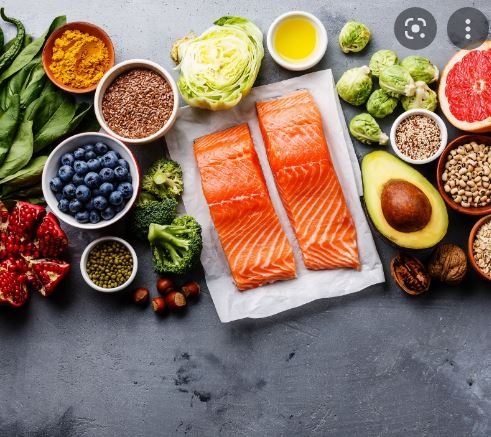
A pescatarian is someone who adds fish and seafood to a vegetarian diet. There are many reasons people choose to forgo meat and poultry, but still eat fish. Some people choose to add fish to a vegetarian diet so they can get the health benefits of a plant-based diet plus heart-healthy fish. Others might be trying to curb the environmental impact of their diet. For some, it might be simply a matter of taste.
Most simply, a pescatarian is someone who doesn’t eat meat, but does eat fish.
Of course, just as vegetarian diets can vary widely, so can pescatarian ones. It’s possible to eat a meat-free diet that’s full of processed starches, junk food and fish sticks, rather than a healthier one based on whole foods.
Why Do People Choose a Pescatarian Diet?
Health Benefits
There are many proven benefits to plant-based diets, including a lower risk of obesity and chronic diseases like heart disease and diabetes . According to research, you can get many of those protective benefits from a pescatarian diet too. One study found that women who were pescatarians gained 2.5 fewer pounds each year than women who ate meat.
And people who shifted their diet in a more plant-based direction gained the least amount of weight, showing that reducing your animal consumption may be good for you no matter your current eating patterns.
Additionally, one large study looked at people who ate meat rarely or were pescatarians. They had a 22% lower risk of dying from heart disease compared to regular meat-eaters.
Environmental Concerns
Raising livestock comes with a high environmental cost. According to the United Nations, raising livestock contributes to 15% of all human-made carbon emissions. In contrast, producing fish and seafood has a lower carbon footprint than producing any type of animal meat or cheese.
A 2014 study calculated that diets of fish eaters caused 46% less greenhouse gas emissions than the diets of people who ate at least a serving of meat a day.
What Do Pescatarians Eat?
A typical pescatarian diet is primarily vegetarian with the addition of seafood.
Pescatarians Do Eat
- Whole grains and grain products
(My Meal Delivery Service uses on gluten free grains) - Legumes and their products, including beans, lentils, soy and hummus. I personally do not use soy as I have a severe allergic reaction to it and use 0only Tempeh in the service. I use Coconut Aminos as a substitute for soy sauce) I do use miso and tempeh and miso are both fermented foods that aid in developing good gut flora and are easier to digest than other forms of soy)
- Nuts and nut butters, peanuts and seeds
- Seeds, including hemp, chia and flaxseeds
- Dairy, including yogurt, milk and cheese
(my service a lactose and gluten free. I use coconut milk, almond milk, cashew milk, etc. I make these myself as they are much richer in taste as well as having to chemicals added as boxed milks do) - Fruits
- Vegetables
- Fish and shellfish
- Eggs
Benefits of Adding Fish to a Vegetarian Diet
There are many health benefits of adding fish to a vegetarian diet.
Many people are concerned that completely excluding animal products or avoiding animal flesh could lead to a low intake of certain key nutrients (.In particular, vitamins B12, zinc, calcium and protein can be somewhat harder to get on a vegan diet (11Trusted Source, 13Trusted Source).
Adding seafood, including fish, crustaceans and mollusks, to a vegetarian diet can provide beneficial nutrients and variety. Fish is the best way to get omega-3 fatty acids (14Trusted Source).
Some plant foods, including walnuts and flaxseeds, contain alpha-linolenic acid (ALA), a type of omega-3 fat. However, this type of ALA is not easily converted to eicosapentaenoic acid (EPA) and docosahexaenoic acid (DHA) in the body.
DHA and EPA have additional health benefits, helping not just the heart, but also brain function and mood. In contrast, oily fish, such as salmon and sardines, contains EPA and DHA.
Boost Your Protein Intake
Humans only need about 0.8 grams of protein per 2.2 pounds (1 kg) of body weight daily to stay healthy. That’s about 54 grams for a 150-pound (68-kg) person. However, many people prefer to eat more protein than that.
A high-protein diet can be hard to achieve with just plant proteins, especially if you don’t want extra carbs or fat with your protein.
Fish and other seafood offer an excellent source of lean protein.
Seafood Is Packed With Other Nutrients
Beyond omega-3s and protein, seafood is rich in several other nutrients.
For instance, oysters are extremely high in vitamin B12, zinc and selenium. Just one oyster delivers 133% of the RDI for vitamin B12 and 55% of the RDI for zinc and selenium (18).
Mussels are also super rich in vitamin B12 and selenium, as well as manganese and the rest of the B vitamins (19).
White fish varieties such as cod and flounder don’t deliver much omega-3 fats, but they are a source of extremely lean protein.
For example, just 3 ounces of cod provide 19 grams of protein and less than a gram of fat. Cod is also an excellent source of selenium and a good source of phosphorus, niacin and vitamins B6 and B12 (20).
You’ll Have Extra Options
Being a vegetarian can be limiting at times.
Eating out at restaurants often leaves you with a not-so-healthy choice, with dishes like cheesy pasta as the main “veggie” option.
If health at least partially motivates your food choices, then becoming pescatarian will give you more options.
And fish is generally a good one, especially if you get it baked, grilled or sautéed, as opposed to deep-fried.
Drawbacks of the Diet
There are not many health drawbacks of this diet.
That said, some people may be more vulnerable to high intakes of fish.
Fish, especially larger species, can contain mercury and other toxins. For this reason, the US Food and Drug Administration (FDA) recommends that young children and women of childbearing age, especially pregnant and nursing women, should avoid tilefish, swordfish, shark and king mackerel.
These populations should also limit albacore and yellowfin tuna to one palm-sized serving or less per week. Light tuna is lower in mercury and it’s fine to eat 2–3 servings a week.
Since this diet is primarily vegetarian, it’s subject to some of the other traps that frequently accompany vegetarian diets. For instance, it can be easy to overeat carbs, especially if you rely on lots of processed grains.
Beyond-Paleo is Now Pescatarian!
Posted: June 24, 2022 Filed under: Food and it's Impact on Our Health, Health and Happiness | Tags: #meals #vegetarian #glutenfree #delivery #Jacksonville #nutrioncoaching #lactosefree #weightloss #immunesystem Leave a comment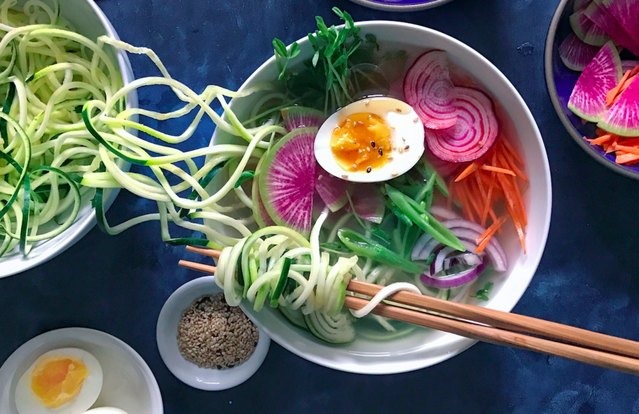


Thirty-Six years ago I started my Meal Delivery Service offering a Macrobiotic diet. I was newly divorced with a toddler and a nursing baby and a friend offered to let me take over her cooking service. I was involved with a group who met at the Granary Health Food Store in Orange Park once a week for meals. I accepted her offer and my clientele grew to thirty clients within a few months. At that point the owner of the Granary loaned me money to expand and I bought equipment and added a prep person and never looked back!
I was still on a search to figure out my health problems. I had had arthritis for years, I had been on medication for spastic colitis for 17 years and no one could give me any answers as to what was going on. Everybody told me I was eating healthy and just needed to keep doing that but that they had no answers for me. One doctor told me to eat lots of cheese and jello. I quickly learned that macrobiotics was not a great thing as it was primarily grain based and that definitely fed into the systemic yeast problem I had.
I transitioned off macrobiotic and went to offering a vegetarian diet that was lactose and gluten free. I did this for years. During this time, as I had since I was 15, I have studied nutrition. As there was no internet at the time I meant doctors who helped me study and gave me feedback as well as getting borrowing privileges from the universities in the town I live in. I also met someone during this time he started urging me to go off of Wheat and dairy. I didn’t see how that was possible and need a vegetarian diet and unfortunately my allergies kept getting worse. I finally added Seafood to my diet and started backing off on grains and went completely lactose in dairy-free. I finally got well. I have continued to research is slowly widened out to a more traditional diet the found that I felt better staying more grain based. I finally went back to a Pescatarian diet. Although my meal delivery service had been a traditional foods diet including meat I’m finding that my clientele has been moving more toward plant-based. So I am going back to a Pescatarian diet. It promotes long-term wellness; it includes seafood and fish, eggs, beans, nuts and seeds. You get all the benefits of vegetarian lifestyle but it includes lots of mega 3 fats which makes it far healthier than a plain vegetarian diet.
While I am aware that we need to be careful about not overfishing our oceans, we also need to take care of our own health if we are going to survive as a species and flourish. We humans absolutely have to have saturated fats, it is a building block of health and helps our immune system, our brains and our ability to absorb nutrients. I cook with ghee primarily because it gives us a depth of vitamin A D and E along with the mega fats from fish can meet our needs for the fats we need.
The price for food is getting scary, the impact a food production on our climate means that we should lean Almost 100% to work real food and not products. Having a moderate amount of non-gluten grains, Seafood, with a lot of fruits and vegetables including a good bit of raw food can meet our needs and balance taking care of our Earth.
My 40 Years of nutrition research, coupled with my extensive experience in cooking vegetarian food means the meals that I cook are flavorful and offer a great deal of variety. I have made a living cooking for Indian families, I’ve worked publicly as a chef offering Caribbean and Southwestern food. I cook several different styles a South American food as well as having extensive experience in cooking Japanese and Chinese food. It is hard to eat on a day-to-day basis depending or just standard American fare. While I offer a good bit of American food I also include a lot of different Cuisines giving you plenty of variety and taste.
I am very excited to be going back to offering a Pescatarian diet. I urge you to try the service and see if it’s something that fits for you.
Feel free to reach out with any questions you might have.
NIMBUS Intelligent Watering System
Posted: December 16, 2021 Filed under: Gardening, Going Green; How and Why..., Health and Happiness Leave a comment
NIMBUS Intelligent Watering System
Here is a great watering system for those of you who like container growing. The inventor is a friend of mine and I have been really impressed by this product.
Here’ s how it works;
NIMBUS Technology keeps your plants healthy by alternating between wet and dry cycles.
1. Rain / Water Reservoir. The wet cycle mimics a rainfall in nature.
2. Wet Cycle. This is when the NIMBUS will provide your plants roots with water.
3.Evaporation / Aeration. As the roots absorb the water, it begins the dry cycle.
4. Dry Cycle. The NIMBUS allows air to pass through the roots before the next wet cycle allowing for healthy root growth.
5. Repeat. The cycle begins again.
The Inventor;
MILTON B. WATSON
Born in Little Rock, Ark., in 1959, inventor Milton B. Watson was influenced by science and art at a young age. Growing up on his grandparents’ small farm in Jacksonville, Ark., each day he watched his parents water their chickens by filling a jar with water and turning it upside down in a pan. As the chickens drank, the water level was maintained at the mouth of the jar, a principle that would later become central to his first patented invention, the NIMBUS Intelligent Watering System™.
Watson’s knowledge of art and scientific principles allowed him to draft plans for a prototype almost immediately. Starting with his hand-drawings, he built custom acrylic prototypes in 2006. After his initial NIMBUS pot was rejected by an interiorscaper due to concerns over root rot, Watson catered to gardeners’ needs, altering NIMBUS’ design and function to eliminate common watering issues, as he wanted to introduce a product that was the total self-watering solution. The culmination of hard work and refinement came in 2010 when NIMBUS was granted a patent.
GIR Reusable Face Masks- the only mask I wear anymore!
Posted: January 3, 2021 Filed under: Health and Happiness, Non-Toxic Choices, Products Leave a comment
My GIR mask is now the only one I wear! They run a tad small and I ordered a medium, which fits me perfectly. BUT they run small!
All of you who follow my blog know that I very rarely endorse products. However I have to share this! We are 11 months in to the pandemic and I now have a fabulous collection of masks. But wearing glasses with them is tricky and so is he fact that every single mask has to be modified because my face and especially my nose is SO tiny. I wear children’s glasses and my nose width at the tip of my nose is only 1/2 an inch wide. I have long been a fan of GIR kitchen utensils. As a Chef and an environmentalist I do not use plastic and love the well designed silicone utensils.
And then when the epidemic started they added a mask to their repertoire. HOLY COW, it is perfect! The silicone seals the mask around my face, the ear straps are perfect and the cleaning is a cinch. Just wash with soap and hot water and you are set to go. All of my cloth masks are wearing out at this point, this solves that problem. My glasses do not fog up because no moist are is escaping EXCEPT through the vent in the front of the mask. That means I am breathing in and out completely filtered air!
They come in awesome colors; 
The filters are great but are pricy, so I use my own charcoal masks with 2 non-woven paper filters.
Masks and How to Wear Them Correctly!
Posted: November 24, 2020 Filed under: Health and Happiness, Products | Tags: #Covid, #JacksonvilleFL, #socially distance, #wearadamnmask Leave a comment This person is not wearing a mask correctly.
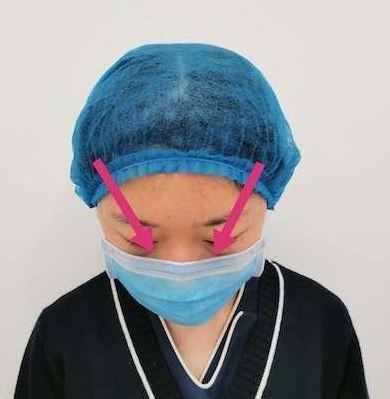 Do you see why? She is breathing unfiltered air!
It was with much trepidation that I went to the eye doctor a few days ago. Knowing there was no way to socially distance while being examined was very stressful and my anxiety was awful. Those fears were realized when I saw the doctor come out front with a mask that kept slipping off of her nose and had gaps on the side as the elastic was loose.
She attempted to approach me and I kept backing up across the room and finally I held my hand up, palm out, and aid I was deeply concerned about her mask and the fact that we were going to have to be close. She tightened it up and we went to the examining room. But when I asked her to stop letting her mask slip down…I dove in. I explained to her how I had gotten my mask to fit and why it was imperative for her to do so. I explained to her the ways I assure that my masks fit correctly.
So let’s talk about that. I am a very small person; I have to wear children’s glasses, I can still wear my baby jewelry…so you can imagine how frustrating finding a mask that fits well has been. When the pandemic hit I made my own, then a friend made some for me. But they didn’t fit snuggly enough. I added straps instead of ear loops. That helped. I added a casing to put nose pieces through that I made out of spacers for window screens. Works perfectly. Then I added darts on each side.
But my masks started wearing out from being washed so much. So I use my really snug. great fitting masks for things like going to the grocery store or doctors visits and have made it through just fine. I know for a fact that I was exposed to the virus at least, up close to someone who did not have a mask on and tested positive within a few days.
We finally were able to get really well made masks on Etsy and I have tweaked each one to my specifications. But as this goes on longer my masks started to show wear. I had to find an answer to those quick trips like getting gas or a quick run to the health food store. I use my masks ONLY ONCE so I ordered a pack of triple layer white cotton ear-looped masks from Amazon. I got a pack of 50. I added a dart to each side to make them fit better and ordered these three products from Amazon;



I was all set. I also use two non-woven paper filters under each mask. (blue shop towels available form Amazon (pricy) or the Auto parts store).
Then I ordered a bed from a friend who has a mattress store at the beach. He explained to me that his delivery person was a non-masker. I told him it was a deal breaker, that I would get him a mask. When he showed up he put one one. But I was left with a pack of 50 surgical masks that were HUGE on me.
So, I got to work. I put a dart on the chin and refolded the bottom with another pleat. I stapled them in place being careful to only staple on the outer parts that already had holes.
 See the dart on the chin and how I folded the pleat while making sure to catch the strap?
When I wear it now I use the extender to make it fit snug (the silicone straps) and I use two paper filters and a carbon filter. These are trimly easy to breath in and talk in but my glasses do not fog and I can yell or blow real hard and no fog. SO I know I breathing ONLY filtered air!
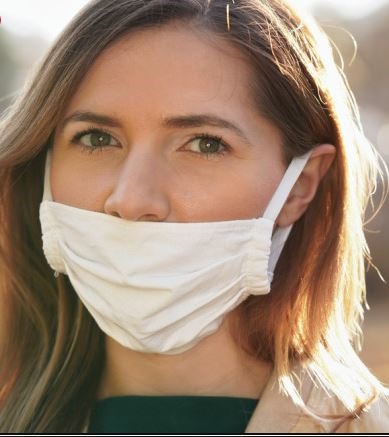
DON”T wear a mask like this;

12-Minute Exercise Bursts Offer Big Benefits
Posted: November 18, 2020 Filed under: Health and Happiness | Tags: #allergies, #atlanticbeach, #BeyondPaleo, #cancer, #energy, #energy #pontevedrabeach, #glutenfree, #healing, #higherenergy, #immunesystem, #JacksonvilleFL, #jax, #Lactosefree, #mealdeliveryservice, #nutritioncoaching, #weightloss Leave a comment
hort bursts of physical exercise induce changes in the body’s levels of metabolites that correlate to an individual’s cardiometabolic, cardiovascular, and long-term health, a study by Harvard-affiliated Massachusetts General Hospital (MGH) has found.
In a paper published in Circulation, the research team describes how about 12 minutes of acute cardiopulmonary exercise affected more than 80 percent of circulating metabolites, including pathways linked to a wide range of favorable health outcomes, thus identifying potential mechanisms that could contribute to a better understanding of cardiometabolic benefits of exercise.
“What was striking to us was the effects a brief bout of exercise can have on the circulating levels of metabolites that govern such key bodily functions as insulin resistance, oxidative stress, vascular reactivity, inflammation, and longevity,” said investigator Gregory Lewis, section head of Heart Failure at MGH and senior author of the study.
The MGH study drew on data from the Framingham Heart Study to measure the levels of 588 circulating metabolites before and immediately after 12 minutes of vigorous exercise in 411 middle-aged men and women.
The research team detected favorable shifts in a number of metabolites for which resting levels were previously shown to be associated with cardiometabolic disease. For example, glutamate, a key metabolite linked to heart disease, diabetes, and decreased longevity, fell by 29 percent. And DMGV, a metabolite associated with increased risk of diabetes and liver disease, dropped by 18 percent. The study further found that metabolic responses may be modulated by factors other than exercise, including a person’s sex and body mass index, with obesity possibly conferring partial resistance to the benefits of exercise.
Lower risk of depression with elevated exercise
35 minutes a day of physical activity may protect against new episodes, even in the genetically vulnerable
Exercise reduces chronic inflammation, protects heart, study says
After six weeks, mice had lower levels of inflammatory leukocytes
“Intriguingly, our study found that different metabolites tracked with different physiologic responses to exercise, and might therefore provide unique signatures in the bloodstream that reveal if a person is physically fit, much the way current blood tests determine how well the kidney and liver are functioning,” notes co-first author Matthew Nayor of the Heart Failure and Transplantation Section in the Division of Cardiology at MGH. “Lower levels of DMGV, for example, could signify higher levels of fitness.”
The Framingham Heart Study, which began in 1948 and now embraces three generations of participants, allowed MGH researchers to apply the same signatures used in the current study population to stored blood from earlier generations of participants. By studying the long-term effects of metabolic signatures of exercise responses, researchers were able to predict the future state of an individual’s health, and how long they are likely to live.
“We’re starting to better understand the molecular underpinnings of how exercise affects the body and use that knowledge to understand the metabolic architecture around exercise response patterns,” says co-first author Ravi Shah of the Heart Failure and Transplantation Section in the Division of Cardiology at MGH. “This approach has the potential to target people who have high blood pressure or many other metabolic risk factors in response to exercise, and set them on a healthier trajectory early in their lives.”
Lewis is associate professor of medicine at Harvard Medical School and director of the Cardiopulmonary Exercise Testing Laboratory at MGH. Nayor is a cardiologist at MGH and instructor of medicine at Harvard Medical School, and Shah is a cardiologist at MGH and assistant professor of medicine at Harvard Medical School. Other co-authors include Ramachandran Vasan, professor of medicine at Boston University and principal investigator of the Framingham Heart Study, and Clary Clish, senior director of Metabolomics at the Broad Institute of MIT and Harvard.
The study was supported by the American Heart Association’s Grand Challenge Award and the National Institutes of Health.


 Meal Delivery Service by Millie Barnes