If the Food’s in Plastic, What’s in the Food?
Posted: April 18, 2012 Filed under: Going Green; How and Why..., Non-Toxic Choices 1 CommentBy Susan Freinkel
In a study published last year in the journal Environmental Health Perspectives, researchers put five San Francisco families on a three-day diet of food that hadn’t been in contact with plastic. When they compared urine samples before and after the diet, the scientists were stunned to see what a difference a few days could make: The participants’ levels of bisphenol A (BPA), which is used to harden polycarbonate plastic, plunged — by two-thirds, on average — while those of the phthalate DEHP, which imparts flexibility to plastics, dropped by more than half.
The findings seemed to confirm what many experts suspected: Plastic food packaging is a major source of these potentially harmful chemicals, which most Americans harbor in their bodies. Other studies have shown phthalates (pronounced THAL-ates) passing into food from processing equipment and food-prep gloves, gaskets and seals on non-plastic containers, inks used on labels — which can permeate packaging — and even the plastic film used in agriculture.
Eau Good Water Bottle
Posted: April 10, 2012 Filed under: Going Green; How and Why..., Non-Toxic Choices Leave a comment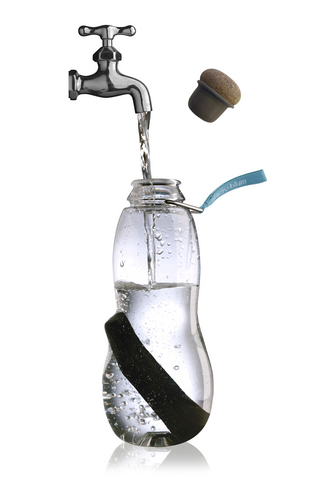
Binchotan active charcoal has been used in Japan as a water purifier since the 17th century. It reduces chlorine, mineralises the water and balances the pH. The binchotan active charcoal can be used for up to 6 months and amazingly recycles for many different uses after this.
Over 22 billion plastic water bottles are discarded around the world every year. We want to reduce this by making tap water taste better and encourage people to stop buying bottled water.
BPA free tritan, cork, stainless steel, silicon
includes x1 binchotan active charcoal filter (6 months life)
8.5 x 24cm – 800 ml / 27 floz


Anonymous Takes Down Monsanto.com
Posted: January 31, 2012 Filed under: Food and it's Impact on Our Health, Gardening, Going Green; How and Why..., Non-Toxic Choices Leave a commentPosted on January 21, 2012 by Sabra
In a thread of hack events from the Anonymous group, the most recent target has been Monsanto.com. Anonymous, which briefly knocked the FBI and Justice Department websites offline as well as Music Industry websites in retaliation for the US shutdown of file-sharing site Megaupload, is a shadowy group of international hackers.
Click here to see the videos- http://www.organiccommonsense.com/organic/anonymous-takes-down-monsanto-com/
Anonymous Message To Monsanto: We fight for farmers! – Video Transcript
To the free-thinking citizens of the world: Anonymous stands with the farmers and food organizations denouncing the practices of Monsanto We applaud the bravery of the organizations and citizens who are standing up to Monsanto, and we stand united with you against this oppressive corporate abuse. Monsanto is contaminating the world with chemicals and genetically modified food crops for profit while claiming to feed the hungry and protect the environment. Anonymous is everyone, Anyone who can not stand for injustice and decides to do something about it, We are all over the Earth and here to stay.
To Monsanto, we demand you STOP the following:
- Contaminating the global food chain with GMO’s.
- Intimidating small farmers with bullying and lawsuits.
- Propagating the use of destructive pesticides and herbicides across the globe.
- Using “Terminator Technology”, which renders plants sterile.
- Attempting to hijack UN climate change negotiations for your own fiscal benefit.
- Reducing farmland to desert through monoculture and the use of synthetic fertilizers.
- Inspiring suicides of hundreds of thousands of Indian farmers.
- Causing birth defects by continuing to produce the pesticide “Round-up”
- Attempting to bribe foriegn officials
- Infiltrating anti-GMO groups
Monsanto, these crimes will not go unpunished. Anonymous will not spare you nor anyone in support of your oppressive illegal business practices.
AGRA, a great example:
In 2006, AGRA, Alliance for a Green Revolution in Africa, was established with funding from Bill Gates and The Rockefeller Foundation.
Among the other founding members of, AGRA, we find: Monsanto, Novartis, Sanofi-Aventis, GlaxoSmithKline, Procter and Gamble, Merck, Mosaic, Pfizer, Sumitomo Chemical and Yara. The fact that these corporations are either chemical or pharmaceutical manufacturers is no coincidence.
The people of the world see you, Monsanto. Anonymous sees you.
Seeds of Opportunism, Climate change offers these businesses a perfect excuse to prey on the poorest countries by swooping in to “rescue” the farmers and people with their GMO crops and chemical pesticides. These corporations eradicate the traditional ways of the country’s agriculture for the sake of enormous profits.
The introduction of GMOs drastically affects a local farmers income, as the price of chemicals required for GMOs and seeds from Monsanto cripples the farmer’s meager profit margins.
There are even many cases of Monsanto suing small farmers after pollen from their GMO crops accidentally cross with the farmer’s crops. Because Monsanto has a patent on theri brand of seed, they claim the farmer is in violation of patent laws.
These disgusting and inhumane practices will not be tolerated.
Anonymous urges all concerned citizens to stand up for these farmers, stand up for the future of your own food. Protest, organize, spread info to your friends!
SAY NO TO POISONOUS CHEMICALS IN YOUR FOOD!  SAY NO TO GMO!
SAY NO TO MONSANTO!
We are Anonymous
We are legion
We do not forgive
We do not forget
Expect us
Stopping Monsanto
Posted: January 31, 2012 Filed under: Food and it's Impact on Our Health, Gardening, Going Green; How and Why..., Non-Toxic Choices 1 Comment
We all been outraged at Monsanto’s aggressive, even illegal, certainly immoral marketing and pollution practices lately. we have all bitched voraciously all over the Internet. Go HERE to read about their deplorable business practices.
So what can we do about it? Yes, sign the petitions, re-post, re-blog..spread the word! And then?
Again’ VOTE with your Dollars! Buy certified organic food, grow your own food… purchase heirloom seeds and organic seeds. Learn how to grow from the seeds of your own food you raise. I bought seeds 4 years ago, am still using the same seed packets or have seeds from my last crop of tomatoes, Malabar spinach, lettuces. The seed packets tell you to “broadcast the seeds” then thin the plants. That is ridiculous! Of coarse they want you to waste the seeds, and buy more next year. I sprout each seed or direct plant into perlite and then soil.
So let’s put Monsanto out of business, let’s do what they re most scared of; make our voices heard load and clear. AND stop supporting them,, buy organic food, cleaning products, clothing..etc. Stop supporting chemical companies, not just Monsanto. Stop buying plastic, stop getting shopping bags (bring your own), stop getting take-out.
Learn to live with less, buy better quality when you do. Re-use as much as possible.
It is possible to drastically lower your carbon footprint. This in turn impacts big business.
Every single choice you make has an impact.
And go to Millions Against Monsanto and speak out.
Why Sustainability Is Boring and Merely ‘Consuming Less’ Misses the Point
Posted: January 23, 2012 Filed under: Gardening, Going Green; How and Why... Leave a commentFrom Apartment Therapy
You’re probably wondering right now if this is Re-Nest you’re reading. Wait, what?Have we suddenly upped and thrown our morals to the wind? Isn’t Re-Nest supposed to be about conscious and responsible living and design at home? Don’t we believe that the choices we make—what we use, what we buy— have an impact on the planet? Aren’t we for reuse and against throwawyism? Yes, yes, and yes—which is exactly why sustainability is boring and merely ‘consuming less’ misses the point.
We’ve all heard the hot button words: green, eco-friendly, sustainable, recycled, upcycled, reclaimed, reused, non-toxic, all-natural… the list goes on. And I’m the first to admit that Re-Nest writers, myself included, use these descriptors all the time as a way of defining what is "good" and what is "bad" in this nebulous green world we’re trying to create for ourselves. (See? I did it again.)
But to be honest, I’m growing tired of my reliance on these words to define what is important. Because while these descriptors can be incredibly useful and informative, more often than not they’re excuses for bad design, condescending judgement and behavior (hence the top photo), or blatant greenwashing.
Are there ways we can "tweak" our thinking on this? I think so.
Note: I’m not saying we should abandon the old views entirely, but rather expand those views to include some of the broader new views in our understanding of what it means to, well, be green.

Old View: Don’t be a consumer.
New View: Buy fewer things of higher quality that you’ll value more.
It’s not about not consuming; it’s about mindful consuming. Bruce Sterling, the founder of the Veridian Design Movement (or "bright green environmentalism") wrote in his last Veridian note that "it’s not bad to own fine things that you like. What you need are things that you GENUINELY like. Things that you cherish, that enhance your existence in the world. The rest is dross."
Old View: Live minimally and frugally.
New View: Practice appropriatism.
As Frank Chimero writes, "Add things until it starts sucking, take things away until it stops getting better." It shouldn’t simply be about consuming less; instead, we should ask ourselves ‘What is better?’ and ‘What is appropriate?’ and we should celebrate both thrift and aspiration.
Old View: Sustainable, recycled, upcycled.
New View: Heirloom, repairable, upgradable.
Justin McGuirk in this article for The Guardian says, rightly so, that the wordsustainable is not an adjective you would use to describe something you love. "To sustain something is to keep it alive, pure and simple. It’s more of a duty than a passion," he writes, that "suggests the flatlining of human ambition." If sustainability is an aesthetic predominantly defined by brown, recycled wood and cardboard products, then it will ultimately fail to interest the majority of the population. Encourage design that appeals to people’s sense of aesthetic, not just to their sense of duty. The best green design should be able to improve your life and the planet without sacrificing style and comfort.
Old View: Reduce, reuse, recycle.
New View: Be against throwawayism.
Learn to love and take care of your stuff. Buy well and buy once. Get "radically improved everyday things," as Bruce Sterling says. The objects you use the most should be the highest quality you can afford.
Saving Money on Products and Food
Posted: January 22, 2012 Filed under: Going Green; How and Why... 1 CommentEstimates are that up to 15% of the toothpaste and other things we use in tubes are thrown in the landfill. Why? Because we do not squeeze the last bit out.
In your kitchen and in most restaurant kitchens, about 8 to 10% of the food in ketchup bottles and tubes are thrown away. Or when we scrap the bowl when baking or cooking, we do not get it all out.
What to about it? Get a pair of scissors for the bathroom and some slim spatulas for the kitchen.
I am partial to silicone spatulas, they work really well as they are very flexible, are safe to use in heat and last way longer than rubber ones.
Cut that tube of toothpaste or hair conditioner, use what you need, put the tube in a Zip-loc and use it all up.
Better for your wallet and the earth!
This Says It All
Posted: January 7, 2012 Filed under: Food and it's Impact on Our Health, Going Green; How and Why..., Non-Toxic Choices Leave a comment
USDA Quietly Approves New GMO Corn, While Touting Safety of Agent Orange Ingredient
Posted: January 5, 2012 Filed under: Going Green; How and Why..., Non-Toxic Choices 1 CommentFrom Lifehacker

Over the holidays, the USDA approved a strain of Monsanto’s genetically engineered corn that can now be planted freely in the environment and distributed throughout the U.S. food supply, with no oversight or efforts to track its safety.
Monsanto says the strain is drought-tolerant, but the USDA itself has actually found otherwise.
Instead, the agency ignored its own results as well as concerns from the public, which has little trust in the safety of the crop. Nearly 45,000 public comments were written in opposition to the particular corn variety and only 23 comments were written in favor, according to the Cornucopia Institute.
Approving an Agent Orange Chemical
Other GMO crops are also on the way. Cornucopia reports that the USDA has opened a public comment period for a soybean variety from Monsanto containing increased levels of an omega-3 fatty acid—which you hear a lot about as being healthy, but it doesn’t not naturally occur in soybeans.
The agency is also holding a public comment period for a GMO corn from Dow engineered to better resist the poisonous herbicide 2,4-D.
While the USDA attempts to assure the public that 2,4-D is safe, scientists have raised serious concerns about the safety of this herbicide, which was used as a key ingredient in “Agent Orange,” used to defoliate forests and croplands in the Vietnam War.
2,4-D is a chlorophenoxy herbicide, and scientists around the world have reported increased cancer risks in association with its use, especially for soft tissue sarcoma and malignant lymphoma. Four separate studies in the United States reported an association with chlorophenoxy herbicide use and non-Hodgkin lymphoma.
Mark Kastel from Cornucopia said, “the approval of a cultivar resistant to 2,4-D will cause an exponential increase in the use of this toxic agrichemical,” comparing it to Monsanto’s GMO corn that has become resistant to itsRoundup herbicide—and which has led to the evolution of superweeds that grow up to three inches per day.
Bad News for Public Health and Safety
The science of the effects of this chemcial is frightening:
Research by the EPA found that babies born in counties with high rates of 2,4-D application to farm fields were significantly more likely to be born with birth defects of the respiratory and circulatory systems, as well as defects of the musculoskeletal system like clubfoot, fused digits and extra digits. These birth defects were 60% to 90% more likely in counties with higher 2,4-D application rates.
Birth defects were also found to be more likely in babies conceived in the spring—when application of herbicides is at its highest.
There’s also a touch of irony that should not be overlooked, again from Cornucopia:
In its petition, Dow AgroSciences states that 2,4-D is increasingly important for chemical farmers because of the presence of weeds that have developed resistance to glyphosate, as a result of the widespread use of Monsanto’s genetically engineered glyphosate-resistant crops.
When Monsanto introduced glyphosate, it was touted as a safer and less toxic alternative to herbicides like 2,4-D. Now, an emerging body of scientific literature is raising serious concerns about the safety of glyphosate as well.
How Supermarkets Trick You Into Spending More Money
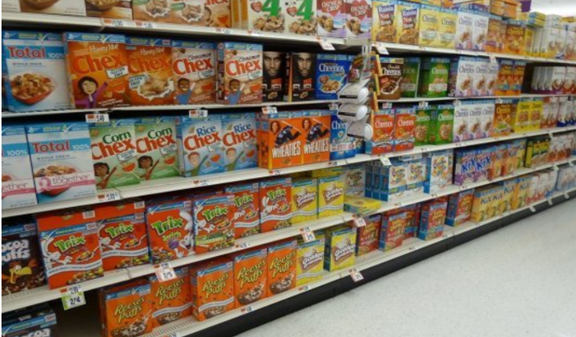
Posted: December 3, 2011 Filed under: Going Green; How and Why... Leave a commentRemember that sales is all about manipulation. There are many ways grocery stores trick you into buying more.
The best advice is;
- BUY WHOLE FOODS! Buy a whole chicken, cut it up yourself. The savings are tremendous. And you will have bones to make stock. Don’t buy convenience foods; you are paying dearly fpor that convenience.
- Make a list and stick to it.
- Buy proteins and fruits and veggies. Do not buy food in boxes, cans. It is not as good for you and is wasteful of the earths resources. PLUS, those cans have BPA, really bad for you.
Huffington Post has a great article on tricks to make you buy more, check it out HERE.
7 Ways To Reduce Corporate Influence In Our Lives
Posted: November 26, 2011 Filed under: Going Green; How and Why... Leave a comment
Living lives controlled by our own choices and not by those of large corporations can help us live more consciously and sustainably. Need a few tips to get you started down that path? Here are 7 ways to reduce the corporate influence on your life.
Frugally Sustainable‘s list of 7 things you can do to reduce the corporate influence in our daily lives is worth checking out. Here are 3 examples:
Don’t eat at corporate restaurants
Instead you can:
- Stay home.
- Learn to cook frugal and nourishing meals.
- And when we do go out for a treat, we can choose to support the local ma and pop joint.
Don’t buy corporate coffee
Instead you can:
- Find a small company that sells fair-trade, directly from sustainable farmers coffee and buy from them.
- Set the timer on the coffee pot while we’re getting ready for work and make your own at home.
- Stop drinking coffee altogether (yeah…okay that’s a stretch).
- Look for the the little local coffee shop and go there if we have to have a hit.
Don’t buy new clothing made by a corporation
Instead you can:
- Simply live with less. I ask myself all the time, "Why do I need 6 pairs of jeans, 20+ pairs of shoes, God only knows how many shirts, and 4 different jackets?" At some point I felt proud to own all this stuff, now I see it as a burden.
- Exclusively shop consignment for the whole family.
- Learn to create, hem, repair, and re-purpose our own clothing.
- Retrain our minds…buying that new, super cute dress will not bring me happiness!
• Read More: Find the other 4 tips over at Frugually Sustainable


 Meal Delivery Service by Millie Barnes