Butter IS Best!!!
Posted: July 27, 2009 Filed under: Food and it's Impact on Our Health Leave a commentMARGARINE OR BUTTER?
by Dr H.H.Nehrlich
Margarine was invented in France at the instigation of Napoleon III who wanted to find a cheap substitute for butter to feed the poor, the soldiers and the other ‘common’ people. When first marketed sales were slow as margarine was in direct competition with butter and it looked and tasted inferior. The main advantage seemed to be that it spread easily straight out of the cool house (later the refrigerator). However, in the early fifties when the "Cholesterol Bogeyman" was invented by Dr.Ancel Keyes, things began to improve. Margarine was then marketed as a health food. Eating it promised a longer life free of heart and blood vessel disease.
Today, the propaganda continues and supermarket shelves are overflowing with many different kinds of margarine. Shelf life is very long and it still spreads easily straight from the fridge. However, while in the early days it was made from whale oil, tallow or lard (and thus had considerable nutritional value), today it starts its life as cheap vegetable oil (often pesticide-soaked cottonseed oil); it is processed aggressively by repeated heating to extreme temperatures, by the addition of toxic chemicals and coloring agents. It is degummed, bleached and deodorized. However, during processing several undesirable things happen: While adding hydrogen gas to the oil mixture in order to ‘hydrogenate’ it, meaning to chemically change it into a more solid state, the natural cis configuration of fatty acids is changed to an unnatural ‘trans’ configuration. These high trans fat margarines have a higher melting point and practically keep forever. Since our bodies are not able to deal with these trans-fats properly the ‘funny fats’ or ‘phony fats’ do much serious damage to cell membranes, blood cells, blood vessels and they interfere with prostaglandin production. When trans fats are ingested the body responds by mounting an immune defensive reaction, practically creating a state of war in the system. As long ago as 1974 it was proven that margarine is a significant cause of atherosclerosis (blood vessel disease), high blood pressure and cancer. In Germany, trans fats are limited by law to less than 1% in any food, including fast foods. In Australia, some products contain over 40% trans fats.
Place a tub of margarine outside your house and you will find that no animals or insects show any interest. As to the health claims made – this cocktail of damaged, unnatural oils with a high content of toxic chemicals is in no way conducive to good health. As to its alleged positive effects on cholesterol: Some margarines do lower cholesterol in some people, however, the benefits of lowering cholesterol have been – to put it mildly- obscenely overstated.
BUTTER has been used for centuries. Because is a saturated fat, it is very stable. It also is totally natural, nutrient-rich product made up of a mix of many different fatty acids. It contains antimicrobial and antifungal substances as well as a very potent anti-cancer agent called conjugated linoleic acid (CLA). Butter contains lecithin and antioxidants including Vitamins A and E, also selenium. All are strong health-promoting nutrients.
Butter contains cholesterol, also a powerful antioxidant, which protects against heart disease (Yes, that is true!). Butter contains nearly 500 different fatty acids; each has its own role in nourishing the body. Thus, the nutrients in butter protect against heart disease, cancer and other degenerative diseases.
Butter helps to protect the thyroid gland as it contains iodine, it fights fat storage through CLA, and butter contains several growth factors and plays a critical role in the development of the nervous system and the brain. All the nutrients in butter make it an essential food, capable of supplying many of our daily nutrient needs.
Butter is not man-made, it is natural, of extremely high biological value and –compared to margarine-in a league that’s light years ahead. Butter can be made from just about any milk, e.g. buffalo, goat, sheep, camel…. In Canada and many parts of Europe goat butter is available in stores.
Butter tastes good, looks good and it sustains life.
Now you know. Margarine or butter – the choice is yours!
[Dr Nehrlich practices Chiropractic and Clinical (Orthomolecular) Nutrition in Bongaree, Bribie Island Queensland. He is chapter leader of the Weston A. Price Foundation, a worldwide organization whose goal it is to tell people the truth about Nutrition and Health.]
Old-fashioned can openers save energy and money.
Posted: July 24, 2009 Filed under: Food and it's Impact on Our Health Leave a commentFrom TheDailyGreen;
 It may not seem like a big energy user, but consider whether you really need to be using electricity to open the occasional can. Unless you have arthritis or are disabled, you can probably get by easily with a hand-crank model, and therefore reduce your environmental impact.
Electric can openers require more resources to build, and take up more space in landfills than old-fashioned models. Typical 175-watt brands use .01 to .18 kWh per month, for an energy cost of about one cent. That doesn’t sound like much, but if every person in America used one, that would be 36 to 648 million kWh of power, costing us $36 million.
Ironically, most people have to own both types of can openers anyway, because they need to be able to open cans during emergencies, when the power might be out, or just want something to take on picnics or out camping. Modern hand-crank openers are often ergonomically designed for comfort and efficiency, and are often just as fast as electrics, so they are a smart choice.
Read more: thedailygreen.com
I have never owned an electric can opener. About a month ago I began grinding my own coffee, by hand. And it no longer causes any muscle fatigue…though it still renders me wide awake way before the coffee gets ready. Funny thing is, I enjoy the coffee more.
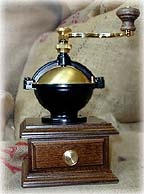 Sweet Marias for all things that matter about great coffee.
Throw That Non-Stick Cookware Away!
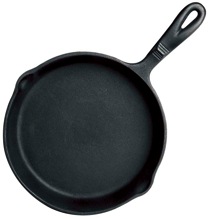
Posted: July 23, 2009 Filed under: Food and it's Impact on Our Health Leave a commentOld-Fashioned, lasts forever, black iron for frying and sautéing is the best anyway! It’s cheap, easy to care for, cooks like a dream…what more could you ask for? I love my grandmothers skillets she handed down to me, they are over 100 years old, and cook beautifully. I have a solid iron waffle maker too that I love (Thank you, Bim Willow!) that makes great waffles, real crispy!
From The Good Human;
What Teflon Is And Why You Should Avoid It.

You know you used it growing up even though your mom’s pans were all beat up and flaking. You know you have used it around your own house, and you know that restaurants use it to cook your food with. You may have even heard it was bad for you. But do you know why and just how bad?
Teflon is the trademarked name for Polytetrafluoroethylene (PTFE). This chemical, which makes things “non-stick” in its use here, should be classified as a “likely carcinogen” (cancer-causing substance) according to some advisers to the EPA. You would think that that should be enough to get the EPA to ban its use in tons of products, but alas no…they have just decided that the companies using Teflon should make it less likely to break down. Huh? Yep, in effect, everybody can keep using Teflon as long as they figure out a way to keep it from leeching into everything that it is used in…cookware, clothes, pizza boxes, microwave popcorn bags, etc. And companies have until 2015 to do so. I can’t wait to see what type of chemical they come up with to make it “safer” and what that new chemical will do to us.
See, within two to five minutes on a stove, cookware coated with Teflon can exceed temperatures at which the coating breaks apart and emits toxic particles and gases linked to thousands of pet bird deaths and an unknown number of human illnesses each year. Sounds safe, right? From the Environmental Working Group:
“In new tests conducted by a university food safety professor, a generic non-stick frying pan preheated on a conventional, electric stovetop burner reached 736°F in three minutes and 20 seconds, with temperatures still rising when the tests were terminated. A Teflon pan reached 721°F in just five minutes under the same test conditions (See Figure 1), as measured by a commercially available infrared thermometer. DuPont studies show that the Teflon offgases toxic particulates at 446°F. At 680°F Teflon pans release at least six toxic gases, including two carcinogens, two global pollutants, and MFA, a chemical lethal to humans at low doses. At temperatures that DuPont scientists claim are reached on stovetop drip pans (1000°F), non-stick coatings break down to a chemical warfare agent known as PFIB, and a chemical analog of the WWII nerve gas phosgene.“
Well that certainly sounds safe, no? A few years back we switched to stainless steel pots and pans and have not looked back. They might take a little bit longer to clean up, but it is worth it knowing I am not cooking any additional chemicals into my food, never mind releasing more dangerous gases into the air. If you have pans coated with Teflon, I would really advise you to get rid of them and buy stainless steel or cast iron ones; even the cheap ones from Target or somewhere like that are better than using the ones coated with Teflon. Multiple studies have shown how toxic this stuff is…would you like a side of polytetrafluoroethylene or perfluorooctanoic acid with your eggs? Did not think so.
GMOs Aren’t Safe! Don’t Let Obama Put GMO Boosters in Charge of Food Safety!
Posted: July 23, 2009 Filed under: Food and it's Impact on Our Health Leave a comment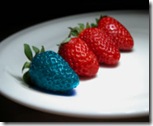 Genetically modified foods are not safe. The only reason they’re in our food supply is because government bureaucrats with ties to industry suppressed or manipulated scientific research and deprived consumers of the information they need to make informed choices about whether or not to eat genetically modified foods.
Now, the Obama Administration is putting two notorious biotech bullies in charge of food safety! Former Monsanto lobbyist Michael Taylor has been appointed as a senior advisor to the Food and Drug Administration Commissioner on food safety. And, rBGH-using dairy farmer and Pennsylvania Agriculture Secretary Dennis Wolff is rumored to be President Obama’s choice for Under-Secretary of Agriculture for Food Safety. Wolfe spearheaded anti-consumer legislation in Pennsylvania that would have taken away the rights of consumers to know whether their milk and dairy products were contaminated with Monsanto’s (now Eli Lilly’s) genetically engineered Bovine Growth Hormone (rBGH).
Please use the form below to send a message to President Obama, USDA Secretary Tom Vilsack, and Health and Human Services Secretary Kathleen Sebelius (oversees FDA) demanding Michael Taylor’s resignation, and letting them know that you oppose Dennis Wolff’s appointment.
Please sign the petition! GMOs Aren’t Safe! Don’t Let Obama Put GMO Boosters in Charge of Food Safety!
>>Learn More and sign the petition!!
Why Butter Is Better
Posted: July 22, 2009 Filed under: Food and it's Impact on Our Health Leave a comment
by Sally Fallon and Mary G. Enig, PhD
When the fabricated food folks and apologists for the corporate farm realized that they couldn’t block America’s growing interest in diet and nutrition, a movement that would ultimately put an end to America’s biggest and most monopolistic industries, they infiltrated the movement and put a few sinister twists on information going out to the public. Item number one in the disinformation campaign was the assertion that naturally saturated fats from animal sources are the root cause of the current heart disease and cancer plague. Butter bore the brunt of the attack, and was accused of terrible crimes. The Diet Dictocrats told us that it was better to switch to polyunsaturated margarine and most Americans did. Butter all but disappeared from our tables, shunned as a miscreant.
This would come as a surprise to many people around the globe who have valued butter for its life-sustaining properties for millennia. When Dr. Weston Price studied native diets in the 1930’s he found that butter was a staple in the diets of many supremely healthy peoples. Isolated Swiss villagers placed a bowl of butter on their church altars, set a wick in it, and let it burn throughout the year as a sign of divinity in the butter. Arab groups also put a high value on butter, especially deep yellow-orange butter from livestock feeding on green grass in the spring and fall. American folk wisdom recognized that children raised on butter were robust and sturdy; but that children given skim milk during their growing years were pale and thin, with "pinched" faces.
Does butter cause disease? On the contrary, butter protects us against many diseases.
Butter & Heart Disease
Heart disease was rare in America at the turn of the century. Between 1920 and 1960, the incidence of heart disease rose precipitously to become America’s number one killer. During the same period butter consumption plummeted from eighteen pounds per person per year to four. It doesn’t take a Ph.D. in statistics to conclude that butter is not a cause. Actually butter contains many nutrients that protect us from heart disease. First among these is vitamin A which is needed for the health of the thyroid and adrenal glands, both of which play a role in maintaining the proper functioning of the heart and cardiovascular system. Abnormalities of the heart and larger blood vessels occur in babies born to vitamin A deficient mothers. Butter is America’s best and most easily absorbed source of vitamin A.
Butter contains lecithin, a substance that assists in the proper assimilation and metabolism of cholesterol and other fat constituents.
Butter also contains a number of anti-oxidants that protect against the kind of free radical damage that weakens the arteries. Vitamin A and vitamin E found in butter both play a strong anti-oxidant role. Butter is a very rich source of selenium, a vital anti-oxidant–containing more per gram than herring or wheat germ.
Butter is also a good dietary source cholesterol. What?? Cholesterol an anti-oxidant?? Yes indeed, cholesterol is a potent anti-oxidant that is flooded into the blood when we take in too many harmful free-radicals–usually from damaged and rancid fats in margarine and highly processed vegetable oils. A Medical Research Council survey showed that men eating butter ran half the risk of developing heart disease as those using margarine.
Butter & Cancer
In the 1940’s research indicated that increased fat intake caused cancer. The abandonment of butter accelerated; margarine–formerly a poor man’s food– was accepted by the well-to-do. But there was a small problem with the way this research was presented to the public. The popular press neglected to stress that fact that the "saturated" fats used in these experiments were not naturally saturated fats but partially hydrogenated or hardened fats–the kind found mostly in margarine but not in butter. Researchers stated–they may have even believed it–that there was no difference between naturally saturated fats in butter and artificially hardened fats in margarine and shortening. So butter was tarred with the black brush of the fabricated fats, and in such a way that the villains got passed off as heroes.
Actually many of the saturated fats in butter have strong anti-cancer properties. Butter is rich in short and medium chain fatty acid chains that have strong anti-tumor effects. Butter also contains conjugated linoleic acid which gives excellent protection against cancer.
Vitamin A and the anti-oxidants in butter–vitamin E, selenium and cholesterol–protect against cancer as well as heart disease.
Butter & the Immune System
Vitamin A found in butter is essential to a healthy immune system; short and medium chain fatty acids also have immune system strengthening properties. But hydrogenated fats and an excess of long chain fatty acids found in polyunsaturated oils and many butter substitutes both have a deleterious effect on the immune system.
Butter & Arthritis
The Wulzen or "anti-stiffness" factor is a nutrient unique to butter. Dutch researcher Wulzen found that it protects against calcification of the joints–degenerative arthritis–as well as hardening of the arteries, cataracts and calcification of the pineal gland. Unfortunately this vital substance is destroyed during pasteurization. Calves fed pasteurized milk or skim milk develop joint stiffness and do not thrive. Their symptoms are reversed when raw butterfat is added to the diet.
Butter & Osteoporosis
Vitamins A and D in butter are essential to the proper absorption of calcium and hence necessary for strong bones and teeth. The plague of osteoporosis in milk-drinking western nations may be due to the fact that most people choose skim milk over whole, thinking it is good for them. Butter also has anti-carcigenic effects, that is, it protects against tooth decay.
Butter & the Thyroid Gland
Butter is a good source of iodine, in highly absorbable form. Butter consumption prevents goiter in mountainous areas where seafood is not available. In addition, vitamin A in butter is essential for proper functioning of the thyroid gland.
Butter & Gastrointestinal Health
Butterfat contains glycospingolipids, a special category of fatty acids that protect against gastro-intestinal infection, especially in the very young and the elderly. For this reason, children who drink skim milk have diarrhea at rates three to five times greater than children who drink whole milk. Cholesterol in butterfat promotes health of the intestinal wall and protects against cancer of the colon. Short and medium chain fatty acids protect against pathogens and have strong anti-fungal effects. Butter thus has an important role to play in the treatment of candida overgrowth.
Butter & Weight Gain
The notion that butter causes weight gain is a sad misconception. The short and medium chain fatty acids in butter are not stored in the adipose tissue, but are used for quick energy. Fat tissue in humans is composed mainly of longer chain fatty acids. These come from olive oil and polyunsaturated oils as well as from refined carbohydrates. Because butter is rich in nutrients, it confers a feeling of satisfaction when consumed. Can it be that consumption of margarine and other butter substitutes results in cravings and bingeing because these highly fabricated products don’t give the body what it needs?.
Butter for Growth & Development
Many factors in butter ensure optimal growth of children. Chief among them is vitamin A. Individuals who have been deprived of sufficient vitamin A during gestation tend to have narrow faces and skeletal structure, small palates and crowded teeth. Extreme vitamin A deprivation results in blindness, skeletal problems and other birth defects. Individuals receiving optimal vitamin A from the time of conception have broad handsome faces, strong straight teeth, and excellent bone structure. Vitamin A also plays an important role in the development of the sex characteristics. Calves fed butter substitutes sicken and die before reaching maturity.
The X factor, discovered by Dr. Weston Price (and now believed to be vitamin K2), is also essential for optimum growth. It is only present in butterfat from cows on green pasture. Cholesterol found in butterfat plays an important role in the development of the brain and nervous system. Mother’s milk is high in cholesterol and contains over 50 percent of its calories as butterfat. Low fat diets have been linked to failure to thrive in children –yet low-fat diets are often recommended for youngsters! Children need the many factors in butter and other animal fats for optimal development.
Beyond Margarine
It’s no longer a secret that the margarine Americans have been spreading on their toast, and the hydrogenated fats they eat in commercial baked goods like cookies and crackers, is the chief culprit in our current plague of cancer and heart disease. But mainline nutrition writers continue to denigrate butter–recommending new fangled tub spreads instead. These may not contain hydrogenated fats but they are composed of highly processed rancid vegetable oils, soy protein isolate and a host of additives. A glitzy cookbook called Butter Busters promotes butter buds, made from maltodextrin, a carbohydrate derived from corn, along with dozens of other highly processed so-called low-fat commercial products.
Who benefits from the propaganda blitz against butter? The list is a long one and includes orthodox medicine, hospitals, the drug companies and food processors. But the chief beneficiary is the large corporate farm and the cartels that buy their products–chiefly cotton, corn and soy–America’s three main crops, which are usually grown as monocultures on large farms, requiring extensive use of artificial fertilizers and pesticides. All three–soy, cotton and corn–can be used to make both margarine and the new designer spreads. In order to make these products acceptable to the up-scale consumer, food processors and agribusiness see to it that they are promoted as health foods. We are fools to believe them.
The best butter you can eat is raw, organic butter because pasteurization destroys nutrients.
Butter, Vitamin D and the X-Factor of Dr Price : by Royal Lee
Dr. Royal Lee – scientist, inventor and nutrition researcher – is probably best known as the founder of Standard Process Laboratories, which specializes in the formulation of natural vitamins derived from food sources. This article, from the Lee Foundation for nutritional Research, comes from the collection of Joseph Connolly, late husband of Patricia Connolly and one of the founders of the Price-Pottenger Nutrition Foundation.
The special nutritional factors present in butter as known up to 1942 are without question. It was shown that butter has the following characteristics of superiority over other fats and oleomargarine imitations:
The nation’s best source of vitamin A
Unit for unit, the vitamin A in butter was three times as effective as the vitamin A in fish liver oils. The natural vitamin D in butter was found 100 times as effective as the common commercial form of D (viosterol). Butter, prescribed by physicians as a remedy for tuberculosis, psoriasis, xerophthalmia, dental caries, and in preventing rickets, has been promptly effective.
Butter carries vitamin E in sufficient quantity to prevent deficiency reactions. Since that time, new and important evidence has accumulated which indicates other nutritional functions supplied by butter. This evidence appears to revolve around the physiological ramifications of the effects of the vitamin E complex. Up to the present, vitamin E has been considered a tocopherol, and its function analyzed as nothing more than a physiological anti-oxidant.
It now appears evident that the real vitamin E is that factor in the E complex that is being protected from oxidation by the tocopherol group, and that the same mistake has been made in attributing E activity to tocopherols as in the case of the promotion of pure viosterol as vitamin D, ascorbic acid as vitamin C, niacin as the anti-pellagra vitamin, pyridoxine as B6, or folic acid as the anti-pernicious anemia fraction of liver. In each case the isolation of one factor as the “vitamin” in question has embarrassed the discoverer, in his assumption that he had discovered the “pot of gold” at the rainbow’s end, by the attribution of vitamin activity to some synthetic or pure crystalline component of a natural complex. No reasonable student of nutrition can today deny the axiom that all vitamins are complexes and cannot exert their normal physiological effect other than as the complete complex, as found in natural foods.
The true vitamin E is found in the chromatin material of the germinal tissues of plant and animal, and in young plants that are in a state of rapid growth. It seems to be a phospholipid carrying a special fatty acid in combination that has heretofore traveled under the cognomen of vitamin F. (Vitamin F was first discovered as a part of the wheat germ oil vitamin complex; at least the term vitamin F was first used to designate the essential fatty acid fraction.)
The fact that an unsaturated fatty acid as vitamin F is a part of the E complex, probably in molecular combination, explains the close relationship between the two vitamins in their synergistic support of cell division in reproduction, in maintenance of epithelium (where cell division is also predominant), and in kidney and liver metabolism, both epithelial activities. It explains the fact that both are factors in calcium metabolism, vitamin E deficiency resulting in bone resorption8 just as vitamin F deficiency results in less calcium available to bone.
Tocopherol administration in excess also results in bone-calcium loss, just as is caused by a deficiency of vitamin E. So again we have more evidence that tocopherol is NOT the vitamin E, but rather a protector that can in excess reduce the availability of traces of the real vitamin. Now, just what IS the real function of the real vitamin E complex?
…A factor in young grass is apparently the same one as described by Dr. Weston A. Price, in the second edition of his book, Nutrition and Physical Degeneration, which he called “Activator X” and was found only in butter from cows fed spring grass. “Activator X” seemed very susceptible to oxidation, being lost in the butter within a few months after its production. “Activator X” was shown to promote calcification and health of bones and teeth in human patients. It inhibited the growth of the caries bacillus (facto-bacillus acidophilus) completely, one test showing 680,000 salivary bacterial count before the use of “Activator X” and none after.
[Research shows] that this grass factor SUPPORTS THE DIFFERENTIATION OF SEXUAL DEVELOPMENT. Animals not getting the grass factor (but getting TOCOPHEROL) required 23% MORE time to become sexually mature.
It is highly interesting to find that tests of oleomargarine feeding to human subjects in comparison with commercial butter (having relatively low content of the fragile “X’ factor), HAD THE SAME EFFECT of failing to bring out the secondary sex characteristics: not only a delay, but a failure to promote sex changes in toto. Here are the results for children with ages up to 17 years:
160 Children were fed oleo, 107 butter, over a period of two years.
Average gain in weight on oleo for girls, 8.2 pounds. Yearly average growth in height, 2.2 inches. Girls on butter gained 6.3 pounds per year, grew 0.9 of an inch. Boys on oleo grew 2.2 inches per year, gained 8.1 pounds. On butter, boys gained 6.7 pounds, grew 1.6 inches.
A characteristic effect of castration of the child is a stimulation of growth and greater height. The investigators say the results vindicated oleo. What do YOU say?
… We all are what we are – men, women, white, black or yellow – simply because our growth and development is guided every minute by certain chemical factors in our cells, reproduced exactly in the chromosome, the real blueprints of our bodies. These factors – determinants to the geneticist – are protected by wrappings or insulating layers of a fatty nature that prevent the enzymatic digestion or damage, otherwise inevitable, to which these factors are exposed. It is well known that chromosomes are destroyed and liquefied in vitamin E complex deficiency.
These determinants even seem to be secreted into the mouth in the saliva (that probably is how it happens that salivary gland cells have extraordinarily large chromosomes) to start the alteration of food factors into tissue as quickly as possible. It is quite analogous to the attachment to a lot of incoming steel as it enters a factory, of the blueprints that direct how it is to be processed to become the finished product….
It is obvious that any interference by vitamin or other deficiency with the determinant cycle will delay or impair the normal plan of development.
Do you wonder that your instincts demand butter over oleo?
Do you wonder that since yellow butter contains more “Activator X” than pale butter, people prefer the yellow kind that comes from spring grass feeding to the cow?
It is very interesting to note how nutritional experts and “scientists” have always been found to exstole oleomargarine as equal to butter as a food. As far back as 1886, when oleo was first made, before vitamins were thought of, scientists testified that oleo was equal to butter in food value. They are still testifying, without knowing what new factors might still be found in butter which cause people to prefer it to oleo (over any period of time) even after milk and butter flavors have been added to oleo to create the best possible imitation of real butter.
Animal tests have shown oleo to better advantage than such human feeding tests as reported by Drs. Leichenger, Eisenberg and Carlson. This is, no doubt, because milk proteins have always been used in any test diet along with oleo. Milk proteins carry the trace factors peculiar to milk that oleo lacks, and these cushion the deficiency reactions. The tests are about as honest scientifically as those on aluminum salts in baking powder, where the animals given the toxic aluminum salts were also fed an antidote “sodium silicate’’ under the guise of “mineral supplement.” Dr. H. J. Deuel, testifying before the House Committee on Agriculture in connection with hearings on oleomargarine in 1948, was quizzed on this point.
Oleo has other drawbacks. It is a synthetic product, being hydrogenated vegetable fat. The hydrogenation destroys all associated vitamins or phospholipids. As it comes from the hydrogenator, it is admittedly unfit for food, has a vile odor and must be “refined.” The oleo, after the bad odors have been removed, and after flavoring with milk products to imitate butter, must then be preserved with a poisonous chemical, sodium benzoate, to keep it from again developing a bad flavor.
The use of sodium benzoate as a preservative in oleomargarine is brought to light in testimony before the official hearings on the oleomargarine tax repeal. … Note should be made that natural foodstuffs, such as butter, contain naturally occurring anti-oxidants such as the protector of vitamin E, alpha tocopherol. Presence of this anti-oxidant in butter makes it unnecessary to add synthetic and poisonous preservatives such as sodium benzoate. Oleo, however, being a synthetic product, is lacking in these natural preservatives; hence the necessity for the addition of the chemicals. No doubt the addition of vitamin E to oleo would preserve the product far better than the sodium benzoate. Vitamin E, however, is far more expensive than sodium benzoate, which explains the use of the latter instead.
Such poisonous preservatives are not commonly permitted in foods, but the flour industry and the oleo industry seem to be specially favored. It is well known that Dr. Harvey W. Wiley, the first head of the Food and Drug Administration, lost his job in 1912 because he refused to be “reached” by food manufacturers like the oleo people, who could not exist without special permission to violate the law. When he told the entire sordid story of the unspeakable corruption and malignant chicanery that exists in the food and drug operations in Washington in his book,The History of a Crime Against the Pure Food Law, and published it at his own expense in 1930, little attention was paid to the matter by the newspapers. Since his death a year later, the books have been eliminated from circulation, and his still-surviving widow, by her ownership of the copyright, is “sitting on the lid” by refusing to permit reproduction or quotation of any part of the book.
The penalties for using a synthetic, imitation, chemically-embalmed substitute for butter seem to be quite drastic. Some appear to be:
This list could be extended almost without limit – but we feel we have established our case.
Do Vitamin Supplements Make Us Any Healthier?
Posted: July 21, 2009 Filed under: Food and it's Impact on Our Health Leave a comment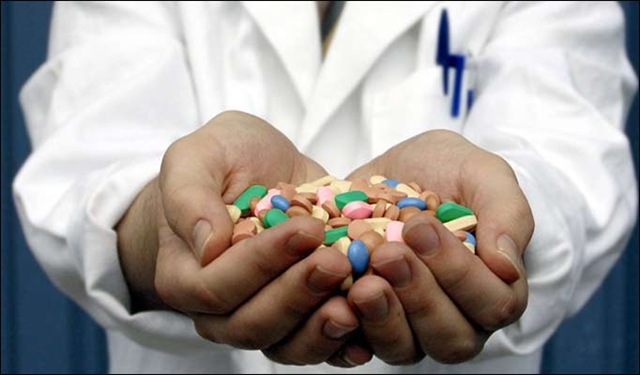 In a word- NO.
Most U.S. adults and more than 30 percent of American children take some form of dietary supplement, most often multivitamins and multiminerals, according to a report in the October 2007 issue of Archives of Pediatrics. Experts emphasize diet as the best source of nutrients for children, but physicians may recommend supplements for certain children at risk of deficiency.
Do dietary supplements work, and are they safe?
Dr. Sanjay Gupta, CNN chief medical correspondent: The report found that about one third of kids in the United States are taking dietary supplements. Most were taking a daily multivitamin and a small group taking individual supplements such as vitamin C, calcium or iron. So, do your kids need to take a multivitamin daily to be healthy? The short answer: no. The American Academy of Pediatrics does not recommend a daily multivitamin for children. They say most kids get the nutrients they need from their diet. But they do recommend 200 IU of vitamin D for children who don’t drink milk and also 5 to 10 mg of iron for babies who are breast-fed.
What about vitamin D?
Gupta: The biggest concern for the American Academy of Pediatrics is vitamin D deficiency. Rickets is a disorder that becomes apparent during infancy or childhood and is the result of insufficient vitamin D in the body. This is most common in breast-fed children. Here is the good news: Although a daily multivitamin might not be offering your child a tremendous amount of benefit, it certainly is not hurting them.
Dr. Gupta, why did you say in your book that adults might be wasting money on daily supplement pills?
Gupta: Here’s the problem: Despite the billions of dollars people spend, there’s virtually no research showing that supplements can make you healthier or live longer. There is some research, but most finds there’s no benefit at all.
Two examples from the Journal of the American Medical Association: Ginkgo doesn’t help memory, and Echinacea doesn’t work to fight colds. And you’ve heard of antioxidants? One study found that taking antioxidants, such as vitamins A and E, in pill form, might actually be harmful. So it’s possibly a waste of money because there’s no powerful proof behind supplements. Yet, honestly, I take a few even though I don’t know if they’re doing anything for me. You could say it’s a leap of faith. The National Institute on Aging doesn’t specifically recommend any supplement.
If there’s no evidence, what’s driving people to take these supplements?
Gupta: People think they’re shortcuts. We like shortcuts. And there’s clever marketing to encourage us to give them a try, whether it’s supplements, vitamins or antioxidants. Some supplements do show promise, even without much data yet to back it up, such as alpha lipoic acid to fight off heart disease and diabetes and fish oil with omega-3 fatty acid. Also, even if you eat a healthy diet, taking a multivitamin may just give you an extra boost of nutrients — although, again, no research out there proves this yet.
The bottom line is studies have shown that a good diet, not pills, is the safest and best way to stay healthy. In my book, "Chasing Life," I recommend eating a "colorful diet" Research has shown eating a rainbow of colorful fruits and vegetables can protect you against heart disease, cancer and even the effects of aging
Dr. Gupta talks here about Vitamin D deficiency. As you know if you have been following my blog, that I am a huge proponent of Grass-fed meat, raw butter, cage free organic chickens and eggs…because we get large amounts of Vitamin A, D and E from eating these foods! There is no substitute for getting real Vitamin D in this form!
The following is an article I wrote in 2001;
Can we get the nutrients we need through supplements?
By Millie Barnes
You rush out the door in the morning after grabbing orange juice, two pieces of toast with margarine, and a handful of vitamins. Have you had a healthy breakfast? Gotten the vitamins you needed for the day? Lets take a look….
You consumed 321 calories, 5 grams of fat. Unfortunately, no vitamin C, because your source of C was from concentrate. Vitamin C, being one of the water soluble vitamins is extremely light and heat sensitive. Twenty minutes after you have squeezed fresh orange juice, half the vitamin C is gone. So how much is left in the concentrate? None. Plus there was very little nutrients in the toast, a highly refined food. Also the margarine contains hydrogenated fats, chemicals and additives. Hydrogenation is a process that chemically treats fats or oils to make them stay hard at room temperature. Unfortunately they also stay hard in your arteries. Fruit spreads, apple butter, tahini ( sesame butter); all of these are better choices.
“But I took my vitamins!”, you say. Yes, that is true, but our absorption of vitamins and minerals when they are from chemical sources is very low. We need to get these precious nutrients in the food they occurred in to begin with. Let’s look at why. Fruits and vegetables are rich in vitamins and minerals, but they are also rich in enzymes. On a molecular level, you cannot absorb a vitamin or mineral molecule without a live enzyme attached to it! Enzymes are the catalyst that allow our body to assimilate the nutrients we need. Notice that I said a live enzyme. Live enzymes occur in foods that are ALIVE! Not processed or cooked. Because these processes kill the enzymes. Notice that every culture in the world begins or ends meals with a salad or some fruit. It was observed over time that this aided digestion and improved health.
So, are we looking at an all raw diet? No, it is almost impossible given the way we live today and is not healthy. You need high quality proteins (grass fed meat, free range organic chicken and eggs, small amounts of cold water fish), healthy saturated fats from coconut oil, butter and meat stocks, fresh vegetables and small servings of fruit…and you’ve got a diet rich in nutrients, high in fiber and moisture and low in toxins. In other words diet that will give you high energy, repair and maintain your immune system, allow you to maintain your ideal weight, and allow you to heal. You’ll look and feel far better, sleep better, exercise more and have more fun..
Notice that in the last paragraph that I mentioned that our diet should be low in toxins. In our culture, the diseases that we suffer from are diseases of excess, not deficiencies. Another way of saying it would be that we suffer from toxemia. In our culture, we don’t see beriberi, pellagra, rickets or scurvy. And no American doctor has ever diagnosed a case of Kwashiorkor; protein deficiency. Vitamins and minerals are easy to come by. The reason why toxemia and not deficiency is the cause of symptoms is twofold. First, some vitamins are depleted because they play a role in the bodies’ detoxification of harmful substances within. Vitamin C is a notable example of this. Secondly, drugs and drug like substances, such as coffee, tea, alcohol, medications, junk food, sugar, preservatives, food dyes, in fact all non-food substances, interfere with the bodies absorption and/or utilization of vitamins and other nutrients. We also need to realize that that food processing, storage and preservation all deplete vitamins in food.
So the next time you go to the grocery store, buy grass fed beef, free range organic chicken, cage free eggs (NOT Omega fed eggs!). Buy healthy organic butter and coconut oil, use them liberally. Head to the produce aisle, stay away from boxed and canned food. Avoid grains in any form, avoid anything processed. Find and frequent a good seafood market. A good rule of thumb is to remember you should be able to hold the food in your hands and tell how it grew! If you buy foods that needs labels, make sure you know what the items listed really are, and that you can pronounce them! Read labels!.
There are many benefits from following these recommendations. In a few weeks you will notice that your energy is higher. Getting up in the morning is easier, you’ll have slept better. Your allergies and sinus problems will improve dramatically. Your skin will look better. You will lose weight, if needed. Your stomach will get flatter as your digestion improves. You will attain more emotional poise. When you feel way better, life gets way funner!!! So what are you waiting on?
Industrial “Food” Is Killing Us!
Posted: July 21, 2009 Filed under: Food and it's Impact on Our Health Leave a commentIn 1973, Secretary of Agriculture Earl Butz, encouraged farmers to "get big or get out," as he urged farmers to plant commodity crops like corn "from fencerow to fencerow." These policy shifts coincided with the rise of major agribusiness corporations, and the declining financial stability of the small family farm. Evidence shows that while the present capital and technology-intensive farming systems are productive and able to produce cheap food, they also bring a variety of economic, environmental, and social problems.
Industrial farms are subsidized by commodity payments (your tax money) and are contributing to environmental degradation through: bi-cropping (corn and soy), heavy use of pesticides, inefficient use of increasingly scarce water, depletion and erosion of soil, difficulty recycling nutrients and destruction of biodiversity. Recent research has also shown a decrease in nutrient values in fruits and vegetables over the last 30 years. This alone is great reason for RD’s to be the leading soil advocates.
What is infuriating is that the food that is being subsidized and grown throughout the Midwest is not really food at all, in that it is not fit for human consumption.
It is an input and it must be processed, which leads us another problem: processed food. Almost every product you find in the center aisles of the grocery store is made from corn and soy. From steaks to chicken nuggets, condiments, juices, frozen entrees, pastries, etc., are ultimately derived from corn, either as high fructose corn syrup or from the corn-based animal feed that is being fed to animals. The animals confined to the industrial food system are also not supposed to eat this corn. Cows are ruminant animals and are suppose to eat grass. This is like trying to make a patient with Celiac’s Disease eat a diet of wheat gluten. The cows, like the patient would, get sick with a condition called acidosis which causes one of their four stomachs to inflate, ultimately causing suffocation. To combat this problem, the industrialized food system provides animals living in CAFO’s (Confined Animal Feeding Operations) with a low dose of antibiotics. Presently, 80% of the antibiotics in the US are used non-therapeutically in animals being grown for consumption.
Those working in the community and clinical dietetics and with at-risk populations see the ramifications of these policies every day. The American people, especially low-income populations, are sick. Both corn-fed beef and high-fructose corn syrup contribute to the obesity epidemic in the United States. Those working on obesity know that behavior change alone is not working. Patients are stricken by a federal policy that makes cheap food possible. While American’s spend a smaller fraction of their budget (about 11%) on food compared to any other industrialized nation, the cheap food is catching up to us on the other end: our health care costs, or what I call, “sick care.” Another issue for those working in the area of hunger and food security is our dependency on petroleum inputs to grow food.
With a new administration and a new secretary of agriculture, now is a great time for us to join in the political process that is entrenched in our food. In order for your representatives to begin to change these archaic policies, they must first know that there is political will.
Watch the movie King Corn
My Carbon Footprint
Posted: July 20, 2009 Filed under: Food and it's Impact on Our Health Leave a comment As you probably know by now, I am a very radical environmentalist. My carbon footprint is low, I grow a lot of my own veggies, have used a clothesline all my life, use a sawdust toilet, have never used paper towels (my kids loved that!), used cloth diapers for all 5 children. You can read about how green I am HERE…
 If you’ve been reading my blog for a while, you know how much I love coffee; I hand grind organic coffee each morning before making Turkish coffee on my stovetop. I could rhapsodize here about how much I love the stuff, but you get the picture.
A few years ago I made the firm commitment to not buy or drink coffee that was not faire trade and organic and I have made no exceptions to that.
But now I am growing aware (funny how we examine our lives in layers)… that coffee has a very high carbon footprint. 
Barefoot Coffee Roasters’ Andy Newbom says that when you buy fair trade or organic coffee you’re supporting sustainable farming practices that don’t clear-cut trees or use pesticides or chemical fertilizers and that makes a big difference. "Buying fair trade coffee rewards and supports sustainable farming, reducing developing nations’ carbon footprint," he says. "It’s easy for the first world to say let’s reduce our carbon footprint, but it’s harder for farmers in developing countries to do this." Buy fair trade beans.
So in looking for other things to drink I have discovered Yerba Mate tea, and Macha tea and Kava Tea. The greenest one I found was Guayaki Maté Tea. According to Treehhugger, it has a negative carbon footprint.
The only store I found listed that carries it in Jacksonville is Biomax Health Foods.
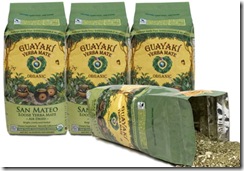 Guayaki’s Maté – "Carbon Subtracting" Beverage in Biodegradable Packaging
Biodegradable only good if it’s being degraded
Biodegradable packaging is a bit like carbon offsetting – of dubious value if it is only a band aid for our guilt. We actually must be biodegrading the packaging to make the premise work. Guayaki, which imports organic and Fair Trade loose Yerba Maté, the Argentinian tea-like drink, was attempting to improve its product’s shelf life freshness. But foil, the common choice, is not very eco-friendly. Guayaki eventually chose old-fashioned cellulose film (which also happens to be biodegradable) that is "metallized" with super thin aluminum film. Thus Guayaki says it has perfected a "carbon-subtracting" packaging – biodegradable, and at the same time, the growing the maté soaks up more CO2 than processing, packaging, and transporting the product. So each 16 oz. pouch of maté is "reducing" CO2 573 grams. TreeHugger asked some detailed questions about the Guayaki maté’s true capacity for CO2 soak-up and the bag’s ability for breaking down in the backyard pile.

TH: How are the bags made?
Guayaki: The bags are made of 2 layers of cellulose films and are printed using water-based inks. The outside layer of the package is transparent cellulose, and the inside film layer is made of cellulose with one side coated by a vacuum deposited ultra thin layer of aluminum. The outside cellulose layer is reverse printed so that the eco-friendly water-based inks are trapped between the layers; this is so the ink cannot scratch off. The metallized side is also trapped between the layers so that the product inside is only in contact with the transparent cellulose layer. Each 16-oz pack of organic, shade-grown and fairly-traded San Mateo Loose Yerba Mate achieves a subtraction of 573 gm of carbon.
TH: How was the biodegradability of the bags tested – under what conditions and what type of internal heat in the compost pile?
Guayaki: All of the materials that the bags are made of have been tested and meet the requirements of ASTM D 6400 and also Vincotte OK Compost Home. According to Innovia, the OK compost home test is conducted at ambient temperature. Tests have shown that the average total time for complete biodegradation of cellulose film is 80 to 120 days for coated cellulose products.
TH: How did you come up with the 71 grams of carbon for the transport…wouldn’t the maté be shipped to so many different locations? Or how did you calculate that?
Guayaki: We used a weighted average distance traveled that is based on each distributor’s zip code and its percentage of Guayaki total sales. An average distance was assumed from distributor to retailer.
TH: Could you also explain about the carbon profile of the mate – why is the tea-processing so relatively carbon-intensive compared to the transport?
Rob Sinclair, of Conscious Brands (www.consciousbrands.com), – the company that conducted the carbon assessment of Guayaki’s supply chain: The greatest journey the yerba mate makes from the rainforest to the consumer is by ocean freight, which has a relatively low per unit distance and mass emissions rate. Tea processing includes two major steps. First it is dried in South America, which is done with biomass, which, although ‘carbon neutral’, does emit some non-CO2 greenhouse gases which are accounted for. The second processing step includes substantial facility electricity use to mill and package the final product. The emissions rate for electricity in the region where Guayaki packages is below the national average, but, nevertheless, the greenhouse gas impact is comparatively large as seen on the label.
TH: How much aluminum (in grams) would come from the package and how much aluminum would need to be in a backyard compost before the compost composition would change enough to worry about?
Guayaki: According to Innovia, which makes the NatureFlex metallized cellulose, the amount of aluminum applied to each bag is less than .02% of the total bag by weight. Each of the new empty Guayaki bags weighs .4 ounces, so the total amount of aluminum contained in each bag to be composted is less than .00008 ounces, and the conversion to grams = less than 0.0023g. In the Earth’s crust, aluminum is the most abundant (8.13%) metallic element, and the third most abundant of all elements (after oxygen and silicon). However, because of its strong affinity to oxygen, it is almost never found in the elemental state; instead it is found in oxides or silicates. In the decomposition process for Guayaki bags, the ultra-thin coating of aluminum oxidizes and turns into aluminum oxide which is inert and non toxic. We did some research to find out if there is a regulatory limit for the amount of aluminum allowed in compost that is sold in the marketplace, etc.., and could not find any information to that effect. More specifically, research indicates that aluminum is not one of the metals that the state of California regulates and tests for in their compost regulatory program.
If you aren’t going to quit drinking coffee (I’m not, I have so few vices and I am down to one cup a day!) here are some tips to making it greener;
- The local brew
Seek out the coffee and tea that have traveled the least distance to reach you and also aim at supporting local, independent farms, cafés, and roasters. - Mug Shots
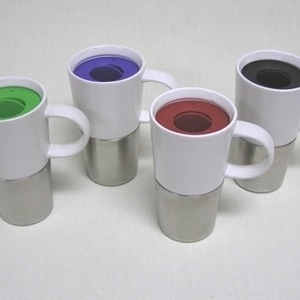
 Go ahead, find that perfect mug and make the investment. Not only is a reusable mug more pleasurable to sip out of than a paper cup, but it will replace an untold number of disposable cups, plastic sippy tops, “java jackets,” and other disposable paraphernalia. I love my stoneware and stainless steel and silicone (NO Plastic!) Highwave Mug.
 - Organic
Coffee and tea that bear organic certification are more eco-friendly because they are grown and processed without toxic chemicals, are cultivated and harvested in ways that protect sensitive ecosystems, and spare workers from exposure to harmful pesticides and herbicides. Shade grown coffee is another important category that preserves habitats for migratory birds on coffee farms, also letting beans mature more slowly and creating richer flavors. - Fair Trade
Not only does certified fair trade coffee and tea help ensure living wages and safe working conditions for farmers, but TransFair and Rainforest Alliance both include rigorous environmental standards in their certification criteria. - Home brew
 The local café is great. It’s got your friends, good food, free wireless. But if you think you can be greener in your own kitchen, give it a try. When you do it at home you know where the beans and leaves are coming from and also where they go when they’re spent. Plus, you can’t forget your mug, you can choose organic milk, and never toss out another paper sugar packet. Try a bit of quick math on the cost savings of making your morning cup-o-joe at home.
 - Loosen up
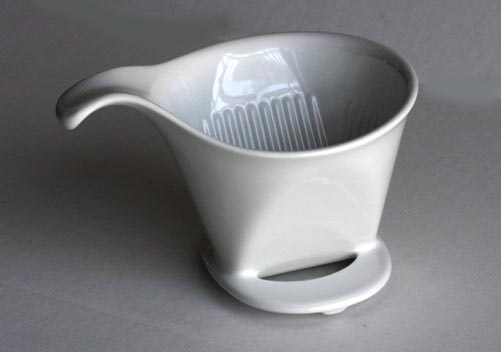
 Tea bags and coffee filters can be useful but are mostly unnecessary. Great coffee can be made at home with a reusable filter or a stovetop espresso maker. A quality tea infuser can last a lifetime and replace an untold number of (questionably compostable) tea bags. If you do use filters and bags, look for biodegradable and unbleached ones.
 - Milk and sugar
Most people put one thing or another in their hot beverage of choice. Don’t foul up your organic, fair trade, bird friendly, solar roasted brew with chemical and hormone-laden milk and sugar from a little paper packet. If you don’t do the cow thing, look for organic almond milk to yin up your yang. In the US, TransFair also certifies sugar, so even your sugar can be fair trade. (Maple syrup in coffee is another well-kept secret.) - "Press" the issue
If the local coffee shop you love doesn’t carry coffee and tea that meet your standards, start asking politely. - Compost the roast
Tea leaves and especially coffee grounds make outstanding compost. Coffee’s high nitrogen content has made it a fertilizer of choice since days of yore. Composting leaves and grounds helps keep organic waste out of landfills, makes great soil, and keeps waste baskets dry. If you don’t have a heap to toss it on, just spread coffee grounds on the top of your plants’ soil.

I do not drink Starbucks coffee because I do not like thier product, but I also do not support corporate business, I prefer that my money stay in my community. BUT, Starbucks will give you big =bags of coffee grounds if you call ahead and tell them when you will come by! I’ve built some great soil thanks to Starbucks, a local health food store and my own kitchen scraps!
 All Coffee making utensils pictured here come from Sweet Maria’s.
Wake Up Call- Sugar in Breakfast Cereals
Posted: July 20, 2009 Filed under: Food and it's Impact on Our Health Leave a commentSome cereals more than HALF sugar!
A serving of 11 popular cereals, including Kellogg’s Honey Smacks, carries as much sugar as a glazed doughnut, the Consumer Reports found.
And some brands have more sugar and sodium when formulated for the U.S. market than the same brands have when sold in other countries.
Post Golden Crisp made by Kraft Foods Inc and Kellogg’s Honey Smacks are more than 50 percent sugar by weight, the group said, while nine brands are at least 40 percent sugar
Here is a list of the cereals that top the charts for sugar content.
All the cereal boxes I have seen list the sugar contents in grams. Most people think that a gram is a tiny little amount. A gram = 1/3 of a teaspoon. I have converted them to ounces for you. After all, Americans use ounces and pounds and are familiar with what that amounts looks like.
Sugar content (per 3 1/2 ounces) This is only about 3/4 of a cup. I don’t know about you, but who eats only 3/4 of a cup of cereal at a time???
Kellogg’s Coco Pops Moons & Stars (12 1/3 teaspoons!)
Kellogg’s Frosties (12 1/3 teaspoons)
Kellogg’s Ricicles (12 1/3 t.)
Sainsbury’s Choco Rice Pops (12 t.)
Tesco Choco Snaps (12 t.)
Nestle Cookie Crisp (11 3/4 t.)
Nestle Cheerios Honey (11 t.)
Kellogg’s Crunchy Nut (11 1/2 t.)
Breakfast Cereals (and grains in general) are Not Fit for Human Consumption
Posted: July 20, 2009 Filed under: Food and it's Impact on Our Health Leave a commentFrom Nourish Magazine;

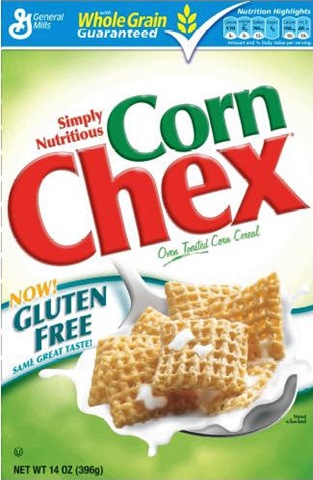



Breakfast Cereals
These cleverly marketed, attractively boxed ‘foods’ are in my opinion one of the most unhealthy foods in your supermarket.
And it’s not just me who thinks this.
According to Dr. Peter Dingle, a Western Australian Toxicologist and author of “My Dog Eats Better than Your Kids” and “The DEAL for Happier, Healthier, and Smarter Kids”, McDonalds makes a more nutritious breakfast than Cornflakes!
Even Choice Magazine agrees with me. They looked at the top 10 selling children’s breakfast cereals and concluded that you may as well have a candy bar for breakfast they were so high in sugar and lacking in nutrients. Iron man food they most definitely are not.
Besides the addition of sugar and refined salt, breakfast cereals are made from highly processed grains. You might start off with a nice healthy whole grain but by the time you’ve puffed it or turned it into a nice crunchy flake, you’re left with something your body no longer recognises as food. The process used to make the little ‘O’s, pellets, shreds, flakes and other shapes in your cereal bowl is called ‘extrusion’. The extrusion process damages the nutrients and proteins in the grain leaving them devoid of nutrients, highly toxic and not much more than empty calories – watch this space, they will be the trans fats of the future. For more info on the dangers of the extrusion process read Dirty Secrets of the Food Processing Industry by Sally Fallon
From my website; Optimum Nutrition
Let’s look at 3 different breakfasts and see which one is healthiest. I have used oatmeal for one breakfast, and a breakfast cereal is FAR less nutritious and has way more sugar and chemicals!
Let’s compare a common (and so-called healthy) breakfast food to another choice one could have, and then compare that to a healthy breakfast. Breakfast should provide you with a third of the calories and nutrients you need for the whole day. This also gives you plenty of calories for energy.
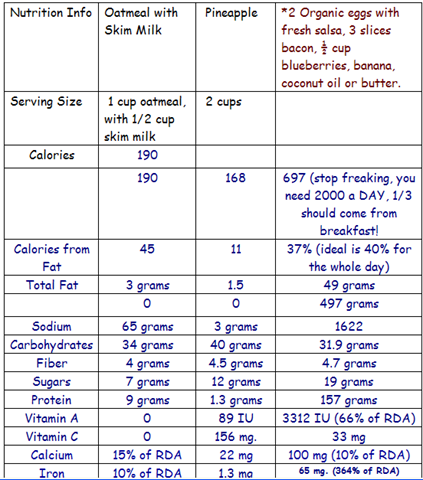
When I leave the house in the morning with approximately 700 calories under my belt, I am not hungry, have high energy, have about 1/3 of my nutrients and calories for the day and have very high energy! I am not looking for stuff to snack on, experiencing a sugar high from an all carb breakfast, have no blood sugar crash halfway through the morning. Then around one or two o’clock I feel natural hunger, so I eat a lunch with about another 500 to 600 calories (generally what ever I made for dinner that I take with me in a small insulated lunch box). Then I am good to go until dinner time later.


