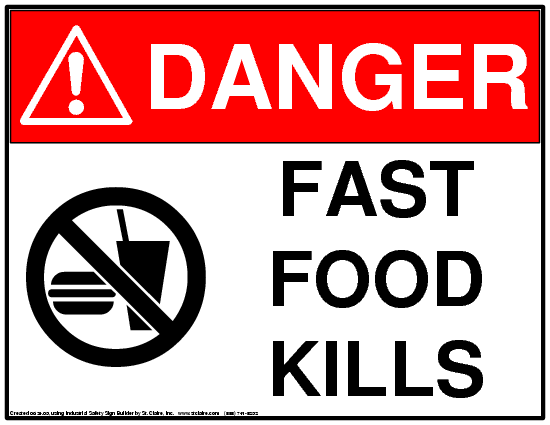
We Can’t Afford Health Care? You Lie!
Posted: September 17, 2009 Filed under: Food and it's Impact on Our Health Leave a commentFrom TruthOut;
Wednesday 16 September 2009
by: Tom H. Hastings, t r u t h o u t | Perspective

While $1 trillion is being spent on war, unemployment continues to rise and people continue to lose their health care. (Photo: Troy Page / t r u t h o u t)
We see the spectacle of the US Congress unable to manage decent health care reform that will actually enable the American citizenry to join the rest of the industrialized world in having health care for all. The problems, it is clear, come from those who are lying.
Death panels? That’s true – we already have them. Insurance companies deny care to Americans, who then die as a result. It happens every day, Sarah Palin – but ascribing that to the Obama plan is untrue. In fact, those corporate death panels would be outlawed.
Find the language in Obama’s bill that says that illegal aliens are covered or admit it’s a canard – God forbid we should help some migrant worker who is stricken by illness or accident while laboring in service to Americans. South Carolina’s Joe Wilson is just the Tourette tip of a dissembling iceberg.
We can’t afford the plan? That is a whopper. It’s all choice.
If every child in America doesn’t have health care, but we own more than 6,000 nuclear weapons, more than half of them on board a fleet of 18 extremely expensive Trident submarines ready to fight the Soviets (Hey! Where’d they go?), isn’t it time to ask some fundamental questions? One is: Why spend $16.5 billion just on the Department of Energy nuclear weapons budget for FY 2010 with 50 million uninsured citizens? Does US Sen. Jim DeMint (R-South Carolina) speak for us all when he calls health care a privilege (and presumably threatening life on Earth is a human right for the US military)?
When our working poor are so often without either the money to pay for health insurance or the high costs of health care for ailing family members, and yet we somehow manage to justify spending in excess of $915 billion on the so-called War on Terror, shouldn’t we engage in some national discussion about priorities?
$1 trillion for war while unemployment pushes ten percent in more and more states is unconscionable. Unemployment means a loss of health care for a high percentage of those who lose jobs and more foreclosures on the American dream of home ownership every month. Historically, it naturally correlates with increases in crime. The US is the last of the so-called developed countries to fail to insure the unemployed and underemployed, and we have the highest crime rates. So many thousands of us are shot each year that we more than qualify to be considered at war inside our own borders. Much of that carnage relates to social problems like unemployment, lack of health care and simple hopelessness.
Does it not seem that when the US can afford and not question nearly 1,000 military bases on other people’s sovereign soil – 287 of them in Germany alone – that we can afford to create jobs? Rather than have our young people learning how to hurt others in the military, we could end economic conscription, lower the crime rate, drastically reduce the numbers of uninsured, reverse the home foreclosure numbers and enhance our nation’s productivity by offering minimum wage jobs to anyone willing to work. Those jobs would include housing in some cases, health care benefits in all cases and on-the-job training and supplementary education for those needing it. Closing foreign military bases until these programs were paid for would be a giant leap for the US back toward the health of our workforce, our economy, our educational system and our very citizenry.
No one is talking about this? True. So, it’s time to start.
When a Parent’s ‘I Love You’ Means ‘Do as I Say’
Posted: September 16, 2009 Filed under: Food and it's Impact on Our Health 1 CommentBy ALFIE KOHN in the New York Times
Published: September 14, 2009
More than 50 years ago, the psychologist Carl Rogers suggested that simply loving our children wasn’t enough. We have to love them unconditionally, he said — for who they are, not for what they do.

As a father, I know this is a tall order, but it becomes even more challenging now that so much of the advice we are given amounts to exactly the opposite. In effect, we’re given tips in conditional parenting, which comes in two flavors: turn up the affection when they’re good, withhold affection when they’re not.
Thus, the talk show host Phil McGraw tells us in his book “Family First” (Free Press, 2004) that what children need or enjoy should be offered contingently, turned into rewards to be doled out or withheld so they “behave according to your wishes.” And “one of the most powerful currencies for a child,” he adds, “is the parents’ acceptance and approval.”
Likewise, Jo Frost of “Supernanny,” in her book of the same name (Hyperion, 2005), says, “The best rewards are attention, praise and love,” and these should be held back “when the child behaves badly until she says she is sorry,” at which point the love is turned back on.
Conditional parenting isn’t limited to old-school authoritarians. Some people who wouldn’t dream of spanking choose instead to discipline their young children by forcibly isolating them, a tactic we prefer to call “time out.” Conversely, “positive reinforcement” teaches children that they are loved, and lovable, only when they do whatever we decide is a “good job.”
This raises the intriguing possibility that the problem with praise isn’t that it is done the wrong way — or handed out too easily, as social conservatives insist. Rather, it might be just another method of control, analogous to punishment. The primary message of all types of conditional parenting is that children must earn a parent’s love. A steady diet of that, Rogers warned, and children might eventually need a therapist to provide the unconditional acceptance they didn’t get when it counted.
But was Rogers right? Before we toss out mainstream discipline, it would be nice to have some evidence. And now we do.
In 2004, two Israeli researchers, Avi Assor and Guy Roth, joined Edward L. Deci, a leading American expert on the psychology of motivation, in asking more than 100 college students whether the love they had received from their parents had seemed to depend on whether they had succeeded in school, practiced hard for sports, been considerate toward others or suppressed emotions like anger and fear.
It turned out that children who received conditional approval were indeed somewhat more likely to act as the parent wanted. But compliance came at a steep price. First, these children tended to resent and dislike their parents. Second, they were apt to say that the way they acted was often due more to a “strong internal pressure” than to “a real sense of choice.” Moreover, their happiness after succeeding at something was usually short-lived, and they often felt guilty or ashamed.
In a companion study, Dr. Assor and his colleagues interviewed mothers of grown children. With this generation, too, conditional parenting proved damaging. Those mothers who, as children, sensed that they were loved only when they lived up to their parents’ expectations now felt less worthy as adults. Yet despite the negative effects, these mothers were more likely to use conditional affection with their own children.
This July, the same researchers, now joined by two of Dr. Deci’s colleagues at the University of Rochester, published two replications and extensions of the 2004 study. This time the subjects were ninth graders, and this time giving more approval when children did what parents wanted was carefully distinguished from giving less when they did not.
The studies found that both positive and negative conditional parenting were harmful, but in slightly different ways. The positive kind sometimes succeeded in getting children to work harder on academic tasks, but at the cost of unhealthy feelings of “internal compulsion.” Negative conditional parenting didn’t even work in the short run; it just increased the teenagers’ negative feelings about their parents.
What these and other studies tell us, if we’re able to hear the news, is that praising children for doing something right isn’t a meaningful alternative to pulling back or punishing when they do something wrong. Both are examples of conditional parenting, and both are counterproductive.
The child psychologist Bruno Bettelheim, who readily acknowledged that the version of negative conditional parenting known as time-out can cause “deep feelings of anxiety,” nevertheless endorsed it for that very reason. “When our words are not enough,” he said, “the threat of the withdrawal of our love and affection is the only sound method to impress on him that he had better conform to our request.”
But the data suggest that love withdrawal isn’t particularly effective at getting compliance, much less at promoting moral development. Even if we did succeed in making children obey us, though — say, by using positive reinforcement — is obedience worth the possible long-term psychological harm? Should parental love be used as a tool for controlling children?
Deeper issues also underlie a different sort of criticism. Albert Bandura, the father of the branch of psychology known as social learning theory, declared that unconditional love “would make children directionless and quite unlovable” — an assertion entirely unsupported by empirical studies. The idea that children accepted for who they are would lack direction or appeal is most informative for what it tells us about the dark view of human nature held by those who issue such warnings.
In practice, according to an impressive collection of data by Dr. Deci and others, unconditional acceptance by parents as well as teachers should be accompanied by “autonomy support”: explaining reasons for requests, maximizing opportunities for the child to participate in making decisions, being encouraging without manipulating, and actively imagining how things look from the child’s point of view.
The last of these features is important with respect to unconditional parenting itself. Most of us would protest that of course we love our children without any strings attached. But what counts is how things look from the perspective of the children — whether they feel just as loved when they mess up or fall short.
Rogers didn’t say so, but I’ll bet he would have been glad to see less demand for skillful therapists if that meant more people were growing into adulthood having already felt unconditionally accepted.
Alfie Kohn is the author of 11 books about human behavior and education, including “Unconditional Parenting” and “Punished by Rewards.”
Depression lesson: Play nice
Posted: September 16, 2009 Filed under: Food and it's Impact on Our Health Leave a commentAlways a big fan of Psych Central (I get thier newsletters), here is a great article by one of my favorite writers on that site.
 By Christine Stapleton
September 12, 2009
I do not like to make sweeping generalizations but after this week, I am comfortable saying this:
We are not nice. We are not tolerant. We do not play well together.
- I had to sign a permission slip to allow my 17-year-old daughter to listen to the President of the United States at the conservative Christian school she attends.
- Someone seeded a road beloved by local cyclists – which cuts through one of the richest towns on the planet – with small carpet tacks. The town, Jupiter Island, doesn’t want groups of riders on its beautiful roads.
- I listened to a grown man with a few beers in his belly use the “N” word indiscriminately in front of his 10-year-old son.
What the heck is going on? For some reason, people assume that because my daughter attends a conservative Christian school that I am a Limbaugh-lovin’ dittohead. Others assume that because I am a journalist at a left-leaning newspaper that I am a Jane Fonda wannabe. I wear preppy clothes, but underneath I have a tattoo. I was born in Gerald Ford’s Republican hometown, but I live in the gayest neighborhood in town. I have no bumper stickers and I am registered as an independent voter.
I am not what people think I am but because they mistakenly assume I am, I get to hear and see people in their most honest state, when their guard is down. My liberal friends are as pedantic and self-righteous as the conservatives they bash. My conservative friends send me horrible emails and jokes about liberals and minorities.
What does any of this have to do with my mental illnesses? Plenty. One of the first tools I was given when I got sober was this: Identify, don’t compare. I did not know what it meant. I had trained my brain to cop to the negative, to look for differences rather than what we have in common. This kind of thinking breeds anger, resentment and intolerance – ingredients for a perfect batch of depression or mania. I convince myself that I am either better than you or not as good as you. I am holier than thou or not worthy of a scratch behind the ear.
The solution: find something in common, even if it is just an anatomical or geographical similarity: “I live in Palm Beach county, Rush Limbaugh lives in Palm Beach county” or “I have a nose and my religion-bashing atheist co-worker has a nose.” It sounds silly, but it works. Just approaching a person or situation with the intent of finding common ground has made a huge difference in my mental health.
This tool, and others I have learned in therapy, are as important as my medications. Antidepressants alone will not make me well. I have had to change – rewire -the way I think. It isn’t easy, but it works. Now, what do that N-word slinging father and I have in common?
A Fast Look at Slow Food: How to Eat Slower and Greener Every Day
Posted: September 16, 2009 Filed under: Food and it's Impact on Our Health Leave a comment-
 A big part of green eating is slowing down the entire process.

-
One of the most visible examples of any green lifestyle is eating. What we choose to eat can serve as the motivating power of example. The same can be said for how we choose to eat: fast or slow. Fast food has been around so long that a full generation of humans can’t remember life without it. I’d say the time is long overdue for a major slow food comeback.
"The slow food movement works to reconnect people to the food they eat. Local food, and local food traditions are central to reclaiming our relationship with nature," declare the good folks at TreeHugger.com. And there’s nothing slow about this movement with over 83,000 members in 122 countries. Some of the objectives sought by those 83,000 slowpokes include lobbying for the inclusion of organic farming concerns within agricultural policy, lobbying against government funding of genetic engineering, and lobbying against the use of pesticides.
When we shorten the distance–both literal and figurative–that our food travels to get to our bellies, we are participating in the Slow Food movement. (And it can all start with nice slow breakfast.)
5 Ways to Be a Slow Eater
1. Say no to fast food.- For starters, fast food cooking alone is worse for the air than all the trucks on the road. How’s that for an apropos statistic?
So passing that greasy burger joint by means sparing the air.
Fast food restaurants also contribute to reckless consumption and destruction of resources—check out this article that follows the chain from rainforest destruction to chicken nuggets ending up in the UK. And then there’s the poor animal treatment, the immense shipping programs emitting harmful gases, the millions of tons of waste generated annually, and the total lack of nutritional value in fast food restaurant’s most popular menu items.
Of course some of this is null and void if you happen to pass by an organic fast food joint. In which case, eat organically away, I say. But until the day when we see these organic outposts right off the highway regularly—drive on by, friend. Just drive on by, even if you’re hungry.
 How about packing a picnic? That what I always did when my children and I took road trips. That way you can eat in the car or stop at a rest stop and let the kids run around and eat outdoors.
2. Eat locally grown food whenever possible. Again, local food traditions help reclaim our relationship with nature.
3. Choose organic. It’s good for the farmers, the soil, the local food tradition, and the health of all involved.
4. Avoid GMOs. Slow food is all about reconnecting people to the food they eat. That’s food, not frankenfood.
5. Find time to slowly savor your meals.- One of the problems in our daily lives is that many of us rush through the day, with no time for anything … and when we have time to get a bite to eat, we gobble it down. That leads to stressful, unhealthy living. And with the simple but powerful act of eating slower, we can begin to reverse that lifestyle immediately. How hard is it? You take smaller bites, you chew each bite slower and longer, and you enjoy your meal longer.
It takes a few minutes extra each meal, and yet it can have profound effects.

If you read the Slow Food Manifesto, you’ll see that it’s not just about health — it’s about a lifestyle. And whether you want to adopt that lifestyle or not, there are some reasons you should consider the simple act of eating slower:
- Lose weight. A growing number of studies confirm that just by eating slower, you’ll consume fewer calories — in fact, enough to lose 20 pounds a year without doing anything different or eating anything different. The reason is that it takes about 20 minutes for our brains to register that we’re full. If we eat fast, we can continue eating past the point where we’re full. If we eat slowly, we have time to realize we’re full, and stop on time. Now, I would still recommend that you eat healthier foods, but if you’re looking to lose weight, eating slowly should be a part of your new lifestyle.
- Enjoy your food. This reason is just as powerful, in my opinion. It’s hard to enjoy your food if it goes by too quickly. In fact, I think it’s fine to eat sinful foods, if you eat a small amount slowly. Think about it: you want to eat sinful foods (desserts, fried foods, pizza, etc.) because they taste good. But if you eat them fast, what’s the point? If you eat them slowly, you can get the same amount of great taste, but with less going into your stomach. That’s math that works for me. And that argument aside, I think you are just happier by tasting great food and enjoying it fully, by eating slowly. Make your meals a gastronomic pleasure, not a thing you do rushed, between stressful events.
- Better digestion. If you eat slower, you’ll chew your food better, which leads to better digestion. Digestion actually starts in the mouth, so the more work you do up there, the less you’ll have to do in your stomach. This can help lead to fewer digestive problems.
- Less stress. Eating slowly, and paying attention to our eating, can be a great form of mindfulness exercise. Be in the moment, rather than rushing through a meal thinking about what you need to do next. When you eat, you should eat. This kind of mindfulness, I believe, will lead to a less stressful life, and long-term happiness. Give it a try.
- Rebel against fast food and fast life. Our hectic, fast-paced, stressful, chaotic lives — the Fast Life — leads to eating Fast Food, and eating it quickly. This is a lifestyle that is dehumanizing us, making us unhealthy, stressed out, and unhappy. We rush through our day, doing one mindless task after another, without taking the time to live life, to enjoy life, to relate to each other, to be human. That’s not a good thing in my book. Instead, rebel against that entire lifestyle and philosophy … with the small act of eating slower. Don’t eat Fast Food. Eat at a good restaurant, or better yet, cook your own food and enjoy it fully. Taste life itself.
Top Green Coffee & Tea Tips
Posted: September 16, 2009 Filed under: Food and it's Impact on Our Health Leave a comment
From Planet Green
- The local brew- Seek out the coffee and tea that have traveled the least distance to reach you and also aim at supporting local, independent farms, cafés, and roasters.
- Mug Shots
Go ahead, find that perfect mug and make the investment. Not only is a reusable mug more pleasurable to sip out of than a paper cup, but it will replace an untold number of disposable cups, plastic sippy tops, “java jackets,” and other disposable paraphernalia. If you’ve got a thing for paper cups and Greek art, try a more durable "We Are Happy to Serve You", the handy-work of TreeHugger founder Graham Hill. Make a quick tally of how many disposable coffee or tea cups you use in a month…yeah, it’s probably a lot. - Organic
Coffee and tea that bear organic certification are more eco-friendly because they are grown and processed without toxic chemicals, are cultivated and harvested in ways that protect sensitive ecosystems, and spare workers from exposure to harmful pesticides and herbicides. Shade grown coffee is another important category that preserves habitats for migratory birds on coffee farms, also letting beans mature more slowly and creating richer flavors. - Fair Trade
Not only does certified fair trade coffee and tea help ensure living wages and safe working conditions for farmers, but TransFair and Rainforest Alliance both include rigorous environmental standards in their certification criteria. - Home brew
The local café is great. It’s got your friends, good food, free wireless. But if you think you can be greener in your own kitchen, give it a try. When you do it at home you know where the beans and leaves are coming from and also where they go when they’re spent. Plus, you can’t forget your mug, you can choose organic milk, and never toss out another paper sugar packet. Try a bit of quick math on the cost savings of making your morning cup-o-joe at home. - Loosen up
Tea bags and coffee filters can be useful but are mostly unnecessary. Great coffee can be made at home with a reusable filter or a stovetop espresso maker. A quality tea infuser can last a lifetime and replace an untold number of (questionably compostable) tea bags. If you do use filters and bags, look for biodegradable and unbleached ones. - Milk and sugar
Most people put one thing or another in their hot beverage of choice. Don’t foul up your organic, fair trade, bird friendly, solar roasted brew with chemical and hormone-laden milk and sugar from a little paper packet. If you don’t do the cow thing, look for organic rice, soy, or almond milk to yin up your yang. In the US, TransFair also certifies sugar, so even your sugar can be fair trade. (Maple syrup in coffee is another well-kept secret.) - Compost the roast
Tea leaves and especially coffee grounds make outstanding compost. Coffee’s high nitrogen content has made it a fertilizer of choice since days of yore. Composting leaves and grounds helps keep organic waste out of landfills, makes great soil, and keeps waste baskets dry. If you don’t have a heap to toss it on, just spread coffee grounds on the top of your plants’ soil. - Gift the good stuff
Organic coffee and tea make superb gifts for friends and coworkers, as well as effective peace offerings for estranged family members and ex-lovers. It’s also a great way to get people appreciating the many benefits of a “greener” coffee or tea habit.
Nationwide “eat-ins” show way to a revived National School Lunch Program
Posted: September 16, 2009 Filed under: Food and it's Impact on Our Health Leave a comment Though I in now way agree with the statement this write makes when he says, “Thus a diet that puts more emphasis on whole grains and fresh vegetables, with meat as a side dish or condiment rather than the center of the plate is, as ever, the only healthy, viable alternative”…. at least our awful school lunches are coming under fire.
 Chowing down for better school lunches in Iowa City.Photo: Kurt Michael Friese
All across the country this past Labor Day, folks gathered for picnics. That’s no surprise, of course. After all, it was a holiday, and the weather was grand across nearly the whole continent. But there was something unique about one group of picnics; 307 of them to be exact, in all 50 states. They were dubbed “Eat-Ins” (modeled on the sit-ins of the ‘60s), and they were a call to action by Slow Food USA
At those picnics, including one right here in Iowa City, more than 20,000 people gathered around tables in parks and farms and school grounds to tell Congress to fix the School Lunch Program. Most of the discussions at these events and in the press afterwards centered on improving the food itself through increased Federal spending and local food initiatives. But there was another topic directly relevant to Labor Day: the call to create green jobs with a “School Lunch Corps.”
As the platform promoted by Slow Food states:
We can’t serve real food in schools without investing in school kitchens and the people who prepare and serve lunch. This spring, President Obama signed the Serve America Act, which expanded Americorps and reinforced his call for Americans to serve their country. Right now, our nation has an opportunity to train young and unemployed Americans to be the teachers, farmers, cooks and administrators we need to ensure the National School Lunch Program is protecting children’s health. President Obama has called for an end to childhood hunger by 2015; let’s answer that call by putting Americans to work building and working in school kitchens nationwide.
It bears emphasizing that the School Lunch Corps idea is not an attempt to vilify today’s lunch ladies—or squeeze them out of a job. No one at Slow Food is devaluing the hard work of the thousands of people who work in school kitchens, commissaries, and cafeterias. These folks are dedicated laborers, many of them Union members, whose hands are tied by sometimes outlandishly picayune regulations.
For example, to be permitted to serve a simple but healthy dish of red beans and rice in a school cafeteria—according to Iowa City Schools food service director Diane Duncan-Goldsmith—kitchen workers must add meat or cheese. Doesn’t matter that the dish is already a complete protein. Regulations, serving no one but dairy and beef interests, insist that main dishes must contain meat or cheese. This raises the cost and the calorie count, but adds little to the nutritional value of the meal.
Most of the food served in school cafeterias comes packaged in paper or plastic or cans, and is shipped in from an average of 1500 miles. Multiply that by the 30 million meals served in schools everyday and the impact on greenhouse gasses and the waste stream become readily apparent.
All this doesn’t even touch on the potential health effects of the food our children are eating. The keynote address at our Eat-In was delivered by Rep. Dave Loebsack (D-IA), who sits on the House Education and Labor Committee, the panel with jurisdiction over the Child Nutrition Act reauthorization. Mr. Loebsack emphasized the connection between healthy kids and the future of our entire health care system, noting that one in three kids born after 2000 will contract diabetes before they’re old enough to vote; among minorities that number rises to one in two.
Thus a diet that puts more emphasis on whole grains and fresh vegetables, with meat as a side dish or condiment rather than the center of the plate is, as ever, the only healthy, viable alternative. As an example, the dish I brought to our Eat-In was a slight twist on classic tabouleh, with everything but the grain coming from my restaurant’s garden (I haven’t tried to grow quinoa yet).
Kurt Michael Friese is chef/owner of Devotay in Iowa City, serves on the Slow Food USA Board of Directors, and is editor-in-chief of the magazine Edible Iowa River Valley. His new book, A Cook’s Journey: Slow Food in the Heartland, was published in August 2008. He lives with his wife Kim in rural Johnson County.
Pollan says health-care reform will fail unless we change the way we eat
Posted: September 16, 2009 Filed under: Food and it's Impact on Our Health, Going Green; How and Why... 1 CommentFrom The Grist
 NPR’s Guy Raz: What if health care is overhauled and it doesn’t change the American diet in any way?
Michael Pollan: We’ll go broke. If we don’t get a handle on these health care costs, the new system or the old system, we’ll go broke. And that’s why I think that really food is the elephant in the room when we’re talking about health care.
First in The New York Times last week and then on NPR this weekend, Michael Pollan made that point that if we want to fix our health-care system, we have to fix our food system.
From his op-ed in the Times:
[T]he fact that the United States spends twice as much per person as most European countries on health care can be substantially explained, as a study released last month says, by our being fatter. …
That’s why our success in bringing health care costs under control ultimately depends on whether Washington can summon the political will to take on and reform a second, even more powerful industry: the food industry. …
Cheap food is going to be popular as long as the social and environmental costs of that food are charged to the future. There’s lots of money to be made selling fast food and then treating the diseases that fast food causes. One of the leading products of the American food industry has become patients for the American health care industry.
But even with that grim diagnosis, Pollan is optimistic about the future, arguing that if insurance companies are required to accept everyone, as called for by even weak health-reform legislation now in Congress, then the insurance industry will become a powerful ally in fight for better food and against the agribusiness lobby.
Grist’s Tom Laskawy is less optimistic, noting that the poor and the elderly—the most unhealthy groups—are likely to keep getting their health coverage from the government (Medicare, Medicaid, and the VA) and not the insurance industry.
Still, both Pollan and Laskawy are encouraged by New York City’s new anti-soda ad campaign, which Laskawy says is supported by health insurance companies. Will we see more such public-health campaigns around the country, no matter what happens with health-care reform in Washington, D.C.?
Here’s an ad from NYC’s campaign:

I say low fat milk is as bad a choice as the soda…both are products of corn! Eat grass fed meat and only eat dairy if it’s organic and straight from the cow!
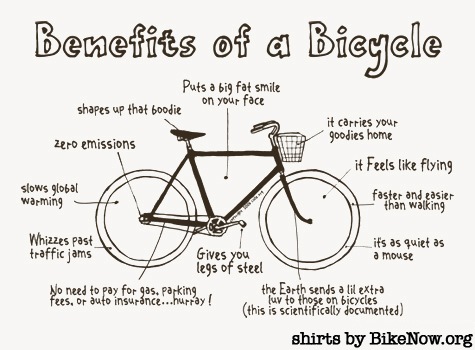
Benefits of a Bicycle
Posted: September 13, 2009 Filed under: Food and it's Impact on Our Health Leave a commentNow that the heinous hot weather is over…it was all I could do to keep up with the garden this year, yesterday I got the bike out, cleaned it and got new tubes….ahh, great weather…beautiful ride again today…I love my bike! I vow to not use the car for anything closer to my house than 2 miles…
Take Action!!!!
Posted: September 10, 2009 Filed under: Food and it's Impact on Our Health, Non-Toxic Choices Leave a commentDon’t Let Kellogg’s Buy Scientists: Froot Loops Aren’t a Healthy Breakfast
Send a letter today and tell all four doctors supporting the Smart Choices program to stop shilling for Kellogg’s. They, and the leaders of their respective institutions, need to hear that you think it is wrong for them to support any program that gives sugary cereals and other unhealthy foods a stamp of approval as healthy choices.

Insulin Resistance: The Real Culprit in Disease
Posted: September 9, 2009 Filed under: Food and it's Impact on Our Health 1 CommentSeveral years ago I had a client who was scheduled to have his second by-pass surgery. He had been told that if he did not follow through with this by-pass surgery, within two weeks he would be dead. He couldn’t walk from the car to the office without severe chest pain. He was on eight different medications for various things. But his first by-pass surgery was such a miserable experience he said he would rather just die than have to go through the second one and had heard that I might be able to prevent that.
To make a long story short, this man right now is on no insulin. I first saw him three and a half years ago. He plays golf four or five times a week. He is on no medications whatsoever, he has no chest pain, and he has not had any surgery.
Last year I saw a female client with severe osteoporosis. A fairly young woman, her doctor had put her on a high carbohydrate diet and told that would be of benefit, and placed on estrogen, which is a fairly typical treatment. They wanted to put her on some other medicines which she didn’t want; she wanted to know if there was an alternative. We got her to one standard deviation below the norm in a year, taking her off the estrogen she was on.
How did they achieve this degree of healing? A Traditional Human Diet; 50% calories from fat, 30% protein and 20% carbs (almost all carbs should come from low-glycemic vegetables).
Insulin in Chronic Disease
What would be the typical treatment of cardiovascular disease? First they check the cholesterol. High cholesterol over 200, they put you on cholesterol lowering drugs and what does it do? It shuts off your CoQ10. What does CoQ10 do? It is involved in the energy production and protection of little energy furnaces in every cell, so energy production goes way down. A common side effect of people who are on all these HMG co-enzyme reductase inhibitors is that they tell you their arms feel heavy. Well, the heart is a muscle too, and it’s going to feel heavy too. One of the best treatments for a weak heart is CoQ10 for congestive heart failure. But medicine has no trouble shutting CoQ10 production off so that they can treat a number (cholesterol figure).
The common therapies for osteoporosis are drugs
For cancer reduction there is nothing.
But all of these have a common cause.
The same cause as Aging. Yes, aging!
Aging
There are three major centenarian studies going on around the world. They are trying to find the variable that would confer longevity among these people. Why do centenarians become centenarians? Why are they so lucky? Is it because they have low cholesterol, exercise a lot, live a healthy, clean life? Well the longest recorded known person who has ever lived, Jean Calumet of France who died last year at 122 years, smoked all of her life and drank. What they are finding on these major centenarian studies is that there is hardly anything in common among them. They have high cholesterol and low cholesterol, some exercise and some don’t, some smoke, some don’t. Some are nasty and ornery as can be and some calm and nice.
But one thing is common; they all have low sugar, relatively for their age. They all have low triglycerides for their age. And they all have relatively low insulin. Insulin is the common denominator in everything I’ve just talked about. The way to treat cardiovascular disease, the way I treated the high risk cancer patient, and osteoporosis, high blood pressure, the way to treat virtually all the so-called chronic diseases of aging is to treat insulin itself.
The other major avenue of research in aging has to do with genetic studies of so-called lower organisms. We’ve the entire genes mapped out for several species of yeast and worms.
We think of life span as being fixed but in lower forms of life it is very plastic. Life span is strictly a variable depending on the environment. If there is a lot of food around they are going to reproduce quickly and die quickly, if not they will just bide their time until conditions are better.
We know now that the variability in life span is regulated by insulin.
Insulin is found as in even single celled organisms. It has been around for several billion years. And its purpose in some organisms is to regulate life span. The way genetics works is that genes are not replaced, they are built upon. We have the same genes as everything that came before us. We just have more of them. We have added books to our genetic library, but our base is the same. What we are finding is that we can use insulin to regulate lifespan too.
If there is a single marker for lifespan, as they are finding in the centenarian studies, it is insulin, specifically, insulin sensitivity or insulin resistance.
Insulin Resistance
Insulin resistance is the basis of all of the chronic diseases of aging.
In almost all cases if you treat a symptom, you are going to make the disease worse because the symptom is there as your body’s attempt to heal itself. The medical profession calls the symptoms diseases. Using Ear Nose and Throat medicine for example, that patient will walk out of there with a diagnosis of Rhinitis which is inflammation of the nose. Is there a reason that patient has inflammation of the nose? I think so. Wouldn’t that underlying cause be the disease as opposed to the descriptive term of Rhinitis or Pharyngitis? Some one can have the same virus and have Rhinitis or Pharyngitis, or Sinusitis; they can have all sorts of “itises” which is a descriptive term for inflammation. They treat what they think is the disease which is just a symptom.
It is the same thing with cholesterol. If you have high cholesterol it is called hypercholesterolemia. Hypercholesterolemia has become the code for the disease when it is only the symptom. So they treat that symptom and what are they doing to the heart? Messing it up.
If you are going to treat any disease, you need to get to the root of the disease. If you keep pulling a dandelion out by it’s leaves, you are not going to get very far. But the problem is that we don’t know what the root is, or we haven’t. They know what it is in many other areas of science, but the problem is that medicine really isn’t a science, it is a business.
It doesn’t matter what disease you are talking about, whether you are talking about a common cold or about cardiovascular disease, or osteoporosis or cancer, the root is always going to be at the molecular and cellular level, and I will tell you that insulin is going to have its hand in it, if not totally controlling it.
The Purpose of Insulin
As I mentioned, in some organisms it is to control their lifespan, which is important. What is the purpose of insulin in humans? If you ask your doctor, they will say that it’s to lower blood sugar and I will tell you right now, that is a trivial side effect. Insulin’s evolutionary purpose is to store excess nutrients.
Storing Fat
We come from a time of feast and famine and if we couldn’t store the excess energy during times of feasting, we would all not be here, because we all have had ancestors that encountered famine. So we are only here because our ancestors were able to store nutrients, and they were able to store nutrients because they were able to elevate their insulin in response to any elevation in energy rich foods that the organism encountered. When your body notices that the sugar is elevated, it is a sign that you’ve got more than you need right now, you are not burning it so it is accumulating in your blood. So insulin will be released to take that sugar and store it. How does it store it? Glycogen. Do you know how much glycogen you have in your body at any one time? Very little. All the glycogen stored in your liver and all the glycogen stored in your muscle if you had an active day wouldn’t last you the day. Once you fill up your glycogen stores how that sugar is stored? Saturated fat.
So the idea of the medical profession to go on a high complex carbohydrate, low saturated-fat diet is an absolute oxymoron, because those high complex carbohydrate diets are nothing but a high glucose diet, or a high sugar diet, and your body is just going to store it as saturated fat. The body makes it into saturated fat quite readily.
Building Muscle
It is an anabolic hormone. Body builders are using insulin now because it is legal, so they are injecting themselves with insulin because it builds muscle, it stores protein too.
Storing Magnesium
A lesser known fact is that insulin also stores magnesium. If your cells become resistant to insulin, since you can’t store magnesium so you lose it, in the urine. What is one of magnesium’s major roles? To relax muscles. Intracellular magnesium relaxes muscles. You lose magnesium and your blood vessels constrict, which increases blood pressure, and reduces energy since intracellular magnesium is required for all energy producing reactions that take place in the cell. But most importantly, magnesium is also necessary for the action of insulin. It is also necessary for the manufacture of insulin. So then you raise your insulin, you lose magnesium, and the cells become even more insulin resistant. Blood vessels constrict, glucose and insulin can’t get to the tissues, which makes them more insulin resistant, so the insulin levels go up and you lose more magnesium. This is the vicious cycle that goes on from before you were born.
Insulin sensitivity is going to start being determined from the moment the sperm combines with the egg. If your mother, while you were in the womb was eating a high carbohydrate diet which is turning into sugar, we have been able to show that the fetus in animals becomes more insulin resistant. Worse yet, we are able to use sophisticated measurements, and if that fetus happens to be a female, they find that the eggs of that fetus are more insulin resistant.
Retaining Sodium
What else does insulin do? We mentioned high blood pressure, if your magnesium levels go down you get high blood pressure. We mentioned that the blood vessels constrict and you get high blood pressure. Insulin also causes the retention of sodium, which causes the retention of fluid, which causes high blood pressure and fluid retention: congestive heart failure.
One of the strongest stimulants of the sympathetic nervous system is high levels of insulin. What does all of this do to the heart? Not very good things.
There was a study done a couple of years ago, that showed that heart attacks are two to three times more likely to happen after a high carbohydrate meal. They said specifically NOT after a high fat meal. Why is that? Because the immediate effects of raising your blood sugar from a high carbohydrate meal is to raise insulin and that immediately triggers the sympathetic nervous system which will cause arterial spasm, constriction of the arteries. If you take anybody prone to a heart attack and that is when they are going to get it.
Mediating blood lipids.
The way you control blood lipids is by controlling insulin. We won’t go into a lot of detail, but we now know that LDL cholesterol comes in several fractions, and it is the small, dense LDL that plays the largest role in initiating plaque. It’s the most oxidizable. It is the most able to actually fit through the small cracks in the endothelium. And that’s the one that insulin actually raises the most. When I say insulin, I should say insulin resistance. It is insulin resistance that is causing this.
Cells become insulin resistant because they are trying to protect themselves from the toxic effects of high insulin. They down regulate their receptor activity and number of receptors so that they don’t have to listen to that noxious stimuli all the time. It is like having this loud, disgusting rap music played and you want to turn the volume down. You might think of insulin resistance as like sitting in a smelly room and pretty soon you don’t smell it anymore because you get desensitized. It’s like you are starting to go deaf and your are telling others to speak up because you can’t hear them, so if I was your pancreas, I would just start talking louder, and what does that do to your hearing? You would become deafer.
Insulin Resistance Role in Heart Disease, Cancer and Osteoporosis
Insulin stimulates cells to divide. If all of the cells were to become resistant to insulin we wouldn’t have that much of a problem. The problem is that all of the cells don’t become resistant. Some cells are incapable of becoming very resistant. The liver becomes resistant first, then the muscle tissue, then the fat. When the liver becomes resistant insulin suppresses its production of sugar. When you wake up in the morning it is a reflection of how much sugar your liver has made. If your liver is listening to insulin properly it won’t make much sugar in the middle of the night. If your liver is resistant, those brakes are lifted and your liver starts making a bunch of sugar so you wake up with a bunch of sugar.
The next tissue to become resistant is the muscle tissue. Insulin allows your muscles to burn sugar for so if your muscles become resistant to insulin it can’t burn that sugar that was just manufactured by the liver. So the liver is producing too much, the muscles can’t burn it, and this raises your blood sugar.
Fat cells also become resistant, but not for a while. It is only after a while that they become resistant. It takes them longer. Liver first, muscle second, and then your fat cells. So for a while your fat cells retain their sensitivity. As people become more and more insulin resistant, their weight goes up. But eventually they plateau.
As all these major tissues become resistant, your liver, muscles and fat, your pancreas is putting out more insulin to compensate, so you are hyperinsulinemic and you’ve got insulin floating around all the time, 90 units, more. But there are certain tissues that aren’t becoming resistant such as your endothelium, the lining of the arteries do not become resistant very readily. So all that insulin is effecting the lining of your arteries.
Insulin floating around in the blood causes a plaque build up. Insulin causes endothelial proliferation, that’s the first step, it causes a tumor, an endothelial tumor. Insulin also causes the blood to clot too readily. Every step of the way, insulin’s got its fingers in it and is causing cardiovascular disease. It fills it with plaque, it constricts the arteries, it stimulates the sympathetic nervous system, it increases platelet adhesiveness and coaguability of the blood. Any known cause of cardiovascular disease, insulin is a part of.
I mentioned that insulin increases cellular proliferation, what does that do to cancer? It increases it. And there are some pretty strong studies that show that one of the strongest correlations to breast and colon cancers are with levels of insulin.
Hyperinsulinemia causes the excretion of magnesium in the urine. What other big mineral does it cause the excretion of? Calcium. What is the cause of osteoporosis? There are two major causes, one is a high carbohydrate diet which causes hyperinsulinemia. People walking around with hyperinsulinemia can take all the calcium they want by mouth and it’s all going to go out in their urine.
The medical profession just assume a Calcium supplement has a homing device and it knows to go into your bone. What happens if you high levels of insulin and you take a bunch of calcium? Most of it is just going to go out in your urine. You would be lucky if that were the case because that part which doesn’t does not have the instructions to go to your bone because the anabolic hormones aren’t working. This is first of all because of insulin, then because of the IGF’s from growth hormone, also testosterone and progesterone, they are all controlled by insulin and when they are insulin resistant they can’t listen to any of the anabolic hormones. So your body doesn’t know how to build tissue anymore, so some of the calcium may end up in your bone, but a good deal of it will end up everywhere else. Metastatic calcifications, including in your arteries.
Causes of Insulin Resistance- –
High Carbohydrate Diets
Any time your cell is exposed to insulin it is going to become more insulin resistant. That is inevitable, we cannot stop that, but the rate we can control. An inevitable sign of aging is an increase in insulin resistance. That rate is variable, if you can slow down that rate you can become a centenarian, and a healthy one. You can slow the rate of aging. Not just even the rate of disease, but the actual rate of aging itself can be modulated by insulin. We should be living to be 130, 140 years old routinely.
We talk about simple and complex carbohydrates, that is totally irrelevant, it means absolutely nothing. Carbohydrates are fiber or non-fiber. If you have a carbohydrate that is not a fiber it is going to be turned into a sugar, whether it be glucose or not. It may be fructose and won’t necessarily raise your blood glucose, but fructose is worse for you than glucose.
Throughout most of the history of life on Earth there was no oxygen. Organisms had to develop very specific mechanisms of dealing with high levels of oxygen before there could ever be life with oxygen. So we evolved very quickly, as plants arose and developed a very easy means of acquiring energy, they could just lay back and catch rays, and they dealt with that oxygen with the carbon dioxide by spitting it out, they didn’t want it around. So the oxygen in the atmosphere increased. All the other organisms then had to cope with that toxic oxygen. Many perished if they didn’t have ways of dealing with it. One of the earliest ways of dealing with all that oxygen was for the cells to huddle together, so that at least the interior cells wouldn’t be exposed to as much. So, multi-celled organisms arose after oxygen did. Of course, with that came the need for cellular communication.
Everyone knows that oxygen causes damage, but unfortunately, the press has not been as kind to publicize glycation. Glycation is the same as oxidation except substitute the word glucose. When you glycate something you combine it with glucose. Glucose combines with anything else really, it’s a very sticky molecule. Just take sugar on your fingers. It’s very sticky. It sticks specifically to proteins. So the glycation of proteins is extremely important. If it sticks around a while it produces what are called advanced glycated end products: AGEs.
That acronym is not an accident. Glycation damages the protein to the extent that white blood cells will come around and gobble it up and get rid of it, so then you have to produce more, putting more of a strain on your ability to repair and maintain your body.
That is the best alternative; the worst alternative is when those proteins that can’t turn over very rapidly get glycated, like collagen, or like a protein that makes up nerve tissue. These proteins cannot be gotten rid of, so the protein accumulates, and the AGEs accumulate and they continue to damage. That includes the collagen that makes up the matrix of your arteries. We know that there are receptors for AGEs, hundreds of receptors for every macrophage. They are designed to try to get rid of those AGEs, but what happens when a macrophage combines with an AGE product? It sets up an inflammatory reaction. We know that cardiovascular disease is an inflammatory process, any type of inflammation. You eat a diet that promotes elevated glucose, and you produce increased glycated proteins and AGEs, you are increasing your rate of inflammation of any kind. You get down to the roots of chronic illness, including arthritis, diabetes, headaches.
So we age and at least partially we accumulate damage by oxidation, and one of the most important types of tissues that oxygenate is the fatty component, the lipid, especially the poly-unsaturated fatty acids, they turn rancid. And they glycate, and the term for glycation in the food industry is carmelization. They use it all the time, that is how you make caramel. So the way we age is that we turn rancid and we carmelize.
Diet for Healing Insulin Resistance
Caloric Restriction. There are thousands of studies done since the fifties on caloric restriction. They restrict calories of laboratory animals. It has been known since the fifties that if you restrict calories but maintain a high level of nutrition, called “C.R.O.N.’s:” Caloric restriction with optimal nutrition, these animals can live anywhere between thirty and two-hundred percent longer depending on the species. They’ve done it on several dozen species and the results are uniform throughout. They are doing it on primates now and it is working with primates, we won’t know for sure for about another ten years, they are about half way through the experiment, our nearest relatives are also living much longer.
Nutrient Dense foods are key.
There are fifty-some essential nutrients to the human body. You know you need to breathe oxygen. It gives us life and it kills us. Same with glucose. Certain tissues require some glucose (which can be made from fat). It is essential. It gives us life and it kills us. We know that we have essential amino acids and we have essential fatty acids. They are essential for life, we better take them in as building blocks or we die. If we took all the essential nutrients that are known to man and computed the top ten foods that contain each nutrient that is required by the human body, grains would not come up in the top ten.
What is the minimum daily requirement for carbohydrates? ZERO. The food pyramid is based on a totally irrelevant nutrient.
Let’s back up even further? Why do we eat?
- To gather energy. The body stores excess energy as fat. Why does the body store it as fat? Because that is the body’s desired fuel. That is the fuel the body wants to burn and that will sustain you and allow you to live. The body can store only a little bit of sugar. In an active day you would die if you had to rely one-hundred percent on sugar.
- To replace tissue, to gather up building blocks for maintenance and repair.We need the building blocks and we need fuel, to have energy to obtain those building blocks and to fuel those chemical reactions to use those building blocks. So what are the building blocks that are needed? Proteins and Fatty acids. Not much in the way if carbohydrates. You can get all the carbohydrates you need from proteins and fats.
Sugar was never meant to be your primary energy source. Your brain will burn sugar, but it doesn’t have to, it can burn by-products of fat metabolism called ketones. You can get enough sugar that your brain needs actually from fat; just eating one-hundred percent fat. Two triglycerides will give you a molecule of glucose. Glucose was meant to be fuel used if you had to, in an emergency situation, expend and extreme amount of energy, such as running from a saber tooth tiger. It is a turbo charger, a very hot burning fuel, if you need fuel over and above what fat can provide you will dig into your glycogen and burn sugar. But your primary energy source as we are here right now should be almost all fat.
But what happens if you eat sugar. Your body’s main way of getting rid of it, because it is toxic, is to burn it. That which your body can’t burn your body will get rid of by storing it as glycogen and when that gets filled up your body stores it as fat. If you eat sugar your body will burn it and you stop burning fat.
When you are insulin resistant and you have a bunch of insulin floating around all the time, you wake up in the morning with an insulin of 90. How much fat are you going to be burning? Virtually none. What are you going to burn if not fat? Sugar coming from your muscle. So you have all this fat that you’ve accumulated over the years that your body is very adept at adding to. Every time you have any excess energy you are going to store it as fat, but if you don’t eat, you will still burn sugar because that is all your body is capable of burning anymore. Where is it going to get the sugar? Well you don’t store much of it in the form of sugar so it will take it from your muscle. That’s your body’s major depot of sugar. You just eat up your muscle tissue. Any time you have excess you store it as fat and any time you are deficient you burn up your muscle.
So where do carbohydrates come in? They don’t. There is no essential need for carbohydrates. SO why are we all eating carbohydrates? To keep the rate of aging up, we don’t want to pay social security to everyone..
I didn’t say you can’t have any carbs, I said fiber is good. Vegetables are great, I want you to eat vegetables. The practical aspect of it is that you are going to get carbs, but there is no essential need. The traditional Eskimo diet for most of the year subsists on almost no vegetables at all, but they get their vitamins from organ meats and things like eyeball which are a delicacy, or were. So, you don’t really need it, but sure, vegetables are good for you and you should eat them. They are part of the diet that I would recommend, and that is where you’ll get your vitamin C.
Fruit is a mixed blessing. You can divide food on a continuum. There are some foods that I really can’t say anything good about since there is no reason really to recommend them. And the other end of the spectrum are foods that are totally essential, like: Grass fed meat, organic cage free eggs, meat stocks made traditionally FROM SCRATCH, coconut oil, raw butter.
Sardines are a very good therapeutic food. They are baby fish so they haven’t had time to accumulate a bunch of metal. They are smoked so they are not cooked and the oil is not spoiled in them. You have to eat the whole thing. Not the boneless and skinless. You need to eat all the organs and they are high in vitamins and magnesium.
Acid/Alkaline
It is a high protein diet that will increase an acid load in the body, but not necessarily a high fat diet. Vegetables and greens are alkalinizing, so if you are eating a lot of vegetables along with your protein it equalizes the acidifying effect of the protein. I don’t recommend a high protein diet. I recommend an adequate protein diet. I think you should be using fat as your primary energy source, and fat is kind of neutral when it comes to acidifying or alkalinizing. In general, over 50% of the calories should come from fat. When we get to fat, the carbohydrates are clear cut, no scientist out there is really going to dispute what I’ve said about carbohydrates. There is the science behind it. You can’t dispute it. There is a little bit of a dispute as to how much protein a person requires. When you get to fat, there is a big grey area within science as to which fat a person requires. We just have one name for fat, we call it fat or oil. Eskimos have dozens of names for snow and east Indians have dozens of names for curry. We should have dozens of names for fat because they do many different things. And how much of which fat to take is still open to a lot of investigation and controversy.
Sugar and Hormones
We only have one hormone that lowers sugar, and that’s insulin. Its primary use was never to lower sugar. We’ve got a bunch of hormones that raise sugar, cortisone being one and growth hormone another, and epinephrine, and glucagon. Our primary evolutionary problem was to raise blood sugar to give your brain enough and your nerves enough and primarily red blood cells, which require glucose. So from an evolutionary sense if something is important we have redundant mechanisms. The fact that we only have one hormone that lowers sugar tells us that it was never something important in the past.
So you get this rush of sugar and your body panics, your pancreas panics and it stores, when it is healthy, insulin in these granules, ready to be released. It lets these granules out and it pours out a bunch of insulin to deal with this onslaught of sugar and what does that do? Well the pancreas generally overcompensates, and it causes your sugar to go down, and just as I mentioned, you have got a bunch of hormones then to raise your blood sugar, they are then released, including cortisone. The biggest stress on your body is eating a big glucose load. Then Epinephrine is released too, so it makes your nervous and it also stimulates your brain to crave carbohydrates, to seek out some sugar, my sugar is low. So you are craving carbohydrates, so you eat another bowl of cereal, or a big piece of fruit, you eat something else so that after your sugar goes low, and with the hormone release, and with the sugar cravings and carbohydrate craving your sugars go way up again which causes your pancreas to release more insulin and then it goes way down. Now you are in to this sinusoidal wave of blood sugar, which causes insulin resistance. Your body can’t stand that for very long. So you are constantly putting out cortisone.
The more hormones your cells are exposed to, the more resistant they will become to almost any hormone. Certain cells more than others, so there is a discrepancy. The problem with hormone resistance is that there is a dichotomy of resistance, that all the cells don’t become resistant at the same time. And different hormones affect different cells, and the rate of hormone is different among different cells and this causes lots of problems with the feedback mechanisms. We know that one of the major areas of the body that becomes resistant to many feedback loops is the hypothalamus.
Hypothalamic resistance to feedback signals plays a very important role in aging and insulin resistance because the hypothalamus has receptors for insulin too. I mentioned that insulin stimulates sympathetic nervous system, it does so through the hypothalamus, which is the center of it all.