A Grain Based Diet is Dangerous for Diabetes…and the Rest of Us!
Posted: July 27, 2010 Filed under: Food and it's Impact on Our Health 2 Comments A few days ago I had a young man ask me about the carb count in the food I was servings to him, but something in the way he said it made me quickly glance up…he looked frightened. Something didn’t compute…he was about 6’ 2”, in perfect physical shape, young, about 24 or so. I asked’ “You have a blood sugar problem”?
He replied, “ I was just released from Mayo this morning, I was taken to the hospital when I passed out, they said I have diabetes. I asked him what they had told him to eat and how to manage it. As he told me the answer I started getting madder and madder. “They told me”, he said, “ To eat the same foods I am eating now but to eat half the amount!” I was incredulous. He said, his face becoming animated, “But I’m sooo hungry”! When asked what he had for breakfast that morning at the hospital, he told me he had had half of an English Muffin with margarine, half a bowl of oatmeal with 2% milk, and a fruit cup! ALL CARBS, the wrong fats, toxic milk, a fruit cup with high fructose corn syrup!
As I explained to him how excess carbs and the wrong fats, and lack of fats had gotten him to where he was today…it dawned on him..they were creating a patient for life. I told him my experiences when doctors had told me they were not interested in teaching people to get well to the degree that I did, that they didn’t have time and that they would lose out on income.
So I went on with the conversation, explaining about organic meat, grass fed beef, coconut oil…and why…he just grinned, “I can eat, I don’t have to try to be hungry the rest of my life!”
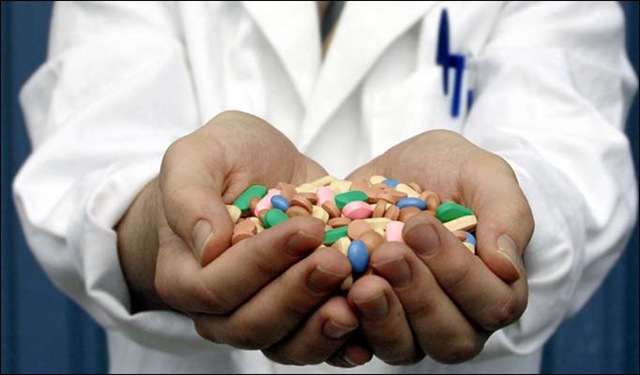
I obtained a flyer from the company Sanofi Aventis, clearly a company who makes pharmaceuticals..although it never mentions that on the flyer, The accompanying flyer was an advertisement for Insulin.
Here’s the Diet they recommended for a diabetic;
Breakfast; white egg omelet with low fat cheese, spinach, onions, a slice of whole wheat toast, 1 teaspoon light margarine spread, 2/3 cup light yogurt, half a grapefruit and coffee with artificial sweetener.
The Nutrition breakdown;
229 calories- woefully inadequate, he should be getting a third of his calories for the day!
30% of his calories were from fat- too low.
23% of calories were from protein- too low.
And 47% of his calories were from CARBOHYDRATES! No wonder they recommend this diet along with the insulin…he’s gonna need it! Plus he has gotten 17% of needed calcium, 7% of needed iron…this isn’t looking good for his health. He took in 41 mg. of Vitamin C, kinda scary. And he took in 438 IU. of Vitamin A..you need 50,000 a DAY! And it is easily gotten through diet alone.
Next; Lunch; 2 slices rye bread, 2 ounces turkey, 2 slices tomato, low fat cheese, light mayonnaise, small apple and a diet beverage! I swear, it really says that!
Lunch was 367 calories- kinda puny..and who eats 2 ounces of meat on a sandwich?
19% was from fat- way too low.
23% was from protein- are you seeing a pattern here…since these too numbers are always too low…guess what that does to the carb percentages? You guessed it!
Carbs were 58% of this intake. Eeeekkk! No way to handle diabetes, and a good way to develop diabetes.
He did get 59 mg of Vitamin C, big whoop. And 2638 IU of Vitamin A, far short still of that 50,000. He took in 14% of needed calcium, and along with the inadequate Vitamin C…no or low absorption of calcium…which he’s not getting enough of anyway.
So lets look at the whole day,. Dinner was 3 OUNCES of broiled salmon with 2 teaspoons canola oil, a whole wheat dinner roll. mixed greens with olive oil, 2/3 cup brown rice and a packet of sugar free chocolate pudding.
This poor man had 1200 calories. I’d starve to death. 29% was from fat, too low for good health and most of high fats were monounsaturated fats, those fats that make cholesterol stick together in the arteries, leads to heart disease, have no nutrition in them, are rancid and unsafe to ever heat at all.
18% of his calories were from protein, too low. And carbs were at 53%. They should be between 15 and 20% for healthy individuals, which is also ideal for diabetics…doesn’t THAT make sense?
But let’s take a look at the nutrition; the vitamins and minerals he got this day;
122 mg of Vitamin C for the whole day! Dismal.
4271 IU of Vitamin A, we need 50,000 to 75,000 from our diet each day.
He took in 54% of needed calcium…(he’ll need Boniva, Lipitor and then Viagra…)
He took in 51% of needed Iron.
And the FDA, the American Heart Association, the Diabetic Association will tell you this is good nutrition.
It’s a joke, and it pisses me off. They lie to sell drugs, keep the doctors offices and hospitals full. It’s time we all got mad and gave feedback about the way you have been duped into thinking that these illnesses “just happen”…they are preventable!
But not with the FDA approved “diet”.
Carbs is Carbs
Posted: July 27, 2010 Filed under: Food and it's Impact on Our Health Leave a comment I read an article in the NY Times last week that reported that even products labeled sugar free can raise your blood sugar. That is true, because the the sugar alcohols used, which are nether sugar nor alcohol.
But it got me to thinking about carbs, and how most Americans get most of thier calories from carbs. Hence, the obesity, diabetes, learning disorders, cancers, immune system disorders.. In other words; malnourishment. Carbs, without the right amounts of fats and high quality proteins to accompany them wear out our pancreas, keep us craving carbs…never feeling satisfied because it is impossible to get the depth of nutrition that we get from the right fats and high quality protein.
When we say carbs in this country most people think of grains; bread, pasta..or sugars. But fruits and vegetables are 95% carbohydrate. And even though they are not empty carbs, (like a donut, or rice)…they do have a lot of nutrients, too many of them are bad for you. Only 20% of your calories a day should come from carbohydrates; low glycemic vegetables, dark in color, rich in nutrients, a tiny amount of in season fruit, plenty of green leafy veggies, onions, mushrooms, tomatoes. Fruit with depth of color; blueberries, black berries.
Too many carbs, even from fruits and vegetables, cause harm to the body. They make the panaceas work too hard, blood sugar goes up and down, the body loses the ability to regulate blood sugar. Without the fats that help us properly digest the fruits and vegetables, regulate our hormones, control our appetites, have proper brain function we cannot ever be well nourished. Too many carbs contribute to elevated LDL levels. So do heated or rancid vegetable oils. Once outside of the food they came in they are no longer fit for human consumption, they oxidize, causing free radical production in the body. In other words, aging us too quickly.
You hear a LOT of hoopla nowadays about anti-oxidants. They come in pills, drinks…and fruits and veggies. In fact, ALL fruits and veggies have them. So eating a moderate amount, 20% a day of your calories gives you all the anti-oxidants you need. But too many veggies and fruits raises your need for them because of the damage done by too many carbs!
Notice that I have not mentioned grains as a part of a nutritious diet. They are not. They are devoid of nutrients, have an abundance of opioids (yes, morphine type derivatives),. They are indeed a relaxant. and we crave them…..boy do we crave them! They are addictive, Americans live on them, vegetarians depend on them as a mainstay in thier diet.
We need to eat like the cave men did; plenty of high quality organic fats, grass meats, free range chickens and eggs, rich, healthy organic butter and coconut oil, with organic fruits and veggies. Notice this is all WHOLE FOOD, not “products”.
Try it for a month, watch what happens.
a Great IDEA!
Posted: May 14, 2010 Filed under: Food and it's Impact on Our Health Leave a commentNational Geographic- SODIS Solution Posted: 13 May 2010 01:00 PM PDTSo, I’m a total nerd. Every year for Christmas the only gift I request of my husband is to renew my subscription to National Geographic.While finding clean water to support the population of Sub-Saharan Africa is an ongoing problem, in 2006 Ibelatha Mhelela, the principal at a primary school in Tanzania, implemented a simple solution.Turns out, even if people live nowhere near a clean source of water, as long as they have plastic bottles they can CREATE clean water. It’s known as the SODIS program. Basically, you peel the label off any plastic water bottle and fill it with standing water, as long as the water isn’t completely brown. Then place the bottle on top of a metal surface (for better heat conductivity) and leave it alone. Within six hours, the UVA radiation will kill parasites, bacteria and other harmful elements in the water, making it safe to drink.And don’t worry, Snopes assures me that it perfectly safe to drink water from bottles that have been left in the sun.
Why Is Breast Milk Best? It’s All in the Genes
Posted: May 13, 2010 Filed under: Food and it's Impact on Our Health Leave a commentScienceDaily (May 12, 2010) — Is breast milk so different from infant formula? The ability to track which genes are operating in an infant’s intestine has allowed University of Illinois scientists to compare the early development of breast-fed and formula-fed babies. They say the difference is very real.

Breast milk induces genetic pathways that are quite different from those in formula-fed infants, new research has found. (Credit: iStockphoto/Oleg Kozlov)
"For the first time, we can see that breast milk induces genetic pathways that are quite different from those in formula-fed infants. Although formula makers have tried to develop a product that’s as much like breast milk as possible, hundreds of genes were expressed differently in the breast-fed and formula-fed groups," said Sharon Donovan, a U of I professor of nutrition.
Although both breast-fed and formula-fed babies gain weight and seem to develop similarly, scientists have known for a long time that breast milk contains immune-protective components that make a breast-fed infant’s risk lower for all kinds of illnesses, she said.
"The intestinal tract of the newborn undergoes marked changes in response to feeding. And the response to human milk exceeds that of formula, suggesting that the bioactive components in breast milk are important in this response," she noted.
"What we haven’t known is how breast milk protects the infant and particularly how it regulates the development of the intestine," she said.
Understanding those differences should help formula makers develop a product that is more like the real thing, she said. The scientists hope to develop a signature gene or group of genes to use as a biomarker for breast-fed infants.
Many of the differences found by the scientists were in fundamental genes that regulate the development of the intestine and provide immune defense for the infant.
In this small proof-of-concept study, Donovan used a new technique patented by Texas A&M colleague Robert Chapkin to examine intestinal gene expression in 22 healthy infants — 12 breast-fed, 10 formula-fed.
The technique involved isolating intestinal cells shed in the infants’ stools, then comparing the expression of different genes between the two groups. Mothers in the study collected fecal samples from their babies at one, two, and three months of age. Scientists were then able to isolate high-quality genetic material, focusing on the RNA to get a gene expression or signature.
Donovan said that intestinal cells turn over completely every three days as billions of cells are made, perform their function, and are exfoliated. Examining the shed cells is a noninvasive way to examine intestinal health and see how nutrition affects intestinal development in infants.
Understanding early intestinal development is important for many reasons, she said.
"An infant’s gut has to adapt very quickly. A new baby is coming out of a sterile environment, having received all its nutrients intravenously through the placenta. At that point, babies obviously must begin eating, either mother’s milk or formula.
"They also start to become colonized with bacteria, so it’s very important that the gut learns what’s good and what’s bad. The baby’s body needs to be able to recognize a bad bacteria or a bad virus and fight it, but it also needs to recognize that even though a food protein is foreign, that protein is okay and the body doesn’t want to develop an immune response to it," she said.
If anything goes wrong at this stage, babies can develop food allergies, inflammatory bowel disease, and even asthma. "We’re very interested in frequent sampling at this early period of development," she added.
Donovan also would like to learn how bacteria in the gut differ in formula- and breast-fed babies, and this technique should make that possible. "Now we’ll be able to get a complete picture of what’s happening in an infant — from the composition of the diet to the microbes in the gut and the genes that are activated along the way."
Of potential clinical importance: The gene expressed most often in breast-fed infants is involved in the cell’s response to oxygen deprivation. Lack of oxygen is a factor in the development of necrotizing enterocolitis (NEC), a kind of gangrene of the intestine that can be fatal in premature babies. NEC is a leading cause of disease and death in neonatal intensive care units, with a reported 2,500 cases occurring annually in the United States and a mortality rate of 26 percent.
The study will appear in the June 2010 issue of the American Journal of Physiology, Gastrointestinal and Liver Physiology. Co-authors are Robert S. Chapkin, Chen Zhao, Ivan Ivanov, Laurie A. Davidson, Jennifer S. Goldsby, Joanne R. Lupton, and Edward R. Dougherty, all of Texas A&M University, Rose Ann Mathai and Marcia H. Monaco of the U of I, and Deshanie Rai and W. Michael Russell of Mead Johnson Nutrition. The study was funded by Mead Johnson Nutrition.
Not aging fast enough? Drink a soda!
Posted: May 4, 2010 Filed under: Food and it's Impact on Our Health, Non-Toxic Choices Leave a commentHoo boy. The American Beverage Association isn’t going to like this news one bit. Food companies now add significant amounts of phosphates to soda and other processed foods. And now researchers have found evidence that phosphates may accelerate aging (via Science Daily):

High phosphate levels may also increase the prevalence and severity of age-related complications, such as chronic kidney disease and cardiovascular calcification, and can also induce severe muscle and skin atrophy.
"Humans need a healthy diet and keeping the balance of phosphate in the diet may be important for a healthy life and longevity," said M. Shawkat Razzaque, M.D., Ph.D., from the Department of Medicine, Infection and Immunity at the Harvard School of Dental Medicine. "Avoid phosphate toxicity and enjoy a healthy life."
"Soda is the caffeine delivery vehicle of choice for millions of people worldwide, but comes with phosphorous as a passenger" said Gerald Weissmann, M.D., Editor-in-Chief of the FASEB Journal. "This research suggests that our phosphorous balance influences the aging process, so don’t tip it."
This has nothing to do with sweeteners, food coloring or any other previously established badness associated with soda and processed food — it’s a "new and improved" risk.
And what, pray tell, are these phosphates doing there in the first place? According to other scientists, food companies starting adding them at high levels only in the last 20 years:
…[W]hile a moderate level of phosphate plays an essential role in living organisms, the rapidly increasing use of phosphates as a food additive has resulted in significantly higher levels in average daily diets. Phosphates are added to many food products to increase water retention and improve food texture.
"In the 1990s, phosphorous-containing food additives contributed an estimated 470 mg per day to the average daily adult diet," he said. "However, phosphates are currently being added much more frequently to a large number of processed foods, including meats, cheeses, beverages, and bakery products. As a result, depending on individual food choices, phosphorous intake could be increased by as much as 1000 mg per day."
"Increase water retention and improve food texture"?! That’s worth shaving years off our lives for sure! We’re all lab rats now.
Happiness: No Purchase Necessary, Says Study
Posted: April 25, 2010 Filed under: Food and it's Impact on Our Health Leave a commentAnother great post from Treehugger

by Stephen Messenger, Porto Alegre, Brazil
It turns out, in this age of consumerism and gadgetry, that all this stuff we buy isn’t really making us any happier–in fact, it’s kind of bumming us out. According to the latest research, the key to finding happiness is something far more accessible than what product advertisements would like you to believe–simply enough, it’s in having new experiences. Whether it be in traveling to new places, taking a hike with some friends, or even participating in some green activism, investing in experiences delivers more bang for your buck than consumer products–which is good news considering that so much of the stuff we buy ends up as waste.
The study, which was conducted by psychologists at Cornell University, found that ‘experiences’ are more rewarding than ‘things’ because of the way people tend to evaluate their happiness by comparing themselves with others. For example, it is easier to feel crummy about some possession of yours if you learn that someone else has a superior version of it. "Experiences are inherently less comparative," says one researcher, which means they tend to bring happiness regardless of other’s.
Thomas Gilovich, one of study authors, tells the BBC Brasil:
Imagine you buy a flat screen TV, and you’re happy with it. But then you come to my house and I have a TV with a larger and better picture. That will disappoint and annoy you. But if you go on a vacation to the Caribbean and I also, you have your memories – your personal connection with the Caribbean – which no one else has and that made the holiday special.
According to the study, experiences are so effective at making us happy because we truly ‘own’ them in that they become integrated into our characters and help shape our personalities. Material goods, on the other hand, can really only be ‘possessed’ and rarely become a part of us in any meaningful way. Also, things we buy are subject to material degradation and devaluation, not to mention a gradual lessening in our appreciation for them. In contrast, experiences are transformed into memories, and even bad ones can be appreciated later on down the line.
"If you go on a hiking trip, and the weather is terrible, you might not view it as a pleasurable experience in the here and now. Instead, you may view it as a challenge, and over time remember the positive aspects of the experience more than the negative aspects," says Gilovich, via The Med Guru. "With material things you can’t do this, because they are what they are."
So, in our quest to find happiness in a day and age where so many are offering it in the form of stuff they’re selling, it turns out that being happy is a ‘no purchase necessary’ emotion. Not only does that mean we are happier producing less waste, but actively helping our planet could be one such experience that makes us even more so.
Vitamin D deficiency now so widespread that rickets is on the rise once again
Posted: March 15, 2010 Filed under: Food and it's Impact on Our Health, In The Kitchen with Millie- How To's 1 CommentSubmitted by vermont on March 14, 2010
 (NaturalNews) A clinical review paper published in the British Medical Journal is warning the public that widespread vitamin D deficiency is resurrecting the once-obsolete disease called rickets. According to Professor Simon Pearce and Dr. Time Cheetham, authors of the paper, people are getting far too little sunlight exposure which is necessary for the body to produce adequate levels of vitamin D.
Nowadays, children spend most of their time indoors staring at computer and television screens rather than playing outside in the sunlight. On the rare occasion that they venture outside, zealous parents are quick to apply UV-blocking sunscreen that prevents the sun’s useful UVB rays from penetrating their skin and producing vitamin D. The result is an epidemic of vitamin D deficiency that is leading to all sorts of illness and disease.
Rickets, a disease in which a person’s bones do not properly develop and harden, results when a person is getting too little vitamin D and most likely not enough calcium. The U.S. Recommended Daily Allowance (RDA) for vitamin D is a mere 400 IU, an amount that is said to be adequate for preventing rickets.
To put this amount into perspective, however, exposure to the summer sun for about 20 minutes is enough to produce up to 20,000 IU of vitamin D in the body. At this level, far more optimal health can be achieved. Yet the fact that children are beginning to develop rickets suggests that they are not even getting 400 IU a day, an amount that should be relatively easy to attain through a moderately healthy diet or a few minutes in the sun every day.
In the U.K., there are several hundred cases of rickets reported every year. According to statistics, more than 50 percent of the adult population in the U.K. is deficient in vitamin D as well. During the winter and spring months, more than 15 percent experience severe deficiency.
Researchers suggest that people with darker skin pigmentation are at a higher risk for rickets because they do not assimilate vitamin D from the sun’s UVB rays as easily as those with lighter skin do. Some experts believe that the changing ethnic profile of the U.K. may play a significant role in the onset of rickets while others point primarily to an overall lack of vitamin D among all ethnic groups.
Either way, the changing lifestyles among all people are partially to blame as people are not spending enough time outside and, when they do they are using too much sunscreen to obtain any sort of benefit from the sun. Overuse of sunscreen can be blamed on government health authorities, regulatory agencies, medical professionals, and mainstream media outlets that continually exaggerate the threat of developing skin cancer from sunlight exposure to the point that some people are afraid of getting any at all.
Sources for this story include:
http://www.guardian.co.uk/society/2…
http://www.naturalnews.com/028329_vitamin_D_rickets.html
Soda: A Sin We Sip Instead of Smoke?
Posted: February 15, 2010 Filed under: Food and it's Impact on Our Health Leave a comment
Is soda the new tobacco?
By MARK BITTMAN From the NYTimes

In their critics’ eyes, producers of sugar-sweetened drinks are acting a lot like the tobacco industry of old: marketing heavily to children, claiming their products are healthy or at worst benign, and lobbying to prevent change. The industry says there are critical differences: in moderate quantities soda isn’t harmful, nor is it addictive.
The problem is that at roughly 50 gallons per person per year, our consumption of soda, not to mention other sugar-sweetened beverages, is far from moderate, and appears to be an important factor in the rise in childhood obesity. This increase is at least partly responsible for a rise in what can no longer be called “adult onset” diabetes — because more and more children are now developing it.
Attention is being paid: Last week, the Obama administration announced a plan to ban candy and sweetened beverages from schools. A campaign against childhood obesity will be led by the first lady, Michelle Obama. And a growing number of public health advocates are pushing for even more aggressive actions, urging that soda be treated like tobacco: with taxes, warning labels and a massive public health marketing campaign, all to discourage consumption.
A tax on soda was one option considered to help pay for health care reform (the Joint Committee on Taxation calculated that a 3-cent tax on each 12-ounce sugared soda would raise $51.6 billion over a decade), and President Obama told Men’s Health magazine last fall that such a tax is “an idea that we should be exploring. There’s no doubt that our kids drink way too much soda.”
But with all the junk food and U.F.O.’s (unidentifiable food-like objects) out there, why soda? Why a tax? And, most important, would it work?
To the beverage industry, the idea is not worth considering. Susan Neely, the president of the American Beverage Association, acknowledges that obesity is a problem but says: “If you’re trying to manage people being overweight you need a variety of behavior changes to achieve energy balance — it can’t be done by eliminating one food from the diet.”
Even if soda consumption were to drop, say critics of the tax, a drop in childhood obesity isn’t guaranteed. “Simply pricing one product higher,” says Derek Yach, a senior vice president of global health policy at PepsiCo, the big food company that has spoken the most seriously about building a healthier portfolio, “would lead to unknown effects on total dietary consumption. It may even lead to worse situations: people may stop spending on one food and eat more of another, so taxing high levels of sugar may lead to eating higher levels of fat.”
Still, the idea of a special tax on soda, similar to those on tobacco, gasoline and alcoholic beverages, is attracting more interest. Advocates of a tax note that sugared beverages are the No. 1 source of calories in the American diet, representing 7 percent of the average person’s caloric intake, according to government surveys, and up to 10 percent for children and teenagers. These calories, they point out, are worse than useless — they’re empty, and contribute to a daily total that is already too high.
“What you want,” says Kelly Brownell, director of Yale’s Rudd Center for Food Policy and Obesity, “is to reverse the fact that healthy food is too expensive and unhealthy food is too cheap, and the soda tax is a start. Unless food marketing changes, it’s hard to believe that anything else can work.”
Advocates argue that a soda tax would reduce consumption and pay for anti-obesity campaigns. In an opinion piece in The New England Journal of Medicine last year, Dr. Brownell and Thomas R. Frieden, the director of the C.D.C. and former New York City health commissioner, estimated that in New York State alone a penny-per-ounce soda tax would raise $1.2 billion annually.
Small excise taxes on soda are already in place in Arkansas, Tennessee, Virginia, Washington and West Virginia, and Chicago imposes a 3 percent retail tax on soft drinks. Soda taxes were proposed in at least 12 other states in 2009, though none were approved. Mississippi is considering legislation that would tax the syrup used to sweeten soda; the mayor of Philadelphia is weighing a tax on soda and other sugar-sweetened drinks, and Gov. David Paterson of New York has indicated that he will recommend a penny-per-ounce tax on sugared beverages in his 2011 budget.
The penny-per-ounce tax, favored by Dr. Brownell and others, would produce a significant increase in retail costs: the 12-pack of Coke on sale for $2.99 would go for $4.43 and a 75-cent can would rise to 87 cents. These increases, Dr. Brownell estimates, would reduce the annual per capita consumption of soda by more than 11 gallons, to 38.5 gallons. “And the revenue,” he says, “could be used to subsidize fruits and vegetables, fund obesity prevention programs for children and home economic classes in schools, and more.”
The model, clearly, is tobacco. Dr. Frieden, who promoted a soda tax when he was a health commissioner, sees further parallels between soda and tobacco: “There are aspects of the food industry that are reminiscent of tobacco — the sowing of doubt where there’s no reasonable doubt, funding of front groups, use of so-called experts, claims that new products which are safer for consumers are available, and the claim that they are not marketing to children.”
The public war against tobacco has worked, if imperfectly: Americans smoke at half the rate they once did, half of all smokers have quit, and the tobacco companies finance strong antismoking campaigns.
In the case of tobacco, the health risks of smoking were clear. But the beverage industry contends that science does not back up the assertion that childhood obesity is even partly caused by soda consumption, and has sought to make the discussion about personal choice and freedom. “Soda has calories, and food with calories causes people to put on weight when consumed in excess,” says J. Justin Wilson a self-described “libertarian consumer advocate” and senior research analyst for the Center for Consumer Freedom, an industry-sponsored advocacy group. “But there is no unique link between soda and obesity.”
Besides, says Ms. Neely, the industry is taking measures: “The beverage industry supports real solutions to obesity and continues to step up to do its part. We’ve removed full-calorie soft drinks from schools across the country and, in support of Mrs. Obama’s initiative, will place the full calories for our products on the front of our containers.”
Perhaps the process of reducing the drinking of sweetened beverages need not be so contentious. “There are parts of the industry that want to be constructive” says Dr. Frieden. “Big Food doesn’t have to become the next tobacco.”
With this Dr. Yach agrees, and though he clearly thinks a soda tax won’t work, he’d like to see a greater government role. “The overall governmental voice and investment in solutions required has been stunningly weak. They need to forcibly say, ‘The fundamental issue is one of calorie balance, and here’s what you need to do.’ ”
The problem, says Dr. Frieden, is that, “Obesity is a major health problem that’s getting worse, and it’s clear that exhorting individuals to eat less and exercise more is not going to turn things around.”
It may be time to try something a little more forceful.
Mark Bittman writes the Minimalist column for the The Times and is the author, most recently, of “Food Matters: A Guide to Conscious Eating.”

Forget Recycling, Save Time with Precycling
Posted: February 12, 2010 Filed under: Food and it's Impact on Our Health Leave a commentFrom GOOD Blog

Although recycling is crucial to the future of our planet, it still contributes to pollution. Recycled waste builds up and produces toxins when melted down. By precycling, you lower the amount of products that need to be recycled. This involves purchasing products with minimal packaging and maximum reusability. When you precycle, you save waste from landfills by reusing, repairing, and donating what you already have.
Learn how to precycle with these simple lifestyle switches:
Carry reusable bags. Bring your own bags when running errands. If you forget your bags always choose paper over plastic. Paper bags can be reused and can be recycled much easier than plastic ones. Some grocery stores will even enter you into a weekly drawing for free groceries if you bring your own bags. Who doesn’t want to be a winner? Baggu make an amazing assortment of reusable shopping bags in more than 30 colors.
Pick products with minimal packaging. Avoid buying items that have multi-layer packaging bigger than the product itself. In most cases you can’t avoid packaging all together, so purchase products made from recycled materials.
Refuse junk mail. Be the boss of your mailbox with services like Tonic Mail Stopper and Proquo.
Give away, don’t throw away. Donate old clothing, toys, and electronics to your local Goodwill or community center. If you have old magazines and books you want to get rid of donate them to local hospitals and libraries.
Repair broken items. Always try and repair before you throw away. How to Mend It is a wonderful resource for how to fix just about anything. For further repair advice, read Platform21’s Repair Manifesto.
Drink from refillable bottles and mugs. Kick your water bottle addiction by buying a Sigg. If you buy a coffee every morning, bring your own reusable mug or try I’m Not a Paper Cup for coffee shop trips.
Dispose your disposable habit. Eliminate the use of one-time use products such as razors, plastic eating utensils, and cigarette lighters. Instead buy reusable, refillable, and washable items.
Rent it, don’t buy it. Borrow or rent tools you wont use everyday. Many hardware stores have the rent option instead of buy.
London is Good Enough to Eat
Posted: February 8, 2010 Filed under: Food and it's Impact on Our Health 1 CommentFrom Treehugger

Image from mail on line
There is something so irresistible about these vegetable "foodscapes". Examining the detail and the ingenuity can provide endless minutes (surely not hours) of fun. The Houses of Parliament are built from asparagus, green beans and runner beans, mixed with baby sweet corn to depict the intricate stonework. Look out for the watermelon dome.
This depiction of London’s skyline took three weeks and used 26 different types of fruit and vegetables. Carl Warner and his team of five model makers call them still life pictures. They have an ulterior motive: they are promoting healthy eating as well as their art.

Images from mail on line
The London Eye has green beans as spokes and its pods are carefully crafted out of baby cherry tomatoes. Check out the radishes, runner beans, rhubarb and a lemon as well.

Then there’s the iconic Tower Bridge. It’s made made from runner beans, celery, and Shredded Wheat, and sits on pineapple bases.
Warner does moving pictures as well. The Caramel Sea is a sea of yummy sauce flowing gently over apple rocks and croissant cliffs. It’s all in good fun and you can buy the prints if you are really obsessed, or make your own.
It’s not that easy. First Warner sketches out a traditional landscape scene before introducing the food. Each scene is then captured in separate layers to prevent the food from wilting. He then uses computer technology to combine them into a single final print. To give a realistic 3-D feel to the photos, each still life is composed on an 8 foot by 4 foot table. The foreground is only about 2 feet across.


 Meal Delivery Service by Millie Barnes