Spinach and Artichoke Dip
Posted: June 19, 2012 Filed under: Food and it's Impact on Our Health 2 CommentsA woman who worked for me in my restaurant came in one day and was describing the artichoke and spinach dip (with sour cream and butter) that she had eaten the night before. She loved it but felt terrible the next day. so we came up with this version which we think is even better. It’s gluten and lactose free and is very rich, buttery and flavorful.

2 Tablespoons butter
1 medium onion- diced
2 cans artichoke hearts packed in water (not oil), drained
1 cup frozen spinach (or 1 pound fresh, steamed and chopped)
1/2 teaspoon dried thyme or 1 teaspoon fresh, chopped
4 Tablespoons fresh basil- chiffonade
1 1/2 Tablespoon Rice Parmesan
salt and pepper to taste
Optional; You can use about 1 Tablespoon or so of soy sour cream.
1) Sauté onions in butter, until transparent. with slotted spoon, place onions in food processor with artichoke hearts. Blend until very smooth. add thyme, rice sour cream, parmesan, salt and pepper. Blend again.
2) Now add spinach and blend just until spinach is evenly chopped, but still in flecks. you don’t want to turn your dip all green!
3) Chill and serve with rice crackers or Ezekiel bread toast points.
Cooking with Olive Oil Is NOT Healthy!
Posted: June 19, 2012 Filed under: Food and it's Impact on Our Health Leave a comment

A local nutritionist posted an article today claiming that her recipe for Shrimp Scampi was actually “healthy”.
Um, actually, Shrimp Scampi is already very healthy if you use real butter that is organic.
This idea that we should be cooking with vegetable oils started when we Americans started eating low fat and we became terrified of saturated fats. BUT if the saturated fats we are eating are from organically grown of grass fed animals…then it is not only healthy, it is crucial for our health! Saturated fats contain the depth of nutrition we need for ALL biological functions, to build an immune system, for brain health, as an anti-depressant, to regulate hormone production…I could go on and on about the benefits of these crucial fats.
But the bottom line on cooking with vegetable oils (corn, canola, olive, peanut…) is that it is DANGEROUS to heat them! They become rancid and oxidized as well as harmed by heat. When you heat vegetable oils they get sticky. Remember when you get the pan and oil too hot and it becomes one with the pan..sticky and hard to get out?
It does the same when it is in your arteries, leading to clumping of cholesterol! But heat butter and you can pan sear and sauté on higher heat with no adverse effects to the fats.
So make that Scampi with organic butter, use butter at each meal along with coconut oil, beef fat, chicken fat…just make then organic! And skip the pasta to make it low carb…so that’s it’s good for you!
Never Buy Celery Again..
Posted: June 17, 2012 Filed under: Gardening Leave a commentOn Gizmodo

How to Grow Unlimited Celery Without Entering the Contra Code
That little nubby celery stump that you normally throw away is valuable. It can live its own 99 lives. Here’s how to use it to punch your ticket to vegetative financial freedom.
You Should Do This If: You enjoy eating celery and don’t want to pay for it anymore.
Materials and Tools Required:
- 1 bunch of celery
- 1 knife
- 1 shallow dish
- 1 plant pot and general-use potting soil
- 1 sunny windowsill
Cut the celery stump from the stalks about two inches from the bottom end (where they all connect—you know, the base). Fill the shallow dish with tepid water, set the stump in there too (cut side up), and put the dish in a sunny windowsill.
Gluten Free Tortillas
Posted: June 14, 2012 Filed under: Food and it's Impact on Our Health 1 CommentThere seems to be a misconception that CORN is gluten free. It is not. It contains gluten but it a more water soluble form of gluten similar to the one in oats and spelt. This means that you will not experience the degree of digestive symptoms but it triggers symptoms allergy or intolerance symptoms; fibromyalgia, tinnitus, dizziness, build up of toxins and mucus in the body, low energy, learning disorders because of changes in brain chemistry, insomnia and headaches.

Here is a Corn and Gluten Free tortilla recipe. Makes 6 top 8 tortillas.
1 cup sweet rice flour
1/3 cup potato starch
1/3 cup tapioca flour
1/3 cup teff flour
2 teaspoons xantham gum
1 teaspoon baking powder
1/2 teaspoon salt
1/2 teaspoon sugar
2 Tablespoons butter, coconut oil or beef fat
1 cup hot water
1) Heat black iron griddle to medium hot.
2 ) Combine all dry ingredients, then cut in fat using a pastry cutter. Add hot water, starting with 3/4 cup and mixing well. Continue adding water until a soft, cohesive dough is formed. It should be neither dry or wet feeling.
3) You can use a rolling pin but I place a ball of dough between two plastic bags and press down until the desired thickness is reached.
4) Bake on a hot griddle, turning only once when the edges of the tortilla start curling up and the surface on top looks dry.
5) The second side browns rather quickly.
6) Place all tortillas in a cold oven directly on rack. When you are ready to serve them turn on the oven to 300 and when the tortillas are warm remove from oven, wrap in cloth napkin and take to the table. They will be hot when the oven is almost preheated.
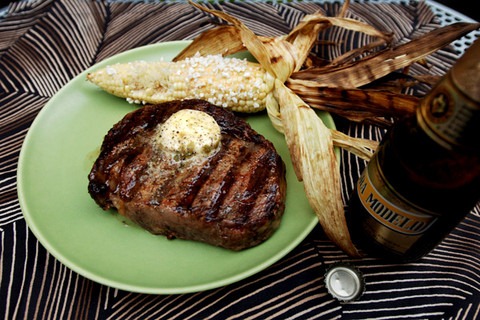
Grilled Rib-Eyes with Chile-Lime-Tequila Butter Recipe
Posted: June 14, 2012 Filed under: Food and it's Impact on Our Health Leave a commentFrom Chow– a Great website for food info, how-toes and recipes. This is one of the dishes I will be making f0r the Meal Delivery Service, it’s a favorite of mine.
- 6 rib-eye steaks
- Olive oil- for grille
- butter
- Heat a gas or charcoal grill to medium high (about 375°F). Brush both sides of the steaks with butter and season well with salt and freshly ground black pepper. Let steaks rest at room temperature at least 15 minutes before grilling.
- When the grill is heated, place steaks on the grate and close the lid. After about 4 minutes, rotate steaks a quarter turn to create crosshatched marks. After another 3 to 4 minutes, flip steaks over. After another 4 minutes, rotate steaks a quarter turn and grill to desired doneness. (It will take about 15 minutes of total cooking time to reach an internal temperature of 130°F for medium rare.) Remove steaks from the grill and let rest 7 to 10 minutes before serving.
- To serve, slice compound butter into six rounds and top each steak with a round.
Chile-Lime-Tequila Compound Butter
6 tablespoons unsalted butter (3/4 stick), at room temperature
2 teaspoons minced jalapeño or Serrano chiles, seeds and membranes removed
1 tablespoon freshly squeezed lime juice (from 1/2 medium lime)
2 teaspoons tequila (optional)
2 teaspoons freshly ground black pepper
1 teaspoon kosher salt
- Place butter in a medium bowl and, using a rubber spatula, soften until it’s very spreadable. Add remaining ingredients and mix until thoroughly combined.
- Place compound butter on a sheet of plastic wrap. Roll into a log and twist the ends to seal. Place butter in the refrigerator to harden.
Do You Shop Local?
Posted: June 13, 2012 Filed under: Going Green; How and Why... Leave a commentIt’s easy to re-post what we see on the Internet, we all “Like” stuff all the time..
How often do we REALLY support what we say we do? Everyone calls for us to make greener choices, buy local, do the right thing!

But how many of you breeze through Publix each week grabbing veggies, dish soap, meat?
JD Beef has Grass Fed Beef at Riverside Arts Market every Saturday for SIX DOLLARS A pound!
Green Lotus Organics has the best soaps, lotions and lip balms in town! You can find them in little local shops all over town.
Green Man Gourmet has amazing salts, beer, herbs and spices in Avondale.
Grassroots has local cage free eggs at a WAY better price than Publix! You can green cleaners, make up, most of what you need AND avoid sending your money out of Jax by way of Whole Foods.
The Cake Shop of San Jose is on Hendricks with cakes that are delicious and stunningly beautiful! Unless you are needing gluten free these cakes are your best bet instead that tasteless stuff at Publix.
Clothing made locally is readily available at Bad Girls Boutique, Edge City has had amazing hip clothing for years in Avondale. Laurie Dyer has beautiful cotton tie dyed clothing at RAM every week. For dressier clothing Blair Woolverton’s place in Avondale is awesome.
You NEVER need go to big box stores, there are so many choices locally.
There are Farmer’s Markets AL:L over town now! The Veggie Bin delivers. There’s Avondale Farmers Market, Jacksonville Farmers’ Market is open 27/7, The Jacksonville Landing Farmers and Arts Market is downtown, Jacksonville Seed Exchange is a great place for exchanging seeds.
Chamblin’s both Uptown and on Roosevelt have all the books you could ever possibly read and you are recycling!
No need to go to Lowe’s or Home Depot for lumber, we have local lumber companies. Philip’s Garden Store and Trads’ Garden Store both ROCK!
There are Consignment shops ALL over town, Goodwill, Local Ace Hardware’s…I could go on and on and on…

Let’s SUPPORT EACH OTHER!!!
Eating Organic Economically; How I Eat and Cook all Week.
Posted: June 13, 2012 Filed under: Food and it's Impact on Our Health Leave a commentI hear all the time from friends and clients, “It’s too expensive to eat organic!” If you eat packaged foods, buy gluten free or organic prepared foods, of course it is expensive. You pay for convenience. But change your perspective, make most foods from scratch and you will be able to lower your food bills, even eating organically.
1 whole organic chicken 10.00
1 pound grass-fed hamburger 6.00 a pound from JD Beef at RAM
18 eggs- Grassroots Market 5 Points– 3.99
1 pound Applegate Farms turkey bacon 3.79- Publix has it for 1.80 less than health foods stores!
½ pound salmon 4.99
1 pound butter 5.89
1 pound carrots 2.99
3 large onions
¾ pound coffee 3.00 a week (6.00 a pound, organic and free trade from Green Mountain Coffee- delivered to my door every 5 weeks).
3 green peppers bell peppers
1 bag celery 1.99
1 pint blueberries 3.99
1 bunch kale, Swiss chard, spinach, Malabar spinach or broccoli
3 large sweet potatoes 2.99
3 beefsteak tomatoes
2 Garlic bulb
2 limes .99 and 2 lemons 1.10
45.73- total grocery bill to meet all my nutrient and calorie needs
The items in redare the things I grow in sub-irrigated containers; I used 5 gallon buckets, soil, perlite and made sub-irrigated containers. Growing from seed is cheap.
If you have a backyard, or a deck for container gardening, or grow lights indoors, you can save further in ways that processed food eaters can’t: Almost all year I grow salad greens, herbs, braising greens of some kind and cucumbers and tomatoes. (The salad herbs oregano, thyme, mint, basil, cilantro and parsley never quit here in any season!)
Items I make myself; almond butter made in the Champion juicer, coconut milk yogurt, mayonnaise, salad dressings. These things are very inexpensive to make, very easy to do…not much labor.
Starting on the day I shop, here’s how I eat and cook all week, very simply, but extremely healthy.
First Night; I roast a whole chicken by rubbing butter all over it, salt and peppering it, maybe some garlic or lemon juice and zest. Then roast it for 30 minutes on 450°. Then turn the oven down to 300° and bake for 30 minutes. Now turn the oven back up to 400° and roast that bird just 165°, checking for temp in the thickest part of the breast, not hitting the bone. Save the pan drippings for cooking, save the carcass for stock. Here’s a link to making stock- https://optimumnutrition.wordpress.com/2009/08/12/chicken-stock-101/
That is dinner the first night; a leg and thigh and some breast meat, pour pan drippings over it, using fat and gelatin in roasting pan. With some sautéed peppers and onions and a few slices of ripe tomato, here’s a great dinner.
Breakfast is usually 2 eggs, fried in butter or coconut oil, 3 slices of turkey bacon, some coconut milk yogurt and a handful of blueberries. And 6 ounces of Turkish coffee, ground and brewed each morning. Some mornings I have Ezekiel bread.
Lunch is usually whatever I’ve had for dinner the night before, or an Ezekiel bread sandwich, with meat, fresh olive oil mayonnaise, or almond butter. Maybe Ezekiel with almond butter and sauerkraut, toasted. Usually a cup of meat stock and/or coconut milk yogurt.
Second night; take the rest of the meat off of the chicken, make stock. Have a great chicken soup that night, add sautéed celery, carrots, bay leaf. Maybe some kale sautéed in chicken fat, some gelatin from chicken pan drippings, onions, mushrooms. Sliced tomatoes.
Third night; 1/3 pound hamburger patty, sautéed onions and peppers, 8 ounces chicken stock, sliced tomatoes, coconut milk yogurt.
Fourth night; fresh salmon with dill, Dijon and fresh lemon juice, sautéed peppers, mushrooms and onions, sliced tomatoes. A cup of chicken stock.
Fifth night; Chicken meat prepared however you want, sautéed kale, ½ sweet potato, sautéed mushrooms. Coconut milk Crème Brule and a few blueberries.
Sixth night; 1/3 pound hamburger patty, pan gravy, ½ sweet potato with butter, kale with onions.
Seventh Night; Rest of hamburger with peppers, onions, tomato, salsa, avocado and fresh corn tortilla.
Shop again, or have leftovers, or breakfast for dinner.
Extras I buy if I can afford them; cherries, plantains to fry, dark chocolate, steaks, roasts, Ezekiel bread, wine.
Things I always have in the kitchen; raw butter, Tropical Traditions Coconut Oil and their coconut cream (to use in recipes that call for heavy cream or for decadent desserts) Dijon mustard, olives, herbs and spices, an array of vinegars, olive oil, sesame oil, masa harina, coconut oil, lemons, limes, Kava tea, organic coffee, Yerba Mate Tea, quinoa, rice, teff, coconut and tapioca flours, coconut milk, curry sauces, olives.
Bear in mind that this is a very basic dinner menu, showing how to meet all of your calorie and nutrient needs affordably. These dinners reflect basic eating, by adding other ingredients I can get real fancy, and I do at times.
Eating Organic Economically; How I Eat and Cook all Week.
Posted: June 13, 2012 Filed under: Gardening, Going Green; How and Why..., Non-Toxic Choices 2 Comments
I hear all the time from friends and clients, “It’s too expensive to eat organic!” If you eat packaged foods, buy gluten free or organic prepared foods, of course it is expensive. You pay for convenience. But change your perspective, make most foods from scratch and you will be able to lower your food bills, even eating organically.
1 whole organic chicken 10.00
1 pound grass-fed hamburger 6.00 a pound from JD Beef at RAM
18 eggs- Grassroots Market 5 Points– 3.99
1 pound Applegate Farms turkey bacon 3.79- Publix has it for 1.80 less than health foods stores!
½ pound salmon 4.99
1 pound butter 5.89
1 pound carrots 2.99
3 large onions
¾ pound coffee 3.00 a week (6.00 a pound, organic and free trade from Green Mountain Coffee- delivered to my door every 5 weeks).
3 green peppers bell peppers
1 bag celery 1.99
1 pint blueberries 3.99
1 bunch kale, Swiss chard, spinach, Malabar spinach or broccoli
3 large sweet potatoes 2.99
3 beefsteak tomatoes
2 Garlic bulb
2 limes .99 and 2 lemons 1.10
45.73- total grocery bill to meet all my nutrient and calorie needs
The items in red are the things I grow in sub-irrigated containers; I used 5 gallon buckets, soil, perlite and made sub-irrigated containers. Growing from seed is cheap.
If you have a backyard, or a deck for container gardening, or grow lights indoors, you can save further in ways that processed food eaters can’t: Almost all year I grow salad greens, herbs, braising greens of some kind and cucumbers and tomatoes. (The salad herbs oregano, thyme, mint, basil, cilantro and parsley never quit here in any season!)
Items I make myself; almond butter made in the Champion juicer, coconut milk yogurt, mayonnaise, salad dressings. These things are very inexpensive to make, very easy to do…not much labor.
Starting on the day I shop, here’s how I eat and cook all week, very simply, but extremely healthy.
First Night; I roast a whole chicken by rubbing butter all over it, salt and peppering it, maybe some garlic or lemon juice and zest. Then roast it for 30 minutes on 450°. Then turn the oven down to 300° and bake for 30 minutes. Now turn the oven back up to 400° and roast that bird just 165°, checking for temp in the thickest part of the breast, not hitting the bone. Save the pan drippings for cooking, save the carcass for stock. Here’s a link to making stock- https://optimumnutrition.wordpress.com/2009/08/12/chicken-stock-101/
That is dinner the first night; a leg and thigh and some breast meat, pour pan drippings over it, using fat and gelatin in roasting pan. With some sautéed peppers and onions and a few slices of ripe tomato, here’s a great dinner.
Breakfast is usually 2 eggs, fried in butter or coconut oil, 3 slices of turkey bacon, some coconut milk yogurt and a handful of blueberries. And 6 ounces of Turkish coffee, ground and brewed each morning. Some mornings I have Ezekiel bread.
Lunch is usually whatever I’ve had for dinner the night before, or an Ezekiel bread sandwich, with meat, fresh olive oil mayonnaise, or almond butter. Maybe Ezekiel with almond butter and sauerkraut, toasted. Usually a cup of meat stock and/or coconut milk yogurt.
Second night; take the rest of the meat off of the chicken, make stock. Have a great chicken soup that night, add sautéed celery, carrots, bay leaf. Maybe some kale sautéed in chicken fat, some gelatin from chicken pan drippings, onions, mushrooms. Sliced tomatoes.
Third night; 1/3 pound hamburger patty, sautéed onions and peppers, 8 ounces chicken stock, sliced tomatoes, coconut milk yogurt.
Fourth night; fresh salmon with dill, Dijon and fresh lemon juice, sautéed peppers, mushrooms and onions, sliced tomatoes. A cup of chicken stock.
Fifth night; Chicken meat prepared however you want, sautéed kale, ½ sweet potato, sautéed mushrooms. Coconut milk Crème Brule and a few blueberries.
Sixth night; 1/3 pound hamburger patty, pan gravy, ½ sweet potato with butter, kale with onions.
Seventh Night; Rest of hamburger with peppers, onions, tomato, salsa, avocado and fresh corn tortilla.
Shop again, or have leftovers, or breakfast for dinner.
Extras I buy if I can afford them; cherries, plantains to fry, dark chocolate, steaks, roasts, Ezekiel bread, wine.
Things I always have in the kitchen; raw butter, Tropical Traditions Coconut Oil and their coconut cream (to use in recipes that call for heavy cream or for decadent desserts) Dijon mustard, olives, herbs and spices, an array of vinegars, olive oil, sesame oil, masa harina, coconut oil, lemons, limes, Kava tea, organic coffee, Yerba Mate Tea, quinoa, rice, teff, coconut and tapioca flours, coconut milk, curry sauces, olives.
Bear in mind that this is a very basic dinner menu, showing how to meet all of your calorie and nutrient needs affordably. These dinners reflect basic eating, by adding other ingredients I can get real fancy, and I do at times.
Posted: June 13, 2012 Filed under: Food and it's Impact on Our Health Leave a comment


These grain free cookies are lower on the glycemic index than most cookie recipes. They are gluten lactose and soy free!
Posted: June 13, 2012 Filed under: Food and it's Impact on Our Health Leave a comment


Years ago I set out to make Pad Thai at home. I couldn’t get it and my kids said it wasn’t quite right. So I asked my housekeeper, who was from Thailand, to help. We made the dish together and she said she knew what was wrong. She told me it needed ketchup! I was flabbergasted! She explained to me that ketchup was a condiment in China used for thousands of years! She was right and here is the results!


 Meal Delivery Service by Millie Barnes