Nutrition For Life Seminar
Posted: February 10, 2013 Filed under: In The Kitchen with Millie- How To's | Tags: #Nutrition, Paleo Leave a comment
But What Do I Put In My Coffee?
Posted: February 10, 2013 Filed under: Recipes 3 CommentsFor 27 years I have been teaching my clients how to eat dairy and gluten free and there are always a few questions that come up (usually with a panicked look!)…
Can I still drink wine? Yes
Can I still eat Chocolate? Yes
What in the world do I put in my coffee? My best advice has been almond milk, and advised them how to make it.
Then a few years ago SO products came on the market. While far cleaner in ingredients than most creamers it’s not perfect. It contains GUAR GUM), ORGANIC DRIED CANE SYRUP, NATURAL FLAVORS, COLORED WITH TITANIUM DIOXIDE, DIPOTASSIUM PHOSPHATE, CARRAGEENAN. NOT stuff we want in our bodies!
Then someone posted on Facebook a recipe. I followed the link and found a cool website;

Here’s the recipe;
Coconut Milk Creamer
I put a can of Thai Kitchen coconut milk into the food processor, added one organic egg and 2 tablespoons of Tropical Traditions coconut oil and a teaspoon of vanilla.
Blend all of the above in the food processor or blender.
It’s great coffee creamer and makes great whipped cream…use it on berries!!
Salt Pigs
Posted: February 6, 2013 Filed under: Products Leave a commentI am a big fan of open salt containers. As a Chef I go through a lot of salt! I use French Fleur de Sel as a salt for most sautéing, fine for vegetable dishes, coarse for pan searing meat, fine pink Himalayan as a finishing salt. I love the Bonfire Smoked Salt from Greenman Gourmet in Avondale. Using an open container means I can grab some with my fingers and distribute it evenly over my food.
I found an article on TheKitchn, a round up of them on Apartment Therapy’s wonderful site. They are beautiful but a bit pricy;


I had these made by an artist that is at Riverside Arts Market every Saturday; Wood Turnings by Jerry Vaughan.

There are Nanoparticles in Your Food
Posted: February 6, 2013 Filed under: Food and it's Impact on Our Health, Non-Toxic Choices Leave a comment
Study Looks at Particles Used in Food
By STEPHANIE STROM
Published: February 5, 2013
Nanomaterials, substances broken down by technology into molecule-size particles, are starting to enter the food chain through well-known food products and their packaging, but there is little acknowledgment by the companies using them, according to a new report from a nonprofit group that works to enhance corporate accountability.
Some companies may not even know whether nanomaterials are present in their products, the corporate accountability group As You Sow said.
Only 26 out of 2,500 companies, including PepsiCo, Whole Foods and the corporate parent of Pizza Hut and Taco Bell, responded to a survey from As You Sow about their use of nanomaterials.
“Only 14 said they don’t use nanomaterials, and of those only two had any policies on the use of nanomaterials,” said Andy Behar, chief executive of As You Sow. Various food companies have said they are interested in nanotechnology, which can help make products creamier without additional fat, intensify and improve flavors and brighten colors.
Their small size allows nanoparticles to go places in the body where larger particles cannot and enter cells. They have been found in the blood stream after ingestion and inhalation, and while research on their health effects is limited, studies have shown them to have deleterious effects on mice and cells.
“We’re not taking a no nano position,” Mr. Behar said. “We’re saying just show it’s safe before you put these things into food or food packaging.”
He noted that the European Union requires labeling of foods containing nanomaterials and that the European Food Safety Authority has published guidance for assessing nanomaterials in food and animal feed.
Last April, the Food and Drug Administration issued an unusually emphatic statement on nanomaterials, saying it did not have enough data to determine the safety of nanomaterials in food.
The Environmental Protection Agency is evaluating various nanoparticles used in consumer products, like sunscreens.
As You Sow tested 10 varieties of powdered doughnuts for the presence of nanoparticles. With the help of an independent lab, it found that Hostess Donettes and Dunkin’ Donuts Powdered Cake Donuts tested positive for the presence of titanium dioxide materials of less than 10 nanometers. Titanium dioxide is used to brighten white substances. The nano variety is under investigation by the E.P.A.
Michelle King, a spokeswoman for Dunkin’ Donuts, said the company was working with its supplier to validate As You Sow’s findings. Hostess Brands went out of business during the test and closed its factories.
A version of this article appeared in print on February 6, 2013, on page B5 of the New York edition with the headline: Study Looks At Particles Used in Food.
Beet Kvass Recipe with Wild Fermentation
Posted: February 6, 2013 Filed under: Food and it's Impact on Our Health, Recipes 6 Comments
 Cool website Holistic Squid carried this article on making Beet Kvass using wild fermentation, meaning you do not inoculate it.
Beet Kvass Myth Busting (& Recipe)

Have you been taught that you must use whey or another culture starter when making beet kvass? (You don’t.)
Are you dairy free, on a tight budget, on the GAPS or SCD diet and therefore cannot buy and use whey or other culture starters? (Don’t worry!)
Have you been taught that if you do not use a culture starter to make beet kvass, it must contain so much salt that it is not pleasurable to drink? (Not true.)
For these reasons or more, have you been living without the beauty of beet kvass in your life? These are all common misconceptions and I think it’s time we all set them aside and empower ourselves to harness the transformative powers of mother-nature.
Beet Kvass is comprised of simple ingredients and is simple to make through the process of wild fermentation. Fancy fermentation equipment is fun, convenient, and pretty but rarely a must.
What is Beet Kvass?
Here in my kitchen, we call it blood of the earth. Indeed I do taste the earth when I sip this crimson liquid. Beet Kvass is an age-old tonic associated with many health benefits including efficient hydration. Fermented beverages are the original sports drinks. Like other lacto-fermented drinks, kvass is more hydrating than even water. In order to remain hydrated, our bodies require a balance of electrolytes. Cultured beverages like kvass help restore this balance without the sugar and preservatives of modern “sport drinks”.
Beet Kvass is traditionally heralded as a blood and liver tonic. And indeed this ancestral knowledge is meted out in science. In fact, beets are high in betacyanin which can dramatically increase the oxygen-carrying ability of the blood.
Personally, beet kvass gives me a feeling of energy and clarity. I LOVE beets and the taste of beet kvass. If you don’t love the taste but do want the health benefits of this tonic, try adding it to a soup when serving or use it to make a virgin ‘dirty martini’ or ‘bloody mary’. The taste is perfect for these concoctions and a big hit at any dinner party I’ve ever had.
Beet Kvass Ingredients
Filtered water
3-4 beets
1 ½ tablespoon unrefined sea salt
Beet Kvass Method
Wash the beets of any dirt but, do not scrub or peel the beets. Our aim is to keep the delicate bacteria on the skin of the beets in tact so that we can encourage their multiplication during fermentation.
Add the beets to a 1-gallon jar.*
Add 1 ½ tablespoon unrefined sea salt
Add filtered water to ½ inch below lid
Affix lid tightly and label with date.
Allow to ferment for 1 ½ weeks or more out of direct sunlight.
You may strain through a cheese-cloth and decant into smaller containers, taking care to redistribute a handful of beet pieces into each bottle and then store in the refrigerator. Or feel free to store in the refrigerator as is.
For Full Article….
Everyone SHOULD Eat Gluten Free
Posted: February 5, 2013 Filed under: Food and it's Impact on Our Health, Non-Toxic Choices Leave a comment
The NYTimes had an article today exploring gluten intolerance named “Gluten-Free, Whether You Need It or Not”. It says that many proponents are claiming that everyone should avoid gluten containing foods and products. Most agree that people do feel better and get healthier but they are puzzled as to why.
I have been eating gluten free for 27 years, as well as teaching others to do the same. My experience as a Nutrition Coach is that everyone feels better, loses weight, has far more energy and their health is improved dramatically.
The debate goes on as to whether this is due to celiac disease, allergies to gluten or intolerances. I believe, as many others do, that it is simply that we are not designed to eat grains.
Read this from the article–
“As with most nutrition controversies, most everyone agrees on the underlying facts. Wheat entered the human diet only about 10,000 years ago, with the advent of agriculture.
“For the previous 250,000 years, man had evolved without having this very strange protein in his gut,” Dr. Guandalini said. “And as a result, this is a really strange, different protein which the human intestine cannot fully digest. Many people did not adapt to these great environmental changes, so some adverse effects related to gluten ingestion developed around that time.”
The primary proteins in wheat gluten are glutenin and gliadin, and gliadin contains repeating patterns of amino acids that the human digestive system cannot break down. (Gluten is the only substance that contains these proteins.) People with celiac have one or two genetic mutations that somehow, when pieces of gliadin course through the gut, cause the immune system to attack the walls of the intestine in a case of mistaken identity. That, in turn, causes fingerlike structures called villi that absorb nutrients on the inside of the intestines to atrophy, and the intestines can become leaky, wreaking havoc. Symptoms, which vary widely among people with the disease, can include vomiting, chronic diarrhea or constipation and diminished growth rates in children.
The vast majority of people who have celiac do not know it. And not everyone who has the genetic mutations develops celiac.
What worries doctors is that the problem seems to be growing. After testing blood samples from a century ago, researchers discovered that the rate of celiac appears to be increasing. Why is another mystery”.
I do not believe there is a mystery here, it seems obvious that if we all feel better without grains…then it is toxic, a poison…not an allergy.
I challenge you to try it for a month. Very few people go back to eating it after experiencing the difference in appearance, weight and energy!
Why Reading Labels is Crucial
Posted: February 3, 2013 Filed under: Non-Toxic Choices Leave a commentDON”T just read the front of the package, or jar…or believe what they manufacturer tells you when they are trying to sell you their product!
Peruvian Grilling Sauce
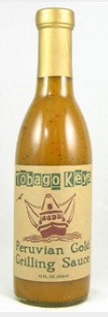
My son has been going on and on about a sauce that he loves called Peruvian Gold Grilling Sauce. It’s a local company that makes the sauce right here in Jacksonville, FL. When we were in the grocery store I decided to grab a bottle and try it.
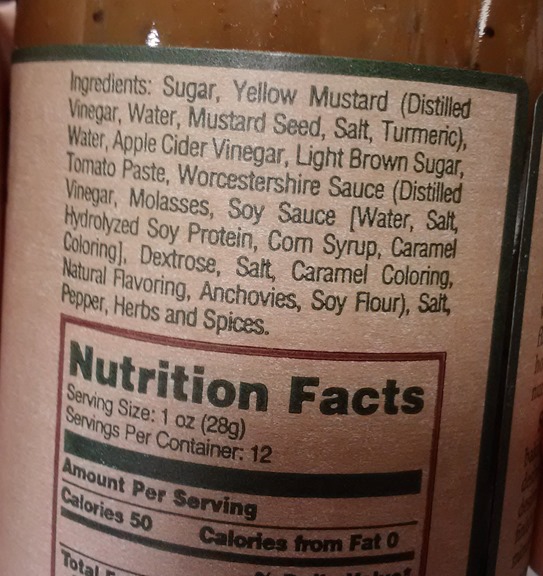
Then I read the ingredients! Sugar was the first one. In addition to the sugar was molasses, light brown sugar, corn syrup and dextrose, Some were real food (mustard, turmeric, Molasses, tomato paste). But many were chemicals or toxic ingredients; caramel coloring was listed twice, soy protein, dextrose, soy flour, “natural’ flavoring (of which they do not have to disclose what it is).
I decided I would just make some. So I went to their web page and looked for info about it. That’s when I saw that the ingredient list on the bottle was vastly different that what is listed on their web page for this product.
Here’s the label on the bottle;
Here’s what the web page shows-
Product Description
Tobago Keys Peruvian Gold Grilling Sauce (12 FL.OZ. / 355 ml):
Suggestions: grilling, roasting, baking, or just saucing it.
Ingredients: Sugar, Yellow Mustard, Water, Apple Cider Vinegar, Light Brown Sugar, Tomato Paste, Worcestershire, Salt, Pepper, Herbs, and Spices.
Brand: Tobago Keys Sauces
Manufacturer: Trinidad Traders
Good thing I didn’t just read the web page and grab the bottle instead of reading the ingredients..the actual ingredient list…not the one on the web page.
I am going to make this sauce this week and will post the recipe…
Can We Get the Nutrients We Need Through Supplements?
Posted: February 3, 2013 Filed under: Food and it's Impact on Our Health Leave a comment
By Millie Barnes
You rush out the door in the morning after grabbing orange juice, two pieces of toast with margarine, and a handful of vitamins. Have you had a healthy breakfast? Gotten the vitamins you needed for the day? Lets take a look….
You consumed 321 calories, 5 grams of fat ( one of them saturated). Unfortunately, no vitamin C, because your source of C was from concentrate. Vitamin C, being one of the water soluble vitamins is extremely light and heat sensitive. Twenty minutes after you have squeezed fresh orange juice, half the vitamin C is gone. So how much is left in the concentrate? Almost none. Plus there was very little nutrients in the toast, a highly refined food. Also the margarine contains hydrogenated fats, chemicals and additives. Hydrogenation is a process that chemically treats fats or oils to make them stay hard at room temperature. Unfortunately they also stay hard in your arteries. Real butter would have been a far healthier choice..or tahini, almond butter; cashew butter…all of these are better choices.
“But I took my vitamins!”, you say. Yes, that is true, but our absorption of vitamins and minerals when they are from chemical sources is very low. We need to get these precious nutrients in the food they occurred in to begin with. Let’s look at why. Fruits and vegetables are rich in vitamins and minerals, but they are also rich in enzymes. On a molecular level, you cannot absorb a vitamin or mineral molecule without a live enzyme attached to it! Enzymes are the catalyst that allow our body to assimilate the nutrients we need. Notice that I said a live enzyme. Live enzymes occur in foods that are ALIVE! Not processed or cooked food, not in pills. Because these processes kill the enzymes. Notice that every culture in the world begins or ends meals with a salad or some fruit. It was observed over time that this aided digestion and improved health. Including fermented foods in our diets aids digestion and helps us maintain healthy flora in the gut.
Fats and high quality proteins are our most important foods that we need to take in at each meal along with a small amount of fruit and low glycemic vegetables, especially dark green leafy vegetables…and you’ve got a diet rich in nutrients, high in fiber and moisture and low in toxins. The food that we take each day should be able to be digested completely in our stomach. Fats, proteins and plants fall in this category. Enzymes in foods and a healthy digestive system allows us to meet our nutrient needs. So avoid toxins; grains, processed dairy, soy, processed foods and additives, drugs. And eat real food.
Best Spinach Paneer I’ve Ever Made, and It’s Vegan!
Posted: February 1, 2013 Filed under: Recipes Leave a comment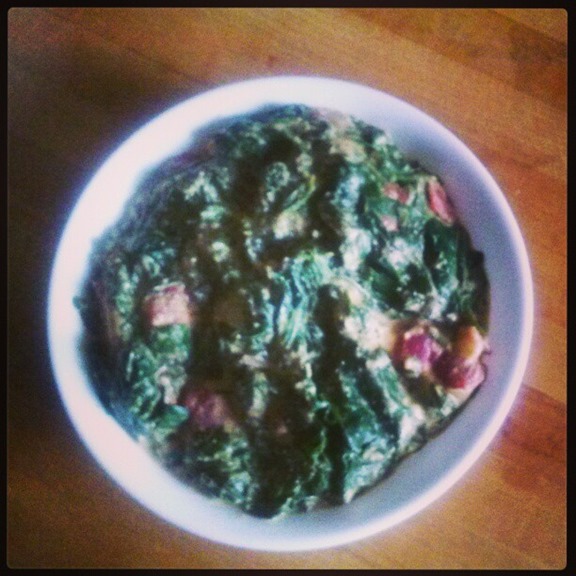
I didn’t start out to make it vegan, but I do not cook with dairy or soy. So I started playing.
Serves 2
2 pounds spinach- cleaned, large stems removed, steamed until just bright green
1 1/2 cup almonds- no skins
4 Tablespoons butter
1 large Spanish onion
1 4 ounce jar pimentos
3 Tablespoons fresh lemon juice
1/3 teaspoon celery seed
2 tomatoes- diced
4 to 5 large cloves garlic, finely chopped
3 tablespoons ginger root, finely chopped
1 tablespoon garam masala
1 tablespoon ground coriander
1 tablespoon ground cumin
1½ teaspoons salt
1/3 teaspoon cayenne pepper
1 cup coconut cream (from can of coconut milk hat has separated)
fresh cilantro, chopped for garnish
Sauté diced onions in butter until deeply caramelized, about an hour. Steam spinach until very bright green, leave in colander and let drain well. Place it in a bowl and cut it up very fine.
In a blender, blend the almonds to a very fine powder, stopping a few times and using a butter knife to get what is under the blades. Add the juice from pimentos, the lemon juice and the coconut water from the can of coconut. Use just enough so that the mixture blends well.
Why Do We Have Food Cravings?
Posted: January 28, 2013 Filed under: Food and it's Impact on Our Health Leave a comment
Just Eat Real Foods Facebook page posted this gem today;
"Step 1 to overcoming your junk food cravings: stop judging yourself harshly for having them.
Cravings are not failure. They are feedback. There’s something in what your craving that your body is demanding for short term gratification.
Your job is to LISTEN to your body and get IN FRONT OF the cravings by making sure your body is well nourished."
We have cravings when our body is not getting what it needs. If you find yourself eating between meals, grabbing dessert after every meal, wanting chocolate often (except for a small amount at times)…then look at your caloric intake each day. Where are the calories coming from? Are you taking in a minimum of 2000 calories a day? Is your protein and fat percentages high enough?
You need 50% of your calories to come from fat, 30 from protein and the remaining 20% to come from mostly low glycemic vegetables with heavy emphasis on green leafy vegetables. Include some fermented foods each day; coconut milk yogurt, sauerkraut, kombucha tea are several sources.
Perfect health may be defined as having fullness of function. Health means complete well being, inner and outer harmony, vigor, strength, mental acuity, emotional poise, in short, total fitness. You should wake up rearing to go, go all day without energy fluctuations, sleep well at night, and have no aches, pains or other symptoms.
If not, look to your nutrition. Hiring a coach can greatly enhance your ability to examine and modify your diet to reach your goals.


 Meal Delivery Service by Millie Barnes