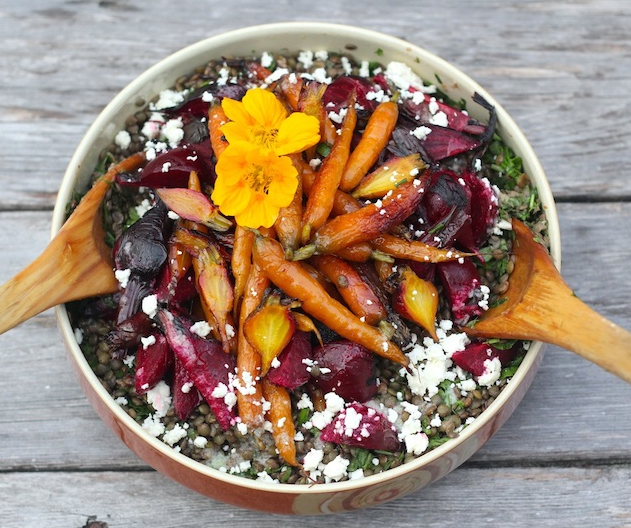
Lentil Stew with Roasted Beets and Carrots
Posted: July 20, 2013 Filed under: Recipes Leave a commentI found a cool blog about food through PBS, and this recipe looks awesome!
 Kitchen Vignettes For her recipe visit her site on PBS.
Beets and carrots, (like all cruciferous veggies also) need to be cooked in order for us to absorb the nutrients. I have changed her oriogial recipe to reflect healthier practices, like sautéing in butter, more seasonings.
- 2 1/2 cups lentils
- About 1 dozen (1 large bunch) medium-small carrots, with their tops on
- 1 large onion- diced
- About 1 dozen (2 large bunches) medium-small beets
- 2 Tablespoon butter
- 1 1/2 quarts traditionally made beef stock
- 1 Tablespoon cumin
- 1 teaspoon turmeric
- 1 Tablespoon garlic- minced
- 1 Tablespoon thyme
- 1 Tablespoon minced fresh ginger
- 1/2 cup chopped carrot tops
- 3 Tablespoon ketchup
- Grated zest of one organic lemon
- Remove the leafy tops from the carrots and beets. Reserve the carrot tops. (Beet greens can also be kept as they are extremely nutritious and delicious). Wash and scrub the carrots and beets, removing any soil, leaving their skins on. Place the whole carrots and beets in a large French oven or enameled iron pot and mix in the 3 Tablespoons butter, fully coating the vegetables in butter.
- In a 375 F oven, roast the vegetables for about 30 to 45 minutes, until tender when pierced with a fork. If you wish, once the beet are cool enough to handle, you can remove the skins from the beets by gently rubbing them off with your fingers.
- Caramelize onions in 2 Tablespoons butter until golden, about 30 minutes. Add garlic, sauté’ another 5 minutes. Add seasonings and sauté about 5 minutes more, until the spices are nice and toasted.
- Meanwhile, rinse the lentils and check them for small pebbles, then place them in the pan with the onions. Cover them with stock and bring to a simmer.
- Simmer on low to medium heat, covered, for about 30 to 40 minutes, until tender but not falling apart or turning mushy. (Add stock if necessary through the cooking). Drain the lentils and place them in a large shallow serving bowl.
- Add ketchup, tomato paste, adjust seasonings. Simmer another 1/2 hour.
- Place the roasted carrots and beets on top to serve.
Millie’s Kickin’ Chili
Posted: July 18, 2013 Filed under: Recipes Leave a comment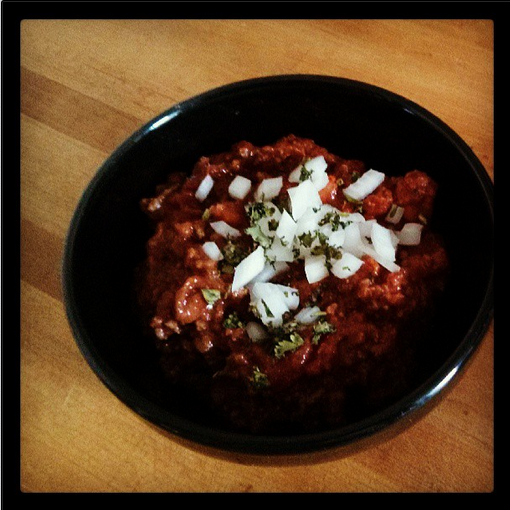
I’ve been working on my chili recipe for years, decades even…I think I finally have it as good as I can get it! Enjoy!
Serves 12 people generously
4 pounds grass fed hamburger or ground bison
2 Tablespoons butter
2 Tablespoons bacon fat
3 large onions- diced
3 Tablespoons chili powder
3 Tablespoons cumin
1 Tablespoon Smoked Salt
1 teaspoon cayenne
2 teaspoons finely minced jalapenos
1 teaspoon cinnamon
2 teaspoons smoked paprika
3 tablespoons dark brown sugar
1/3 teaspoon red pepper flakes
3 large cans diced tomatoes, with juice
1 small can tomato paste
1 large can red kidney beans
3 tablespoons dark cocoa powder
black and white pepper to taste
1 large Spanish onion- diced to serve on top of chili
6 Tablespoons chopped cilantro to top chili
1) Heat the butter and bacon fat in a large heavy pot over high heat. Add the onions and sauté’ a few minutes until they start to soften, cover the pan, and continue cooking on low heat until the onions caramelize. They will look golden color and be very sweet. When they are done, remove the onions from he pan with a slotted spoon, leaving as much of the liquid as possible.
2) Add more butter and bacon fat and brown the hamburger in batches until cooked through about 2/3 of the way, still showing a bit of pink. Add the seasonings, onions, sautéing about 10 minutes until the spices are very aromatic. about 10 minutes.
2) Add the tomatoes, tomato paste, salt, brown sugar, and chocolate to the pot. Stir well and bring to a boil. Reduce to a simmer and cook until slightly thickened, about 1 hour, stirring occasionally to prevent the chili from sticking to the bottom of the pot.
3) Skim off as much fat as possible. Add the beans, return to a simmer, cover, and cook until thickened, about 1 1/2 hours longer. Serve with the diced onions, and cilantro alongside as garnish.
Ditch the Toxic Sunscreen; Use Coconut Oil Instead
Posted: July 1, 2013 Filed under: Non-Toxic Choices Leave a commentFrom RealNews24

by: Paul Fassa
Natural Society
Summer time is beach time, or at least poolside time. But if you want some protection form the sun’s UV rays, don’t always reach for toxic sunscreens. Instead, pack some extra virgin coconut oil along with your beach towel and umbrella.
That’s right, the same extra virgin coconut oil found in your kitchen pantry will do the trick to protect your skin – minus the toxicity from health-compromising ingredients. Coconut oil has been used as an effective sunscreen for thousands of years by indigenous, pacific islanders. Why slather toxic chemicals on your body when you can use non toxic coconut oil instead?
There are two types of UV (ultraviolet) rays from the sun: UVA and UVB. UVA rays are primarily responsible for skin damage from excessive sun exposure that can lead to cancer and skin aging. However, although UVB rays can also cause damage and sunburn, they are necessary for your body to produce its own cancer protective vitamin D via the skin.
Sunlight is by far the optimal way to produce your vitamin D. Blocking UVB rays may inadvertently be increasing your cancer risk by blocking vitamin D absorption. Plus, sunscreen causes cancer through carcinogenic ingredients.
Avoid Toxic Sunscreens
According to the Environmental Working Group (EWG) approximately 75% of commercial sunscreens contain toxic chemicals that are linked to cancer and disrupt hormones.
Store bought sunscreens typically contain:
- Retinyl palmitate, a known skin cancer hazard.
- Oxybenzone, which disrupts hormones leading to cell damage and cancer.
- Zinc and titanium nanoparticles are in colorless sun screen lotions.
Those and other chemicals rubbed on your skin are readily absorbed into your bloodstream and can be just as unhealthy and toxic as an oral dose.
The Sun Protection Factor (SPF) Hoax
An excerpt from a 2012 CNN article about sunscreens:
“The EWG said consumers should not purchase sunscreens with SPF greater than 50. SPF (sun protection factor) works by absorbing, reflecting or scattering the sun’s rays on the skin. It is very misleading to put high SPF numbers on labels because it gives consumers a false sense of security and doesn’t offer a lot more protection.”
While SPF 85 may sound like a lot more protection than SPF 30, the higher the number doesn’t always offer a higher return. Studies show that sunscreen with SPF 15 can block about 93% of all incoming UVB rays. SPF 30 blocks 97%. SPF 50 blocks 98%. The protective factors plateau from there.
“A product with SPF 100+ blocks about 99.1 percent of the UVB rays. You don’t really need a high number. They end up being expensive and don’t offer more protection than SPF 50. Keep in mind, SPF protects only against UVB rays.”
Coconut oil has an SPF of 10 which means 90% of beneficial vitamin D creating UBV rays are blocked. How many people know that SPF ratings do not indicate any protection from the highly damaging UVA rays?
Yet, the American Cancer Society advises to apply a generous amount of of toxic commercial sunscreen 30 minutes before sun exposure and minimally every two hours thereafter, reapplying after being in the water, sweating, and towel drying.
Choose Coconut Oil for Sunscreen Instead
Daily exposure to the sun is essential to your overall health; it’s the overexposure that could cause some issues. Sunshine exposure is the best way for your body to create health protecting vitamin D. To protect against sunburn, use a non-toxic sunscreen like coconut oil or opt for a low-risk, safe sunscreen that doesn’t contain health-compromising ingredients.
Bruce Fife, ND, author of Coconut Cures: Preventing and Treating Common Health Problems with Coconut Oil,explains that coconut oil applied on the skin protects against sunburn and cancer. Unlike sunscreen, unprocessed coconut oil doesn’t completely block the UVB rays that are necessary for vitamin D synthesis. It protects the skin and underlying tissues from damage excessive exposure can cause. Instead of burning or turning red, it produces a light tan, depending on the length of time you spend in the sun.
Fife asserts that “Consuming coconut oil also strengthens the skin and makes it more resilient and less prone to sunburn.” He warns against using hydrolyzed or processed oil. Just make sure the coconut oil is pure and not processed.
Sunday Brunch: Beet and Potato Hash
Posted: July 1, 2013 Filed under: Recipes Leave a comment From Serious Eats

- 1 pound russet potatoes, peeled and grated on the large holes of a box grater
- 3/4 pounds beets, peeled and grated on the large holes of a box grater
- Kosher salt and cracked black pepper
- 4 tablespoons olive oil
- 1/4 cup Coconut Milk Yogurt
- Small bunch chives, finely chopped
-
Adjust oven rack to middle position and preheat to 200°F. Place grated potato in the center of a clean towel. Twist towel over sink to wring out excess moisture from potatoes. Transfer to a large bowl. Add beets and season with salt and pepper.
-
Heat 1 tablespoon of olive oil in a 10- inch non-stick skillet over medium high heat until shimmering, add 1/4 of the potato and beet mixture to the skillet. Using a rubber spatula, press into the bottom of the pan and cook until edges begin to look brown, about 5 minutes. Carefully slide hash onto a plate then place another plate on top. Flip plates over, then slide hash back into pan and continue to cook until completely crisp, about 6 minutes longer. Transfer to a large plate and keep warm in a oven. Repeat with remaining fat and potato and beet mixture. Serve hash topped with Greek yogurt or sour cream and chives.
Sunday Brunch Potato and Beet
Posted: June 30, 2013 Filed under: Food and it's Impact on Our Health Leave a commentPosted from WordPress for Android
Homemade BBQ Sauce with a Secret Superfood Ingredient
Posted: June 24, 2013 Filed under: Recipes Leave a commentI found this recipe on Holistic Squid

I will be making and offering this for sale on the Meal Delivery Service.
1-finely diced Vidalia or Spanish onion
5 Tablespoons of minced onion
4 cups beef bone broth
½ cup apple cider vinegar
2 cups molasses
½ teaspoons allspice
2 tablespoons celery salt
3 cups tomato paste
¾ cup spicy mustard
3 teaspoons horse radish
- Heat onions & garlic in 4 cups bone broth on medium stove heat.
- Turn stove heat down to low.
- Add all other ingredients, and combine completely by stirring.
- All sauce to cook for 45 minutes – 1 hour, stirring occasionally.
- At this point, test the thickness of your sauce. When you’re happy with the consistency, remove it from the heat.
- If you want a thicker sauce continue to cook down with occasional stirring.
- If you want a thinner sauce, add ¼ cup bone broth or water at a time until you reach the desired consistency.
Yields: 3 quarts
Why You Shouldn’t Buy juice Boxes…or Juice!
Posted: June 16, 2013 Filed under: Food and it's Impact on Our Health, Non-Toxic Choices 1 CommentFrom the Website Why Don’t You Try This
.jpg "Why I Stopped Buying Juice Boxes (The picture will gross you out…)") A patient came to my ER after noticing green slime coming up the straw from her Juicy Juice box. Her mom cut open the box – and brought her straight to the doctor. Here’s what we found in the unexpired juice box:
A patient came to my ER after noticing green slime coming up the straw from her Juicy Juice box. Her mom cut open the box – and brought her straight to the doctor. Here’s what we found in the unexpired juice box:
Her juice box was full of mold—green slime that lined the edges of the box. Apparently moldy juice boxes and juice pouches (such as those made by Capri Sun) are nothing new. If even a tiny bit of air gets into the container molds can grow. Air can get into a juice box through a hole that’s so small you can’t see it, and it doesn’t cause leaking. Such a tiny puncture also permits the sugars in the juice to ferment, turning the product into a form of alcohol.
Juicy Juice and many other kid’s juice products are made without preservatives, permitting mold to grow even more easily.
The good news for my patient is that moldy, fermented juice is usually not very dangerous to drink. An upset stomach and a totally grossed out mom are the most common complications.
But I recommended she cut out the juice, anyway. Why? Because juice is so full of sugar and calories that some have called it a gateway drug. Sugar ingestion can actually cause release of natural opiates (really). Opiate release stimulates the desire for other sweets and junk food. High salt and high fat foods can also trigger release of pleasure-inducing opiates. This is why so many people binge on ice cream, potato chips, and other favorite junk foods like Flamin’ Hot Cheetos.
The more sugar-laden juice your kids drink, the more opiates flood their system, and the more they will beg for another juice box. After drinking all those calories and stimulating their sweet tooth, chances are your kids won’t be interested in dinner. Some high sugar, high fat, high salt food might sound good, though. Sound familiar?
Too much fruit juice can also cause tooth decay, diarrhea, and flatulence. There are plenty of other healthy foods that contain the vitamins your kids need, and without the high sugar and calories. Kids just don’t need juice.
The American Academy of Pediatrics offers this guidance regarding kids and fruit juice.
- Juice should not be introduced into the diet of infants before 6 months of age, unless directed by your physician. Occasionally small amounts of fruit juice may be recommended as a treatment for constipation.
- In children ages 6 months -6 years, fruit juice offers no nutritional benefit over whole fruit. Whole fruits also provide fiber and other nutrients.
- If you do let your kids drink fruit juice, do not allow your child to carry a sippy cup, bottle or box of juice throughout the day. Intake of fruit juice should be limited to 4 to 6 oz/d for children 1 to 6 years old. For children 7 to 18 years old, juice intake should be limited to 8 to 12 oz or 2 servings per day.
- Never serve your kids unpasteurized juice.
- These recommendations are for 100% fruit juice, which differs from juice drinks. Fruit drinks often provide little to no nutritional benefit.
.jpg "Why I Stopped Buying Juice Boxes (The picture will gross you out…)") OK, I admit it, I’ve bought juice boxes for birthday parties and soccer games. They are convenient, they keep kids happy, and they’re probably healthier than soda. But you just can’t tell from looking at a juice box if it is moldy—you won’t know until you start drinking, and sometimes you won’t know until you get to the bottom… So as for my family, we’re going back to the cooler of ice water for soccer games. If the kids complain, we’ll hand out good snacks.
OK, I admit it, I’ve bought juice boxes for birthday parties and soccer games. They are convenient, they keep kids happy, and they’re probably healthier than soda. But you just can’t tell from looking at a juice box if it is moldy—you won’t know until you start drinking, and sometimes you won’t know until you get to the bottom… So as for my family, we’re going back to the cooler of ice water for soccer games. If the kids complain, we’ll hand out good snacks.
Sincere thanks to the patient and her mother who permitted the photography of their juice box and gave permission for the publication of this story.
The Monsanto-Free Seed Company List
Posted: June 4, 2013 Filed under: Food and it's Impact on Our Health, Gardening, Non-Toxic Choices Leave a comment
A great post from Natural Cures Not Medicine

Some background that’s important to understand when using this list-
The Safe Seed Pledge
“Agriculture and seeds provide the basis upon which our lives depend. We must protect this foundation as a safe and genetically stable source for future generations. For the benefit of all farmers, gardeners and consumers who want an alternative, we pledge that we do not knowingly buy or sell genetically engineered seeds or plants. The mechanical transfer of genetic material outside of natural reproductive methods and between genera, families or kingdoms poses great biological risks, as well as economic, political and cultural threats. We feel that genetically engineered varieties have been insufficiently tested prior to public release. More research and testing is necessary to further assess the potential risks of genetically engineered seeds. Further, we wish to support agricultural progress that leads to healthier soils, genetically diverse agricultural ecosystems and ultimately healthy people and communities.”
History of the Safe Seed Pledge
The Safe Seed Pledge was created in 1999 when High Mowing Organic Seeds guided a coalition of 9 other seed companies in drafting a statement about the signers’ stance on genetic engineering. Over 70 companies have signed the pledge, ranging from large seed companies to family-owned businesses such as ours.
In signing the Safe Seed Pledge we affirm our commitment to non-GMO (genetically modified organism) seed. We feel that the regulatory framework for the introduction of genetically modified crop varieties is flawed, and that GMO seeds themselves present a threat to plants’ genetic diversity through their ability to pollinate non-GMO plants.
But then Monsanto comes along….
It’s not terribly easy to avoid them, which is why we’ve compiled the list below
In 2005, Monsanto purchased Semenis which was (and is) the world’s largest seed company and now they own thousands of conventional seed companies in addition to their GMO seed business. Monsanto now owns 40% of the conventional seed market in the US and 20% of the worldwide market, including organics and heirlooms. It’s not terribly easy to avoid them, which is why we’ve compiled the list below list with the help of readers and some experts from the field, both to help you navigate through things as well as encouragement for companies to take part in the boycott so that they may also qualify to have their names included.
Use this link below to access the full article and list from Occupy Monsanto:
The Monsanto-Free Seed Company List
Banana Clafouti
Posted: May 24, 2013 Filed under: Recipes | Tags: #Paleo Dessert, Paleo Leave a comment
Serves 6
1/3 cup Demerara Sugar
6 large ripe bananas
2 cup coconut milk
3 large eggs, beaten well
1 Tablespoon fresh orange zest
1 teaspoon vanilla
pinch of salt
3 tablespoons butter, melted
1) Preheat oven to 375°.
2) Generously butter a 8×8 or 7×10 shallow baking dish. Sprinkle 2 tablespoons of the sugar in the bottom.
3) Cut each banana into 3 long strips and line the bottom of the dish with them.
4) In a bowl beat together all the remaining ingredients and pour carefully over the bananas.
5) Bake for 40-50 minutes, or until puffy and golden. Llet cool on a rack for 15 minutes.
Miso Ginger Glazed Salmon
Posted: May 24, 2013 Filed under: Recipes | Tags: #soy-free, Paleo Leave a comment
This is a simple but flavorful dish is easy..and it’s SOY FREE!
Serves 4
1 cup non-soy Chickpea Miso (available at Grassroots in 5 Points in Jacksonville)
1/3 cup sugar
1/2 teaspoon Stevia
1/2 cup sake’
4 8-ounce salmon fillets
-
Whisk the miso, sugar, and sake together in a medium bowl to dissolve the sugar and miso (the mixture will be quite thick). Gently lay the salmon in a 1-gallon zipper-lock bag and pour the marinade into the bag. Seal the bag, pressing out as much air as possible, and refrigerate for at least 5 hours and up to 24 hours, flipping the bag occasionally to ensure that the fish marinates evenly. (Do not over- marinate.)
-
2. Adjust an oven rack 6 inches from the broiler element and heat the broiler. Line a broiler pan bottom with foil and top with a slotted broiler pan top. Remove the fish from the marinade, lay on the broiler pan top skin side down and spoon 1 tablespoon of the marinade out of the bag over each fillet; discard the remaining marinade.
-
3. Broil the salmon until nicely browned and the flesh is opaque and flakes apart when gently prodded with a paring knife, 6 to 9 minutes. Transfer the salmon to a platter and serve


 Meal Delivery Service by Millie Barnes