Tips for Making DIY Nut Milk and Nut Butte
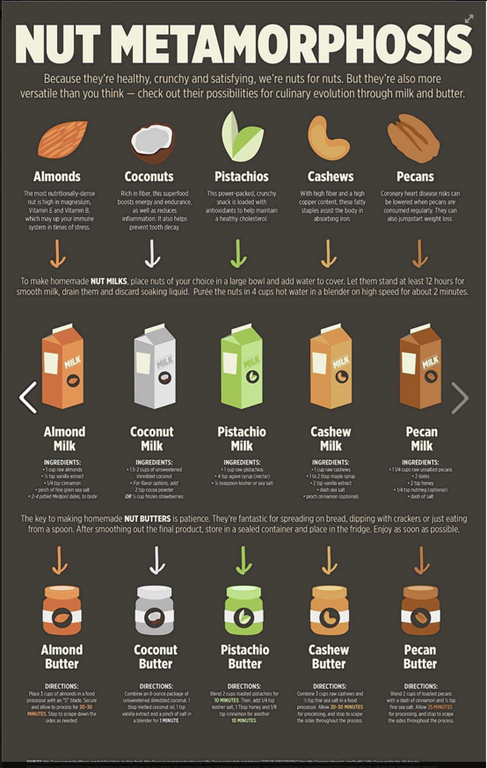
Posted: February 19, 2015 Filed under: In The Kitchen with Millie- How To's, Recipes Leave a commentI found this great info on DIY nut milks and butters on rebelDietician. While I do not agree with her stance on protein sources (yes, we DO need animal proteins and fats!)..she does have some great info on eating clean.
Moderation Is NOT the Best Approach to Losing Weight
Posted: February 18, 2015 Filed under: Food and it's Impact on Our Health Leave a comment(or why skipping breakfast and eating a small salad for lunch will NEVER let you lose weight)

This is what they have to say;
A new study by nutritionists and public health experts at Harvard University showed that the conventional wisdom that the key to weight loss is just to eat less and exercise more actually isn’t very effective when it comes to weight loss. For many people, they say, what you eat matters just as much.
The moral of the story is that it’s not enough to count calories; you have to look at the kinds of calories you’re counting because your body processes them differently based on their source. The Harvard study followed 120,877 men and women of all shapes and sizes for 12 to 20 years. Every two years, they completed a survey about their diet and lifestyle, along with their weight and current health.
The results were startling: even though most of us have been taught to believe that just eating less, avoiding fatty foods, and taking everything in moderation, it’s just not enough to stay healthy. Instead, they propose, Americans should temper their diet to minimize the foods that contribute the most to weight gain, like French fries, potato chips, and sugar-sweetened drinks. They also noted that the “good foods” were the ones most people already associate as good for you: fruits, vegetables, and whole grains.
Millie- there is where I disagree; fruits, and veggies are needed in the diet, and healthy for you…but they should only be 25 to 30% of our caloric intake. Grains have no place in the human diet. I consider them “recreational” foods. Fats and high quality organic sources of proteins are the most important part of our diet..for the depth of nutrients they have.
You need 2000 calories a day; 50% of that should be from fat, 30% protein..the remainder should be low glycemic veggies and a serving of fruit.
HERE is a perfect day (and yes, for weight loss as well as how you should eat for the rest of your life!…
Ideal Day
Breakfast:– 2 or 3 whole organic, free range eggs, 2 to 3 slices organic bacon or Sausage, or a small hamburger patty, or 6 ounces of steak. Coconut Milk Yogurt, ½ cup Blueberries, Coffee or Green Tea
Lunch– 2 each chicken legs, 2 cups sautéed red cabbage and onions or Greens, Sliced tomato
Midafternoon- 1 cup beef or chicken broth
Dinner- 8 ounces grass fed beef, bison or free range chicken, cooked with 1 T. organic virgin coconut oil or butter, 2 cups kale or broccoli or other green LEAFY green vegetable with ½ cup mushrooms, peppers and onions cooked with butter, ½ Sweet Potato if desired.
Caloric Restriction Does Not Work for Weight Loss
Posted: February 18, 2015 Filed under: Food and it's Impact on Our Health Leave a comment

Caloric restriction is an absurd way to try to lose weight; the body goes into starvation mode and you severely limit the nutrients you take in. this means the body, wanting to keep you alive, hangs on to everything you feed it, trying to get the nourishment it needs.
2000 calories a day, with only 25% coming from healthy low glycemic veggies and a small amount of fruit…allows the body to lose weight, about a pound a day in fact. It’s healthy to lose a pound a day if you are meeting your nutrient needs. This means no food cravings, being completely satiated at each meal, higher energy, you sleep better, look better.
Exercise has almost no effect on weight loss; you cannot exercise enough in one day to take off a pound of fat. It does keep you in shape, alleviates depression and is crucial for cardiovascular health.
Actually, Adkins was very close to right in his approach to weight loss. He just did not understand the crucial role that fats play in health and how important it is to ONLY eat organic grass fed meat.
As a Nutritionist (and Chef) my clients lose an average of a pound a day, get rid of allergies, and achieve a very high level of health and happiness. How we nourish ourselves equals how we feel and how healthy we are. It’s cause and effect. We understand the role that using high grade fuel in our cars means a clean well running engine. We miss this detail when we think of health.
I have trouble understanding how we think it’s a mystery why Americans are fat; Americans begun eating low fat 30 years ago, most people live on carbs. The average food diary I see from my clients is 1100 to 1400 calories with almost 70% coming from carbs! That is a prescription for weight gain… We need healthy fats, most of them saturated, grass fed meats, high quality food from organic sources…and to cut the carbs!
Versatile Paleo Wraps
Posted: February 18, 2015 Filed under: Food and it's Impact on Our Health, Recipes Leave a comment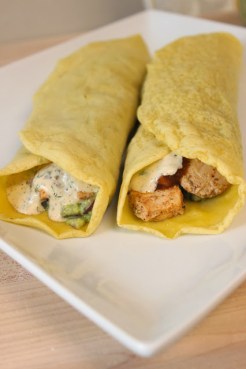
Giving up gluten 28 years ago was challenging, but not anywhere near as hard as giving up corn. At the time everyone said that corn had no gluten. However, every time I ate it the fibromyalgia symptoms came back…the tiredness, the muscle aches. So I gave it up. Shortly afterwards I began working with two families who had autistic children. Both of them were still eating corn and as soon as we removed it from their diet they improved dramatically. one three year old spoke for the first time!!
Years later I still miss tortillas and chips. I have made some that were gluten free but they were still made with grains. So when I saw this post on CupcakesOMG! I had to try them.
I’m thrilled to say they are awesome and were still good later that day and the next day. Sometimes baked goods that are gluten free are only really good fresh.
 Melissa, the owner of the blog, says, “So far, I’ve eaten these tortillas as fish tacos, breakfast tacos, lunch wraps (with like, lunch meat and shit in them), and almond butter honey roll ups–DESSERT!!!! And the thing is, there are countless more options! What about eating it like a pizza and topping it with some marinara, prosciutto, and olives? Or rolling it up with a bit of coconut whipped cream and cinnamon apples for a warm, crepe, fall-themed breakfast? And, omg, I don’t mean to get crazy here, but what IF you filled it with a little almond butter, Enjoy Life chocolate chips, and…some sliced banana?!?! I know, I know…I’m out of control right now”.
Take a look ate her wonderful blog and try these! I made them with butter instead of coconut oil. I prefer it for it’s depth of nutrients. I also added a teaspoon of toasted cumin and garlic powder.
Paleo Wraps/Tortillas
Adapted from Stupid Easy Paleo
Makes about 10 wraps
- 4 teaspoon butter, melted
- 8 eggs
- 1 cup arrowroot flour
- 4 Tablespoon coconut flour
- 1/2 teaspoon baking soda
- pinch of salt
1. Add all ingredients to a blender and blend well.
2. Heat a 6 or 8 inch iron frying pan. Add about 1/4 of a cup, maybe less, of batter to the pan and swirl until it completely coats the pan in a thin layer (you want to make these thin, like crepes, or, I dunno, tortillas!). Cook for about a minute or so or until the size start to peel away from the pan, then, using an offset spatula, flip over and cook on the other side for another minute.
3. Remove from the pan and allow to cool on a cooling rack for a few minutes.
4. Store in a covered container in the refrigerator. They keep pretty well for about a week. Reheat for 20 seconds before using.
Great Nutrition Essential for Mental Health
Posted: February 3, 2015 Filed under: Food and it's Impact on Our Health Leave a commentEvidence is rapidly growing showing vital relationships between both diet quality and potential nutritional deficiencies and mental health, a new international collaboration led by the University of Melbourne and Deakin University has revealed.
Published in The Lancet Psychiatry today, leading academics state that as with a range of medical conditions, psychiatry and public health should now recognise and embrace diet and nutrition as key determinants of mental health.
Lead author, Dr Jerome Sarris from the University of Melbourne and a member of the International Society for Nutritional Psychiatry Research (ISNPR), said psychiatry is at a critical stage, with the current medically-focused model having achieved only modest benefits in addressing the global burden of poor mental health.
“While the determinants of mental health are complex, the emerging and compelling evidence for nutrition as a key factor in the high prevalence and incidence of mental disorders suggests that nutrition is as important to psychiatry as it is to cardiology, endocrinology and gastroenterology,” Dr Sarris said.
“In the last few years, significant links have been established between nutritional quality and mental health. Scientifically rigorous studies have made important contributions to our understanding of the role of nutrition in mental health,” he said.
Findings of the review revealed that in addition to dietary improvement, evidence now supports the contention that nutrient-based prescription has the potential to assist in the management of mental disorders at the individual and population level.
Studies show that many of these nutrients have a clear link to brain health, including omega-3s, B vitamins (particularly folate and B12), choline, iron, zinc, magnesium, S-adenosyl methionine (SAMe), vitamin D, and amino acids.
“While we advocate for these to be consumed in the diet where possible, additional select prescription of these as nutraceuticals (nutrient supplements) may also be justified,” Dr Sarris said.
Associate Professor Felice Jacka, a Principal Research Fellow from Deakin University and president of the ISNPR noted that many studies have shown associations between healthy dietary patterns and a reduced prevalence of and risk for depression and suicide across cultures and age groups.
“Maternal and early-life nutrition is also emerging as a factor in mental health outcomes in children, while severe deficiencies in some essential nutrients during critical developmental periods have long been implicated in the development of both depressive and psychotic disorders,” she said.
A systematic review published in late 2014 has also confirmed a relationship between ‘unhealthy’ dietary patterns and poorer mental health in children and adolescents. Given the early age of onset for depression and anxiety, these data point to dietary improvement as a way of preventing the initial incidence of common mental disorders.
Dr Sarris, an executive member of the ISNPR, believes that it is time to advocate for a more integrative approach to psychiatry, with diet and nutrition as key elements.
“It is time for clinicians to consider diet and additional nutrients as part of the treating package to manage the enormous burden of mental ill health,” he said.
Story Source:
The above story is based on materials provided by University of Melbourne. Note: Materials may be edited for content and length.
Journal Reference:
- Jerome Sarris, PhD et al. Nutritional medicine as mainstream in psychiatry.The Lancet Psychiatry, January 2015 DOI: 10.1016/S2215-0366(14)00051-0
Cite This Page:
University of Melbourne. “Diet, nutrition essential for mental health.” ScienceDaily. ScienceDaily, 29 January 2015. <www.sciencedaily.com/releases/2015/01/150129104217.htm>.
New York Attorney General Targets Supplements at Major Retailers
Posted: February 3, 2015 Filed under: Non-Toxic Choices Leave a comment
The authorities said they had conducted tests on top-selling store brands of herbal supplements at four national retailers — GNC, Target, Walgreens and Wal-Mart — and found that four out of five of the products did not contain any of the herbs on their labels.
The New York State attorney general’s office accused four major retailers on Monday of selling fraudulent and potentially dangerous herbal supplements and demanded that they remove the products from their shelves.
The authorities said they had conducted tests on top-selling store brands of herbal supplements at four national retailers — GNC, Target, Walgreens and Walmart — and found that four out of five of the products did not contain any of the herbs on their labels. The tests showed that pills labeled medicinal herbs often contained little more than cheap fillers like powdered rice, asparagus and houseplants, and in some cases substances that could be dangerous to those with allergies.
The investigation came as a welcome surprise to health experts who have long complained about the quality and safety of dietary supplements, which are exempt from the strict regulatory oversight applied to prescription drugs.
The Food and Drug Administration has targeted individual supplements found to contain dangerous ingredients. But the announcement Monday was the first time that a law enforcement agency had threatened the biggest retail and drugstore chains with legal action for selling what it said were deliberately misleading herbal products.
Among the attorney general’s findings was a popular store brand of ginseng pills at Walgreens, promoted for “physical endurance and vitality,” that contained only powdered garlic and rice. At Walmart, the authorities found that its ginkgo biloba, a Chinese plant promoted as a memory enhancer, contained little more than powdered radish, houseplants and wheat — despite a claim on the label that the product was wheat- and gluten-free.
Three out of six herbal products at Target — ginkgo biloba, St. John’s wort and valerian root, a sleep aid — tested negative for the herbs on their labels. But they did contain powdered rice, beans, peas and wild carrots. And at GNC, the agency said, it found pills with unlisted ingredients used as fillers, like powdered legumes, the class of plants that includes peanuts and soybeans, a hazard for people with allergies.
The attorney general sent the four retailers cease-and-desist letters on Monday and demanded that they explain what procedures they use to verify the ingredients in their supplements.
DOCUMENT
NOTES
Zoom


“Mislabeling, contamination and false advertising are illegal,” said Eric T. Schneiderman, the state attorney general. “They also pose unacceptable risks to New York families — especially those with allergies to hidden ingredients.”
The attorney general’s investigation was prompted by an article in the New York Times in 2013 that raised questions about widespread labeling fraud in the supplement industry. The article referred to research at the University of Guelph in Canada that found that as many as a third of herbal supplements tested did not contain the plants listed on their labels — only cheap fillers instead.
Industry representatives have argued that any problems are caused by a handful of companies on the fringe of the industry. But New York’s investigation specifically targeted store brands at the nation’s drugstore and retail giants, which suggests that the problems are widespread.
“If this data is accurate, then it is an unbelievably devastating indictment of the industry,” said Dr. Pieter Cohen, an assistant professor at Harvard Medical School and an expert on supplement safety. “We’re talking about products at mainstream retailers like Walmart and Walgreens that are expected to be the absolute highest quality.”

A Target in East Harlem. It and three other retailers — GNC, Walgreens and Walmart — were accused of selling fraudulent supplements.Credit Yana Paskova for The New York Times
In response to the findings, Walgreens said it would remove the products from its shelves nationwide, even though only New York State had demanded it. Walmart said it would reach out to the suppliers of its supplements “and take appropriate action.”
A spokeswoman for GNC said that the company would cooperate with the attorney general “in all appropriate ways,” but that it stood behind the quality and purity of its store brand supplements. The company said it tested all of its products “using validated and widely used testing methods.”
Target did not respond to requests for comment.
The F.D.A. requires that companies verify that every supplement they manufacture is safe and accurately labeled. But the system essentially operates on the honor code.
Under a 1994 federal law, supplements are exempt from the F.D.A.’s strict approval process for prescription drugs, which requires reviews of a product’s safety and effectiveness before it goes to market.
The law’s sponsor and chief architect, Senator Orrin G. Hatch, Republican of Utah, is a steadfast supporter of supplements. He has accepted hundreds of thousands of dollars in campaign contributions from the industry and repeatedly intervened in Washington to quash proposed legislation that would toughen the rules.
Mr. Hatch led a successful fight against a proposed amendment in 2012 that would have required supplement makers to register their products with the F.D.A. and provide details about their ingredients. Speaking on the floor of the Senate at the time, Mr. Hatch said the amendment was based on “a misguided presumption that the current regulatory framework for dietary supplements is flawed.”
Critics say it is all too easy for dangerous supplements to reach the market because they are not subject to a review or approval process. Under current law, supplements are assumed to be safe until the authorities can prove otherwise. And in general, they are pulled from shelves only after serious injuries occur — which is not uncommon.
In 2013, for example, an outbreak of hepatitis that struck at least 72 people in 16 states was traced to a tainted supplement. Three people required liver transplants, and one woman died.
It is not only consumers. Hospitals have been affected, too. In December, an infant at a Connecticut hospital died when doctors gave the child a popular probiotic supplement that was later found to be contaminated with yeast. After the child’s death, the F.D.A. issued a warning to the public that reiterated its limited control over supplements.
“These products are not subject to F.D.A.’s premarket review or approval requirements for safety and effectiveness,” the F.D.A. stated, “nor to the agency’s rigorous manufacturing and testing standards for drugs.”
As part of its investigation, the attorney general’s office bought 78 bottles of the leading brands of herbal supplements from a dozen Walmart, Target, Walgreens and GNC locations across New York State. Then the agency analyzed the products using DNA bar coding, a type of genetic fingerprinting that the agency has used to root out labeling fraud in the seafood industry.
The technology allows scientists to identify plants and animals by looking for short sequences of DNA unique to each organism, which can then be quickly analyzed — much like the bar codes on grocery items — and compared with others in an electronic database. The technology can single out which plants a supplement contains by identifying its unique DNA.
Dr. Cohen at Harvard said that the attorney general’s test results were so extreme that he found them hard to accept. He said it was possible that the tests had failed to detect some plants even when they were present because the manufacturing process had destroyed their DNA.
But that does not explain why the tests found so many supplements with no DNA from the herbs on their labels but plenty of DNA from unlisted ingredients, said Marty Mack, an executive deputy attorney general in New York. “The absence of DNA does not explain the high percentage of contaminants found in these products,” he said. “The burden is now with the industry to prove what is in these supplements.”
The Myth about Low Sodium Diets
Posted: January 30, 2015 Filed under: Food and it's Impact on Our Health | Tags: Paleo Leave a comment
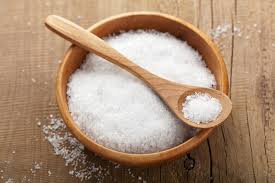
A client emailed me this morning asking if adhered to the Paleo Guidelines of using no salt or sugar. I am unsure why many people think that we should drastically lower our sodium intake in spite of the studies showing otherwise.
Salt is crucial to our health, Sodium is a naturally-occurring element found in everything from milk to beets to celery sticks. Most people’s main source of dietary sodium is table salt (sodium chloride), which is 40% sodium; fancier sea salts contain roughly the same amount of sodium, although they also contain several other trace minerals that are stripped from table salt during processing. Sodium is crucial for maintaining proper muscle and nerve function and electrolyte balance. It helps maintain the volume of blood plasma, an important balance for heart health. Salt also aids in digestion by providing chloride to the hydrochloric acid (HCL) in your stomach.
People with certain kidney problems may see some benefits from reducing salt consumption, but it’s not necessary or even healthy for most people. The historical stability of salt consumption suggests that our bodies know better than we do how much salt they need: on a Paleo diet rich in other important micronutrients like potassium, there’s nothing harmful about eating as much salt as you have a taste for.
Sugar Linked to Memory Problems in Adolescent Rats
Posted: January 23, 2015 Filed under: Food and it's Impact on Our Health Leave a comment
Studying rats as model subjects, scientists found that adolescents were at an increased risk of suffering negative health effects from sugar-sweetened beverage consumption.
Adolescent rats that freely consumed large quantities of liquid solutions containing sugar or high-fructose corn syrup (HFCS) in concentrations comparable to popular sugar-sweetened beverages experienced memory problems and brain inflammation, and became pre-diabetic, according to a new study from USC. Neither adult rats fed the sugary drinks nor adolescent rats who did not consume sugar had the same issues.
“The brain is especially vulnerable to dietary influences during critical periods of development, like adolescence,” said Scott Kanoski, corresponding author of the study and an assistant professor at the USC Dornsife College of Letters, Arts and Sciences.
Kanoski collaborated with USC’s Ted Hsu, Vaibhav Konanur, Lilly Taing, Ryan Usui, Brandon Kayser, and Michael Goran. Their study, which tested a total of 76 rats, was published online by the journal Hippocampus on Sept. 23.
About 35 to 40 percent of the rats’ caloric intake was from sugar or HFCS. For comparason, added sugars make up about 17 percent of the total caloric intake of teens in the U.S. on average, according to the CDC.
The rats were then tested in mazes that probe their spatial memory ability. Adolescent rats that had consumed the sugary beverages, particularly HFCS, performed worse on the test than any other group — which may be the result of the neuroinflammation detected in the hippocampus, Kanoski said.
The hippocampus is a part of the temporal lobe located deep within the brain that controls memory formation. People with Alzheimer’s Disease and other dementias often suffer damage to the hippocampus.
“Consuming a diet high in added sugars not only can lead to weight gain and metabolic disturbances, but can also negatively impact our neural functioning and cognitive ability.” Kanoski said. Next, Kanoski and his team plant to see how different monosaccharides (simple sugars) and HFCS affect the brain.
Story Source:
The above story is based on materials provided by University of Southern California. Note: Materials may be edited for content and length.
Journal Reference:
- Ted M. Hsu, Vaibhav R. Konanur, Lilly Taing, Ryan Usui, Brandon D. Kayser, Michael I. Goran, Scott E. Kanoski. Effects of sucrose and high fructose corn syrup consumption on spatial memory function and hippocampal neuroinflammation in adolescent rats. Hippocampus, 2014; DOI:10.1002/hipo.22368
Food to Starve Cancer through Antiangiogenesis
Posted: January 23, 2015 Filed under: Food and it's Impact on Our Health 3 Comments
Diet & Food is better than pharmaceutical drugs to stop cancer! Phytochemicals can stop, prevent, and cure cancer!
The advancement of cancer treatment is changing. A MD is now admitting that vegetables, herbs, or PHYTOCHEMICALS are better in neutralizing cancer than prescription drugs! This is a very significant admission by a medical doctor. Most MD are uneducated in phytochemical nutrient. Phytochemicals are a much safer way to treat cancer than to consume toxic chemicals of chemotherapy.
The discovery of antiangiogenesis properties of chemicals in food is redefining cancer treatment methods. Antiangiogenesis means preventing the growth of blood vessels to a tissue. Why is this significant? Every tumor has blood vessels attached to it that feed the cancerous tumors. This method is to starve cancer tissues by stopping the growth of new blood vessels to tumors and destroying blood vessels already attached to it.
Antiangiogenesis is the new method of stopping cancerous tumors and it is commonly found in plants or phytochemicals!
Directly quoted from Dr. William Li, “Our search for this has taken us to the market, the farm and to the spice cabinet, because what we’ve discovered is that Mother Nature has laced a large number of foods and beverages and herbs with naturally occurring inhibitors of angiogenesis.”
A complete transcript can be found on:
http://www.ted.com/talks/william_li/transcript?language=en
From Dr. Li’s research, Resveratrol found in red grapes and red wine inhibits abnormal angiogenesis by 60 percent. Ellagic Acid (an extract from strawberries) and Genistein (extract from soybeans) shows even stronger ability than Resveratrol to inhibit abnormal angiogenesis. The significant effect of phytochemicals on tumors can be visually seen on Youtube or on TEDx. Antiangiogenesis is very effective in stopping cancerous tumors from growing. Dimethyl sulfoxide (DMSO) was used to deliver the chemicals to the area, as the slides indicates.
Not surprisingly, turmeric is the one of the highest in antiangiogenesis properties along with Chinese jasmine, Japanese sencha tea and Earl Grey tea.
Amazingly Dr. William Li have found that Vitamin E is better than any cancer drugs to stop cancer! Vitamin E has the highest antiangiogenesis property compared to all food and drugs. An excellent source for Vitamin E is wheat germ oil.
Here is a short list of natural antiangiogenesis:
Ginseng, Red Wine (Resveratrol,) Dark Chocolate, Maitake mushrooms, Licorice, Nutmeg, Green Tea, Tuna, Soy beans, Parsley, Garlic, Grapes, other berries, fruits, herbs, and vegetables.
Synergistic Effect of Herbs
Dr. William Li even emphasizes the synergistic effect of combining two tea (herbs) together to create a more potent effect. From Dr. Li’s finding Chinese jasmine and Japanese sencha tea have strong anti-angiogenesis properties but combining them together creates a stronger antiangiogenesis effect than to use them alone. Earl Grey is highest in antiangiogenesis properties versus Chinese jasmine or Japanese sencha tea but not higher than Chinese jasmine and Japanese sencha tea combined together. Of course this is not new to the Chinese. In TCM, this is strongly emphasized. All Chinese herbs are combined to create herbal formulas.
Conclusion
This discovery is so outstanding that insurance companies are promoting this philosophy of eating your vegetables to stay healthy and beat cancer. Insurance companies are realizing that healthier patients are more profitable!
The cure in cancer is in natural food not pharmaceutical drugs. As Hippocrates, father of medicine, 431 B.C. said, “Let food be thy medicine and medicine be thy food.”
Sources:
https://www.youtube.com/watch?v=B9bDZ5-zPtY
http://blogs.naturalnews.com/prescribe-herbs-tcm-way
About the author:
E. Wong is a licensed acupuncturist in Texas that practices Traditional Chinese Medicine. With over 30 years of training in Tai Chi and Qi Gong, he shares his knowledge with his student as a Tai Chi and Qi Gong instructor.
He believes in being a responsible denizen of this planet through actions such as recycling, alternative energy, and green living.
More Uses of Bacon Fat
Posted: December 7, 2014 Filed under: In The Kitchen with Millie- How To's, Non-Toxic Choices, Recipes Leave a commentRemember that it is ONLY SAFE to use Bacon Fat (and all other animal fat) it is from ORGANIC sources! Otherwise throw that toxic stuff out!!
1) Baconnaise

mariamindbodyhealth.com This one almost seems too obvious. Recipe here.
2) Warm Brussels Sprout Slaw With Bacon

Lucy Schaefer / foodandwine.com
Sautéing shredded Brussels sprouts in a mixture of butter and bacon faster is much faster than roasting them whole. Recipe here.
3) Kale and Brussels Sprouts Salad with Hot Bacon Vinaigrette

You don’t like salads? Here’s one to change your mind. Recipe here. Just use bacon fat instead of the olive oil.
4) Spinach Salad with Bacon Dressing
The only difference in mine and her r3cipe is I use mushrooms in my salad in addition to this recipe.

Pic and Recipe by The Pioneer Woman. Recipe HERE
5) Bacon Coleslaw Stir-Fry
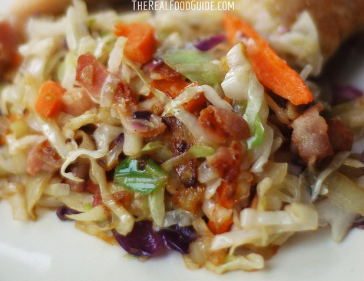
therealfoodguide.com Recipe here.
6) Chipotle Bacon Barbecue Sauce

grillingcompanion.com Squeeze on everything. Recipe here.


 Meal Delivery Service by Millie Barnes