Swim Down Through a Sea of Trash With Dramatic, Eerily Beautiful Photos by Mandy Barker
Posted: February 11, 2012 Filed under: Non-Toxic Choices Leave a commentFrom TreeHugger


© Mandy Barker
SOUP: Bird’s Nest. Ingredients: discarded fishing lines that have formed nest-like balls due to tidal and oceanic movement. Additives: other debris collected in its path.
What would it be like to swim down through the estimated 100 million tons of trash swirling around in the Great Pacific Garbage Patch? Mandy Barker‘s photographs bring viewers probably as close as they’d ever want to come to finding out.
Looking at the images in the U.K.-based artist’s "SOUP" series creates the vertiginous feeling of sinking into the ocean, watching colorful — but deadly — bits of plastic in all shapes, sizes, and hues rise through the blackness of the deep sea.

© Mandy Barker
SOUP: Refused. Ingredients: plastic oceanic debris affected by the chewing and attempted ingestion by animals. Includes a toothpaste tube. Additives: teeth from animals.
"I have always been interested in collecting natural objects from the beach but began to notice that there was more and more man-made materials debris amongst them," Barker told TreeHugger in an email this week. In an earlier series, "Indefinite," she photographed individual pieces or clusters of beach trash, abstracted to resemble the strange sea creatures such debris is threatening, with captions indicating the number of years it takes each material to decompose.
Inspired By Photographer Chris Jordan
The visually striking, even beautiful "SOUP" photographs were inspired, Barker says, by TreeHugger favorite Chris Jordan, who famously photographed the extensive collection of plastic pieces found inside albatrosschicks after they died. Seeking to show the vast scale of the problem in her photographs, the artist collected bits of plastic from beaches in the U.K. and elsewhere in Europe, and contacted researchers in other parts of the world, asking them to send her specific garbage finds.

© Mandy Barker
SOUP: Translucent. Ingredients: translucent plastic debris.
Barker, a former graphic designer, also previously created a Silent Spring-inspired series of haunting multiple-exposure photographs combining images of birds, eggs, and diagrams of chemical structures to bring attention to the impact of pesticides on bird populations. She is currently trying to find funding to expand the "SOUP" project and continue the artistic exploration of the impact of oceanic plastic that she has been working on for the past two years.
"My intention aesthetically was to visually attract the viewer to the image and for them to question what it represented," Barker told the website London Independent Photography in an earlier interview. "I felt by enticing the viewer to discover the meaning in this way would create a more lasting impact and message of awareness… All the images are created to represent the disturbing statistics of dispersed plastics having no boundaries."
Fallout From Fatigue Syndrome Retraction Is Wide
Posted: February 8, 2012 Filed under: Food and it's Impact on Our Health Leave a comment
David Calvert/AP Images, via Associated Press
DASHED HOPES Before a legal showdown, a finding from Dr. Judy Mikovits at the Whittemore Peterson Institute for Neuro-Immune Disease in Reno, Nev., gave hope to desperate patients.
By DAVID TULLER
When scientists reported in 2009 that a little-known mouse retrovirus was present in a large number of people with chronic fatigue syndrome, suggesting a possible cause of the condition, the news made international headlines. For patients desperate for answers, many of them severely disabled for years, the finding from an obscure research center, the Whittemore Peterson Institute for Neuro-Immune Disease in Reno, Nev., seemed a godsend.
Dr. Judy A. Mikovits outside the Whittemore Peterson Institute for Neuro-Immune Disease last year in Reno, Nev.
“I remember reading it and going, ‘Bingo, this is it!’ ” said Heidi Bauer, 42, a mother of triplets in Huntington, Md., who has had chronic fatigue syndrome since her 20s. “I thought it was going to mean treatment, that I was going to be able to play with my kids and be the kind of mom I wanted to be.”
Patients showered praise on the lead researcher, Dr. Judy Mikovits, a former scientist at the National Cancer Institute. They sent donations large and small to the institute, founded by Harvey and Annette Whittemore, a wealthy and politically well-connected Nevada couple seeking to help their daughter, who had the illness.
In hopes of treating their condition, some patients even began taking antiretroviral drugs used to treat H.I.V., a retrovirus related to the murine leukemia viruses suddenly suspected of involvement in chronic fatigue syndrome.
More recently, however, the hopes of these patients have suffered an extraordinary battering. In a scientific reversal as dramatic and strange as any in recent memory, the finding has been officially discredited; a string of subsequent studies failed to confirm it, and most scientists have attributed the initial results to laboratory contamination. In late December, the original paper, published in the journal Science, and one other study that appeared to support it were retracted within days of each other.
As the published evidence for the hypothesis fell apart, a legal melodrama erupted, dismaying and demoralizing patients and many members of the scientific community. Dr. Mikovits was even briefly jailed in California on charges of theft made by the institute.
“I’m stunned that it’s come to this point,” said Fred Friedberg, a professor at Stony Brook University Medical Center and president of the International Association for C.F.S./M.E., a scientific organization. “This is a really sad unraveling of something that was perhaps going to generate a whole new direction in this illness.” MORE
A bucket of mushrooms
Posted: February 6, 2012 Filed under: Food and it's Impact on Our Health Leave a comment
We recently bought a bucket of mushroom starter from local outfit, Parkvale mushrooms. It’s currently living in our firewood box outside the back door in the relative cool and dark. We’ve harvested over a kilo of mushrooms from it so far, and more keep coming up. At the current price of mushrooms it’s already paid for itself! Aside from the economy, the taste of just-picked mushrooms in our salads and on pizzas can’t be beaten. They’re easy to look after, don’t take up much space, and start producing immediately – ideal for the kitchen gardener.

Where to Buy- CLICK HERE
Posted: February 6, 2012 Filed under: Food and it's Impact on Our Health Leave a comment

The Fab Tech & Gadgets Shop.
Fab.com
Visit Fab.com now and check out the Tech
Seems like Spring IS Here..
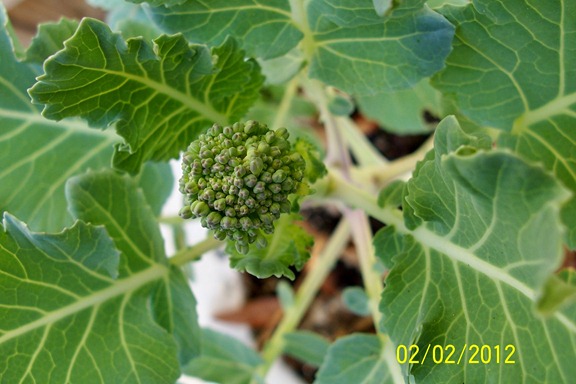
Posted: February 3, 2012 Filed under: Food and it's Impact on Our Health Leave a commentI haven’t grown broccoli before..this plant has been growing outside since October, finally has one tiny little head on it…
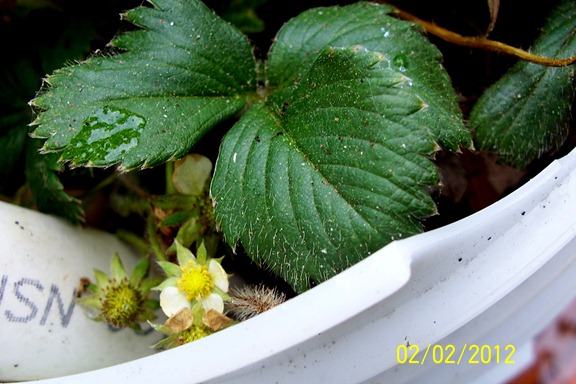
The strawberry has bloomed, this has been outside all winter also. All plants are in sub-irrigated containers.
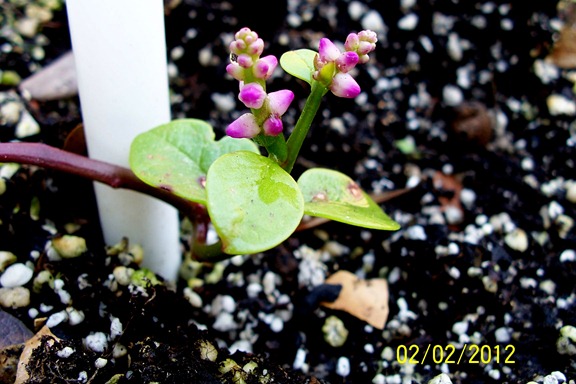
Malabar spinach is such a beautiful plant…
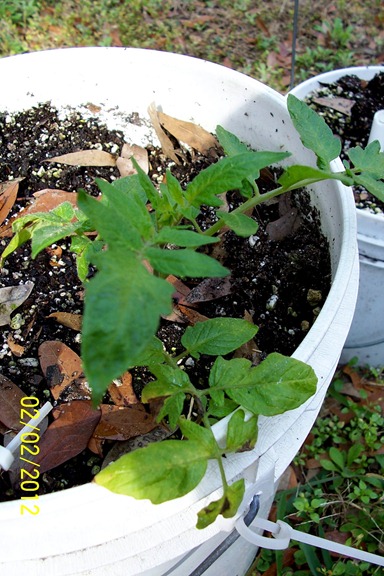
Before the cold got the tomato bush 2 weeks ago (it still had tomatoes ripening), I cloned it. From the 3 I took one is growing nicely… I have 8 more plants that are about 3 inches high that I just put in containers, but this one will give me tomatoes way earlier…
Flawed Labeling
Posted: February 3, 2012 Filed under: Food and it's Impact on Our Health, Non-Toxic Choices Leave a commentAlthough I do not agree with Jeff Novicks’ stance on Nutrition (vegetarian) .. he is right about the crazy info that food manufacturers are allowed to call “Nutrition Info” on labels. VERY misleading, in fact, outright lies!
Anonymous Takes Down Monsanto.com
Posted: January 31, 2012 Filed under: Food and it's Impact on Our Health, Gardening, Going Green; How and Why..., Non-Toxic Choices Leave a commentPosted on January 21, 2012 by Sabra
In a thread of hack events from the Anonymous group, the most recent target has been Monsanto.com. Anonymous, which briefly knocked the FBI and Justice Department websites offline as well as Music Industry websites in retaliation for the US shutdown of file-sharing site Megaupload, is a shadowy group of international hackers.
Click here to see the videos- http://www.organiccommonsense.com/organic/anonymous-takes-down-monsanto-com/
Anonymous Message To Monsanto: We fight for farmers! – Video Transcript
To the free-thinking citizens of the world: Anonymous stands with the farmers and food organizations denouncing the practices of Monsanto We applaud the bravery of the organizations and citizens who are standing up to Monsanto, and we stand united with you against this oppressive corporate abuse. Monsanto is contaminating the world with chemicals and genetically modified food crops for profit while claiming to feed the hungry and protect the environment. Anonymous is everyone, Anyone who can not stand for injustice and decides to do something about it, We are all over the Earth and here to stay.
To Monsanto, we demand you STOP the following:
- Contaminating the global food chain with GMO’s.
- Intimidating small farmers with bullying and lawsuits.
- Propagating the use of destructive pesticides and herbicides across the globe.
- Using “Terminator Technology”, which renders plants sterile.
- Attempting to hijack UN climate change negotiations for your own fiscal benefit.
- Reducing farmland to desert through monoculture and the use of synthetic fertilizers.
- Inspiring suicides of hundreds of thousands of Indian farmers.
- Causing birth defects by continuing to produce the pesticide “Round-up”
- Attempting to bribe foriegn officials
- Infiltrating anti-GMO groups
Monsanto, these crimes will not go unpunished. Anonymous will not spare you nor anyone in support of your oppressive illegal business practices.
AGRA, a great example:
In 2006, AGRA, Alliance for a Green Revolution in Africa, was established with funding from Bill Gates and The Rockefeller Foundation.
Among the other founding members of, AGRA, we find: Monsanto, Novartis, Sanofi-Aventis, GlaxoSmithKline, Procter and Gamble, Merck, Mosaic, Pfizer, Sumitomo Chemical and Yara. The fact that these corporations are either chemical or pharmaceutical manufacturers is no coincidence.
The people of the world see you, Monsanto. Anonymous sees you.
Seeds of Opportunism, Climate change offers these businesses a perfect excuse to prey on the poorest countries by swooping in to “rescue” the farmers and people with their GMO crops and chemical pesticides. These corporations eradicate the traditional ways of the country’s agriculture for the sake of enormous profits.
The introduction of GMOs drastically affects a local farmers income, as the price of chemicals required for GMOs and seeds from Monsanto cripples the farmer’s meager profit margins.
There are even many cases of Monsanto suing small farmers after pollen from their GMO crops accidentally cross with the farmer’s crops. Because Monsanto has a patent on theri brand of seed, they claim the farmer is in violation of patent laws.
These disgusting and inhumane practices will not be tolerated.
Anonymous urges all concerned citizens to stand up for these farmers, stand up for the future of your own food. Protest, organize, spread info to your friends!
SAY NO TO POISONOUS CHEMICALS IN YOUR FOOD!  SAY NO TO GMO!
SAY NO TO MONSANTO!
We are Anonymous
We are legion
We do not forgive
We do not forget
Expect us
Stopping Monsanto
Posted: January 31, 2012 Filed under: Food and it's Impact on Our Health, Gardening, Going Green; How and Why..., Non-Toxic Choices 1 Comment
We all been outraged at Monsanto’s aggressive, even illegal, certainly immoral marketing and pollution practices lately. we have all bitched voraciously all over the Internet. Go HERE to read about their deplorable business practices.
So what can we do about it? Yes, sign the petitions, re-post, re-blog..spread the word! And then?
Again’ VOTE with your Dollars! Buy certified organic food, grow your own food… purchase heirloom seeds and organic seeds. Learn how to grow from the seeds of your own food you raise. I bought seeds 4 years ago, am still using the same seed packets or have seeds from my last crop of tomatoes, Malabar spinach, lettuces. The seed packets tell you to “broadcast the seeds” then thin the plants. That is ridiculous! Of coarse they want you to waste the seeds, and buy more next year. I sprout each seed or direct plant into perlite and then soil.
So let’s put Monsanto out of business, let’s do what they re most scared of; make our voices heard load and clear. AND stop supporting them,, buy organic food, cleaning products, clothing..etc. Stop supporting chemical companies, not just Monsanto. Stop buying plastic, stop getting shopping bags (bring your own), stop getting take-out.
Learn to live with less, buy better quality when you do. Re-use as much as possible.
It is possible to drastically lower your carbon footprint. This in turn impacts big business.
Every single choice you make has an impact.
And go to Millions Against Monsanto and speak out.
Growing Her Own Food- On a Balcony
Posted: January 29, 2012 Filed under: Food and it's Impact on Our Health, Gardening Leave a commentA cool little video…shows clearly how easy it is to grow your own food…in a tiny little space..
Why Sustainability Is Boring and Merely ‘Consuming Less’ Misses the Point
Posted: January 23, 2012 Filed under: Gardening, Going Green; How and Why... Leave a commentFrom Apartment Therapy
You’re probably wondering right now if this is Re-Nest you’re reading. Wait, what?Have we suddenly upped and thrown our morals to the wind? Isn’t Re-Nest supposed to be about conscious and responsible living and design at home? Don’t we believe that the choices we make—what we use, what we buy— have an impact on the planet? Aren’t we for reuse and against throwawyism? Yes, yes, and yes—which is exactly why sustainability is boring and merely ‘consuming less’ misses the point.
We’ve all heard the hot button words: green, eco-friendly, sustainable, recycled, upcycled, reclaimed, reused, non-toxic, all-natural… the list goes on. And I’m the first to admit that Re-Nest writers, myself included, use these descriptors all the time as a way of defining what is "good" and what is "bad" in this nebulous green world we’re trying to create for ourselves. (See? I did it again.)
But to be honest, I’m growing tired of my reliance on these words to define what is important. Because while these descriptors can be incredibly useful and informative, more often than not they’re excuses for bad design, condescending judgement and behavior (hence the top photo), or blatant greenwashing.
Are there ways we can "tweak" our thinking on this? I think so.
Note: I’m not saying we should abandon the old views entirely, but rather expand those views to include some of the broader new views in our understanding of what it means to, well, be green.

Old View: Don’t be a consumer.
New View: Buy fewer things of higher quality that you’ll value more.
It’s not about not consuming; it’s about mindful consuming. Bruce Sterling, the founder of the Veridian Design Movement (or "bright green environmentalism") wrote in his last Veridian note that "it’s not bad to own fine things that you like. What you need are things that you GENUINELY like. Things that you cherish, that enhance your existence in the world. The rest is dross."
Old View: Live minimally and frugally.
New View: Practice appropriatism.
As Frank Chimero writes, "Add things until it starts sucking, take things away until it stops getting better." It shouldn’t simply be about consuming less; instead, we should ask ourselves ‘What is better?’ and ‘What is appropriate?’ and we should celebrate both thrift and aspiration.
Old View: Sustainable, recycled, upcycled.
New View: Heirloom, repairable, upgradable.
Justin McGuirk in this article for The Guardian says, rightly so, that the wordsustainable is not an adjective you would use to describe something you love. "To sustain something is to keep it alive, pure and simple. It’s more of a duty than a passion," he writes, that "suggests the flatlining of human ambition." If sustainability is an aesthetic predominantly defined by brown, recycled wood and cardboard products, then it will ultimately fail to interest the majority of the population. Encourage design that appeals to people’s sense of aesthetic, not just to their sense of duty. The best green design should be able to improve your life and the planet without sacrificing style and comfort.
Old View: Reduce, reuse, recycle.
New View: Be against throwawayism.
Learn to love and take care of your stuff. Buy well and buy once. Get "radically improved everyday things," as Bruce Sterling says. The objects you use the most should be the highest quality you can afford.


 Meal Delivery Service by Millie Barnes