Why you Can’t Meet Your Nutrient Needs on a Vegan Diet
Posted: October 18, 2017 Filed under: Food and it's Impact on Our Health Leave a commentSomeone posted on FB today that she was horribly hungry no matter how much she ate on a vegan diet. I experienced the same thing on a vegan and a vegetarian diet that I followed for 30 years. I even went into therapy as a chronic over eater! Turns out I was hungry because I was MALNOURISHED! You cannot meet all of your nutrient needs on a vegan diet. You =can get closer on a vegetarian diet, bit not completely.
I went to 4 different sites online to see what they had to say about the subject. I took their recommendations for a daily intake on a vegan diet. They CLAIMED that these were 2000 a day meal plans!
Let me show you what I found!
Here was their suggestion;
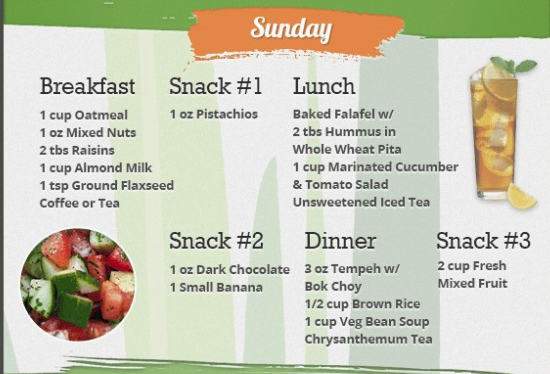
When I plugged this info in to my Nutrition Program here was the results!
First of all it added up to 2980 CALORIES!! AND at 52% calories from carbs it’s an easy way to gain weight. It also suggests a serving of soy in the form of Tempeh. Soy is highly toxic to the human body. The other protein sources were beans and nuts. These foods should be eaten in b=very limited amounts. The beans means you will always have gas, a sign of undigested food in the colon. This is a prescription for a clogged colon and an over growth of yeast.
So even at almost 3000 calories, did this way of eating meet your nutrient levels ?
NO, IT DID NOT!
First lets look at fats;
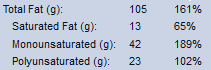 This pattern of eating WAY more ply and mono-unsaturated fats is the main reason so many recovering vegans have high blood pressure! 75% of the fats we take in each day need toi be saturated; coconut oil, butter or ghee (for the whopping amount of Vitamins in it!) The entire immune system depends of saturated fat, so does hormone production, keeping the body hydrated, cell wall integrity, brain health. You cannot produce a baby with a decent IQ without saturated fats. Our low fat diets have lead to an epidemic in learning disorders and depression.
This high calorie intake only met 85& of calcium needs.
It only gave you 88% of Vitamin A
It only gave you 14% of Vitamin B12. YIKES!
And only 90% of niacin.
AND Zero Cholesterol. Cholesterol is important in the diet as it is your best defense to aging!
Benefits of Broccoli: Eating More May Improve Your Gut Health
Posted: October 18, 2017 Filed under: Food and it's Impact on Our Health Leave a commentThe Difference Between Saturated and Unsaturated Fats (and Why It’s Important)
Posted: October 15, 2017 Filed under: Food and it's Impact on Our Health Leave a comment
- By Dacy Knight, thethirty.byrdie.com
- October 15th, 2017
1. Eat enough fat. The proper amount is not going to make you fat, clog your arteries or give you cancer. The reason fat tastes so good is because your body needs it. Give your body what it needs.
2. Cook with saturated fats. They are the most heat-stable and will be relatively undamaged even with high-heat applications. Animal fats like lard and duck fat are actually mostly monounsaturated, this is a good thing. Coconut oil is great choices for all you vegetarians (but know that is not a nutrient dense as butter or ghee).
3. Monounsaturated for cold to low heat. Use these oils from vegetable sources for cold applications like salads, low heat applications like pouring over hot vegetables or, if you like, for light sautéing. Extra virgin olive oil is great, full of phytonutrients and antioxidants, but don’t waste it by overheating it.
4. Polyunsaturated for cold use. These oils are really best as supplements. You can add some to your salad dressing or smoothie if you want to, but it’s not really necessary. Never heat polyunsaturated oils. Yes, they are sold as cooking oils in the supermarket but these oils are very delicate and will be damaged by heat or by light or air exposure. There is no good reason to buy vegetable oils that are sold for cooking.
5A. Avoid hydrogenated fats outright. Check food labels diligently. Even if the product says “0g trans fats,” it still, by law, can contain up to 0.5 grams per serving. Considering the fact that food processors can designate serving size any way they like, these numbers are truly meaningless. Look for the word “hydrogenated” on ingredients lists. If it’s there, this food is plastic. Don’t eat plastic.
5B. Skip spreads. Since saturated fats are not harmful, there’s no reason to buy processed vegetable spreads that employ different tricks to imitate the properties of the real stuff. Hydrogenation, interesterification, and the use of thickeners and blending fats and oils are all employed to make something inherently un-spreadable into something apparently spreadable. Just go for the real thing – butter. Better yet, boil the butter to make it into ‘ghee’ – it’s more stable, is free of dairy proteins and lasts outside of the fridge for months.
To sum it all up, names are more for convenience. Remember that no fat is entirely saturated, monounsaturated, or polyunsaturated. Every fat source is a mixed bag of all these types. We refer to animal fats as “saturated” and vegetable oils as “polyunsaturated” as a kind of shorthand. But many animal fats actually have more monounsaturated than saturated fats. Even olive oil contains some saturated fat and you can get omega-3s from butter. Remember not to take these labels as gospel. Good fat is good, bad fat is bad. There is still the need to be vigilant in what we eat, including avoidance of over-processed, nutrient-depleted faux foods and meat and dairy from sick animals. Choose fresh, choose organic choose 100% pasture raised and choose local. Avoid processed anything.
Why Researchers Recommend Eating Avocado Every Day (Yay!)
Posted: October 5, 2017 Filed under: Food and it's Impact on Our Health Leave a comment
A new review of studies provides more evidence that the creamy fruit can protect against diabetes and heart disease.
April 12, 2017
Here is some very good news for guacamole lovers everywhere: A new review of scientific literature suggests that eating avocado is a simple (and delicious!) way to prevent metabolic syndrome. Dubbed “the new silent killer,” metabolic syndrome is the term used to describe a combination of three or more risk factors for heart disease and diabetes (think high blood pressure, high triglycerides, and large waist circumference, for example).
The review, conducted by Iranian researchers and published in the journal Phytotherapy Research, looked at 129 previously published studies examining the effects of avocado consumption on different components of metabolic syndrome. Most of the studies involved the fleshy part you’re used to eating, but some also included avocado leaves, peels, oil, and seeds, or pits.
The researchers concluded that avocados have the most beneficial effects on cholesterol levels, and that consumption of the creamy fruit can influence several different measurements: LDL (bad) cholesterol, HDL (good) cholesterol, triglycerides, total cholesterol, and phospholipids.
That’s not all, though. “The lipid-lowering, antihypertensive, antidiabetic, anti-obesity, antithrombotic, antiatherosclerotic, and cardioprotective effects of avocado have been demonstrated in several studies,” wrote the authors, and most of those studies recommend eating the fruit on a daily basis. In other words, avocados can help fight pretty much every aspect of metabolic syndrome.
<?XML:NAMESPACE PREFIX = “[default] http://www.w3.org/2000/svg” NS = “http://www.w3.org/2000/svg” />
“This is just yet another study to show that avocados truly deserve superfood status,” says Health’s contributing nutrition editor, Cynthia Sass, RD, MPH. Sass was not involved in the review, but says it includes an “impressive range of studies.”
Sass points out that avocados can help stave off belly fat, the most dangerous type of fat to carry. And even though they’re high in (healthy) fat compared to other fruits, it’s hard to go overboard and eat too much. “Fortunately avocado is very satiating,” she says. “It’s almost like they have a built-in stop-gap.”
Research also shows that people who eat more avocados weigh less and have smaller waists than those who don’t, even when they don’t consume fewer calories overall. “This is yet another example of how not all calories are created equal,” Sass says.
RELATED: 18 Superfoods for Your Heart
Plus, avocados are a good source of antioxidants, fiber, vitamins, and minerals, in addition to their heart-healthy monounsaturated fats. And, as the review notes, they’re generally safe and better tolerated than medications.
Want to add more avocado to your regular diet? Besides using the fruit to make guacamole and super-trendy avocado toast, you can also whip it into smoothies, add it to omelets and salads, and—with a little seasoning—use it as a topping for sandwiches, soups, fish, chicken, pizza, you name it. Avocado can even be used as a replacement for butter in baking recipes, and its creaminess makes it a good base for desserts like ice cream and pudding. (For more ideas, check out 25 Amazing Avocado Recipes for the Avo-Obsessed.)
“If you’ve never tried avocado in these ways, trust me, you’ll love it,” Sass says. “Avocado blends well with both sweet and savory ingredients, and provides the satisfaction factor that makes dishes decadent. Incorporating more avocado into your diet is like having your cake and eating it too!”
Oh, and while the study looked at several parts of the plant, Sass recommends sticking with the flesh for now. “We don’t yet know enough about the safety of eating pits and peels,” she says.
Eating More Chocolate Could Be Good for Your Heart, Says Study
Posted: October 4, 2017 Filed under: Food and it's Impact on Our Health, Health and Happiness Leave a commentFeel guilty for reaching for that second piece of chocolate? You shouldn’t. In fact, go right ahead and grab a few more.
Chocolate has always been a double-edged sword when it comes to health. It’s packed full of heart-loving flavonoids, antioxidants and a lot of sugar. But, a 2017 Harvard University study has found that even eating up to six servings of chocolate a day can have a positive effect on your health.
Analyzing data from more than 55,000 participants in the Danish Diet, Cancer, and Health Study, researchers concluded that higher levels of chocolate consumption can result in a reduced risk of atrial fibrillation (AF), commonly known as a heart flutter.
The study comes as welcome news. About two percent of people in the U.S. under 65 suffer from the condition, which has been linked with an increased risk of heart failure and stroke.
 Mmmmm… brownies. (Photo credit: Getty Images)
The most outstanding benefits of chocolate consumption were seen in male participants. The likelihood of developing AF dropped by 23 percent in men when two to six servings of chocolate were included in their diets each week. In women, the effects were linked to eating just one portion a week. It saw a 21 percent decrease in developing the condition.
A portion, mind you, isn’t that entire Mars Bar. For the purposes of the study, a mere 30 grams equalled a single serving. However, even the lead author of the study, Elizabeth Mostofsky, says that rushing out to buy a block might not be the best idea.
“Eating excessive amounts of chocolate is not recommended because many chocolate products are high in calories from sugar and fat and could lead to weight gain and other metabolic problems,” she cautioned.
“But moderate intake of chocolate with high cocoa content may be a healthy choice.”
So, it seems opting for small pieces of dark chocolate is the way to go — but we were already doing that!
Parkinson’s Breakthrough: New Disease-causing Mechanism Found
Posted: October 2, 2017 Filed under: Health and Happiness Leave a commentA new study led by scientists in South Korea and Singapore “overturns three decades of consensus” on what causes Parkinson’s disease symptoms.
A study recently published in the journal Neuron sheds new light on the disease-causing mechanism behind Parkinson’s.
Broadly speaking, Parkinson’s disease is known to be caused by insufficient levels of the neurotransmitter dopamine. In more detail, however, it is not precisely known what causes the motor problems – including tremor, stiffness, and the inability to control movements – that characterize this low-dopamine condition.
Voluntary movement is known to be regulated by a brain region called the basal ganglia. The basal ganglia modulates locomotion by shifting between instructions to trigger motion and instructions to suppress it.
Achieving the delicate balance between these two sets of instructions results in smooth motions.
Because a low level of the dopamine neurotransmitter more strongly suppresses movement and low dopamine characterizes Parkinson’s disease, researchers have long believed that suppression induced by a lack of dopamine causes the motor dysfunction in Parkinson’s.
The new study, however, uses cutting-edge technology to challenge this belief.
The researchers were co-led by Prof. Daesoo Kim, from the Department of Biological Sciences at the Korea Advanced Institute of Science & Technology in Daejeon, South Korea, and Prof. George Augustine, from the Lee Kong Chian School of Medicine in Singapore.
Using optogenetics – a technique wherein neurons are genetically modified to respond to light, enabling the researchers to track and control the behavior of the cells – the scientists stimulated inhibitory basal ganglia inputs. In other words, they intensified the motor suppression instructions.
However, they found that this made ventrolateral thalamic neurons – which are involved in motor control – hyperactivity.
This hyperactivity seemed to cause muscular rigidity and contractions in the rodents – symptoms similar to the hallmark motor symptoms in Parkinson’s disease.
As the authors explain, this is the phenomenon called “rebound firing,” which seems to be triggered by intensifying inhibitory basal ganglia inputs.
Prof. Kim and team tested the role of this phenomenon by genetically engineering mice to lack dopamine and inhibiting rebound firing to see what effects it would have on Parkinson’s disease motor symptoms.
Rebound firing was inhibited by genetically interfering to reduce the number of ventrolateral thalamic neurons.
Surprisingly, mice with abnormally low levels of dopamine but no rebound firing displayed normal movement and no Parkinson’s disease symptoms.
“In a low dopamine state,” the authors say, “the number of [ventrolateral thalamic] neurons showing post-inhibitory firing increases, while reducing the number of active [ventrolateral thalamic] neurons [by inhibiting basal ganglia] input, effectively prevents Parkinson disease-like motor symptoms.”
“Thus, [basal ganglia] inhibitory input generates excitatory motor signals in the thalamus and, in excess, promotes PD-like [Parkinson’s disease-like] motor abnormalities,” they conclude.
“This study,” says Prof. Daesoo Kim, as he comments on the significance of the findings, “overturns three decades of consensus on the provenance of Parkinsonian symptoms.”
First study author Dr. Jeongjin Kim says, “The therapeutic implications of this study for the treatment of Parkinsonian symptoms are profound. It may soon become possible to remedy movement disorders without using L-Dopa, a precursor to dopamine.”
“Our findings are a breakthrough, both for understanding how the brain normally controls the movement of our body and how this control goes awry during Parkinson’s disease and related dopamine-deficiency disorders.”
How Many Calories you Burn Doing Popular Exercises (Or, Why Exercising for Weight Loss Doesn’t Work)
Posted: October 2, 2017 Filed under: Food and it's Impact on Our Health, Health and Happiness Leave a commentIn order to lose ONE POUND of body fat you must burn 3500 calories in a day! Looking at it in this perspective tells you why you cannot exercise enough in a day to lose weight. Losing weight comes from monitoring WHAT you eat, not necessarily how much. Although I will say 99% of most Americans do NOT MEET THEIR CALORIE needs, making it impossible to meet your nutrient needs…which is the key to successful weight loss.

Everything we do burns calories.
Calorie-counting isn’t the best way to lose weight — for that, you’re better off focusing on which foods you eat. But exercise offers a huge range of mental and physical health benefits, and it can be useful to know how much fuel you are burning.
Of course, the number of calories you burn varies based on body mass, body fat, age, sex, efficiency of movement, and conditions like altitude that impact the energy required for an activity.
It’s also important to note that the figures below only count time spent engaged in the activity — so 60 minutes playing soccer doesn’t count as a full hour if you spent 15 minutes on the sideline. Also, doing an exercise in a vigorous way can burn up to twice as many calories as doing the same activity in a casual way.
Here’s the full list:
- Hatha yoga: 183 calories/hour | 228 calories/hour
- A slow walk (2 mph): 204 calories/hour | 255 calories/hour
- Canoeing: 256 calories/hour | 319 calories/hour
- Slow, easy cycling (under 10 mph): 292 calories/hour | 364 calories/hour
- Volleyball: 292 calories/hour | 364 calories/hour
- Power yoga: 292 calories/hour | 364 calories/hour
- Golfing (and carrying your clubs): 314 calories/hour | 391 calories/hour
- A brisk walk (3.5 mph): 314 calories/hour | 391 calories/hour
- ‘Jogging’ on the elliptical: 365 calories/hour | 455 calories/hour
- Resistance training/weightlifting: 365 calories/hour | 455 calories/hour
- Kayaking: 365 calories/hour | 455 calories/hour
- Water aerobics: 402 calories/hour | 501 calories/hour
- Light or moderate lap swimming: 423 calories/hour | 528 calories/hour
- Hiking: 438 calories/hour | 546 calories/hour
- Backpacking: 511 calories/hour | 637 calories/hour
- Tennis, singles: 584 calories/hour | 728 calories/hour
- Running (5 mph): 606 calories/hour | 755 calories/hour
- Running up stairs: 657 calories/hour | 819 calories/hour
- Vigorous lap-swimming: 715 calories/hour | 892 calories/hour
- Jump rope: 861 calories/hour | 1,074 calories/hour
- Running, 8 mph: 861 calories/hour | 1,074 calories/hour
Moderate fat consumption may lower risk of death, global study finds
Posted: August 31, 2017 Filed under: Food and it's Impact on Our Health Leave a comment- Low carb, low protein
- Moderate fat (35% of overall caloric intake is healthiest!
- 75% of fat intake should be ghee or butter, and animal fats.
- The remaining 25% should come from the poly- and mono-unsaturated fats in veggies. NOT from olive and veggie oils as they are rancid by the time you buy them and should never ever be heated.
- ALL Carbs need to come from fruits and veggies!
Contrary to most dietary advice handed out for decades, consuming moderate amounts of fat appears to reduce the risk of premature death, a major global study has found.
Research involving more than 135,000 people across five continents has shown that fat consumption representing about 35 per cent of daily caloric intake was associated with a lower risk of death, compared to lower fat intakes.
Moderate amounts of saturated fat, found in butter and cheese, may actually help protect against heart disease and stroke.
Researchers also found that dietary fats, including saturated, polyunsaturated and monounsaturated fats, are not associated with major cardiovascular diseases or increased risk of heart attacks.
However, a diet high in carbohydrates, in which carbs represent more than 60 per cent of caloric intake, was linked to higher mortality rates.
Overall, the study showed that avoiding a high-carb diet and consuming a moderate amount of fat, along with fruits and vegetables, can lower the risk of premature death.
The Prospective Urban Rural Epidemiology (PURE) study was led by researchers at the Population Health Research Institute (PHRI) at McMaster University and Hamilton Health Sciences in Hamilton, Ont.
For an average of seven-and-a-half years, the study followed more than 135,000 people from 18 countries and various economic and cultural backgrounds. The collected data produced two reports, published Tuesday in The Lancet.
While the PURE study’s findings about dietary fats may seem surprising, Canadian researchers say the latest results are consistent with several other studies conducted in western countries over the last 20 years.
Mahshid Dehghan, the lead author of the PURE study and an investigator at PHRI, said that for decades, dietary guidelines have focused on reducing total fat consumption to below 30 per cent of daily caloric intake.
She said those guidelines were developed about 40 years ago using data from some western countries that showed average fat consumption represented more than 40 per cent of daily caloric intake.
But overall fat consumption is significantly lower today in North America and Europe, at 31 per cent, she said. Dehghan added that in some countries, reducing fat intake actually led to other dietary problems.
“A decrease in fat intake automatically led to an increase in carbohydrate consumption and our findings may explain why certain populations such as South Asians, who do not consume much fat but consume a lot of carbohydrates, have higher mortality rates,” Dehghan said in a news release.
Richard Bazinet, a professor at the University of Toronto’s department of nutritional sciences, said that in the past decade, researchers have been getting “some really conflicting evidence” on how fat consumption impacts our health.
The PURE study is a “very large piece of evidence” that shows saturated fat is not as bad for us as previously thought, he told CTV News Channel on Tuesday.
“A lot of people around the world haven’t been able to reproduce the findings that saturated fats are a major culprit (for disease),” he said.
The PURE study also found that:
- People who ate three to four servings (between 375 and 500 grams) of fruits, vegetables and legumes per day had the lowest risk of premature death.
- Although most dietary guidelines recommend a minimum of five daily servings of fruits and veggies, researchers say higher intakes did not result in many additional health benefits.
“Most people in the world consume three to four servings of fruits, vegetables and legumes a day,” Andrew Mente, a PHRI investigator and McMaster University professor, said in a news release.
“This target is likely more affordable and achievable, especially in low and middle income countries where the costs of fruits and vegetables are relatively high.”
Researchers say the PURE study further demonstrates the importance of dietary moderation, and provides “robust, globally applicable” evidence that can be used to inform nutrition policies.
Shrimp and Fall Greens Gumbo
Posted: August 23, 2017 Filed under: Recipes Leave a comment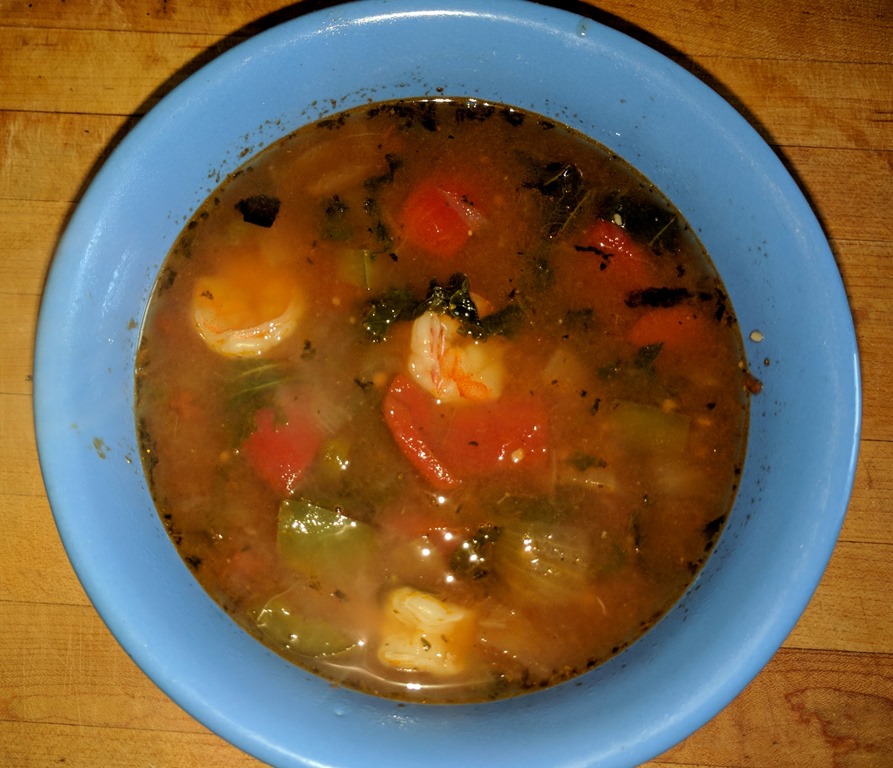
I have been making this soup for about 20 years and it remains one of my all time favorite recipes!
Serving Size : 4
12 ounces clam juice
1 pound shrimp — small, reserve shells
1 tablespoon butter
1 cup onion — chopped
1 cup green pepper — diced
1 Tablespoon garlic — chopped
1 cup tomatoes — seeded, diced
2 large bay leaf
1 tablespoon dried thyme
1/2 teaspoon Tabasco sauce
1/2 bunch kale — chopped coarsely
1/2 bunch scallions — dia. slices
1 1/2 tablespoons file powder
1) Boil water, reserved shrimp shells and clam juice for 15 minutes. strain and reserve stock.
2) Sauté onions, peppers and garlic in butter for 2 until tender, add tomatoes, bay leaves, thyme, tabasco and reserved stock. bring to a boil. reduce heat, simmer 15 minutes.
3) Add greens to soup, simmer until greens are bright green, about 3 minutes. add shrimp, simmer 1 more minute. turn off heat, add file powder, season with salt and pepper and Tabasco.
4) Garnish with diagonal cut scallions.
Tropical Shrimp and Pineapple Skewers
Posted: July 24, 2017 Filed under: In The Kitchen with Millie- How To's, Recipes Leave a comment
Marinade;
1 cup pineapple, cubed
4 cloves garlic
1 tablespoon chili sauce
¾ cup water
2 tablespoons rice wine vinegar or white vinegar
½ tablespoon salt
¼ cup coconut cream
1 lime, juiced
2 limes, zested and divided
3 tablespoons cornstarch slurry (2 tablespoons water mixed with 1 tablespoon cornstarch)
SKEWERS
1 pineapple, cut into ½-inch pieces
1 pound shrimp, peeled and deveined
PREPARATION
1. Place wooden skewers in a bowl of water to soak for at least 10 minutes.
2. Puree the pineapple, garlic, chili sauce, and water in a food processor.
3. Heat a pan over medium heat, and add the pureed sauce mixture.
4. Add vinegar, salt, coconut cream, lime juice, zest of one lime, and salt, and bring the sauce to a boil, stirring occasionally. Reduce heat to a simmer.
5. Mix the cornstarch and water in a small bowl to create the slurry, then add the mixture into the sauce and simmer until the sauce thickens, about a minute.
6. Skewer the pineapple and shrimp, then brush sauce on both sides.
7. Grill skewers over medium-high heat until cooked, about 2-3 minutes per side.
8. Sprinkle finished skewers with lime zest and serve with remaining sauce.
9. Enjoy!


 Meal Delivery Service by Millie Barnes