The 7 Biggest Mistakes You Make When Baking Potatoes
Posted: May 8, 2019 Filed under: In The Kitchen with Millie- How To's, Recipes Leave a comment
By Kimberly Holland
All the ways you tank your ‘taters’
Baked potatoes sit atop the mountain of comfort foods. With a fluffy, melt-in-your-mouth interior and a crispy, salty skin, a perfect baked potato is a thing of beauty.
But for many people, the dream of the ideal oven-baked potato sits just out of reach. What should seem easy — baking a potato in a hot oven — can, and often does, return mixed results: gummy centers, slightly charred skins, or slippery, soggy skins.
No one will say they’re not edible, but could they be better? Yes. And if the steps to make them better are remarkably easy, there’s no reason to suffer sad, shriveled baked potatoes anymore.
Read on to see if you’re committing the 7 deadly sins against baked potatoes, and learn simple tips you can follow to make your next batch of oven-baked potatoes perfect.
1. You don’t dry the potato well.
You should certainly rinse the potatoes — we prefer russets — to remove any dirt and debris. You can even give them a quick scrub with a vegetable brush. But you need to dry the spuds well after the bath. Excess moisture on the skin can seep into the potato during baking and cause soggy skins.
Do be sure to prick a few holes into the skin, too. While the potato is unlikely to explode in the oven, no one is here to take risks with dinner. Err on the side of caution.
2. You wrap the potato in foil.
Don’t be ashamed if you do this — many cooks believe it to be the key to the perfect baked potato. But turns out you’re ruining the skin if you do this.
The ideal baked potato skin relies on a certain amount of dehydration and rehydration — we’ll get to that. If you bake in foil, all the moisture from the potato just circles back into the potato skin, which can leave you with a sad state of skin.
No, once you’ve washed and dried the potatoes, leave them be. No wrapping.
3. You don’t use a wire rack under the potatoes.
Potatoes need to cook all the way through, and the best way for that to happen is to make sure the hot air can get to the potato from all sides. If a potato bakes with one side touching a sheet pan, you’ll get a hard spot and possibly uneven cooking.
Place a thin wire rack inside a rimmed baking sheet. Line up your spuds, side by side, and place the pan into the oven. Make sure there’s a little room between each potato before closing the oven door.
4. The oven is too hot.
Low and slow—that’s the mantra of the Perfect Baked Potato. If you’ve got the time to spare, cook the potatoes at 300°F for 90 minutes. If you need to speed that up, bump it to 450°F for 45 minutes. (Note: Your baking time will vary depending on the size of your potato and how hot your oven runs.)
But don’t go hotter than that. There’s no victory in cooking potatoes at a temp greater than 450°F. They might be done a bit faster, but the high heat temp will leave you with overly browned skins that might even char in spots. And since the whole point of a perfectly baked potato is to have skins as delicious as the fluffy interior, there’s no charring allowed.
5. You don’t take the potatoes’ temperature.
You know when meat is perfectly cooked by measuring the internal temperature; the same is true for baked potatoes. Use a probe thermometer to measure the temp of your potatoes. You’re aiming for a temp in the sweet spot between 205°F and 212°F. Below that, the texture may still be too dense, and above that, it may become a gummy mess.
6. You baste first, not last.
Skip rubbing your potatoes in oil and salt until the end of the cooking time. That’s when they’ll deliver the most texture and flavor benefit for the spuds. If you oil them up early, the skins may not turn crispy. The salt, too, can run off the potatoes in the heat.
Instead, do a quick oil baste after the potatoes reach 205°F: Remove the pan from the oven. Brush with olive oil (or bacon grease if you have it) and a hefty sprinkle of kosher salt.
Return the pan to the oven for 10 minutes — the temperatures of the potatoes won’t climb more than 2 or 3 degrees in that time. The oil will crisp up the skins that were dehydrated during the long bake, and the salt will add delectable flavor.
7. You let the potatoes cool before cutting.
Unlike meat, potatoes don’t get better by resting. They need to be sliced open immediately. If you don’t, they will retain water from the still-steaming center and turn dense and gummy.
Quickly jab a serrated knife through each potato as soon as the pan has cleared the oven. Give them a gentle squeeze (with a hot-temp glove or towel) to create a vent.
Then you can gather all your fixings and call the family to the table. The potatoes will have cooled just enough by the time everyone gathers around to enjoy dinner — and marvel at your perfectly baked potatoes.
About Kimberly Holland
Kimberly’s favorite hobby is grocery shopping. Her second favorite hobby is realizing she already had two of the foods she just bought. Will bake. Won’t grill. Can caramel. Find her at khollandcooks on Instagram and on Allrecipes.
Bloody Mary Soup with Bacon, Shrimp and Crab
Posted: May 6, 2019 Filed under: Recipes Leave a comment
6 ripe tomatoes OR large can of diced tomatoes
4 large red bell peppers, seeded
2 large green bell pepper, seeded
2 cucumbers, peeled and seeded
3 celery, strings removed
1 small clove garlic
1 small red onion
3 tablespoons olive oil
Juice of 2 limes, or to taste
4 tablespoons Worcestershire sauce
Salt and freshly ground black pepper
Tabasco sauce, to taste
2 tablespoons freshly grated horseradish, or to taste
1/2 pound jumbo lump crab meat, picked over for shells and cartilage
1/2 pound medium shrimp, cleaned and shelled
4 slices bacon, cooked crisp
-
Blanch tomatoes, remove skins, squeeze out seeds and dice. Or use canned tomatoes.
-
Cut vegetables, garlic, and onion into large chunks, and puree in batches in a blender or food processor, adding some of the olive oil to each batch.
-
Strain through a sieve into a large bowl to remove skins and seeds.
-
Bake bacon in oven on parchment paper, crumble for garnish.
-
Boil shrimp until pink, drain, cool.
-
Add lime juice, Worcestershire sauce, salt and pepper.
-
Place soup in bowl, add crab, shrimp and top with bacon.
Caribbean Mango Coleslaw
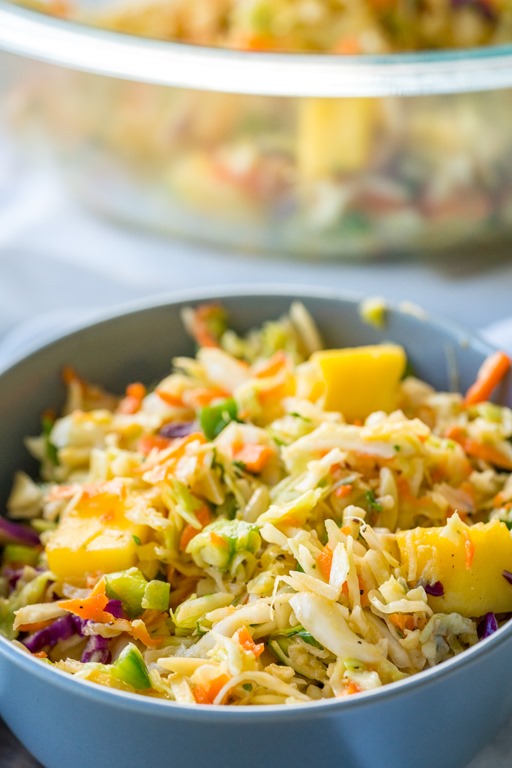
Posted: May 2, 2019 Filed under: Recipes Leave a commentI made this last week for the clients and I am now SO addicted! I always have a batch of some kind of Cole Slaw as it is a great salad and prebiotic. Actually I should say I always have Pressed Salad. I prep my veggies and then put them in a salad press for 5 or 6 hours. It removes a good bit of the moisture and allows the dressing to not get watered down.
- 3 cups cabbage, sliced thin
- 2 cups red cabbage, sliced thin
- 1 ripe mango, diced
- 1 medium Spanish onion, diced very small
- 1 jalapeño, seeds removed, finely chopped
- 1 cup carrot, shredded
- 2 cloves garlic, minced
- 1/3 cup fresh cilantro, chopped
- 2 tablespoons Dijon mustard
- 2 tablespoons honey
- 2 tablespoons lime juice
- 1 Tablespoon cumin
- 1 teaspoon smoked paprika
- 4 tablespoons fresh mayo
- 1 teaspoons Caribbean hot sauce
- Kosher salt and freshly ground pepper, to taste
PREPARATION
- Using a food processor slice the cabbages very thin. Grate carrot and dice onions. Place in salad press. Or place food in colander and cover with a plate, then add weights. (I use about 4 iron skillets and a Dutch oven because I make it in large amounts!) With either method salt the veggies to help pull liquid out of the veggies.
- In a medium bowl, whisk together mustard, honey, lime juice, mayo, spices and hot sauce until combined.
- In a large bowl, toss together cabbage, mango, jalapeño, carrot, garlic and then drizzle mustard dressing on top.
- When ready to serve, add cilantro and toss everything together.
- Serve and enjoy!
Want To Live Longer? Do These Four Things Daily
Posted: May 1, 2019 Filed under: Food and it's Impact on Our Health, Health and Happiness Leave a comment
By Jason Wachob
We all want to optimize our time on this planet and live the healthiest, longest lives possible. Joel Dudley, Ph.D., and Chris Mason, Ph.D., the founders of Onegevity, an AI-driven health care service, are committed to empowering people to better understand and take charge of their health through data-driven and customized solutions.
Dudley and Mason joined me on the mbg podcast to talk about what they believe doctors should be testing for, what we should be doing daily for our microbiome, and why prevention is critical for the future of health care.
A big topic here at mbg is longevity, and with advancements in genetic, microbiome, and blood testing, we know more than ever before. In this episode, we delve deeper into all that, but here, they offer four things we can all be doing right now, today:
1. Present your body with new challenges.
A simple, cost-effective way to try to reverse the effects of aging is to present your body with new challenges. “Maintaining your body’s ability to respond dynamically to the environment is important,” explained Dudley. This could be why things like HIIT and cold exposure are linked with greater longevity. It boils down to flexing your body’s ability to respond to challenges that will, in turn, build resilience.
2. Get quality sleep.
When asked about one of the key factors in living a long life, Mason responded that sleep is crucial. As for how much? He says somewhere from six to eight hours is optimal and reminds us that some essential processes occur only during sleep. We discussed the new research on the glymphatic system that connects the brain with our immune system, and he suggested that sleep may be the only time the body can drain unwanted things out of our brains.
3. Move, move, and move.
The scientists point out that while certain diseases such as Huntington’s disease and cystic fibrosis are genetic and may be difficult to prevent, through lifestyle changes such as exercise, a good diet, and a healthy microbiome, we may be able to move the needle on things like cardiovascular risk, longevity, and cognitive clarity. Dudley says while intense exercise such as HIIT may improve longevity, taking time each day to walk is a great option. It’s less about what exactly you’re doing and more about getting out and moving in some way.
4. Get baseline testing.
Mason and Dudley recommend getting testing (genetic, microbiome, blood work) done so you can have a baseline of what things look like now, so down the line you and your provider have something to compare to. Whether you have health issues or not, having more information pieced together can help create a picture of what’s going on inside you and may mean more effective care.
Whether it’s longevity or cardiovascular, gut, or immune health, it’s important to remember that every part of our health story is connected. Mason and Dudley explain that it takes the whole picture to understand what’s going on inside, and they have us excited about what the future of health looks like.
Cucumbers are the Best Salad Base of All Time—and These 5 Recipes Back That Up
Posted: May 1, 2019 Filed under: Food and it's Impact on Our Health, Recipes Leave a comment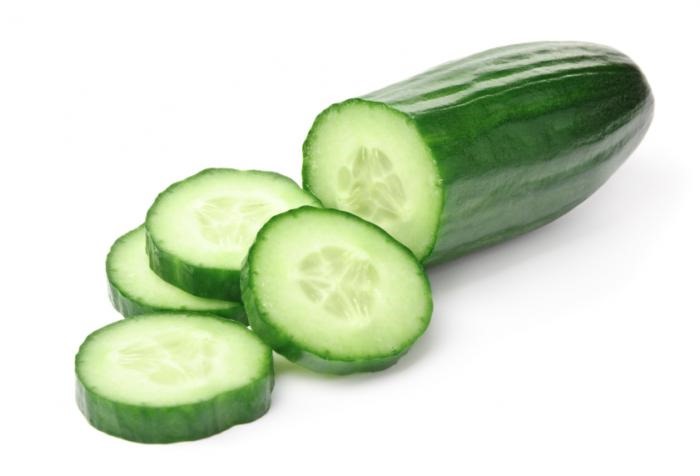
I feel kinda bad for cucumbers. Thanks to the world’s obsession with its famous cousin, the versatile zucchini, people are zoodling their lives away without even giving the cuke a fair shake. Well, sorry zucchinis, but cucumbers have some impressive qualities, too. And one of them is their ability to make you want to ditch the kale for a salad that’s crunchy, satisfying, and super-hydrating.
Cucumbers are typically used as a salad topping, but there’s no reason why they shouldn’t be the star of the show. A large cucumber contains 2 grams of protein, 2 grams of fiber, and a solid amount of vitamin C and vitamin K, magnesium, and potassium, which is known to help with bloating (something kale commonly causes). On top of that, since cucumbers are 96 percent water, eating them makes it easy to stay hydrated.
To take full advantage of the many benefits of cucumbers, create some hearty salads you can devour all season long.
The 5 best healthy cucumber salads
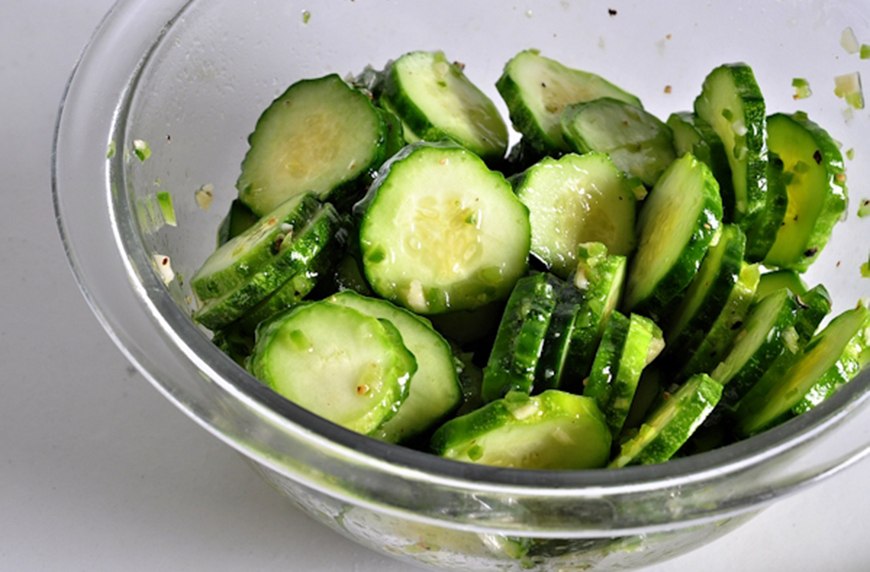
1. Jalapeño lime cucumber salad
If you like a little spice in your life, this cucumber salad featuring finely-diced jalapeños is a winner. Combined with zesty lime, your taste buds are in for a treat.
Give your cucumbers a Thai twist with this quickie salad that’s loaded with red onion, lemon juice, cayenne powder, and chopped peanuts.
3. Sweet and spicy cucumber salad
To satisfy both your sweet and spicy cravings, whip up this cucumber salad that contains ingredients like rice vinegar, red pepper flakes, and diced red onion.
4. Mediterranean cucumber salad
For the ultimate hydrating cucumber salad, add in some other refreshing veggies too: cherry tomatoes, radishes, and red bell pepper.
This cucumber salad ups the flavor with wakame, a type of seaweed that brings on plenty of health benefits. It’s been shown to help fight off cancer, decrease your risk of heart disease, and provide mental health-boosting omega-3 fatty acids.
Sorry, Kombucha fans: Dentists say it’s Ruining our Teeth
Posted: April 29, 2019 Filed under: Food and it's Impact on Our Health Leave a commentAnother point is that it is not as effective to add PROBIOTICS as it is to think in terms of introducing PRE-Biotics. Think raw foods before a meal, such as a salad. Every culture throughout time had serves a salad before or after a meal. My whole life I have always eaten a banana about 20 minutes or so before each meal. I eat a lot of salads, and for breakfast I always have lemon or lime water when I wake up and then have a banana before I enjoy a cup of coffee. I also do that southern thing of having sliced tomatoes with almost every meal, even breakfast.
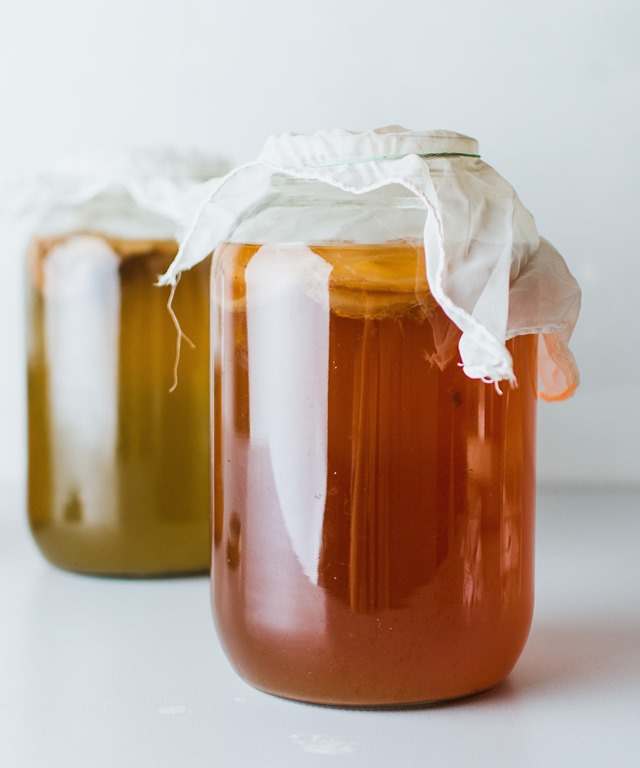 Photo by Klara Avsenik on Unsplash
Billed as a “healthy” drink, the fermented tea could be worse than soda for your oral health
For many new age-y health enthusiasts, probiotic drinks like kombuchaare an intrinsic part of a healthy lifestyle.
Kombucha, which is a fermented sweetened tea made of a symbiotic colony of bacteria and yeast (SCOBY) that grow inside a semi-permeable membrane, is said to aid digestion, boost immunity, reduce inflammation, increase energy, and even alleviate anxiety and depression, among other (oft-dubious) claims. Since its rise in popularity over the last ten years, kombucha can be found on the shelves of nearly every grocery store, especially health food stores like Whole Foods. The kombucha market around the world is expected to reach $5.45 billion by 2025.
However, the rise in this drink among the health conscious has come with a price: your teeth. Some dentists are noticing a rise in eroded enamel coinciding with kombucha’s popularity, questioning its so-called miraculous impact.
“Kombucha is nearly as acidic as a pop and energy drinks,” Dr. Bobby J. Grossi, an author, motivational speaker and founder of the Grossi Institute for Dental Assisting, told Salon. “Acidic drinks mess with the PH level of the saliva which ideally should be 7 or 7.3, when the saliva level becomes more acidic it becomes a breeding ground for bacteria which can take over the mouth.”
This bacteria, Grossi said, causes erosion of the enamel, plaque accumulation which can lead to both gum disease or tooth decay. Grossi added sugary drinks weaken your teeth.
The acid in kombucha is crucial for the bacteria’s survival, which makes this a challenging issue for manufacturers to solve. Dr. Greg Grobmyer of AuthorityDental.org, who has a DDS from the University of Tennessee Health Science Center, told Salon it is nearly as acidic as soda, too. “It is not uncommon to see ‘pitting’ in the enamel of someone who drinks a lot of kombucha,” he told Salon.
Pitting occurs on the surface of a tooth and usually leads to decay.
“We suggest rinsing your mouth with water after drinking kombucha to wash away the acidic compounds it may leave behind and not eating or brushing for at least 30 minutes afterwards, allowing your tooth enamel to remineralize and reharden,” Grobmyer said.
When asked if it is better or worse, Grossi said he does not believe it’s either-or between kombucha and soda.
“Both drinks are very acidic and have a lot of sugar in them,” Grossi said. “I am a firm believer that water and milk are the drinks of choice.”
“I also recommend always drinking water with a fresh lemon in it to help create a more alkaline environment, not only in your mouth but in your bloodstream,” Grossi said.
Overall, it seems the jury is still out when it comes to kombucha’s purported health benefits.
While studies do show that probiotic foods are good for your digestion and gut health, other studies have called into question kombucha’s healthfulness. A 2014 academic journal article, published in Comprehensive Reviews in Food Science and Food Safety, states: “Most of [kombucha’s] benefits were studied in experimental models only, and there is a lack of scientific evidence based on human models.”
Given that dentists constitute the front lines of our oral health, it might be wise to heed their observations.
Nicole Karlis
Nicole Karlis is a news writer at Salon. She covers health, science, tech and gender politics. Tweet her @nicolekarlis.
Coffee’s Effects on Our Endocannabinoid System
Posted: April 25, 2019 Filed under: Food and it's Impact on Our Health Leave a comment
- Photo source: Unsplash.com
- By Amy Loriaux, www.labroots.com
- April 23rd, 2019
Daily consumption of caffeine is seen as a “normal” addiction, er, habit. It doesn’t seem to pose any deleterious health effects, and, tolerance and withdrawal aside, many people can stay on a daily “maintenance dose” of coffee without any adverse consequences. That common perception, however, may be challenged based on data suggesting that caffeine can affect our newly discovered physiological system: the endocannabinoid system (ECS).
A study published in the Journal of Internal Medicine last year by Dr. Marilyn C. Cornelis and colleagues of Northwestern University studied the metabolome (a profile of metabolites) of 47 habitual coffee consumers across 3 months. For the first month, the study participants were to abstain for coffee (that must have been painful). In the second month, the participants were instructed to drink four cups a day and in the third month, they had to drink eight cups a day. Scientists measured the level of different metabolites in the participants’ fasting serum at each month.
The researchers found a total of 115 metabolites associated with coffee intake. These metabolites tend to be associated with a particular biological pathway. The scientists mapped the metabolites to 33 known pathways. Eighty-two of the 115 metabolites found had already been identified. Researchers observed a significant increase of metabolites related to 5 specific pathways: xanthine metabolism; benzoate metabolism; steroid metabolism; fatty acid metabolism and endocannabinoid metabolism.
These metabolites could be traced back to their sources (for example, xanthine metabolism produces caffeine metabolites). Some were previously unknown to be related to coffee metabolism. For instance, it had not been previously reported that fatty acid metabolism was involved in coffee metabolism. What was especially surprising was the finding of metabolites related to the ECS. What would the ECS have to do with coffee? And what does it mean for the ECS?
Metabolites related to the ECS decreased in response to coffee consumption. This is despite the fact that caffeine has not been shown to activate common endocannabinoid receptors (CB1 and CB2). However, that fact does not preclude the observed reduction in metabolites related to the ECS. One thing to keep in mind, though, is that there is something else that decreases ECS function: chronic stress. What does this have to do with coffee?
Caffeine can induce a stress response in some individuals. The ECS is thought to maintain several biological and psychological processes, and stress is one of them. Prolonged stress can decrease the function of the ECS. So, is there a coffee-stress-ECS connection? This is probably an overly simplistic interpretation of the data. In fact, stress appears to have a bidirectional effect on the production of certain endocannabinoids. Stress can increase the production of the endocannabinoid anandamide but decrease the production of 2-arachidonoyl glycerol (2-AG).
The “why” and the “how” of the decrease in ECS-related metabolites are not yet understood. The authors concede that this is merely an observation, or a starting point, if you will, for further research. At most, they suggest that the reduction of coffee metabolites processed by the ECS may be due to a desensitization of the ECS to coffee. Furthermore, this does not address the effects of phytocannabinoids, such as CBD or THC, may have in combination with caffeine intake. So, until that data comes out, maybe order a grande instead of a venti?
Source: Critical Reviews in Food Science and Nutrition, Journal of Internal Medicine, Drug Discovery Today, Neuropsychopharmacology, Journal of Caffeine Research, Nature Reviews: Neuroscience,
Chocolate is Better for Your Cough Than Cough Syrup, Study Says
Posted: January 16, 2019 Filed under: Food and it's Impact on Our Health Leave a comment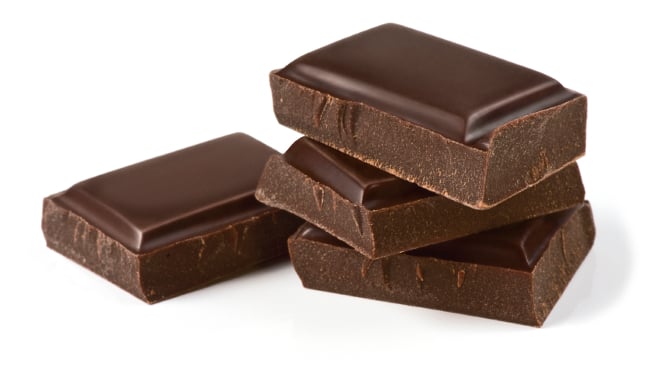
It may sound too good to be true, but researchers now say indulging in that piece of chocolate is actually the best cure for your cough.
A research group from a university in England randomly prescribed more than 160 patients either regular cough medicine or a chocolate-based medicine.
Patients on the chocolate-based medication reported improving more quickly than those on regular cough syrup.
Scientists believe the properties of cocoa help relieve irritation and inflammation.
Preferably make it DARK and RAW chocolate, which is WAY healthier than milk or conventional chocolate!
Blow to Low Carb Diet as Landmark Study Finds High Fiber Cuts Heart Disease Risk- But It Matters Where the Fiber Comes From!
Posted: January 14, 2019 Filed under: Food and it's Impact on Our Health Leave a comment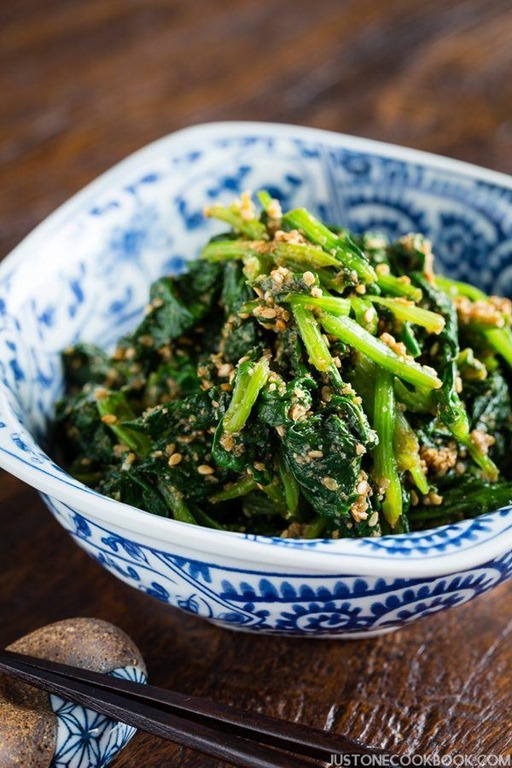
Eating more fiber, found in fruits, vegetables, herbs as well as nuts and pulses, will cut people’s chances of heart disease and early death, according to a landmark review commissioned by the World Health Organization. Many organizations recommend more grains and breads, but these are mostly empty carbs. You want 80% of the volume of food you eat each day to be fruits, veggies, salads and herbs. This will give you the fiber you need as well as an abundance of nutrients, enzymes and phyto-chemicals.
The authors of the review, which will inform forthcoming WHO guidelines, say their findings are good news – but incompatible with fashionable low-carb diets.
The research is led by Prof Jim Mann’s team at the University of Otago in New Zealand, who also carried out the major review that informed WHO guidance on curbing sugar in the diet, leading to sugar taxes around the world.
Sugar is a “bad” carbohydrate, but fiber is found in “good” carbohydrates such as fruits, vegetables, salads and herbs. However, the overwhelming backlash against sugar has led to popular diets that reject carbohydrates, including the fibrous sort that can, say the scientists, save lives.
Mann told the Guardian that the research “does contribute to the debate considerably. Here we have got very strong evidence that a high-fiber diet, which for the majority of people is at least high-ish in carbohydrates, has an enormous protective effect – a wide range of diseases including diabetes, cardiovascular disease and cancer benefit from a high-carbohydrate diet.”
But he said it would not end the “diet wars”, because there were so many vested interests involved. “It’s twofold. There is the commercial vested interest, which there is an enormous amount of from chefs and celebrity chefs and so on. And there is also the professional vested interest.” This included some doctors and scientists, he said.
The review found that we should be eating at least 25g to 29g of fiber a day, with indications that over 30g is even better. Most people in the world manage less than 20g.
Among those who ate the most fiber, the analysis found a 15-30% reduction in deaths from all causes, as well as those related to the heart, compared with those eating the least fiber.
Coronary heart disease, stroke, type 2 diabetes and colorectal cancer were reduced by 16-24%. The results mean 13 fewer deaths and six fewer cases of coronary heart disease for every 1,000 people who eat high-fiber foods compared with those who do not.
Minimally processed fibrous foods can also help people lose weight. “The randomised controlled trials involving an increase in the intake of fruits and vegetables showed reduction in body weight and cholesterol,” says the paper published in the Lancet medical journal.
“Fiber-rich whole foods that require chewing and retain much of their structure in the gut increase satiety and help weight control and can favorably influence lipid and
The researchers investigated 185 observational studies containing data that related to 135m person years, as well as 58 clinical trials involving 4,635 adults. For every 8g increase in dietary fiber eaten per day, total deaths and incidences of coronary heart disease, type 2 diabetes and colorectal cancer decreased by 5-27%. Protection against stroke and breast cancer also increased.
In a comment piece in the Lancet, Prof Gary Frost from Imperial College London said the analysis “provides compelling evidence that dietary fiber from fruits and vegetables major determinants of numerous health outcomes and should form part of public health policy”.
But only 9% of the UK population eat the large amounts of fiber outlined in the paper, he said, and “public health bodies face considerable challenges altering intake at the population level”.
Other scientists backed the findings and said the public should eat more fiber. “It is a concern that the fiber consumption in the UK is on average, currently much less than [30g a day]. It is also worrying that otherwise healthy consumers who try to follow popular diets low in carbohydrate will find it very difficult to achieve a healthy level of fiber intake,” said Dr Ian Johnson, emeritus fellow at the Quadram Institute Bioscience.
Prof Nita Forouhi of Cambridge University’s MRC epidemiology unit said the findings “do imply that, though increasingly popular in the community at large, any dietary regimes that recommend very low-carbohydrate diets should consider the opportunity cost of missing out on fiber from whole grains”.
When it came to carbohydrates, she said, “the quality matters very much, over and above the debate on quantity. Wholegrain foods are typically high in fiber, and this research provides further evidence to highlight their importance and support a shift in our diets from processed and refined foods in the food supply chain towards more fiber-rich fruits and vegetables.”
Easy Orange Chicken
Posted: January 14, 2019 Filed under: Recipes Leave a comment
4 large egg whites
2 tablespoons plus 1 teaspoon arrowroot powder
4 whole boneless, skinless chicken thighs, cut into bite-sized pieces
1/3 cup orange juice concentrate
1 teaspoon orange zest
1 tablespoon soy sauce
1 tablespoon honey
1 tablespoon rice vinegar
¼ teaspoon sesame oil
½ teaspoon salt
¼ teaspoon crushed red pepper
1 clove garlic, pressed
2 teaspoons minced ginger
¼ cup water
3 tablespoons vegetable oil
2 whole green onions, sliced
1 teaspoon toasted sesame seeds
- Using a large bowl, whisk together the egg whites and 2 Tablespoons arrowroot until frothy. Place the chicken in the bowl and coat with the egg mixture. Allow the chicken to sit and soak up the mixture for about 5 minutes.
- Warm a nonstick large skillet on the stove. Place the orange juice, soy sauce, sugar, vinegar, sesame oil, salt, crushed pepper, garlic and ginger into the pan. Whisk together and heat until boiling. Turn the temperature down to low; cover, and allow the sauce to simmer for 3 or 4 minutes.
- Combine the water and remaining arrowroot in a mixing bowl, and stir until the arrowroot is dissolved. Stir with the whisk as you slowly add the water to the sauce. You may add more water, such as 2 to 3 tablespoons, if the sauce becomes too thick for your liking.
- In a large skillet, heat the vegetable oil. Add the chicken to the oil in small batches. Stir the chicken around the pan with a wooden spoon for 3 to 4 minutes, so that it cooks evenly. Drain the cooked chicken on clean paper towels.
- Once all of the chicken is cooked, toss it in the sauce until it is well coated. Garnish with toasted sesame seeds and sliced green onion.
Tip
Orange chicken is traditionally served over white rice, but you may substitute sides as you like. Some pairing suggestions include sautéed spinach, steamed broccoli, rice noodles and vegetable spring rolls.


 Meal Delivery Service by Millie Barnes