Mixing Diet Soda and Fries Has a Dangerous Effect on the Brain
Posted: March 5, 2020 Filed under: Food and it's Impact on Our Health Leave a comment
Swapping out sugar for Splenda triggers a strange, potentially dangerous effect on the body if the swap is paired with food high in carbohydrates, suggests new research.
It turns out artificial sweeteners and carbs — when consumed together — trip up the brain and mess with metabolism. These effects can lead to insulin intolerance, diabetes, and weight gain. This research suggests that downing a diet soda isn’t so bad for you if consumed alone. What could be bad for health is when the drink comes with a side of fries.
“If you’re going to have a diet drink, don’t have it with French fries,” co-author Dana Small, a researcher at Yale University, tells Inverse. “Have the diet drink by itself and if you’re going to have a diet drink, give an hour on either side and it should be fine, at least in small quantities.”
The study was published Tuesday in the journal Cell Metabolism.
This research also posits that, if you’re on a sugar detox or aim to skip sugar-related calories, artificial sweeteners may not help as much as you think. Anytime you increase the sweetness of anything and it’s not actual sugar, it could have a negative impact, Small says.
“The finding that we saw could be the TIP OF THE ICEBERG in the sense that there are many, many things where the sensory properties and the energetic properties are mismatched or combined and created and processed, unlike anything in the natural food environment,” Small explains.
SWEET EXPERIMENT
Small and her team recruited a group of 45 healthy young adults who didn’t regularly consume artificial sweeteners. All of the participants maintained a healthy weight and showed no signs of metabolic dysfunction.
The participants were randomly assigned into three groups and, over the course of a two week period, visited Small’s lab 13 times. By the end of the study, each participant drank seven fruit-flavored beverages mixed by the researchers.
One group drank beverages sweetened with the artificial sweetener SUCRALOSE (zero-calories, 0.06 grams of sucralose adding up to about two packets of Splenda). Sucralose goes by the brand name Splenda and is one of the most common artificial sweeteners. It’s 600 times sweeter than table sugar, the FDA says, and has been on the market since 1998.
Sucralose goes by the brand name Splenda. Other popular artificial sweeteners, such as Equal (pictured), contain aspartame.Mike Mozart
Another group drank beverages with regular table sugar (120 calories, 30.38 grams of sugar) and, as a control, the final group consumed drinks including both an artificial sweetener and added carbs — a non-sweet substance called maltodextrin (120 calories, 31.83 grams of maltodextrin). Each drink was the size of a typical soda can (355 milliliters or about 12 ounces).
Before and after they downed their drinks, the participants went through a barrage of tests measuring brain activity, taste perception, and metabolic function. The scientists also used functional magnetic resonance (fMRI) scanning to look at how the participant’s brains responded to sweet, savory, salty and sour tastes. The researchers also documented the group’s taste perception and did an oral glucose tolerance test to look at insulin sensitivity.
CONSCIOUS UNCOUPLING
At the start of the study, the researchers wanted to test the “uncoupling hypothesis.” This hypothesis works off the idea that we’ve evolved to have a special relationship with sugar: We want sweet food, like fruit, because sweet food gives us energy. But when we consume something that is sweet that doesn’t contain calories — like artificial sweetener — the body becomes consumed. The taste is there, but the calories that give us energy are not.
In this case sweetness, Small explains, “is no longer a useful clue.” According to the hypothesis, this confusion causes the body to stop producing insulin and metabolizing sugar — which it normally would if the sweetness was paired with calories. This can lead to metabolic dysfunction and weight gain.
But Small’s results DISPROVE this theory: If the uncoupling hypothesis were correct, the group who drank artificially-sweetened drinks would have experienced negative brain and metabolic changes.
That didn’t happen: Only the group that drank the carb-artificial sweetener combo showed changes in the brain’s response to sweet taste and impaired insulin sensitivity or sugar metabolism. This result shocked the researchers so much, that they conducted an additional test where participants drank beverages with the added carbs (maltodextrin) only.
On their own, sucralose, sugar, or carb-heavy drinks didn’t seem to have negative metabolic and neurologic effects. Only the artificial sweetener-carbohydrate mixture disrupted the brain’s sugar response and kicked off downstream metabolic changes.
The sweetener-carbo group participants’ brains also showed decreased activity in the parts of the brain linked to regulating metabolism and processing rewards. These participants also because slightly insensitive to insulin.
Taken together, the results suggest carbs and sucralose work together TO CONFUSE THE BRAIN and set off a cascade of miscommunication through the body.
Since the brain’s response to sugar is “blunted” the body can’t metabolize sugar properly. In turn, if this blunting effect happens regularly, it can make it difficult for the brain and body to recognize sugar and respond appropriately.
Small describes this as a “circuit change.” This neural circuit change is adaptive in the sense that the body’s trying to understand how to process nutrients, but it is getting inaccurate signals, Small says. Whether the brain would eventually be able to self-correct isn’t clear, since the study was only for two weeks.
RETHINKING ARTIFICIAL SUGAR
While no one in this study was at risk of becoming diabetic, the results do suggest that people who habitually eat or drink artificial sweeteners with a side of carbs may have a greater risk of Type 2 diabetes or becoming obese, Small explains.
Whether other common artificial sweeteners — from aspartame to stevia — could also ignite this disruptive effect when paired with carbs isn’t known, but Small predicts research will reveal similar results.
Artificial sweeteners, Small points out, aren’t necessarily used by food and drink companies because they are trying to make “diet” products — it’s because they’re artificial sweeteners are less expensive than sugar. In turn, her research suggests it’s time to rethink how healthy a “diet” version of a product (containing artificial sweeteners) is compared to foods and drinks that contain actual sugar.
To be the healthiest you can be, Small advises you avoid process foods and eat naturally. But if you’re in the mood for a treat, pair your pizza slice with a sugary drink like a Sprite — and not a Diet Coke.
Abstract: There is a general consensus that overconsumption of sugar-sweetened beverages contributes to the prevalence of obesity and related comorbidities such as type 2 diabetes (T2D). Whether a similar relationship exists for no- or low-calorie ‘‘diet’’ drinks is a subject of intensive debate and controversy. Here, we demonstrate that consuming seven sucralose- sweetened beverages with, but not without, a carbohydrate over 10 days decreases insulin sensitivity in healthy human participants, an effect that correlates with reductions in midbrain, insular, and cingulate responses to sweet, but not sour, salty, or savory, taste as assessed with fMRI. Taste perception was unaltered and consuming the carbohydrate alone had no effect. These findings indicate that consumption of sucralose in the presence of a carbohydrate rapidly impairs glucose metabolism and results in longer-term decreases in brain, but not perceptual sensitivity to sweet taste, suggesting dysregulation of gut-brain control of glucose metabolism.
Study: Drinking dairy milk linked to breast cancer in women
Posted: March 1, 2020 Filed under: Food and it's Impact on Our Health, Non-Toxic Choices Leave a commentNote from Millie– Dairy foods do not belong in the human body. Breastfed until 2 years old and after that we do not need dairy.
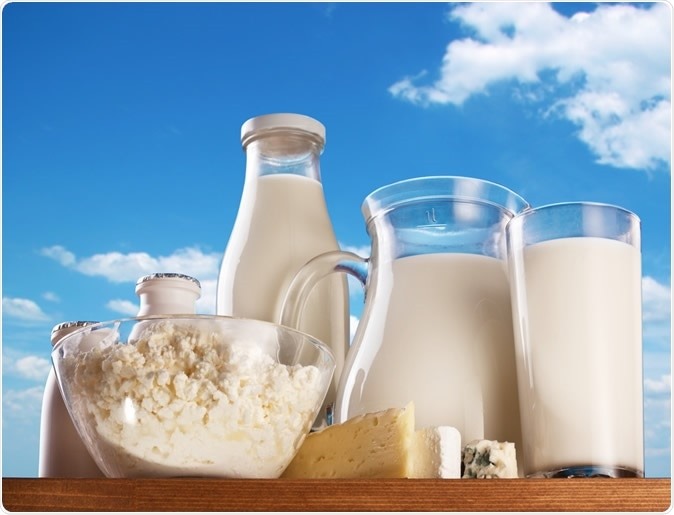
New U.S. research has found that drinking even a moderate amount of dairy milk appears to be linked to an increased risk of breast cancer in women.
Hot on the heels of a review from top nutrition scientists that cautioned against drinking cow’s milk comes another study with another caution: drinking milk increases the risk of developing breast cancer, say the researchers. But this finding comes from an observational study, and there may be confounders that are not accounted for, says an expert not involved with the study.
The latest research was based on data from the long-running larger study called Adventist Health Study-2 (AHS-2), which is looking at diet and health among Seventh Day Adventists in North America. Past results from this study have suggested that Seventh Day Adventists have longer life spans and lower rates of some cancers, perhaps because of heathier lifestyles.
The latest analysis suggests that milk raises breast cancer risk, and the more you drink the higher your risk may be.
“Consuming as little as 1/4 to 1/3 cup of dairy milk per day was associated with an increased risk of breast cancer of 30%,” first author Gary E. Fraser, MBChB, PhD, said in a press statement. Fraser is affiliated with the School of Public Health at Loma Linda University, California.
“By drinking up to 1 cup per day, the associated risk went up to 50%, and for those drinking 2 to 3 cups per day, the risk increased further to 70% to 80%,” he added.
The findings were published February 25 in the International Journal of Epidemiology.
“The AHS study is provocative, but it’s not enough to warrant a change in guidelines. The caution being espoused by the authors is not warranted given the observational nature of this study,” commented Don Dizon, MD, director of Women’s Cancers, Lifespan Cancer Institute at Brown University in Providence, Rhode Island. He was not involved with the study and was approached by Medscape Medical News for comment.
Because of its observational design, the study cannot prove that cow’s milk causes breast cancer, Dizon emphasized.
“I’d want to see if the findings are replicated [by others]. Outside of a randomized trial of [cow’s] milk vs no milk or even soy, and incident breast cancers, there will never be undisputable data,” he said.
“Probably the biggest point [about this study] is not to overinflate the data,” Dizon added.
He noted that the results were significant only for postmenopausal women, and not for premenopausal women. Moreover, analyses showed significant associations only for hormone receptor-positive cancers.
Fruit Fly Study Reveals the Hidden Costs of Intermittent Fasting
Posted: March 1, 2020 Filed under: Food and it's Impact on Our Health Leave a comment
Note from Millie– Please remember that a true fast is not a short term deal. The first three days you are simple emptying the colon. Then you begin the process of detoxing. Very few people’s lifestyle affords them the luxury of a fast, as it takes a week to 10n days to truly fast effectively. I recommend detoxing by stopping processed foods, ,beginning to eat more fruits and veggies. Every summer I do a fruit fats, I will eat only fruit for several weeks. It’s an amazing detox and will allow you to carry on your regular schedule.
Yo-yo dieting takes an unexpected toll on health, a new study suggests.
Jumping on and off the diet wagon may seem like a tempting way to lose weight or improve long-term health. But a new study suggests swinging between periods of dietary restriction and eating rich foods may have “hidden costs” for reproductive health and perhaps even lifespan.
In the study, which was conducted in fruit flies, researchers find that switching back to a plentiful diet after cutting consumption causes flies to lay fewer eggs and die prematurely as compared to flies that lived on a rich diet consistently.
Of course, “fruit flies aren’t humans,” study co-author Mirre Simons tells Inverse. More research is needed to see how diet switching plays out in the human body. But if future studies confirm the findings, it could be bad news for the thousands of people who diet on-and-off, or incorporate intermittent fasting in their routines.
“Intermittent fasting could have negative health consequences under certain dietary or temporal regimes,” Simons, a researcher at the University of Sheffield, says.
Switching from restriction to re-feeding, or resuming normal eating, may have negative health consequences that may occur within a short timeline, the results suggest.
“A level of caution is therefore warranted when rapidly changing diet, especially at least that is what our work suggests, increasing intake after a period of restriction,” he says.
The findings were published Friday in the journal Science Advances.
Typically, when fruit flies’ diets are restricted, their risk of death drops significantly within 24 hours, Simons says. But rebounding after dietary restriction by eating a rich diet appears to cause an “overshoot effect” in the flies, resulting in “substantial” and “unexpected” mortality costs.
To test how sudden diet shifts affect fruit flies, a model often used in biology as a “stand-in” for humans, Simons’ team cycled a large group of mostly female flies through periods of eating very little and periods of eating four times as much food.
The research team examined the survival and reproductive capabilities of over 60,000 fruit flies in their labUniversity of Sheffield
The researchers tracked how many bugs lived or died throughout the study, and how many eggs the flies laid. After switching from four-day dietary restriction to a rich-food diet, flies’ risk of death went up and their fertility went down.
The effect of diet switching remained significant after controlling for different confounders, including the flies’ microbiomes, water consumption, social dynamics, and gender.
The experiment was repeated in over 66,000 flies across 11 genetic lines. As a group, the short-term diet switches have “surprising” effects on flies’ health, the researchers say.
Mortality risk during intermittent 4-day periods of dietary restriction was 1.6 times higher than in flies kept on a restricted diet without breaks. During the 4-day timelines, the flies’ risk of death appears to peak 48 hours after each diet switch.
During shorter, 2-day time periods, the team did not see significant effects on the flies’ risk of death. This finding suggests timing matters, and negative effects pop up after a certain number of days after a diet switch.
SURVIVAL MODE
This study pushes against the popular theory that dietary restriction triggers a “survival strategy” in humans and animals.
The theory goes that humans and animals invest in maintaining and repairing the body in times of low food availability, to await times when food availability increases again. This ability to thrive under a constrained energy budget seems to benefit their long-term survival. Indeed, dietary restriction — not starvation or nutrient deprivation — has been shown to extend animal lifespans in multiple studies.
A huge number of species — from yeast to rhesus monkeys — show similar responses to dietary restriction, suggesting dietary restriction is an “evolutionary conserved response,” Simons says.
“The explanation why this response is so universally found in the animal kingdom is that organisms go into a survival mode during times of scarcity, invest in maintaining themselves, therefore age less fast, to await times when food availability increases again,” he says.
The theory is “attractive and intuitive,” but it has not been subject to rigorous testing, Simons says.
In this study, the researchers test the theory’s assumption that cutting food intake prepares animals for periods of food abundance.
But the results indicate flies are “ill-prepared” for rich-food conditions after experiencing dietary restriction. Rather than waiting for food availability to increase in the future, the flies instead appear to be essentially waiting to die on a restricted diet, the researchers say.
The team conducted several follow-up experiments to make sure this effect was “real,” interesting biology, Simons says. However, the work does still need to be validated in a separate sample.
Instead of dietary restriction triggering a survival mechanism, the researchers offer an alternate theory: Perhaps, dietary restriction is an escape from the damaging costs of a rich diet, which are currently unknown, they say.
What that “escape” means and if it translates to real-life health outcomes isn’t clear at this stage.
“Our work is a considerable step forward in the fundamental understanding of dietary restriction — one of the best known and studied ways to make animals, and most likely also our own species, live longer and healthier,” Simons says.
Ultimately, the study suggests limiting food intake may affect longevity, and in some cases, hamper reproductive abilities and heighten the risk of death. Diet changes should be taken with care, the researchers caution.
Abstract: Dietary restriction (DR) extends life span across taxa. Despite considerable research, precise and universal mechanisms of DR have not been identified, limiting its translational potential. In biomedical science, DR is interpreted as stimulating pro-longevity molecular pathways. This rationale is guided by the conviction that DR evolved as an adaptive, pro-longevity physiological response to food scarcity. Current evolutionary theory states that organisms invest in their soma during DR, and thus when resource availability improves, should outcompete rich-fed controls in survival and/or reproduction. Here, we test this prediction using large populations of Drosophila melanogaster (N > 66,000 across 11 genetic lines). Our experiments reveal substantial, unexpected mortality costs when flies return to a rich diet following DR. The physiological effects of DR should therefore not be interpreted as intrinsically pro-longevity, acting via somatic maintenance. We suggest DR could alternatively be considered an escape from costs incurred under nutrient-rich conditions, in addition to costs associated with DR.
People With The Best Gut Health Share This ONE Thing in Common
Posted: December 5, 2019 Filed under: Food and it's Impact on Our Health Leave a comment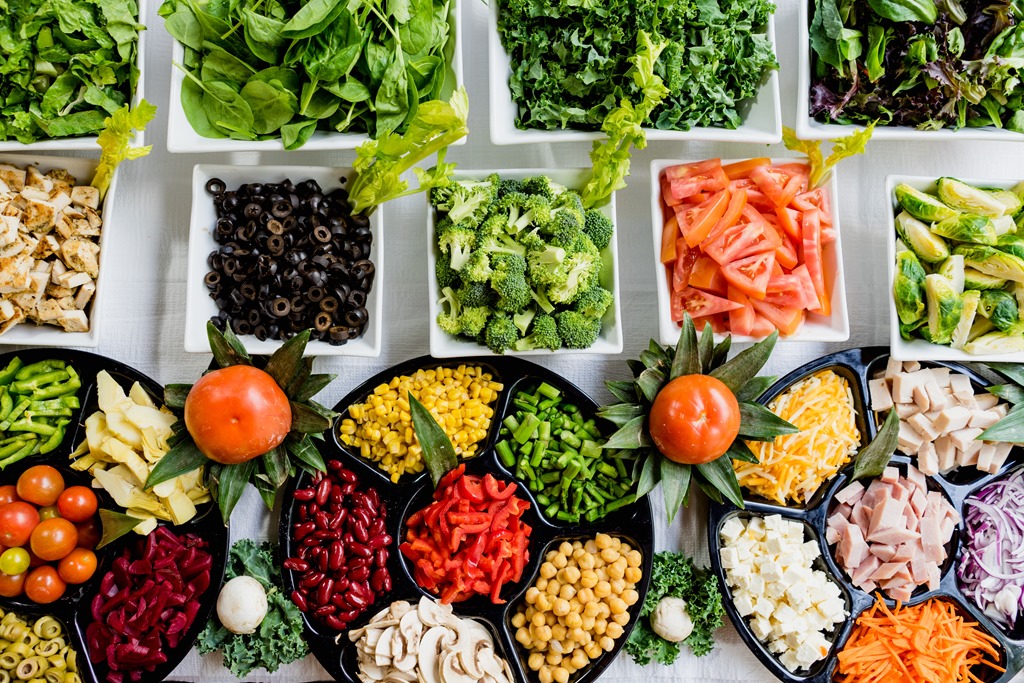
After looking at 11,000 people’s gut microbes and their corresponding eating questionnaires, the team of researchers learned an invaluable lesson about gut health. “It turned out that people who had the healthiest guts, which is generally the most diverse guts, were the people eating more than 30 different types of plant in a week,” says Dr. Spector.
When your gut isn’t happy about what you ate for breakfast, lunch, or dinner, it makes its feelings known. There’s an overwhelming amount of information out there about what to do—and what to avoid—to care for your digestive tract. But Tim Spector, MD, professor of genetic epidemiology at Kings College London and author of The Diet Myth: The Real Science Behind What We Eat, knows how to improve gut health naturally with a small but mighty tweak to your diet.
On a recent episode of the Deliciously Ella podcast, Dr. Spector points to a study a 2018 study published by the American Society for Microbiology. After looking at 11,000 people’s gut microbes and their corresponding eating questionnaires, the team of researchers learned an invaluable lesson about gut health. “It turned out that people who had the healthiest guts, which is generally the most diverse guts, were the people eating more than 30 different types of plant in a week,” says Dr. Spector.
At first blush, a triple-digit quantity of plants sounds like a lot, but Dr. Spector explains that it’s easier than you think. “People forget what a plant is. A plant can be a nut, a seed, a grain. It can be an herb, a spice. So it’s actually not that hard as long as you don’t have the same thing every day. That diversity was much more important than if you were vegan or vegetarian or meat-eater,” he says. So if you eat nut butter and whole grain toast for breakfast, followed by a salad at lunch, and some cauliflower pizza for dinner, you’ve checked off nearly a dozen of your vegetables in less than 24 hours.
The lesson here? If you’re new to the world of digestive health, focus on the diversity of the foods you eat. Your gut microbes will flourish and you’ll get to try every plant the supermarket has to offer.
From 
Vegetarian Nutrition- Examined. How Coaching Can Help
Posted: December 5, 2019 Filed under: Food and it's Impact on Our Health Leave a comment
Most vegetarians do not eat enough fruits and veggies and eat too much bread, grains and processed foods.
I cooked and taught vegetarian nutrition for almost 30 years before organic meat became readily available to us. Although I healed on the vegetarian diet I developed other issues because of its inadequacies. So this stage of my life I eat wheat and dairy free, lots of fruits and vegetables and I mainly depend on protein with seafood and eggs.
I had found in teaching and coaching nutrition all these years that very few people meet their nutrient needs. So course when that happens the body stores what it takes in and it makes it harder to lose weight. So only when you meet every nutrient needs can you reach Optimum Nutrition and health.
The way I offered coaching is to analyze the clients food diary for 4 to 5 days and then show them in analysis of their nutrition for each of those days. That way you can see what you’re missing and what you are getting out of the way you’re eating.
There is so much controversy and belief system wrapped around the way we eat whoever really and truly it’s not that complicated. The right healthy fats, the correct amount of protein for growth and repair, and lots of fruits and vegetables. That’s it ,that’s all we should eat everyday.
When you can see it in black and white and have someone coach you as to how to shop, how to meet your nutrient needs, how to still have a life and eat healthy, that’s when you can really start to make changes and reach a very high degree of Health. My client see major changes in just a few weeks and it is amazing to see how different people feeling look in just a month.
I Googled what a vegetarian should eat daily to meet their nutrient needs; This menu below was very typical of what I found. I have also seen MANY vegetarian clients daily food diaries along the way.
- Breakfast: Oatmeal with fruit and flaxseeds
- Lunch: Grilled veggie and hummus wrap with sweet potato fries
- Dinner: Tofu banh mi sandwich with pickled slaw
Here’s the nutrient breakdown;
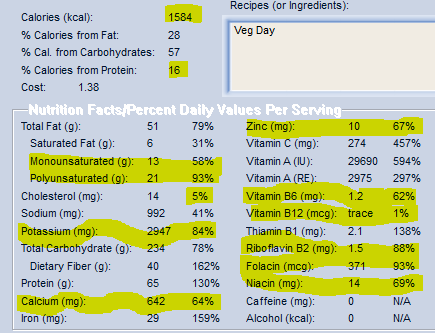
The highlighted part is showing the deficiencies, long term this will do harm to your health.
Hands on Coaching can help you come very close to meeting the lack of some vitamins and minerals. In this example the saturated fats are dangerously low, this affects the immune system, brain function, our ability to digest food. The mono and poly-unsaturated fats are way too high, leading to clogged arteries and sticky blood lipids.
the B Vitamins, especially B12 is way too low. This is one of the reason that many Vegetarians are tired and lack energy. Including Tofu in your diet is dangerous and is associated with brain fog, damage to the endocrine system and many types of cancer.
Notice how FEW fruits and vegetables there are in this days menu! You cannot maintain this type of nutrition long term with harming the body.
I work with clients by analyzing their daily food intake and helping them optimize their nutrition.
Reach out today to get started on a healthier lifestyle. Click here for more info- Beyond-Paleo.com
Why You shouldn’t Follow “Diet” Advice on Losing Weight
Posted: October 27, 2019 Filed under: Food and it's Impact on Our Health Leave a comment
PopSugar carried this article on it’s website on how to lose weight and a 7 Day Meal Plan- you can read it here-
You Don’t Have to Eat Bland, Boring Food to Lose Weight, and This 7-Day Meal Plan Is Proof
After reading the article I realized their advice was awful. So I took the first day’s meal plan and used my Nutrition Program to analyze the calories and nutrition.
Here’s their menu for the day-
Breakfast- Pumpkin oatmeal, 2 tablespoons no-sugar-added peanut butter
Lunch- – Mexican stuffed peppers
Dinner- Easy fried rice with egg
Snack- Banana peanut butter ice cream
Notice there are a LOT of empty carbs and very little veggies, and no fruit?
The breakdown; 3875 calories! Yikes!
19% fat- ok
68% carbs- way too high as most of the calories come from dairy and rice (empty calories)
Protein- 13% – too low
Only 45% of needed B12 was achieved.
Other nutrients were met but only by taking in more than twice needed calorie!
Is Clean Beauty Really Better? 7 Derms & Aestheticians Weigh In
Posted: October 25, 2019 Filed under: Non-Toxic Choices, Skin Care Leave a comment
These doctors have voiced how important clean skin care is, but the recommendations they make (about thoer own skincare lines) are WAY OFF BASE! Many of these products include toxic ingredients such as butylene glycol, Sodium Hyaluronate, Glycerin, etc. Even products labeled natural or even organic contains these 3 ingredients which wreak havoc on the skin. Every skincare product they recommend (which they sell) are devoid of toxic ingredients. The last one list doesn’t give an igredient list on their pages that sell the product!
Scan almost any clean beauty retailer’s “About” page — Detox Market, Credo, Follain, Beautycounter — and you’ll notice two keywords: health and safety. That’s because the movement’s overarching mission is to eliminate chemicals ,known to be toxic to the human body from personal care products, including suspected cancer-causing agents (formaldehyde releasers, parabens) and hormone disruptors (phthalates, pesticides). While that’s no doubt a win for overall wellness, it does leave one critical question unanswered: Is clean beauty better for your skin? These seven dermatologists, cosmetic chemists, and renowned aestheticians think so.
“From my unique vantage point as a facialist for the past 25 years, having treated over 25,000 faces, I have seen how the proliferation of harsh ingredients — including dimethicone, fragrance, colorants, and sulfates — compromise the skin’s lipid barrier, thereby sensitizing the skin,” Angela Caglia, a celebrity aesthetician who works with Barbra Streisand and Minnie Driver, tells The Zoe Report. The integrity of the skin barrier is also a sticking point for cosmetic scientist Dr. Shuting Hu, Ph.D., who works with clean beauty brand Acaderma. “I personally believe in using clean ingredients as it is the very best way to prevent skin irritation and skin barrier damages, both of which are better for skin health,” Dr. Hu tells TZR. “Not only is it my belief, it is also scientifically proven.”
There’s a catch, though: Terms like “clean,” “natural,” “green,” and “non-toxic” aren’t regulated by the FDA — so, in theory, any brand can market any ingredient as clean (although the threat of callout culture tends to keep companies in line). “We really need a good working definition for ‘clean’ and ‘non-toxic,’” Marie Veronique Nadeau, a chemist and founder of her namesake skincare line, tells The Zoe Report. She personally considers an ingredient clean when it has “a track record for safety and efficacy” via scientific studies — and that goes for both naturals and synthetics. “It just makes more sense to use ingredients that are safe in your own opinion,” she says.
Ahead, seven skincare experts explain why they believe clean beauty is the healthiest choice for your skin — and reveal the natural and non-toxic products they swear by.
Dr. Nava Greenfield, Board-Certified Dermatologist
You need to be just as careful about what you put on your skin as what you eat and drink,” Dr. Nava Greenfield, M.D., a board-certified dermatologist, tells TZR. “Numerous studies have confirmed that products used topically on the skin penetrate into the bloodstream and affect your body.” She suggests cross-checking your products with the Environmental Working Group’s toxicity database to pinpoint any potentially harmful ingredients.
Marie Veronique Nadeau, Chemist & Brand Founder
“Absolutely, ‘clean’ and ‘non-toxic’ ingredients are better for the health of the skin,” Nadeau says. When it comes to formulating her own products, Nadeau adds a third descriptor to the list: active. “It’s not enough that it won’t harm you — people also need to be asking, ‘Is it active? Is it going to be doing something for my skin?’”
To this end, she recommends incorporating clean versions of vitamin C and vitamin B3 — aka, niacinamide — into your routine. “You need vitamin C to build collagen, and it also does any number of other cool things like limit hyperpigmentation and provide UV protection,” Nadeau says. “Vitamin B3 protects mitochondrial DNA from free radical damage. This is about as close as we’re going to get to slowing the aging process in the skin, so it’s a must-have for anyone interested in keeping skin healthy and youthful-looking.”
Britta Plug, Aesthetician & Brand Founder
“I avoid processed food and chemicals — I feel my best that way — and I apply the same reasoning to my skincare,” Britta Plug, a holistic aesthetician and co-founder of Wildling, tells The Zoe Report. According to Plug (and science), harsh chemicals can negatively impact the skin’s microbiome and disrupt its inherent functions. “Natural products are much more likely to support the skin’s innate intelligence, and support all of its functions, flora, and barrier system,” she says.
Her go-to products, naturally, come from her own line. “I’m obsessed with the sweet fern in our Empress Tonic,” Plug says. “It’s amazing for kickstarting detoxification by stimulating lymphatic flow, and it’s also great for skin irritations.” After spritzing with the Tonic, she reaches for Wildling’s Empress Oil. “The balm of gilead in the oil is pure magic for stimulating circulation and reducing fine lines and breakouts,” the aesthetician explains. “It also smells like a dreamy forest.”
Dr. Shuting Hu, Cosmetic Scientist
Dr. Hu is passionate about clean skincare — but emphasizes that clean doesn’t always mean natural. “Plenty of natural ingredients are irritating, and not all natural materials are made equally,” she says. “Some high quality synthesized ingredients are also clean, like vitamin C.”
In her work with Acaderma, Dr. Hu defines “clean” as any ingredient that minimizes irritation to the skin while maintaining efficacy. Her favorite? “Seh-Haw EXTM,” a brand-exclusive form of African kinkeliba extract that moisturizes dehydrated skin and boosts the barrier. “We spent two years optimizing the extraction and purification process of Seh-Haw EXTM to make sure no organic solvents were used in the whole process, and that there were no causes of pollution to the environment,” she says.
Angela Caglia, Celebrity Aesthetician & Brand Founder
“Through a process of trial and error in my treatment room, I’ve discovered which ingredients work and which ingredients make skin more susceptible to external aging factors,” Caglia says. (Considering her clients include age-defying celebs like Helena Christensen, I totally trust her.)
“One ingredient, in particular, that I’ve discovered helps with maintaining homeostasis is the organically-grown Limnanthes alba flower, indigenous to the Pacific Northwest, from which meadowfoam seed oil is derived through a unique cold pressing process,” she shares. “The reason why I love it is that it’s similar in molecular structure to our own sebum, which means it’s able to deeply penetrate the skin’s surface to deliver high levels of essential fatty acids and antioxidants where they’re needed most.” It can be found throughout the aesthetician’s namesake skincare line.
Athena Hewett, Aesthetician & Brand Founder
“Like much of the population, I have sensitive skin,” Athena Hewett, an aesthetician and founder of skincare brand Monastery, tells The Zoe Report. When she discovered that even hypoallergenic ingredients were irritating her skin, she decided to launch her own company — where she’s redefined “non-toxic” as “100 percent natural.”
“Take propylene glycol, for example — this chemical is used to make polyester, is considered non-toxic, and is found in nearly all of the skincare products out today,” she says. “I am highly allergic to this ingredient as are many of my clients, but most of them have no idea that this is what has been wrong with their skin. When someone lays on my table and I notice dermatitis, I can almost guarantee that they are putting propylene glycol on their skin in some form or another. Sadly, this ingredient is just one of many.” Hewett now looks to naturals for safe — and sensitivity-friendly — skincare solutions. “I love watching what raspberry seed oil does to the skin,” she says. “It makes up our Gold Oil, and it immediately soothes and reduces redness.”
Sarah Akram, Aesthetician
“I am a believer in integrative skincare, meaning just like what you put inside of your body, what you put on its surface can make a big difference in how you look and feel,” Sarah Akram, a Washington D.C.-based aesthetician and the founder of her namesake skincare boutique, tells TZR. “Just like you’d drink a cold pressed juice for optimum nutrient intake, you should take a similar approach to your skincare routine and overall skin health.”
She suggests looking for products packed with pure, natural ingredients (i.e., not “naturally-derived” — which is basically a synonym for “synthetic”). The facialists’ top pick? The Antioxidant Defence Creme by Environ. “This moisturizer is loaded with antioxidants like vitamin C and E to strengthen skin cells and fight free radicals,” Akram says. “Antioxidants are so important in the fight against premature aging, they actually work with your SPF to protect and correct the effects of harmful UV rays.” And, of course, they’re abundant in nature.
Chocolate Shortbread Cookies
Posted: October 24, 2019 Filed under: Recipes Leave a commentOn the Menu for delivery Week after next. I love shortbread cookies!

Ingredients
- 1/4 cup butter, softened
- 1/4 teaspoon vanilla extract
- 1/2 cup sweet rice flour
- 1/4 cup confectioners’ sugar
- 1 to 2 tablespoons baking cocoa
Directions
1. In a small bowl, cream butter until light and fluffy. Beat in vanilla. Combine the flour, sugar and cocoa; add to creamed mixture. Beat until dough holds together, about 3 minutes.
2. Pat into a 9×4-in. rectangle. Cut into 2×1-1/2-in. strips. Place 1 in. apart on ungreased baking sheets. Prick with a fork.
3. Bake at 300° for 20-25 minutes or until set. Cool for 5 minutes before removing from pan to a wire rack to cool completely.
Artificial Leaf Turns Sunlight, CO2 and Water into Synthetic Gas
Posted: October 24, 2019 Filed under: Non-Toxic Choices Leave a comment
Cambridge’s artificial leaf uses two perovskite light absorbers and a cobalt catalyst to convert sunlight, water and carbon dioxide into syngas
by Virgil Andrei
The humble leaf is an incredible little machine, converting sunlight and carbon dioxide into energy for a plant. Artificial versions could be useful renewable energy sources, or even used to produce fuels. Now, researchers from the University of Cambridge have developed an artificial leaf that can produce synthetic gas (or syngas) without releasing carbon dioxide.
Syngas is made from hydrogen and carbon monoxide, sometimes with a bit of carbon dioxide thrown in. While it can technically be burned to generate electricity or for gas lighting and heating, it more often acts as an intermediate step in manufacturing products, including plastics, fertilizers, and fuels like diesel. Unfortunately, producing it can release carbon dioxide into the atmosphere.
“You may not have heard of syngas itself but every day, you consume products that were created using it,” says Erwin Reisner, senior author of the study. “Being able to produce it sustainably would be a critical step in closing the global carbon cycle and establishing a sustainable chemical and fuel industry.”
To help with that, the Cambridge team developed a new artificial leaf prototype that can produce syngas through photosynthesis. The new device contains two light absorbers made of perovskite, and a cobalt catalyst. When these are placed in water, one side produces oxygen, while the other reduces carbon dioxide and water into carbon monoxide and hydrogen. Those latter two gases can then be combined into syngas.
The team showed that the technology can still work even in relatively low light, like that on cloudy or rainy days. The perovskite was chosen because it’s good at absorbing light and creating a voltage, which is why it’s showing up in solar panels so much lately. Meanwhile the cobalt in the catalyst is lower cost and more efficient at creating carbon monoxide than other materials.
That said, the conversion efficiencies are still quite low – the new design currently produces hydrogen at an efficiency of 0.06 percent and carbon monoxide at 0.02 percent.
The new device joins a range of artificial leaf designs that are being developed to create a range of useful products, like electricity, drugs, fertilizers, and hydrogen fuel. Ultimately, the team hopes to be able to skip the middleman syngas stage.
“What we’d like to do next, instead of first making syngas and then converting it into liquid fuel, is to make the liquid fuel in one step from carbon dioxide and water,” says Reisner. “There is a major demand for liquid fuels to power heavy transport, shipping and aviation sustainably.”
The research was published in the journal Nature Materials.
Source: University of Cambridge
Alzheimer’s Risk May be 75% Higher for People Who Eat Trans Fats
Posted: October 24, 2019 Filed under: Food and it's Impact on Our Health 10 CommentsIf you eat out often, eat fast foods, eat purchased baked goods, if you eat anything with partially hydrogenated oils, canned frosting, margarines you are eating trans fats. I have worked in many high end restaurants and I can tell you that most restaurants do not use real butter, they use an oil blend, because of the cost. And those are vegetable oils that mostly contain soy, canola and other vegetable oils. Many products, such as popcorn or pizza still contain trans fat.


People with higher levels of trans fats in their blood may be 50% to 75% more likely to develop Alzheimer’s disease or dementia from any cause, according to a new study published Wednesday in the journal Neurology.
“This study demonstrates that there are negative ‘brain/cognitive’ outcomes, in addition to the known cardiovascular outcomes, that are related to a diet that has (a) high content of trans fats,” said neurologist Dr. Neelum T. Aggarwal, who was not involved in the study. Aggarwal, a member of the American Academy of Neurology, is co-leader of the Rush Alzheimer’s Disease Center in Chicago.
Over 1,600 Japanese men and women without dementia were followed over a 10-year period. A blood test for trans fat levels was done at the start of the study and their diets were analyzed.
Researchers then adjusted for other factors that could affect the risk of dementia, such as high blood pressure, diabetes and smoking. They found that people with the two highest levels of trans fats were 52% and 74% more likely to develop dementia than those with the lowest levels.
“The study used blood marker levels of trans fats, rather than more traditionally used dietary questionnaires, which increases the scientific validity of the results,” said neurologist Dr. Richard Isaacson, director of the Alzheimer’s Prevention Clinic at Weill Cornell Medicine in New York.
“This study is important as it builds upon prior evidence that dietary intake of trans fats can increase risk of Alzheimer’s dementia,” said Isaacson, who was also not involved in the study.
Trans fats can occur naturally in small amounts in certain meat and dairy foods, but by far the greatest exposure comes from the man-made version.
Also called trans fatty acids, artificial trans fats are created by an industrialized process that adds hydrogen to liquid vegetable oils to make them more solid (think of semi-soft margarine and shortening).
The food industry loves trans fats because they are cheap to produce, last a long time and give foods a great taste and texture.
Besides fried foods, trans fats are found in coffee creamer, cakes, pie crusts, frozen pizza, cookies, crackers, biscuits and dozens of other processed foods.
In the Japanese study, researchers found sweet pastries were the strongest contributor to higher trans fats levels. Margarine was next, followed by candies, caramels, croissants, non-dairy creamers, ice cream and rice crackers.
After extensive research revealed the connection between trans fats and the increase of bad cholesterol (LDL), combined with a reduction of good cholesterol (HDL), the US Food and Drug Administration banned trans fats in 2015.
Companies were given three years to stop using them; then the FDA began granting extensions to various parts of the industry. The latest extension runs out January 1.
But even if every manufacturer complies by the first of the year, that doesn’t mean trans fats are gone from the grocery shelves. According to the FDA, if one serving of the food contains less than 0.5 grams, companies can label the food as “0 grams” of trans fats.
Even in small doses, artificial trans fats will still be around to contribute to cardiovascular disease, diabetes and other conditions, such as dementia.
“In the United States, the small amounts still allowed in foods can really add up if people eat multiple servings of these foods, and trans fats are still allowed in many other countries,” said study author Dr. Toshiharu Ninomiya, a professor at Kyushu University in Fukuoka, Japan, in a statement.
“People at risk still need to pay careful attention to nutrition labels,” Isaacson said. “When it comes to nutrition labels, the fewer ingredients, the better! Focus on natural whole food, and minimize or avoid those that are highly processed.”
Aggarwal added: “This message must be delivered in countries where the ban of trans fats has not been enacted or difficult to enforce.”


 Meal Delivery Service by Millie Barnes