Switch To Old-School Safety Razors And Save $160 A Year
Posted: July 13, 2011 Filed under: Going Green; How and Why... Leave a comment
Like a drug dealer giving out free samples, Gillette has been getting men hooked on Fusion razors by handing out free Fusion razors. You go along and you think, mm, this is a pretty good shave, and eventually you need to buy replacement cartridges, and it turns out they cost $40! Reader Jim got sick of spending $250 a year on cartridges for a shave that wasn’t stellar so he decided to kick it like a grandpa and switch to old-school double-edged safety razors. Jim says the blades on these just cost pennies a piece and the shave is cleaner and closer.
Millie; Here’s how i made the switch:
I went to the Classic Shaving website and bought this razor for $25.00.

I bought 2 packs of blades. I bought the razor and blades FOUR years ago..I just used the next to the last blade! I have paid NOTHING to shave my legs all this time. And there is no better, closer shave!
http://consumerist.com/2008/03/8-ways-to-opt-out-of-junk-mail-lists.html
The Case Against the American Front Lawn
Posted: July 8, 2011 Filed under: Gardening, Going Green; How and Why... Leave a comment
July 4th is a time when American families across the country congregate in their backyards for fireworks and burgers. Conspicuously absent from the revelry is the front yard. When you think about it, unless you’re on the local parade route, no one really hangs out in the front yard. And it’s not for lack of space.
The American suburban landscape is dominated by homes set far back off the sidewalk, separated by a front yard almost exclusively of grass, an ecologically barren monoculture devoid of flowerbeds or shrubs. (In lush places like Washington, there will be a few azaleas and a handful of trees, of course, but in newer developments even trees are a scarcity). And in most areas, people don’t seem to actually hang out or play on their front lawns; often, the only human activity you see is the homeowner or landscaper engaged in noisy and tedious lawn maintenance and mowing.
So why do Americans have such big front lawns?
In most municipalities, builders are actually required to adhere to rigid "setback” requirements and subdivision codes, meaning that residents are stuck with a big front lawn whether they want it or not. According to The Old Urbanist, $40 billion is spent on lawn care each year across 21 million acres of grass — that’s the size of Maine, by the way. That’s a lot of money for land you never actually use.
But America’s love affair with the front lawn has deeper cultural roots that reflect a tension in our national psyche between our desire to stand out as wealthy landowners and our penchant for cultural conformity and egalitarianism. New York Times journalist and author Michael Pollan in Why Mow? The Case Against Lawns, posits that it all began as a reaction to our English roots. In 19th century England, lawns were the exclusive domains of vast wealthy estates. Suburban planners and reformers responded by slicing the American landscape into quarter-acre bundles for the middle class. The front lawn was the stage upon which Americans could spotlight the ultimate symbol of democratic and economic success: the home. Everyone could have a mini-estate of sorts, set off grandly from the road. Yet, lawns also became a symbol of community and equality; with each yard carved out in a cookie cutter fashion to create a better communal tableau along the street.
This obsession with a neatly trimmed front lawn really took off in the post-War 1950s, when the American suburban dream of homeownership joined forces with new power mowers and a chemical trifurcate of pesticides, herbicides and fertilizers. This was when the front lawn became less about our national pride in economic mobility and more about a kind of coercive suburban conformity. According to Turf Grass Madness: Reasons to Reduce the Lawn in Your Landscape, “No longer a status symbol of the rich and famous, front lawns became the measure of a middle-class family’s ability to keep up with the Joneses.” Abraham Levitt (whose son William, creator of Levittown, NY, is considered the father of American suburbia) wrote that “A fine carpet of green grass stamps the inhabitants as good neighbors, as desirable citizens." Communities began mandating that every home maintain uniformly trimmed lawns; failure to do so was seen as subversive and anti-community. According to Pollan, there is a Puritanical basis to the homogenization of American lawns. The designer-reformers were "like Puritan ministers, laying down rigid conventions governing our relationship to the land.”
For members of the “anti-lawn” movement (yes, there is one), the American front lawn is not only boring and uninspired but an under-lamented environmental hazard, as lawns receive on average more pesticides and herbicides per acre than any other crop, according to Pollan. And a New Yorker article, Turf War, points out that these lawn chemicals, of course, end up in our streams and lakes, creating “dead zones”. And then there is the issue of water usage. The EPA estimates nearly a third of all residential water use in the country foes toward landscaping our lawns.
Anti-lawn crusaders advocate abolishing antiquated “setback” laws. They urge residents to plant trees, flowers and vegetables or simply ground cover on their grassy lawns. Ironically, perhaps we should cast our eyes back to the Old World for some inspiration. In most European towns and suburbs, homes are set much closer to the road, with a much smaller front garden dominated by functional patios, hedges and fences. In European yards, a grassy lawn is not the focus but merely a backdrop for flowerbeds, trees, lawn games and social gatherings. The spacious private yard lies in the rear, where families play, eat and socialize. The Old Urbanist illustrates through a series of photographs the dramatic difference between yards in European suburbs and American suburbs, making a compelling argument against the American lawn tradition.
For ways to make your lawn more aesthetically and environmentally robust, read Turf Grass Madness: Reasons to Reduce the Lawn in Your Landscape.
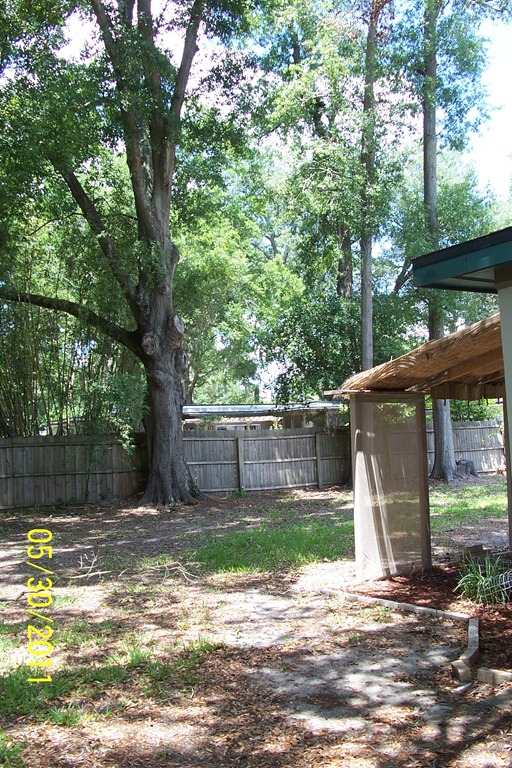
Millie- I recently moved to a new house, only about a block and a half away…but a big part of the decision to move was a very low maintenance yard. The back yard has huge oak trees with ground cover (Ivy, ferns) instead of grass… There is very little shrubbery. I have already planted low water flowers; lantana, Plumbago, Purple Queen. I moved my barrels with sweet potatoes from the other house…thank goodness I grow in self-watering containers that were easy to move. I have Swiss Chard going, Dill, tomatoes, lavender, cucumbers. I am sprouting onions and planting a kitchen herb garden…I’ll post pics soon….
Here’s the backyard;
10 Plastic Wrap Alternatives
Posted: June 16, 2011 Filed under: Going Green; How and Why..., Non-Toxic Choices Leave a commentFrom; Re-Nest

In my kitchen plastic wrap was one of the hardest things to let go when we began converting to a more sustainable lifestyle. To be a viable alternative to that oh-so-easy plastic wrap, something must be readily available, easy to use, quick to clean and cheap. Here are some alternatives I have come up with.
1. Glass Jars For smaller items, glass jars work wonderfully. Maintaining the see-through nature of plastic wrap this is one of my favorite substitutes.
2. Tin Foil Don’t worry: I reuse my tin foil. A roll of foil lasts for a LONG time at our house. By purchasing high quality, durable foil we are able to wash and reuse it as a non-perishable item.
3. Glass Food Storage Containers With lots of great options on the market these days, glass food storage containers can often go from oven to table to fridge reducing the need to wash multiple containers as well.
4. Oil Cloth Homemade food wraps made using oil cloth can be both attractive and reusable.
5. Parchment or (Soy Derived) Wax Paper Use parchment or soy derived wax paper to wrap your sandwiches for your packed lunch instead of baggies or plastic wrap.
6. Fabric Bowl Covers Easy to make with some elastic and fabric these bowl covers look like old lady swim caps but are fantastic in the fridge to keep your bowls covered.
7. Bento Boxes You don’t have to look for long to find gorgeous bento boxes that you can keep your lunch or leftovers in when storing them in the fridge.
8. Not Making So Much Food This might seem obvious, but it makes a big difference in my kitchen. Cooking smaller portions more often not only adds variety to my cuisine but it reduces the need for storing leftovers.
9. Two Plates Easy peasy: put food on one plate and invert another on top.
10. Don’t Wrap It Seriously, think hard, does that actually need to be wrapped or are you just doing it out of habit? Unless it’s pretty fragrant or will run all over the place, chances are you can leave it open on a plate.
(Image: Blast Magazine)
Major Brands Say Goodbye to Excess Packaging
Posted: June 4, 2011 Filed under: Going Green; How and Why..., Non-Toxic Choices Leave a comment
Image: Tara Hunt via flickr
From TreeHugger
Good news, according to the New York Times: excess packaging, plastic in particular, is on the decline. Apparently more because of high oil prices than any environmental concern, but we’ll take it. The Times has examples of a few major stores making significant changes:
Target has removed the plastic lids from its Archer Farms yogurts, has redesigned packages for some light bulbs to eliminate plastic, and is selling socks held together by paper bands rather than in plastic bags.
Wal-Mart Stores, which has pledged to reduce its packaging by 5 percent between 2008 and 2013, has pushed suppliers to concentrate laundry detergent so it can be sold in smaller containers, and has made round hydrogen peroxide bottles into square ones to cut down on plastic use.
At Home Depot, Husky tools are going from clamshell to paperboard packaging, and EcoSmart LED bulbs are about to be sold in a corrugated box, rather than a larger plastic case.
And a follow-up blog post expands on a couple others:
Seventh Generation, a maker of sustainable cleaning and personal care products, began using a pressed-cardboard detergent bottle that is recyclable; an inner pouch contains the liquid detergent.
"The category potential for this is huge, from vitamin companies to pet food, juice, milk, " said Julie Corbett, the founder of Ecologic, which makes the cartons.
Recently Wal-Mart began replacing the metal twist ties that keep dolls and other toys in their boxes with paper ties.
Now, reducing packaging is a huge step forward, but it’s not the end goal. Buying in bulk—everything from rice and coffee to shampoo using refillable containers—is always going to be the environmentally superior option.
As Planet Green has written before, "Nearly 80 million tons of waste is generated from packaging and containers annually," and from TreeHugger: "a 10 kilogram bag of rice has 20 less bags than the equivalent in 500 gram packages. And it that one bulk bag is probably a compostable cotton sack anyhow, instead of plastic. Wasted transport fuel is reduced because much more product per container is delivered to the store."
So yes, look for products with minimal packaging and support companies making the effort to eliminate excess, but whenever there’s a bulk aisle, shop there first.
Edible Gardens to Feed the Homeless
Posted: June 4, 2011 Filed under: Gardening, Going Green; How and Why... 1 Comment
Image credit: Grow Local Colorado
From TreeHugger
It’s always seemed strange to me that most parks grow only ornamental flowers and shrubs. Sure, it’s nice to have pretty flowers around, but what if our parks also produced food for those who need it? From sharing gardens to community nut tree plantings, we have indeed seen some moves to turn shared land into a productive food producing resource. Now a group of Colorado residents are aiming to utilize multiple city parks to produce 1,500 pounds of produce to help feed the homeless.
Grow Local Colorado started out with just one garden bed in a park in Denver. But that bed was such a success that the city has since expanded the amount of land given over to the group to 13 garden beds in 8 different parks.
The gardens are maintained by neighborhood groups, churches and non-profits, and the produce that is harvested will be donated at the end of the season to homeless charities and shelters. According to the Huffington Post’s write up of the Grow Local Colorado project, the organization is planning to donate 1,500lbs of produce to Denver’s Gathering Place, a drop-in center for homeless women and children.
More on Community Gardens
Sharing Gardens Grow Food for Those in Need (Video)
Community Plants Nut Trees for Food Security
New York’s Community Gardens Lose Protected Status
A Sustainable Kitchen
Posted: June 1, 2011 Filed under: Going Green; How and Why..., In The Kitchen with Millie- How To's, Non-Toxic Choices 1 CommentOver at Apartment Therapy yesterday I was reading about sustainable kitchens. Their focus was on building the kitchen…
As I am moving to a new house with a kitchen half the size of the one I’m in now it set me to thinking about that subject. Except that what I think of when I think of sustainable kitchens is how to set up a kitchen that supports a sustainable lifestyle.
The house I live in now is set up to have a very very low carbon footprint; I grow most of my veggies and use a sawdust toilet that supports me practicing high heat composting. This allows me to have soil that is deeply rich in nutrients and microbes to grow in food in my grow buckets. It’s a closed system; I do not have to buy fertilizer’s as my yard waste, kitchen scraps and all paper can be composted. Composting this way gives me useable soil in a year without ever having to turn or stir the compost. This is huge as I only weigh 109 pounds and cannot turn large amounts of compost effectively. And I refuse to buy anything plastic so getting a tumbler is out.
I make all my food from scratch; coconut milk yogurt, Kombucha tea, bone stocks, juicing, rendering fats, canning or freezing vegetables… I need room and equipment but am now going to do all that in a kitchen half the size.
Let’s look at how I do this;
· I use a Hamilton Beach slow cooker with 3 stoneware bowls to make my coconut milk yogurt and to slow cook chickens or roasts.
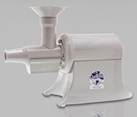
· I use a 32 year old Champion Juicer that is a continuous feed juicer, will make nut butters, shaved ice and will homogenize and great sorbets.
· I use a stainless steel canister to put food scraps in.
· I have a six foot prep table that I had in my restaurant with a cutting board.
· I have a hand coffee grinder from Sweet Maria’s that rocks!


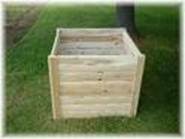


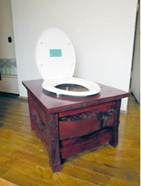
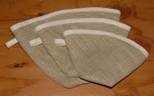


Top, left to right; mason jars for caning and storing food (with laundry soap made from Soap Nuts, Ibriki to make Turkish coffee, my compost bin, ceramic coffee filter holder.
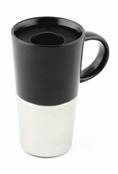
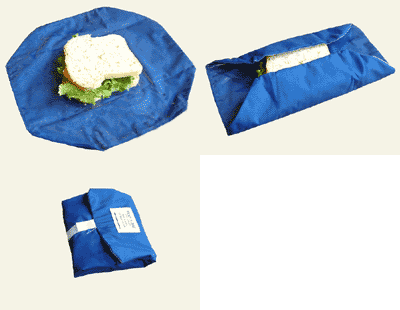
Second row; plastic free travel mug from, coffee grinder from Sweet Maria’s, Wrap n Mat instead of plastic bags, sawdust toilet, hemp coffee filters.
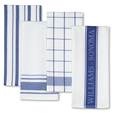
Third row; clothesline, Champion Juicer, Williams Sonoma dish cloths and cup towels, Soapnuts
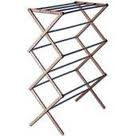
Last row; indoor drying rack,
I recently commented to someone that I did not use a dryer. She was very puzzled and asked how I dried clothes without one! Yeah, she was young, about 22 or so…but was truly baffled! LOL!
All it takes is planning. Many people comment to me that I must spend an inordinate amount of time in the kitchen…but I really don’t. It takes 20 minutes to put on a batch of yogurt and it;’s done in 12 hours. It takes 45 minutes to get beef stock simmering, then it’s done in 72 hours without me touching it. The next day I render the fat and freeze stocks that will last me all month. After I roast a chicken and remove meat from the bones I put it in the slow cooker for 12 hours and I have stock that supplies me with all the iron and calcium I need to stay in perfect health!
I only take my trash can to the curb every third week because that all the trash my household generates..everything else is composted (bones, fats…all can be high-heat composted).
I make my own skin cleaners, toners, flower water and soaps but only do so a few times a year. Recipes are on my blog under skin care.
I use no paper products if I can help it; dish cloths and rags for the kitchen, baby wash cloths for the bathroom that get laundered, recycled toilet paper for guests (see No-Impact Man’s Blog entry on this).
Remember you do not have to dive in all at once…do the normal things people do nowadays…use CF bulbs, use less water…start here and take one one new sustainable choice a week.. It’s just habits and you will get use to them…
You’ll lower your bills as well as your carbon footprint!
Cool Tub
Posted: May 27, 2011 Filed under: Going Green; How and Why..., Non-Toxic Choices Leave a commentI’m thinking this is a good green choice..better than the plastic tubs they use nowadays..gorgeous!
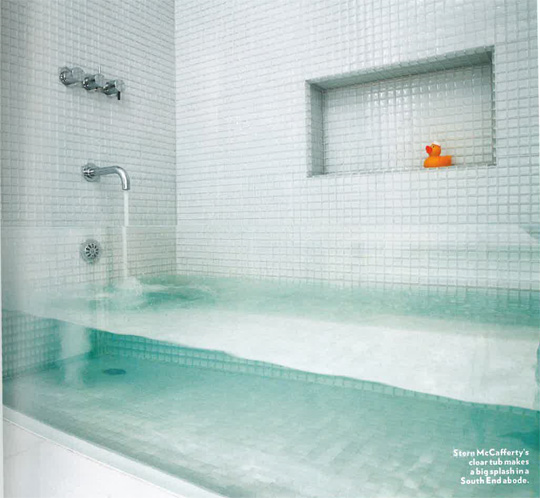
Boston-based architecture & design firm Stern McCafferty created this custom bath based on an inspiration photo from owners Amy and Ethan d’Abelmont Burnes. They gut renovated their South End row house when they bought the property next door and decided to combine them. The couple wanted an open and modern sanctuary, and this tub definitely fits in with that aesthetic.
London’s Unpackaged Grocery Store Eliminates Wasteful Packaging
Posted: September 28, 2010 Filed under: Food and it's Impact on Our Health, Going Green; How and Why..., Non-Toxic Choices 1 Comment

I have finally gotten the whole recycling/composting thing to a science. I have availed myself of the no-junk-mail registry, I’m as close as I can get to a paperless office, send documents to my iPhone instead of printing. I try to only buy food that doesn’t need packaging, recycle plastic bags if I get them, carry shopping bags with me. I put the paper that I do generate into my high heat compost bin. I buy in glass if at all possible, then use them for the food I make for clients (yogurt, bone and meat stocks, dressings, skin cleanser). I usually only take my one trash can to the road for pick-up about every three weeks. All leaves, grass clippings and yard clippings go in the compost,
But it is impossible to not avoid plastic at all, meat comes in plastic unless I drive all the way to Whole Foods, not the best choice for the planet, driving so far. But I can get all the meat in butcher paper.
Unpackaged, a small grocery store in London England, is operating with a unique concept; sell products without any wasteful packaging. Beginning it’s life as a small market stall in 2006 before soon expanding into a full fledged store, Catherine Conway started Unpackaged because she believes there’s a better way to sell food.
Unpackaged combines the best elements of a farmers market, a traditional store’s bulk bins, the convenience of a downtown shop, and extreme eco-friendliness. The premise of the store is simple; sell the highest quality local organic ingredients and products, without any wasteful packaging. This is accomplished by selling most items without any packaging at all, and using easily recyclable and/or reusable containers for the items that do require packaging.
From the Unpackaged website:
- Remember to bring your containers* from home
- Come to Unpackaged and say hello
- Choose the product and amount you want
- Take your goods home in your own containers (if you forget, we have reusable bags)
- When you’ve run out, come back for a refill, simple as that!
*Containers: bring anything you like, there’s nothing to date that we haven’t been able to refill (even our lovely friend who likes putting lentils in old water bottles!) Bring glass jars, Tupperware, old takeaway cartons, brown paper bags, plastic bags, old packaging.. if it’s heavy, we’ll weigh it first, if it’s light then just refill and we’ll weigh at the end.
Local organic food with no wasteful packaging is a match made in heaven, and it’s so obvious it’s a wonder why more businesses like this haven’t cropped up around the world.
Visit the Unpackaged website.
I read about health food stores that lets people bring thier own jars for juice, honey, grains in bulk, bulk spices. Get creative, pressure your health food store to do the same! One store had a big shelf where people could leave jars and take what they needed.
Paying for Packaging: It’s Time to Stop
Posted: July 6, 2010 Filed under: Going Green; How and Why..., Non-Toxic Choices Leave a commentFrom;

by Thursday Bram on 29 June 2010

Next time you take a walk through the grocery store, take a look at the packaging — especially on relatively expensive items. Any item with a lot of packaging always costs more than its counterpart without. Hamburger Helper offers a great example: not only does it come in a box, but there are packets within the box. Compare the price of a box or bag of pasta, with less packaging, and a few spices (which is not all that far off from what Hamburger Helper is). In such cases, we aren’t just paying for packaging — of course convenience is a key pricing factor — but the connection is still there.
Reducing the Packaging in Your Cart
One of the easiest strategies is to buy in bulk when possible. The packaging on small, convenience-sized containers of common staples — like oatmeal — adds up very quickly when you compare it to the packaging on one large container. Another option is to choose to buy from locations that don’t rely as heavily on packaging. For instance, at many farmer’s markets, you simply bring your own bags. Similarly, many food co-ops actually require you to bring in containers to purchase certain items, like grains. There are even a few grocery stores that offer you the same option. Investing in a few reusable bags and containers can help you get away from buying pre-packaged foods.
Lastly, cooking from scratch can be a key strategy in minimizing packaging. There’s far less packaging on "ingredients" (which also happen to be cheaper) than on mixes and meals that are practically ready to go.
It is important to make a conscious decision, however, if you want to stop paying for packaging on your food. It’s very easy to have a blind spot when it comes to the paper and plastic your food comes wrapped up in. Unless you’re paying attention, a small jar of mustard and a big bottle will seem to have roughly the same amount of packaging materials. But when you consider their relative size, one size certainly requires more jars than the other.
A Bigger Impact
There’s additional value in reducing the packaging we buy than simple costs. There is no doubt that there’s a huge environmental impact made by each piece of packaging that winds up in the trash and even recycling such items isn’t the best option. The best solution is to not use more packaging than is absolutely necessary in the first place.
It’s not always an option, but making an effort to focus on reusable packaging or less-harmful packaging is a step in the right direction. You can minimize the plastic packaging you need, for instance, without hurting your own bottom line.
Nine Green Home Projects You Can Do Today
Posted: May 4, 2010 Filed under: Going Green; How and Why... Leave a comment
The Design of Everyday Life > Allison Arieff on April 29, 2010 at 5:00 am PDT
Between the economic meltdown and the push for green buildings, saving energy, water and money in your home is more popular than ever. Fortunately, greening your home doesn’t have to be time consuming or expensive. We caught up with Eric Corey Freed, principal of Organic Architect, and author of the new book, Green$ense for the Home. Here’s his list of nine simple things anyone—renters and homeowners alike—can do in their homes today.
1. Change your light bulbs already! How many environmentalists does it take to change a light bulb? There are several answers to this joke (none of them that funny), but the real answer is: “all of them.” In your home, lighting accounts for nearly 30 percent of all electricity use. By using compact fluorescent bulbs, you can cut lighting costs by 30 to 60 percent, while improving the quality of the light and reducing environmental impact at the same time.
2. Convince your toilet to use less water. More water is consumed per person in the United States than in any other country. More than a quarter of all of the water used inside the home is flushed down the toilet, which is, literally, a waste. The toilet is the single largest user of clean drinking water inside the home, and it is also the easiest place to conserve water. Before you run out and replace your existing toilets, there are simple and effective things you can do to trick your old toilet to use less water, from flush adapters to flusher adjustments and tank tricks. And when the time comes to replace your working toilets, make sure you buy a low-flow or dual-flush model.
3. Use less water in the shower. Showers add up to nearly 20 percent of all indoor water usage and are the largest users of hot water. By simply installing a low-flow showerhead, you can save up to 4,000 gallons of water annually, and for every gallon of hot water you save, that’s gas or electricity you don’t need to use to heat it. If your average shower is 10 minutes long, upgrading your old showerheads to a low-flow model will save 25 to 55 gallons of water for every shower you take, and potentially shave 30 percent off utility bills!
4. Keep vampires at bay. In the average home, 75 percent of the electricity used to power home electronics—cable boxes, DVD players, video games, stereos—is consumed while the products are turned off. That’s money that could stay in your pocket. If something is plugged into the wall—a TV, a cellphone charger, an appliance- even if it’s not on, it draws electricity. We call this demand of energy “phantom loads” or, more appropriately, “vampire loads,” since they suck energy. While the amount of power used is relatively small, they can add up to more than 10 percent of your electricity bill.
There are several simple ways to slay vampire loads: Unplug any appliance with a standby light. Get a power strip for appliances, and flip the switch off when not needed. Or, consider Smart Strips, which sense when power is being drawn and shut off automatically—as simple to install as a regular strip, and you don’t need to worry about vampire loads ever again.
5. Install a programmable thermostat. A programmable thermostat operates only during the times you set. For example, a programmable thermostat could lower the heat at 10 p.m. every night, when you’re bundled under the covers in bed. It could also be programmed to return the room to a more comfortable temperature 30 minutes before you wake up. The average household spends more than $2,000 a year on energy bills—nearly half of which goes to heating and cooling. You can save $150 a year just by properly setting a programmable thermostat. Once set correctly, a programmable thermostat can cut your heating and cooling bills by 20 percent to 30 percent annually.
6. Put a coat on your hot water heater. If your home is like most, hot water is produced in a hot water heater. This large tank usually sits in a garage, closet, or basement and slowly heats up a vat of water, and keeps it hot all day and night. Nearly 20 percent of all of the energy used in the home goes just to the water heater, making it the second-largest energy user in homes after heating and cooling. Insulating a water heater tank reduces the heat losses by 25 percent to 45 percent. This translates into as much as a 9 percent savings in total energy usage. If everyone in the U.S. insulated their hot water heaters, nearly 11 billion kilowatt-hours of that energy would be saved—enough to power 11.9 million homes in a year.
7. Weatherize windows. The largest source of energy loss in your home is your windows. If you add up the area of all of the cracks and leaks around the windows of your home, it would total about the size of an entire window. Installing new windows can solve much of this problem, but that can be a big job. Simply weatherizing—sealing the cracks and leaks around your windows and exterior doors—can have an immediate impact on your energy savings and can be completed in an afternoon.
Purchase only caulking with low or zero Volatile Organic Compounds (VOCs). Figure that six to eight tubes at a total cost of no more than $65 should be enough to seal a 3,000-square-foot house with 15 to 20 windows.
8. Install a solar powered clothes dryer: a clothesline. Today, 80 percent of households have a washer and dryer, but this convenience comes at a price. Electric clothes dryers eat up 10 percent of a home’s energy. Each load of laundry gives off around 5.6 pounds of carbon dioxide per load. That adds up to more than 2,000 pounds of CO2 a year just from drying clothes. A solar-powered clothes dryer is a smart and highly energy efficient way to dry your clothes. Also known as a “clothesline,” this idea has been around for centuries and provides an affordable, easy alternative to the high cost of clothes-drying convenience.
9. Compost and recycle. The average American produces 4.6 pounds of trash a day, which totals up to 251.3 million tons a year. Landfills pollute our water, take up enormous amounts of space, and (surprise) no one wants to live near them. Most people don’t realize the biggest problem with landfills is the emissions they generate, namely methane and carbon dioxide gas, which contribute to global warming. By composting and recycling, we can reduce the trash in landfills and do long-lasting good for our environment.
Recycling and composting require nothing except the desire to do it. Contact your local trash pickup company and request a free recycling bin (you may also be able to get a free compost bin). While not every town recycles, many do and will have specific rules for how to separate the items.
Each of these steps will pay for themselves in less than a year. Plus you’ll rest easy knowing you are doing your part for our environment.
This post originally appeared on www.refresheverything.
Post from Grist.


 Meal Delivery Service by Millie Barnes