First Strawberry!
Posted: January 17, 2010 Filed under: Gardening Leave a commentThe coldest week I’ve ever experienced in Florida ended yesterday…and today I have my first strawberry!
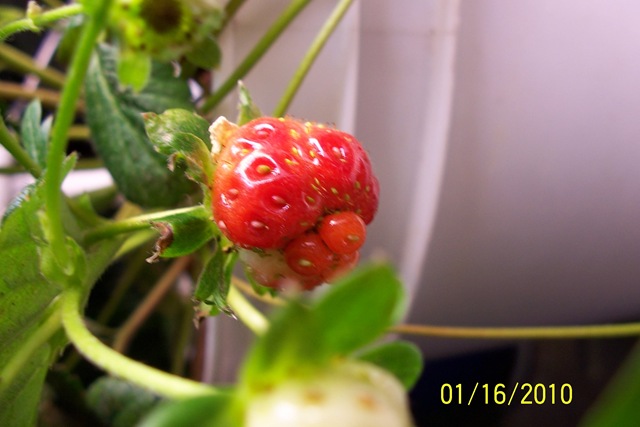
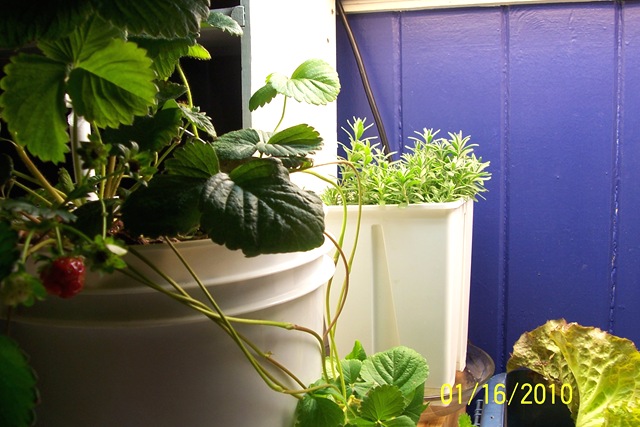 Love that splash of red, lavender is behind, lettuce to the right.
Of course, outside is decimated..except the lettuce which sprouts up and is 5 inches high. Yep, it made it through 21 degree weather, 5 nights of hard freezes. It was the seed from the lettuce plant I let go to seed. It was sprouting out from under the plastic I had covering the soil in the sub-irrigated grow bucket…hung in all summer. Sprouted 10 days ago. So that got me to thinking about how hardy it was..that led to searching on garden forums for a hint of why. And viola! Winter Sowing. I’m really tickled about this and you’ll see why..
Here’s how WinterSown.org explains it;
Winter Sowing is done outdoors during Winter using mini-greenhouses made from recyclables; there are no heating devices, no energy wasting light set-ups or expensive seed starting devices.
You can learn How to Winter Sow Seeds Outdoors.The FAQs (frequently asked questions) will show you many different tips and techniques for Winter Sowing, they are written in a friendly and encouraging manner. The Winter Sowing Method adapts easily to fit everyone’s own needs and skill level. Because the method is budget wise it can fit into everyone’s wallet size too.
Amazingly, just when Winter is about to break, and you’re still getting nightly freezes, the first of your flats will begin to germinate. When I saw this I thought that the seedlings were goners, but they thrived. The seeds know when it’s safe to come up; it’s part of their genetics. Now is the time to check the moisture in the flats. On an above-freezing day, open them up and if they look like they need a drink give them one. The excess water will drain away. Don’t forget to replace the lids tightly.
And all the hardening off, winterizing, makes for tougher, hardier plants!
So go read these simple instructions.. I’m fixing to start new veggies inside, but I’m also going to experiment with this method and I’ll keep you posted along the way!
This week I will plant new lettuce, a small amount, I planted scallions today. I will plant Swiss chard and beets tomorrow although the ones outside are still going, I’m shocked… Basil may bounce back, but the one in the square food garden went to seed last year. I can’t wait to see what pops up this year. What an adventure learning all this…by just diving in and doing it… It is so easy to grow most of my veggies. I spend a few hours a week now that I am growing mostly indoors; easy..no bugs, very low water needs, …and savings of about 30 dollars a week…
Another Garden Update- Flowers
Posted: December 7, 2009 Filed under: Gardening Leave a commentGreat day for photography, dark an cloudy outside.
 The azalea’s started to bloom, then it plunged to 39 degrees…in a few days it’ll be back to 80 degrees..winter in Florida! My tomatoes have ripening fruit, the peppers are producing and flowering again..


 And the strawberries are sending out shoots like crazy…
Finally! A Garden Update..
Posted: December 3, 2009 Filed under: Gardening Leave a commentIt’s been forever, I know.. And I have been gardening all along…just focused on other things, ya’ll! Mainly blogging, working, looking for more work, my daughter moved in…all kind of things…
It’s storming like crazy here tonight…but in the kitchen;
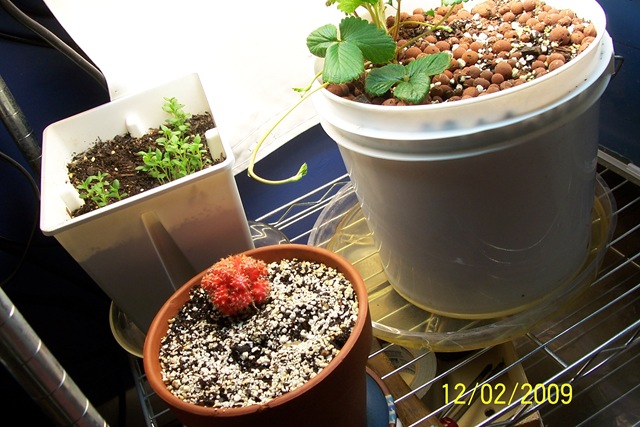 Lavender, Cactus, and strawberries.
 New strawberry leaf
 Strawberries, finally flowering..
 Baby Lettuce, a few of these I will let grow into heads, each one will give me months of lettuce…and in the meantime I eat delicate little baby lettuces sprinkled over thick tomato slices (which are still blooming and have ripening tomatoes on them outside).
 Purple peppers are still blooming and have ripening fruit, too. They, like the tomatoes, have fared WAY better in sub-irrigated containers, made out of 5 gallon buckets.

 Here’s the cucumbers, growing up a chain by my front door..
 Basil and thyme are doing great…
 These beets greens just keep producing for months as long as I keep taking the outside leaves off to et for dinner..
Most of these plants will come inside under the grow lights soon…but for now, they’re doing great. The lowest the temperature has gotten here is 41 degrees so far and it didn’t faze any of them…
35 Ways to Never Waste Food Again
Posted: December 2, 2009 Filed under: Gardening, In The Kitchen with Millie- How To's 2 Comments-
Simple ideas that make a big difference in your budget and help save resources too.
-
 By Colleen Vanderlinden
From Planet Green


"Use it up, wear it out, make do, or do without" is a favorite adage in both frugal and green circles, and it is something I strive to live by. One of the best ways to "use it up" is to think differently about our food and ways to avoid wasting it. Lloyd wrote a great post a while back about the statistics for how much food we waste in the U.S., and the numbers are, frankly, appalling. On average, we waste 14% of our food purchases per year, and the average American family throws out over $600 of fruit per year. Most of the food we waste is due to spoilage; we’re buying too much and using too little of it.
We’ve all had it happen: half the loaf of bread goes stale because no one wants to eat sandwiches today, and the grapes we bought as healthy snacks for the kids’ lunches languish in the crisper. With a little creativity, and an eye toward vanquishing waste in our lives, we can make use of more of our food before it goes to waste. Here are a few ideas for you.
Millie; The most important step you can take to save money is make everything from scratch! I make my own coconut milk yogurt, Kombucha tae, meat stocks, mayonnaise, granola (gluten free), salad dressings, literally everything- see How I eat and Shop Organically AND Economically.
Using Up Vegetables
1. Leftover mashed potatoes from dinner? Make them into patty shapes the next morning and cook them in butter for a pretty good "mock hash brown."
2. Don’t toss those trimmed ends from onions, carrots, celery, or peppers. Store them in your freezer, and once you have a good amount saved up, add them to a large pot with a few cups of water and make homemade vegetable broth. This is also a great use for cabbage cores and corn cobs.
Use all the food clippings in your traditional meat stocks; I keep them in a large zip-lock bag in the freezer. Onion skins are great for flavor, too!
3. Don’t toss broccoli stalks. They can be peeled and sliced, then prepared just like broccoli florets.
4. If you have to dice part of an onion or pepper for a recipe, don’t waste the rest of it. Chop it up and store it in the freezer for the next time you need diced onion or peppers.
5. Roasted root vegetable leftovers can be turned into an easy, simple soup the next day. Add the veggies to a blender, along with enough broth or water to thin them enough to blend. Heat and enjoy.
6. If you’re preparing squash, don’t toss the seeds. Rinse and roast them in the oven, just like you would with pumpkin seeds. The taste is pretty much the same.
7. Celery leaves usually get tossed. There’s a lot of good flavor in them; chop them up and add them to meatloaf, soups, or stews.
8. Use up tomatoes before they go bad by drying them in the oven. You can then store them in olive oil in the refrigerator (if you plan on using them within a week) or in the freezer.
9. Canning is always a good option. If you’re doing tomatoes, you can use a boiling water bath. If you’re canning any other type of veggie, a pressure canner is necessary for food safety.
10. Before it goes bad, blanch it and toss it in the freezer. This works for peas, beans, corn, carrots, broccoli, brussels sprouts, cauliflower, and leafy greens like spinach and kale.
11. Too many zucchini? Make zucchini bread or muffins. If you don’t want to eat the bread now, bake it and freeze it, then defrost when you’re ready to eat it.
12.Pickle it. Cucumbers are the first veggie most of us think of pickling, but in reality, just about any vegetable can be preserved through pickling.
Ideas for Cutting Down on Fruit Waste
13. Make smoothies with fruit before it goes bad. Berries, bananas, and melons are great candidates for this use-up idea.
14. Jam is really easy to make, and will keep for up to a year if you process the jars in a hot water bath. If you don’t do the water processing part, you can keep the jam in the refrigerator for a month, which is a lot longer than the fruits would have lasted.
I make apple butter and freeze it in amounts I will use in a week (about a cup).
15. Dry your fruit and store it in the freezer or in airtight containers.
16. Make fruit spreads.
17. Make a big fruit salad or "fruit kebabs" for your kids. For some reason, they seem to eat more fruit if it’s in these "fancier" forms.
18. Use up the fall bounty of apples by making applesauce or apple butter.
19. Don’t throw out those watermelon rinds! Pickled watermelon rind is a pretty tasty treat.
20. Make a fruit crumble out of almost any fruit you have on hand. Assemble and bake it now, or leave it unbaked and store it in the freezer for a quick dessert.
Make the Most of Meat
21. Use organic chicken carcasses and bones to make traditional meat stocks. (there is an art to making stocks, you do not just boil the bones!). Chicken Stock 101
22. Ditto for bones from beef! Beef Stock 101
23. The fat you trim from beef can be melted down and turned into suet for backyard birds. If it’s organic and/or grass fed beef bones, use it to fry with…it makes the best French fries in the world!!
24. Turn leftover bits of cooked chicken into chicken salad for sandwiches the next day.
25. Use leftover roast beef or pot roast in an easy vegetable beef soup the next day by adding veggies, water, and stock.
Herbs and How to Get the Most Out of Them
26. Chop herbs and add them to ice cube trays with just a little water. Drop whole cubes into the pan when a recipe calls for that type of herb.
27. You can also freeze herbs by placing them in plastic containers. Certain herbs, such as basil, will turn black, but the flavor will still be great.
28. Make pesto with extra basil or parsley.
29. Dry herbs by hanging them by their stems in a cool, dry location. Once they’re dry, remove them from the stems and store them in airtight containers.
Don’t Waste a Drop
30. Leftover coffee in the carafe? Freeze it in ice cube trays. Use the cubes for iced coffee or to cool down too-hot coffee without diluting it. You can do the same with leftover tea.
31. If there’s a splash or two of wine left in the bottle, use it to de-glaze pans to add flavor to whatever you’re cooking.
32. If you have pickle juice left in a jar, don’t pour it down the drain. Use it to make a fresh batch of refrigerator pickles, or add it to salad dressings (or dirty martinis).
33. You can also freeze broth or stock in ice cube trays, and use a cube or two whenever you make a pan sauce or gravy.
34. If there’s just a bit of honey left in the bottom of the jar, add a squeeze or two of lemon juice or hot water and swish it around. The lemon juice will loosen up the honey, and you have the perfect addition to a cup of tea.
35. Grow your own herbs, lettuce, tomatoes and green peppers. They are easy to grow and will save you a bunch!
36. Do not buy paper towels, buy more dish cloths and use them for years! Also use cloth napkins.
Finally….
37. If you can’t think of any way to use that food in the kitchen, compost it. Everything, even meat and dairy will work in a compost pile if you do thermal composting, and at least your extra food can be used for something useful. Such as growing more food!
Turn a Sunny Window into a Hydroponic Garden
Posted: November 10, 2009 Filed under: Gardening Leave a comment
Just because you don’t have a backyard garden doesn’t mean you can’t enjoy fresh greens. Put together a hydroponic system in a sunny spot based on the designs of WindowFarms.org, and you’ll have fresh greens all year long.
WindowFarms is an initiative devoted to turning urban windows into useful micro-farming space. They’ve put together a detailed PDF to help budding window farmers get started, including charts to help you select and build the right number of hydroponic pods, what kind of pumps to use, and how to link your pods together.
The guide also covers how to make a nutrient solution and what kinds of plants are suitable for window-based hydroponic systems—herbs, cherry tomatoes, peppers, okra, and strawberries do well in hydroponic setups. A nice touch is the large vendor list at the end of the PDF that includes the name of the items, links to find them online or at least see an example of them, and sources in your local environment for each component.
DIY Window Farm [via Re-Nest]
Bare Bones Economy Version “How to Eat Organic Economically”
Posted: September 30, 2009 Filed under: Gardening Leave a commentI published an article about a month ago and got several emails from young people I know asking me to make a bare bones version of this…so I took out a few luxuries (like the pound of organic coffee I buy each week, Ezekial bread…).
1 whole organic chicken 9.00
1 pound grass-fed hamburger 7.99
18 eggs- Grassroots- 3.99
1 pound turkey bacon 5.79
1 pound salmon 6.99
1 pound organic butter 5.99
2 pound carrots 2.99
3 large onions 3.25
3 beefsteak tomatoes 2.00
Garlic bulb .30
2 lemons 1.10
4 green peppers bell peppers 2.99
1 pint blueberries 3.99
1 bunch kale 3.99
3 large sweet potatoes 2.99
~ 56.36~ grocery cost
-19.51 minus the items I grow
36.85
The items in red are the things I grow. I have a square foot garden outside. I used 5 gallon buckets, soil, perlite and made sub-irrigated containers. Growing from seed is cheap.
If you have a backyard, or a deck for container gardening, or grow lights indoors, you can save further in ways that processed food eaters can’t: Almost all year I grow salad greens, herbs, braising greens of some kind and cucumbers and tomatoes. (The salad herbs oregano, thyme, mint, basil, cilantro and parsley never quit here in any season!)
Items I make myself; almond butter made in the Champion juicer, sauerkraut, coconut milk yogurt, mayonnaise, Kombucha tea, salad dressings. These things are very inexpensive to make, very easy to do…not much labor.
Starting on the day I shop, here’s how I eat and cook all week, very simply, but extremely healthy.
First Night; I roast a whole chicken by slapping butter all over it, salt and peppering it, maybe some garlic. Then roast it for 30 minutes on 450°. Then turn the oven down to 300° and bake for 30 minutes. Now turn the oven back up to 400° and roast that bird just 165°, checking for temp in the thickest part of the breast, not hitting the bone. Save the pan drippings for cooking, save the carcass for stock. Here’s a link to making stock- Chicken Stock 101.
That is dinner the first night; a leg and thigh and some breast meat, pour pan drippings over it, using fat and gelatin in roasting pan. With some sautéed peppers and onions and a few slices of ripe tomato, here’s a great dinner.
Breakfast is usually 2 eggs, fried in butter or coconut oil, 3 slices of turkey bacon, some coconut milk yogurt and a handful of blueberries. And 6 ounces of Turkish coffee, ground and brewed each morning. Some mornings I have Ezekiel bread.
Lunch is usually whatever I’ve had for dinner the night before, or an Ezekiel bread sandwich, with meat, fresh olive oil mayonnaise, or almond butter. Maybe Ezekiel with almond butter and sauerkraut, toasted. Usually a cup of meat stock and/or coconut milk yogurt.
Second night; take the rest of the meat off of the chicken, make stock. Have a great chicken soup that night, add sautéed celery, carrots, bay leaf. Maybe some kale sautéed in chicken fat, some gelatin from chicken pan drippings, onions, mushrooms. Sliced tomatoes.
Third night; 1/3 pound hamburger patty, sautéed onions and peppers, 8 ounces chicken stock, sliced tomatoes, coconut milk yogurt.
Fourth night; fresh salmon with dill, Dijon and fresh lemon juice, sautéed peppers, mushrooms and onions, sliced tomatoes. A cup of chicken stock.
Fifth night; Chicken meat prepared however you want, sautéed kale, ½ sweet potato, sautéed mushrooms. Coconut milk Crème Brule and a few blueberries.
Sixth night; 1/3 pound hamburger patty, pan gravy, ½ sweet potato with butter, kale with onions.
Seventh Night; Rest of hamburger with peppers, onions, tomato, salsa, avocado and fresh corn tortilla.
Shop again, or have leftovers, or breakfast for dinner.
Extras I buy if I can afford them; cherries, plantains to fry, dark chocolate, steaks, roasts, Ezekiel bread, wine.
Things I always have in the kitchen; raw butter, Tropical Traditions Coconut Oil and their coconut cream (to use in recipes that call for heavy cream or for decadent desserts) Dijon mustard, olives, herbs and spices, an array of vinegars, olive oil, sesame oil, masa harina, coconut oil, lemons, limes, Kava tea, organic coffee, Yerba Mate Tea, quinoa, rice, teff, coconut and tapioca flours, coconut milk, curry sauces, olives.
Bear in mind that this is a very basic dinner menu, showing how to meet all of your calorie and nutrient needs affordably. These dinners reflect basic eating, by adding other ingredients I can get real fancy, and I do at times.
Growing basil easily
Posted: August 15, 2009 Filed under: Gardening 1 CommentThursday, August 13, 2009
From Natural Gardening
Last summer, I first tried growing basil in flats. It was a smashing success. Harvested often, I had lots of tender leaves to use in pesto and for flavoring. In contrast, the plants in the ground had their usual tough leaves, etc., although bees and other visitors enjoyed the flowers.
So this year, I duplicated the method. Fabulous, again. These flats are the multi-harvested one on the right, and the newly sown one on the left. 
Garden Update- It’s Kickin’ Butt!
Posted: August 5, 2009 Filed under: Gardening Leave a commentI was heading to Publix to shop for a client when I walked out the door and saw the sky. Then noticed the flowers and veggies in that light when it gets real dark right before a storm..you know that deep dark sky with the green leaves looking dark against?
I grabbed the camera, here’s a garden update. As you can see everything is busting loose! So far I have felt like the guy who wrote about spending all his money on growing and months later realized he had a tomatoes that had cost him roughly $65 apiece. Except that I have collected, asked for, bartered for most of what it took me to do. And did all the labor myself with any power tools until I finally bought a drill a few months ago.
 Purple Bell Peppers
 These are outside my front door, on the circular driveway. They are sub-irrigated containers made from 5 gallon buckets I got from a nearby restaurant,
 The tomatoes are hanging by my front door.
 These will be purple tomatoes. You can see the garden in the backyard. These tomatoes grew so tall I finally just hung them to the clothesline!
 Tomatoes in the foreground, and in the back, The blue barrels have sweet potatoes growing in them;
 Swiss chard, watermelon, sweet potatoes, basil,
Wall of Succulents
Posted: August 2, 2009 Filed under: Gardening Leave a commentFrom Apartment Therapy
This is so beautiful, I want to do this!

In our eyes, and to our seemingly black thumb, there is no more beautiful plant than a succulent. Not only are they small architectural wonders of the plant world; they’re also highly sustainable because they need very little water to survive. We’ve been seeing them all over the place lately, but this stunning array took our breath away…
This mosaic of succulents was not shot from above; the arrangement is mounted on a wall. We love the incredible variation of colors and the sheer number of plants involved. Imagine something like this in a sunny dining nook, or a small, horizontal version on a coffee table?
(Image: Flickr member davitydave licensed under Creative Commons.)
Natural Remedy: 5 Plants That Repel Mosquitoes
Posted: August 1, 2009 Filed under: Gardening Leave a comment
- Catnip: what attracts cats is very effective at repelling mosquitoes. This’d be our first choice.
- Rosemary: This is one of our favorite herbs for cooking and we love the smell and the bright blue flowers. And, as we’ve mentioned before, it’s effective against mosquitoes. It may not last outside when the weather gets colder but it’s perfect for the summer when the bugs are out and the vegetables that blend perfectly with it — tomatoes, eggplants, peppers — are in.
- Marigolds: Their bright flowers will decorate your garden and add some colour. If you plant some near your vegetable plot, they also work their magic on other garden pests such as aphids as well.
- Mosquito Plants: Yup, there are actual plants called mosquito plants.
- Citronella Grass: this plant is where they get the oil that powers those smelly candles that keep the bugs away. Unfortunately, it’s also a tropical grass that grows super tall so it may not work in your average garden.
And, you can also use the leaves or flowers of these plants to make your own natural repellents! There are two methods:
- Alcohol method: Steep the crushed foliage in an alcohol (you can use vodka) and set aside for a few weeks to cure
- Oil method: Cover crushed foliage with a neutral oil like almond or safflower oil. Next morning, strain the oil, add new foliage and cover with the strained oil. Repeat for 5 days. Use the resulting oil as is or mix it with alcohol to make a spray or with lotion.


 Meal Delivery Service by Millie Barnes