What Effect Does Exercise have on Obesity and Weight Loss?
Posted: April 29, 2009 Filed under: Food and it's Impact on Our Health Leave a comment Exercise hardly helps you lose any weight. You can lose the weight that you want and get fairly healthy through diet alone. But you will never have the level of health and energy that you want unless you are willing to exercise on a daily basis.
I had someone tell me today that he works out two hours a day, is incredibly strong (I guess so!) and cannot lose weight. He showed me the “healthy” snack he had with him; a granola crunch type thing. I read the ingredients. Rice flour, out flour, fructose. So far we are at all carbs. Next comes soy oil. Yuck. And about 20 more ingredients from there…So we talk, really talk. I explain to him what a great breakfast, nutritionally speaking, looks like; organic eggs for breakfast, cooked in coconut oil or butter. Three strips of turkey bacon, crispy. Two cups of pineapple, a handful of blueberries, some organic coffee and I am out the door. With a third of my calories for the day, RARING to go for 5-6 hours without even thinking about food. Enough fat, protein and nutrient packed carbs (fruits and veggies!) at every meal, 3 times a day. 2000 calories a day, every day. Healthy rapid weight loss occurs, energy quickly returns, you sleep better, feel wonderful upon awakening…and get in some play time each day. THAT is the way too lose weight. The ONLY healthy way there is. Period.
Let’s look at trying to exercise enough to lose weight;
Be forewarned, however, that the pounds won’t melt off magically. It takes 35 miles of walking or jogging to burn the calories in one pound of fat. Losing weight requires both exercise and optimum nutrition; a balance of healthy fats, protein, fruits, and vegetables. In addition, if a person exercises but doesn’t diet any actual pounds lost may be minimal because dense and heavier muscle mass replaces fat. Also bear in mind that vigorous exercise such as jogging or running on hard surfaces is essentially unnatural to the body and can lower the immune response. Human beings in virtually every culture have typically, throughout time, engaged in anaerobic functional exercise common to regular labor or work functions on the farm, at sea or while hunting wild game, punctuated by occasional bursts of intense activity. Getting on the treadmill, running, or jogging is not that affective for weight loss, is hard on the joints, and wears you out. Use that same energy for weight training, bursts of hard work such as gardening, surfing, dancing, yoga or sex! You will be in better shape, get toned faster…and save a lot of time that is wasted on the treadmill!
That young man bounced out my door, excited, saying he could not wait to get started on eating right. Knowing he isn’t going to have to be hungry to be healthy.
What a silly notion, we are afraid to eat anymore.
Can we get the nutrients we need through supplements?
Posted: April 25, 2009 Filed under: Food and it's Impact on Our Health Leave a commentBy Millie Barnes
 You rush out the door in the morning after grabbing orange juice, two pieces of toast with margarine, and a handful of vitamins. Have you had a healthy breakfast? Gotten the vitamins you needed for the day? Lets take a look….
You consumed 303 calories, 9.5 grams of fat (one of them saturated). Unfortunately, no vitamin C, because your source of C was from concentrate. Vitamin C, being one of the water-soluble vitamins is extremely light and heat sensitive. Twenty minutes after you have squeezed fresh orange juice, half the vitamin C is gone. So how much is left in the concentrate? None. Plus there was very little nutrients in the toast, a highly refined food. Also the margarine contains hydrogenated fats, chemicals and additives. Hydrogenation is a process that chemically treats fats or oils to make them stay hard at room temperature. You took in 10% of the Vitamin A you needed, 8% of the calcium, 10% of the iron. 58% of what you took in were carbohydrates.
You should have taken in about 1/3 of the calories and nutrients you need for the day. Your breakfast is going to leave you very hungry. In a short time, you will probably crave something sweet to get your blood sugar back up and by lunch time you will be very hungry.
Breakfast could have been eggs cooked with coconut oil or organic butter, bacon, fresh fruit.
“But I took my vitamins!”, you say. Yes, that is true, but our absorption of vitamins and minerals when they are from chemical sources is very low. We need to get these precious nutrients in the food they occurred in to begin with. Let’s look at why. Fruits and vegetables are rich in vitamins and minerals, but they are also rich in enzymes. On a molecular level, you cannot absorb a vitamin or mineral molecule without a live enzyme attached to it! Enzymes are the catalyst that allow our body to assimilate the nutrients we need. Notice that I said a live enzyme. Live enzymes occur in foods that are ALIVE! Not processed or cooked. Because these processes kill the enzymes. Notice that every culture in the world begins or ends meals with a salad or some fruit. It was observed over time that this aided digestion and improved health.
You need real food, NOT products or refined foods. Meats, healthy fats, fruits veggies…nothing out of boxes, cans..
So the next time you go to the grocery store. Head to the produce aisle, stay away from boxed and canned food. Find and frequent a good seafood and meat market. A good rule of thumb is to remember you should be able to hold the food in your hands and tell how it grew! If you buy foods that needs labels, make sure you know what the items listed really are, and that you can pronounce them! Read labels! And when you eat out, eat ethnic…Japanese, Chinese, Thai, Greek, Indian. These diets are based more on vegetables with meat as a condiment. Each meal should be composed of organic grass fed meat, healthy fats (40% of your calories should come from fat!) Avoid dairy, grains, your intake of processed carbohydrates. Remember that 95% of the calories from fruits and vegetables are from carbohydrates, and they are loaded with nutrients and enzymes. A $5.00 box of cereal has no vitamins and minerals, only what they have enriched it with! I consider the term “enrichment” as they use it. It’s like I bonk you on the head, steal your dollar then give you back a nickel. I have enriched you! But $5.00 worth of sweet potatoes will last you a week and are packed with nutrients.
There are many benefits from following these recommendations. In a few weeks you will notice that your energy is higher. Getting up in the morning is easier, you’ll have slept better. Your allergies and sinus problems will improve dramatically. Your skin will look better. You will lose weight, if needed. Your stomach will get flatter as your digestion improves. You will attain more emotional poise. When you feel way better, life gets way funner!!! So what are you waiting on?
Turn off the TV Week!
Posted: April 21, 2009 Filed under: Food and it's Impact on Our Health 5 CommentsIt’s TV Turnoff Week, so just do it. From April 20 to 26 join millions of people worldwide and switch off your set. Find a more rewarding and active life–at least for a week.
Last year 5 million people in the USA alone turned off the box and found that they had all sorts of extra time to do things they had been meaning to do. Like talk to their friends, read a book, take a walk…

Image from indymedia.org
The founder of the campaign which he started thirteen years ago, David Burke, sums it up: “The odd thing is that it wasn’t until I stopped watching TV that I started feeling really strongly about it. Suddenly you walk into a room and everyone is watching TV and you think, ‘Why isn’t anyone talking?'”
The statistics about television watching are scary. According to the Financial Times, here in the UK, “84 per cent of men and 85 per cent of women rate television viewing as their most popular leisure activity. By comparison, “Spending time with family or friends” was chosen by 75 per cent of men and 82 per cent of women. People watched an average of 3.88 hours of TV a day, so by the age of 75 the average Briton will have spent more than 12 years of his or her life watching television.” The average child by the time they are six will have watched a whole year’s worth of television. More than half of three year olds now have televisions in their bedrooms.
Now that you are completely horrified and convinced that you will never watch the box again,
here’s what to do instead of watching the tube:
* Invite over friends or family you haven’t seen
* Pick up your local what’s on guide and get out to see live entertainment
* Fix up your bike and take it out for a ride
* Walk around the neighborhood, go to places you have never been to before
* Go to bed really early with your lover, partner – or a book
* Go though your stuff and sell things on ebay or do a garage sale
* Listen to some new music
* Pay someone a surprise visit
* Dust off your cook books and cook something amazing
* Get a new piece of technology e.g. An MP3 Player and work out how to use it
* Participate in a local event
* Join a political party

Read more about living without TV at Whitedot.org
How to Shop for the Right Food in Your Regular Grocery Store in 10 Easy Steps
Posted: April 21, 2009 Filed under: Food and it's Impact on Our Health 1 Commentby Millie Barnes
Your health is the most important thing you own, so investing in it through the right foods is the best investment you can make. However, I realize that finding the “right” foods can be challenging for some. If you:
- Can’t always order the healthy products recommended online
- Don’t have access to a natural health food store
- Have a very tight budget and are restricted to a regular supermarket
… then the following steps will help you to find the best possible foods no matter where you are or what your budget. It will help if you take a new approach to the way you look at buying food. American consumers make their food choices based on the following five food criteria: taste, price, convenience, appearance and shelf life. Notice that these have nothing to do with health.
If you are making all your food choices based on these [criteria] you may be indulging your taste buds, staying within your budget and minimizing your trips to the grocery store but your cells may all be starving for nutrients that they aren’t getting because they are not in those foods. I am not saying to ignore taste, price, convenience, appearance and shelf life. Go ahead and consider those, but consider those after you consider the nutritional value because nutritional value is the real reason we need to eat–the body needs nutrients and it is important to wake up to that and the sooner you wake up to that the better.
So where do you go once you commit yourself to focusing on a food item’s nutritional value? Whether you live in a rural area with no access to a health food store or are simply on a very tight budget, there are ways to weed through the offerings in any grocery store to come out with the most nutritious food available, and the following principles should help to guide you along your way.
Buy the Freshest Items
The fresher the food, the more nutritious it will be. Only buy produce that is fresh and firm, otherwise you are wasting your money on food that has passed its prime, in terms of both nutrition and taste. This also applies to meat, poultry and fish. If it’s not fresh, don’t buy it.
Pick the Leanest Cut of Beef, or Request Bison
Free-range meats and poultry are always the best choice, but there are other options if these are not available to you. In terms of beef, choose the leanest cuts as most of the toxins from hormones and antibiotics will settle in fattier tissue, so the fatter cuts tend to have more toxins. Lean cuts of beef include flank steak and round steak.
Another option is to ask the butcher to order some bison. In general, bison are raised much more naturally than other livestock, which means they’re not given antibiotics or hormones and the meat is very lean. If you haven’t ever tried it I suggest you give it a try, as in my opinion it’s one of the best tasting of all meats. Its flavor is similar to prime beef, but sweeter and more tender.
If the Chicken is From a Factory Farm, Don’t Eat the Skin
Most chicken sold in typical grocery stores is raised in factory farms. Each full-grown chicken in a factory farm has as little as six-tenths of a square foot of space. These extremely overcrowded conditions pave the way for disease. Many are also genetically modified, and due to genetic manipulation, 90 percent of broiler chickens have trouble walking. If you don’t have access to free-range, organic or cage-free chicken, be sure to remove the skin before eating. Also be sure to follow the white meat/dark meat guidelines based on your metabolic type.
Fresh Food is Always Better Than Frozen, but Frozen is Better Than Canned
There is some confusion over whether frozen vegetables are as healthy as fresh vegetables, but you can rest assured that fresh vegetables are always preferable to frozen ones. The freezing process causes damage to the cells in the food, which compromises its nutritional value. Eating pre-frozen food is acceptable, however, but be careful to not overload your diet with pre-frozen foods. If you have no choice and must choose between frozen or canned, frozen would be the better option.
Avoid Processed Foods
Processed foods, including canned and boxed goods, are among the most nutritionally devoid foods. Plus, they tend to be expensive, especially when you get into all of the packaged, name-brand junk foods. Save the money that you’d normally spend on pricey and unhealthy items like potato chips, cereals, cookies, ice cream and frozen pizzas, and spend it on some fresh vegetables, fruits or meat instead.
Check Prices on Organic Food–It’s Not Always More Expensive
If you have access to organic food, don’t just pass it up because you assume it’s too expensive. Sometimes organic food is actually less expensive than traditionally grown food, especially when it’s on sale. It may also be only slightly more expensive than a comparable regular item, and in that case the increased nutritional value (and lack of pesticides, etc.) would be well worth the extra price. So be sure to compare prices and choose the best value, which may in fact be organic.
Ocean-Caught Fish is Better Than Farm-Raised Fish
I don’t recommend that you eat any fish unless you can be certain that it does not contain toxins like mercury and PCBs.
If you do choose to eat fish from your grocery store, don’t eat farm-raised fish, as numerous studies have found it may be harmful to your health. Instead, your best choices would be fresh, ocean-caught Alaskan salmon, arctic Char (similar to salmon), fresh sardines and anchovies. Remember that these may still contain toxins, though probably a lesser amount than the other options. Sardines and anchovies are likely fine to eat, as they are small enough to have minimal contamination. As fish is not typically labeled thoroughly, you may have to ask the fishmonger where the fish came from (farm, lake or ocean) to be sure.
Adjust to Your New Way of Eating, and Enjoy the Feeling
Once you become accustomed to eating the best-quality foods and start to experience the increased energy, weight normalization and other health benefits, you may find that you’re inspired to seek out even more of the healthiest foods. You may want to ask your grocer to start carrying some of the healthier foods mentioned in this article or be inspired to try some of the products recommended online.
The habit can become quite addictive and I suspect you’ll discover that healthy foods are available in places you hadn’t thought of before. Local farmers, farmers’ markets, and health-food coops represent some great potential places to find healthy, and likely inexpensive, food.
Monsanto trying to make backyard gardening illegal
Posted: April 21, 2009 Filed under: Food and it's Impact on Our Health Leave a commentTake action again this here;
|
|
Monsanto Shill Trying to Make Backyard Gardens Illegal
Posted: April 21, 2009 Filed under: Food and it's Impact on Our Health, Gardening 3 CommentsWednesday, 11 March 2009 10:57 by John Young


Monsanto
Representative Rosa DeLauro, whose husband Stanley Greenburg works for Monsanto, has introduced H.R. 875, a very bad piece of legislation that promises to put every backyard gardener in jeopardy of property seizure.
A human being’s most fundamental needs in this world are food, clothing, shelter and self-defense. As long as you have the ability to provide for these yourself, you are free. But when you must depend upon government (or the government’s designated global corporation) for these — nay, when it is even illegal for you to provide these for yourself — you are a slave.
Representative Rosa DeLauro, whose husband Stanley Greenburg works for Monsanto, has introduced H.R. 875, a very bad piece of legislation that promises to put every backyard gardener in jeopardy of property seizure.
Monsanto is a monster corporation that sinks its controlling tentacles deep into the minds of every presidential administration and every Congress. Just last year, I described the corruption Monsanto engendered in a fair amount of depth. And how very convenient to have their very own pet member of Congress!
Naturally, like all monstrous attacks on our freedom, this attack is made in the name of “safety.” If you understand the intention of the legislation, and carefully read sections 3, 103, 206 and 207 in their entirety, you’ll see that the danger I am reporting is quite real. This is essentially a bill to restructure agriculture in this country along lines suitable for Monsanto’s profitability, at the cost of the impoverishment of both our material well-being and our health.
Let me be clear.
A human being’s most fundamental needs in this world are food, clothing, shelter and self-defense. As long as you have the ability to provide for these yourself, you are free. But when you must depend upon government (or the government’s designated global corporation) for these — nay, when it is even illegal for you to provide these for yourself — you are a slave. Any attempt to outlaw our ability to grow our own foods in our own gardens using our own methods or to save our own seeds or cooperate in seed banks — any attempt along these lines should be seen as nothing less than an attempt to drop the chains of slavery across our shoulders.
This legislation is currently in committee, and I strongly encourage you to contact the members of that committee at this link and let them know in no uncertain terms that this legislation is unacceptable and should never make it to the floor.
Seeds and home gardens are as important as your right of self-defense, because without them you eat whatever a global corporation tells you to eat. Your diet determines your health, mental acuity, longevity, level of energy and much more.
Just because you may not grow a garden currently doesn’t mean you shouldn’t, or that you wouldn’t be better off growing one in the future. Just like your neighbor owning a gun can protect you, your neighbor owning seeds can protect you.
So take this seriously and contact the members of the committee considering this legislation. Let’s get this bad special-interest legislation shut down in a hurry!
The ostensible purpose of this legislation is to enhance the safety of food in the wake of numerous deaths due to e. coli and salmonella contamination. Almost all of this contamination was caused on large factory farms, and practically none occurred in smaller, family-run, organic or Certified Naturally Grown farms.
In one case, the contamination was due to the violation of existing standards regarding the use of fresh manure on crops that come into contact with the ground. In another case, it was due to a peanut processor knowingly allowing contaminated machinery to be used rather than lose a few dollars by shutting down the line for a thorough cleaning. In yet other cases, the products came from Mexico where sanitation — as we understand it — hardly exists.
All of these practices are a violation of not only existing laws and standards, but violations of common sense and basic moral decency. A new federal law that takes away your right to raise your own food will not inspire people who will already endanger your life in pursuit of profit to be any more diligent.
In fact, the very companies whose influence spawned this legislation have already had legislation passed that denies you the right to even know when you are eating genetically modified Franken-foods that have been proven to be dangerous to laboratory animals. They don’t care one iota about your safety, and the idea that they will suddenly grow a conscience in the face of legislation they wrote to put their competition out of business is laughable.
If Representative DeLauro really cared about the safety of our food, she would make the following proposals:
1. No importation of food from any country whose standards of sanitation are less than our own. (This would include China, where raw human waste is dumped onto fields or Mexico where basic facilities to flush human waste and wash hands afterwards are unavailable to the workers.)
2. No importation of agricultural workers or workers in food processing plants from countries whose sanitation standards are less than our own.
3. If a company executive knowingly allows the violation of a safety standard such that he could reasonably expect that harm could result, he should be charged with manslaughter for each death he caused and the sentences should be served serially rather than concurrently.
4. An enforcement of the same standards that apply to organic certification upon all commercial agriculture over $100M/annum in size as it pertains to the use of animal wastes.
5. Mandate that genetically modified foods be disclosed, and that they be subjected to the same safety trials applicable for newly developed drugs before being cleared for human consumption.
None of these proposals require a whole new government department, and none threatens our freedom.
We shouldn’t have to give up our freedom to garden just because a bunch of greedy global corporatists won’t shut down a contaminated assembly line or insist on employing filthy laborers under abominable conditions where basic human sanitation isn’t even possible.
So contact the committee members, and let them know you won’t stand for this!
House Committee on Agriculture
1301 Longworth House Office Building
Washington, DC 20515
Phone: 202-225-2171
Fax: 202-225-8510
Eat Like It’s 1975 to Save the Planet: New Report Links Obesity, Energy Consumption & Climate Change
Posted: April 21, 2009 Filed under: Food and it's Impact on Our Health 2 Commentsby Matthew McDermott, New York, NY on 04.20.09

image: Joe 13 via flickr
You’ve undoubtedly seen umpteen reports detailing the myriad health problems associated with obesity, and probably have read how our industrial food system sure supplies calories, but not so many that are actually healthy. Now a new report goes one step further, linking increased energy consumption and people being overweight:
The report, done by the London School of Hygiene and Tropical Medicine, looks at energy usage in the UK and obesity. It suggests that people in the UK are consuming 19% more food than 40 years ago.
In the 1970s the UK saw “normal” rates of obesity—about 3.5% of the adult population being significantly overweight—but by 2010 it’s predicted that about 40% of the population will be obese. That’s similar to what is already seen in the United States.
1 Gigatonne of Additional Greenhouse Gases Released by Highly Obese Population
All that means that because of the increased use of fuel needed to carry all that extra weight around—both bodily and because of the additional food consumption—an additional 1.0 Gigatonnes of greenhouse gas emissions per billion people are released into the atmosphere.
Staying Slim Good For Health & The Planet
Report authors Dr Phil Edwards and Prof Ian Roberts say that,
When it comes to food consumption, moving about in a heavy body is like driving around in a gas guzzler. The heavier our bodies become the harder and more unpleasant it is to move about in them and the more dependent we become on our cars. Staying slim is good for health and for the environment. We need to be doing a lot more to reverse the global trend towards fatness, and recognize it as a key factor in the battle to reduce emissions and slow climate change.
via: BBC News
Great article on Mother Earth News
Posted: April 16, 2009 Filed under: Food and it's Impact on Our Health, Going Green; How and Why... 1 CommentI came across this article in the archives of MotherEarthNews (another favorite web site!).. It says perfectly what motivates me to conserve, make do, recycle…and long to homestead….
You — yes, you! — can learn the skills you need to be more self-sufficient. Here’s how one modern homesteader discovered the joys of a self-reliant life.
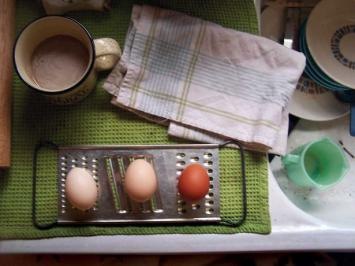
A good place to start thinking about self-reliant living is in your own kitchen. Where does the food you eat come from, and could you produce more of it right in your own backyard?
When you start to comprehend something as basic as how food gets to your plate, you start thinking about how other items find their way to you, too — things such as clothing, electronics and especially energy. The bloodshed and national security threats caused by depending on foreign oil were loud and clear on the daily news. The scary thing was that I was completely dependent on fossil fuels, and so was everyone I knew. My gas-heated apartment, my groceries from the supermarket, my station wagon parked outside — everything was part of the system. And if the system broke, I was going to be hungry, cold and immobile. So I threw my hands in the air. I was done with Wal-Mart and Wonder bread. I wanted something real. I wanted a lifestyle that was no longer a part of the problem, or at the very least was constantly striving to be less involved in it. I wanted a more sustainable life.
Read the whole article here
7 Foods Banned in Europe Still Available in the U.S.
Posted: April 7, 2009 Filed under: Food and it's Impact on Our Health, Going Green; How and Why... Leave a commentby Christine Lepisto, Berlin on 04. 2.09
=
Image credit: Getty Images
How many times do you hear people say: “Well, it must be safe because the government allows it?” But can you rely on that? Maybe a look as some of the foods and food practices which are permitted in the U.S. and banned in Europe could shed light on how governments judge safety in the food chain.
Genetically Modified Foods
Although the E.U. is continuously coming under attack for policies banning GM foods, the community is highly suspicious of genetically modified foods, and the agro-industrial pressures that drive their use. The problem with GM foods is that there is simply not sufficient research and understanding to inform good public policy. In spite of widespread GM use without apparent negative impacts in other countries, the recent public reaction to trans-fats are reason enough to support a precautionary principle for the food supply chain.
Pesticides in Your Food
The E.U. has acted against the worst pesticides typically found as residuals in the food chain. A ban on 22 pesticides was passed at the E.U. level, and is pending approval by the Member States. Critics claim the ban with raise prices and may harm malaria control, but advocates of the ban say action must be taken against the pesticides which are known to cause harm to health and nevertheless consistently found in studies of food consumption.

Image credit: Getty Images
Bovine Growth Hormone
This drug, known as rBGH for short, is not allowed in Europe. In contrast, U.S. citizens struggle even for laws that allow hormone-free labelling so that consumers have a choice. This should be an easy black-and-white decision for all regulators and any corporation that is really concerned about sustainability: give consumers the information. We deserve control over our food choice.

Image credit: Getty Images
Chlorinated Chickens
Amid cries that eating American chickens would degrade European citizens to the status of guinea pigs, the E.U. continued a ban on chickens washed in chlorine. The ban effectively prevents all import of chickens from the U.S. into Europe. If chicken chlorination is “totally absurd” and “outrageous” for Europeans, what does that mean for Americans?

Food Contact Chemicals
Phthalates and Bisphenols in plastic are really beneficial. They help manufacturers create plastic products with the softness and moldability needed to fulfill consumer needs. But when the food contact additives are found in the food and liquids contained by those plastics, trouble starts. Both the U.S. and Europe stringently regulate food contact use of chemicals. However, the standard of approval is different. In Europe, the precautionary principle requires that the suppliers of chemicals prove their additives safe, or they will be banned. Of course, although the E.U. has banned phthalates in toys, both phthalates and bisphenol-A remain approved for food contact uses — subject to strict regulations on their use.

Image via: Cargill
Stevia, the natural sweetener
The U.S. recently approved this “natural” sweetener as a food additive. Previously, it was sold in the U.S. under the less stringent dietary supplement laws. It has been embraced in Japan for over three decades, but E.U. bans still stand — pointing to potential disturbances in fertility and other negative health impacts. But the sweetener is credited with potentially positive health effects too. Is this a case where consumer choice should prevail?

Image credit: Getty Images
Planned Ban: Food Dyes
Many food dyes previously recognized as safe are suspected of contributing to attention deficit disorder. Action is afoot as the UK evaluates a ban on synthetic food colors. Regulation in the E.U. often starts through the leadership of one Member State, which pushes the concepts up to Brussels after a proof-of-concept pilot phase. Red 40, Yellow 5, Yellow 6, Blue 1, Blue 2, Green 3, Orange B, and Red 3 are among the food colors associated with hyperactivity.
Note from Millie- Of course reading labels is crucial to knowing what is in your food. Eat only organic grass fed beef, organic free range chickens, breast feed instead of bottle feed. Let your food manufacturers know how you feel. Go to your grocery store managers and let them know what you want!
Quote of the Day: Vivienne Westwood on Buying Nothing
Posted: April 7, 2009 Filed under: Food and it's Impact on Our Health Leave a commentby Jasmin Malik Chua, Jersey City, USA on 04. 4.09

Photo credit: Mattia Passeri
If you ask me what I think people should be getting next season. I’ll tell you what I’d like them to buy—nothing. I’d like people to stop buying and buying and buying…
There’s this idea that somehow you’ve got to keep changing things, and as often as possible. Maybe if people just decided not to buy anything for a while, they’d get a chance to think about what they wanted; what they really liked.
—Legendary fashion designer Vivienne Westwood in the Oct. 4, 2007 edition of The Telegraph
Article continues: Quote of the Day: Vivienne Westwood on Buying Nothing


