Jicama and Roasted Red Pepper Salad with Cilantro
Posted: October 8, 2012 Filed under: Food and it's Impact on Our Health Leave a comment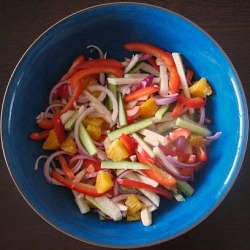
I love jicama, it’s is so crunchy and refreshing! This salad has remained a favorite of mine for a few decades now,
1 medium sized jicama
1 medium Spanish or Vidalia onion
1 12-ounce jar of roasted red peppers
1/2 cup cilantro
1 avocado
1/4 cup orange juice
1/4 teaspoon toasted sesame oil
1 teaspoon cumin
1 teaspoon garlic granules
4 Tablespoons of the juice from the roasted red peppers
3 Tablespoons olive oil
3 Tablespoons Lime juice
zest from one lime
1 teaspoon honey
salt and fresh ground pepper
1) The easiest way to cut a jicama is to cut it in half, lay the flat end down and slice it in 1/2 inch thick slices. Then lay each slice down and cut the small amount of peel off. Then cut into matchsticks. Place in bowl.
2) Using scissors cut the roasted red peppers into matchsticks, add to jicama. Slice the onion in paper-thin half moons.
3) Chop cilantro, add to bowl. Slice avocado and place in bowl. In a separate bowl, whisk together remaining ingredients. Add to bowl and toss together. Marinate for a few hours and enjoy!
Great Website on Paleo Diet
Posted: October 6, 2012 Filed under: Food and it's Impact on Our Health 1 Comment
It’s obvious to anyone that our diets ‘control’ the way we look and as most of you know if you either don’t get your morning coffee or your ‘snack’ for lunch you feel like crap all day. This correlation holds true even more intrinsically with the way your body processes, stores, and heals itself from what you eat and drink. Not so much an immediate change like coffee or your sugary snack at lunch but down the road it will catch up to you. Keep eating that snack everyday and soon you’ll find yourself in the doctor’s office trying to find out why you’re having problems.
I came across Mark’s Daily Apple a while back and have been on this ‘lifestyle’ for a while now (with a couple of in and out times where I ate stuff I shouldn’t have) and it’s been great. I have a friend on Facebook who is in a bit of trouble because he beat his diabetes with a Paleo-like diet. His blog is here. I’ve read a ton of information about how our current agricultural diets affect our health and wellness but I wanted to take this opportunity to share what I have found as an elaboration.
Posted: September 29, 2012 Filed under: Food and it's Impact on Our Health Leave a comment

https://optimumnutrition.wordpress.com/2012/09/29/why-you-shouldnt-wear-your-shoes-into-your-home/
Citrus Collards with Raisins Redux
Posted: September 24, 2012 Filed under: Food and it's Impact on Our Health Leave a comment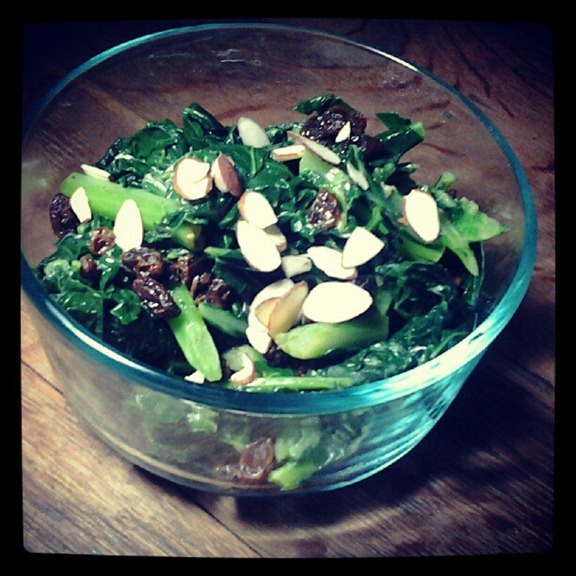
2 large bunches collard greens, ribs removed, cut into a chiffonade, rinsed and drained
2 tablespoon butter
2 cloves garlic, minced
2/3 cup raisins
1 cup freshly squeezed orange juice
1) In a medium-size sauté pan, combine the butter and the garlic and raise the heat to medium. Sauté for 1 minute. In another pot, or in a saucier, reduce orange juice in half, add raisins, cover and let simmer slowly for about 10 minutes. Pour sauce into larger pot, add butter and garlic, add 1/2 teaspoon salt
2) While the sauce is reducing; In a large pot over high heat, bring 3 quarts of water to a boil and add 1 tablespoon salt. Add the collards and cook, uncovered, for 8 to 10 minutes, until softened. Meanwhile, prepare a large bowl of ice water to cool the collards.
Remove the collards from the heat, drain, and plunge them into the bowl of cold water to stop cooking and set the color of the greens. Drain by gently pressing the greens against a colander.
4) Add to sauce and let heat through. Serve immediately.
Posted: September 24, 2012 Filed under: Food and it's Impact on Our Health Leave a comment

Citrus Collards with Raisin Ruduction and Toasted Almonds (Taken with Instagram)
Eating Organic Economically; How I Eat and Cook all Week
Posted: September 20, 2012 Filed under: Food and it's Impact on Our Health Leave a comment
1 whole organic chicken 12.00
1 pound grass-fed hamburger 7.99
18 eggs- local market, local eggs- 3.99
1 pound turkey bacon 4.79
½ pound salmon 4.99
1 pound butter 4.99
1 pound carrots 2.99
3 large onions 3.25
1 pound coffee 7.99- delivered once a month form Green Mountain Coffee
3 beefsteak tomatoes 3.00
Garlic bulb .30
2 limes .99
2 lemons 1.10
3 green peppers bell peppers 2.99
1 bag celery 1.99
1 pint blueberries 3.99
1 bunch kale 3.99
3 white potatoes- 3.00
3 large sweet potatoes 2.99
~ 71.26~ grocery cost
16.52 minus the items I grow
TOTAL- 54.74
The items in red are the things I grow in sub-irrigated containers; I used 5 gallon buckets, soil, perlite and made sub-irrigated containers. Growing from seed is cheap. I also grow beet greens, scallions, Swiss chard, kale, basil, thyme, broccoli, Malabar spinach, cucumbers, tomatoes (cherry, Roma and beefsteak), dill.
If you have a backyard, or a deck for container gardening, or grow lights indoors, you can save further in ways that processed food eaters can’t: Almost all year I grow salad greens, herbs, braising greens of some kind and cucumbers and tomatoes. (The salad herbs oregano, thyme, mint, basil, cilantro and parsley never quit here in any season!)
Items I make myself; almond butter made in the Champion juicer, coconut milk yogurt, mayonnaise, salad dressings. These things are very inexpensive to make, very easy to do…not much labor.
Starting on the day I shop, here’s how I eat and cook all week, very simply, but extremely healthy.
First Night; I roast a whole chicken by rubbing butter all over it, salt and peppering it, maybe some garlic or lemon juice and zest. Then roast it for 30 minutes on 450°. Then turn the oven down to 300° and bake for 30 minutes. Now turn the oven back up to 400° and roast that bird just 165°, checking for temp in the thickest part of the breast, not hitting the bone. Save the pan drippings for cooking, save the carcass for stock. Here’s a link to making stock- Chicken Stock, Beef Stock.
That is dinner the first night; a leg and thigh and some breast meat, pour pan drippings over it, using fat and gelatin in roasting pan. With some sautéed peppers and onions and a few slices of ripe tomato, here’s a great dinner.
Breakfast is usually 2 eggs, fried in butter or coconut oil, 3 slices of turkey bacon, some coconut milk yogurt and a handful of blueberries. And 6 ounces of Turkish coffee, ground and brewed each morning. Some mornings I have Ezekiel bread.
Lunch is usually whatever I’ve had for dinner the night before, or an Ezekiel bread sandwich, with meat, fresh olive oil mayonnaise, or almond butter. Maybe Ezekiel with almond butter and sauerkraut, toasted. Usually a cup of meat stock and/or coconut milk yogurt.
Second night; take the rest of the meat off of the chicken, make stock. Have a great chicken soup that night, add sautéed celery, carrots, bay leaf. Maybe some kale sautéed in chicken fat, some gelatin from chicken pan drippings, onions, mushrooms. Sliced tomatoes.
Third night; 1/3 pound hamburger patty, sautéed onions and peppers, 8 ounces chicken stock, sliced tomatoes, coconut milk yogurt.
Fourth night; fresh salmon with dill, Dijon and fresh lemon juice, sautéed peppers, mushrooms and onions, sliced tomatoes. A cup of chicken stock.
Fifth night; Chicken meat prepared however you want, sautéed kale, ½ sweet potato, sautéed mushrooms. Coconut milk Crème Brule and a few blueberries.
Sixth night; 1/3 pound hamburger patty, pan gravy, ½ sweet potato with butter, kale with onions.
Seventh Night; Rest of hamburger with peppers, onions, tomato, salsa, avocado and fresh corn tortilla.
Shop again, or have leftovers, or breakfast for dinner.
Extras I buy if I can afford them; cherries, plantains to fry, dark chocolate, steaks, roasts, Ezekiel bread, wine.
Things I always have in the kitchen; butter, Tropical Traditions Coconut Oil and their coconut cream (to use in recipes that call for heavy cream or for decadent desserts) Dijon mustard, olives, herbs and spices, an array of vinegars, olive oil, sesame oil, masa harina, coconut oil, lemons, limes, Kava tea, organic coffee, Yerba Mate Tea, quinoa, rice, teff, coconut and tapioca flours, coconut milk, curry sauces, olives.
Bear in mind that this is a very basic dinner menu, showing how to meet all of your calorie and nutrient needs affordably. These dinners reflect basic eating, by adding other ingredients I can get real fancy, and I do at times.
MARBLE POUND CAKE- Gluten and Lactose Free
Posted: September 19, 2012 Filed under: Food and it's Impact on Our Health Leave a comment

Serves 8
15 tbsp. softened unsalted butter
3 tbsp.almond milk
3 eggs
1 tsp. vanilla extract
1 1/2 cups sifted tapioca flour
3/4 cup sugar
3/4 tsp. baking powder
½ cup dark chocolate- melted in a double boiler
1) Preheat oven to 350°. Grease a 6-cup loaf pan with 2 tbsp. of the butter; set aside. Put milk, eggs, and vanilla in a bowl and beat until well combined; set aside.
2) Sift together flour, sugar, and baking powder into the bowl of a standing mixer fitted with a whisk, beating on medium speed, then add remaining 13 tbsp. of butter, 1 tbsp. at a time, waiting until each is completely incorporated before adding more.
3) Slowly add milk-egg mixture, beating constantly, until batter is just mixed together. Separate batter in half, mix in melted chocolate in half. Pour batter with no chocolate into buttered loaf pan. Then pour in chocolate batter and taking two butter knives mix batter with chocolate into a swirl pattern.
4) Bake until a toothpick inserted in the center of the cake comes out clean, 55-65 minutes. (Lightly cover cake with a piece of buttered foil during baking if it begins to get too brown.) Allow cake to cool on a rack for 5 minutes, then unmold.
Diabetes is Caused by Poor Nutrition, not by Lack of Exercise!
Posted: September 19, 2012 Filed under: Food and it's Impact on Our Health 1 Comment“The researchers found that the less walkable one’s neighborhood is, the higher risk its inhabitants have of developing diabetes”.

Another ridiculous theory on why we get diabetes, almost as silly as Tree hugger’s article a while back saying we are fat because of air conditioning! (article here)
Diabetes is caused by malnutrition; not getting enough healthy fat and protein and ingesting too high a percentage of our calories from carbohydrates.
It’s that simple.
Read Treehugger’s article, but take it with a grain of salt!- How Neighborhood Design Can Make Us Sick
For Weight Loss, Less Exercise May Be More
Posted: September 19, 2012 Filed under: Food and it's Impact on Our Health 15 Comments
From the NYTimes;
Most people who start working out in hopes of shedding pounds wind up disappointed, a lamentable circumstance familiar to both exercisers and scientists. Multiple studies, many of them covered in this column, have found that without major changes to diet, exercise typically results in only modest weight loss at best (although it generally makes people much healthier). Quite a few exercisers lose no weight. Some gain.
But there is encouraging news about physical activity and weight loss in anew study by researchers at the University of Copenhagen. It found that exercise does seem to contribute to waist-tightening, provided that the amount of exercise is neither too little nor, more strikingly, too much.
To reach that conclusion, the Danish scientists rounded up a group of pudgy and sedentary young men, a segment of the population increasingly common in Denmark, as elsewhere in the world. The volunteers, most in their 20s or early 30s, visited the scientists’ lab to undergo baseline measurements of their aerobic fitness, body fat, metabolic rates and general health. None had diabetes, high blood pressure or heart disease and, while heavy, they were not obese.
The men were then randomly assigned to exercise or not. The non-exercisers, who served as controls, returned to their former routines, with no change to their diets or sedentary ways.
A second group began 13 weeks of almost daily moderate workouts, consisting of jogging, cycling or otherwise sweating for about 30 minutes, or until each man had burned 300 calories (based on his individual metabolic rate).
A third group tackled a more strenuous routine of almost hour-long workouts, during which each man burned 600 calories.
The men were asked not to consciously change their diets, either by eating more or less, and to keep detailed daily food diaries throughout the 13 weeks.
On certain designated days, they also were asked to don sophisticated motion sensors that would measure how active they were in the hours before and after exercise.
At the end of the 13 weeks, the members of the control group weighed the same as they had at the start, and their body fat percentages were unchanged, which is hardly surprising.
On the other hand, the men who had exercised the most, working out for 60 minutes a day, had managed to drop some flab, losing an average of five pounds each. The scientists calculated that that weight loss, while by no means negligible, was still about 20 percent less than would have been expected given the number of calories the men were expending each day during exercise, if food intake and other aspects of their life had held steady.
Meanwhile, the volunteers who’d worked out for only 30 minutes a day did considerably better, shedding about seven pounds each, a total that, given the smaller number of calories that they were burning during exercise, represents a hefty 83 percent “bonus” beyond what would have been expected, says Mads Rosenkilde, a Ph.D. candidate at the University of Copenhagen who led the study.
Why Exercise Has Little Effect On Weight Loss
Posted: September 19, 2012 Filed under: Food and it's Impact on Our Health 6 Comments
What Effect Does Exercise have on Obesity and Weight Loss?
I had someone tell me today that he works out two hours a day, is incredibly strong (I guess so!) and cannot lose weight. He showed me the “healthy” snack he had with him; a granola crunch bar. I read the ingredients. Rice flour, oat flour, fructose. So far we are at all carbs. Next comes soy oil. Yuck. And about 20 more ingredients from there…So we talk, really talk. I explain to him what a great breakfast, nutritionally speaking, looks like; organic eggs for breakfast, cooked in coconut oil or butter. Three strips of turkey bacon, a handful of blueberries, some organic coffee. This is my breakfast most mornings. With a third of my calories for the day, RARING to go for 5-6 hours without even thinking about food. Enough fat, protein and nutrient packed carbs (fruits and veggies!) at every meal, 3 times a day. 2000 calories a day, every day. Healthy rapid weight loss occurs, energy quickly returns, you sleep better, feel wonderful upon awakening…and get in some play time each day. THAT is the way too lose weight. The ONLY healthy way there is. Period.
Let’s look at trying to exercise enough to lose weight;
It takes 35 miles of walking or jogging to burn the calories in one pound of fat. Losing weight requires optimum nutrition; a balance of healthy fats, protein, fruits, and vegetables. In addition, if a person exercises but doesn’t diet any actual pounds lost may be minimal because dense and heavier muscle mass replaces fat. Also bear in mind that vigorous exercise such as jogging or running on hard surfaces is essentially unnatural to the body and can lower the immune response. Human beings in virtually every culture have typically, throughout time, engaged in anaerobic functional exercise common to regular labor or work functions on the farm, at sea or while hunting wild game, punctuated by occasional bursts of intense activity. Getting on the treadmill, running, or jogging is not that affective for weight loss, is hard on the joints, and wears you out. Use that same energy for weight training, bursts of hard work such as gardening, surfing, dancing, yoga or sex! You will be in better shape, get toned faster…and save a lot of time that is wasted on the treadmill!
While exercise has little impact on weight loss (that comes from eating enough calories that contain all the nutrients you need on a day to day basis) a fit body will look more toned and be healthier. And exercise even without dieting adds benefit. For example, one study found that overweight but fit people have half the death rate of overweight and unfit people. And, studies suggest that people who have trained for a long time develop more efficient mechanisms for burning fat and are able to stay leaner.
Exercise is vitally important, it helps us stay in shape, stimulates and improves cardiovascular health, helps make us happier and gets us into the sunshine we need so badly. This should include cardiovascular and resistance training. Every type of exercise that you do for resistance should be balanced with stretching exercises. This is called cross training. Most types of resistance training or repetitive movements cause some of our muscles to shorten. You need to balance this with stretching these muscles very well. I mean serious stretching, not what we usually do for five minutes before we run! I mean a true warm up. When we try to stretch without warming the muscles up, we can pull muscles or tendons. We only are able to stretch effectively when our muscles are truly warmed up.
I think yoga is the perfect cross training for almost every other form of exercise. Plus, it is also tones muscles, helps us detox, aids digestion and stills the mind. It is a perfect way to learn to meditate. If someone told me I had to choose just one type of exercise, then yoga would be my first choice. It is also important that find something that you love to do every day that will help you gain cardiovascular health. I mean something that will make you work up a serious sweat! Notice I say find something you love to do. Very few people really love aerobics classes. They are not that effective in toning muscles. You are better off riding a bike, running, rollerblading, surfing, dancing,playing soccer or tennis, . These things are so much fun that they tend to be things you love to do, instead of things you make yourself do in order to get in shape. You’re more likely to do them more often.
Weight training should be practiced 3 to 4 times a week in order to build bone and muscle mass. You may find it very effective to work with a personal trainer or find a workout buddy in the first few months. This will keep you motivated. The hardest part of getting on a regular schedule of exercising is getting started. In the beginning, it seems harder to fit it into our schedules. We get sore and tired. But after a few weeks you reach the point where you see results, you’re sleeping better, feeling energized. You notice that you don’t feel as good on the days you don’t exercise. You feel edgy. I love those endorphins!
But to lose 5 pounds a week AND meet out nutrient and energy needs you need 2000 calories a day. You won’t get weight lose by caloric restriction, that has been proven. At that rate of caloric intake your body is in starvation mode; So eat plenty of healthy fats, get plenty of high quality protein and eat ½ way down the glycemic index…including plenty of green leafy veggies each day. Did you know that green leafy vegetables have NO glycemic scale whatsoever and offer you a depth of nutrients that includes plenty of calcium? They must be cooked with saturated fats to assimilate the nutrients, so use butter or animal fats to cook with.
Yes, bacon and eggs cooked in butter is a great breakfast!


 Meal Delivery Service by Millie Barnes