Coffee, Green Tea, May Help Lower Stroke Risk, Research Shows
Posted: March 19, 2013 Filed under: Food and it's Impact on Our Health Leave a comment
From Science Daily
Mar. 14, 2013 — Green tea and coffee may help lower your risk of having a stroke, especially when both are a regular part of your diet, according to research published in Stroke: Journal of the American Heart Association.
“This is the first large-scale study to examine the combined effects of both green tea and coffee on stroke risks,” said Yoshihiro Kokubo, M.D., Ph.D., F.A.H.A., F.A.C.C., F.E.S.C., lead author of the study at Japan’s National Cerebral and Cardiovascular Center. “You may make a small but positive lifestyle change to help lower the risk of stroke by adding daily green tea to your diet.”
Researchers asked 83,269 Japanese adults about their green tea and coffee drinking habits, following them for an average 13 years. They found that the more green tea or coffee people drink, the lower their stroke risks.
- People who drank at least one cup of coffee daily had about a 20 percent lower risk of stroke compared to those who rarely drank it.
- People who drank two to three cups of green tea daily had a 14 percent lower risk of stroke and those who had at least four cups had a 20 percent lower risk, compared to those who rarely drank it.
- People who drank at least one cup of coffee or two cups of green tea daily had a 32 percent lower risk of intracerebral hemorrhage, compared to those who rarely drank either beverage. (Intracerebral hemorrhage happens when a blood vessel bursts and bleeds inside the brain. About 13 percent of strokes are hemorrhagic.)
Participants in the study were 45 to 74 years old, almost evenly divided in gender, and were free from cancer and cardiovascular disease.
During the 13-years of follow-up, researchers reviewed participants’ hospital medical records and death certificates, collecting data about heart disease, strokes and causes of death. They adjusted their findings to account for age, sex and lifestyle factors like smoking, alcohol, weight, diet and exercise.
Green tea drinkers in the study were more likely to exercise compared to non-drinkers.
Previous limited research has shown green tea’s link to lower death risks from heart disease, but has only touched on its association with lower stroke risks. Other studies have shown inconsistent connections between coffee and stroke risks.
Initial study results showed that drinking more than two cups of coffee daily was linked to increasing coronary heart disease rates in age- and sex-adjusted analysis. But researchers didn’t find the association after factoring in the effects of cigarette smoking — underscoring smoking’s negative health impact on heart and stroke health.
A typical cup of coffee or tea in Japan was approximately six ounces. “However, our self-reported data may be reasonably accurate, because nationwide annual health screenings produced similar results, and our validation study showed relatively high validity.” Kokubo said. “The regular action of drinking tea, coffee, largely benefits cardiovascular health because it partly keeps blood clots from forming.”
Tea and coffee are the most popular drinks in the world after water, suggesting that these results may apply in America and other countries.
It’s unclear how green tea affects stroke risks. A compound group known as catechins may provide some protection. Catechins have an antioxidant anti-inflammatory effect, increasing plasma antioxidant capacity and anti-thrombogenic effects.
Some chemicals in coffee include chlorogenic acid, thus cutting stroke risks by lowering the chances of developing type 2 diabetes.
Further research could clarify how the interaction between coffee and green tea might help further lower stroke risks, Kokubo said.
Great Info To Have While Shopping!
Posted: March 17, 2013 Filed under: Food and it's Impact on Our Health, Non-Toxic Choices | Tags: #organic, Paleo 2 CommentsFrom Wholesome Style

Balancing Carbs with Fats and Proteins
Posted: March 13, 2013 Filed under: Food and it's Impact on Our Health, Recipes | Tags: Paleo 3 Comments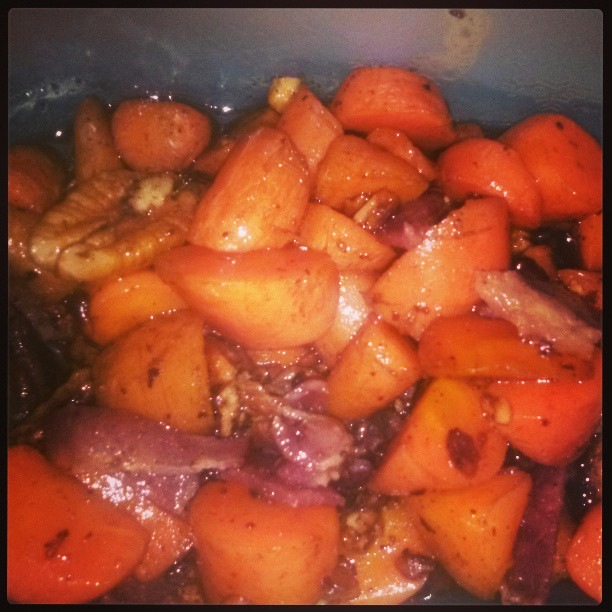
Eating a healthy diet that allows you to lose or maintain weight requires balancing carbohydrates, fats and proteins. You need 50% of your daily caloric intake of 2000% a day to come from fat, 30% from protein and 20% from carbs.
You should never eat carb alone. When eaten on their won your blood sugar rises rapidly, then plunges…leaving you tired and hungry. And craving more carbs. And it causes weight gain. Eat those carbs with plenty of healthy fats and protein…and you ingest and burn them nice and slow.
Though the following recipe is a carrot dish, and carrots being very high in carbs (97% of it’s calories are from carbs), when combin3ed with butter, pecans and bacon, it reduces the carb load to a acceptable percentage.
Glazed Carrots With Bacon And Pecans
4 slices of thick cut bacon
1/2 cut pecans- coarsely chopped
1 pound carrots- roll cut
2 tablespoons honey
1/2 cup chicken stock
1 teaspoon thyme
2 Tablespoons butter
2 teaspoons lemon juice
salt and pepper to taste
1. Cook the bacon in a 12-inch iron skillet over medium-high heat until crisp. Transfer the cooked bacon to a paper towel-lined plate to drain. Add the pecans and cook until fragrant and slightly browned, about 3 minutes. Transfer the pecans to the plate with the bacon.
2. Add the carrots, salt, honey, the chicken broth, and thyme to the skillet. Bring to a boil, covered, over medium-high heat. Reduce the heat to medium and simmer, stirring occasionally, until the carrots are almost tender when poked with the tip of a paring knife, about 7 minutes. Uncover, increase the heat to high, and simmer rapidly, stirring occasionally, until the liquid is reduced to about 2 tablespoons, 1 to 2 minutes.
3. Add the butter to the skillet. Toss the carrots to coat and cook, stirring frequently, until the carrots are completely tender, about 3 minutes. Off heat, add the lemon juice and toss to coat. Transfer the carrots to a serving dish, scraping the glaze from the pan into the dish. Season to taste with pepper, sprinkle the bacon and pecans on top and serve immediately.
More Consumers Giving Up Gluten Containing Foods
Posted: March 9, 2013 Filed under: Food and it's Impact on Our Health Leave a comment
The following articles was published at CNBC today. It documents that more and more people are giving up gluten containing foods. While much of what they say in the article is true, they commented that many doctors challenge the fact that people lose weight when they give up gluten containing foods. They can doubt it all they want…it IS true that you lose weight when giving up these foods.
You also have more energy, brain function improves, you sleep better, you have far less inflammation and bloating, the dry patches on the back of your arms and on your thighs as well as the dryness around the crease of your nose goes away…and you lose weight.
Humans do not tolerate grains well including the ones that have gluten. They have enzymes that are toxic to us and are almost all empty carbs. Your carbs should come from fruits and vegetables because they have a depth of nutrients not contained in grains.
A Paleo diet, the one followed for hundreds of thousands of years by our ancestors was only abandoned in the 50’s and 60’s for the sake of convenience and profit margin for companies manufacturing processed foods. Giving up grains, eating plenty of healthy saturated fats and grass fed meats along with organic cage free eggs and plenty of low glycemic vegetables IS the key to great health, high energy and happiness.
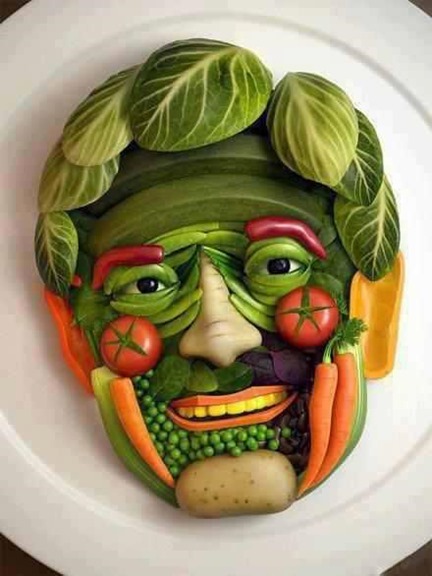
Veggie Face
Posted: March 1, 2013 Filed under: Food and it's Impact on Our Health Leave a commentDr, Mark Lipman posted this today on Facebook.
https://www.facebook.com/DrFrankLipman
Benefits of Chocolate and Raw Cacao
Posted: February 16, 2013 Filed under: Food and it's Impact on Our Health Leave a commentI found a great web site that offers luscious raw chocolate confections but also great info on the health benefits of raw chocolate.
Graph designed from information gathered at Natural News: Examining the Properties of Chocolate and Cacao for Health. Source: Source: US department of Agriculture/Journal of American Chemical Society and Brunswick Laboratories MA, USA
This study in the Journal of Cerebral Blood Flow and Metabolism indicates that the flavanols found in cacao may be helpful in preventing additional neural damage in the case of a stroke. This could indicate a protective function for the flavanols found in cacao, as cocoa was specifically used as part of the trial.
Additional details on the neuro-benefits of cocoa and more layman’s terms about the latest research from the Journal of Cerebral Blood Flow & Metabolism.
his study in the American Journal of Clinical Nutrition shows that heart health is increased by consumption of cacao. Blood pressure is reduced, and endothelial function improved in overweight adults.
“Chocolate contains more magnesium than any other food. Magnesium is the number one mineral deficiency in the west. It is the most powerful stress relieving mineral. It also relaxes the muscles and builds strong bones and teeth.” What more do you need?
Chocolate again scores well in a literature review for protective effects against heart disease. From the article published in Nutrition & Metabolism (Jan 3, 2006,) “The body of short-term randomized feeding trials suggests cocoa and chocolate may exert beneficial effects on cardiovascular risk via effects on lowering blood pressure, anti-inflammation, anti-platelet function, higher HDL, decreased LDL oxidation” and “Meanwhile, the large body of prospective studies of flavonoids suggests the flavonoid content of chocolate may reduce risk of cardiovascular mortality. Our updated meta-analysis indicates that intake of flavonoids may lower risk of CHD mortality”.
Another study, from the Archives of Internal Medicine February 2006.
Chocolate has been shown to have excellent antioxidant levels. ORAC (Oxygen Radical Absorbance Capacity) values of dark chocolate (13,120 per 100 grams) exceed those of prunes (5, 700); blueberries (2,400), strawberries (1,540) and spinach (1,260). Adding milk to chocolate does not help, in fact, it seems to block the activity of the phytochemicals responsible for the powerful antioxidant capacity of cacao. The August 28, 2003 issue of the journal Nature has a great article discussing the power of dark chocolate, of which, cacao is the key ingredient.
Researchers from the University of Cambridge in England have finally published solid evidence to demonstrate the consumption of chocolate is associated with improved heart and vascular health. Writing in the prestigious BMJ (British Medical Journal), Dr. Oscar Franco and his team determined several factors including diet, exercise, body weight control and lifestyle changes could help reduce the risk of heart disease, a condition expected to claim the lives of nearly 24 million people worldwide by the year 2030. The study authors found that the antioxidant and anti-inflammatory properties of cocoa from chocolate consumption could reduce heart disease risk by one-third and could also reduce the risk of sudden death from a heart attack and stroke incidence.
Cacao, ‘the food of the gods’ has received considerable attention lately as it has been found to contain one of the highest levels of antioxidants on the planet, exceeding red wine, green tea, and other exotic fruits and vegetables. Recently published in the peer-reviewed Journal of Agricultural Food Chemistry (December 3, 2003) is an article titled “Cocoa has more phenolic phytochemicals and a higher antioxidant capacity than teas and red wine”.
Cacao is showing benefits for reduction in blood pressure and greater insulin sensitivity in healthy persons. In an article titled “Short-term administration of dark chocolate is followed by a significant increase in insulin sensitivity and a decrease in blood pressure in healthy persons” published in the American Journal of Clinical Nutrition, March 2005, insulin sensitivity was improved almost 12% in 15 test subjects given dark chocolate and systolic blood pressure dropped almost 6% among the same group.
More testing shows that the antioxidant effects of cacao are helpful in arteriosclerosis. Testing with laboratory rabbits showed, “The antioxidative effect of Cacao Liquor Polyphenols was superior to those of the well-known antioxidative substances, vitamin C, vitamin E and probucol.” Arteriosclerosis, April 2005.
Cacao may help lower the oxidative stress of strenuous activities – thus helping athletes to recover. Recent research “conclude[s] that dietary flavanols, using cocoa drink as example, can lower the plasma level of F(2)-isoprostanes, indicators of in vivo lipid peroxidation.” Free Radical Biological Medicine, August 2004.
Free radical decreases have been noticed in subjects eating chocolate. In one trial there was a 16% drop in the amount of expelled free-radicals, indicating a higher antioxidant level in the subjects taking chocolate. Found in Nutr. Cancer, Vol 47, Iss 2, 2003.
The procyanidin found in Cacao have also been shown to inhibit cataract formation in diabetic lab rats. Experimental Biological Medicine, January, 2004.
All regular readers of NaturalNews know that researchers have discovered chocolate (especially the organic, not junked up with additives and sugar type) contains phytochemicals which appear to promote good health. But no one has had much of a clue about the specifics of some of those benefits on the cardiovascular system — until now. Scientists at the European Society of Cardiology Congress currently underway in Paris just announced that chocolate provides huge protection from heart disease as well as stroke.
Sautéed Chicken Breast with Lemon and Prosciutto Sauce
Posted: February 13, 2013 Filed under: Food and it's Impact on Our Health, Recipes | Tags: Paleo Leave a comment
2 organic chicken breasts, skin on
4 Tablespoons sweet rice flour
2 Tablespoons arrowroot powder
3 Tablespoons organic butter
2 teaspoons garlic, minced
1 tablespoon dried sage
3 Tablespoons lemon juice
3 Tablespoons butter
2 slices thick cut prosciutto, cubed
salt and pepper to taste
1) Generously season both sides of each breast with salt and pepper and dredge one at a time in flour placed in a shallow dish; shake gently to remove excess flour and set aside.
2) Heat butter and coconut oil in 12-inch heavy-bottomed skillet over high heat, swirling to melt butter. When foam subsides and butter begins to color, place cutlets in skillet, skinned side up. Reduce heat to medium-high and sauté without moving until nicely browned, about 4 minutes. Turn cutlets over and cook on other side until meat feels firm when pressed and clotted juices begin to emerge around tenderloin, 3 to 4 minutes.
3) Leaving fat in skillet, transfer cutlets to plate, cover loosely with foil, and keep warm in 200-degree oven while preparing the sauce.
For the Sauce:
1) Set skillet over medium heat. Add garlic and sage leaves; sauté until garlic is fragrant and sage crisps, 1 to 2 minutes. Add lemon juice and bring to boil, scraping up browned bits from bottom of skillet with wooden spoon. Add chicken stock, increase heat to medium-high and bring to boil, stirring occasionally, until reduced to 1/4 cup, about 8 minutes. Off heat, swirl in butter, and add prosciutto. Season to taste with salt and pepper. Spoon sauce over cutlets; serve immediately.
There are Nanoparticles in Your Food
Posted: February 6, 2013 Filed under: Food and it's Impact on Our Health, Non-Toxic Choices Leave a comment
Study Looks at Particles Used in Food
By STEPHANIE STROM
Published: February 5, 2013
Nanomaterials, substances broken down by technology into molecule-size particles, are starting to enter the food chain through well-known food products and their packaging, but there is little acknowledgment by the companies using them, according to a new report from a nonprofit group that works to enhance corporate accountability.
Some companies may not even know whether nanomaterials are present in their products, the corporate accountability group As You Sow said.
Only 26 out of 2,500 companies, including PepsiCo, Whole Foods and the corporate parent of Pizza Hut and Taco Bell, responded to a survey from As You Sow about their use of nanomaterials.
“Only 14 said they don’t use nanomaterials, and of those only two had any policies on the use of nanomaterials,” said Andy Behar, chief executive of As You Sow. Various food companies have said they are interested in nanotechnology, which can help make products creamier without additional fat, intensify and improve flavors and brighten colors.
Their small size allows nanoparticles to go places in the body where larger particles cannot and enter cells. They have been found in the blood stream after ingestion and inhalation, and while research on their health effects is limited, studies have shown them to have deleterious effects on mice and cells.
“We’re not taking a no nano position,” Mr. Behar said. “We’re saying just show it’s safe before you put these things into food or food packaging.”
He noted that the European Union requires labeling of foods containing nanomaterials and that the European Food Safety Authority has published guidance for assessing nanomaterials in food and animal feed.
Last April, the Food and Drug Administration issued an unusually emphatic statement on nanomaterials, saying it did not have enough data to determine the safety of nanomaterials in food.
The Environmental Protection Agency is evaluating various nanoparticles used in consumer products, like sunscreens.
As You Sow tested 10 varieties of powdered doughnuts for the presence of nanoparticles. With the help of an independent lab, it found that Hostess Donettes and Dunkin’ Donuts Powdered Cake Donuts tested positive for the presence of titanium dioxide materials of less than 10 nanometers. Titanium dioxide is used to brighten white substances. The nano variety is under investigation by the E.P.A.
Michelle King, a spokeswoman for Dunkin’ Donuts, said the company was working with its supplier to validate As You Sow’s findings. Hostess Brands went out of business during the test and closed its factories.
A version of this article appeared in print on February 6, 2013, on page B5 of the New York edition with the headline: Study Looks At Particles Used in Food.
Beet Kvass Recipe with Wild Fermentation
Posted: February 6, 2013 Filed under: Food and it's Impact on Our Health, Recipes 6 Comments
 Cool website Holistic Squid carried this article on making Beet Kvass using wild fermentation, meaning you do not inoculate it.
Beet Kvass Myth Busting (& Recipe)

Have you been taught that you must use whey or another culture starter when making beet kvass? (You don’t.)
Are you dairy free, on a tight budget, on the GAPS or SCD diet and therefore cannot buy and use whey or other culture starters? (Don’t worry!)
Have you been taught that if you do not use a culture starter to make beet kvass, it must contain so much salt that it is not pleasurable to drink? (Not true.)
For these reasons or more, have you been living without the beauty of beet kvass in your life? These are all common misconceptions and I think it’s time we all set them aside and empower ourselves to harness the transformative powers of mother-nature.
Beet Kvass is comprised of simple ingredients and is simple to make through the process of wild fermentation. Fancy fermentation equipment is fun, convenient, and pretty but rarely a must.
What is Beet Kvass?
Here in my kitchen, we call it blood of the earth. Indeed I do taste the earth when I sip this crimson liquid. Beet Kvass is an age-old tonic associated with many health benefits including efficient hydration. Fermented beverages are the original sports drinks. Like other lacto-fermented drinks, kvass is more hydrating than even water. In order to remain hydrated, our bodies require a balance of electrolytes. Cultured beverages like kvass help restore this balance without the sugar and preservatives of modern “sport drinks”.
Beet Kvass is traditionally heralded as a blood and liver tonic. And indeed this ancestral knowledge is meted out in science. In fact, beets are high in betacyanin which can dramatically increase the oxygen-carrying ability of the blood.
Personally, beet kvass gives me a feeling of energy and clarity. I LOVE beets and the taste of beet kvass. If you don’t love the taste but do want the health benefits of this tonic, try adding it to a soup when serving or use it to make a virgin ‘dirty martini’ or ‘bloody mary’. The taste is perfect for these concoctions and a big hit at any dinner party I’ve ever had.
Beet Kvass Ingredients
Filtered water
3-4 beets
1 ½ tablespoon unrefined sea salt
Beet Kvass Method
Wash the beets of any dirt but, do not scrub or peel the beets. Our aim is to keep the delicate bacteria on the skin of the beets in tact so that we can encourage their multiplication during fermentation.
Add the beets to a 1-gallon jar.*
Add 1 ½ tablespoon unrefined sea salt
Add filtered water to ½ inch below lid
Affix lid tightly and label with date.
Allow to ferment for 1 ½ weeks or more out of direct sunlight.
You may strain through a cheese-cloth and decant into smaller containers, taking care to redistribute a handful of beet pieces into each bottle and then store in the refrigerator. Or feel free to store in the refrigerator as is.
For Full Article….
Everyone SHOULD Eat Gluten Free
Posted: February 5, 2013 Filed under: Food and it's Impact on Our Health, Non-Toxic Choices Leave a comment
The NYTimes had an article today exploring gluten intolerance named “Gluten-Free, Whether You Need It or Not”. It says that many proponents are claiming that everyone should avoid gluten containing foods and products. Most agree that people do feel better and get healthier but they are puzzled as to why.
I have been eating gluten free for 27 years, as well as teaching others to do the same. My experience as a Nutrition Coach is that everyone feels better, loses weight, has far more energy and their health is improved dramatically.
The debate goes on as to whether this is due to celiac disease, allergies to gluten or intolerances. I believe, as many others do, that it is simply that we are not designed to eat grains.
Read this from the article–
“As with most nutrition controversies, most everyone agrees on the underlying facts. Wheat entered the human diet only about 10,000 years ago, with the advent of agriculture.
“For the previous 250,000 years, man had evolved without having this very strange protein in his gut,” Dr. Guandalini said. “And as a result, this is a really strange, different protein which the human intestine cannot fully digest. Many people did not adapt to these great environmental changes, so some adverse effects related to gluten ingestion developed around that time.”
The primary proteins in wheat gluten are glutenin and gliadin, and gliadin contains repeating patterns of amino acids that the human digestive system cannot break down. (Gluten is the only substance that contains these proteins.) People with celiac have one or two genetic mutations that somehow, when pieces of gliadin course through the gut, cause the immune system to attack the walls of the intestine in a case of mistaken identity. That, in turn, causes fingerlike structures called villi that absorb nutrients on the inside of the intestines to atrophy, and the intestines can become leaky, wreaking havoc. Symptoms, which vary widely among people with the disease, can include vomiting, chronic diarrhea or constipation and diminished growth rates in children.
The vast majority of people who have celiac do not know it. And not everyone who has the genetic mutations develops celiac.
What worries doctors is that the problem seems to be growing. After testing blood samples from a century ago, researchers discovered that the rate of celiac appears to be increasing. Why is another mystery”.
I do not believe there is a mystery here, it seems obvious that if we all feel better without grains…then it is toxic, a poison…not an allergy.
I challenge you to try it for a month. Very few people go back to eating it after experiencing the difference in appearance, weight and energy!


 Meal Delivery Service by Millie Barnes