Champion Juicers
Posted: August 2, 2013 Filed under: Food and it's Impact on Our Health, In The Kitchen with Millie- How To's, Products | Tags: #Champion juicer, #juicing, Paleo 10 Comments

I’ve been doing more juicing lately, again. I find it’s a great way to get more greens, as long as you are including some type of fat with them. Saturated fats, such as coconut oil or coconut milk, allow you to assimilate the nutrients. Saturated fats play a crucial role in digestion, as well as the immune system and all biological functions in our bodies.
Today I made carrot, apple, pear, celery, turmeric and ginger. I was at the computer most of the day (arrgghhh!)..but needed a pick me up late afternoon. I was thinking about coffee, but decided on juicing instead. After the energy buzz from the juice I got a lot done and finished blogging.
My Champion juicer, yes…it’s avocado green, is still going strong after all these years. I bought it in 1977 and it has never failed me in any way. Those new black ones look amazing. However, the Champion juicer still costs the same as when I bought one- $279.00 online. How many products can you say that about?
It also makes great sorbets, it homogenizes, makes great shaved ice, and is a continuous feed juicer…so no stopping to clean. I can turn it on and juice 50 pounds of carrots!
Juicing is a great way to amp up nutrients, especially when you are slammed for time during the day…or tend to not slow down to eat. But, ideally, you will drink them in addition to healthy meals!
Frittata’s- A GREAT Make Ahead Breakfast
Posted: July 23, 2013 Filed under: Food and it's Impact on Our Health, Recipes Leave a comment
Recent studies show that skipping breakfast raises your chance of heart disease by 27%! See an article on the study HERE.
The biggest challenge for most of my Nutrition Clients is incorporating a full healthy breakfast each day. Most people are rushed in the morning, most think that oatmeal is an ideal breakfast. The problem with oatmeal, like all grains, are mostly all carbohydrates and are severely deficient in nutrients.
So what is a great breakfast? Bacon and eggs cooked in butter, fruit, hot tea. Maybe some sliced tomato. This article tells us why- A high-fat breakfast of bacon and eggs may be the healthiest start to the day, report shows
That breakfast will give you a third of the days needed nutrition. If you are not up to cooking it each day, here is a great recipe to make ahead that will give you breakfast for 4 or 5 mornings. You can make it with smoked salmon or bacon.
4 Tablespoons organic butter
2 medium Baking Potatoes- grated, steamed
1 large onion- diced
2 red bell peppers- cut in medium matchsticks
1 yellow pepper- medium matchsticks
1/2 pound mushrooms, sliced
10 strips of bacon- cooked
or
Smoked Salmon
20 large organic eggs
salt and pepper to taste
1 1/2 Tablespoons Dill
1) Sauté’ onions in butter until softened and translucent. Add peppers and mushrooms, cover and sauté’ until all veggies are almost tender.
2) Place the grated potatoes on TOP of veggies, DO NOT STIR (or the potatoes will really stick to the pan). Cover and let the potatoes steam.
3) Line a springform pan with foil as if you were making a cheesecake. Make sure you are using a pan that seals well, otherwise use a casserole dish.
4) Scoop most of the potatoes up and press them into the pan well. Add veggies and spread evenly. Pour the eggs that you have scrambled or blended in blender. Top with dill.
5) Bake for 30 minutes in a 350 degree oven until eggs are set.
Sunday Brunch Potato and Beet
Posted: June 30, 2013 Filed under: Food and it's Impact on Our Health Leave a commentPosted from WordPress for Android
Why You Shouldn’t Buy juice Boxes…or Juice!
Posted: June 16, 2013 Filed under: Food and it's Impact on Our Health, Non-Toxic Choices 1 CommentFrom the Website Why Don’t You Try This
.jpg "Why I Stopped Buying Juice Boxes (The picture will gross you out…)") A patient came to my ER after noticing green slime coming up the straw from her Juicy Juice box. Her mom cut open the box – and brought her straight to the doctor. Here’s what we found in the unexpired juice box:
A patient came to my ER after noticing green slime coming up the straw from her Juicy Juice box. Her mom cut open the box – and brought her straight to the doctor. Here’s what we found in the unexpired juice box:
Her juice box was full of mold—green slime that lined the edges of the box. Apparently moldy juice boxes and juice pouches (such as those made by Capri Sun) are nothing new. If even a tiny bit of air gets into the container molds can grow. Air can get into a juice box through a hole that’s so small you can’t see it, and it doesn’t cause leaking. Such a tiny puncture also permits the sugars in the juice to ferment, turning the product into a form of alcohol.
Juicy Juice and many other kid’s juice products are made without preservatives, permitting mold to grow even more easily.
The good news for my patient is that moldy, fermented juice is usually not very dangerous to drink. An upset stomach and a totally grossed out mom are the most common complications.
But I recommended she cut out the juice, anyway. Why? Because juice is so full of sugar and calories that some have called it a gateway drug. Sugar ingestion can actually cause release of natural opiates (really). Opiate release stimulates the desire for other sweets and junk food. High salt and high fat foods can also trigger release of pleasure-inducing opiates. This is why so many people binge on ice cream, potato chips, and other favorite junk foods like Flamin’ Hot Cheetos.
The more sugar-laden juice your kids drink, the more opiates flood their system, and the more they will beg for another juice box. After drinking all those calories and stimulating their sweet tooth, chances are your kids won’t be interested in dinner. Some high sugar, high fat, high salt food might sound good, though. Sound familiar?
Too much fruit juice can also cause tooth decay, diarrhea, and flatulence. There are plenty of other healthy foods that contain the vitamins your kids need, and without the high sugar and calories. Kids just don’t need juice.
The American Academy of Pediatrics offers this guidance regarding kids and fruit juice.
- Juice should not be introduced into the diet of infants before 6 months of age, unless directed by your physician. Occasionally small amounts of fruit juice may be recommended as a treatment for constipation.
- In children ages 6 months -6 years, fruit juice offers no nutritional benefit over whole fruit. Whole fruits also provide fiber and other nutrients.
- If you do let your kids drink fruit juice, do not allow your child to carry a sippy cup, bottle or box of juice throughout the day. Intake of fruit juice should be limited to 4 to 6 oz/d for children 1 to 6 years old. For children 7 to 18 years old, juice intake should be limited to 8 to 12 oz or 2 servings per day.
- Never serve your kids unpasteurized juice.
- These recommendations are for 100% fruit juice, which differs from juice drinks. Fruit drinks often provide little to no nutritional benefit.
.jpg "Why I Stopped Buying Juice Boxes (The picture will gross you out…)") OK, I admit it, I’ve bought juice boxes for birthday parties and soccer games. They are convenient, they keep kids happy, and they’re probably healthier than soda. But you just can’t tell from looking at a juice box if it is moldy—you won’t know until you start drinking, and sometimes you won’t know until you get to the bottom… So as for my family, we’re going back to the cooler of ice water for soccer games. If the kids complain, we’ll hand out good snacks.
OK, I admit it, I’ve bought juice boxes for birthday parties and soccer games. They are convenient, they keep kids happy, and they’re probably healthier than soda. But you just can’t tell from looking at a juice box if it is moldy—you won’t know until you start drinking, and sometimes you won’t know until you get to the bottom… So as for my family, we’re going back to the cooler of ice water for soccer games. If the kids complain, we’ll hand out good snacks.
Sincere thanks to the patient and her mother who permitted the photography of their juice box and gave permission for the publication of this story.
The Monsanto-Free Seed Company List
Posted: June 4, 2013 Filed under: Food and it's Impact on Our Health, Gardening, Non-Toxic Choices Leave a comment
A great post from Natural Cures Not Medicine

Some background that’s important to understand when using this list-
The Safe Seed Pledge
“Agriculture and seeds provide the basis upon which our lives depend. We must protect this foundation as a safe and genetically stable source for future generations. For the benefit of all farmers, gardeners and consumers who want an alternative, we pledge that we do not knowingly buy or sell genetically engineered seeds or plants. The mechanical transfer of genetic material outside of natural reproductive methods and between genera, families or kingdoms poses great biological risks, as well as economic, political and cultural threats. We feel that genetically engineered varieties have been insufficiently tested prior to public release. More research and testing is necessary to further assess the potential risks of genetically engineered seeds. Further, we wish to support agricultural progress that leads to healthier soils, genetically diverse agricultural ecosystems and ultimately healthy people and communities.”
History of the Safe Seed Pledge
The Safe Seed Pledge was created in 1999 when High Mowing Organic Seeds guided a coalition of 9 other seed companies in drafting a statement about the signers’ stance on genetic engineering. Over 70 companies have signed the pledge, ranging from large seed companies to family-owned businesses such as ours.
In signing the Safe Seed Pledge we affirm our commitment to non-GMO (genetically modified organism) seed. We feel that the regulatory framework for the introduction of genetically modified crop varieties is flawed, and that GMO seeds themselves present a threat to plants’ genetic diversity through their ability to pollinate non-GMO plants.
But then Monsanto comes along….
It’s not terribly easy to avoid them, which is why we’ve compiled the list below
In 2005, Monsanto purchased Semenis which was (and is) the world’s largest seed company and now they own thousands of conventional seed companies in addition to their GMO seed business. Monsanto now owns 40% of the conventional seed market in the US and 20% of the worldwide market, including organics and heirlooms. It’s not terribly easy to avoid them, which is why we’ve compiled the list below list with the help of readers and some experts from the field, both to help you navigate through things as well as encouragement for companies to take part in the boycott so that they may also qualify to have their names included.
Use this link below to access the full article and list from Occupy Monsanto:
The Monsanto-Free Seed Company List
High-Carb Intake in Infancy Has Lifelong Effects, Study Finds
Posted: May 6, 2013 Filed under: Food and it's Impact on Our Health Leave a commentAlthough the American Academy of Pediatrics recommends no solid food for the first 4 to 6 months, I heartily disagree! For the first year of life an infant should only be fed breast milk, then fruits, then veggies, then meat…

Mar. 19, 2013 — Consumption of foods high in carbohydrates immediately after birth programs individuals for lifelong increased weight gain and obesity, a University at Buffalo animal study has found, even if caloric intake is restricted in adulthood for a period of time.
The research on laboratory animals was published this month in the American Journal of Physiology: Endocrinology and Metabolism; it was published online in December.
"This is the first time that we have shown in our rat model of obesity that there is a resistance to the reversal of this programming effect in adult life," explains Mulchand S. Patel, PhD, SUNY Distinguished Professor of Biochemistry and associate dean for research and biomedical education in the UB School of Medicine and Biomedical Sciences.
The research has applications to the obesity epidemic in the U.S., particularly as it relates to infant nutrition, Patel explains.
"Many American baby foods and juices are high in carbohydrates, mainly simple sugars," he says. "Our hypothesis has been that the introduction of baby foods too early in life increases carbohydrate intake, thereby boosting insulin secretion and causing metabolic programming that in turn, predisposes the child to obesity later in life."
For more than 20 years, Patel and his UB colleagues have studied how the increased intake of carbohydrate-enriched calories just after birth can program individuals to overeat.
For their rat model of obesity, the UB researchers administered to newborn rat pups special milk formulas they developed that are either similar to rat milk in composition, (higher in fat-derived calories) or enriched with carbohydrate-derived calories.
"These pups who were fed a high-carbohydrate milk formula are getting a different kind of nourishment than they normally would," explains Patel, "which metabolically programs them to develop hyperinsulinemia, a precursor for obesity and type 2 diabetes."
At three weeks of age, the rat pups fed the high-carbohydrate (HC) formula were then weaned onto rat chow either with free access to food or with a moderate calorie restriction, so that their level of consumption would be the same as pups reared naturally.
"When food intake for the HC rats was controlled to a normal level, the pups grew at a normal rate, similar to that of pups fed by their mothers," Patel says. "But we wanted to know, did that period of moderate calorie restriction cause the animals to be truly reprogrammed? We knew that the proof would come once we allowed them to eat ad libitum, without any restrictions.
"We found that when the HC rat undergoes metabolic reprogramming for development of obesity in early postnatal life, and then is subjected to moderate caloric restriction, similar to when an individual goes on a diet, the programming is only suppressed, not erased," he says.
This is due to developmental plasticity, which extends from fetal development into the immediate postnatal period. According to Patel, previous research by others has revealed that during the immediate postnatal period, pancreatic islets and neurons continue to mature.
"That’s why an altered nutritional experience during this critical period can independently modify the way certain organs in the body develop, resulting in programming effects that manifest later in life," Patel says. "During this critical period, the hypothalamus, which regulates appetite, becomes programmed to drive the individual to eat more food. We found that a period of moderate caloric restriction later in life cannot reverse this programming effect."
Therefore, addressing the obesity epidemic in the U.S. requires true lifestyle change, including permanent caloric restriction.
"As long as you restrict intake, you can maintain normal body weight," he says.
To avoid metabolic reprogramming that predisposes a baby to obesity later in life, he says that parents should follow the American Academy of Pediatric guidelines, which state that solid foods should not be given before a baby is 4-6 months old.
Patel adds that this study involved only moderate caloric restriction; he and his colleagues would like to study whether or not more severe caloric restriction for a limited period can result in true metabolic reprogramming to normal metabolic phenotype.
Co-authors with Patel are Malathi Srinivasan, PhD, research assistant professor and Saleh Mahmood, PhD, post-doctoral associate, both in the UB Department of Biochemistry.
The work was supported by the National Institute for Diabetes and Digestive and Kidney Diseases.
High Glycemic Index Foods and Dairy Products Linked to Acne
Posted: April 2, 2013 Filed under: Food and it's Impact on Our Health, Skin Care 3 Comments
This article shows studies that high carbs and dairy intake cause acne, but those dietary practices also lead to obesity, poor health, a compromised immune system, and malnutrition.
Feb. 20, 2013 — A study published in the Journal of the Academy of Nutrition and Dietetics has determined that there is increasing evidence of a connection between diet and acne, particularly from high glycemic load diets and dairy products, and that medical nutrition therapy (MNT) can play an important role in acne treatment.
17 million Americans suffer from acne, mostly during their adolescent and young adult years. Acne influences quality of life, including social withdrawal, anxiety, and depression, making treatment essential. Since the late 1800s, research has linked diet to this common disease, identifying chocolate, sugar, and fat as particular culprits, but beginning in the 1960s, studies disassociated diet from the development of acne.
"This change occurred largely because of the results of two important research studies that are repeatedly cited in the literature and popular culture as evidence to refute the association between diet and acne," says Jennifer Burris, MS, RD, of the Department of Nutrition, Food Studies, and Public Health, Steinhardt School of Culture, Education, and Human Development, New York University. "More recently, dermatologists and registered dietitians have revisited the diet-acne relationship and become increasingly interested in the role of medical nutritional therapy in acne treatment."
Burris and colleagues, William Rietkerk, Department of Dermatology, New York Medical College, and Kathleen Woolf, of New York University’s Department of Nutrition, Food Studies, and Public Health, conducted a literature review to evaluate evidence for the diet-acne connection during three distinctive time periods: early history, the rise of the diet-acne myth, and recent research.
Culling information from studies between 1960 and 2012 that investigated diet and acne, investigators compiled data for a number of study characteristics, including reference, design, participants, intervention method, primary outcome, results and conclusions, covariate considerations, and limitations.
They concluded that a high glycemic index/glycemic load diet and frequent dairy consumption are the leading factors in establishing the link between diet and acne. They also note that although research results from studies conducted over the last 10 years do not demonstrate that diet causes acne, it may influence or aggravate it.
The study team recommends that dermatologists and registered dietitians work collaboratively to design and conduct quality research. "This research is necessary to fully elucidate preliminary results, determine the proposed underlying mechanisms linking diet and acne, and develop potential dietary interventions for acne treatment," says Burris. "The medical community should not dismiss the possibility of diet therapy as an adjunct treatment for acne. At this time, the best approach is to address each acne patient individually, carefully considering the possibility of dietary counseling."
Luscious Truffles- Low Carb!
Posted: March 31, 2013 Filed under: Food and it's Impact on Our Health, Recipes | Tags: #Healthy, #Low Carb, dairy free, Paleo Leave a comment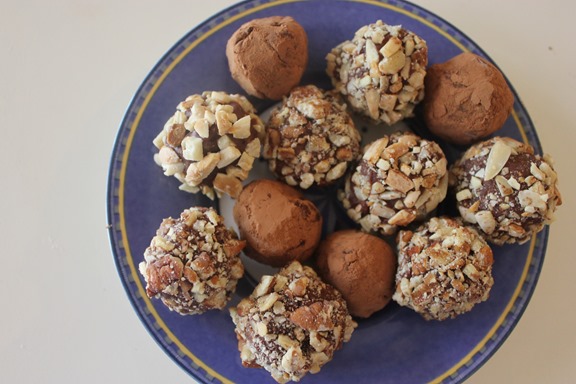
These luscious truffles are only 73 Calories apiece and get only 16% of their calories from carbs…this makes them a great Paleo snack. Use raw chocolate and get way more anti-oxidants!
Raw chocolate can promote cardiovascular function & health- The antioxidant power of flavonoids and essential minerals and vitamins found in cacao can support healthy heart functioning by lowering blood pressure, improving blood flow, lowering LDL cholesterol, and reducing plaque buildup on artery walls.
Raw chocolate Can Neutralize free radicals- High levels of antioxidants protect the body from a buildup of free radicals from sun exposure, pollution, cigarette smoking, etc., which may damage healthy body tissue giving rise to cancer and cardiovascular disease.
Truffles
2 cups (12 ounces) bittersweet chocolate, roughly chopped- preferably raw
1/2 cup coconut cream
1 tablespoons honey
2 Tablespoons Kahlua
1/2 teaspoons vanilla extract
Pinch salt
1 1/2 tablespoons unsalted butter, cut into 8 pieces and softened
For coating;
About 1 cup (3 ounces) raw cocoa powder
1 Teaspoon Stevia
About 1 cup of crushed nuts, if you’re using them
Lightly coat 8-inch baking dish with butter. Make parchment sling by folding 2 long sheets of parchment (or non-stick foil) so that they are as wide as baking pan. Lay sheets of parchment in pan perpendicular to each other, with extra hanging over edges of pan. Push parchment into corners and up sides of pan, smoothing flush to pan.
Microwave chocolate in medium bowl at 50 percent power, stirring occasionally, until mostly melted and few small chocolate pieces remain, 2 to 3 minutes; set aside. Microwave coconut cream in measuring cup until warm to touch, about 30 seconds. Stir honey, vanilla, and salt into coconut cream and pour mixture over chocolate. Cover bowl with plastic wrap, set aside for 3 minutes, and then stir with wooden spoon to combine. Stir in butter, one piece at a time, until fully incorporated.
Using rubber spatula, transfer ganache to prepared pan and set aside at room temperature for 2 hours. Cover pan and transfer to refrigerator; chill for at least 2 hours. (Can be stored, refrigerated, for up to 2 days.)
For coating; Sift cocoa and sugar through fine-mesh strainer into large bowl. Sift again into large cake pan and set aside. If using nuts, crush them up.
Gripping overhanging parchment, lift ganache from pan. Cut ganache into sixty-four 1-inch squares (8 rows by 8 rows). (If ganache cracks during slicing, let sit at room temperature for 5 to 10 minutes and then proceed.) Dust hands lightly with cocoa mixture to prevent ganache from sticking and roll each square into ball. Transfer balls to cake pan with cocoa mixture and roll to evenly coat. Lightly shake truffles in hand over pan to remove excess coating. Transfer coated truffles to airtight container and repeat until all ganache squares are rolled and coated. Cover container and refrigerate for at least 2 hours or up to 1 week. Let truffles sit at room temperature for 5 to 10 minutes before serving.
Why Fish Is Better Than Supplements: Omega-3s from Fish Vs. Fish Oil
Posted: March 19, 2013 Filed under: Food and it's Impact on Our Health | Tags: Paleo Leave a comment
Mar. 5, 2013 — Omega-3 fatty acids found in oily fish may have diverse health-promoting effects, potentially protecting the immune, nervous, and cardiovascular systems. But how the health effects of one such fatty acid — docosahexaenoic acid (DHA) — works remains unclear, in part because its molecular signaling pathways are only now being understood.
Toshinori Hoshi, PhD, professor of Physiology, at the Perelman School of Medicine, University of Pennsylvania, and colleagues showed, in two papers out this week in the Proceedings of the National Academy of Sciences, how fish oils help lower blood pressure via vasodilation at ion channels. In vascular smooth muscle cells, such as those that line blood vessels, ion channels that span the outer membrane of a cell to let such ions as sodium, calcium, and potassium in and out, are critical to maintaining proper vessel pressure.
The researchers found that DHA rapidly and reversibly activates these channels by increasing currents by up to 20 fold. DHA lowers blood pressure in anesthetized wild type mice but not in mice genetically engineered without a specific ion channel subunit.
In comparison, the team found that a dietary supplement, DHA ethyl ester, found in most fish oil pills fails to activate the same channels, and even antagonizes the positive effect of DHA from natural sources, on the cells. The DHA ethyl ester seems to compete with the natural form of DHA for binding sites on the ion channel.

The team concluded that these channels have receptors for long-chain omega-3 fatty acids, and that DHA — unlike its ethyl ester cousin — activate the channels and lower blood pressure.
The findings have practical implications for the use of omega-3 fatty acids as nutraceuticals for the general public and also for critically ill patients who may receive omega-3-enriched formulas as part of their nutrition.
Michael Bauer from Jena University Hospital in Germany, who studies sepsis in a clinical setting, says the findings may encourage physicians to have a closer look at the specific formulations given to sepsis patients as they may contain either the free omega-3 acid or the ester.
The findings also underscore the importance of obtaining omega-3 fatty acids from natural food sources such as oily fish.
Remember also that the less we heat these oils the healthier they are for us. So eat Sushi!!
Gene Discovery Reveals Importance of Eating Your Greens
Posted: March 19, 2013 Filed under: Food and it's Impact on Our Health Leave a comment
From Science Daily
Mar. 3, 2013 — Eating your greens may be even more important that previously thought, with the discovery that an immune cell population essential for intestinal health could be controlled by leafy greens in your diet.
The immune cells, named innate lymphoid cells (ILCs), are found in the lining of the digestive system and protect the body from ‘bad’ bacteria in the intestine. They are also believed to play an important role in controlling food allergies, inflammatory diseases and obesity, and may even prevent the development of bowel cancers.
Dr Gabrielle Belz, Ms Lucie Rankin, Dr Joanna Groom and colleagues from the Walter and Eliza Hall Institute’s Molecular Immunology division have discovered the gene T-bet is essential for producing a population of these critical immune cells and that the gene responds to signals in the food we eat.
Dr Belz said the research team revealed T-bet was essential for generating a subset of ILCs which is a newly discovered cell type that protects the body against infections entering through the digestive system. “In this study, we discovered that T-bet is the key gene that instructs precursor cells to develop into ILCs, which it does in response to signals in the food we eat and to bacteria in the gut,” Dr Belz said. “ILCs are essential for immune surveillance of the digestive system and this is the first time that we have identified a gene responsible for the production of ILCs.”
The research was published today in the journal Nature Immunology.
Dr Belz said that the proteins in green leafy (cruciferous) vegetables are known to interact with a cell surface receptor that switches on T-bet, and might play a role in producing these critical immune cells. “Proteins in these leafy greens could be part of the same signaling pathway that is used by T-bet to produce ILCs,” Dr Belz said. “We are very interested in looking at how the products of these vegetables are able to talk to T-bet to make ILCs, which will give us more insight into how the food we eat influences our immune system and gut bacteria.”
ILCs are essential for maintaining the delicate balance between tolerance, immunity and inflammation. Ms Rankin said the discovery had given the research team further insight into external factors responsible for ILC activation. “Until recently, it has been difficult to isolate or produce ILCs,” Ms Rankin said. “So we are very excited about the prospect for future research on these cells which are still poorly understood.”
ILCs produce a hormone called interleukin-22 (IL-22), which can protect the body from invading bacteria, Dr Belz said. “Our research shows that, without the gene T-bet, the body is more susceptible to bacterial infections that enter through the digestive system. This suggests that boosting ILCs in the gut may aid in the treatment of these bacterial infections,” she said.
ILCs help to maintain a ‘healthy’ environment in the intestine by promoting good bacteria and healing small wounds and abrasions that are common in the tissues of the gut. They may also have a role in resolving cancerous lesions. “The discovery of these immune cells has thrown open a completely new way of looking at gut biology,” Dr Belz said. “We are just starting to understand how important these immune cells are in regulating allergy and inflammation, and the implications for bowel cancer and other gastrointestinal disorders such as Crohn’s disease,” she said.
“Understanding the biology of ILCs and the genes that are essential for generating them will help us to develop methods of targeting these cells,” Dr Belz said. “This might include boosting ILCs in situations where they may not be active enough, such as infections or some cancers, or depleting them in situations where they are overactive, such as chronic inflammatory disease,” she said.


 Meal Delivery Service by Millie Barnes