Scientists Have Found a New, Healthier Way to Cook Broccoli
Posted: February 11, 2018 Filed under: Food and it's Impact on Our Health Leave a comment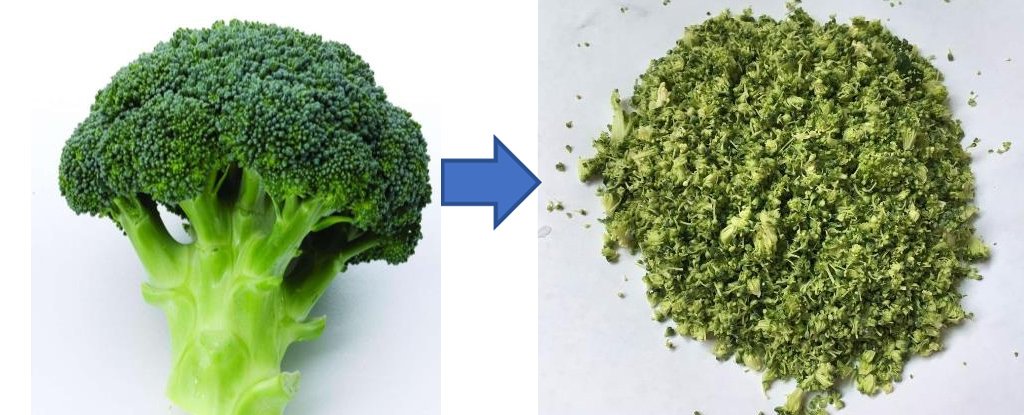
SIGNE DEAN
8 FEB 2018
Lately, broccoli has been gaining a reputation as an excellent vegetable due to its high levels of a particularly beneficial compound called sulforaphane.
With some early-stage studies showing how this compound plays a role in blood sugar control and potentially even has anti-cancer benefits, it’s no wonder that broccoli pills are on the rise.
But a 2011 study has shown that eating the whole vegetable gets you more sulforaphane than taking a supplement – so a team of Chinese researchers has been on the case of finding the best way to cook broccoli.
They have a clear winner – but it’s a hard sell if you have better things to do.
The interesting part is that sulforaphane doesn’t just sit there in the broccoli florets, ready to be consumed. Instead, the vegetable contains several compounds called glucosinolates.
It also contains the enzyme myrosinase, which plants have evolved for defending themselves against herbivores. Through what’s known as ‘myrosinase activity’, the glucosinolates get transformed into sulforaphane, which is what we want.
To kick myrosinase activity into gear, you need to do damage to the broccoli, so you’d think cooking would do the trick.
Unfortunately, studies have shown that common broccoli cooking methods, like boiling and microwaving, seriously reduce the amount of glucosinolates in the vegetable – even if you just zap it for a couple minutes. And myrosinase is super-sensitive to heat, too.
Hence, by far the largest amount of sulforaphane you can get from broccoli is by munching on raw florets. Ugh.
This got the team of researchers thinking about the results of stir-frying – the most popular method for preparing vegetables in China.
“Surprisingly, few methods have reported the sulforaphane concentrations in stir-fried broccoli, and to the best of our knowledge, no report has focused on sulforaphane stability in the stir-frying process,” the researchers noted in their study.
The team bought a bunch of broccoli from the local market and set to work, measuring the levels of compounds in the vegetables as they went.
First, they basically pulverized the broccoli, chopping it into 2 millimeter pieces to get as much myrosinase activity going as possible (remember, it happens when broccoli is damaged).
Then they divided their samples into three groups – one was left raw, one was stir-fried for four minutes straight after chopping, and the third was chopped and then left alone for 90 minutes before being stir-fried for four minutes as well.
The 90 minute waiting period was to see whether the broccoli would have more time to develop the beneficial compounds before being lightly cooked.
And that’s exactly what the team found – the broccoli that was stir-fried right away had 2.8 times less sulforaphane than the one left to ‘develop’ for longer.
“Our results suggest that after cutting broccoli florets into small pieces, they should be left for about 90 minutes before cooking,” the team concluded, adding that they didn’t test it but thought “30 minutes would also be helpful.”
We’re not sure we’re willing to commit to all that effort, though. The team does say they’re looking into ways to reduce the chopping needed, so watch this space – or just eat some raw broccoli.
The study was published in the Journal of Agricultural and Food Chemistry.
9 Reasons You Should Drink Tea Every Day
Posted: February 11, 2018 Filed under: Food and it's Impact on Our Health, Health and Happiness Leave a comment
While everyone continues to go crazy for coffee, we’d like to point your attention toward tea. Yes, tea, the beverage that can soothe you when you want to relax or wake you up when you need an extra push. Basically, tea is great and you should consume it just as much as your beloved java.
Without further ado, here are nine reasons you should drink tea every single day. (We still love you, coffee.)
1. First things first, tea is way easier to make than coffee. – Most of the time, you need a whole machine to make coffee, and you may even have to grind some beans. To make tea, all you need is boiling water, tea and a cup. It’s that simple.
2. Green tea could have the power to help keep your bones healthy.- For elderly folks, studies have shown that drinking green tea may help lessen the risk of osteoporotic bone fractures.
3. Drinking unsweetened black tea could help fix bad breath.- If you have a case of halitosis, you may want to start drinking black tea. Researchers at the University of Chicago College of Dentistry found that black tea contains chemical components called polyphenols that slow down the formation of plaque-causing bacteria. The polyphenols also reduce “acid production levels,” helping to prevent periodontal disease.
4. It’s considered a “necessity of life” in China, so maybe it should be for you, too. – Along with firewood, rice, oil, “chiang,” salt and vinegar, tea is considered one of the things “people cannot do without every day,” according to the proverbial “seven necessities of life” created by the Sung Chinese people.
5. Tea has the power to calm you down.- ome research has suggested that valerian root tea could act as a safe and effective mild natural sleep aid. In a German study, 202 adults either took valerian extract or a prescription anti-anxiety drug. The people who took valerian extract reported “equal improvement in sleep quality, feeling rested and how long they slept as those taking the prescription drug.”
6. It’s kind of a presidential order.- If the President of the United States is obsessed with tea, then you should be too. A 2009 New York Times article that details the changes Obama made to the White House stated that the fridges were stocked with his favorite brand of organic tea: Honest Tea. Apparently, his favorite flavors are “Black Forest Berry” and “Green Dragon.”
7. It could relieve your seasonal allergies before you even get them.- If you’re suffering from seasonal allergies you may want to start your day with a cup of nettle leaf tea. While more research still needs to be done, a preliminary study followed 69 people and found that freeze-dried nettle leaf could “slightly improve allergy symptoms.”
8. Some experts believe that drinking tea can sometimes be better than drinking water. – Researchers at the European Journal of Clinical Nutrition found that tea rehydrates you just as much as water does by replacing fluids in your body. And because tea has antioxidants, there’s an added bonus. “Water is essentially replacing fluid. Tea replaces fluids and contains antioxidants so it’s got two things going for it,” public health nutritionist Dr. Carrie Ruxton said in an interview with BBC.
9. Afternoon tea. Need we say more? – There are parties dedicated to drinking tea, which include sandwiches that are delicious. Here’s a little history: In 1840, Anna Maria Stanhope, the seventh Duchess of Bedford, thought of the genius idea of having afternoon tea “to bridge the lengthy gap between luncheon and dinner.” In order to retain a good (but restrained) appetite for the sweet scones and iced cakes that accompany such an event, the preceding sandwiches that were eaten at this event needed to be filling but too filling. Thus came dainty mini crustless sandwiches that have lighter fillings like cucumber and eggs for a tasty, quick snack.
Eating Leafy Greens Daily May Help Keep Minds Sharp
Posted: February 5, 2018 Filed under: Food and it's Impact on Our Health Leave a comment
To age well, we must eat well — there’s been a lot of evidence that heart-healthy diets help protect the brain.
The latest good news: A study recently published in Neurology finds that healthy seniors who had daily helpings of leafy green vegetables — such as spinach, kale and collard greens — had a slower rate of cognitive decline, compared to those who tended to eat little or no greens.
“The association is quite strong,” says study author Martha Clare Morris, a professor of nutrition science at Rush Medical College in Chicago. She also directs the Rush Institute for Healthy Aging.
The research included 960 participants of the Memory and Aging Project. Their average age is 81, and none of them have dementia. Each year the participants undergo a battery of tests to assess their memory. Scientists also keep track their eating habits and lifestyle habits.
To analyze the relationship between leafy greens and age-related cognitive changes, the researchers assigned each participant to one of five groups, according to the amount of greens eaten. Those who tended to eat the most greens comprised the top quintile, consuming, on average, about 1.3 servings per day. Those in the bottom quintile said they consume little or no greens.

THE SALT
As Bagged Salad Kits Boom, Americans Eat More Greens
After about five years of follow-up/observation, “the rate of decline for [those] in the top quintile was about half the decline rate of those in the lowest quintile,” Morris says.
So, what’s the most convenient way to get these greens into your diet?
“My goal every day is to have a big salad,” says Candace Bishop, one of the study participants. “I get those bags of dark, leafy salad mixes.”
A serving size is defined as a half-cup of cooked greens, or a cup of raw greens.
Does Bishop still feel sharp? “I’m still pretty damn bright,” she tells me with a giggle. She isn’t convinced that her daily salad explains her healthy aging.
“I think a lot of it is in the genes,” Bishop says, adding, “I think I’m lucky, frankly.”
She has other healthy habits, too. Bishop attends group exercise classes in her retirement community and she’s active on several committees in the community.
Many factors play into healthy aging — this study does not prove that eating greens will fend off memory decline. With this kind of research, Morris explains, scientists can only establish an association — not necessarily causation — between a healthy diet and a mind that stays sharp.

Still, she says, even after adjusting for other factors that might play a role, such as lifestyle, education and overall health, “we saw this association [between greens and a slower rate of cognitive decline] over and above accounting for all those factors.”
Some prior research has pointed to a similar benefit. A study of women published in 2006 also found that high consumption of vegetables was associated with less cognitive decline among older women. The association was strongest with greater consumption of leafy vegetables and cruciferous vegetables — such as broccoli and cauliflower.
And, as NPR has reported, there’s evidence that a Mediterranean-style diet — which emphasizes a pattern of eating that is rich in fish, nuts, vegetables and whole grains — may help stave off chronic diseases.
What might explain a benefit from greens?
Turns out, these vegetables contain a range of nutrients and bioactive compounds including vitamin E and K, lutein, beta carotene and folate.
“They have different roles and different biological mechanisms to protect the brain,” says Morris. More research is needed, she says, to fully understand their influence, but scientists do know that consuming too little of these nutrients can be problematic.
For instance, “if you have insufficient levels of folate in your diet you can have higher levels of homocysteine,” Morris says. This can set the stage for inflammation and a build-up of plaque, or fatty deposits, inside your arteries, which increases the risk of stroke. Research shows elevated homocysteine is associated with cognitive impairmentamong older adults.
Another example: Getting plenty of Vitamin E from foods in your diet can help protect cells from damage, and also has been associated with better cognitive performance.
“So, when you eat leafy greens, you’re eating a lot of different nutrients, and together they can have a powerful impact,” Morris says.
Omega-3s from Fish More Effective in Cancer Prevention- NOT Supplements!
Posted: January 31, 2018 Filed under: Food and it's Impact on Our Health, Non-Toxic Choices Leave a commentI have never advised my clients to take any oil based supplements as they are very rancid by the time they are processed. Which renders them carcinogenic. And they lack enzymes that you get when eating whole food.

Toronto, Jan 27 (IANS) When it comes to cancer prevention, Omega-3 fatty acids from fish pack a stronger punch than flaxseed and other oils, new research has found.Marine-based omega-3s are eight times more effective at inhibiting tumor development and growth than plant-based sources, said the study published in the Journal of Nutritional Biochemistry. “This study is the first to compare the cancer-fighting potency of plant-versus marine-derived Omega-3s on breast tumor development,” said David Ma, Professor at University of Guelph in Ontario.”There is evidence that both Omega-3s from plants and marine sources are protective against cancer and we wanted to determine which form is more effective,” Ma said.
There are three types of Omega-3 fatty acids: a-linoleic acid (ALA), eicosapentaenoic acid (EPA) and docosahexaenoic acid (DHA). ALA is plant-based and found in such edible seeds as flaxseed and in oils, such as soy, canola and hemp oil. EPA and DHA are found in marine life, such as fish, algae and phytoplankton.The study involved feeding the different types of Omega-3s to mice with a highly aggressive form of human breast cancer called HER-2. Ma exposed the mice to either the plant-based or the marine-based Omega-3s.”The mice were exposed to the different omega-3s even before tumors developed, which allowed us to compare how effective the fatty acids are at prevention,” said Ma. Overall exposure to marine-based omega-3s reduced the size of the tumors by 60 to 70 per cent and the number of tumours by 30 per cent.However, higher doses of the plant-based fatty acid were required to deliver the same impact as the marine-based Omega-3s, the study said.Omega-3s prevent and fight cancer by turning on genes associated with the immune system and blocking tumor growth pathways, said Ma.Based on the doses given in the study, humans should consume two to three servings of fish a week to have the same effect, he said.–IANSgb/vm
Kale, other Leafy Vegetables may Make your Brain Seem 11 Years Younger
Posted: January 29, 2018 Filed under: Food and it's Impact on Our Health Leave a comment
Look into your salad bowl and think: If a fountain of cognitive youth were flowing in there, would you return every day?
In research that gives new meaning to the expression “salad days,” a study published recently finds that older people who ate at least one serving of leafy greens a day had a slower rate of decline on tests of memory and thinking skills than did people who rarely or never ate these vegetables.
The study was published in the journal Neurology.
After almost five years, regular consumers of such veggies as kale, spinach, collard greens and lettuce enjoyed a mental edge that was the equivalent of 11 years in age.
To be sure, the top tier of leafy-vegetable consumers started with cognitive scores that were slightly higher than those in the bottom tier. That’s probably a testament to the power of lifelong eating patterns.
But over five years, the pattern of mental aging differed markedly in these two groups. Study participants who ate an average of roughly 1.3 servings of leafy greens a day experienced a decline in test performance that was about half as steep as that of participants whose daily consumption was near-zero.
Those stark differences were evident even after the researchers took account of a host of factors that are known to affect mental aging, including age, gender, education, exercise, participation in cognitive activities, smoking and consumption of seafood and alcohol.
Let’s say you and your neighbor are both 75 and similar in most every way: You both completed the same amount of school, take regular walks together, don’t smoke, and gather with friends over an occasional beer.
But while you enjoy a little more than a bowl of greens every day, your pal barely touches the stuff.
This long-running study would predict that at 75, your memory and thinking skills are a notch stronger than your neighbor’s. Over the next five years, hers will decline twice as fast as yours.
By the time you’re both 80, a battery of exercises that test several types of memory, as well as the speed and flexibility of your thinking, may show that your mental age is typical of a 75-year-old’s. Meanwhile, your neighbor’s performance on the same cognitive tests may look more like that of an 86-year-old.
“It’s almost unbelievable,” said Martha Morris, the senior author of the study who studies nutrition and brain health at Rush University Medical Center in Chicago. “Eating these leafy greens was independently associated with slower cognitive decline. That tells you this single food group contains so many nutrients it could be brain-protective.”
Morris and her colleagues identified a small cluster of specific nutrients that appear to offer anti-aging benefits. The leafy greens that participants were asked about are generally rich in vitamin E, folic acid, vitamin K1, lutein and beta-carotene. While inconsistent, research has suggested that some or all of these nutrients may play some role in protecting the brain against inflammation, the accumulation of toxic proteins such as beta-amyloid, and neuronal damage and death.
For lifelong avoiders of leafy greens, the study doesn’t show that a late-life conversion to kale salads and spinach shakes will keep dementia at bay. But Morris said she thinks about nutrition the same way she thinks about exercise.
“You do get immediate benefits from eating healthy foods and exercising,” she said. “And you get long-term benefits.”
Dr. Lon Schneider, a specialist in dementia at the University of Southern California’s Keck School of Medicine, says the new study offers important insights into which nutrients in the Mediterranean diet help support health in aging. But it also underscores the complexity of dementia and cognitive aging — and the absence of a “silver bullet” to counter them.
“Dementia is a complex illness, as so many chronic illnesses are,” Schneider said. “It’s clearly not caused by one thing, and surely its onset and severity are not caused by one thing. This shows the environment is really important. Diet matters.”
We Just Got More Evidence For The Strange Link Between Sugar And Alzheimer’s
Posted: January 29, 2018 Filed under: Food and it's Impact on Our Health Leave a comment
People with high blood sugar stand to experience worse long-term cognitive decline than their healthy peers, even if they’re not technically type 2 diabetic, new research suggests.
The findings are not the first linking diabetes with impaired cognitive functions, but they’re some of the clearest yet showing blood sugar isn’t just a marker of our dietary health – it’s also a telling predictor of how our brains may cope as we get older.
“Our findings suggest that interventions that delay diabetes onset, as well as management strategies for blood sugar control, might help alleviate the progression of subsequent cognitive decline over the long-term,” explain the researchers, led by epidemiologist Wuxiang Xie from Imperial College London.
The researchers sourced their data from the English Longitudinal Study of Ageing, an ongoing assessment of the health of a representative sample of the English population aged 50 and older, which began in in 2002.
For its analysis, the team tracked 5,189 participants – 55 percent women, with an average age of 66 years – assessing their level of cognitive function between 2004-2005 to 2014-2015, spanning several waves of the ELSA study.
In addition, the researchers monitored participants’ levels of HbA1c, aka glycated haemoglobin, a measure of blood sugar control over time.
While all of the participants showed some level of cognitive decline over the course of the assessment due to simply getting older, the researchers found those with greater levels of HbA1c experienced a steepened rate of decline, tracked by tests measuring their cognitive, memory, and executive function abilities.
Other studies have previously shown this kind of link between diabetes and the cognitive decline seen in conditions like Alzheimer’s disease – but never before by using HbA1c.
Interestingly, though, the new findings go beyond just re-establishing the link between diabetes and cognitive decline – because the HbA1c trend was observed in participants regardless of whether or not they were technically diabetic.
Healthy people’s HbA1c levels are lower than 42 millimoles per mole (mmol/mol, or below 6 percent), while diabetic people show readings of 48 mmol/mol or above (6.5 percent or above).
In the middle, people with the precursor condition prediabetes (high blood sugar, but not considered diabetic) have readings between 42 to 47 mmol/mol (6 to 6.4 percent).
What the researchers found is that the associated rate of cognitive decline isn’t limited to just those who are diabetic, but to higher HbA1c counts generally.
“Our findings show a linear correlation between circulating HbA1c levels and cognitive decline, regardless of diabetic status,” the researchers explain.
It’s a bit too early to know what the dietary implications are for people concerned about their blood sugar levels – suffice to say it’s another compelling reason why we should all be watching what we eat so as to prevent developing type 2 diabetes– although even if you do, some clever choices could help you reverse that diagnosis.
“One strength of this large study is that it followed people over time to show a faster decline in memory and thinking in those with poorer blood sugar control,” says Alzheimer’s Research UK’s Chief Scientific Officer, David Reynolds.
“But it does not shed any light on the potential mechanisms underlying this decline.”
While researchers continue to explore what those mechanisms could be, it’s becoming clearer that none of us, diabetic or otherwise, should assume diets high in sugar are necessarily harmless to both body and mind.
“Just because you don’t have type 2 diabetes doesn’t mean you can eat whatever carbs you want,” epidemiologist Rosebud Roberts from the Mayo Clinic, who wasn’t involved in the study, told The Atlantic.
“Especially if you’re not active. [What we eat is] a big factor in maintaining control of our destiny.”
The findings are reported in Diabetologia.
Chicken and Chorizo Paella with Cauliflower Rice
Posted: January 24, 2018 Filed under: Food and it's Impact on Our Health, Recipes Leave a comment
serves 4
1 pound chorizo sausage
2 skinless, boneless chicken breast
3 cups cauliflower rice, divided
1 medium onion- diced
1 large red bell pepper
1 pinch salt ground black pepper to taste
1 T. garlic
1 (14.5 ounce) can Diced Tomatoes
2 bay leaves
1 teaspoons fresh thyme
1/2 teaspoon crushed saffron threads
1/2 teaspoon dried basil
1/2 cup water
2 tablespoons tomato paste
4 cups chicken broth
1 cup frozen peas
1. Place paella pan or large flat-bottomed pan over medium-high heat. Cook and crumble chorizo sausage, stirring to break up chunks, until browned, about 5 minutes. Add chicken; cook and stir with sausage until chicken is no longer pink instead and is browned. Transfer chicken and sausage to a plate.
2. Reduce heat to medium and add 2 cups of the cauliflower rice. Cook, stirring for 5 minutes to brown the cauliflower slightly (this brings out a nutty flavor). Add the diced onion and bell pepper. Season with a pinch of salt, and pepper to taste. Add the minced garlic. Cook 2 minutes longer.
3. Pour canned tomatoes into pan. Add bay leaves, thyme leaves, saffron, and basil. Mix well. Transfer sausage and chicken mixture back to pan. Add water, tomato paste, and bouillon. Stir to combine all ingredients. Bring to a boil; reduce heat to medium-low and cover. Simmer 15 minutes.
4. Remove lid and fold in peas and remaining 1 cup of cauliflower rice. Place frozen tilapia filets on top of the paella mixture, cover and steam for another 10 minutes. Remove lid and check for doneness. You might also like
Nine Things That Can Affect Whether you Get Dementia – and What You Can do About Them
Posted: January 21, 2018 Filed under: Food and it's Impact on Our Health Leave a comment
Dementia is by no means an inevitable result of ageing. In fact, one in three dementia cases can be prevented, according to new findings published in The Lancet.
For the report – the first for The Lancet Commission on Dementia Prevention and Care – my colleagues and I analysed a number of studies and developed a model showing how lifestyle changes, at different ages, can reduce a person’s risk of developing dementia.
We considered potentially reversible risk factors from different life stages – not just old age. Based on this, we propose a new model to demonstrate the possible impact of eliminating these risk factors across the lifespan.
We have detailed the compelling international evidence for nine lifestyle factors that may reduce, or increase, an individual’s risk of developing dementia. These are more childhood education, exercise, being socially active, stopping smoking, managing hearing loss, depression, diabetes, high blood pressure and obesity. Each of these factors could help prevent or delay dementia.
Our message is: be ambitious about prevention; put these into practice. It’s never too early to start education – and never too late to check your blood pressure and stop smoking. Get your blood pressure checked if you are 45 or over and keep it under control. Ask your family if they think your hearing is a problem and, if so, seek medical help. Be physically, mentally and socially active and watch your weight and blood sugar.
Nine factors that play a role in dementia. Credit: Keck Medicine of USC
The greatest healthcare challenge
Dementia is the greatest global challenge for health and social care in the 21st century – and the greatest fear of most people. People are living longer, and dementia is mainly a disease of old age, which means that rates are going up. About 47m people around the world are living with dementia. That figure is expected to rise to 115m by 2050.
In some countries, such as the UK, US, Sweden and the Netherlands, dementia is already being delayed for years in those with more education, so the proportion of older people living with it has decreased, although more people have dementia, simply because there are more old people. In many other countries, the proportion of older people living with dementia has increased.
The 2015 global cost of dementia was estimated to be US$818 billion (£630 billion) and this will continue to increase as the numbers of people with dementia rise. Nearly 85% of costs are related to family and social – rather than medical – care. It may be that future new medical care, including public health measures, may reduce some of this cost.
It’s about doing something now
Giving people information about what to do to prevent dementia is an essential first step, but it is not enough. There is a responsibility, not just as professionals but as a society, to implement this evidence into interventions that are widely and effectively used for people with dementia and their families. So our recommendations need public health as well as individual effort. Interventions have to be accessible, sustainable and, if possible, enjoyable or they won’t be used.
Of course, not everyone will be able to make changes, some changes will not make a difference and some dementia risk is genetic (about 7% of cases) and not currently modifiable. Nonetheless these interventions should delay dementia for some years for many people and this would be an enormous achievement and enable many more people to reach the end of their life without developing dementia.
Effective dementia prevention could transform the future for society. Acting now on what we already know can make this difference happen.
Does It Really Matter What Kind Of Eggs You Buy?
Posted: January 13, 2018 Filed under: Food and it's Impact on Our Health Leave a comment
When it comes to eggs, there are so many options to choose from, and that can make navigating the dairy aisle a bit challenging. Between the different colors, sizes, and labels, you might be left scratching your head at the grocery store.
Don’t let this misunderstanding stop you from whipping up some eggs, as they’re loaded with benefits “All eggs are a good source of protein and vitamin D, have brain-healthy choline, some lutein for healthy eyes, and are naturally gluten-free,” says Maggie Moon, R.D.N., and author of The MIND Diet.
However, conventional eggs don’t give you a ton of extra perks beyond the basic nutritional benefits of eggs. “These eggs come from hens living in cages where they are fed food and water,” says Moon. (Oh, the ambiguity.)
If you’re worried about what’s going in your body, you might want to take a step or two up and purchase eggs with labels offering more distinctions and reassurance. “Nutritionally speaking, what the hen eats impacts the nutrition you get out of the egg,” Moon says. “There are also environmental and animal welfare issues. Depending on what’s important to you, there’s probably an egg out there for you,” she adds.
Out of all the many egg varieties, Moon recommends organic eggs. They offer a bit more protection when it comes to health, as they’ve needed to be regulated by USDA organic standards, says Moon.
“Namely, they come from hens raised on certified organic feed, are cage-free, and free-roaming,” says Moon. Getting that access to organic food can guarantee a safer egg, and the access to move around, without being contained in a cage, makes for a more humane and happier lifestyle for the chicken. What’s more, “antibiotics and growth hormones are never used,” says Moon, so you can be certain there won’t be any whacky additives.
Study: Eating Leafy Greens May Help Prevent Dementia
Posted: January 1, 2018 Filed under: Food and it's Impact on Our Health Leave a comment
Wednesday, December 20, 2017
Love it or hate it, most people know kale is good for you, but there’s now new evidence that it may have benefits for your mind.
Popeye might have had it right all along. Spinach, kale, lettuce – these leafy greens may not taste as good as holiday treats but new research suggests they may help prevent dementia.
A new study in the Journal Neurology found that people who eat just one or two servings of these leafy greens a day tend to have slower rates of memory loss.
The nutrients in these vegetables slow cognitive decline and may help protect your brain from the effects of aging.
Researchers said the effect seen in the study was statistically similar to being 11 years younger.


 Meal Delivery Service by Millie Barnes