So You Want to Grow Veggies Organically AND Be a Vegan?
Posted: April 22, 2012 Filed under: Gardening, Non-Toxic Choices 1 Comment Photo from All About Gardening
What do plants eat? They eat dead animals; that’s the problem. For me that was a horrifying realization. You want to be an organic gardener, of course, so you keep reading ‘Feed the soil, feed the soil, feed the soil…’
Alright. Well what does the soil want to eat? Well, it wants manure, and it wants urine, and it wants blood meal and bone meal. And I…could not face that. I wanted my garden to be pure and death-free. It didn’t matter what I wanted: plants wanted those things; they needed those things to grow…
So, I sort of played a moral hide-and-seek in my mind. I was left with this realization that I could eat an animal directly, or I could pass an animal through a plant and then eat it, but either way there were animals involved in this process. I could not remove animals from the equation.
I had to accept on some level that there was a cycle here, and it was very ancient, and ultimately very spiritual. It was really hard for me to accept the ‘death’ part of that equation. Years. It took me years to finally face it. But there wasn’t any way out of it if I was going to grow things.
Lierre Keith, on gardening as a vegan; October 8, 2009 on Underground Wellness Radio
Vertical garden- DIY
Posted: April 19, 2012 Filed under: Gardening Leave a commentI got the idea when I saw a website for Wooly Pockets, they are awesome, but pricy.
They have some amazing installations. Here are the two that inspired me;

 Pics from the wooly Pocket Site.
I bought a roll of burlap a few years ago and use it for mulching and for weed control sometimes…when I had a square foot garden it entailed a LOT of weeding. Since I switched to all container gardening I spend almost NO time weeding! Hence I have a lot of burlap.
I am using a shoe rack I have an extra of; I have them in all my closets for organization.

I am cutting 27 inch by 11 inch pieces of burlap to use for each insert. I am then folding each one over so that each finished insert will be thick enough to stay damp for moisture retention. I don’t want my plants drying out too much during the day.
Here is what one insert looks like;
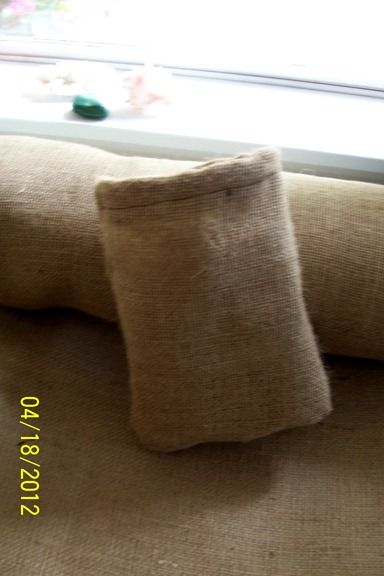
Here is a pic showing how it will look in the rack;

Here’s a few pics I found for inspiration….


The one I am making right now will have strawberries and herbs in it. I want to make another one for succulents but will use a pallet to plant in since I will want it to be permanent…
Utah’s Abstinence-Only Education Law is a Betrayal of Our Children
Posted: April 18, 2012 Filed under: Food and it's Impact on Our Health 1 Comment
Photo: Jeremy McBride/Creative Commons
It looks like the debate over abstinence-only education is rearing its ugly head once more. As reported in USA Today, Utah lawmakers have passed a law mandating that public schools teach abstinence and more abstinence as the only path to safe sex before marriage:
The Utah Legislature has passed a controversial bill mandating an abstinence-only sex education curriculum for Utah public schools or allows schools to drop the subject altogether.
The bill, which passed Tuesday largely along party lines, defines sex education as abstinence-only and bans instruction in sexual intercourse, homosexuality, contraceptive methods and sexual activity outside of marriage.
The bill’s advocates argue that sex education should take place in the home, and that the Government has no place in instructing kids on the finer points of sexual intercourse.
From state schools spreading anti-gay literature to how to appropriately approach the topic of teen sexting, sex education is always likely to be a difficult and politically loaded subject. But to abandon the notion of sex education in schools – except from a very narrow, ideologically-informed perspective – is, to this author at least, a dangerous precedent.
Besides betraying those kids who need advice on safe sex the most (many kids do not have parents who will discuss sex at all; others may not be able to approach family if their sexual preferences don’t fit in with the heterosexual “norm”), it is also a step away from both science and common sense. We don’t need research to tell us that teenage boys masturbate a lot, that teens have strong sexual urges, or that we are biologically programmed to act on those urges.
Some of us may wish that wasn’t so, but it is. To simply ask kids to wait until marriage, and assume that everyone will, is wishful thinking in the extreme. As reported in OnlineAthens last year, research suggests that abstinence-only education may even be counterproductive:
The researchers also looked at the influence of other factors on teen pregnancy, such as socioeconomic status, education level, access to Medicaid waivers and ethnicity. Those factors can influence teen pregnancy rates, but the researchers still found that the more abstinence is emphasized in a state’s official sex education programs, the higher teenage pregnancy and birth rates are.
The states with the lowest teen pregnancy rates were those that prescribed comprehensive sex and/or HIV education, covering not only abstinence, but also proper contraception and condom use, said Stanger-Hall, a professor of plant biology and biological sciences in the Franklin College.
To be fair, there have also been some studies – as reported in this US News story on the abstinence-only debate – that have shown some students wait slightly longer before having sex if they attend an abstinence-only program. But to measure how long teens wait before having sex as the primary unit of success is, to my mind, a little simplistic. Unless abstinence-only education can encourage the vast majority of kids to abstain until married, then we still need to address the safety, well-being and health of those who do not choose to wait.
Abstinence has a clear place in the broad toolbox of sex education – and i hope my own kids wait until they are truly ready. (I am not hypocritical enough to hope that they will be married.) Other parents, with different beliefs or religious perspectives, may encourage their kids to wait until they are indeed married – that is both their right and their responsibility. But the only way that absinence-only education in schools can be justified is from an ideological perspective. And as shown in thereligious battle over a faith-based banner, state schools have no place picking ideological sides.

A Great post from 
Americans Eat the Cheapest Food in the World, But What is It Really Costing Us?
Posted: April 18, 2012 Filed under: Food and it's Impact on Our Health Leave a comment
USDA data shows that in 2010 Americans spent 9.4 percent of their disposable income on food, which equals 5.5 percent at home and 3.9 percent eating out. As a nation, we spend far less of a percentage on our food than we ever have before. For example, in 1929 we spent 23.4 percent of our disposable income on food, which equaled 20.3 percent at home and 3.1 percent eating out.
Not only are we spending much less of our money on the foods we eat, we eat out far more than ever before, buying fatty processed and fast foods laden with saturated fats, sodium, and added sugars. When compared to other countries, our food is by far the cheapest.
Click HERE to Read Complete Article.
If the Food’s in Plastic, What’s in the Food?
Posted: April 18, 2012 Filed under: Going Green; How and Why..., Non-Toxic Choices 1 CommentBy Susan Freinkel
In a study published last year in the journal Environmental Health Perspectives, researchers put five San Francisco families on a three-day diet of food that hadn’t been in contact with plastic. When they compared urine samples before and after the diet, the scientists were stunned to see what a difference a few days could make: The participants’ levels of bisphenol A (BPA), which is used to harden polycarbonate plastic, plunged — by two-thirds, on average — while those of the phthalate DEHP, which imparts flexibility to plastics, dropped by more than half.
The findings seemed to confirm what many experts suspected: Plastic food packaging is a major source of these potentially harmful chemicals, which most Americans harbor in their bodies. Other studies have shown phthalates (pronounced THAL-ates) passing into food from processing equipment and food-prep gloves, gaskets and seals on non-plastic containers, inks used on labels — which can permeate packaging — and even the plastic film used in agriculture.
How the Law Stops Us Sharing, And What We Can Do To Change It
Posted: April 18, 2012 Filed under: Food and it's Impact on Our Health Leave a comment
Sustainable Economies Law Center/Video screen capture
From sharing your storage space to renting out your dog, there’s a renewed interest in sharing, borrowing, and lending. And while some of it is profit-motivated, some—like these neighbors who removed their fences and started a garden—is done purely for the purpose of building community and pursuing mutual self-interest.
In either case, though, folks are doing things a little differently than our mainstream economy has taught us to do. And as demonstrated by the recent news that Air BnB now owes hotel tax in San Francisco, or the citizens forced to pour bleach on a farm-to-table dinner, doing things differently can create legal gray areas which can get in the way of more sharing.
To Read More- CLICK HERE.
Most Vegetarians Return to Eating Meat
Posted: April 17, 2012 Filed under: Food and it's Impact on Our Health Leave a comment It appears that for the vast majority of vegetarians, abstaining from meat is only a phase rather than a permanent life choice.
According to Psychology Today, roughly 75% of vegetarians eventually return to eating meat with 9 years being the average length of time of abstinence.
The most common reason former vegetarians cited as the reason they returned to meat was declining health. One vegetarian turned omnivore put it very succinctly:
“I’ll take a dead cow over anemia any time.”
Other former vegetarians cited persistent physical weakness despite eating a whole foods, PETA recommended diet while others returned to meat at the recommendation of their doctor.
Another big reason that vegetarians returned to meat was due to irresistible cravings. This occurred even among long term vegetarians. Respondents talked about their protein cravings or how the smell of cooking bacon drove them crazy.
One survey participant wrote:
“I just felt hungry all the time and that hunger would not be satisfied unless I ate meat.”
Another put it more humorously:
Starving college student + First night back home with the folks + Fifty or so blazin’ buffalo wings waiting in the kitchen = Surrender.
Sustainably Raised, Grass-fed Meats Prove Enticing to Vegetarians
About half of vegetarians originally gave up meat for ethical reasons. Pictures of confined animals standing on concrete in their own excrement and the stench of factory farms on country roads from 5 miles away is no doubt plenty of reason to turn away from meat. Some former vegetarians, however, have recognized and embraced the grass-fed movement back to sustainable and humanely raised, cruelty free meats as a real ethical alternative.
Some of these converts back to meat view buying grass-fed beef and other sustainably raised animal foods as a new form of activism similar to their boycott of factory farmed meats when they were vegetarians.
To Read the Rest of the article- CLICK HERE.
Fences of Fruit Trees
Posted: April 17, 2012 Filed under: Gardening Leave a comment“Almost anyone who has a backyard or garden would do well to plant fruit trees for the years ahead. Most fruit trees, though, take more years to mature than most of us have to prepare, and take up more space than most of us have in cities or suburbs. Luckily, only a few centuries ago master gardeners developed a way to cultivate fruit in narrow spaces – one that yields more fruit, more quickly, and with a longer growing season.
Espalier is a method of growing a dwarf fruit tree along a wall or fence, binding it for support, and bending the branches to follow certain lines, as Japanese artists do with bonsai trees. Most gardeners started espaliers with a “maiden,” a one-year-old sapling that had not yet forked, and tied it to a staff of wood to keep it straight. Then they tied the desired branches to the fence or wall as they emerged, bending and pruning aggressively as the tree grew.
With the tree’s natural growth concentrated into only two dimensions, it creates many spurs looking for a chance to spread, creating more flowers and fruit than their conventional counterparts, and earlier in the trees’ life. The fruit can be picked casually while standing or sitting, with no need for the ladders or devices needed to pick many other fruit trees, and no risk of injury. Growing a tree against a south-facing wall has another advantage; not only does the tree receive maximum light and heat, but the thermal mass of the wall absorbs the heat and provides shelter from the wind. In this way trees get a longer growing season, and can grow in cooler climates than they would ordinarily tolerate.”
Read more: Fences of fruit trees. Related: Irish hedgerows.
What To Buy Organic…
Posted: April 17, 2012 Filed under: Food and it's Impact on Our Health, Non-Toxic Choices 1 Comment
Rethink Your Drink
Posted: April 17, 2012 Filed under: Food and it's Impact on Our Health, Non-Toxic Choices Leave a comment
The consumption of sugar-sweetened drinks is associated with obesity, type 2 diabetes, dental cavities, cardiovascular disease, low nutrient levels….
And ALL that plastic…ick!


 Meal Delivery Service by Millie Barnes