Grilled Chinese Asparagus
Posted: May 24, 2013 Filed under: Recipes | Tags: Paleo Leave a comment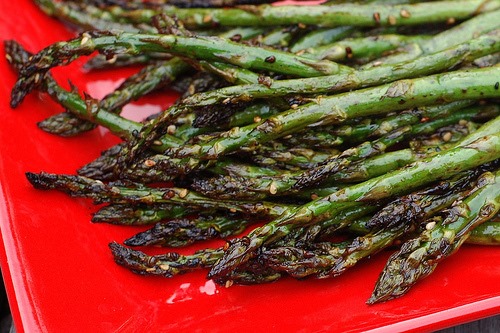
1 bunch asparagus- cut bottom third off on a diagonal, then cut in half lengthwise
1 teaspoon toasted sesame oil
1 Tablespoon Bragg’s Amino Acids
Heat a wok or large cast iron skillet to very hot. Add sesame oil and heat to almost smoking. Add asparagus and do NOT stir for a few minutes, you want the asparagus to begin browning. Then toss in pan and continue cooking for about 2 or 3 minutes, until asparagus is bright green. Add Bragg’s (or gluten free tamari) and stir briefly. Serve immediately.
Cut Lemons Lengthwise to Get More Juice
Posted: May 19, 2013 Filed under: In The Kitchen with Millie- How To's 8 Comments From Lifehacker
When you need lemon juice for a recipe, nothing beats fresh-squeezed, but it’s always a struggle to coax a lot of juice out of the fruit. As it turns out, the secret is to cut the lemon lengthwise.
Ian Knauer at Gourmet demonstrated this surprising trick by cutting two lemons, one lengthwise, and one the “normal” way, across its equator. He then juiced the lemons, and found that the one cut lengthwise yielded him nearly three times as much juice. For added juice, he also recommends warming the lemon up in the microwave for a few seconds if it’s coming from your fridge. Once it’s warm, be sure to give it a firm roll on the counter too before you cut. Lemons cut the “wrong” way might work a little better with a handheld reamer, but if you’re using a citrus juicer, or just squeezing by hand, there aren’t any downsides to cutting lengthwise. Click through the source link to check out the video.
RELATED

Squeeze More Juice Out of Lemons by Rolling and Crushing Them First
If you want to get the most juice out of a lemon—short of using a dedicated citrus juicer (like semi-professional lemon juicer Adam Pash does), break … Read…
Red Potato Salad with Bacon and Roasted Red Onions
Posted: May 17, 2013 Filed under: Recipes | Tags: Paleo Leave a comment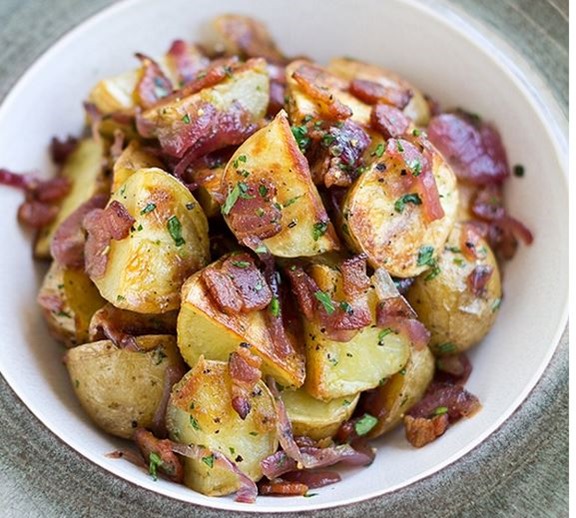
Serves 4
2 pounds red potatoes
1 1/2 red onions- cut in half moons
2 Tablespoons butter
2 teaspoons oregano
1 teaspoons cumin
12 slices bacon
1 cup fresh mayonnaise
3 tablespoons lemon juice
1 cup frozen peas
1 Tablespoons Dijon mustard
1) Steam potatoes, toss with butter and spices, salt and pepper. Roast, uncovered, for 30 minutes.
2) Toss onions with melted butter, grill onions on the grill. this is easy if you use stainless steel basket designed to grille fish. Or you can roast them in the oven with melted butter until starting to brown. Stir occasionally.
3) Cool potatoes and onions. Crumble bacon and add bacon and the bacon grease to the salad. Add mayonnaise to desired moistness. Add lemon juice, Dijon mustard, salt and pepper, peas. Toss gently.
Collards (or Kale) with Bacon and Black-eyed Peas
Posted: May 16, 2013 Filed under: Recipes | Tags: #Calcium, #Collards, Paleo 3 Comments
1 can black-eyed peas
1/2 onion- medium diced
1 teaspoon garlic
1/2 red bell pepper
1 teaspoon thyme
1 teaspoon cumin
1/2 teaspoon smoked paprika
Salt and Pepper to taste
1 pound collards- sliced thin
1 whole Vidalia onion- cut in half moons
4 Tablespoons Cider Vinegar
salt and pepper to taste
4 Tablespoons butter
1) Heat butter in saucepan, sauté’ onions until caramelized. Add red pepper and sauté’ until softened. Add garlic and sauté’ for 3 or 4 minutes. Add seasonings and sauté’ until herbs smell aromatic, 2 or 3 minutes.
2. For Greens: Bring 2 quarts water to boil in Dutch oven or large, deep sauté pan. Add salt and greens; stir until wilted. Cover and cook until greens are just tender, about 6 minutes; drain in colander. Rinse with sprayer or under faucet with cold water, make sure all the greens are cool. Let drain real well, until you cannot squeeze any more water out of the greens.
3) Add butter to hot pan, sauté onion until softened. Add black-eyed peas when they are ready, fold greens in, mixing well. Adjust seasonings; salt and vinegar.
Crab Quinoa Salad
Posted: May 16, 2013 Filed under: Recipes | Tags: gluten-free, Paleo Leave a comment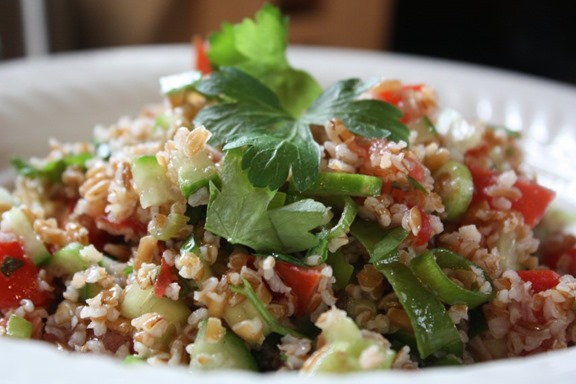
I demonstrated this dish in cooking class one night and my students had taken one look at the recipe and said they would never make it, they said it had too many ingredients!. But after tasting it they agreed that this dish was REALLY worth the effort!!
serves 4
1 cup quinoa
3 cups water
1 Granny Smith Apple – diced small
2Roma Tomatoes- diced small
1 small cucumber- deseeded and diced small
3 scallions- sliced thin, diagonally
2 Tablespoons spearmint, chopped
1/3 cup basil- chiffonade
1/3 cup sliced black olives
1/2 cup fresh mayonnaise
2 Tablespoons lemon juice
1 pound lump crab meat
1 small yellow tomato
salt and pepper to taste
1) Toast quinoa on stovetop, in heavy skillet, shaking pan, until lightly browned. Transfer to a bowl, pour in boiling water, cover tightly and let sit for about an hour. Or you can simmer on low until liquid is completely absorbed.
2) Combine all ingredients with quinoa after if has cooled. Fold in crab and season to taste. cover and refrigerate for 2-4 hours.
Breakfast Frittatas!
Posted: May 6, 2013 Filed under: Recipes | Tags: breakfast, Paleo 1 Comment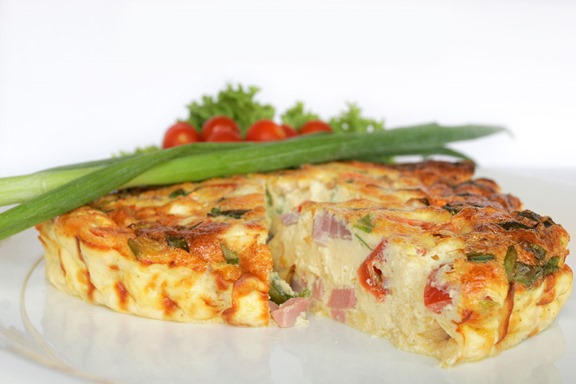
People often complain that they get sick of eggs every day for breakfast. I personally cannot relate- I can eat eggs any time, any way! Scrambled, poached, fried, in egg drop soup, on French toast, deviled, boiled..But an all time favorite of mine is the breakfast frittata. I make them in a spring form pan, make them very deep dished with plenty of veggies…and have breakfast already made for several days! With a serving of fruit or coconut milk yogurt..they are a perfect breakfast!
Deep Dish Breakfast Frittata
Makes 8 slices
1/2 cup butter
2 whole potatoes- washed, grated
1 Vidalia or Spanish onion- diced
1 red bell pepper- matchstick cut
1 yellow pepper- matchstick cut
1/2 pound mushrooms- sliced
1 1/3 teaspoon thyme (or dill if you are using smoked salmon)
20 organic eggs
6 ounces rice mozzarella (optional)
10 slices bacon (optional or leave out if using smoked salmon on top of already baked Frittata)
salt and pepper to taste
1) Sauté, mushrooms, onions, peppers and herbs until softened. place grated potatoes on top of other veggies AND DO NOT STIR! turn to low, cover and let simmer 10 minutes. Season with herbs, salt and pepper.
2) Prepare a spring form pan with foil just as if you were doing a cheesecake. Spread grated potatoes mixture in your buttered spring form pan.
3) Add grated cheese, then pour eggs over it. Bake at 350° until eggs are done. Approximately 25 to 35 minutes, until eggs are just set in the middle.
I offer these on the Meal Delivery Service for my clients to have for breakfast.
High-Carb Intake in Infancy Has Lifelong Effects, Study Finds
Posted: May 6, 2013 Filed under: Food and it's Impact on Our Health Leave a commentAlthough the American Academy of Pediatrics recommends no solid food for the first 4 to 6 months, I heartily disagree! For the first year of life an infant should only be fed breast milk, then fruits, then veggies, then meat…

Mar. 19, 2013 — Consumption of foods high in carbohydrates immediately after birth programs individuals for lifelong increased weight gain and obesity, a University at Buffalo animal study has found, even if caloric intake is restricted in adulthood for a period of time.
The research on laboratory animals was published this month in the American Journal of Physiology: Endocrinology and Metabolism; it was published online in December.
"This is the first time that we have shown in our rat model of obesity that there is a resistance to the reversal of this programming effect in adult life," explains Mulchand S. Patel, PhD, SUNY Distinguished Professor of Biochemistry and associate dean for research and biomedical education in the UB School of Medicine and Biomedical Sciences.
The research has applications to the obesity epidemic in the U.S., particularly as it relates to infant nutrition, Patel explains.
"Many American baby foods and juices are high in carbohydrates, mainly simple sugars," he says. "Our hypothesis has been that the introduction of baby foods too early in life increases carbohydrate intake, thereby boosting insulin secretion and causing metabolic programming that in turn, predisposes the child to obesity later in life."
For more than 20 years, Patel and his UB colleagues have studied how the increased intake of carbohydrate-enriched calories just after birth can program individuals to overeat.
For their rat model of obesity, the UB researchers administered to newborn rat pups special milk formulas they developed that are either similar to rat milk in composition, (higher in fat-derived calories) or enriched with carbohydrate-derived calories.
"These pups who were fed a high-carbohydrate milk formula are getting a different kind of nourishment than they normally would," explains Patel, "which metabolically programs them to develop hyperinsulinemia, a precursor for obesity and type 2 diabetes."
At three weeks of age, the rat pups fed the high-carbohydrate (HC) formula were then weaned onto rat chow either with free access to food or with a moderate calorie restriction, so that their level of consumption would be the same as pups reared naturally.
"When food intake for the HC rats was controlled to a normal level, the pups grew at a normal rate, similar to that of pups fed by their mothers," Patel says. "But we wanted to know, did that period of moderate calorie restriction cause the animals to be truly reprogrammed? We knew that the proof would come once we allowed them to eat ad libitum, without any restrictions.
"We found that when the HC rat undergoes metabolic reprogramming for development of obesity in early postnatal life, and then is subjected to moderate caloric restriction, similar to when an individual goes on a diet, the programming is only suppressed, not erased," he says.
This is due to developmental plasticity, which extends from fetal development into the immediate postnatal period. According to Patel, previous research by others has revealed that during the immediate postnatal period, pancreatic islets and neurons continue to mature.
"That’s why an altered nutritional experience during this critical period can independently modify the way certain organs in the body develop, resulting in programming effects that manifest later in life," Patel says. "During this critical period, the hypothalamus, which regulates appetite, becomes programmed to drive the individual to eat more food. We found that a period of moderate caloric restriction later in life cannot reverse this programming effect."
Therefore, addressing the obesity epidemic in the U.S. requires true lifestyle change, including permanent caloric restriction.
"As long as you restrict intake, you can maintain normal body weight," he says.
To avoid metabolic reprogramming that predisposes a baby to obesity later in life, he says that parents should follow the American Academy of Pediatric guidelines, which state that solid foods should not be given before a baby is 4-6 months old.
Patel adds that this study involved only moderate caloric restriction; he and his colleagues would like to study whether or not more severe caloric restriction for a limited period can result in true metabolic reprogramming to normal metabolic phenotype.
Co-authors with Patel are Malathi Srinivasan, PhD, research assistant professor and Saleh Mahmood, PhD, post-doctoral associate, both in the UB Department of Biochemistry.
The work was supported by the National Institute for Diabetes and Digestive and Kidney Diseases.
Fennel and Tangerine Salad
Posted: May 6, 2013 Filed under: Recipes | Tags: Paleo Leave a comment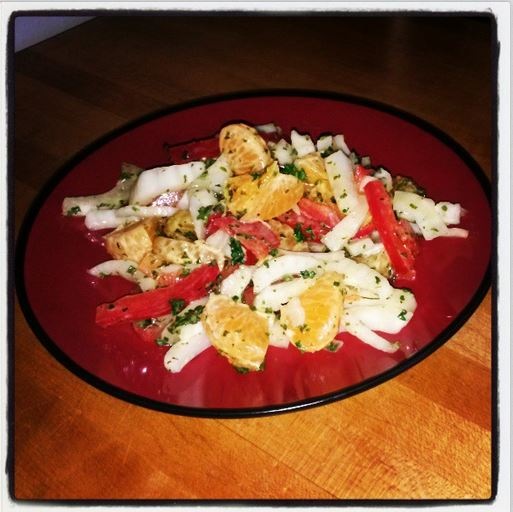
Fennel and Tangerine Salad
Serves 4
2 large fennel bulbs
2 Tangerines
1/4 cup chopped parsley
1/2 red bell pepper- cut in small matchsticks
4 each scallions- cut in thin diagonals
1/4 cup olive oil
4 T. lemon juice
2 T. Dijon mustard
salt and pepper
1) Cut the fennel in small matchsticks. Toss the fennel, peppers, tangerines, and parsley in a large bowl.
2) Whisk the oil, lemon juice, mustard, and and seasonings together in a small bowl. Toss the dressing with the fennel mixture and season with salt and pepper to taste. Serve.
15+ Ways To Make A Trellis
Posted: April 27, 2013 Filed under: Gardening | Tags: DIY, Gardening Leave a commentFrom TipNut
Here’s a bunch of ways you can make trellises for both vegetable gardens and flower beds, many are simple in design (and to make) while others are more detailed and fancy (with a bit of woodworking skill required). Quite a selection of materials used such as bamboo, wooden poles and sticks, lumber, wire mesh, etc. A couple of the projects below have been featured previously on Tipnut and moved here for better organization. Enjoy!

With Wire Mesh: Shares a tip to install panels of welded wire mesh along fencing.
Wood A-Frame: With some plywood, hardware cloth, fasteners, basic tools, and a little time, you can fashion a hinged A-frame trellis to support peas, beans, tomatoes, or other vining plants.


Invisible Tip: Eyehooks screwed into siding or walls and networks of medium-gauge wire hold delicate vines. (Heavier climbers, such as roses, will need heavy-gauge wire.) Grid design examples included.
DIY Bamboo Project: Made with several canes of bamboo in different diameters and lashing cord.


Portable Design: Made with lumber and chicken wire. Free pdf tutorial download available.
Rustic Design: Simple project made from prunings or substitute 1-by-1 stakes from the nursery or lumberyard. The finished structure is 7 feet 4 1/2 inches tall and 3 feet wide.


Topper Plans: Three different designs to choose from to top a classic design trellis, free pdf downloads.
For Roses: The instructions are for an eight-by-four-foot trellis with a three-quarter-inch thickness, the strips of wood are spaced three inches apart.


Easy To Store: When the season ends, either untie and store the trellis or leave it in place year-round for visual interest.
Rustic Ti-pi Tutorial: Made with three to six poles, 1 1/2″ to 2 1/2″ in diameter and 4′ to 7′ long, copper or galvanized steel wire and grapevines or flexible willow branches.


With Lattice Fencing: Here’s how to turn lattice fencing and 2x4s into a three-panel focal point. Plan diagram included.
Bamboo & String Tee-Pee: Made to accommodate peas and cucumbers using scrap bamboo sticks tied together with cotton string.

For MORE Trellises…Read Complete Article
12 Lifesaving Canning Rules
Posted: April 27, 2013 Filed under: Gardening, Going Green; How and Why..., In The Kitchen with Millie- How To's | Tags: canning, Gardening Leave a commentIf you can your garden bounty and especially if you are new to canning this could be handy.
Canning rules to keep your food safe from Modern survival blog will give you tips you need to can safely.
One thing I didn’t know was that you can’t do raw pack for stewed tomatoes. Good thing I haven’t done it yet but I probably would have if I was worried about losing a whole lot of ripe tomatoes. Good info.
photo credit modernsurvivalblog.com


 Meal Delivery Service by Millie Barnes