You Can’t Give From an Empty Well
Posted: May 22, 2015 Filed under: Food and it's Impact on Our Health | Tags: #Covey method, #Goal setting, #happiness, #productivity Leave a commentnourish – transitive v. To provide with food or other substances necessary for life and growth; feed.
- to foster the growth or development of;

Earlier this week I posted about taking good care of yourself, making time and getting organized so you can nourish yourself. It is crucial to prioritize what is most important to you. I realized early in life, and especially when I became a single parent, how crucial it was to put myself first in order to have enough energy to meet all of my responsibilities. I began my business 32 years ago and became a single parent at the same time. I remember standing in a group of young mothers one time and saying that it was important to put your needs first, in order to better meet the needs of your family. It got heated, everyone pretty much went in to attack mode…saying that kids come first…no matter what! I disagreed, still do.
You cannot give from an empty well. In our culture, women are taught to put others first, to nurture, to always be available emotionally. But this takes a toll, both emotionally and physically. I am NOT saying to be self centered, to but your needs way above others. But being selfish means meeting your needs as well as others…and that takes energy and patience. We have those when we are mature, well rested, fulfilled.
What that takes is learning to say NO! It is an acquired skill, we have to practice it, hone it. Let’s face it, we all want to be liked, to be accepted, to please people. But we cannot do so at our own expense.
This is especially true when we run our own businesses, have busy careers.
Here’s the scene: you’re busy as all heck working your buns off.
Through your blood, sweat and tenacity — you’ve gained a lot of experience and expertise. Things are really starting to come together. Everyone you know is taking notice, but unfortunately…
You’re now drowning in constant requests from friends who want to “have coffee and pick your brain.”
But the truth is…You don’t have time for coffee right now. You don’t want to have your brain picked. And, if you did, you’d wanna get paid for it!
If you’re tired of ignoring these emails and feeling guilty about it, here are some ways to handle it;
- When a friend calls and asks to pick your brain or a prospective client wants to p[ick your brain you can ask, “Do you want to become a client or do you just have a quick question.
- When someone wants to interview you or pick your brain..refer them to your blog or list of services or ask them if they would like to book a consultation. Refer them to the info and payment methods on your business site.
- Tell them that would be great and to pick a payment method.
I am a Chef and Nutrition Coach. I cannot tell you how often people call or email to ask if they can pick my brain about how I started my business, can I email a recipe, what are my recommendations for cookware, knives, brands of food. Twice this month I have received looong emails from college students asking me to answer their list of questions as to how I run my business. I get friends asking me to help them research and buy phones and computers.
And a never ending list of requests, mostly from perfect strangers, asking how to heal, how to go gluten free. People want to tell me how they eat, ask for advice…many times while I am out socially. or while I am working. People ask me to give speeches, lectures…mostly for free!
Don’t get me wrong, I LOVE helping people heal, motivating others, BUT I NEED TO MAKE A LIVING. And I need to time to do yoga, sit in the sun, enjoy my children and friends…in other words..live my life.
So practice saying no. Ask yourself what you really want. Use a goal setting method (I personally have used the Covey method for 22 years and LOVE IT), and stick to it.
Plan YOUR time first, then plan work and family stuff. Find balance by putting yourself first..it leads to happiness and you’ll be more productive!
Get Organized…To Get Healthy!
Posted: May 20, 2015 Filed under: Food and it's Impact on Our Health, In The Kitchen with Millie- How To's | Tags: #, #cooking from scratch, #saving time, Paleo Leave a comment
One of the reasons people give the most often, when I mention making all my own food from scratch, is that they do not have time to cook. I say you don’t have time not to!
Let me explain that.. Not eating correctly and truly nourishing yourself means not having as much energy, not sleeping as well, not having the mental acuity and emotional poise that reflects great health. You will get sick more often, experience colds and allergies more often, you will gain weight, be tired…all the things that most of my clients tell me they experience.. that people think are normal as we mature!
Eat better gives you great health and high energy. This save saves lot of time! You will wake up early, raring to go, have high playful energy all day, have the energy to exercise and then sleep well at night. Since radically changing my diet 29 years ago, becoming truly well nourished I wake up raring to go on about 6 to 7 hours sleep.
Getting up early means sipping tea of coffee as the sun comes up, enjoying the morning as I start work, without rushing. Plenty of time to cook breakfast. I turn the pan on, shower, cook bacon while getting dressed. Then eggs, cut up an avocado maybe, or get some coconut milk yogurt I made over the weekend. Sit and eat breakfast while reading. Off and running for the day, or gardening…I stop for lunch about 2-is. Whatever I made for dinner the evening before; or some roasted chicken. With some leftover greens and sliced tomato. Dinner will be a steak, roasted chicken, salmon, whatever I have or have defrosted fro dinner. It doesn’t have to be ornate.
Making all my own food from scratch and hardly ever eating out means I have to stay organized. But feeling WAY better through making ME a priority allows me to feel great all the time. never run out of energy.
I few things you can do that help get through the week;
It takes a little planning ahead, but that allows you to eat well all week and actually feel great…
Sunday Is Not a Day of Rest
If you are going to cook dinner every day of the week, you will have to do most of your shopping and some preparing ahead of time. This is particularly the case if you have a very busy schedule.
Yes, this means planning menus for the week. Don’t wince. This is good. It means freedom from the painfully frequent question, “What are we going to eat tonight?” By Sunday, you will know.
Getting some meals ready ahead of time makes sense for people who like to cook, because weekend preparation can be as languorous as you allow.
In spring and summer, when I want to go dancing, or am swamped at work…or my herb garden calls for fussing, I keep it simple. Advance work might include buying the ingredients for a composed salad and chopping and roasting whatever can be done ahead of time without sacrificing freshness. I might use the most basic techniques: steaming artichokes, for example, instead of braising them.
In winter, depending on my mood, I could make a chuck roast in wine and herbs (10 minutes of browning and stirring, three hours in the oven) instead of concocting a stew that demands that the meat be cubed, floured and browned and copious vegetables be diced. Or, I could do just the reverse.
As often as not, I don’t cook the food right away but prepare it for the moment it is to be popped into the oven. For food that looks great and entices children, I find it is easy to stuff a flank steak or chicken breasts ahead of time, secure them with twine, wrap them well and just roast them when I walk in the door.
Whatever the season, my habit is to get at least two meals done on Sunday. For at least one of these meals I make a double portion and freeze half to serve a week from the coming Tuesday. Among my standbys are stews (chicken and vegetable, or beef), Chicken breast; grilled or pan seared, fish cakes, pesto (in ice cube trays) and soups, especially lentil-vegetable, minestrone and butternut squash.
If you are disciplined, shopping and cooking (not including time in the oven) can be kept to two hours on Sunday, setting you up for dinners through Tuesday.
Also, make salad dressings and mayonnaise for the week; they only take 5 minutes apiece as most of the work is in the blender or food processor.
The Foods of My GrandMother
As a child, in my grandmother’s house, there was always a leftover roast chicken, meatloaf or pot roast in our refrigerator. Always. The reliability of these offerings was something of a joke among my friends, but they did end up in my kitchen stuffing themselves after every school event. Who could blame them? Even today few foods are more satisfying than my grandmothers warmed brisket!
Naturally, when I began to cook I disdained such pedestrian offerings or reconfigured them to epicurean standards.
I have now come full circle, and appreciate the genius of my grandmother’s approach. I have four core dishes: marinated flank steak, pot roast, roast chicken and chicken stew. I could now do each of these dishes in my sleep. Perhaps I have. My basic roast chicken is covered in butter and sprinkled with kosher salt and paprika, pepper and that’s that.
Every week I make at least one of those dishes and leave it in the back of the fridge to do emergency duty. And like a great friend, it never fails me in a crisis.
Perhaps by now you have noticed we are not all the way through the week. I’ve helped you plan Sunday, Monday and Tuesday. If you’ve done your job well, Thursday will be leftovers night. On Saturday everybody’s eating Friday nights leftovers.
But what about Wednesday?
This is why you must memorize five or six dishes that can be prepared in a snap. If you use only one a week, say on Wednesday, they will not get old or tired.
As someone who watches carbs, I make here a painful admission: baked sweet potatoes are the best bet. I can use stocks or leftover soups on them; baked or mashed. Olives, sautéed red peppers and onions are favorite additions. My older daughter is partial to potatoes carbonara with turkey bacon and eggs.
Quickly seared meats like lamb chops, seafood and thin steaks are satisfying (cooked with little more than butter, kosher salt, fresh ground pepper and a few seasoning) and just right over spicy prewashed greens and served with a sweet potato (pop that in the oven the minute you walk in the door). (Children may omit greens and go straight for the baby carrots.) The trick for flavor here is a salad dressing with an extra twist, like puréed sun-dried tomatoes or chipotle peppers. The dressing, of course, is the ones you made ahead, on Sunday.
Fast vegetables are also important. Asparagus can be tossed with coconut oil and roasted in seven minutes. Prewashed baby spinach can be tossed in the wok and on the table in about as much time. Shredded coleslaw or broccoli stem mix from bags can be assembled in under five (remember that mayo you made Sunday??)
See it is possible!!
Sautéed Spinach with Leeks and Hazelnuts
Posted: May 17, 2015 Filed under: Recipes Leave a comment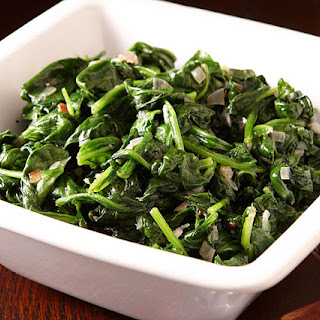
Serving Size : 4
3 bags baby spinach (about 16 cups) — (6-ounce)
1/4 cup water
2 tablespoons unsalted butter
2 small leeks — white and light green parts halved lengthwise, washed, and sliced thin (about 3 cups)
sea salt
1/2 teaspoon grated zest and 1 tablespoon juice from 1 lemon
1/8 teaspoon ground nutmeg
2 tablespoons coconut cream
1/3 cup chopped hazelnuts — toasted
Briefly wilt spinach and drain in colander. Using back of rubber spatula, gently press spinach against colander to release excess liquid. Transfer spinach to cutting board and roughly chop. Return spinach to colander and press again.
Heat butter in 10-inch skillet over medium heat until foaming subsides. Add leeks and cook, stirring occasionally, until softened, 10 to 15 minutes, adding 1 teaspoon water to skillet if leeks begin to color.
Add spinach to skillet, using tongs to stir and coat with butter. Sprinkle with 1/4 teaspoon salt, lemon zest, and nutmeg; continue stirring with tongs until spinach is uniformly wilted and glossy green, about 2 minutes.
Drizzle with lemon juice and cream; stir to combine. Sprinkle with hazelnuts and season with salt to taste.
Drunken Zucchini Noodles
Posted: May 9, 2015 Filed under: Recipes Leave a comment
Serving Size : 4
1 Tablespoon hoisin sauce
1 Tablespoon mirin
1 Tablespoon Coconut aminos — or Tamari
1/2 Tablespoon Worcestershire sauce
1/2 Tablespoon Thai chili oil
1 Tablespoon Thai or Vietnamese fish sauce
1 Tablespoon toasted sesame oil oil
8 ounces ground pork
2 small shallots — minced
1 medium garlic clove — minced
1 red bell pepper — sliced into strips
2 thinly sliced scallions
2 medium zucchini — spiralized with blade or sliced thin and then slices into strips
3 Tablespoons chopped fresh Thai basil leaves
1) Heat a large nonstick skillet over medium heat. add the hoisin, soy sauce, oyster sauce, chili oil, and fish sauce and heat for about 2 minutes. Transfer to a bowl.
2) add the coconut oil to the skillet and heat until shimmering. add the pork and cook, breaking up with a wooden spoon, for 5 minutes or so, until cooked through and browned. add the shallots and garlic and cook for 2-3 more minutes.
3) return the sauce mixture to the skillet and add the bell pepper and scallions. cook for 1 minute, stirring frequently. add the zucchini noodles and cook 2-3 more minutes or until the zucchini noodles soften. fold in the basil leaves, taste and adjust sauces if desired.
Coconut Tapioca Pudding with Mango
Posted: May 4, 2015 Filed under: In The Kitchen with Millie- How To's, Recipes | Tags: #desserts, #lactose free. #Dairy free, gluten-free, Paleo Leave a comment
FROM; Smitten Kitchen
Serving Size : 4
1/3 cup small pearl or flaked tapioca
1 each egg yolk
2 1/2 cups coconut milk
1/4 teaspoon stevia
1/4 teaspoon sea salt
1/2 teaspoon vanilla extract
Mango puree;
1 ripe mango — peeled, pitted and roughly chopped
1 Tablespoon lime juice
1/2 cup coconut flakes — toasted
Make pudding: In a medium saucepan, soak tapioca in coconut milk for 30 minutes. Whisk in egg yolk, stevia, salt and vanilla bean seeds, if using (if using extract, you’ll add it in a bit).
Place saucepan over medium heat until mixture comes to a simmer, then reduce it to very low heat so it’s barely bubbling, and cook it until it thickens, about 15 minutes, stirring frequently. Remove from heat and add vanilla extract, if using. [Pudding will be the consistency of thick gravy – i.e. worrisomely thin – going into the cups but after chilling in the fridge, it will set.]
Pour into pudding cups to chill for several hours or overnight.
Make mango puree: Place mango chunks in food processor and lime juice and blend until very smooth, scraping down the sides several times, if needed. Refrigerate puree until needed.
Serve with mango puree on top, toasted coconut flakes or a few gratings of lime zest.
To toast coconut chips: Heat an oven to 350 degrees F. Spread coconut flakes on a rimmed baking sheet and toast until golden brown and fragrant, about 5 minutes, tossing once if needed to help them brown evenly. Let cool before using.
Chicken Fried Steak- lactose and gluten free recipe!
Posted: May 4, 2015 Filed under: In The Kitchen with Millie- How To's, Recipes | Tags: #grass fed, gluten-free, lactose free, Paleo Leave a commentWhile at Riverside Arts Market on Saturday buying grass fed meat from JD Beef, their cube steak was on sale for $7.00 a pound!
Here’s my lactose and gluten free recipe for Chicken Fried Steak!

Serving Size : 4
3 cups sweet rice flour
1/8 teaspoon cayenne pepper
1 large egg
1 teaspoon baking powder
1/2 teaspoon baking soda
1 cup coconut milk
2 pounds cube steaks
1/2 cup butter
Gravy;
1 medium onion — minced
1/8 teaspoon dried thyme
2 medium cloves garlic — minced or pressed through a garlic press
3 tablespoons sweet rice flour
1/2 cup beef stock
1 tablespoon rice vinegar
2 cups coconut milk
3/4 teaspoon sea salt
1/4 teaspoon ground black pepper
1) For the steaks: Measure the flour, 5 teaspoons salt, 1 teaspoon black pepper, and cayenne into a large shallow dish.
2) Stir rice vinegar into coconut milk. In a second large shallow dish, beat the egg, baking powder, and baking soda; stir in the coconut milk (the mixture will bubble and foam).
3) Heat iron skillet to medium hot. When hot, add butter and let it come to bubbling.
4) Pat the steaks dry with paper towels and sprinkle each side with salt and pepper to taste. Drop the steaks into the flour and shake the pan to coat. Shake excess flour from each steak, then, using tongs, dip the steaks into the egg mixture, turning to coat well and allowing the excess to drip off. Coat the steaks with flour again, shake off the excess.
5) Place three steaks in the butter and fry, turning once, until deep golden brown on each side, about 5 minutes (oil temperature will drop to around 335 degrees).
6) Turn the heat to medium, add the onion and thyme, and cook until the onion has softened and is beginning to brown, 4 to 5 minutes. Add the garlic and cook until aromatic, about 30 seconds. Add the flour to the pan and stir until well combined and starting to dissolve, about 1 minute.
7) Whisk in the broth, scraping any browned bits off the bottom of the pan. Whisk in the milk, salt, pepper, and cayenne; bring to a simmer over medium-high heat. Cook until thickened (gravy should have a loose consistency-it will thicken as it cools), about 5 minutes.
8) Transfer the chicken-fried steaks to individual plates. Spoon a generous amount of gravy over each steak. Serve immediately, placing any remaining gravy in a small bowl.
Asparagus Salad With Hard-Boiled Eggs
Posted: May 3, 2015 Filed under: Recipes Leave a comment
Serving Size : 4
2 pound asparagus
4 hard-boiled eggs
1 teaspoon lemon zest
1 tablespoon lemon juice
1 tablespoon rice vinegar
1/4 cup extra virgin olive oil
2 teaspoons capers — rinsed and chopped
2 tablespoons tarragon
Salt
freshly ground pepper to taste
1) Snap the woody ends off the asparagus. Cut into 1-inch pieces. Steam for five minutes. Refresh with ice-cold water, then drain and dry on paper towels.
2) Cut the boiled eggs in half, mince the yolks and whites separately, and season with salt and pepper
3) In a salad bowl, whisk together the vinegar (or lemon juice and vinegar) and olive oil. Season with salt and pepper to taste. Add the asparagus, capers and herbs, and toss together. Add the chopped egg yolks and whites, then toss together again and serve.
UN Report Says Small-Scale Organic Farming Only Way to Feed the World
Posted: May 3, 2015 Filed under: Gardening, Non-Toxic Choices Leave a commentFrom – TECHNOLOGYWATER
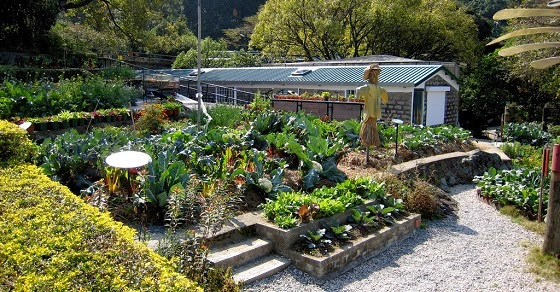
Image: eatdrinkbetter.com
Even as the United States government continues to push for the use of more chemically-intensive and corporate-dominated farming methods such as GMOs and monoculture-based crops, the United Nations is once against sounding the alarm about the urgent need to return to (and develop) a more sustainable, natural and organic system.
That was the key point of a new publication from the UN Commission on Trade and Development (UNCTAD) titled“Trade and Environment Review 2013: Wake Up Before It’s Too Late,” which included contributions from more than 60 experts around the world.
The cover of the report looks like that of a blockbuster documentary or Hollywood movie, and the dramatic nature of the title cannot be understated: The time is now to switch back to our natural farming roots.
The New UN Farming Report “Wake Up Before It’s Too Late.”
The New UN Farming Report “Wake Up Before It’s Too Late.” Click here to read it.
The findings on the report seem to echo those of a December 2010 UN Report in many ways, one that essentially said organic and small-scale farming is the answer for “feeding the world,” not GMOs and monocultures.
According to the new UN report, major changes are needed in our food, agriculture and trade systems, with a shift toward local small-scale farmers and food systems recommended.
Diversity of farms, reducing the use of fertilizer and other changes are desperately needed according to the report, which was highlighted in this article from the Institute for Agriculture and Trade Policy.
It also said that global trade rules should be reformed in order to work toward these ends, which is unfortunately the opposite of what mega-trade deals like the proposed Trans Pacific Partnership (TPP) and the U.S.-EU Trade and Investment Partnership (TTIP) are seeking to accomplish.
The Institute noted that these pending deals are “primarily designed to strengthen the hold of multinational corporate and financial firms on the global economy…” rather than the reflect the urgent need for a shift in agriculture described in the new report.
Even global security may be at stake according to the report, as food prices (and food price speculating) continue to rise.
“This implies a rapid and significant shift from conventional, monoculture-based and high-external-input-dependent industrial production toward mosaics of sustainable, regenerative production systems that also considerably improve the productivity of small-scale farmers,” the report concludes.
ou can read more about the report from the Institute by visiting their website here.
Kale and Brussels Sprouts Salad with Bacon and Parmesan
Posted: April 27, 2015 Filed under: Recipes Leave a comment
Serving Size : 4
Dressing;
1 tablespoon lemon zest
3 Tablespoons fresh lemon juice
1 Tablespoon Dijon mustard
1 teaspoon shallot — finely minced
1 small clove garlic — finely minced
1/8 teaspoon kosher salt
1 Pinch black pepper
1/4 Cup extra virgin olive oil
1 Tablespoon bacon fat
Salad:
2 cups thinly sliced kale (approx. 1/2 a bunch) — (2 to 3)
1 lb Brussels sprouts
4 slices bacon — baked and chopped (3 to 4)-m reserve fat
1/4 cup roasted almonds — chopped
2 Tablespoons Rice Parmesan
Blend all dressing ingredients in a blender.
Using slicing blade with food processor, slice all kale. Using grating blade in food processor, grate all Brussels sprouts.
Mix sliced kale and shaved Brussels sprouts in a large bowl. Throw in bacon, almonds, and cheese. Pour dressing over the top and toss salad until all ingredients are distributed throughout.
Specific Sugar Molecule Causes Growth of Cancer Cells
Posted: April 19, 2015 Filed under: Food and it's Impact on Our Health Leave a commentFrom; Science Daily
 Sugar molecules on the surface of cells change their characteristics during development of cancer. Normal cells, as shown on the left, typically have long chains of sugar molecules (illustrated by circles filled with different colours and with the protein, that the chains are attached to, illustrated as a black line) that end in our blood type antigen like ABO. Cancer cells, on the contrary, often have truncated, immature chains of sugar molecules, as shown on the right.
University of Copenhagen
Summary:
The process of glycosylation, where sugar molecules are attached to proteins, has long been of interest to scientists, particularly because certain sugar molecules are present in very high numbers in cancer cells. It now turns out that these sugar molecules are not only present but actually aid the growth of the malignant cells. In the long term this discovery is an important step towards a cure that can stop the growth of cancer cells.
The process of glycosylation, where sugar molecules are attached to proteins, has long been of interest to scientists, particularly because certain sugar molecules are present in very high numbers in cancer cells. It now turns out that these sugar molecules are not only present but actually aid the growth of the malignant cells. In the long term this discovery is an important step towards a cure that can stop the growth of cancer cells.
In co-operation with a research group from Singapore, scientists at University of Copenhagen have shown that immature sugar molecules in the form of truncated O-glycans aid growth properties of cancer cells. Previously, scientists have not been able to decode the significance of these truncated O-glycans, and therefore, the results, which were recently published in the journal PNAS, represent an important contribution to understanding the growth of cancer cells as well as the work towards developing a cure that can limit or stop the growth.
Catharina Steentoft, PhD student at Copenhagen Center for Glycomics and one of the scientists behind the results, stresses that this is basic science and there is still a long way from the results to actually developing a treatment or using them for diagnostic purposes. The results are still a cause for optimism, though.
“This is part of how we will proceed in the battle against cancer. When you know a certain process is important for the development of cancer you can start to consider ways to affect this process in a way that stops the cancer cell from taking advantage of it,” explains Catharina Steentoft.
Sugar molecules affect proteins
Sugar molecules play an important role in almost all of the processes taking place in the body. One of the ways in which sugar molecules affect us is through glycosylation, a process where sugar molecules are attached to proteins. The proteins are basically the building bricks of the body, whilst sugar molecules affect the proteins, and therefore play a significant role in the human organism. A flaw in a chain of sugar molecules can lead to protein malfunctioning and disease.
As early as 1982, scientists around the world realised the importance of sugar molecules for cancer. The American doctor and scientist Georg F. Springer discovered that a certain type of sugar molecules, the truncated O-glycans, were particularly prominent in cancer cells. The discovery of Catharina Steentoft and colleagues builds on the foundation of this knowledge.
Pinpointing ways to proceed
For 30 years, scientists all over the world have worked on using the truncated O-glycans as biomarkers for diagnostics and outcome-prediction, but now the group of researchers from Singapore and Copenhagen has finally pinpointed the significance of these sugar molecules — that they actually cause the cancer cells to grow and the cancer to spread more aggressively.
“We have now taken the first step towards understanding how cancer cells can change their glycosylation and produce these truncated O-glycans. It is a rather big step forward since it gives us an entirely new understanding of something we have worked many years to grasp. It guides our entire field of research towards new ways to proceed in the battle against cancer,” Catharina Steentoft says.
Story Source:
The above story is based on materials provided by University of Copenhagen. Note: Materials may be edited for content and length.
Journal Reference:
- D. J. Gill, K. M. Tham, J. Chia, S. C. Wang, C. Steentoft, H. Clausen, E. A. Bard-Chapeau, F. A. Bard. Initiation of GalNAc-type O-glycosylation in the endoplasmic reticulum promotes cancer cell invasiveness. Proceedings of the National Academy of Sciences, 2013; 110 (34): E3152 DOI:10.1073/pnas.1305269110


 Meal Delivery Service by Millie Barnes