saving electricity
Posted: December 17, 2008 Filed under: Going Green; How and Why... Leave a comment
This website tells you, in plain English, how to really save electricity. He has calculators to figure exactly how much electricity everything in hour house uses, factoring in what you pay per kilowatt. He tells you the why of it, not just how.
What Health Really Is
Posted: December 13, 2008 Filed under: Food and it's Impact on Our Health Leave a comment
By Millie Barnes
Perfect health may be defined as having fullness of function. Health means complete well being, inner and outer harmony, vigor, strength, mental acuity, emotional poise, in short, total fitness.
The easiest place to begin addressing achieving perfect health is on the physical level through optimum nutrition and physical exercise. When we maintain a diet that nurtures us fully and keeps our bodies in shape through rigorous exercise, the rest falls into place. We cannot have a healthy mind within an ailing body. We need a diet that lets our bodies run efficiently while meeting our nutrient needs. We need an exercise regimen that challenges our bodies so they can stay strong and limber.
Lets look at the nutrition aspect of it first. What constitutes a perfect human diet? They requirements that we have for food are; it should meet all of our nutritional needs for vitamins, minerals, enzymes, essential fatty acids, protein, fiber and moisture. It should also not be allergenic, leaving behind a residue or contain toxins. The foods that meet all of these criteria are organic meats, eggs, fats, fruits and vegetables. Preferably fresh and in season. They are all burned efficiently in the body and meet all of our nutrient needs. When food is this nourishing, it provides perfect fuel for us, giving us very high energy, beauty and optimum health. And this, in turn, leads to emotional poise and growth. That is what the word nourish means,” to promote the growth of.”
And how does exercise play a hand in this? When our diet gives us enough health and energy, it is very difficult NOT to be in motion. That is what our bodies are made for, to be in motion. We need to not strive for 30 minutes three times a week to do aerobic exercise. We needs to feel so wonderful and filled with energy that we WANT TO GO OUT TO PLAY. We want to do the things that keep our bodies fit and graceful, but we want to love doing it so that it is play, not work. Think running, skiing, roller-blading, surfing, yoga, riding a bike, hiking, lifting weights. You need resistance exercise, aerobic exercise and some form of serious stretching, such as yoga. When you are physically fit, you do these things because they feel great and are fun. Just like you did when you were a child. To get lost in it, not think of time, in the moment. It’s that meditative state of perfect balance.
When your body is in motion, it stimulates the digestion, aids in detoxing, provides wonderfully addictive endorphins that help us be happier and more relaxed, keeps our cardio-vascular system healthy, tones muscles, stimulate the lymph system and brings our consciousness back into our body as well as our head. When things are working this well, you return to that high playful energy level that you had as a child. I call it that “wag your tail, on your toes” kind of feeling. Within two weeks of beginning to eat cleaner and exercise more, you can notice a substantial difference in how you look and feel. Everything in life is a whole lot funner when you feel wonderful everyday.
Incorporate Gratitude Sessions Into Your Routine
Posted: December 10, 2008 Filed under: Food and it's Impact on Our Health Leave a comment
Too much busyness in your day? Try to get in a gratitude session. Life skills site Zen Habits has a few suggestions on what these might look like:
This is one of my favorite rituals: every day, take a couple of minutes to think about everything and everybody you are grateful for in your life. This may sound corny, but it is an amazing ritual. Try it right now — it only takes a minute. Who are you grateful for? What are you grateful for? I’ve found that this little ritual has so much power that it makes me happier and more compassionate.
This is definitely something I could use more of in my life. What are you grateful for? Let’s hear in the comments!
You Call THAT Health Food?
Posted: December 10, 2008 Filed under: Food and it's Impact on Our Health Leave a commentJust because the label says it’s good for you doesn’t mean it is. Here’s how to read beyond the marketing hype
 By: Cassandra Forsythe, M.S. & Adam Campbell
I have added nutrition notes as I agree with most of what they are saying, but not all. My notes are in RED….
Take a moment and consider this logic: 1. Fat-free foods are healthy. 2. Skittles are fat-free. 3. Therefore, Skittles are healthy. Make sense? Of course not. But it’s exactly the type of reasoning that food manufacturers want you to use.
You see, in our example, we started with a false premise. That’s because the term “fat-free” is often code for “high-sugar” — an attribute that makes a product the opposite of healthy. Case in point: Johns Hopkins University researchers recently determined that high blood sugar is an independent risk factor for heart disease. So high-glycemic foods — those such as sugars and starches that raise your blood sugar dramatically — are inherently unhealthy. (See Skittles, above.)
Unfortunately, faulty food logic is far less obvious when you’re shopping outside the candy aisle. Why? Because making healthy choices isn’t as simple as knowing that beans are packed with fiber, or that fruits are loaded with disease-fighting antioxidants. After all, manufacturers often add ingredients, such as sugar, that can instantly turn a good snack bad. As a result, many of the products that you think are wholesome are anything but. And that’s why we’ve created our list of the dirty dozen: 12 “healthy” foods that you can — and should — live without.
Yogurt with Fruit at the Bottom
The upside: Yogurt and fruit are two of the healthiest foods known to man.
Yoghurt is the healthiest form of dairy, because the acidophilus helps with digestion. BUT, cows milk is made for baby cows, not humans. There are WAY healthier forms of proteins for us, like grass-fed meat.
The downside: Corn syrup is not. But that’s exactly what’s used to make these products super sweet. For example, a cup of Colombo blueberry yogurt contains 36 grams (g) of sugar, only about half of which is found naturally in the yogurt and fruit. The rest comes in the form of “added” sugar — or what we prefer to call “unnecessary.”
The healthy alternative: Eat fresh fruit!
Baked Beans
The upside: Beans are packed with fiber, which helps keep you full and slows the absorption of sugar into your bloodstream.
The downside: The baked kind are typically covered in a sauce made with brown and white sugars. And because the fiber is located inside the bean, it doesn’t have a chance to interfere with the speed at which the sugary glaze is digested. Consider that 1 cup of baked beans contains 24 g sugar: That’s about the same amount in 8 ounces of regular soda.
The healthy alternative: Red kidney beans, packed in water. You get the nutritional benefits of legumes, but without the extra sugar. They don’t even need to be heated: Just open the can, rinse thoroughly, and serve. Try splashing some hot sauce on top for a spicy variation. A better choice is grass fed beef, free range organic chicken, organic eggs. Beans are hard to digest, do not have the healthy saturated fats of meats and eggs.
California Roll
The upside: The seaweed it’s wrapped in contains essential nutrients, such as iodine, selenium, calcium, and omega-3 fats.
The downside: It’s basically a Japanese sugar cube. That’s because its two other major components are white rice and imitation crab, both of which are packed with fast-digesting carbohydrates and almost no protein.
The healthy alternative: Real sushi made with tuna or salmon. These varieties have fewer bad carbohydrates, while providing a hefty helping of high-quality protein. Better yet, skip the rice, too, by ordering sashimi.
Granola Bars
The upside: Granola is made with whole oats, a nutritious food that’s high in fiber. Oats, along with all grains, offer almost no nutrients, absolutely no live enzymes (crucial for the assimilation of nutrients) and spike blood sugar.
The downside: The oats are basically glued together with ingredients like high-fructose corn syrup, honey, and barley malt — all of which quickly raise blood sugar.
The healthy alternative: Grab a low-sugar meal replacement bar that contains no more than 5 g net carbs — those are the ones that affect blood sugar — and at least 15 g protein. We like Myoplex Carb Sense. Eat fruits, veggies and high quality organic proteins…real food. I tell my clients to eat real food, it shouldn’t need a label or come in a box or package!
Pasta Salad
The upside: Most pasta-salad recipes include a variety of fresh vegetables.
The downside: The main ingredient is white-flour pasta, a close relative of white bread.
The healthy alternative: They suggest egg salad, a great choice if you make your own mayo with organic eggs and organic olive oil. Most commercial mayos are now made with soy, safflower or canola oil- not fit for human consumption). Use rice pasta (for a no gluten alternative), or just veggies with dressing.
English Muffins
The upside: One English muffin — two halves — has half as many calories as two slices of bread. So it’s better for a breakfast sandwich.
The downside: Most English muffins not only raise blood sugar significantly but are nearly devoid of fiber, protein, and vitamins. This makes them a great example of a food that provides only empty calories. This is true of ALL bread and pastas!
The healthy alternative: One hundred percent whole-wheat English muffins are a decent start, but we like the kind made from sprouted grains, which contain no flour and are packed with nutrients. For instance, Food for Life sprouted-grain English muffins have twice as much fiber and 30 percent more protein compared with the typical 100 percent whole-wheat version. (For stores, check foodforlife.com.) I agree 100%! Ezekial bread, tortillas, bagels and muffins are awesome!!!
Croutons
The upside: They’re so small they contribute very few calories to your overall meal, yet they add a satisfying crunch.
The downside: Most croutons are made with the same refined flour that’s used in white bread, a food with a higher glycemic index than sugar. They also almost all have all kind of nasty additives, milk powder, cheese, preservatives…
The healthy alternative: Sliced roasted almonds. They’re crunchy, sugar-free, and high in monounsaturated fats, the same type of healthy fats found in olive oil. In fact, Harvard University researchers estimate that substituting nuts for an equivalent amount of carbohydrates results in a 30 percent reduction in heart-disease risk.
Fat-Free Salad Dressing
The upside: Cutting out the fat reduces the calories that a dressing contains.
The downside: Sugar is added to provide flavor. But perhaps more important is that the removal of fat reduces your body’s ability to absorb many of the vitamins found in a salad’s vegetables. Ohio State University researchers discovered that people who ate a salad dressing that contained fat absorbed 15 times more beta-carotene and five times more lutein — both powerful antioxidants — than when they downed a salad topped with fat-free dressing.
The healthy alternative: Choose a full-fat dressing that’s made with either olive oil and has less than 2 g carbs per serving.
Fruit Cocktail
The upside: The main ingredient is fruit.
The downside: If you don’t read the label closely, you may choose a brand that’s packed in heavy syrup. For instance, a 1/2-cup serving of syrupy fruit cocktail contains 23 g added sugar.
The healthy alternative: Look for fruit cocktail canned in “100 percent juice,” not syrup. Better; eat whole fruit, fresh juices or organic dried fruit!!
Reduced-Fat Peanut Butter
The upside: Even the reduced-fat versions pack a substantial quantity of heart-healthy monounsaturated fat.
The downside: Many commercial brands are sweetened with “icing sugar” — the same finely ground sugar used to decorate cupcakes. In fact, each tablespoon of Skippy contains half a teaspoon of the sweet stuff. Reduced-fat versions are the worst of all, because they contain less healthy fat and even more icing sugar.
The healthy alternative: An all-natural, full-fat peanut butter — such as Crazy Richard’s or Teddy’s — that contains no added sugar.
I disagree with all of this info, monounsaturated fats are only healthy when they come from fruits and veggies, not processed or heated. Peanut butter is not a nut butter, it is from a legume that has been roasted, rendering it carcinogenic. See the Weston Price Foundation for more info, or Udo Erasmus’ work on fats. Eat small amounts of almond, cashew or macadamia butter.
Pretzels
The upside: One ounce has just 110 calories.
The downside: These twisted low-fat snacks have one of the highest glycemic indexes of any food. In fact, they rank above ice cream and jelly beans in their ability to raise blood sugar.
The healthy alternative: Fruit is a great snack, or occasionally; gluten free snacks.
Corn Oil
The upside: It contains omega-6 fatty acids — unsaturated fats that don’t raise cholesterol. This is misleading as these fats do not directly raise cholesterol. BUT, when heated, contribute to blood lipids getting sticky…which in turn raises serum cholesterol.
The downside: Corn oil has 60 times more omega-6s than omega-3s, the type of healthy fats found in fish, walnuts, and flaxseed. Studies suggest that a high intake of omega-6 fats relative to omega-3 fats increases inflammation, which boosts your risk of cancer, arthritis, and obesity.
The healthy alternative: Olive oil, which have a far better ratio of omega-6s to omega-3s. BUT ONLY WHEN NOT HEATED!! Olive oil should only be used in salad dressings, mayo or for flavor. When cooking or heating use ONLY fats that re stable when heated- organic butter, coconut oil or lard!
Stay Healthy with the power of garlic
Posted: December 10, 2008 Filed under: Food and it's Impact on Our Health Leave a comment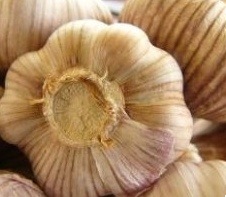 A diet rich in garlic can have a significant positive effect on your health, according to the New York Times. It seems that garlic increases the production of hydrogen sulfide in your blood, which—in the short term—relaxes your blood vessels and increases blood flow. In the long term:
The power to boost hydrogen sulfide production may help explain why a garlic-rich diet appears to protect against various cancers, including breast, prostate, and colon cancer, say the study authors. Higher hydrogen sulfide might also protect the heart, according to other experts.
The downside (if you can call it that)? Benefits from garlic consumption in studies required an equivalent of two medium-sized cloves of garlic per day, and while some countries—namley Italy, Korea, and China—average as high as eight to twelve cloves a day—it may be a lot of garlic by your standards. Then again, if two cloves a day keeps the doctor away, I can deal with the bad breath in other ways.
Unlocking the Benefits of Garlic [NYT]
Eliminating Toxins Inside and Out!
Posted: December 8, 2008 Filed under: Skin Care Leave a comment
It might make you mad to know that you are a guinea pig for the effects of carcinogen exposure and its effects on the human body. You would be shocked to learn how many known – and suspected – carcinogens are you are using in your home and on your body!
A five-year EPA study of over 600 households revealed that contaminant levels in the average home are up to 70 times higher than those found outdoors!
The Environmental Working Group, a public interest research and advocacy organization, has revealed that more than one third of all personal care products contain at least one known carcinogen. The average woman is exposed to approximately 126 such chemicals on a daily basis. In combination, these products are even worse; some “penetration enhancing” skin care products, for example, allow harmful ingredients to be drawn further into the body.
Penetration enhancers have been used to effectively deliver patch drugs deeper and faster through the skin and into the blood vessels. Although rarely added to cosmetics for the purpose of enhancing penetration, many ingredients used in cosmetics are found to have penetration-enhancing properties. The concern with penetration enhancers in cosmetics lies not in the toxicity of the enhancer itself but in the fact that the enhancers open the skin to greater absorption of carcinogens, toxins, and other harmful chemicals that the product may contain.
Scrolling down the list of brand after brand of shampoos, toothpastes, perfumes, shaving products, skin moisturizers, lipsticks and eye makeup, consumers might make some alarming discoveries about the ingredients in the products they use. For instance, a Dove cream facial cleanser was rated 9.2 out of 10 for harmful ingredients used, with 10 being of the highest health concern. The product was cited for areas of concern in cancer, unstudied ingredients, harmful impurities, allergies and penetration enhancers.
Even “trusted” brands are not necessarily trustworthy. Some of the most toxic brands are Ponds, Crest, Avon, Cornsilk, OPI, Estee Lauder, Coty, Liz Claiborne, Blistex, Crabtree and Evelyn, Clarins, Playtex (Baby Magic lotion), RoC, Charmin
(fragrance in toilet paper and wipes!), Alpha Hydrox, Johnson and Johnson (Act fluoride treatments, Ortho vaginal contraceptives), Nexxus, Revlon, Puma personal care products, Murad and Origins. Starting to get scared, ready to jump up and start reading labels of your moisturizers, toothpaste and make-up?
You can go to the website- Environmental Working Group – find the brand name, type of product or most toxic list and go from there.
Unfortunately, the FDA (Food and Drug Administration) does not review or regulate most personal care products or household cleaners. Even many known or suspected carcinogens need not be listed on product labels due to “trade secret” protections and loopholes.
Consumer buying power can pressure companies to clean up their acts. Vote with your wallet for safer products, share information with friends and relatives.
This is a subject I have been researching for a long time. Here is a list of the cleanest personal care products I have found.
Makeup;
Jane Iredale – wonderful pressed powder and lipsticks, but expensive. Expensive packaging. Clean lipsticks that really stay put and have great colors are hard to find, these are the best I’ve ever found!
Everyday Minerals– Great powders, average packaging. GREAT prices!! And free samples, so you can try them. They let you order FIVE generous samples in different colors so you can find a match. I loved the three colors of powders and the blushes I tried.
http://www.valeriebeauty.com/index.php – wonderful mineral powders (my fave!) and she offers a great compact to carry loose powder in!
Evans Garden– ineffective cleansers and chalky powders, but GREAT moisturizers.
Burt’s Bees -has the best lip gloss with color and Lip Balm I’ve ever found.
Aubrey Organics has wonderful Rosa Mosqueta Nourishing Shampoo and Conditioner. They are awesome for permed or colored hair. Their Rosa Mosqueta body lotion is the most luxurious and wonderful body lotion I have ever used!
Toms of Maine are wonderful non-toxic toothpastes.
UVNaturals is the only sunscreen I have found that I am willing to put on my skin! I can even wear it under makeup. recent medical research is indicating that certain sunscreen ingredients are in fact having a detrimental effect through cumulative use.
These ingredients can mimic oestrogen, create free radiate, or accelerate the production of free radicals in the body. The can also damage DNA within the cells.
Sunscreens are divided up into two groups: Chemical (toxic) and Physical (safe).
The Chemical sunscreens work by absorbing the UV radiation – this process creates extremely dangerous and active free radicals.
The Physical sunscreen work by reflecting the UV light.
Zinc and Titanium are classed as the only Physical sunscreens, in fact, Titanium only reflects 30% of UV light and ABSORBS 70%. It functions more as a Chemical sunscreen rather than a Physical one. So it should not be grouped with Zinc at all.
Titanium also acts as a “photoactivator” meaning, that in the presence of light, it will activate (catalyse) free radical activity and production, including cancerous and precancerous activity.
So next time you see a natural sunscreen labeled “safe and natural for your Baby” have a close look at the ingredients.
When you go read the label on most of the personal care products that you are probably using, you will find parabens and phthalates. These chemicals have been definitively linked to breast cancer. Here are two excellent articles on the subject.
Cosmetics, Parabens, and Breast Cancer
Here is a direct link to EWG’s page that will let you see what products are highest in toxic chemicals.
.csharpcode, .csharpcode pre
{
font-size: small;
color: black;
font-family: consolas, “Courier New”, courier, monospace;
background-color: #ffffff;
/*white-space: pre;*/
}
.csharpcode pre { margin: 0em; }
.csharpcode .rem { color: #008000; }
.csharpcode .kwrd { color: #0000ff; }
.csharpcode .str { color: #006080; }
.csharpcode .op { color: #0000c0; }
.csharpcode .preproc { color: #cc6633; }
.csharpcode .asp { background-color: #ffff00; }
.csharpcode .html { color: #800000; }
.csharpcode .attr { color: #ff0000; }
.csharpcode .alt
{
background-color: #f4f4f4;
width: 100%;
margin: 0em;
}
.csharpcode .lnum { color: #606060; }
Eat Heavy at Morning, Light at Night to Sleep Better
Posted: December 6, 2008 Filed under: Food and it's Impact on Our Health | Tags: breakfast, sleep Leave a comment The Dumb Little Man blog posts a condensed wealth of tips and tactics for getting yourself up and at ’em, including a tip that might make you reconsider that toast-and-coffee morning routine. Guest-poster Alex Shalman notes that eating a bigger breakfast gives you energy that burns off all day, while a lighter meal at night has its own benefits:
Eating like a pauper, meaning small light meals, in the evening allows us to go to sleep on an empty stomach. If your body is functioning normally, and you don’t have stomach ulcers, going to sleep on a mostly empty stomach will allow you to sleep better. This nightly fast allows your body to take its focus away from digestion and put it towards repair and rejuvenation of the body’s cells.
Check out our Top 10 Ways to Sleep Smarter and Better for more eating-for-sleep tips. How do you slot your food and resting hours for maximum energy and rest? Share the secret in the comments.
No Impact Man- my hero!
Posted: December 4, 2008 Filed under: Going Green; How and Why... | Tags: Going Green; How and Why..., no impact Leave a commentNo Impact Man
Here is how Colin Beaven describes his experiment to live in NY City for one year while keeping his carbon footprint as small as possible;
“A Guilty Liberal Finally Snaps, Swears Off Plastic, Goes Organic, Becomes a Bicycle Nut, Turns Off His Power, Composts His Poop and, While Living In New York City, Generally Turns Into a Tree-Hugging Lunatic Who Tries to Save the Polar Bears and The Rest of the Planet from Environmental Catastrophe While Dragging His Baby Daughter and Prada-Wearing, Four Season-Loving Wife Along for the Ride.”
I love his blog, have been following it for about a year and a half. It’s very motivating, and hilarious.
Link- No Impact Man
Make your own Natural Cleaning Products
Posted: December 4, 2008 Filed under: Going Green; How and Why... | Tags: natural cleaning products, non-toxic home 1 CommentClean and Green: Natural Cleaning Formulas
Here’s a collection of my favorite natural cleaning formulas . MOST are safe and nontoxic, with a few exceptions which are clearly noted. Use the ingredients listed below when making your own alternative cleaners, most are inexpensive and you probably already have many of them in your kitchen. All can be found at your local supermarket, natural food store or drugstore. Used individually or combined, these cleaners are safe, effective and cost-efficient.
BAKING SODA (sodium bicarbonate): An all-purpose, non-toxic cleaner. Cleans, deodorizes, removes stains and softens fabrics.
BORAX (sodium borate): A natural mineral that kills mold and bacteria. An alternative to bleach, it deodorizes, removes stains and boosts the cleaning power of soap. Please note safety precautions at the bottom of this page.
CASTILE and VEGETABLE OIL BASED SOAPS: Cleans everything
CORNSTARCH: Starches clothes, absorbs oil and grease
LEMON JUICE: Cuts through grease and removes perspiration and other stains from clothing. A bleach alternative. I collect antique clothing, and sometimes they yellow with age. Soak the spot, or the whole piece, in lemon juice then hang in the sunshine for the day. Repeat if needed. The yellowing will be gone. Rinse well. This also works for Lenin, which you cannot use regular bleach on!
SALT (sodium chloride): An abrasive
TOOTHPASTE: A mild abrasive
VINEGAR (acetic acid): Cuts grease, removes stains and is an excellent water softener.
WASHING SODA (sodium carbonate): Cleans clothes, softens water, cuts grease and disinfects. Increases the cleaning power of soap.
Hints:
· To save time and money, make your cleaners in advance and buy the ingredients in bulk for cost savings and to avoid excess packaging..
· Make large batches of the recipes and store them in reusable airtight plastic containers and spray bottles. Using a pretty spray bottle or container makes cleaning days more fun and pleasant.
· Label all of your ingredients and keep them out of reach of children. While most of these all-natural cleaners are not poisonous, some can be harmful or even fatal if swallowed by children or pets. See specific safety precautions at the bottom of this page.
· Add your favorite essential oils or herbs to any of these formulas for fragrance
Disinfectants:
1. Regular cleaning with plain soap and hot water will kill some bacteria.
2. Borax has long been recognized for its disinfectant and deodorizing properties. Mix 1/2 cup Borax into 1 gallon hot water or undiluted vinegar and clean with this solution.
3. Mix a half-cup of borax with 1 gallon hot water. Add a few sprigs of fresh thyme, rosemary or lavender. Steep for 10 minutes, strain and cool. Or add essential fragrant oils instead of fresh herbs. Store in a plastic spray bottle.
4. 2 tablespoons borax, 1/4 cup lemon juice, 2 cups hot water. Combine the borax and lemon juice with the water in a spray bottle. Use as you would any commercial all-purpose cleaner.
5. Isopropyl Alcohol is an excellent disinfectant. Sponge on and allow to dry. Use in a well-ventilated area and wear gloves.
Glass Cleaners:
Windows and Mirrors:
If you use a microfiber cloth to clean windows, you will not need any cleaner, just water! You can get them at Target.
· Use undiluted vinegar in a spray bottle or
· Equal parts vinegar and water in a spray bottle or
· No-Streak Glass Cleaner: 1/4 cup white vinegar, 1 tablespoon cornstarch, 1 quart warm water
· Mix the ingredients and apply with a sponge or pour into spray bottle and spray on. Wipe dry with crumpled newspaper, buff to a shine. (Use crumpled newspaper instead of paper towels for lint-free results.
· Rubbing alcohol is effective in place of glass cleaner.
Scouring Powders:
Use a non-chlorine scouring powder such as Baking Soda or Dry Table Salt. These are mild abrasives and can be used as an alternative to chlorine scouring powders. Simply put either baking soda or salt on a sponge or the surface, scour and rinse.
Non-Abrasive Soft Scrubber:
1/4 cup borax
Vegetable-oil based liquid soap (such as Murphys Oil Soap)
1/2 teaspoon lemon oil
In a bowl, mix the borax with enough soap to form a creamy paste. Add lemon oil and blend well. Scoop a small amount of the mixture onto a sponge, wash the surface, then rinse well.
Bathroom Cleaners:
Toilet Bowl Cleaners:
1. Baking Soda and Vinegar: Sprinkle baking soda into the bowl, then squirt with vinegar and scour with a toilet brush. Cleans and deodorizes.
2. Borax and Lemon Juice. For removing a stubborn stain, like toilet bowl ring, mix enough borax and lemon juice into a paste cover the ring. Flush toilet to wet the sides, then rub on paste. Let sit for 2 hours and scrub thoroughly. For less stubborn toilet bowl rings, sprinkle baking soda around the rim and scrub with a toilet brush.
3. 1 cup borax, 1/2 cup white vinegar. Flush to wet the sides of the bowl. Sprinkle the borax around the toilet bowl, then spray with vinegar. Leave for several hours or overnight before scrubbing with a toilet brush.
4. Denture tablets are an excellent substitute for toilet cleaner. Drop two tablets into the bowl and clean as you would with toilet cleaner.
5. Liquid castile soap and baking soda or Borax, scrub with a toilet brush.
Drain Cleaner:
For slow drains, use this drain cleaner once a week to keep drains fresh and clog-free.
1/2 cup baking soda
1 cup white vinegar
1 gallon boiling water
1/2 a used lemon
Pour baking soda down drain/disposal, followed by vinegar. Allow the mixture to foam for several minutes before flushing the drain with boiling water.
Tub And Tile Cleaners:
1. Baking Soda. Sprinkle baking soda like you would scouring powder. Rub with a damp sponge. Rinse thoroughly.
2. Vinegar and Baking Soda. To remove film buildup on bathtubs, apply vinegar full-strength to a sponge and wipe. Next, use baking soda as you would scouring powder. Rub with a damp sponge and rinse thoroughly with clean water.
3. Vinegar. Vinegar removes most dirt without scrubbing and doesn’t leave a film. Use 1/4 cup (or more) vinegar to 1 gallon water.
4. Baking Soda. To clean grout, put 3 cups baking soda into a medium-sized bowl and add 1 cup warm water. Mix into a smooth paste and scrub into grout with a sponge or toothbrush. Rinse thoroughly and dispose of leftover paste when finished.
5. Rub the area to be cleaned with half a lemon dipped in borax. Rinse well, and dry with soft cloth.
Porcelain Cleaner:
Cream of Tartar. To clean porcelain surfaces, rub with cream of tartar sprinkled on a damp cloth.
Rust Stain and Hard Water Deposit Remover:
Apply full-strength vinegar or lemon juice and let stand until spot disappears, rinse. Repeat if necessary.
Kitchen Cleaners:
Oven Cleaners:
1. The first step is prevention. Put a sheet of aluminum foil on the floor of the oven, underneath but not touching the heating element.
2. Clean up the spill as soon as it occurs.
3. While the oven is still warm, sprinkle salt or baking soda on the spill. If the spill is completely dry, wet the spill lightly before sprinkling on salt. When the oven cools, scrape away the spill and wash the area clean.
4. Baking soda, water; salt; vegetable oil-based liquid soap. Sprinkle water on oven bottom. Cover with baking soda. Let sit overnight. Wipe off and apply liquid soap with scouring pad. Rinse.
5. Retard grease buildup in your oven by dampening your cleaning rag in vinegar and water before wiping out your oven.
6. Sprinkle/spray water followed by a layer of baking soda. Rub gently with a very fine steel wool pad for tough spots. Wipe off scum with dry paper towels or sponge. Rinse well and wipe dry.
7. 2 tablespoons vegetable oil-based liquid soap, 2 tablespoons borax: Mix the soap and borax in a spray bottle. Fill the bottle with hot water and shake well. Spray on oven and leave for 20 minutes. Scrub off.
8. LAST RESORT ONLY: Fill a small glass bowl with 1/2 cup full-strength ammonia, place in oven and close. Let stand overnight, then wipe loosened dirt with paper towels or newspapers. If necessary, rub surfaces with an abrasive, such as fine steel wool, then wash with warm soapy water and rinse. Repeat process if necessary. Provide plenty of fresh air and wear gloves.
Counter Tops/Kitchen Surfaces:
Pots and Pans:
1. Burned, and crusted on foods; Soak or boil a solution of 2 tbs. baking soda per qt of water in each pan. Let stand until particles are loosened, then wash as usual. Use a mild or moderate abrasive if necessary.
2. To clean a greasy pan easily, add 1 or 2 teaspoons of baking soda to the water in which it is soaking.
Copper pan cleaner:
Sprinkle surface of pans with coarse salt. Rub salt into stains with the cut half of a fresh lemon.
No-Stick Cookware:
To remove stains from non-stick surfaces, pour a solution of 1 cup water, 2 tbs. baking soda into a pan, simmer 5 to 10 minutes. Do not allow mixture to boil or to boil over the side of the pan. Wash in hot soapy water, rinse and dry. Apply a light coating of cooking oil. Non-stick pans build up dark spots if you cook in them on heat above the medium setting. Also, if you cook with Pam or other sprays, or vegetable oils, such as olive oil. For your pans sake, but mostly for your health, NEVER cook with vegetable oils, they should never be heated (they are for flavor or dressings and mayonnaises. Use organic butter or coconut oil.
Baking Dishes – Enamel, Ceramic or Glass:
Soak in hot soapy water, then scour with salt or baking soda and rinse thoroughly.
Dishes:
1. I use 7th Generation for dishes.
2. Use liquid or powdered soap instead of detergents – which are petroleum-based. In dishwashers, use equal parts borax and washing soda.
3. Use Baking soda and liquid soap
Drinking Glasses:
1. Occasionally soak drinking glasses in a solution of vinegar and water to really get them clean. Makes them sparkle!
2. When a quick dip for crystal glassware is needed, prepare a solution of baking soda in tepid-cool water (l level teaspoon to a quart) and brush with a soft toothbrush. Very good for glass coffee makers and thermos jugs too.
Silver:
1. Use toothpaste instead of toxic silver cleaner to clean and brighten even your best silver. Use an old soft bristled toothbrush and warm water.
2. Rub with a paste of baking soda and water.
3. To magnetize tarnish away, soak silver in salted water in an aluminum container; then wipe clean.
4. Soak in boiling water, baking soda, salt, and a piece of aluminum foil.
5. When a quick dip for silverware is needed, prepare a solution of baking soda in tepid-cool water (l level teaspoon to a quart) and brush with a soft toothbrush.
Brass:
Mix equal parts salt and flour with a little vinegar, then rub.
Chrome:
Rub with undiluted vinegar.
Copper:
Rub with lemon juice and salt, or hot vinegar and salt.
Stainless Steel:
Rub with a paste of baking soda and water.
Automotive Cleaners and Care:
Windshield Wiper Frost Free Fluid
Mix 3 parts vinegar to 1 part water and coat the car windows with this
solution. This vinegar and water combination will keep windshields ice and frost-free.
Miscellaneous Cleaners:
Candles/Wax:
Sponge with a piece of cotton dipped in rubbing alcohol.
Grease Cutters:
Paint Brushes:
Soften hard paintbrushes in hot vinegar for a few minutes. Then wash paintbrush in soap and warm water and let dry.
Rust Remover:
1. To remove rust from tin-ware, rub with a peeled potato dipped in a mild abrasive such as baking soda or salt.
2. Aluminum Foil. Briskly scrub rust spots on car bumpers with a piece of crumpled aluminum foil, shiny side up.
Stain and Spot Removers:
1. Concrete Grease Spot Remover: To remove grease from concrete flooring sprinkle dry cement over grease. Allow it to absorb the grease, then sweep up.
2. Ink Stains: Use a non-aerosol hair spray to remove ink stains.
Recipe for Making Your Own Laundry Detergent:
1 cup soap flakes *
1/2 cup washing soda
1/2 cup 20 Mule Team Borax
Mix the soap flakes in a pan with 3 pints of water over medium heat, until it all dissolves, roughly 3 to 5 minutes. Stir in the washing soda and Borax. Mix until everything thickens, another 3 minutes or so, then remove from heat. Put 1 quart of hot water in a 2 gallon bucket, then add the soap mixture you just made. Mix well.
Now fill the bucket with the mixture with cold water. Stir until well blended. It will thicken and separate as it cools. Stir or shake well before using. Use 1/2 cup for each load, or more for very dirty items.
Note: washing soda is sodium carbonate and belongs in the same family as baking soda. However it has a pH of 11 and is much more caustic. In concentrated doses washing soda can remove paint and wax! Be sure to wear rubber gloves when using washing soda. Do not use on aluminum or fiberglass. Be sure to follow all manufacturers instructions.
An average gallon of laundry detergent is around $5.00. This recipe is environmentally friendly, and costs about 25 cents per gallon (1/20th the cost!), so you save the green in two ways!
*Soap flakes turned out to be harder to find than either borax or washing soda. Ivory stopped making soap flakes in 1993, the last major manufacturer to do so. Grating any pure soap, such as Castile (e.g. Dr. Bronners) works fine. I used my Microplane grater (available at kitchen specialty stores like Sur La Table or Williams Sonoma) the greatest grater ever made and achieved a very light fluffy soap flake.
Note: Green Home
Freeze Ground Meat in Small Portions with a Chopstick
Posted: December 3, 2008 Filed under: Food and it's Impact on Our Health 1 CommentFreeze Ground Meat in Small Portions with a Chopstick
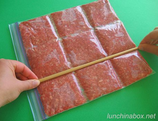 Food blog Lunch in a Box has a brilliant, simple tip for freezing meat in small portions easily and without wasting too much plastic wrap.
First put the food into a large freezer bag and press it out as flat as possible, eliminating air pockets. (Making it thin speeds up defrost time due to the increased surface area, and pressing out excess air guards against freezer burn.) Use a long chopstick or ruler to create divisions within the food, forming individual portions. This way when you freeze the entire bag, you’ll be able to quickly break off just as much as you want to use, no more.
If you don’t have chopsticks handy, any straight edge will work, like a ruler.


 Meal Delivery Service by Millie Barnes