Edible Gardens to Feed the Homeless
Posted: June 4, 2011 Filed under: Gardening, Going Green; How and Why... 1 Comment
Image credit: Grow Local Colorado
From TreeHugger
It’s always seemed strange to me that most parks grow only ornamental flowers and shrubs. Sure, it’s nice to have pretty flowers around, but what if our parks also produced food for those who need it? From sharing gardens to community nut tree plantings, we have indeed seen some moves to turn shared land into a productive food producing resource. Now a group of Colorado residents are aiming to utilize multiple city parks to produce 1,500 pounds of produce to help feed the homeless.
Grow Local Colorado started out with just one garden bed in a park in Denver. But that bed was such a success that the city has since expanded the amount of land given over to the group to 13 garden beds in 8 different parks.
The gardens are maintained by neighborhood groups, churches and non-profits, and the produce that is harvested will be donated at the end of the season to homeless charities and shelters. According to the Huffington Post’s write up of the Grow Local Colorado project, the organization is planning to donate 1,500lbs of produce to Denver’s Gathering Place, a drop-in center for homeless women and children.
More on Community Gardens
Sharing Gardens Grow Food for Those in Need (Video)
Community Plants Nut Trees for Food Security
New York’s Community Gardens Lose Protected Status
A Sustainable Kitchen
Posted: June 1, 2011 Filed under: Going Green; How and Why..., In The Kitchen with Millie- How To's, Non-Toxic Choices 1 CommentOver at Apartment Therapy yesterday I was reading about sustainable kitchens. Their focus was on building the kitchen…
As I am moving to a new house with a kitchen half the size of the one I’m in now it set me to thinking about that subject. Except that what I think of when I think of sustainable kitchens is how to set up a kitchen that supports a sustainable lifestyle.
The house I live in now is set up to have a very very low carbon footprint; I grow most of my veggies and use a sawdust toilet that supports me practicing high heat composting. This allows me to have soil that is deeply rich in nutrients and microbes to grow in food in my grow buckets. It’s a closed system; I do not have to buy fertilizer’s as my yard waste, kitchen scraps and all paper can be composted. Composting this way gives me useable soil in a year without ever having to turn or stir the compost. This is huge as I only weigh 109 pounds and cannot turn large amounts of compost effectively. And I refuse to buy anything plastic so getting a tumbler is out.
I make all my food from scratch; coconut milk yogurt, Kombucha tea, bone stocks, juicing, rendering fats, canning or freezing vegetables… I need room and equipment but am now going to do all that in a kitchen half the size.
Let’s look at how I do this;
· I use a Hamilton Beach slow cooker with 3 stoneware bowls to make my coconut milk yogurt and to slow cook chickens or roasts.
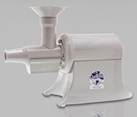
· I use a 32 year old Champion Juicer that is a continuous feed juicer, will make nut butters, shaved ice and will homogenize and great sorbets.
· I use a stainless steel canister to put food scraps in.
· I have a six foot prep table that I had in my restaurant with a cutting board.
· I have a hand coffee grinder from Sweet Maria’s that rocks!

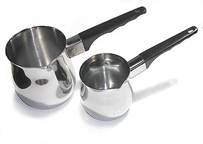
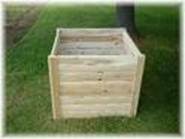
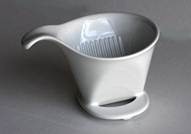
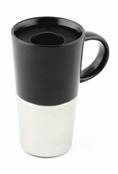

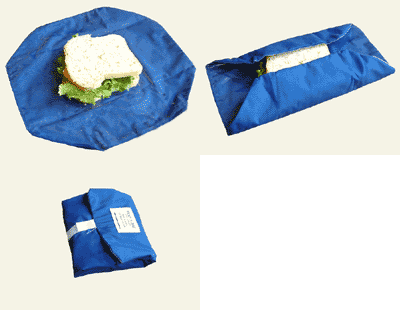
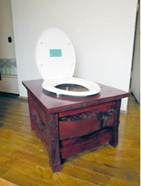
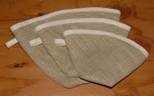

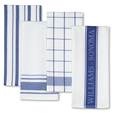

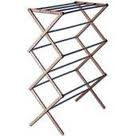
Top, left to right; mason jars for caning and storing food (with laundry soap made from Soap Nuts, Ibriki to make Turkish coffee, my compost bin, ceramic coffee filter holder.
Second row; plastic free travel mug from, coffee grinder from Sweet Maria’s, Wrap n Mat instead of plastic bags, sawdust toilet, hemp coffee filters.
Third row; clothesline, Champion Juicer, Williams Sonoma dish cloths and cup towels, Soapnuts
Last row; indoor drying rack,
I recently commented to someone that I did not use a dryer. She was very puzzled and asked how I dried clothes without one! Yeah, she was young, about 22 or so…but was truly baffled! LOL!
All it takes is planning. Many people comment to me that I must spend an inordinate amount of time in the kitchen…but I really don’t. It takes 20 minutes to put on a batch of yogurt and it;’s done in 12 hours. It takes 45 minutes to get beef stock simmering, then it’s done in 72 hours without me touching it. The next day I render the fat and freeze stocks that will last me all month. After I roast a chicken and remove meat from the bones I put it in the slow cooker for 12 hours and I have stock that supplies me with all the iron and calcium I need to stay in perfect health!
I only take my trash can to the curb every third week because that all the trash my household generates..everything else is composted (bones, fats…all can be high-heat composted).
I make my own skin cleaners, toners, flower water and soaps but only do so a few times a year. Recipes are on my blog under skin care.
I use no paper products if I can help it; dish cloths and rags for the kitchen, baby wash cloths for the bathroom that get laundered, recycled toilet paper for guests (see No-Impact Man’s Blog entry on this).
Remember you do not have to dive in all at once…do the normal things people do nowadays…use CF bulbs, use less water…start here and take one one new sustainable choice a week.. It’s just habits and you will get use to them…
You’ll lower your bills as well as your carbon footprint!
Dutch Apple Pie with Gluten Free Topping..
Posted: June 1, 2011 Filed under: In The Kitchen with Millie- How To's Leave a commentI’ve been working on this recipe a few years..and it’s as good as I have ever had..gluten free or not..

Apples;
8 apples of your choice, I like red delicious. Core and slice them, remove the peels from half of them.
1/4 cup sugar, I like Demarara sugar
1/2 t. cinnamon
1/8 t. salt
2 T. butter
1/2 cup raisins (or blueberries or raspberries)
1/3 cup coconut cream
Sauté the sliced apples in butter, covered, on medium-low until softened and almost clear looking. Halfway through cooking add sugar. Drain, reserving liquid.
Melt butter in saucepan. Place apples back in saucepan. Add sugar, raisins, spices, cook 5 minutes. Add coconut cream, warm until it is all melted in apples.
Streusel;
1 cup almonds, chopped coarsly
3/4 cup rice flour
1/3 cup Demarara sugar
3 T. corn meal
7 T butter
Mix with a wooden spoon until the dough is in pea size pieces. Bake on a cookie sheet on parchment paper in a 300 degree oven. Stir often because the outside browns quickly, but do not break up the pieces.
Slide off of the paper onto the apples in a pie dish. Bake until just brown on top.
Water in the Landscape
Posted: May 31, 2011 Filed under: Gardening Leave a commentI found a great Blog today and wanted to share an article she posted.

Ya’ll probably know by now what a radical environmentalist I am by now! I feel it is morally wrong to continue to grow lawns of grass that eat up our resources, waste our water especially and pollute our rivers with run-offs that place chemicals in our water sources…
But let’s get on-topic, shall we? Probably THE most important environmental responsibility we have as landowners and gardeners have to do with water – conserving it as a resource, and making sure the rainwater landing on our property percolates down and is cleaned before it ends up in our waters. So there’s lots to cover, including topics like how to water efficiently and principles of xeriscaping, which are covered here so I won’t repeat them. I’ll just recommend two interesting links about water in our gardens:
- I like the “Wise Lawn Care Prevents Water Pollution” hand-out distributed by the city of Alexandria, VA. Most people believe that avoiding pesticides is all they need to do to protect waterways, so information like this that emphasizes wise fertilization practices is essential. This brochure tells us to “Fertilize in the fall if at all!”
- A measure is being considered in New Jersey that would severely restrict the polluting nutrients nitrogen and phosphates in lawn fertilizers, and I recommend Tom Christopher’s account on Huffington Post. He notes that Scotts MiracleGro and TruGreen are fighting the measure, as are some who fear their properties values will decline if their lawns are less green. But Tom suggests that the solution to make everyone happy (except the aforementioned behemoths of the lawn industry) is to switch to the less resource-intensive fine fescue mixes that are being tested by Rutgers (see Now-Mow Lawn and Eco-Lawn.) Tom’s also a member of the Lawn Reform Coalition.
Make a House for Solitary Bees
Posted: May 30, 2011 Filed under: Gardening 3 Comments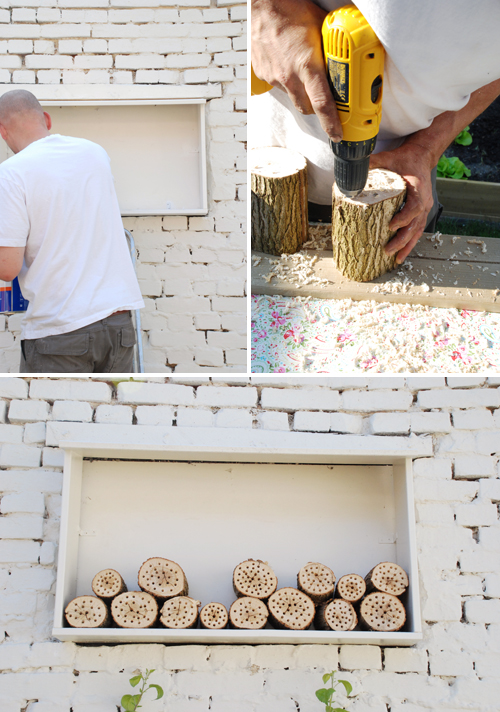
What are Solitary Bees ?
As well as Bumblebees and Honeybees (that live collectively) there are some 200 species of wild bees in the UK that are called ‘solitary bees’ because they make individual nest cells for their larvae. Some species nest in small tunnels or holes in the ground or in sandy banks, piles of sand, or crumbling mortar. Others use the hollow stems of dead plants such as brambles, or tunnels previously bored into dead wood by beetles. Mason Bees and Leafcutter Bees are well-known examples and are common in gardens. 
Solitary bees are harmless and do not sting, they do not live in hives or build combs, and they do not swarm.
If you find them (for example in old house walls) please leave them alone. Colonies are very faithful to their nest sites and may have been living there for many decades. They are part of the ‘fine grain’ of your local biodiversity – something to be cherished.
A number of species are commonly seen in gardens, and they are very useful as they pollinate fruit crops. It is easy for gardeners to encourage them. By drilling holes in dry logs or blocks of wood it is possible to create artificial nesting sites for them.
Constructing the House
All you need is a wooden box, open on one side, which is then fixed to a sunny fence or wall. You then fill it with blocks of wood or small logs in which you have drilled small holes. A variety of solitary bees will use these tunnels as nest sites. The box does not need to be deeper than 8ins, but must have an overhang at the top to keep rain off. You may already have a wooden box or a drawer from an old wooden chest of drawers that you can adapt for this purpose. If not, you can make one. The one in the picture is 8ins deep, 12 ins high at the front and 12ins wide, made out of untreated European spruce. I have given it a sloping, slightly overhanging roof to deflect rain.


I have not put a back on the example in photograph, because if you intend to fix the box against a wall or fence, you don’t need to put a back on it, or you can make a back of chicken wire, simply to help keep the wooden blocks in place. If the bee house is to be free standing, fixed to a pole, you will need to give it a wooden back, to give protection from rain and wind.
The dimensions do not have to be exact and you can make a larger bee house if you want. It is also possible to make a very large, free standing one, and pile up drilled logs and timber in it. (See photograph at foot of this page). For the structure of the house you can use any timber that you have to hand, so long as it has not been recently treated with a preservative. If you don’t have any timber around that you can re-cycle, builders merchants often have offcuts of wood available cheaply. Composite materials such as hardboard, chipboard or particleboard tend to disintegrate in the rain and are not suitable.
Inside the shell of the bee house you stack dry logs or sections of untreated timber, up to about 7ins in length, into which you have drilled a selection of holes of varying diameters between 2mm and 10mm, but no bigger. [Note that the diameter of the holes in some commercially sold wooden solitary bee houses is too large, and the bees cannot use them!] The open ends of these holes should face outwards, and must be smooth and free of splinters. If necessary use a countersinking drill bit to clean and smooth the entrance to each hole, as the bees will not enter holes with rough splintered wood around them. Carefully clean away any sawdust, as this will also put them off. If you are able to obtain extra- long drill bits and can drill deep holes into the wood you can make your bee house deeper, and stack longer sections of drilled logs and timber in it.
The bee house must be positioned in full sun, facing south east or south, at least a metre off the ground, and there must be no vegetation in front of it obscuring the entrances to the tunnels. The bees are cold- blooded and rely on the sun’s heat to warm them up in the morning, hence the need for a sunny site. They do not have furry coats to keep themselves warm like bumblebees do.
Bees Take up Residence
 Different species of Mason Bees (Osmia) will occupy different diameters of tunnels. They will construct a series of ‘cells’ in each tunnel. In each cell they leave a block of pollen that they have collected from nearby flowers, lay an egg, and wall it up with mud they have collected from the ground nearby (see image of walled-up tubes below right). In dry weather make a small mud patch for them.
Later in the summer, Leafcutter Bees (Megachile) may also use the tunnels, lining their cells with circles of leaf that they cut from wild rose bushes. Include some holes of very small diameter (e.g. 2mm) and you will get various other small solitary bees using them. I suggest drilling some blocks just with very small diameter holes, or having a whole separate bee house of them.
 You can also place commercial bee tubes in your bee house. These cardboard tubes are very popular with Mason Bees, but do not suit the smaller species. They are now marketed by a number of on-line suppliers, including CJ Wild Birds Ltd. (www.birdfood.co.uk) and Wiggly Wigglers (www.wigglywigglers.co.uk).
Bee activity will cease by mid-September at the latest. You can then remove the occupied logs and tubes and keep them in a cold dry place during the winter, to protect them from winter wet, replacing them in the bee house in March. An unheated shed, porch, or carport will do. This is very important – winter wet, not cold, is their enemy. Do not store in a warm place – they need to be cold and dry during the winter. Persistent wind-blown rain can dissolve the mud walls of the cells, and cause both wooden and cardboard bee tubes to rot. As autumns and winters are now very rainy, you need to ensure your bee tubes are protected from excessive wet. If your bee house has a good overhanging roof and is waterproof you can leave the tubes there. From April onwards, young bees that have over-wintered in a dormant state inside the tunnels will emerge, and start the cycle over again.
Beware Birds!
If you notice Woodpeckers or other birds attacking the tunnels looking for bee larvae, fix a piece of chicken wire across the front of the bee house. This does not seem to deter the bees.
Make a Bee Post
 An even simpler alternative is to make a bee post – drill a variety of holes up to 12mm in diameter into the side of a thick piece of untreated timber, and fix to a sunny wall or fence. (See photograph). Again this should be kept in a dry, cool place in winter and brought out in March. If you like you can give it a roof to deflect rain. Smooth down the entrances to the holes thoroughly so there are no sharp splinters, as these will put the bees off. New fence posts from garden centres are unsuitable because they have been treated with chemicals, but lengths of very old fence posts or old roof joists, such as you often find on skips, are ideal. In my experience the bee post is not as popular with the solitary bees as as as the bee houses described above, but other people have good success with it.
Bundles of dead stems
 Bundles of bamboo canes, sawn into lengths about 8ins long just below a joint may also be occupied by solitary bees, as will bundles of rigid dried stems of various herbaceous garden plants, especially raspberries, brambles, teasels, and elder. Some species of bees prefer these stems and will not use drilled holes. Rolls of dried reeds (sold as portable screens in garden centres) can also be cut up and placed in your bee house will be used by very small species of solitary bees. The bundles of stems must be kept completely dry at all times, under some sort of shelter – they will soon rot if exposed to rain. If you make a larger bee house you will have scope to include all of these nesting opportunities.
Buying Bee Houses
A number of commercially made wooden bee houses are available. Some of them are quite expensive, and one particular design does not work as the holes are too large! So beware wasting your money. The beauty of home- made bee houses is that you can use re-cycled or waste wood and logs and make them for virtually nothing. One commercially available model which is worth investing in if you are particularly interested has glass tubes for the bees to nest in. You can open a door and look at the larvae as they develop in their cells in the glass tubes. And of course the cardboard tubes that I mention above, and you can see in the illustrations above, are very popular with Mason Bees.
These are not for Bumblebees
Only solitary bees will use the kind of bee house I describe here. The needs of bumblebees are very different – their nests consist of communal wax combs, which they construct mostly in holes underground or in long tussocky grass. Bumblebee boxes are available from many wildlife gardening outlets, and some are hugely expensive – yet bumblebees rarely take to them. Beware wasting your money! Better to encourage the kind of flowery habitat, not over-manicured, that bumblebees like, and let them find their own nest sites. The website of the Bumblebee Conservation Trust has good advice about bumblebee nests, and how you can make inexpensive nest sites yourself. There is more information about Bumblebees on my BUMBLEBEES page.
A whole insect community
Various other sorts of parasitic solitary wasps and parasitic bees will find your bee house once it is occupied, preying on, or taking over, the nest cells of mason bees. Don’t worry about them, they are all part of the fascinating community of insects.
A larger Bee House
 It is easy to make a larger house for solitary bees. I first saw one like this in Switzerland in the early 1980s. Since then I have seen them on several occasions in Germany and Switzerland, but curiously they are rare in the UK. It is time to put that deficiency right!
The one on the left is about 5ft (1.5m) high. made out of recycled wood with part of a disused fence panel at the back.
For more info about some common solitary bees and what flowers will attract them, please download the ‘World of Wild Bees’ fact sheet from my fact sheets page.
There is also an excellent website about the different kinds of solitary bees you are likely to see in your garden at www.insectpix.net
It’s mainly in the details of choosing plants that are suitable for your region and appropriate for your local wildlife that you need to seek local advice. Many of the plants recommended for wildlife gardens in Britain are not suitable for North America.
For example, several well-behaved British wild flowers that are often recommended in the UK as bee and butterfly plants are highly invasive in North America and planting them is banned.
On the other hand, there are many scarlet, trumpet- shaped flowers such as Penstemons, Monardas, Pentas, Epilobium canum, Lonicera sempervirens and Lobelia cardinalis, that are of little or no use to wildlife here in Europe, but are perfect for many North American gardens as they will attract hummingbirds.
Pentas is illustrated on the masthead above, being visited by a female Costa’s Hummingbird. We don’t have hummingbirds in Europe – you are so lucky to have these fascinating litle birds visiting your gardens.
From; http://www.foxleas.com/bee_house.htm
I reproduced this item with permission from “The Pollinator Garden”, www.foxleas.com
© Marc Carlton 2011.
Cool Tub
Posted: May 27, 2011 Filed under: Going Green; How and Why..., Non-Toxic Choices Leave a commentI’m thinking this is a good green choice..better than the plastic tubs they use nowadays..gorgeous!
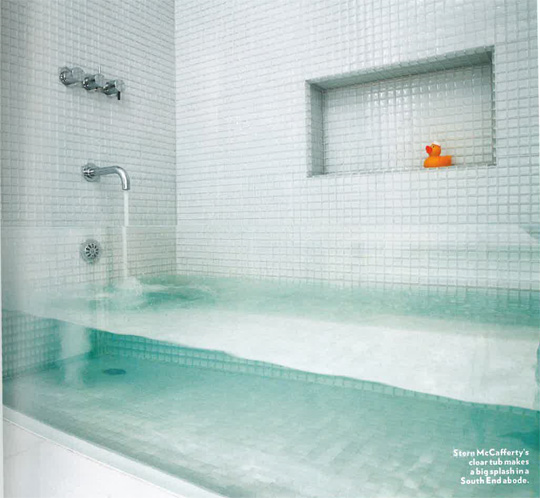
Boston-based architecture & design firm Stern McCafferty created this custom bath based on an inspiration photo from owners Amy and Ethan d’Abelmont Burnes. They gut renovated their South End row house when they bought the property next door and decided to combine them. The couple wanted an open and modern sanctuary, and this tub definitely fits in with that aesthetic.
Nearly 1 In 5 Young Adults Have High Blood Pressure
Posted: May 26, 2011 Filed under: Food and it's Impact on Our Health Leave a comment
 iStockphoto.com
Overweight or obese is a big risk factor for hypertension.
Federal health officials say the expanding waistlines and higher body mass index of young adults are causing unexpected problems, including an increase in diabetes, kidney disease and even arthritis.
Now, researchers from the University of North Carolina report that blood pressure, too, among 24- to 32-year-olds may be much higher than previously thought. In 2008, a whopping 19 percent, or one out of every five, of participants in their study had high blood pressure. The condition, also known as hypertension, was defined as a reading of more than 140/90 millimeters of mercury (mmHg).
The findings are published in the online journal, Epidemiology. Researchers analyzed data from federal surveys of teenage health started in the mid 1990s, called the National Longitudinal Study of Adolescent Health. That study, known as Add Health, is funded by the National Institutes of Health and involves more than 14,000 participants.
Other federal surveys have found much lower rates of hypertension among this age group. But the high numbers in this most recent survey may not be so surprising. That’s because being overweight or obese is a well known risk factor for hypertension. And the majority of these young adults grew overweight or obese as they got older.
When the survey started in 1995, the participants were between 12 and 19. At the time, 11 percent were obese. On follow up five years later, that number had doubled to 22 percent. By 2008, more than one third (37 percent) were obese.
Another 30 percent were overweight, but not obese. This means 67 percent of all the young adults were above a normal weight. And researchers say the pace of weight gain was both dramatic and disturbing.
Males were more likely than females to have hypertension and less educated young adults were more likely than their college-educated peers to have the condition.
Perhaps most troubling, the majority of the youthful study participants had no idea they had high blood pressure. That’s likely because 20-somethings don’t routinely visit the doctor or even have their blood pressure checked on a regular basis.
Researchers and health officials say more targeted research and analysis of the health of this age group is needed. What’s one thing teens can do? Cut their salt intake to head off hypertension early on.
Millie – CUT THEIR SALT INTAKE??? That’s ALL the advise they give?? How about cut the junk food, a;ll the carbs, the vegetable oils..all the REAL causes of hyertension???
Vancouver-area mayor wants people to convert their lawns to vegetable gardens
Posted: May 5, 2011 Filed under: Food and it's Impact on Our Health, Gardening, Non-Toxic Choices 2 Comments
Mayor Darrell Mussatto wants to convert North Vancouver’s lawns to urban farmland.
"We don’t need a lot of expensive technical solutions like rooftop gardens. What about front yards and back yards?" Mussatto said. "That’s a huge land base, and how many of those yards are dedicated to turf?
"Twenty per cent of the people live on 80 per cent of the land, and most of their yards are lawn," he said. "It can easily be changed over to fruits and vegetables."
The City of North Vancouver is second in population density in the region, trailing only Vancouver. But Mussatto sees a lot of wasted space in people’s yards, space that could be producing food.
North Vancouver council has instructed staff to prepare an urban agriculture strategy.
"We want people to convert the yards of single family homes to gardens and even commercial farms," Mussatto said.
Vancouver already has several commercial yard-farming firms, including City Farm Boy.
Ward Teulon has been farming residential yards in Vancouver since 2006 and maintains a roster of 10 yards, including a rooftop garden near Yaletown.
Homeowners take a share of the vegetables that Teulon grows and the rest is distributed to his 38 shareholders, people who pay an annual fee of about $600 for a weekly basket of produce from May through mid-October.
"There was a lot of good soil that wasn’t being used, so I put up some posters trying to find yards," said Teulon. "Once I got a few yards, word of mouth did the rest."
North Vancouver is determined to wipe away all impediments to urban agriculture. Standards of maintenance bylaws were designed to encourage people to maintain a particular kind of landscaping and drive agriculture out of the urban environment, according to Coun. Craig Keating.
"People recognize that the way we are dealing with food in our society has got to change, we need to re-examine how we deal with public spaces and parks," Keating said. "We should be re-examining whether front yards should only be decorative, and commercial agriculture in the city is something I do support.
"We need to make sure there aren’t any obstacles to inhibit family yards from converting to agricultural uses," Keating said.
Keating has even volunteered to convert his own front yard to vegetable garden. The Edible Garden Project employs volunteers to plant and tend vegetable gardens for distribution to low-income residents.
A series of work parties have converted about one quarter of Keating’s 5,000-square-foot yard into raised beds for vegetables.
"We are working with volunteers from the Edible Garden Project, a class of social justice students from Nelson came in Thursday, and a group from Canucks Autism Network came on Saturday," Keating recounted.
"Up till now the front yard has been a monument to long grass and dog poop. Now we are doing something socially redeemable," Keating said.
Millie- I say make growing and fertilizing grass and other non-edibles illegal…we can’t afford the water waste..especially here in Florida!
Read the complete post at http://communities.canada.com/vancouversun/blogs/greenman/archive/2010/11/14/vancouver-area-mayor-wants-people-to-convert-their-lawns-to-vegetable-gardens.aspx
Sugar is "Like Cigarettes and Alcohol, And Killing Us"
Posted: April 28, 2011 Filed under: Food and it's Impact on Our Health Leave a comment
The New York Times Magazine cover article has the provocative title Is Sugar Toxic? Author Gary Taubes has become convinced it isn’t the dietary fat that is causing the explosion of obesity, diabetes, heart disease and hypertension, but the sugar. It is a thesis put forward by Robert Lustig of University of California, San Francisco, School of Medicine, who says "sugar should be thought of, like cigarettes and alcohol, as something that’s killing us."
The points this author makes is valid, yet this is not the whole picture.
Sugar IS bad for us in any form; sugar, high fructose corn syrup, etc. However too many carbs in ANY FORM is what is primarily the problem with Americans health. Yes, that includes FRUITS and veggies if they are too high a percentage of your food intake!
CARBS are killing us! The average food diary I see from nutrition clients shows 50 to 70% calories from carbs.
There are two side to his; the sugar and carbs themselves are a problem AND the lack of depth of nutrients in those foods are the other serious problem.
CARBS KILL, plain and simple. Sugar satisfies us, gives our brains quick energy…but leaves us badly malnourished. If you are even 10 pounds overweight you are malnourished.
Depth of nutrients come from fat and HIGH quality protein (NOT nuts, tofu, protein powders, power bars…).
You need 200 calories a day to be healthy, to meet your energy and nutrient needs. It cannot be done on a vegetarian or vegan diet as the saturated fats that the human body needs comes from animals! The earth cannot support us eating a grain based diet, we need animal husbandry for fertilizer otherwise we are stuck with chemical fertilizers.
We also need high quality fat; 50% of our calories each day should come from fat (75% of those from healthy, organic saturated fats) 30% from high quality protein (grass fed beef or bison, game, free range organic chickens and turkey, organ meats, eggs). The remaining 20% should be from vegetables in addition to some fruit.
Eating this way will normalize your weight, get rid of allergies, restore/repair an immune system and detoxify the body…and lead to abundant health.
Look at a perfect day from this way of eating;
Ideal Day
Breakfast:
2 eggs, (, poached, fried) with 1 teaspoon organic butter
3 to 4 slices organic bacon
1/2 fruit (I eat blueberries or raspberries)
4 ounces coconut yogurt (I make it myself or you can buy it at the Health Food Store)
4 ounces green drink (I juice every 3 or 4 days)
Lunch
8 ounces beef or chicken (or what’s leftover from dinner)
1 ½ cup stock (I like taking my protein in a thermos with the broth and caramelized onions)
Greens or fruit and yogurt
Mid-afternoon
½ cup blueberries with 1 tablespoons macadamias or cashews
Dinner
1/2 medium sweet potato or winter squashes with butter
Sliced tomatoes or sliced avocado
8 ounces grass fed beef, bison or free range chicken, lamb
3 cups kale or broccoli or other green LEAFY vegetable
other veggies such as mushrooms, peppers
THIS is 2000 calories that meets all of your caloric and nutrient needs.
THIS is 2000 calories that meets all of your caloric and nutrient needs.
Vitamin D Levels Linked With Health of Blood Vessels
Posted: April 20, 2011 Filed under: Food and it's Impact on Our Health Leave a commentAnother reason to eat grass fed meat, butter, bone broths…for all that great immune system building Vitamins A,D and E!
ScienceDaily (Apr. 3, 2011) — A lack of vitamin D, even in generally healthy people, is linked with stiffer arteries and an inability of blood vessels to relax, research from the Emory/Georgia Tech Predictive Health Institute has found.
The results add to evidence that lack of vitamin D can lead to impaired vascular health, contributing to high blood pressure and the risk of cardiovascular disease. Study participants who increased their vitamin D levels were able to improve vascular health and lower their blood pressure.
The data was presented by Bihar Al Mead, MD, a cardiovascular researcher at Emory University School of Medicine, at the annual American College of Cardiology meeting in New Orleans. Al Mead is one of five finalists for the ACC’s Young Investigators Award competition in physiology, pharmacology and pathology. He is working with Arched Quyyumi, MD, professor of medicine and director of the Emory Cardiovascular Research Institute.
The 554 participants in the study were Emory or Georgia Tech employees -average age 47 and generally healthy — who are taking part in the Center for Health Discovery and Well Being, part of the Emory/Georgia Tech Predictive Health Institute.
The average level of 25-hydroxyvitamin D (a stable form of the vitamin reflecting diet as well as production in the skin) in participants’ blood was 31.8 nanograms per milliliter. In this group, 14 percent had 25-hydroxyvitamin D levels considered deficient, or less than 20 nanograms per milliliter, and 33 percent had levels considered insufficient, less than 30 nanograms per milliliter.
The researchers monitored the ability of participants’ blood vessels to relax by inflating and then removing a blood pressure cuff on their arms. To allow blood to flow back into the arm, blood vessels must relax and enlarge — a change that can be measured by ultrasound. The researchers also made other measurements of smaller blood vessels and examined the resistance to blood flow imposed by the arteries.
Even after controlling for factors such as age, weight and cholesterol, people with lower vitamin D levels still had stiffer arteries and impaired vascular function, Al Mheid says.
"We found that people with vitamin D deficiency had vascular dysfunction comparable to those with diabetes or hypertension," he says.
Throughout the body, a layer of endothelial cells lines the blood vessels, controlling whether the blood vessels constrict or relax and helping to prevent clots that lead to strokes and heart attacks.
"There is already a lot known about how vitamin D could be acting here," Al Mheid says. "It could be strengthening endothelial cells and the muscles surrounding the blood vessels. It could also be reducing the level of angiotensin, a hormone that drives increased blood pressure, or regulating inflammation."
Most Americans generally get the majority of their vitamin D from exposure to sunlight or from dietary supplements; fortified foods such as milk or cereals are a minor source. A few foods, such as oily fish, naturally contain substantial amounts of vitamin D.
Participants whose vitamin D levels increased over the next six months, either from dietary supplements or ample sun exposure, tended to improve their measures of vascular health and had lower blood pressure. Forty-two study participants with vitamin D insufficiency whose levels later went back to normal had an average drop in blood pressure of 4.6 millimeters mercury.
"This was an observational study, rather than an interventional one, and it was difficult to tease out how the people who restored their vitamin D levels got there," Al Mheid says. "We are hoping to conduct a study where we have participants take a defined regimen of vitamin D."
"With his findings showing the relationship between vitamin D deficiency and vascular dysfunction, Dr. Mheid has helped advance our understanding of the importance of Vitamin D in preventing a common health problem in aging adults," says Kenneth Brigham, MD, medical director of the Emory/Georgia Tech Center for Health Discovery and Well Being. "Additionally, ongoing health studies based on the Center’s collection of health information from participants will yield more discovery as the Center continues to develop."
The Emory-Georgia Tech Predictive Health Institute is a national leader in moving the practice of medicine from a reactive, disease-focused system to a proactive health-focused system. The initiative integrates research, scholarship and education in an innovative effort aimed at revolutionizing care of people to define, preserve and prolong the health of individuals and of society.
Key areas of the Initiative include defining and measuring health using optimal biomarkers of health and understand their interrelationships, determining the best interventions to optimize health throughout an individual’s or a population’s lifetime.


 Meal Delivery Service by Millie Barnes