Food Preservation, Sustaining life from Sustainable Gardens
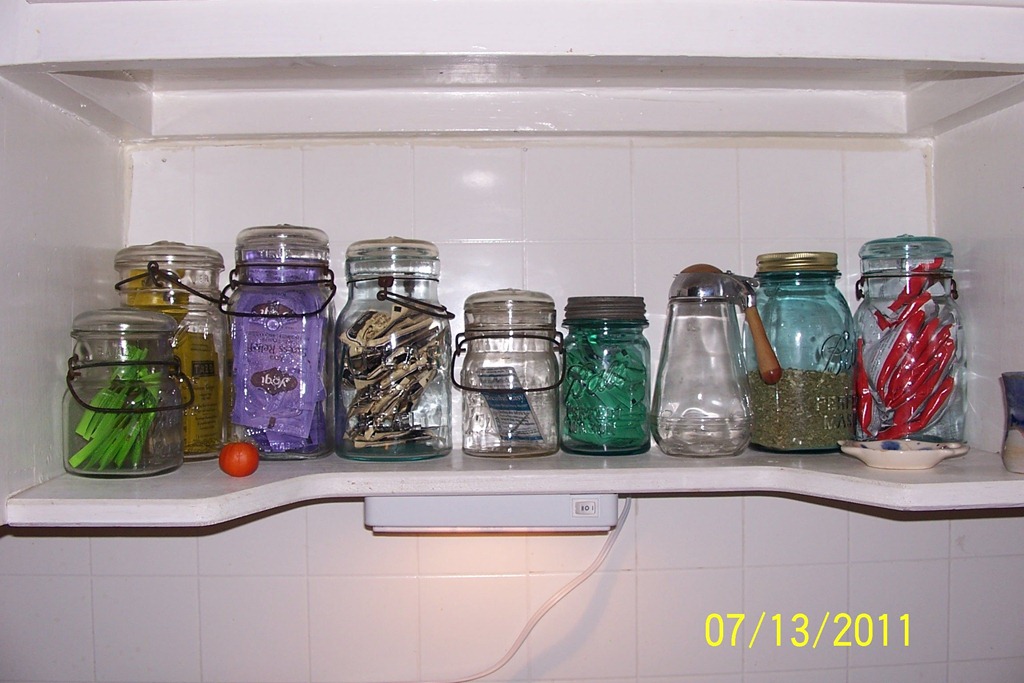
Posted: July 15, 2011 Filed under: Gardening Leave a commentI found these beautiful old canning jars in a neighbors trash and could not believe my good luck! I had actually stopped because they had sat an old desk out by the road. I have been looking for one to use as a base for a potting bench I want to build but alas, it was particle board but there was a box of 12 beautiful jars..
A Facebook friend commented and shared this article with me..
by Lee McDonald
As people moved from earliest times, they needed to feed themselves and the groups with which they associated. From hunter gatherers to farmers and developing civilizations, the technology of successful feeding has been a significant part of human history and the habitation of place. Food storage and preservation materials are on display at the Beaches Museum as a part of the present exhibit of Native and Cultivated Gardens of Florida. Lee McDonald, a resident of the Beaches community since 1989, curates the collection.
The food preservation section of the show illustrates the development of pottery and glassware which is known the world over. There are many similarities in the development of aboriginal pottery, food collection wares, tools, and utensils. Whether the piece is Geto-Dacian from Romania in the time of Alexander the Great or a northeastern Florida native pressed incised pottery decoration from 6,000 years ago. Design followed function and the need to protect and preserve food sources were important to Florida’s inhabitants.
In the United States, early red ware pottery was used as well as others like Salt Glazed and alkaline slip glazed pottery to store meats, grains and vegetables. Salt was used to cure food as well as were several smoking and drying methods. Home canning processes developed among pioneers in America and the use of sealing Home canning processes developed among pioneers in America and the use of sealing wax and a variety of engineered sealing techniques such as metal clamped seals were developed. Glassware for home canning could be observed on the American frontier from 1858 forward. Until this time, flat tin lids were used with wax for sealing preserved food. These were not reusable. John Mason, a tin smith from New York City, invented the Mason jar. He designed a machine that could cut threads into jar tops, which made it possible to screw-on a lid into a formed glass jar. At first the lids were made of zinc and rubber rings were used to affect the seal. This became a practical and affordable way for gardeners, homeowners, and settlers across the country to preserve food they had grown and to transport it across longer distances without spoilage. Mason lived until 1900, but he himself had sold off the patent he held and died a poor man.
Henry William Putnam a native of Vermont invented a fruit jar that used a glass lid and metal clamp to hold the lid in place in 1882. These were easy to open and reseal and were called “lightening jars” because they were quick as lightening to get into.
During the Civil War, foods were transported in crockery; some smaller crocks which were developed for home canning and on many of the major battle fields of the Civil War period, many fragments and, sometimes, entire crocks used to carry preserved foods can still be found. Keeping varmints (critters and insects as well as microbial bacteria) out of grains and food was important. Often these items were stored in designated areas which were cooler, either root cellars or “southern keeping rooms.” Jelly cupboards, pie safes and cabinets were also located in kitchen or food storage areas. I have a food storage cabinet circa 1820 that has mid 19th century repairs to what appear to have been a rat hole that was repaired with hand-forged nails and metals.
The Hazel-Atlas Glass Company was in business from the late 1800’s to 1964 and developed a jar with a lip for use with a metal clamp. These jars were called “strong shoulders” and addressed problems with the cracking which occurred with other forms of the metal clamped “lightening jars”.
William Charles Ball and his five brothers were in the business of manufacturing wood-jacketed tin cans for the storage of oil, lard, and paints. In 1883 they changed their focus to manufacturing glass containers and then, in 1886 when the Buffalo factory burned, they moved to Muncie, Indiana. The Muncie community offered them an incentive to move the business to Indiana by providing free gas and land. They aggressively purchased smaller glass companies and expanded quickly across the nation and became leaders in the industry.
In 1903, Alexander Kerr founded the Hermetic Fruit Jar Company. He developed some of the first wide-mouth jars which were easy to seal. Another inventor, Julius Landsberger, had developed a glass lid with a permanently attached gasket which Kerr used. However, one of the most significant developments occurred in 1915 when Kerr developed a flat metal disk which was held in place by a metal ring. This made it possible to inexpensively reuse glass containers with disposable metal rings.
The Duval County Extension Office offers information and maintains a canning center.
Consult with the following web site for information on various vegetables for home processing. http://okeechobee.ifas.ufl.edu/2010.MG.VegeTip.Sheet.pdf or http://www.uga.edu/nchfp/
Posted: July 13, 2011 Filed under: Food and it's Impact on Our Health Leave a comment

Woman In Triangles
by Frantisek Kupka
1909
Eat Organically on Modest Means
Posted: July 13, 2011 Filed under: Food and it's Impact on Our Health Leave a commentEat Organically on Modest Means
Switch to Old fashioned Safety Razor and Save BIG and Get a Better Shave!
Posted: July 13, 2011 Filed under: Food and it's Impact on Our Health Leave a commentSwitch to Old fashioned Safety Razor and Save BIG and Get a Better Shave!
Switch To Old-School Safety Razors And Save $160 A Year
Posted: July 13, 2011 Filed under: Going Green; How and Why... Leave a comment
Like a drug dealer giving out free samples, Gillette has been getting men hooked on Fusion razors by handing out free Fusion razors. You go along and you think, mm, this is a pretty good shave, and eventually you need to buy replacement cartridges, and it turns out they cost $40! Reader Jim got sick of spending $250 a year on cartridges for a shave that wasn’t stellar so he decided to kick it like a grandpa and switch to old-school double-edged safety razors. Jim says the blades on these just cost pennies a piece and the shave is cleaner and closer.
Millie; Here’s how i made the switch:
I went to the Classic Shaving website and bought this razor for $25.00.
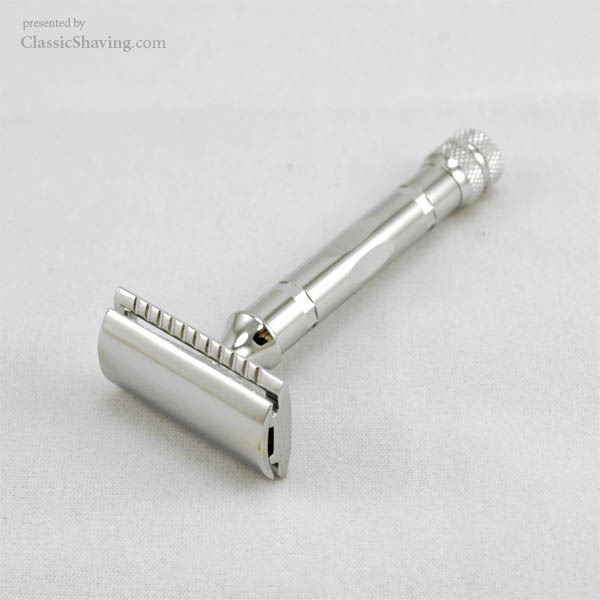
I bought 2 packs of blades. I bought the razor and blades FOUR years ago..I just used the next to the last blade! I have paid NOTHING to shave my legs all this time. And there is no better, closer shave!
http://consumerist.com/2008/03/8-ways-to-opt-out-of-junk-mail-lists.html
Posted: July 12, 2011 Filed under: Food and it's Impact on Our Health Leave a comment
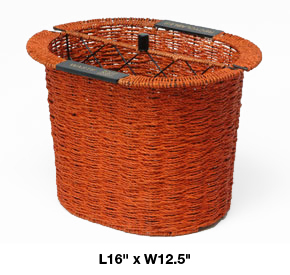
Waste Not Baskets- for recycling in the kitchen…without having to use plastic (eeeww)…
Recycling Baskets for the Kitchen!
Posted: July 12, 2011 Filed under: Food and it's Impact on Our Health Leave a commentRecycling Baskets for the Kitchen!
Baskets for Kitchen Recycling
Posted: July 12, 2011 Filed under: In The Kitchen with Millie- How To's, Non-Toxic Choices Leave a commentI found a great idea for setting up a recycling system for the kitchen…
As you know, I do not use or buy plastic, I compost the little trash I generate; all food scraps, paper. The little plastic that I do generate I recycle or re-use. But I hadn’t found a great system..until now. And they look gorgeous!

Check out all the options here– Waste Not Basket
Eating Organically Will Save you money..and your your health.
Posted: July 12, 2011 Filed under: Food and it's Impact on Our Health Leave a commentEating Organically Will Save you money..and your your health.
How eating Organic and Healthy Saves You Money
Posted: July 12, 2011 Filed under: Food and it's Impact on Our Health, Gardening, In The Kitchen with Millie- How To's, Non-Toxic Choices Leave a comment People tell me all the time that they cannot afford to eat organic. My feeling is that no one can afford NOT TO!
It is true that in the past organic food was much more expensive than the other alternatives. However the demand for these foods and products are so high now that the cost is often the same or lower! Last week organic strawberries at Publix were cheaper than the regular ones!
Most people buy a lot of prepared foods, frozen foods, convenience foods. The cost of these foods is absurd, you are paying for other people to do the work for you. I put my food dollars toward high quality food sand o the labor myself. I make everything from scratch (yogurt, spice mixes, bone broths, desserts, tortillas. etc.) and everything I eat is organic. I grow a lot of my own green leafy vegetables in sub-irrigated containers I built out of 5 gallon buckets.
I know you must be says..yeah, she must stay home and do that full time. I do not. I work a 50 hour a week job, run a small business, maintain a blog, write prolifically. These things do not take a lot of time. Making the grow buckets 2 years ago did, Learning how to grow food did. Growing in buckets means way less watering, my water bill is very low. I do almost no weeding. I never buy many herbs, I never buy green veggies, lettuce, tomatoes, cucumbers. I make my own skin cleaner (it the best I have ever used and costs me about 20 bucks a year).
Bust eating organically also means better health. Eating whole food means great health. I eat only fat, meat, veggies and fruit. Nothing that needs a label to tell me what is in it. I don’t eat veggie based meals (too many carbs), I don’t eat bean based meals (not healthy).
I eat wonderful decadent grass fed meat or organic meat every meal. I have two to three eggs cooked in butter or coconut oil every morning with turkey bacon or skinless chicken sausage, blueberries or fruit in season, homemade coconut milk yogurt. A 700 calorie breakfast that is going to keep me going with very high energy for 5 or 6 hours. Last night I had a 9 ounce sirloin steak, a small sweet potato with 1 Tablespoon of butter, Swiss chard cooked with coconut oil, garlic and caramelized onions. 2 ounces of dark chocolate and 1/2 a mango later in the evening, a great lunch during the day…What more could a person ask for??
My food cost is about $50.00 a week. See my grocery list and plan for the week here.
Buy my Cookbook or Book on Optimum Nutrition here…or go to my blog and explore…


 Meal Delivery Service by Millie Barnes