USDA Quietly Approves New GMO Corn, While Touting Safety of Agent Orange Ingredient
Posted: January 5, 2012 Filed under: Going Green; How and Why..., Non-Toxic Choices 1 CommentFrom Lifehacker

Over the holidays, the USDA approved a strain of Monsanto’s genetically engineered corn that can now be planted freely in the environment and distributed throughout the U.S. food supply, with no oversight or efforts to track its safety.
Monsanto says the strain is drought-tolerant, but the USDA itself has actually found otherwise.
Instead, the agency ignored its own results as well as concerns from the public, which has little trust in the safety of the crop. Nearly 45,000 public comments were written in opposition to the particular corn variety and only 23 comments were written in favor, according to the Cornucopia Institute.
Approving an Agent Orange Chemical
Other GMO crops are also on the way. Cornucopia reports that the USDA has opened a public comment period for a soybean variety from Monsanto containing increased levels of an omega-3 fatty acid—which you hear a lot about as being healthy, but it doesn’t not naturally occur in soybeans.
The agency is also holding a public comment period for a GMO corn from Dow engineered to better resist the poisonous herbicide 2,4-D.
While the USDA attempts to assure the public that 2,4-D is safe, scientists have raised serious concerns about the safety of this herbicide, which was used as a key ingredient in “Agent Orange,” used to defoliate forests and croplands in the Vietnam War.
2,4-D is a chlorophenoxy herbicide, and scientists around the world have reported increased cancer risks in association with its use, especially for soft tissue sarcoma and malignant lymphoma. Four separate studies in the United States reported an association with chlorophenoxy herbicide use and non-Hodgkin lymphoma.
Mark Kastel from Cornucopia said, “the approval of a cultivar resistant to 2,4-D will cause an exponential increase in the use of this toxic agrichemical,” comparing it to Monsanto’s GMO corn that has become resistant to itsRoundup herbicide—and which has led to the evolution of superweeds that grow up to three inches per day.
Bad News for Public Health and Safety
The science of the effects of this chemcial is frightening:
Research by the EPA found that babies born in counties with high rates of 2,4-D application to farm fields were significantly more likely to be born with birth defects of the respiratory and circulatory systems, as well as defects of the musculoskeletal system like clubfoot, fused digits and extra digits. These birth defects were 60% to 90% more likely in counties with higher 2,4-D application rates.
Birth defects were also found to be more likely in babies conceived in the spring—when application of herbicides is at its highest.
There’s also a touch of irony that should not be overlooked, again from Cornucopia:
In its petition, Dow AgroSciences states that 2,4-D is increasingly important for chemical farmers because of the presence of weeds that have developed resistance to glyphosate, as a result of the widespread use of Monsanto’s genetically engineered glyphosate-resistant crops.
When Monsanto introduced glyphosate, it was touted as a safer and less toxic alternative to herbicides like 2,4-D. Now, an emerging body of scientific literature is raising serious concerns about the safety of glyphosate as well.
A Lower Glycemic Energy Bar
Posted: January 4, 2012 Filed under: Food and it's Impact on Our Health, In The Kitchen with Millie- How To's Leave a commentHere is a recipe for an energy bar that is way lower on the glycemic index due to the lower coconut cream, coconut and nuts. Bear in mind though that I am not an advocate of eating these often, but we all get stuck hungry or with no other choices sometimes.
Millie’s Energy Bar
1 cup almonds
1 cup cashews
3 T Almond Butter
2 cups dried cherries
1 cup grated coconut
2 T. Coconut Cream – Available from Tropical Traditions or at your health food store, called coconut butter.
1 T. Raw Chia Seeds
½ t. Stevia
½ T. cinnamon
1 t. vanilla
1 T. orange zest- use a micro planer and you will get just zest, none of the pith that is bitter.
Pinch Sea Salt
- Heat the oven to 350°F and arrange a rack in the middle. Place parchment paper in an 8-by-8-inch baking pan; set aside.
- Place almonds on a rimmed baking sheet in a single layer and bake, stirring halfway through, until fragrant and light golden brown, about 10 minutes. Transfer to a wire rack to cool completely.
- Place apricots and dried cherries in the bowl of a food processor fitted with a blade attachment and process until finely chopped, about 1 minute. Transfer to a small bowl.
- Place cooled almonds and the cashews in the food processor and pulse until finely chopped and the texture of fine meal, about 25 (1-second) pulses. Add dried fruits and process, stopping to scrape down the sides as needed, until nuts and fruits are combined are finely chopped, about 45 seconds. Add almond butter, orange zest, vanilla, cinnamon, salt, and process until evenly combined, about 45 seconds. Transfer mixture to a large bowl.
- Using your hands, knead the coconut into the mixture until evenly mixed, about 3 minutes.
- Transfer mixture to the prepared baking pan and, using your hands, pat it into an even layer to the edges of the pan. Fold the waxed or parchment paper over and press down on it with the bottom of a measuring cup or a flat-bottomed cup until the mixture is firmly packed and the top is smooth. Freeze for 30 minutes or refrigerate overnight.
- Lift the paper and the energy bar slab out of the pan and place on a cutting board. Remove the paper. Cut into 4 squares, then cut each square into 4 (4-by-1-inch) bars to form 16 bars total. Wrap each bar in plastic wrap. Store at room temperature for up to 5 days or freeze for up to 3 weeks.
How To Build a Sub-Irrigated Grow Bucket from ONE Bucket
Posted: January 3, 2012 Filed under: Gardening Leave a commentMaterials needed;
One 5 gallon bucket with lid– these are available from your hardware store, but they are pricey at about 5 to 7 dollars apiece. I have friends who are in the construction industry so was able to get some from them. When I exhausted that supply I went to Deli’s in my neighborhood and got the buckets they get pickles in. I washed them with soap and sat them in the sun for a few days to get the pickle smell out.
A few large zip ties
Small saw or sharp knife to cut the lid down.
Drill
1 1/2 foot length of PVC pipe, 2 inch size.
3 plastic 16 ounce Solo cups or other containers to prop up the lid.
1 16 oz. Solo cup to use as a means of osmosis to get moisture to your soil.
window screen- fine mesh
small bag of organic potting soil
small bag of organic compost
small bag of Perlite
an old, or new, pair of cheap pantyhose
1) First we will be working with the lid. start with cutting it down just a little, remove half of the lip on it. It should fit down in the bucket about half way. Take off a bit at a time, you can always take more off!. In the pic below they have used a bucket bottom, we are going to trim the lid to do this.

2) Here is a picture of what you are shooting for; See how you will have one hole in the middle slightly smaller than the rim of one Solo cup? Then you need one more hole to fit the piece of PVC pipe in. Make sure you trim the bottom of the PVC at an angle or the water will not flow out effectively.
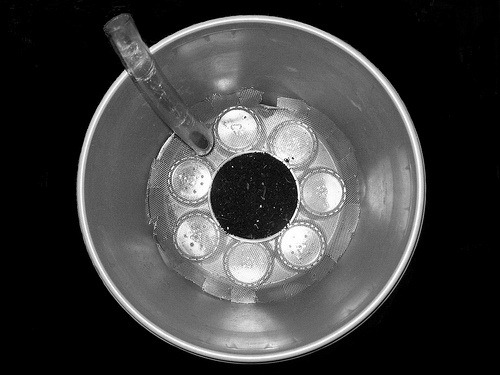 This picture has many cups under it, I use only three, and PVC instead of the Plastic tube shown.
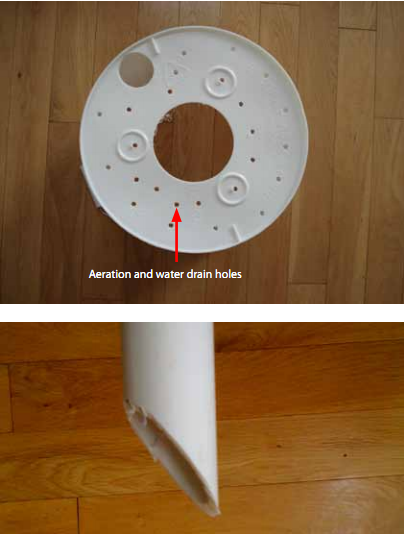
3) Get the lid just right and then let’s work on the bucket. Check where the bucket lid comes to and drill a small hole at that point on the side of the bucket. This is where the water will drain when you water the plant.
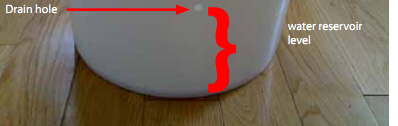
4) In a separate bucket or container mix the soil, compost and Perlite in equal amounts and mound it up some.
4) Now place the 3 Solo cups upside down in the 5 gallon bucket. Take the panty hose and cut each leg off about 14 inches up. Place one leg in the Solo cup and fill it with the soil mixture. Dampen the soil, set aside. Place the lid to the bucket on the upside down cups, slide the PVC pipe in the hole you’ve drilled for it, diagonal side down. Use zip ties to hold the pipe straight up after drilling two small hone near the top of the bucket. Put the cup with soil in the large hole in the middle.
5) Place the screen over the whole thing in the bucket and make it come up the side a few inches. Place the rest of your soil in the bucket so that it comes up to about 2 inches below the rim. Now water the soil slowly and with a sprinkler head on your water bucket. or hose. This is the only time you will water from the soil. Normally you water into the tube until it flows out the side hole.
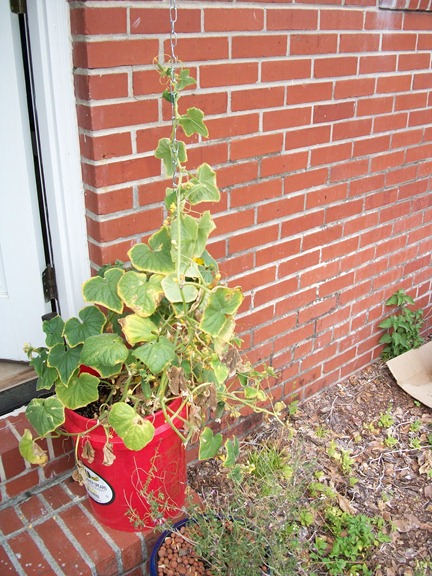 Cucumbers in Grow Bucket growing up a chain.
Neti Pots, Home Remedy for Colds or Conduit for Infections?
Posted: January 2, 2012 Filed under: Non-Toxic Choices Leave a commentMillie- If your sinus’s are so stuffed up habitually. Neti pot is treating the SYMPTOM, not the cause. Give up dairy = get rid of most congestion, colds, allergies, sinus infections, ear infections, asthma.

Dana Robinson’s Flickr page/via
Neti pots, which look like genies’ lamps, have become more popular in recent years as a natural remedy for colds, allergies and sinus infections. Ear, nose, and throat surgeons recommend using a Neti pot or similar device to irrigate nasal passages for patients who have undergone sinus surgery. Many people with sinus symptoms from allergies and environmental irritants also have begun to use the Neti pot to alleviate these symptoms. The Neti pot works by flushing some of the mucus out of the nasal passages. But Neti pots are not a panacea. In recent, but rare incidences, use of neti pots resulted can result in deaths.
Two recent deaths have been tied to neti pot use and an aquatic amoeba
Two people died recently from an encephalitis infection after using neti pots. The infection involved brain eating amoebas (just the sound of that scared the bejesus out of me). The amoeba, Naegleria fowleri, is common in rivers and lakes, but only rarely causes brain infections.
Doctors have issued a warning for people not to use tap water in neti pots
After the first incident, doctors thought it might be a fluke. But after the second, doctors have felt the need to issue warnings to patients advising them not to put tap water in their noses.
Tap water is generally safe to drink, the problem is shooting tap water up one’s nose
Huh? If I’m drinking tap water, shouldn’t it be clean enough to squirt into my nose? The answer is no. If you are using a neti pot or other nasal device, you should only use distilled or filtered water. Tap water in many places is safer to drink than even bottled water, the specific issue here is having tap water shot up one’s nasal cavity.
It is important to regularly clean neti pots and drinking water filters
You should also make sure both your neti pots and your water filters are regularly cleaned. It is also important to let the devices dry, since the amoebas need a wet atmosphere to survive in.
Although neti pot instructions usually recommend using distilled water, people often do not heed recommendations. It is still a very rare occurrence to die from using a neti pot with tap water. Still, it is better safe to be than sorry. Furthermore, neti pots can be more effective for sinus relief when saline water is used.
Avoid other activities that shoot water up one’s nose, like diving
Since the neti pot isn’t the culprit, just the conduit to your nose, it is important to note that one should also avoid doing other activities that would shoot water up one’s nose, i.e. diving or dunking one’s head in brackish, warm freshwater. This is a note of caution if one is swimming in warm, unchlorinated natural bodies of water, including hot springs- sadly for those of us who especially love bathing in these bodies. So if you find yourself in hot water, remember to keep your head up. Oh and save the cannonball for the swimming pool.
High Milk Intake Linked to Prostate Cancer
Posted: January 2, 2012 Filed under: Food and it's Impact on Our Health Leave a comment
Environmentalists go back and forth about the necessity of milk in a healthy diet. Some are advocates of organic milk, some raw milk, and some are vegans that shun milk entirely. It’s a balance of finding the healthiest, lowest impact means of getting the essential nutrients necessary for optimal health.
But a recent study has many questioning whether drinking milk on a regular basis may have harsh implications for the health of the prostate later in life. The study, published in this month’s addition of the American Journal of Epidemiology found that those that drank milk daily were more likely to die of prostate cancer later in life.
The study followed 2,200 men born between 1903 and 1937.
Reuters reports:
Among 463 men who recalled drinking milk less than once a day in their teens, one percent developed advanced prostate cancer or died of the disease over a quarter century of follow-up.
That figure was three percent among the more than 1,800 men who said they drank milk at least daily in adolescence.
The study found a connection between high milk intake during teen years and the health of the prostate gland. While the link could not be explained through education, check-ups, and diet, questions certainly remain.
Again, Reuters:
From these data alone we cannot recommend that teenage boys should chance their dietary habits,” [Johanna Torfadottir, a nutrition scientist and a graduate student at the University of Iceland] said. “We are only looking at the risk of one disease, prostate cancer, and obviously risks of other conditions, e.g. bone health, need to be considered.”
While the research is just emerging, it creates more questions for milk consumption. Not to mention the environmental implications. Cows produce 120 pounds of waste each day, comparable to two dozen people, along with 18 percent of the world’s carbon dioxide.
Even if going vegan entirely isn’t realistic for you, limiting dairy to small portions of high quality local products is certainly a worthwhile feat especially in the face of emerging heath benefits.
Cast Iron Cookware- Or, How to Get Rid of that Toxic Non-stick Stuff you’ve Had Forever.
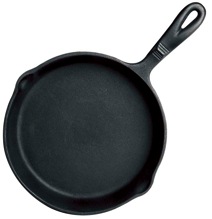
Posted: January 1, 2012 Filed under: In The Kitchen with Millie- How To's, Non-Toxic Choices 4 Comments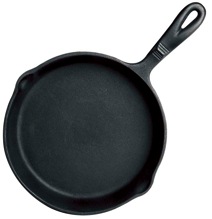 A heavy, but essential, addition to the kitchen, cast-iron cookware is dependable and full of history.
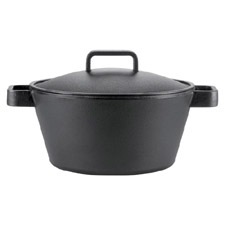
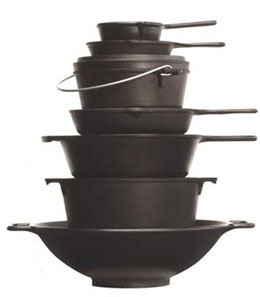
The other day someone asked me how I cooked eggs or hash browns without a non-stick skillet. I told them I used my 100 year old cast-iron skillets, wonderfully non-stick because I keep them seasoned correctly, never, ever use soap in them…eggs and hash brown slide right out. I have a 6 inch skillet, 2 12 inch skillets, a 12 inch round griddle with a handle, a 30 year old 12 inch Dutch oven with a lid and an antique cast iron waffle maker with a iron ring to use on the stove top.
They all perform beautifully. There is no reason to pay more for a pre-seasoned pan, or pans such as La Crueset with enamel that cost a small fortune. These pan are non-stick when seasoned, and kept that way.
Besides being an ideal heat conductor, cast iron heats evenly and consistently, it is inexpensive and will last a lifetime (actually several lifetimes) with proper care, and it is an old-fashioned way to cook non-stick. When well seasoned, a cast-iron pan will be stick resistant and require no additional oil.
The benefits of cast-iron pans are terrific: Foods glide out of it as from no pan made with Teflon; it goes from stove to oven; no special utensils are needed to cook in it and cleanup is a cinch. It’s time people realize the culinary wonder that a cast-iron pan can be!
As a chef, I consider cast-iron pans to be precision cooking tools, as these dependable pans enable precise control of cooking temperatures. Their heat retention qualities allow for even cooking temperature without hot spots. Cast-iron pans can be used on top of the stove or to bake in the oven. All our grandmothers had cast iron skillets and stove-top griddles. In fact, your grandmother swore by it and the pioneers depended on it.
If you don’t own a cast-iron skillet, it’s well worth the time and money to invest in one. You can find them for sale on the internet, at cook stores everywhere, thrift stores, flea markets, or you can scour the tag and yard sales for one that might look as if it has seen better days. If the pan is rusty or encrusted with grease, buy it anyway. Don’t worry! I’ll tell you how to get that new or old one into shape so you can enjoy it for a lifetime of non-stick cooking. You’ll be able to pass the pan on to your own children and grandchildren.
To season a new pan, or re-season one you have been abusing;
All new (not old pots) cast-iron pots and skillets have a protective coating on them, which must be removed. American companies use a special food-safe wax; imports are covered with a water-soluble shellac. In either case, scrub the item with a stainless steel scouring pads (steel wool), using soap and the hottest tap water you can stand.
If the pan was not seasoned properly or a portion of the seasoning wore off and food sticks to the surface or there is rust, then it should be properly cleaned and re-seasoned. Seasoning a cast iron pan is a natural way of creating non-stick cookware. And, like you cook and clean the modern non-stick cookware with special care to avoid scratching the surface, your cast iron cookware wants some special attention too.
You season a cast iron pan by rubbing it with a relatively thin coat of neutral oil (I stress a light coat of oil).
NOTE: NEVER use vegetable oils (canola, sunflower, etc.), or shortening (like Crisco shortening) to season your pan. These oils get very sticky when heated (the same as they do in your arteries!!) Use coconut oil or lard for seasoning your cast iron pans. You can also use butter.
Place the cast iron pan, upside down, in the oven, with a sheet of aluminum foil on the bottom to catch any drips. Heat the pan for 2 hours in a 250 degree oven. Once done, let the pan cool to room temperature. Repeating this process several times is recommended as it will help create a stronger "seasoning" bond.
The oil fills the cavities and becomes entrenched in them, as well as rounding off the peaks. By seasoning a new pan, the cooking surface develops a nonstick quality because the formerly jagged and pitted surface becomes smooth. Also, because the pores are permeated with oil, water cannot seep in and create rust that would give food an off-flavor.
Your ironware will be slightly discolored at this stage, but a couple of frying jobs will help complete the cure, and turn the iron into the rich, black color that is the sign of a well-seasoned, well-used skillet or pot.
Never put cold liquid into a very hot cast iron pan or oven. They will crack on the spot!
Be careful when cooking with your cast-iron pots on an electric range, because the burners create hot spots that can warp cast iron or even cause it to crack. Be sure to preheat the iron very slowly when using an electric range and keep the settings to medium or even medium-low.
Important:
Unless you use your cast-iron pans daily, they should be washed briefly with warm (not hot) water and a green scrubbie, then rinsed and thoroughly dried in order to rid them of excess surface oil. If you do not do this, the surplus oil will become rancid within a couple of days. After you clean the skillet (and this is easiest if you clean it while warm), rub a small amount of coconut oil over the surface.
Remember – Every time you cook in your cast-iron pan, you are actually seasoning it again by filling in the microscopic pores and valleys that are part of the cast-iron surface. The more you cook, the smoother the surface becomes!
Cast iron is 50 percent pig iron and 50 percent steel. It’s cooking properties have been championed and cherished for generations.
I use only cast iron or triple bottom stainless steel to cook. Cast iron for frying or scrambling eggs, frying bacon or steaks, sautéing onions or other veggies. Never cook acidic food such as tomatoes in cast iron, you will remove the seasoning.
I use my cast iron Dutch oven for sautéing roasts or other cuts of meat that I need to brown first, then finish in the oven. My favorite is a Provencal Chicken that I make a little bit of dough to seal the lid to the pot. It seals it completely and when the seal is broken the steam coming out with the smell of chicken, herbs and garlic is amazing!
The technology for making cast-iron cookware has come a long way in the last 100 years, but each piece is still cast in sand moulds. Yes, sand. This method goes back to the Chinese. At Lodge, the biggest cast iron company in the United States, the iron/steel mixture is melted with electro-magnetic heat to 2,500°F. The pouring of the molten metal into the sand moulds has been automated. It’s this automation that has made Lodge the industry leader–and survivor. They were also the first, and only, cast-iron company to offer a pre-seasoned pan. This means the pan is ready to go when you buy it.

A New Year…
Posted: January 1, 2012 Filed under: Food and it's Impact on Our Health Leave a comment Happy New Year! As we go into the new year let’s make it a year for changes, positive changes. I have recently changed the name of my business, along with my business site and blog name.
The new name is Criterion Living
cri·te·ri·on- a standard of judgment or criticism; a rule or principle for evaluating something.
I consider a Traditional Human Diet the gold standard of nutrition. NOT low fat, not a diet to lose weight, not caloric restriction, not vegan or vegetarian..good old-fashioned traditional fats, proteins and veggies. All organic, preferably local, cooked fresh and enjoyed. NOT eating on the run, skipping meals, being afraid of food.
Let THIS year be the year you get healthy, learn what great nutrition is, help yourself and others to achieve goals.
Let’s turn off the TV, return to spending quality time with each other, talking to our spouses and children, luxuriating in the pleasures of great food, abundant health and happiness and great conversation.
Let’s skip a movie and take a walk, practice yoga.
Turn off the dryer and use the clothesline.
Let’s stop whining and do something to make a difference!
Let’s work at giving and sharing what we have with each other; our talents, our happiness. Find out which friends have small businesses and talents and SUPPORT them!
And most importantly; Let’s learn to live each day, each moment from a deep well of gratitude. It’s amazing how different life looks when we appreciate what we have.
Sources for Grass Fed Meats, Eggs, Whole Food
Posted: December 29, 2011 Filed under: Food and it's Impact on Our Health Leave a commentEatWild.com is a site that let’s you search by state for sources of healthy, natural and nutritious grass-fed beef, lamb, goats, bison, poultry, pork, dairy and other wild edibles.
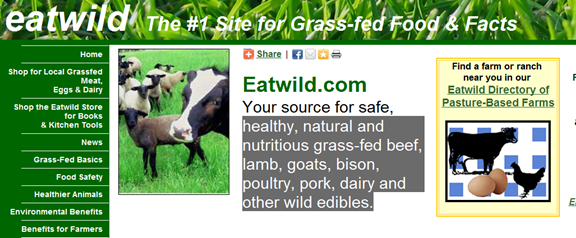
As great a source as it is for food, it’s also a great reference site on the benefits of these foods.
This Whole Dieting Craze…
Posted: December 28, 2011 Filed under: Food and it's Impact on Our Health, In The Kitchen with Millie- How To's 1 CommentIt’s funny how the word "diet" has come to mean something you do for a time to achieve weight loss. "Diet" is what we eat each day; Humans have a diet we should follow just like all other animals. It should not vary that much from person to person; 2000 calories a day from REAL food, not products, nothing out of boxes or cans, plenty of healthy saturated fats from organic sources, organic protein from animals that are grass fed, free range, kindly treated and NATURALLY fed (NOT corn)…and don’t make it low fat…and vegetables as our main source for carbs.
When will Americans learn there are no easy, quick fixes…no gimmicks or diets that will let you do something short term, get healthy…and then go back to doing what got you there in the first place?
Let this be the year you get healthy and as a great side effect, lose that weight…
- Eat more protein
- Eat more fat
- Learn about the glycemic index and use it!
Want to learn more? Click here- Criterion Living
- Book a cooking class with a group of friends
- Schedule an appointment for a Month of Nutrition Coaching
- Use my Personal Cooking Service to jump start getting healthy…use it to learn how to eat while you are getting healthier.
Call or email me today 904-520-3448 mangogirl@comcast.net
Michelle Obama’s Food Plate
Posted: December 20, 2011 Filed under: Food and it's Impact on Our Health, In The Kitchen with Millie- How To's Leave a commentWeston Price Foundation posted this on Facebook this morning and it got me curious;

OF COURSE Americans do not adhere to these recommendation! Eating low fat and restricting food intake is ridiculous. Americans keep eating because they are truly HUNGRY! Your body will tell you to keep eating if you have not met your nutrient level needed for that day…You can take in 3000 calories a day and if a high percentage of those calories are carbohydrates too are STILL going to be hungry!
I went to the site, plugged in my stats and the first thing the site recommended was that I see a health professional to see how to gain weight! Are they kidding?? I am in perfect health at 58 years old, am 5 feet 5 inches and weigh a perfect 110 pounds. My waist is the same size as it was before I had 5 kids, I never get sick, have recovered from Meniere’s Disease, chronic allergies and sore throats, recovered a partial hearing loss, gotten rid of arthritis, acne and been teaching nutrition for 26 years. No doctor ever helped with my health issues, according to the government (obviously bought and paid for by big food, agri-food I call it) I eat all wrong. LOL!
Now don’t take this the wrong way, I’m not trying to be catty…but do I really want to look like this woman who is recommending how Americans should eat?….

While she may very well be eating how she recommends it obviously isn’t working for weight loss. Because it contains TOO MANY CARBS! And a lot of empty carbs if we follow the recommendations to eat grains. (we shouldn’t).
Wee need 50% of our 2000 calories a day to come from fat; butter, fat from meat, coconut oil, avocados. We need 30% of our calories to come from protein, NOT lean protein. The remaining 20% of the 2000 calories should be from carbs…and all of those should be from low glycemic veggies, mostly green leafy vegetables. One serving of fruit with breakfast should be all that is taken in each day…and make that one count; make it blueberries or other deeply colored fruit. Depth of color means depth of nutrients and anti-oxidants.
And enjoy some dark chocolate each day..and a little wine. Both are not only good for the soul, but are rich in anti-oxidants. Can you believe that dark chocolate isn’t even in the government data base?? Crazy!


 Meal Delivery Service by Millie Barnes