Coffee-Roasted Fillet of Beef
Posted: February 26, 2012 Filed under: In The Kitchen with Millie- How To's 1 Comment
2 dried pasilla chilies
1 6-inch white-corn tortilla
3 tablespoons unsalted butter
1 ½ cups chopped white onion
4 large cloves garlic
2 ½ cups chicken stock
¼ cup almond cream
Kosher salt
1 teaspoon light-brown sugar
3 tablespoons medium-roast coffee beans, finely ground
1 tablespoon cocoa powder
1/8 teaspoon ground cinnamon
1 2-pound grass fed organic beef tenderloin roast, cut from the large end, trimmed and tied at ½ -inch intervals with kitchen twine
Kosher salt and black pepper
4 T. organic Butter
3/4 pound shiitake mushrooms, stemmed and quartered
Sprigs of watercress.
1. Seed, stem and cut the chilies into pieces. Tear the tortilla into pieces. Set both aside. In a saucepan, melt 1 tablespoon butter over medium-high heat. Add the onion and garlic and sauté until translucent, about 3 minutes. Add the chilies and tortilla and cook over medium-low heat, stirring, until softened. Pour in the stock, bring to a boil and then simmer, partly covered, for 10 minutes. In a blender, purée the hot mixture until smooth. Pour through a fine sieve set over a saucepan, pressing on the solids. Discard the solids. Whisk in the cream, 1 teaspoon salt and the brown sugar. Season to taste.
2. Preheat the oven to 400 degrees. In a bowl, whisk together the coffee, cocoa and cinnamon. Pat the beef dry and rub with 2 teaspoons salt and 1 teaspoon pepper; then rub with butter. Sprinkle the coffee mixture over a sheet of wax paper and coat the beef in it. Place the beef on a rack set in a roasting pan and let stand at room temperature for 30 minutes.
3. Roast the beef for 10 minutes; then lower the temperature to 250 and cook for an hour more, or until the meat reaches 130 degrees. Let stand, loosely covered with foil, for 10 minutes. (The meat will continue to cook, reaching about 135 degrees.)
4. Bring the broth to a boil and simmer until just thick enough to coat the back of a spoon. Cover and keep warm.
5. In a large skillet, melt the remaining butter over medium-high heat. Add the mushrooms and sauté until golden. Season with salt and pepper.
6. Remove the twine and cut the beef into -inch-thick slices. Spoon just enough broth to cover the bottoms of 4 to 6 shallow, wide soup bowls. Add 2 to 3 slices of beef, spoon more broth over the beef if desired and top with mushrooms and watercress. Serves 4.
Worm Farm and New Rabbit Cage
Posted: February 22, 2012 Filed under: Gardening, Non-Toxic Choices Leave a comment
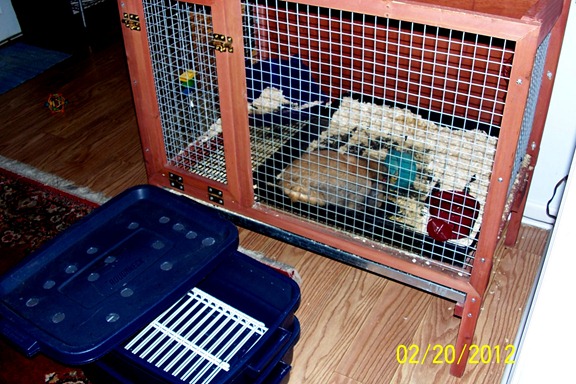
My Holland Lop bunny, Cornelius, is 1 year old. He just went from cage to condo. I found it for cheap on Craigslist! I also built a worm farm this last weekend; 2 Rubbermaid Tote, heavy ones, two small sections of wire shelving held together by 3 zip-ties so that the newspaper will stay damp and allow the liquid to run off into the bottom tub. The top one has holes drilled on the bottom and up near the sides for ventilation. The worms eat the newspaper and just about everything you put in there. Along with some soil, rabbit droppings mixed with sawdust from the rabbit cage and food scraps will be ready for the red worms soon. I’ll have great fertilizer and a ready source of worm farm material.
Coconut Crème Brulee
Posted: February 19, 2012 Filed under: In The Kitchen with Millie- How To's 1 Comment|
Here’s a rich, creamy classic with a tropical twist. Begin preparing it a day ahead. 1/2 cup plus 6 teaspoons sugar Preheat oven to 350°F. Place six 3/4-cup custard cups or ramekins in large roasting pan. Whisk 1/2 cup sugar, egg yolks and whole egg in large bowl to blend. Combine almond milk, coconut milk and coconut in heavy medium saucepan. Bring to boil. Whisk into yolk mixture. Pour custard into cups, dividing equally. Pour enough hot water into roasting pan to come halfway up sides of cups. Bake until custards are just set in center, about 35 minutes. Remove from water. Cool; chill overnight. Preheat broiler. Arrange custard cups on baking sheet. Sprinkle 1 teaspoon sugar evenly over each. Broil until sugar browns, rotating baking sheet for even browning and watching closely, about 2 minutes. Chill custards at least 1 hour before serving. (Can be broiled, then chilled up to 6 hours ahead.)
|
Killing Weeds: Skip The Agent Orange And Bring On The Boiled Water And Vinegar.
Posted: February 19, 2012 Filed under: Gardening, Non-Toxic Choices 2 CommentsWeed eradication programs for most starts in the herbicide aisle of the local home and garden type store but the visit may not be necessary. You might have everything you already need in your kitchen – water and vinegar.
Boiled Water: I read about this on Ecomii.com and had to try it. Boil a kettle of water and pour it on your weeds. It’s that simple. Literally, within 30 minutes, the base of the weeds will turn a brown color and soon flattened on your patio like limp lettuce.
 Vinegar: The active, natural weed killer in vinegar is acetic acid. Careful application via spray bottle or focused pour is important because vinegar is indiscriminate and can kill your grass. Normal grocery store vinegar is 5% acetic acid and may have to be applied several times in order to kill your weeds. You can get vinegar with acetic acid concentrations of 10%+ from a restaurant or farmer’s supply store but you magnify the risk to the nearby plants.
Boiled Vinegar: Why not connect with both weed cheeks with one kick by boiling your vinegar? The scalding water will start the process and the concentrated acetic acid in the boiled vinegar will take care of the rest.
If your neighbor comes out every couple days looking like a retired Ghostbuster spraying the Agent Orange on everything green and unwelcome, mention the scalding water and/or vinegar trick. You probably won’t convince him to change over to boiled anything so do your best to avoid operation weeding thunder.
Give any combo of boiled water, vinegar or boiled vinegar a shot and see if you get the results you want. You will have to invest a little extra time to kill your weeds but atleast you won’t have to face the possible collateral damage and long-term risks associated with herbicides.
Worm Compost Tower Creates And Delivers Compost Naturally
Posted: February 19, 2012 Filed under: Gardening Leave a commentFrom a post on Treehugger.com
After spending $200+ on my tumbler compost bin, seeing this MacGyver in-garden worm composter brings on a little Jubbling envy. It’s a basic idea and seems like it should work. The video explains it – put your compost solution directly in your garden, in this case a bottom perforated PVC pipe, and create and distribute your compost at the same time. Cut out the middleman, which is you, and put the worms in charge of spreading the compost
Animal Food Nutrients
Posted: February 19, 2012 Filed under: Food and it's Impact on Our Health 1 CommentSome nutrients we can only get through animal products, there is no way to get them on a vegetarian diet.
Vegetable oils are unsafe to eat on a regular basis and do not give us the depth of nutrients we get from healthy, organic saturated fats. Our daily calcium needs can be met with TWELVE cups of broccoli daily but it is not absorbed well without saturated fats present at the same time. Vitamin D from supplements is not the same as getting this crucial nutrient from the sun and from grass fed meat.
Supplements do not work, they are not absorbed correctly and do not have the live enzymes present crucial for absorption. 
From Bellatrix Nutrition
Stylish Carbon Filter Water Bottle by Black + Blum Taps Ancient Japanese Techniques
Posted: February 18, 2012 Filed under: Non-Toxic Choices Leave a commentBonnie Alter

black+blum/Promo image
Black+Blum is the British design team that specializes in creating household items that you want to use again and again. Now they have come out with Eau Good, an organic and stylish looking water bottle that makes tap water taste great.
Dan Black and Martin Blum wanted to create a bottle that was ergonomically- (and aesthetically) designed and would filter tap water as you drink. Ever conscious of the environment, they are well aware that over 22 billion plastic water bottles are discarded yearly.
The ingenious and careful design is based on an ancient Japanese filtering system using carbon filters. In Japan carbon filters have been used as a water purifier since the 17th century. They reduce chlorine and chemicals, add minerals to the water and balance the pH. The active carbon filter lasts up to 6 months.
The lovely looking bottle is made from BPA-free plastic. It has a cork top. Just released this week, the water bottle has alrealdy won best new product award at the Home Show in London. TreeHugger Lloyd heard about it in Toronto last week at the Interior Design Show: it is sweeping the world.
The way it works is ingenious. You squeeze the bottle to lock the filter in place as well as release it when it needs to be changed.
TreeHugger had the pleasure of meeting up with Martin Blum and Dan Black, so we know a bit about their background.
The pair met at the University of Northumbria where they were both studying industrial design and decided to work together because they both wanted to design “products for the right reason.” They acknowledge that they are lucky to have the freedom to choose the kind of work that they want to do and the flexibility to branch out and not be pigeon-holed. Blum’s wife is Japanese and she has influenced their thinking in the development of the products, as would seem likely in the case of the eau bottle.
Mango-Guava Lime Tarts with Tropical Nut Crust
Posted: February 12, 2012 Filed under: In The Kitchen with Millie- How To's Leave a comment
These tarts are one of my favorite desserts, a perfect combination of sweet and tart, soft and crunchy. Lactose and Gluten Free. They are easy to do but are very elegant to serve. I use 4 inch tart tins.
Serves 8
Preparation time; 1 ½ hr.
1 cup macadamias
1 cup almonds
2 cups coconut flakes
¾ cup Succanat or organic sugar
3 large egg whites
1/2 cup apple juice
½ cup coconut milk
1 T agar agar
1/3 cup lime juice
1 t arrowroot
1 mango
4 T guava jelly
1 T. butter
1) Combine nuts in food processor to coarse grind. Add coconut and buzz briefly. Beat egg whites to stiff peaks, adding sugar when whites are still soft. Fold in to nuts.
2) Place mixture into buttered tart tins. Bake at 350° until moderately brown. Cool well before removing from tins.
3) Place apple juice and coconut milk in saucepan, gently heat to right before it comes to a simmer. Mix arrowroot and lime juice, add to pan, stirring until arrowroot is melted. Cool and let set ( putting it in freezer speeds this up ) about ½ way, then spoon into shells.
4) Place sliced mango on top of each tart.
5) Melt guava jelly and butter in a small pan and use a pastry brush to glaze mangoes.
Enjoy….
How Much Space Do You Need For a Vegetable Garden?
Posted: February 12, 2012 Filed under: Gardening Leave a commentFrom Vegetable Gardener
Millie- This is what mine looks like now, except I am using the fence to trellis tomatoes and cucumbers on.

This vegetable garden is in a Brooklyn backyard.
Photo by canarsiebk under the Creative Commons Attribution License 2.0.
Not much. Truthfully, it depends on the types of veggies you want to grow and how many. But you’ll want to know what you have to work with before you choose your vegetable seeds or seedlings. For example, if your kids really want to grow giant pumpkins, a good-sized part of the yard or a large raised bed could easily be devoted to pumpkins. But, one thing is for sure, you absolutely do not need what is referred to to as "land" to plant a vegetable garden. Not even close.
There are ways around to successfully grow sprawling veggies like pumpkins and other squash. One way would be to "train" the vines by physically aiming them in a direction and pruning them to keep only several vines. If you prune, remember that you’ll harvest less fruit than if the plant was left to its own devices. Another way to save space with vining veggies is to grow them vertically.
There are some veggies take to containers with ease. Carrots, peppers, and lettuce come to mind. Tomatoes usually do well in containers, although if you let them dry out to the point where the soil pulls away from the sides of the container, they may never forgive you which can affect their performance by producing less fruit.
In fact, if you think of containers as basically small raised beds, it’s hard to think of anything that wouldn’t grow in them. One thing that’s different about containers versus raised beds is that the container will dry out faster because it has sides above ground that absorb the heat.
When choosing a container, take into consideration the mature size of the vegetable plant. Hanging baskets along the eaves of the sunny side of your house can work, too. Creative containers such as the Topsy Turvy hanging tomato planter is also a good option.
If you know you’re going to need more space, have you considered working it into yourlandscaping? What about your lawn? Many people have front and back lawns that aren’t used at all. They’re watered, mowed, and they add some green to the yard. But have you ever thought about if you’re using them? So, step outside and take a look at your lawn. Are you willing to give some of it up?
If you’re absolutely certain that you either have nowhere to plant or you honestly do need more space, consider a community garden. Many cities shave a community gardens where you can lease a plot for the year (and beyond). The nice thing about gardening in a large space among other gardeners is camaraderie, the guidance, and chance to share your vegetables with other gardeners.
Let’s Make Mead: The Ancient Berserker Crunk-Juice of Kings
Posted: February 11, 2012 Filed under: In The Kitchen with Millie- How To's Leave a commentFrom GIZMODO
Let’s Make Mead: The Ancient Berserker Crunk-Juice of Kings
Mead is almost certainly the first beverage that got humans drunk (sorry, beer). It predates wine by ten to thirty thousand years. Hell, it predates the cultivation of soil. Best of all, you only need three common ingredients to whip up a batch. So let’s do that.
It’s Friday afternoon, you’ve made it through the long week, and it’s time for Happy Hour, Gizmodo’s weekly booze column. A cocktail shaker full of innovation, science, and alcohol. Yar, let’s get ye olde drunke.
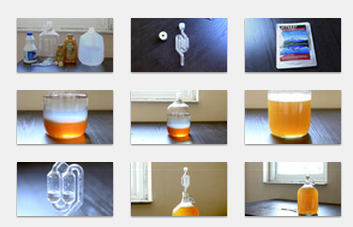
Mead is just three simple ingredients: honey, water, yeast. That’s it. The end. You can add fruit, spices, or hops to add flavors, but you don’t have to. I’m a purist, personally.
Before we get cooking, a little history. The reason mead likely predates other forms of booze is that man probably didn’t even make it. He found it. Somewhere around twenty to forty thousands of years ago, bees would make their nests in holes in trees, then the rainy season would come and flood the nest. Wild yeast would blow through the muck and get all mixed up, too. Then some early hunting-gathering humans ambled by and were like, "Oooh, honey! Eww, it’s wet. Ahh, screw it, I need the calories." Queue drunken orgy.
It was also a favorite drink of the Vikings before storming into battle. Not surprising; the alcohol gets you drunk and the sugar in the honey gets you amped. Think of it as an early Vodka-RedBull prototype. Oh, and yes, that high sugar content can give you a hangover, so be careful.


 Meal Delivery Service by Millie Barnes