How Ultra-Processed Foods Can Raise Risk of Cognitive Decline
Posted: December 8, 2022 Filed under: Food and it's Impact on Our Health | Tags: #delivery, #glutenfree, #healthyeating, #Lactosefree, #mealdelivery, #MillieBarnes, #Ortega, #pescatarian, #Riverside, #SanMarco, #vegetarian, #weightloss Leave a comment
- A new study concludes that regular consumption of ultra-processed foods raises a person’s risk of cognitive decline.
- In an earlier study, Australian researchers also reported that ultra-processed foods can negatively impact cognitive functions.
- These foods include packaged snacks and pre-prepared dishes such as pizza and pies.
- These studies line up with previous research that indicates that an unhealthy diet can impair cognitive abilities and raise the risk of dementia-related diseases such as Alzheimer’s.
New research indicates that regularly consuming ultra-processed foods such as hot dogs and frozen pizza can raise your risk of cognitive decline.
In a study Trusted Source published today in the journal JAMA Neurology, researchers looked at more than 10,000 individuals over a median period of 8 years.
They concluded that people whose daily calorie intake is at least 20% from ultra-processed foods had a 25% faster decline in executive functions and a 28% faster rate of overall cognitive impairment.
The researchers noted that if a person’s overall diet quality was high, the effect of ultra-processed foods was less.
“While this is a study of association, not designed to prove cause and effect, there are a number of elements to fortify the proposition that some acceleration in cognitive decay may be attributed to ultra-processed foods,” Dr. David Katz, a specialist in preventive and lifestyle medicine and nutrition, told CNN.
“The sample size is substantial and the follow-up extensive. While short of proof, this is robust enough that we should conclude ultra-processed foods are probably bad for our brains,” he added.
Other studies find similar effects from ultra-processed foods
The new findings are in line with another study published in July in the European Journal of Nutrition that also suggested that consuming ultra-processed foods may have a negative impact on cognitive performance in older adults.
The researchers from Australia conducting the study told Healthline they defined ultra-processed foods as those that undergo “several industrial processes that can’t be reproduced at home.”
They noted that these items contain little to no whole foods and typically include flavorings, colorings, emulsifiers, and other cosmetic additives.
Examples include packaged snacks, chocolates, breakfast cereals, and pre-prepared dishes such as pies, pasta, and pizza.
That’s opposed to processed foods that the researchers defined as foods that commonly have added sugar, oil, or salt. The processing is used to increase the durability or enhance the “sensory qualities” of the food. Examples include canned veggies, fruits, legumes, and salted, cured, or smoked meats.
Another study published in the journal Neurology also reported that people who consume high amounts of ultra-processed foods such as sodas, chips, and cookies may have a higher risk of developing dementia.
Using a cross-sectional study, the team of Australian researchers evaluated more than 2,700 participants who were 60 years or older.
The participants were part of the National Health and Nutrition Examination SurveyTrusted Source from 2011 to 2014. Each participant recalled what they ate in a 24-hour period on two nonconsecutive days.
The team used standardized, validated tests, including one that assesses Alzheimer’s disease. They concluded that consuming ultra-processed foods was associated with worse performances in one of the tests among older people who did not have pre-existing diseases.
Researchers told Healthline the findings suggest that decreasing ultra-processed foods may be a way to improve impaired cognition among older adults.
“Research indicates that diets that follow a Mediterranean Diet style, recognized by the high proportion of foods with anti-inflammatory and antioxidant properties, are associated with a reduced risk of age-associated cognitive decline and dementia,” said Barbara Cardoso, Ph.D., lead author of the study and a senior lecturer in nutrition, dietetics, and food at Monash University in Melbourne, Australia.
“Foods consumed as part of these diets include fish, nuts, olive oil, and vegetables,” she said.
Experts say these findings are consistent with what they’ve learned from other studies about diet and dementia.
“There is growing evidence that what we eat can impact our brains as we age and many studies suggest it is best to eat a heart-healthy, balanced diet low in processed foods and high in whole, nutritional foods like vegetables and fruits,” said Percy Griffin, Ph.D., director of scientific engagement for the Alzheimer’s Association.
“So, it’s not surprising that this paper found that a diet high in ultra-processed foods impaired cognition in older adults,” he told Healthline.
Another study published in the journal Neurology last year also suggested there were benefits from a Mediterranean diet on brain health.
The researchers concluded that their findings corroborated the view that a Mediterranean diet could be a ”protective factor against memory decline and mediotemporal atrophy,” or shrinkage of the lobe of the brain associated with Alzheimer’s.
The Centers for Disease Control and Prevention estimatesTrusted Source that nearly 6 million people in the United States have Alzheimer’s and related dementias.
By 2060, the number of people diagnosed with Alzheimer’s is predicted to rise to an estimated 14 million.
Communities of color could be affected the most. Cases among Hispanics could increase seven times over the current estimates. Among African Americans, cases could increase four times the current estimates.
In San Francisco, a new community-based program is designed to focus on known modifiable risk factors to help prevent dementia.
Posit Science along with the YMCA is launching a model “Brain Health Program” funded by the National Institutes of Health.
The program, which is expected to be in operation in 6 months, will offer classes to at-risk adults. Part of the training will focus on the diet and nutrition principles the YMCA has been using in its Diabetes Prevention Program.
“Eating a brain-healthy diet is a big part of the Brain Health Program,” said Henry Mahncke, Ph.D., the chief executive officer of Posit Science.
“The future of brain health and dementia prevention is changing what we do in our everyday life so we build healthy, resilient brains that keep going as long as our bodies keep going,” he told Healthline. “Just about everything we eat gets sent by the bloodstream up to our brains, and so it’s not surprising to brain health experts that what we eat matters for our brain health, our cognitive performance, and our risk of dementia.”
The Australian researchers say their study is the first to investigate the association between ultra-processed foods and cognitive decline.
“As such, it sheds light for future studies that aim at providing stronger evidence unraveling potential mechanisms involved,” said Cardoso.
She explained the study had some limitations. It looked at a specific point in time whereas it may take years for impaired cognition to develop. They relied on participants to recall their dietary intake, which might not always be an accurate representation of their usual dietary intake.
“The next step for this research is to study if reducing the amount of ultra-processed foods in one’s diet could improve cognition,” said Griffin.
He noted that there will be more research on the impact of an unhealthy diet on dementia risk introduced at the upcoming Alzheimer’s Association International Conference that begins July 31.
Your Microbiome Ages As You Do—and That’s a Problem
Posted: December 3, 2022 Filed under: Food and it's Impact on Our Health | Tags: #delivery, #glutenfree, #healthyeating, #Lactosefree, #mealdelivery, #MillieBarnes, #Ortega, #pescatarian, #Riverside, #SanMarco, #vegetarian, #weightloss Leave a commentThe following article outlines what happens to our microbiome and gut flora change as we age.
How to make changes to help;
- Never eat cooked food without including some raw food, no exceptions! ONLY raw food has enzymes which help us digest food. Cooking destroys those enzymes.
- There is a reason that every culture has traditionally included fresh fruits or salads either before or after meals.
- Avoid sugar! Empty calories are a huge part of our health problems and keep us from meeting our nutrient needs.
- Avoid ALL processed foods; you should be able to look at the food and tell how it grew.
- Make 1/3 of your intake each day raw food.

We’re all crawling with bugs. Our bodies are home to plenty of distinct ecosystems that are home to microbes, fungi, and other organisms. They are crucial to our well-being. Shifts in the microbiome have been linked to a whole host of diseases. Look after your bugs and they’ll look after you, the theory goes.
These ecosystems appear to change as we age—and these changes can potentially put us at increased risk of age-related diseases. So how can we best look after them as we get old? And could an A-grade ecosystem help fend off diseases and help us lead longer, healthier lives?
It’s a question I’ve been pondering this week, partly because I know a few people who have been put on antibiotics for winter infections. These drugs—lifesaving though they can be—can cause mass destruction of gut microbes, wiping out the good along with the bad. How might people who take them best restore a healthy ecosystem afterwards?
I also came across a recent study in which scientists looked at thousands of samples of people’s gut microbe populations to see how they change with age. The standard approach to working out what microbes are living in a person’s gut is to look at feces. The idea is that when we have a bowel movement, we shed plenty of gut bacteria. Scientists can find out which species and strains of bacteria are present to get an estimate of what’s in your intestines.
In this study, a team based at University College Cork in Ireland analyzed data that had already been collected from 21,000 samples of human feces. These had come from people all over the world, including Europe, North and South America, Asia, and Africa. Nineteen nationalities were represented. The samples were all from adults between 18 and 100.
The authors of this study wanted to get a better handle on what makes for a “good” microbiome, especially as we get older. It has been difficult for microbiologists to work this out. We do know that some bacteria can produce compounds that are good for our guts. Some seem to aid digestion, for example, while others lower inflammation.
But when it comes to the ecosystem as a whole, things get more complicated. At the moment, the accepted wisdom is that variety seems to be a good thing—the more microbial diversity, the better. Some scientists believe that unique microbiomes also have benefits, and that a collection of microbes that differs from the norm can keep you healthy.
The team looked at how the microbiomes of younger people compared with those of older people, and how they appeared to change with age. The scientists also looked at how the microbial ecosystems varied with signs of unhealthy aging, such as cognitive decline, frailty, and inflammation.
They found that the microbiome does seem to change with age, and that, on the whole, the ecosystems in our guts do tend to become more unique—it looks as though we lose aspects of a general “core” microbiome and stray toward a more individual one.
But this isn’t necessarily a good thing. In fact, this uniqueness seems to be linked to unhealthy aging and the development of those age-related symptoms listed above, which we’d all rather stave off for as long as possible. And measuring diversity alone doesn’t tell us much about whether the bugs in our guts are helpful or not in this regard.
The findings back up what these researchers and others have seen before, challenging the notion that uniqueness is a good thing. Another team has come up with a good analogy, which is known as the Anna Karenina principle of the microbiome: “All happy microbiomes look alike; each unhappy microbiome is unhappy in its own way.”
Of course, the big question is: What can we do to maintain a happy microbiome? And will it actually help us stave off age-related diseases?
There’s plenty of evidence to suggest that, on the whole, a diet with plenty of fruit, vegetables, and fiber is good for the gut. A couple of years ago, researchers found that after 12 months on a Mediterranean diet—one rich in olive oil, nuts, legumes, and fish, as well as fruit and veg—older people saw changes in their microbiomes that might benefit their health. These changes have been linked to a lowered risk of developing frailty and cognitive decline.
But at the individual level, we can’t really be sure of the impact that changes to our diets will have. Probiotics are a good example; you can chug down millions of microbes, but that doesn’t mean that they’ll survive the journey to your gut. Even if they do get there, we don’t know if they’ll be able to form niches in the existing ecosystem, or if they might cause some kind of unwelcome disruption. Some microbial ecosystems might respond really well to fermented foods like sauerkraut and kimchi, while others might not.
I personally love kimchi and sauerkraut. If they do turn out to support my microbiome in a way that protects me against age-related diseases, then that’s just the icing on the less-microbiome-friendly cake.
To read more, check out these stories from the Tech Review archive:
At-home microbiome tests can tell you which bugs are in your poo, but not much more than that, as Emily Mullin found.
Industrial-scale fermentation is one of the technologies transforming the way we produce and prepare our food, according to these experts.
Can restricting your calorie intake help you live longer? It seems to work for monkeys, as Katherine Bourzac wrote in 2009.
Adam Piore bravely tried caloric restriction himself to find out if it might help people, too. Teaser: even if you live longer on the diet, you will be miserable doing so.
How Black Tea, Apples, and Cruciferous Veggies Benefit Heart Health Later In Life
Posted: December 1, 2022 Filed under: Food and it's Impact on Our Health | Tags: #delivery, #glutenfree, #healthyeating, #Lactosefree, #mealdelivery, #MillieBarnes, #Ortega, #pescatarian, #Riverside, #SanMarco, #vegetarian, #weightloss Leave a comment
- Abdominal aortic calcification (AAC) causes calcium deposits in the abdominal aorta, a large artery that supplies blood from the heart to the abdominal organs and lower body.
- People with AAC have an increased risk of cardiovascular events such as heart attack and stroke.
- A new study shows that a diet high in flavonoid foods like black tea, apples, and cruciferous vegetables may prevent AAC and protect heart health, particularly among women.
- The findings indicate that older women who consumed more flavonoid foods were 36% less likely to have AAC compared to those who consumed fewer flavonoids.
- More research is needed to determine whether flavonoid-rich foods could prevent calcification in other arteries.
Could a cup of tea or an apple a day really keep the doctor away? Maybe not — but new research suggests that a diet high in flavonoids such as tea, fruits, and cruciferous vegetables may lower your risk of heart disease.
A recent study from researchers at Edith Cowan University (ECU) in Australia found that older women who consumed high levels of flavonoids from plant-based food sources were less likely to have extensive abdominal aortic calcification (AAC).
AAC happens when calcium deposits build up in your abdominal aorta, a large artery that supplies blood from your heart to your abdominal organs and lower body.
People with AAC have an increased risk of cardiovascular disease, such as heart attack and stroke. They’re also more likely to develop late-life dementia.
“This is just one of many, many studies that have shown a reduction in cardiovascular risk with eating more of a plant-based diet that’s rich in flavonoids,” Janice Friswold, RD, LD, a registered dietitian and diabetes educator at University Hospitals in Cleveland, OH, who was not involved in the new study, told Healthline.
“Some studies on flavonoids have also shown other benefits, such as reduction of cancer risk or cognitive decline, so there’s nothing but good stuff to say about these things.”
The ECU study was recently published in the journal Arteriosclerosis, Thrombosis, and Vascular BiologyTrusted Source, which is a journal of the American Heart Association.
Flavonoids are a type of plant compound found in fruits, vegetables, spices, tea, and other plant-based foods. They’re antioxidants that help protect cells from damage caused by oxidative stress.
Scientists have identified more than 6,000 types of flavonoids, which are classified into 12 main groups.
Six of these groups are found in common foods:
Flavonoid group
Common food sources
Anthocyanidins
berries, grapes, and red cabbage
Flavin-3-ols
tea, wine, dark chocolate, apricots, apples, berries, and grapes
Flavanols
tea, berries, apples, onions, and cruciferous and leafy green vegetables, such as broccoli, kale, spinach, watercress, and parsley
Flavones
celery, chili peppers, and herbs such as parsley, mint, oregano, and thyme
Flavanones
citrus fruits, such as lemon, orange, and grapefruit.
Isoflavones
beans, lentils, peas, and soy-based foods, such as tofu and soymilk
“Eating a diet high in flavonoid-rich foods is really important,” Friswold said.
“I generally don’t recommend that people take [flavonoid] supplements because we know there’s over 6,000 different phytochemicals in the flavonoid group, and we’ve isolated a few of them, but who knows which is the magic combination.”
Instead, health and nutrition experts like Friswold encourage people to “eat the rainbow” by consuming a variety of fruits, vegetables, and other plant-based foods of different colors.
High flavonoid intake and reduced AAC risk
Edith Cowan researchers evaluated the eating habits of 881 older white women enrolled in the Perth Longitudinal Study of Ageing Women (PLSAW) to learn how flavonoid consumption could affect cardiovascular health.
These women were generally healthy and had no prior history of cardiovascular disease.
The researchers asked participants to complete food-frequency questionnaires to report how often they consumed certain foods and beverages during the past year.
The researchers also collected information about participants’ body mass index (BMI), smoking history, physical activity, and whether they had received a diagnosis or were taking medication for certain health conditions, such as diabetes, chronic kidney disease, high blood pressure (hypertension), or high cholesterol.
After controlling for these factors, the researchers found that older women with higher total flavonoid intake were 36% less likely to have extensive AAC than those with lower flavonoid intake.
Black tea was the main source of flavonoids in participants’ diets. Women who drank 2–6 cups of black tea per day were 16–42% less likely to have extensive AAC than those who drank none.
Among participants who didn’t drink black tea, flavonoid intake from other dietary sources was still linked to a lower risk of AAC.
What about calcification in other arteries?
Although the findings suggest that a flavonoid-rich diet has health benefits, the study does have limitations.
For instance, the researchers evaluated a relatively healthy and racially homogeneous group of women and only asked about them their eating habits over the past year rather than their lifetime.
It can be challenging for many people to accurately recall their eating habits, especially over longer periods.
“What we don’t know is whether participants have been following the same diet for years or if they used to be on a different diet and have recently become healthier,” Dr. Johanna Contreras, a cardiologist at Mount Sinai Hospital in New York, NY, told Healthline.
“My question is — if I change my diet to eat healthy starting tomorrow, will I get this benefit? Or is this a benefit that participants had because they’ve been eating like that for a long time?”
The study also focused solely on AAC rather than evaluating calcification in other arteries.
“Just because a person has aortic calcification doesn’t mean they have calcification in their main coronary arteries,” Friswold said.
“So nowadays, we’re doing a CT calcium score, which looks at the three main arteries to see if there’s calcification there.”
Flavonoids have other health benefits, too
Plant-based flavonoid foods are rich in healthful nutrients like antioxidants and fiber and may also help fight inflammation.
The new study from ECU is only one of many studies highlighting the potential benefits of eating a diet containing plenty of flavonoid-rich, plant-based foods.
For example, the authors of a 2013 study Trusted Source followed 93,600 healthy women from the Nurses Health Study II over 18 years and found that those with a high intake of anthocyanins had a lower risk of heart attack.
The authors specifically highlighted the apparent benefits of blueberries and strawberries, which are rich in anthocyanin.
And recently, in another new study published in Neurology, researchers linked antioxidant flavanol intake to slower memory decline.
Participants with the highest flavanol intake consumed an average of 15 milligrams daily, roughly equivalent to one cup of dark leafy greens.
Eating well for heart health and more
The American Heart Association (AHA)Trusted Source encourages people to eat a wide variety of plant-based foods, including:
- 2.5 servings of vegetables per day
- 2 servings of fruit per day
- 6 servings of grains per day, with whole grains preferred over refined grains
Friswold said it can be helpful to place less emphasis on which type of protein you’re going to consume at each meal and focus instead on what you’re going to have for fruits and vegetables.
The AHA also encourages people to practice other healthy eating habits by choosing lean protein sources and limiting consumption of saturated fat, trans fats, and added sugars.
Getting enough sleep, avoiding smoking, and exercising regularly are also important for lowering the risk of cardiovascular disease and many other chronic conditions.
“I always tell patients that if you know you have risk factors for coronary artery disease or you have calcified plaques in the arteries, improve your diet and keep moving,” Contreras said.
“Good diet and exercise are very important.”
Diet Rich in Vegetables, Whole Grains and Beans Cuts Bowel Cancer Risk
Posted: November 30, 2022 Filed under: Food and it's Impact on Our Health | Tags: #delivery, #glutenfree, #healthyeating, #Lactosefree, #mealdelivery, #MillieBarnes, #Ortega, #pescatarian, #Riverside, #SanMarco, #vegetarian, #weightloss Leave a comment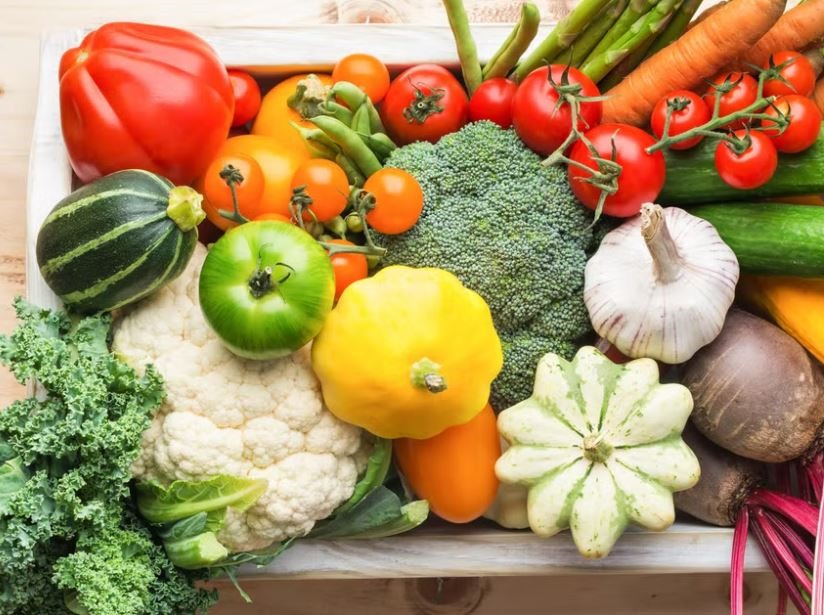
A diet rich in vegetables, whole grains, beans and lentils can cut the risk of bowel cancer in men by more than a fifth, research suggests.
A new study on 79,952 men in the US found that those who ate largest amounts of healthy plant-based foods had a 22% lower risk of bowel cancer compared to those who ate the least.
However, the researchers found no such link for women, of whom 93,475 were included in the study.
The team suggested that the link is clearer for men, who have an overall higher risk of bowel cancer.
They were also asked about portion size.
People could tick that they consumed each food item “never or hardly ever” right up to “two or more times a day”.
For drinks, the responses ranged from “never or hardly ever” to “four or more times a day”.
The food groups were classed as healthy plant foods (whole grains, fruits, vegetables, vegetable oils, nuts, legumes such as lentils and chickpeas, tea and coffee), less healthy plant foods (refined grains, fruit juices, potatoes, added sugars), and animal foods (animal fat, dairy, eggs, fish or seafood, meat).
The researchers then divided the daily consumption per 1,000 kcal into quintiles, from the biggest consumption to the least.
On average, men were aged 60 at the start of the study while women were aged 59.
We speculate that the antioxidants found in foods such as fruits, vegetables, and whole grains could contribute to lowering colorectal cancer risk by suppressing chronic inflammation, which can lead to cancer
Researcher Jihye Kim, from Kyung Hee University, South Korea, said: “Colorectal (bowel) cancer is the third most common cancer worldwide and the risk of developing colorectal cancer over a lifetime is one in 23 for men and one in 25 for women.
“We speculate that the antioxidants found in foods such as fruits, vegetables, and whole grains could contribute to lowering colorectal cancer risk by suppressing chronic inflammation, which can lead to cancer.
“As men tend to have a higher risk of colorectal cancer than women, we propose that this could help explain why eating greater amounts of healthy plant-based foods was associated with reduced colorectal cancer risk in men but not women.”
The authors found the link among men also varied by race and ethnicity.
For example, among Japanese American men, the reduced risk of cancer was 20% but it was 24% for white men.
The team said more research was needed on the differences between ethnicities.
During the study, 4,976 people (2.9%) developed bowel cancer and factors likely to influence the results, such as whether people were overweight, were taken into account.
Dr Helen Croker, head of research interpretation at World Cancer Research Fund, said: “We welcome this research which adds to our own evidence that eating vegetables, wholegrains and beans reduces the risk of developing bowel cancer.
“We also recommend that people limit the amount of red meat they eat and avoid processed meat altogether.
“Interestingly in this paper, plant-based diets were only associated with a lower risk of bowel cancer in men. It’s speculated that one reason for this may be because men in general had a lower intake of plant foods and a higher intake of animal foods than women – so there was perhaps a ceiling effect to the benefits that women may experience.”
Beth Vincent, health information manager at Cancer Research UK, said: “This American study adds to lots of existing evidence on the benefits of eating a balanced diet high in fruit, vegetables and fibre for both men and women.
“The research tried to compare ‘healthy plant foods’ and ‘unhealthy plant foods’ and found a link with bowel cancer in men. But because of the design of the study, the authors themselves acknowledge we can’t read too much into their results.
“The study relied on people remembering what they had eaten up to a year ago. It also made the assumptions that participants’ diets stayed the same over many years, and that all meat and animal products were unhealthy – which isn’t the case.
Kale, Black Bean & Avocado Burrito Bowl
Posted: November 30, 2022 Filed under: Recipes | Tags: #delivery, #glutenfree, #healthyeating, #Lactosefree, #mealdelivery, #MillieBarnes, #Ortega, #pescatarian, #Riverside, #SanMarco, #vegetarian, #weightloss Leave a comment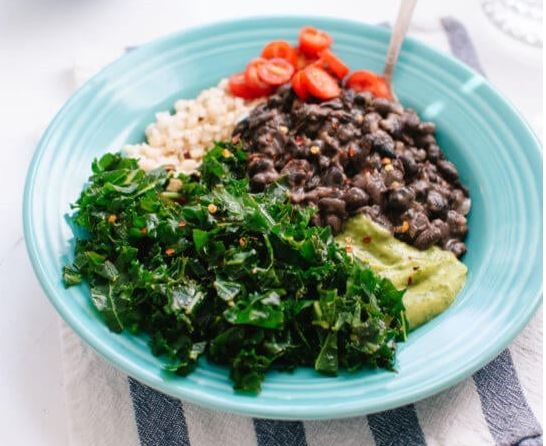
Brown rice
- 1 cup brown rice, rinsed (short grain/arborio or long grain/basmati recommended)
- ¼ teaspoon salt
Lime marinated kale
- 1 bunch curly kale, ribs removed and chopped into small, bite-sized pieces
- ¼ cup lime juice
- 2 tablespoons olive oil
- ½ jalapeño, seeded and finely chopped
- ½ teaspoon cumin
- ¼ teaspoon salt
Avocado salsa verde
- 1 avocado, pitted and sliced into big chunks
- ½ cup mild salsa verde (any good green salsa will do)
- ½ cup fresh cilantro leaves (a few stems are ok)
- 2 tablespoons lime juice
Seasoned black beans
- 2 cans black beans, rinsed and drained (or 4 cups cooked black beans)
- 1 shallot, finely chopped (or ⅓ cup chopped red onion)
- 3 cloves garlic, pressed or minced
- ¼ teaspoon chili powder
- ¼ teaspoon cayenne pepper (optional)
Garnish
- Cherry tomatoes, sliced into thin rounds
- Hot sauce (optional)
- Cook the rice: Bring a big pot of water to a boil, dump in rinsed brown rice and boil, uncovered, for 30 minutes. Turn off the heat, drain the rice and return it to the pot. Cover and let the rice steam in the pot for 10 minutes, then fluff the rice with a fork and season with ¼ teaspoon salt, or more to taste.
- Make the kale salad: Whisk together the lime juice, olive oil, chopped jalapeño, cumin and salt. Toss the chopped kale with the lime marinade in a mixing bowl.
- Make the avocado salsa verde: In a food processor or blender, combine the avocado chunks, salsa verde, cilantro and lime juice and blend well.
- Warm the beans: In a saucepan, warm 1 tablespoon olive oil over medium-low heat. Sauté the shallot and garlic until fragrant, then add the beans, chili powder and cayenne pepper. Cook until the beans are warmed through and softened, stirring often, about 5 to 7 minutes. If the beans seem dry at any point, mix in a little splash of water.
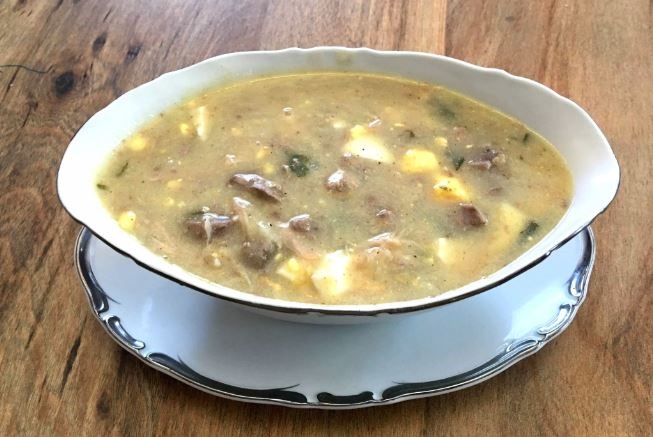
Non-Giblet Vegetarian Gravy
Posted: November 24, 2022 Filed under: Recipes | Tags: #delivery, #glutenfree, #healthyeating, #Lactosefree, #mealdelivery, #MillieBarnes, #Ortega, #pescatarian, #Riverside, #SanMarco, #vegetarian, #weightloss Leave a commentNon-Giblet Vegetarian Gravy
Serving Size : 4
2 Tablespoons ghee
1/4 cup white wine
1 pound mushrooms — sliced
1 large onion — diced
2 cups celery — diced
4 cups almond milk
3 tablespoons nutritional yeast
1 tablespoon rubbed sage
1/2 tablespoon rosemary
1/3 tablespoon thyme
1/4 teaspoon pepper
1 tablespoons honey
1 tablespoon arrowroot
1 cup seitan – optional- I do not use it because I do not cook with gluten
1) Boil eggs and peel.
2) Sauté onions in ghee until transparent. Add celery, mushrooms, and herbs and sauté untel veggies are all softened and wine has cooked off. Let your veggies actually begin to stick to the bottom of the pan and get a layer of brown stuff stuck on the bottom. When that has happened, add more wine and stir.
3) Now add remaining seasonings, almond milk and simmer very slowly, stirring the whole time to keep the almond milk from scorching. Dissolve arrowroot in some cool water or broth or almond milk and add to gravy, stir until thickened.
4) Cut eggs in half and mash yolks with a fork, add to gravy, stir well to incorporate. Now dice the eggs and add.
3) Add optional seitan. when gravy is thickened, remove from heat.
Apple, Fig & Brussels Sprouts Salad
Posted: November 11, 2022 Filed under: Recipes | Tags: #meals #vegetarian #glutenfree #delivery #Jacksonville #nutrioncoaching #lactosefree #weightloss #immunesystem Leave a comment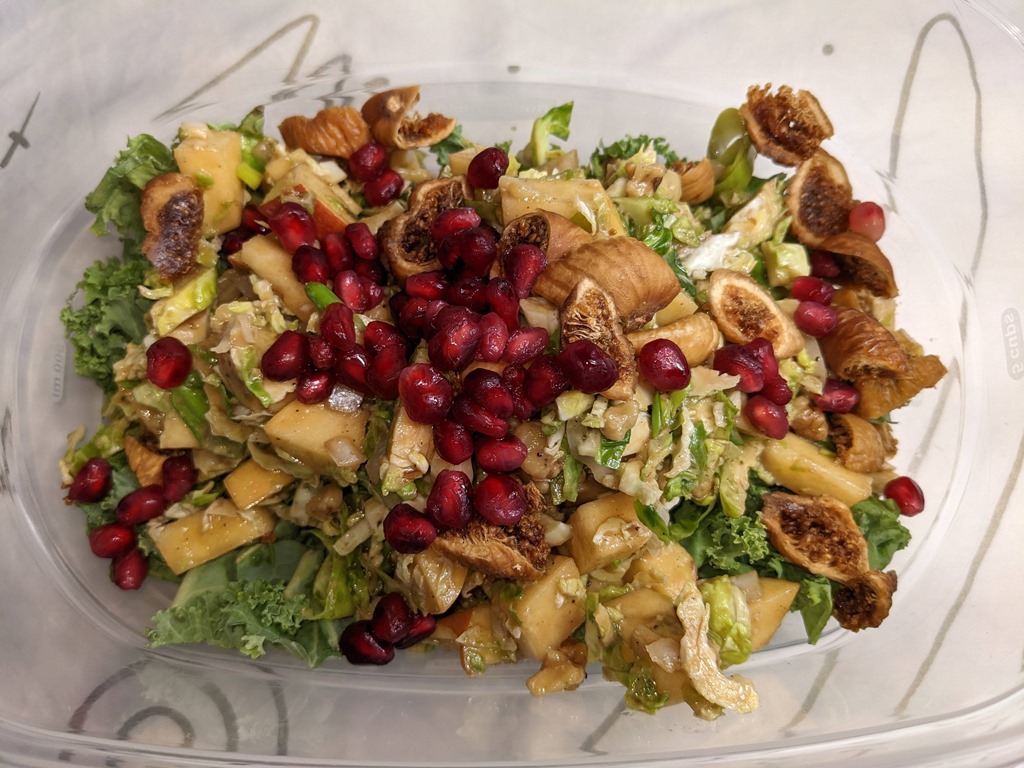
Apple, Fig & Brussels Sprouts Salad
2 tablespoons white balsamic vinegar
2 teaspoons Dijon mustard
1 tablespoon minced shallot
¼ teaspoon salt
Ground pepper to taste
¼ cup extra-virgin olive oil
8 cups baby kale and/or frisée
1 head Belgian endive, leaves separated
1 cup very thinly sliced Brussels sprouts
1 small red apple, thinly sliced
⅓ cup toasted walnuts
4 fresh figs, halved or quartered if large
¼ cup pomegranate seeds
2 tablespoons dried cranberries
1. Whisk vinegar, mustard, shallot, salt and pepper in a small bowl. Whisk in oil until well combined.
2. Combine kale (and/or frisée), endive, Brussels sprouts, apple and walnuts in a large bowl. Drizzle with the dressing and toss to coat. Add a generous grinding of pepper. Top with figs, pomegranate seeds and dried cranberries.
Low-Dose THC Has Positive Effect on Morbidity, Quality of Life and Mortality in Geriatric and Palliative Patients
Posted: October 22, 2022 Filed under: Food and it's Impact on Our Health, Non-Toxic Choices | Tags: #meals #vegetarian #glutenfree #delivery #Jacksonville #nutrioncoaching #lactosefree #weightloss #immunesystem Leave a comment
The study was published by the peer-reviewed journal peer-reviewed journal MMW – Fortschritte der Medizin, as well as on the website for the U.S. National Library of Medicine.
“Cannabis-containing medicines have been successfully used in our practice for more than 20 years in pain and especially in geriatric and palliative patients”, notes the abstract of the study. “While it was initially a very indication-specific use (pain, loss of appetite, etc.) and also with higher THC doses, this changed over time to low THC doses and a therapy focus on suffering-perpetuating symptoms and especially on stress (Matrix of Symptoms).”
As part of the legally prescribed companion survey, researchers “evaluated our data in parallel and discussed it publicly in a series of publications. Based on these published results, the article is intended to show an overview of our experiences.”
Researchers found that “Low-dose THC has a positive effect on morbidity, side effects, quality of life and mortality in geriatric and palliative patients.”
They conclude by stating that “Early therapy is particularly appropriate in geriatric and palliative patients due to the clear benefit-risk ratio of low-dose THC.”
Below is the study’s full abstract.
Abstract
Background: Cannabis-containing medicines have been successfully used in our practice for more than 20 years in pain and especially in geriatric and palliative patients. While it was initially a very indication-specific use (pain, loss of appetite, etc.) and also with higher THC doses, this changed over time to low THC doses and a therapy focus on suffering-perpetuating symptoms and especially on stress (Matrix of Symptoms).
Method: As part of the legally prescribed companion survey, we evaluated our data in parallel and discussed it publicly in a series of publications. Based on these published results, the article is intended to show an overview of our experiences.
Results: Low-dose THC has a positive effect on morbidity, side effects, quality of life and mortality in geriatric and palliative patients.
Conclusion: Early therapy is particularly appropriate in geriatric and palliative patients due to the clear benefit-risk ratio of low-dose THC.
Hearts of Palm and Avocado Salad
Posted: October 20, 2022 Filed under: Recipes | Tags: #meals #vegetarian #glutenfree #delivery #Jacksonville #nutrioncoaching #lactosefree #weightloss #immunesystem Leave a comment
I grew up eating Swamp Cabbage, also known as Cabbage Palm. The first time I ate it my dad dug one up while we were camping on the banks of the Okeechobee. He said we would use part of it for lunch, then we took a hike. My dad saw a small brook with water running and took out his pocket knife and built a little water-wheel with the stack and fronds from the cabbage palm. Later we make some swamp cabbage for lunch.
This recipe is one of my favorite salads.
Hearts of Palm and Avocado Salad with Lime
Serving Size : 4
1/2 cup lime juice
1 tomato
1/4 cup white wine vinegar
1/2 clove garlic — crushed
1 pinch salt
1 tiny pinch red pepper flakes
2 cans hearts of palm — julienned
2 ripe California avocados
1 head leaf lettuce
1 head butter lettuce
1 medium red onion — thin rings
1) Combine first 5 ingredients together in blender for dressing. let sit for about 20 min.
2) Tear lettuces in bite size pieces. Combine with the rest of the ingredients. toss with salad dressing. Serve immediately
My Level of Living Green
Posted: October 19, 2022 Filed under: Going Green; How and Why..., Non-Toxic Choices | Tags: #meals #vegetarian #glutenfree #delivery #Jacksonville #nutrioncoaching #lactosefree #weightloss #immunesystem Leave a commentI started my Blog in 2008, I woke up one morning and had gotten 5000 visits from all over the world! No Impact M<an had seen my site and published the article that put my Blog on the map!!

Here is that article…
I am soooo excited! One of my all time favorite bloggers, Colin Beavan, published an article from my blog! His blog, NoImpactMan.com, is a blog that I follow religiously. I have always been a a serious environmentalist, way before it was cool the first time around..and I am talking back in 1972 when I decided to use cloth diapers instead of that new product (Pampers) everyone else was sooo excited about. I still chose to use a clothesline with the first 4 kids diapers (until I moved to a neighborhood (yuck!) that forbid clotheslines.
Colin’s’ blog made me realize there was a LOT more I could be doing. Hence, the list he published….
April 14, 2009
Thirty-one tips for reducing your impact while saving money
I was reading through comments here on the blog last night and I found this great list of tips by reader Millie Barnes, who writes a blog about health and gardening called Optimum Nutrition. Her tips were just too comprehensive to let them languish in the comments. So here they are (I don’t even mind including the plug for her products). Thanks Millie!
My Level of Living Green
by Millie Barnes
1) Air dry all laundry–had to put a lock on the dryer cord to convince my daughters I was serious–they have learned to plan ahead! I wash all laundry in cold water, always wash full loads, and use a drying rack inside if it is raining. It’s good for the earth and great for your skin, a free humidifier in the house. Which also makes it feel a few degrees warmer in winter, and cooler in summer. I use soapnuts for laundry. http://www.zamuta.com/
2) Buy all organic.
3) Buy all organic non-toxic beauty care products and make-up. I make my own skin care cleanser and moisturizers. I make my own soap.
4) Use baking soda and vinegar for cleaning the bathroom. I use Ms. Meyer Clean Day for dishes, Citri-Clean for counters and general purpose cleaning. I use a loofah for scrubbing dishes (I am growing my own right now so I won’t have to buy them anymore!) My sister is making scrubbies by crocheting them, we will offer these for sale soon!
5) Take cloth bags to store for groceries and all other purchases. Take muslin bags I made to grocery store for produce.
6) Recycle, re-use, make my own and have stopped buying anything I don’t really need.
7) Don’t use paper towels, never have. Used cloth diapers for all 5 kids.
8) Don’t buy stuff in plastic, I try to buy all glass. Store all food in glass. Re-use glass jars. I mostly buy real food (meat, produce) try to not buy anything that needs a label, so no packaging.
9) I use a bidet and cloth wipes. (don’t freak, we all used that same choice when we used cloth diapers and wash clothes on our baby’s tushes!)
10) Make my own gluten free granola, make my own mayonnaise, salad dressings, spice blends.
11) I use a compost toilet, no toilet paper (think cloth baby wash clothes).
13) Bokashi (a way to deal with indoor kitchen scraps with NO odor and yields compost WAY faster). I have been using the Bokashi method of dealing with kitchen waste for about 3 weeks now…I love it!
14) Use very low flow shower heads. Ace Hardware has a 1.5 GPM with a shut-off valve.
15) Use all CF light bulbs…and use them as little as possible. I have one evening a week that I use no lights..on Shabbat! Dinner by candlelight!
16) Use grey water from shower (I keep a 3 gallon bucket in shower and use it throughout the day to flush the toilet, take what’s left to the flower beds.
17) Use water from rinsing dishes to water flower beds.
18) Run as few errands as possible, car pool and combine trips.
19) Use micro-cloths to clean with, even on glass you do not need cleaning products!
20) NEVER buy bottled water. I bought a Kleen Kanteen for each person in the family, we refill and take with us. I’ve had mine over a year.
21) Go paperless or CD-less as much as possible. I provide my clients with emails of my book, but still put cookbook software on CD.
22) Use only a hurricane lamp when we sit outside at night. It gives enough light to read by…but is perfect turned low …for just hanging out. Very romantic, too!
23) Use candlelight at dinner, not just on Shabbat!
26) I put in a raised bed garden, square foot garden I have green leaf lettuce in a grow box, cherry and big sweet tomatoes, basil, thyme. I have sweet potatoes growing, beets (mmmm, beet greens), onions, Swiss chard, purple flowering kale, nasturtiums, broccoli, cucumbers, peppers, red potatoes, a banana tree. Inside I am growing cucumbers and strawberries hydroponically.
27) I use a non-disposable razor, an old-fashioned stainless steel, very high quality razor that uses double edged blades. It was 24.00 from ClassicShaving.com. The blades are 10 for 5.99, and they are double edged! They give the closest, smoothest shave you can imagine! No disposable blade can compare.
28) Wash dishes with 2 dish pans in the sink, one for hot soapy water, one with warm rinse water. Do glasses first, pause a moment to let the soapy water drip off, then move to rinse water. Stop when rinse water is almost full and rinse quickly. Repeat with silver, plates, then pots and utensils. All with 2 dishpans full of water. Then I pour the soapy water, with all that organic matter, onto my plants in the garden. It helps repel pests and loosens the soil. And good for the biceps when you carry it outdoors.
29) I water my garden with buckets from the rain barrels that are under the eaves of my garage. 10 feet from my garden. The front flower garden gets watered entirely from the dish water.
30) I work out at home, no expensive gym memberships that I never used anyway. I save all the expense of membership, and gas and time driving. I have a set of weights, two exercise balls, a yoga mat and a chin-up bar.


 Meal Delivery Service by Millie Barnes