Half Roasted Tomato Salad with Salsa Verde
Posted: July 24, 2017 Filed under: In The Kitchen with Millie- How To's, Recipes Leave a comment
Just made this for the Meal Delivery Service and it’s awesome!!!
Serves 4 to 6
For the salad:
- 1 quart sweet cherry tomatoes, preferably a mixture of colors and shapes
- 3 garlic cloves, lightly crushed
- Olive oil, for roasting
- Coarse salt, for sprinkling, plus more to taste
- 2 tablespoons drained capers
- 1 large or 2 medium/small ripe beefsteak tomatoes, chopped into large chunks
- 1 handful thinly sliced red onions (half-moon shape), soaked in ice water for 10 minutes, drained, and dried (optional step that will remove the bite from the onion)
- 1 handful fresh basil leaves, or fewer depending on your preferences
- 1 splash red wine vinegar, optional
For the salsa verde:
- About 1/2 cup extra-virgin olive oil
- 1/2teaspoon dried oregano (or 1 teaspoon fresh)
- 1/4cup coarsely chopped basil
- 1cup coarsely chopped flat-leaf parsley
- 1small garlic clove
- 1anchovy
- 1tablespoon drained capers
- 1pinch red pepper flakes
- 1/2lemon, for juicing
- Freshly ground black pepper
Preheat the oven to 425° F. Pour the cherry tomatoes and garlic cloves onto a parchment-lined baking sheet, making sure everything fits in a single layer. Pour a generous layer of olive oil over the tomatoes so that it forms a shallow pools in the base of the baking sheet—you’ll be repurposing this oil later. Sprinkle generously with coarse salt. Bake for 20 to 30 minutes, until the tomatoes are blistered and deflated and have released their juices.
Toss the capers with 1/2 teaspoon of olive oil and pour them onto a separate baking sheet. Bake for 10 to 15 minutes, stirring once or twice, until they’re fragrant and crispy.
When the tomatoes are out of the oven, you can start on the salsa verde: Pour all of the extra juices and oil from the cherry tomato baking sheet into a liquid measuring cup. Pour in enough extra-virgin olive oil so that you have 3/4 cup total.
Add the oregano, basil, and parsley to a food processor and process until the herbs are all finely shredded and paste-like. Pour in a small amount of the oil (a couple of tablespoons) and process.
Add the garlic, anchovy, capers, and red pepper flakes and process to combine. With the motor running, stream in the rest of the olive oil and process until you have a uniform sauce. Taste it, then add a squeeze of lemon and freshly ground pepper, as desired. Don’t add salt until after you’ve tasted the sauce—the anchovies and capers might be plenty salty on their own!
In a large salad bowl, dump the blistered cherry tomatoes, roasted capers, raw tomato chunks, red onion, and a handful of basil leaves. (You can also reserve the capers for later and add them to the top of the salad at the very end—this will help them to retain their crispiness.) Add a spoonful of salsa verde and mix. You can add the salsa verde until it coats all the vegetables and pools at the bottom of the bowl or you can stop earlier. Taste for acid and add red wine vinegar as you see fit; add salt and pepper to taste.
Smoked Salmon Deviled Eggs- AND Instruction on the BEST way to cook boiled eggs!
Posted: July 10, 2017 Filed under: Recipes Leave a comment
The way I cook eggs for this dish guarantees that they peel easy!
- 8 extra-large eggs
- 6 tablespoons fresh mayonnaise
- 1 tablespoon freshly squeezed lemon juice
- 2 tablespoons minced fresh chives, plus extra for garnish
- 4 ounces good smoked salmon, minced
- 1 teaspoon kosher salt
- 1/2 teaspoon freshly ground black pepper
- 2 ounces salmon roe
1) Place an expandable steamer in a medium sized saucepan. Fill with water just below the steamer. Bring to a full, hard boil. Place eggs quickly in steamer and put a lid on. Steam for exactly 18 minutes. Immediately plunge eggs in to an ice bath. In about 10 mintes, peel eggs.
2) Slice eggs in half lengthwise. Remove the yolks carefully. Place the yolks in a bowl and mash with a fork. Arrange the whites on a platter in a single layer with the cut sides up and sprinkle with salt.
3) To the egg yolks, add mayonnaise, lemon juice, chives, salmon, salt, and pepper. Mix well. With a small spoon, fill the egg whites with the egg yolk mixture. Cover loosely with plastic wrap (you don’t want to flatten the filling) and refrigerate for 30 minutes for the flavors to blend.
4) When ready to serve, garnish with a dollop of salmon roe and some extra chopped chives. Sprinkle with salt and pepper and serve.
Chocolate Improves Brain Function, Finds New Research
Posted: July 6, 2017 Filed under: Food and it's Impact on Our Health Leave a comment
Chocolate lovers over the world, rejoice!
Consuming chocolate regularly has been found to help the brain function, thanks to cocoa being a rich source of natural neuroprotective compounds.
The useful antioxidant abundant compounds found in cocoa beans are called cocoa flavanols.
In a new review by Italian researchers, flavanol-rich cocoa consumption has been linked to improving memory, short-term cognitive function and counteracting cognitive decline.
“Acute administration of cocoa flavanols could result in immediate cognitive-enhancing effect, sustaining performance particularly in cognitively demanding conditions, including fatigue and sleep loss,” say authors Valentina Socci and Michele Ferrara, from the University of L’Aquila, Italy.
The researchers conducted a meta-analysis and found that the miracle flavanols have beneficial effects on the brain’s blood circulation and boost the speed of processing visual imagery.
“This result suggests the potential of cocoa flavanols to protect cognition in vulnerable populations over time by improving cognitive performance,” the authors say.
Having a chocolate-filled diet for a long period of time was also shown to improve the performance of older adults. For the elderly, long-term ingestion of cocoa has a pronounced effect on attention, verbal fluency and memory. The effects are even greater for elderly people who are already experiencing cognitive decline.
Cocoa flavanols have also been shown to improve blood flow to the heart, prevent blood clots and fight cell damage, according to Harvard Medical School. It should also be remembered that dark chocolate is a richer source of the beneficial flavanols than milk, with the amount ranging from 100-2,000 mg in 100 grams of dark chocolate.
It won’t be difficult to follow the lead of the Italian experts: “Dark chocolate is a rich source of flavanols. So we always eat some dark chocolate. Every day.”
Mothers will also be pleased to hear that eating chocolate after sleep deprivation improved cognitive function for women according to the study.
However the experts warn against the calorific side effects of indulging too much with chocolaty treats. We are well aware that while their high sugar and milk content may gratify the tastes, it isn’t responsible for cocoa’s brain nourishing properties.
Before You Take Ibuprofen, Try This
Posted: July 2, 2017 Filed under: Non-Toxic Choices Leave a comment
Nonsteroidal anti-inflammatory drugs (NSAIDs) like ibuprofen and naproxen are widely used to treat pain and don’t require a prescription. But recent studies suggest that when taken regularly, these medicines can have serious side effects. They’ve been linked to kidney, bone, hearing and cardiovascular problems—including, most recently, an increased risk of heart attack.
For healthy people with occasional aches, there’s nothing wrong with taking an Advil or an Aleve to relieve discomfort, says Dr. Jyotsna Nagda, a pain specialist at Beth Israel Deaconess Medical Center. But “long-term use of anti-inflammatories is not a good idea,” she says, especially when alternatives are available.
Plus, says Alban Latremoliere, a pain physiologist at Boston Children’s Hospital, NSAIDs don’t always work well—which could prompt people to take higher and higher doses when they should be turning to other treatments. “Instead of looking for a pill that works for every type of pain, we need to be thinking about combination approaches that treat the underlying problems,” he says.
If you’re concerned about the level of pain medicine you’re taking, here are a few things you might try instead.
Unlike ibuprofen, over-the-counter acetaminophen has not been linked to heart problems. Nagda recommends it to some of her patients—especially elderly ones—who aren’t good candidates for anti-inflammatory medicines.
Still, the drug is not without its own risks. “We recommend it on an as-needed basis, rather than an around-the-clock regimen,” says Nagda. “People should still be careful about the doses, and if they need it somewhat regularly, they should talk to their primary care physician about having their liver function tested.”
Aspirin is another option. While it is an NSAID, studies of regular aspirin use suggest a protective cardiovascular effect, rather than increased risks. (It can, however, cause stomach bleeding and ulcers.) “If someone has regular pain and they’re planning on doing something more strenuous than normal, I might tell them to take an extra-strength aspirin beforehand,” says Nagda.
Omega-3 fatty acids
For arthritis and related conditions, studies show that omega-3 fatty acids—found in fish, fish oil supplements, nuts and seeds—may help reduce pain and inflammation. The Arthritis Foundation recommends taking fish oil capsules with at least 30% omega-3s.
Latremoliere says that following a diet rich in fish, fruits, vegetables and whole grains may also ease pain throughout the body, although it won’t likely take the place of pain medicines entirely. “If you make a habit of avoiding foods that promote inflammation and eating foods that help reduce it, it can definitely be helpful,” he says.
Turmeric
Despite a recent review that called into question the benefits of curcumin—the active compound in turmeric—Nagda says that people seeking pain relief may still want to try adding the yellow spice to their diet.
“It has anti-inflammatory properties, and there are some small studies that show benefits for patients with rheumatoid and other forms of arthritis,” she says. It’s safe in quantities used in cooking and flavoring food, so as long as you don’t mind the taste, there’s little downside.
Acupuncture
Traditional Chinese medicine technique may help reduce pain associated with back pain, neck pain, arthritis, headaches, fibromyalgia pain after surgery, according to research. Not everyone who tries acupuncture improves, says Nagda, but “when you look at risks and benefits compared to other methods like NSAIDs, acupuncture comes out on top with minimal risks.”
While acupuncture’s cost can be prohibitive for many pain sufferers, it is increasingly covered by health insurance—at least in part—as its benefits become clearer. Massage is another approach that’s been shown to to relieve chronic lower back pain.
Exercise and mindful movement
Regular exercise is a good way to ward off chronic pain and to reduce symptoms if it does develop. But certain types of movement may be more beneficial than others.
Tai chi has been shown to benefit people with fibromyalgia, for example, and yoga may help with back pain and arthritis. “Even if these techniques don’t necessarily decrease pain, they may help people cope with it better,” says Nagda.
Nagda also recommends swimming to many of her pain patients, as a way to stay active and flexible without stressing their joints. And for injuries, she stresses the value of using heat and ice and seeing a physical therapist, rather than masking pain with a pill.
Meditation
In one 2016 study, people who practiced seated meditation for 20 minutes a day had less reaction to a painful stimulus than those who sat and read a book. The research didn’t include people with chronic pain, but the authors say meditation could have potential as an alternative to painkillers like opioid drugs. Other research has shown that mindfulness can reduce a person’s experience of physical pain (and emotional pain, too).
“If you meditate, you’re helping your brain relax and get into a state where some of its regions can be slowed down,” says Latremoliere. “That might help reduce focus on pain or attention to stimuli, so it makes sense that it might help people feel better.”
More sleep (or coffee, in a pinch)
Latremoliere’s own research in mice, published recently in Nature Medicine, has shown that chronic sleep deprivation can enhance pain sensitivity—and that a dose of caffeine can temporarily reverse those effects. Studies in humans have also suggested that staying awake for long periods of time can lower people’s thresholds for pain, and that the equivalent of a few cups of coffee before a workout can reduce perceived muscle pain.
“Our research suggests that if you have chronic pain and you’re not sleeping enough, your pain is probably greater because of that,” says Latremoliere. People should be wary of relying on caffeine to get by, however. “Coffee in the morning might help reduce pain and get you through the day,” he says, “but if you have it too late in the day it could make your sleep, and your pain, even worse.”
Nobu’s Miso Glazed Fish
Posted: June 23, 2017 Filed under: Recipes Leave a commentSimple to Make, Amazingly Flavorful!

Serves two
2 half-pound skin-on fillets of black cod, Chilean sea bass, or Atlantic salmon
1/2 cup white miso paste (shiro)
1/2 cup granulated sugar
1 1/2 Tbsp. sake
1 1/2 Tbsp. mirin
1. To make the marinade, set up a double boiler: Fill a saucepan with an inch of water. Find a large, heat-safe mixing bowl that’ll rest over the rim of the saucepan without touching the water. Turn your stove on to a medium setting. Combine the miso paste, sugar, sake, and mirin, and whisk for about three minutes. Don’t allow the sauce to bubble, but get it hot enough to melt the sugar. To test whether it’s done or not, take the back of a spoon and drag it along the side of the bowl. If it feels gritty, it means the sugar hasn’t melted yet. The consistency should be that of paste, not liquid. Place this bowl in the fridge for five minutes and allow it to cool.
Why MACA Should Be Your New Adaptogenic BFF
Posted: June 22, 2017 Filed under: Food and it's Impact on Our Health Leave a comment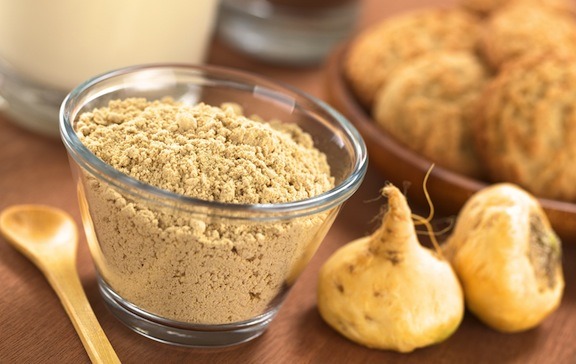
There are tons of reasons why maca is one of this year’s most buzzed-about superfoods: It increases libido, boosts energy levels, and regulates stress, for starters. (Call it an adaptogenic friend with benefits).
But confusion still reigns. After all, with its distinctly nutty-spicy-sweet flavor, this root (used in South America for thousands of years before it found its way to our smoothie bowls), isn’t an ingredient like kale or quinoa that can be easily thrown into any salad or bowl. And so, despite all of maca’s good press, many of us are left confused about how, exactly, to incorporate the powerhouse root into our diets.
That’s why we tapped three nutrition experts for their go-to maca recipes—treats and tonics they make at home that could, conceivably, serve as an everyday source of this potent food.
Scroll down for a crash course in Maca Consumption 101—no, you won’t be tested on this, but we won’t be surprised if you decide to study hard and ace your own kitchen-side exam.
Benefits of Maca;
1 Vitamins, minerals, and other nutrients
Maca is a rich source of vitamins, minerals, enzymes, amino acids (20 different kinds — that’s just about all of them!), and antioxidants. Glucosinates are just one of those antioxidants — the same substances that make broccoli, cabbage, and other cruciferous vegetables so good for you.
2 Sexual function, libido, and fertility
Maca has long been used to promote sexual function of both men and women. It’s thought to boost libido and increase endurance. It has also been used to balance the hormones and increase fertility. Note the these benefits are anecdotal, though one of the more studied aspects of maca is its role in male fertility.
According to an article in Web MD, The Truth About Maca, professionals differ on the effectiveness of maca, especially for libido. Some are skeptical, believing that it’s little more than a placebo. Others strongly believe in its effectiveness. You can read the entire article here.
3 Menstrual issues and menopause
Maca has been used to relieve menstrual issues and the side effects of going through menopause. Some women have used it to alleviate cramps and hot flashes, much as it has been used by indigenous South American cultures for millennia. Outcomes in this area are largely anecdotal, and shouldn’t be used in place of consulting with a practitioner.
4 Physical and mental energy
Many regular users of maca experience an increase in energy level within days of beginning its use. It’s also known for increasing stamina and endurance, which is why some athletes take maca for peak performance. When used in conjunction with a good workout regime, supplementing with maca may help to preserve muscle mass. Maca is also used by those seeking to sharpen and expand mental activity and memory.
Maca has been used as a remedy for ongoing fatigue. If you find yourself tired much of the time, experiment with maca to see if it helps. Just a small amount could be exactly what you need for a boost! An increase in mental energy and focus has been reported as well.
5 General health and disease prevention
As an adaptogen and tonic, maca may boost your overall health in a number of ways. It supplies iron and helps restore red blood cells, which aids in avoiding anemia and cardiovascular diseases. Maca is also believed to promote prostate health. The nutrients in maca have long been valued for keeping bones and teeth healthy and help heal wounds more quickly. Bear in mind that most of these claims, while certainly not unfounded, have not been sufficiently studied.
Be very cautious if you have a cancer related to hormones, like testicular and ovarian, among others. If you have these cancers, liver issues, or high blood pressure, you should consult with a professional before taking maca.
6 Skin health
Maca has been used for skin issues. For some users, it helps to clear acne and blemishes. Another benefit that some users have experienced is that it decreases skin sensitivity. In hot or cold weather, maca may help skin withstand extreme temperatures.
7 Mood and hormone balance
For those struggling with anxiety, stress, depression, or mood swings, maca may help alleviate these symptoms, though the evidence for this is anecdotal and its use shouldn’t replace professional treatment.
Hormone balance is key to regulating sexual function, mood regulation, disease prevention, and much more. Maca’s ability to balance hormones is often credited to its stimulation of the hypothalamus and pituitary glands. It may be the phytonutrients contained in maca that work to balance the endocrine system.
Eat Seafood to Fight Inflammation
Posted: June 22, 2017 Filed under: Food and it's Impact on Our Health Leave a comment Pistachio Encrusted Salmon
Ordering off the seafood menu may help ease the aches and pains of rheumatoid arthritis (RA), according to a new study in Arthritis Care & Research. People with RA who ate fish at least twice a week reported less joint swelling and tenderness than those who rarely or never did—and the findings suggest that the more fish they ate, the less active their disease.
The study involved 176 people with RA who answered questions about their diet over the past year. Specifically, the authors looked at responses to questions about how often people ate tuna, salmon, sardines and other fish prepared raw, broiled, steamed or baked.
They did not look at how often people ate fried fish, shellfish or fish in mixed dishes (like shrimp stir-fry, for example), because these meals tend to be lower in omega-3 fatty acids—a type of fat with anti-inflammatory properties. Previous studies have shown that taking fish-oil supplements (which are rich in omega-3s) may benefit people with RA, but this is among the first studies to look at the consumption of actual fish.
The researchers also looked at the patients’ disease-activity scores, a measure that takes into account the number of swollen and tender joints they have, as well as a blood marker of inflammation.
Disease-activity scores were an average of half a point lower for people who ate the most fish (twice a week or more) compared to those who ate the least (once a month or never). This was found after researchers adjusted for a number of factors that may otherwise affect the results, including age, sex, body mass index, depression, marital status, medication use and fish-oil consumption.
That may not sound like much. But for the scale used in the study, a score of less than 2.6 indicates remission, while a score greater than 5.1 indicates active disease. A half-point reduction is clinically significant, say the researchers; it’s about one-third the amount of improvement reported in clinical trials for methotrexate drugs, which are considered the standard of care for RA.
“With that type of improvement, we would generally expect that a patient would feel noticeably better,” says lead author Dr. Sara Tedeschi, associate physician in rheumatology at Brigham and Women’s Hospital.
The study also suggests that people don’t have to eat fish twice a week to get some benefit, and they don’t have to stop at twice a week, either. Each serving of fish per week was linked to lower disease activity.
The authors concluded that higher intake of fish may be associated with lower disease activity in people with RA, although they caution that the study—which only looked at fish consumption and disease activity at one point in time—could not show a cause-and-effect relationship. While Tedeschi can’t say whether eating fish might have anti-inflammatory benefits for people without RA, she does point to previous research that has suggested a small protective effect.
“If our findings can be replicated in other populations and over longer periods of time, we may be able to show one specific reason for people with RA to eat more fish,” says Tedeschi. That’s in addition to plenty of other reasons that eating fish is a smart choice, she adds, whether you have arthritis or not.
Vietnamese Baked Chicken
Posted: June 21, 2017 Filed under: Recipes Leave a comment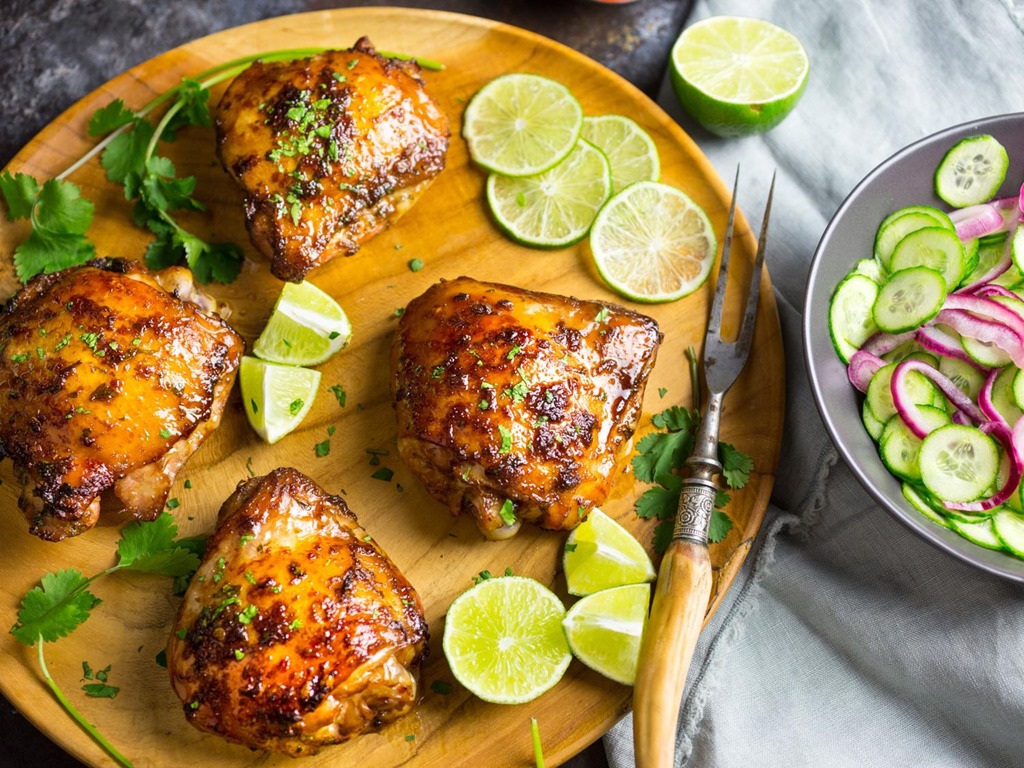
2 pounds bone-in, skin-on chicken thighs
1/4 cup soy sauce
1/4 cup Asian fish sauce
1/4 cup palm or dark brown sugar
1 tablespoon minced peeled fresh ginger
2 teaspoons hot chili-garlic paste
1 ½ tablespoons fresh juice from 1 lime
1 teaspoon finely grated zest from 1 lime
3 medium cloves garlic, minced or grated (about 2 teaspoons)
2 packed tablespoons fresh cilantro leaves and tender stems, finely chopped
2 tablespoons toasted sesame oil
Sliced limes and cilantro leaves, for garnish
1) Place thighs in a large zipper-lock bag. In a medium bowl, whisk together soy sauce, fish sauce, sugar, ginger, chili-garlic paste, lime juice, lime zest, garlic, cilantro, and oil. Pour marinade into bag with chicken, seal bag, and toss to coat well. Let chicken marinate for at least 30 minutes and up to 4 hours.
2) Preheat oven to 425°F and set oven rack to middle position. Line a rimmed baking sheet with foil and place a wire rack on top. Remove chicken from bag, allowing marinade to drip off, and set on wire rack skin side up, making sure to leave space between thighs. Discard marinade. Bake until thighs register 155 to 160°F on an instant-read thermometer. If chicken skin is not brown and crisp enough by the time the thighs are cooked through, turn on oven broiler and broil until browned and crisp, about 1 minute, being careful not to burn the skin. . Garnish with lime slices and cilantro, then serve.
How And Why We Should Be Eating More Vegetables For Breakfast
Posted: June 21, 2017 Filed under: Food and it's Impact on Our Health Leave a commentWe’re here with a friendly reminder: the average person is supposed to eat two and a half to three cups of vegetables a day, according to My Plate.
For some people, that’s an easy feat. For others, hitting that goal can be little trickier. Here’s the easiest way to reach that vegetable recommendation without any trouble: start first thing in the morning.
Most American breakfast options are loaded with sugar ― like our beloved maple-syrup topped pancakes and even our breakfast cereals. And sugar, as most of us know, does not provide us with any nutritional value. In fact, it can cause or contribute to anxiety. Who wants to start the day off like that?
The American Heart Association recommends women consume no more than 100 calories daily from refined sugar, 150 calories for men. If you drink one medium Caramel Swirl Frozen Dunkin’ Coffee with Cream, which has 129g sugar, you’re already getting about 32 calories from sugar. So if you’re starting your day that way, you’re already off to a bad start.
Considering the fact that only nine percent of Americans eat enough vegetables, it’s time we all got serious about upping our veggie intake. If you add vegetables to your breakfast, you can get a jumpstart on the day. And it’s easy enough to do, too, not to mention absolutely delicious.
Other cultures around the world incorporate vegetables as a regular part of their morning meal. Turkey regularly eats cucumbers, tomatoes and olives in the morning. And Israel has a chopped vegetable salad at the breakfast table. There’s no reason America shouldn’t do the same.
Here are the recipes you need to get started:
 Get the 15-Minute Spinach Burrata Omelet With Avocado Salad recipe from How Sweet It IsPhoto by: How Sweet It Is
 Get the Green Shakshuka recipe from The Healthy MavenPhoto by: The Healthy Maven
rvest
 Get the Sweet Potato Hash Egg Skillet recipe from Naturally EllaPhoto by: Naturally Ella
 Get the Veggie Fajita Stuffed Sweet Potato recipe from How Sweet It IsPhoto by: How Sweet It Is
 Get the Sesame Roasted Asparagus, Egg and Bacon Salad recipe from Half Baked Harvest








 Meal Delivery Service by Millie Barnes