Michigan Woman Faces 93 Days in Jail for Planting a Vegetable Garden
Posted: July 11, 2011 Filed under: Gardening, Non-Toxic Choices Leave a comment Photo Credit: Julie Bass
It just doesn’t get more ridiculous than this.
Julie Bass of Oak Park, Michigan — a mother of 6, law-abiding citizen, and gardener — is facing 93 days in jail after being charged with a misdemeanor.
Her crime? Planting a vegetable garden in the front yard.
Bass says that she planted the garden after her front yard was torn up for some sewer repairs. Rather than wasting the opportunity to start with a clean slate by planting a lawn, she decided to really put the area to use, and plant a vegetable garden.
Her garden consists of 5 raised beds, where she grows a mix of squashes, corn, tomatoes, flowers, and other veggies. Bass received a warning from the city telling her to remove the vegetable garden, because it doesn’t adhere to city ordinances (more on that later.) When she refused, she was ticketed and charged with a misdemeanor. Her trial, before a jury, is set to begin on July 26th. If she is found guilty, she can be sentenced to up to 93 days in jail.
About the City Ordinance
Supposedly, Bass is in noncompliance with a city ordinance that states that only "suitable" plant material is allowed on the lawn area of residences. When local media asked city planner Kevin Rulkowski what that meant, he said suitable means "common:" lawn, nice shrubs, and flowers. However, the city ordinance does not specifically state that those are the only allowed plant materials.
About Oak Park
This is not some gated community with HOA regulations. This is an ordinary, working class neighborhood in Oakland County, Michigan. Like nearly every other city in my home state right now, Oak Park is facing financial issues. Here at home, people are amazed that a cash-strapped city has the resources to investigate, charge, and prosecute a resident for something as innocuous as planting a vegetable garden.
What’s Being Done
This story is gaining traction all over the web. Gawker covered it this morning. There are Facebook pages devoted to supporting Mrs. Bass and her family during this ordeal. Will social media help change the city’s mind? That’s what many of us are hoping. Local television affiliates for ABC and Fox news have already covered the story, and media attention continues to grow.
How to Help
If you want to help support a gardener’s right to grow food for her family (even if it is — gasp — in the front yard!) there are several things you can do:
1. Email or call officials for the city of Oak Park. Mrs. Bass has listed contact information for the mayor, city manager, and other city officials in the sidebar of her blog.
2. "Like" the Oak Park Hates Veggies Facebook Page.
3. Spread the word via Facebook and Twitter. By gaining attention to this particular issue, with this particular homeowner, the hope is that other cities will reconsider before they harass another homeowner for something like this.
Plants That Repel Mosquitoes
Posted: July 9, 2011 Filed under: Gardening, Non-Toxic Choices Leave a comment
From; Alderleaf Wilderness Society
By Jason Knight
There are a variety of both wild and cultivated plants that repel mosquitoes. Almost anywhere you go, it is reasonable to find several plant species that you can use to ward off these pesky critters. Plant-based mosquito repellents are especially useful for people who spend a great deal of time in the wilderness.
It is important to note that it is compounds found within the plants that do the repelling. These compounds need to be released from the plant to unlock the mosquito-repelling qualities. Depending on the species of plant, they can be released by either crushing, drying, or infusing the plant into an oil or alcohol base that can be applied to skin, clothing, or living spaces. Others are best used as as a smudge, which releases the compounds in a smoke. Just standing near living plants that repel mosquitoes is often not effective.
Below are separate lists of wild and cultivated plants that repel mosquitoes:
Cultivated Plants That Repel Mosquitoes
Citronella Grass (Cymbopogon nardus) is the most popular cultivated plant used for repelling mosquitoes. Its oil, citronella oil, is the primary ingredient in most natural insect repellents sold in stores. Products applied to the skin are most effective. It grows in tropical regions.
Floridata.com has great info about Citronella grass.
Catnip (Nepeta cataria) is a common garden plant that can be used to repel mosquitoes. The crushed plant can be applied directly to the skin or the dried plant can be infused in an oil, such as olive oil.
Additional cultivated plants that repel mosquitoes:
Peppermint (Mentha piperita)
Rosemary (Rosmarinus officinalis)
Marigolds (Tagetes spp.)
Lemon balm (Melissa officinalis)
Garlic (Allium sativum)
Clove (Syzygium aromaticum)
Eucalyptus (Eucalyptus spp.)
Tea tree (Melaleuca alternifolia)
Lavendar (Lavandula angustifolia )
Diet Soda May Be As Bad For You As Regular Soda
Posted: July 6, 2011 Filed under: Food and it's Impact on Our Health, Non-Toxic Choices Leave a comment
Kelly Hodgkins — Oh noes, a study presented at the American Diabetes Conference suggests diet soda is as bad for you as regular soda. It can make you fat and put you at risk for diabetes, stroke and heart disease. Flipping fantastic.
The statistics from this study are depressing. The researchers followed 474 diet soda drinkers for ten years and found that their belt size expanded 70% more than those who avoided diet soda. Even as little as two diet sodas a day caused the waistline of the soda drinkers to grow 5 times more than the non-drinkers in the study.
Why do you get so fat when the drinks are calorie free? Sharon Fowler of the UT Health Science Center at San Diego says it may involve artificial sweeteners and how they trigger your appetite. Drinking a diet soda could make you hungry, but without the sugar, you don’t get any satisfaction from the drink. Artificial sweeteners could also interact with your brain and prevent you from feeling full. Alone or combined, these effects could cause you to eat more than your should.
The only solution to this diet soda dilemma is to drink water. Ice cold water and lots of it. [Health Freedom Alliance]
Let Plastic2Oil Turn Your Discarded Plastics Into Fuel
Posted: July 6, 2011 Filed under: Non-Toxic Choices Leave a comment
Kelly Hodgkins — Canadian company JBI is setting the recycling industry on fire with its new Plastic2Oil plants that promise to convert non-recyclable plastics into fuel.
The first plant recently began operation in Niagara Falls, NY and can process 22 tons of plastics per day. The plastic is broken down into its individual hydrocarbon gases which are collected and stored. These gases are then separated into gasoline, diesel, methane, propane and more. Some of the gases are sold and others are used to power the facility.
Not only is the process eco-friendly, it’s also incredibly efficient. An 1,800-pound load of plastics can be processed in an hour and almost 90% of the plastic’s hydrocarbon content is converted into fuel. The remaining waste, about 2% of the original input, can be landfilled or burned for heat.
JBI is looking to add more plants in the US and is open to running them as joint ventures with other waste management companies. The more the merrier I say as nothing is more unsightly than a dump filled with 50-year plastic. [Gizmag]
How to Get Rid of Ants Naturally
Posted: July 3, 2011 Filed under: Non-Toxic Choices 1 Comment Melanie Pinola — When ants invade your home, it’s time to battle. You don’t have to use ant baits with pesticide in the traps, however, since there are several natural solutions to getting rid of ants and keeping them out.
Dealing with the Ants Already in Your Home
Probably the most commonly used ingredient in house ant control is Borax. Previously we’ve suggested a 50/50 solution of Borax mixed with sugar placed in a small cap, since most ants are drawn to sweet things. Jonathon Hatch writes on Get Rid of Things that the sweet-based ant baits work for getting rid of Sugar Ants (a.k.a. House Ants or Pavement Ants; those little brown ants that make mounds in the pavement), Pharaoh Ants (golden ants with voracious appetites), and Argentine Ants (long dark ants). If you live in the south where red fire ants swarm or have carpenter ants, unfortunately insecticides seem to be most effective.
Besides Borax, you could also sprinkle a baby powder firewall near the ants’ point of entry to make ants inside your home lose their scent trail, get lost, and eventually die.
Keeping Ants at Bay
To discourage ants from coming inside your house, the baby powder trick may work as well because ants won’t climb over the powder. There are other options that also involve scent or clever uses, a few of which we’ve mentioned before:
- Put cucumber slices near cracks or entry points because ants apparently hate cucumbers.
- Draw chalk lines around your doorways and windowsills—as with the baby powder, this may work because ants don’t like particles sticking to their feet.
- Put bay leaves or sprinkle cayenne pepper where the ants are coming in; according to Planet Green, ants hate the scent of these.
- Make a cleaning solution of vinegar, water, and about ten drops of tea tree oil and spray it around your counters/doorways/etc. Also similar to the baby powder trick, this makes ants lose their scent trails and stop coming around (hopefully).
Regularly cleaning up in your kitchen, taking out the trash, and sealing door sills and window sills are also all good measures. Have any other ant control suggestions? Let’s hear them in the comments. Photo by Shira Gal.
You can follow or contact Melanie Pinola, the author of this post, on Twitter.
ANOTHER Reason to Eat Organic!
Posted: June 25, 2011 Filed under: Food and it's Impact on Our Health, Non-Toxic Choices Leave a commentBribery, but Nobody Was Charged
By JAMES B. STEWART via the NYTIMES
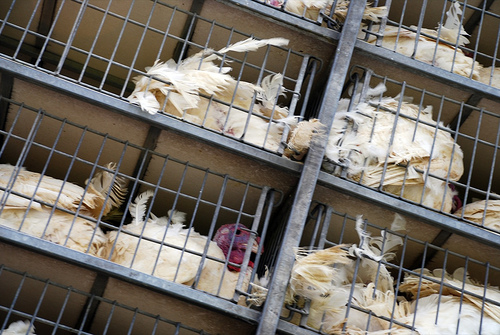
In late June 2004, a plant manager for one of Tyson Foods’ poultry processing plants in Mexico sent a memo to company headquarters in Springdale, Ark.: two women who “most definitely do not work for Tyson Foods in Mexico” each were paid 30,700 pesos, or about $2,700, a month and had been for years.Tyson is one of the world’s largest producers of poultry, pork and beef products, a ubiquitous presence in American supermarkets that has been trying to increase foreign sales. The memo set off an ethics scandal that reached into Tyson’s executive suite and raises questions about who, if anyone, is being held accountable for high-level corporate crime.
The women happened to be the wives of two veterinarians stationed at the plants as part of Mexico’s effort to meet high sanitary and processing standards. The veterinarians certified products as suitable for export, a step required by countries like Japan and increasingly sought after by Mexican consumers as an assurance of quality and safety for locally produced processed meats.
A few days later, senior Tyson executives convened a meeting at headquarters. Someone pointed out the obvious. The purpose of the payments was “to keep the veterinarians from making problems,” according to a subsequent memo — in short, bribes. Participants at this meeting — who included the president of Tyson International, the vice president for operations, and the vice president for internal audit — evidently agreed the payments to the wives had to stop. A company lawyer said he was seeking advice on “possible exposure” from the payments, evidently referring to potential liability for maintaining fraudulent records and bribing foreign officials, which are felonies under the Foreign Corrupt Practices Act.
And then, having identified the serious ethical and legal lapses, and the need to stop the bogus payments, this group of executives “were tasked with investigating how to shift the payroll payments to the veterinarians’ wives directly to the veterinarians,” according to a subsequent statement of facts negotiated by Tyson’s lawyers and the Department of Justice.
Written in the passive voice typical of such documents, the statement raises the question of who “tasked” such an undertaking.
A subsequent memo written by Tyson’s audit department concluded that the “doctors will submit one invoice which will include the special payments formally [sic] being made to their spouses along with there [sic] normal consulting services fee.” The invoices would be identified as “professional honoraria.”
What were these Tyson officials thinking? It’s hard to see how simply shifting the payments did anything to mitigate the bribery scheme or the false descriptions of the payments. If anything, it seems even more brazen. There’s no indication anyone gave serious consideration to stopping the payments — only to finding a new way to make them. The president of Tyson International, the highest-ranking official at the meeting, communicated this “resolution” to Tyson’s chief administrative officer by e-mail on July 14, further pushing the issue up the chain of command.
The payments continued. When another Mexican plant manager complained to an accountant at headquarters that he was “uncomfortable” with this, the accountant spoke to the president of international — who again tried to squelch the issue. “He agreed that we are O.K. to continue to make these payments against invoices (not through payroll)" until we are able to get [the Mexican inspection program] to change, the accountant informed the plant manager.
The issue of the payments resurfaced in November 2006, and this time, Tyson did what it should have done two years earlier: it retained an outside law firm, Kirkland & Ellis, conducted an internal investigation and, under a government program intended to encourage voluntary disclosure of white-collar crime, turned the results over to the Justice Department and the Securities and Exchange Commission. The government’s investigation ended this February, when Tyson was charged with conspiracy and violating the Foreign Corrupt Practices Act. Tyson agreed to resolve the charges with a deferred prosecution agreement in which it “admits, accepts and acknowledges” the government’s statement of facts, and paid a $4 million criminal penalty. The company paid an additional $1.2 million and settled related S.E.C. charges that it maintained false books and records and lacked the controls to prevent payments to phantom employees and government officials.
But what about those at Tyson responsible for the bribery scheme?
Corporations may have assets and liabilities, but they don’t commit crimes — their officers, executives and employees do. And the 23-page letter agreement between Tyson and the Department of Justice, the criminal information, and the S.E.C.’s public statement of facts all withheld names, identifying the participants only as “senior executive,” “VP International,” “VP Audit” and so on.
It would seem self-evident that if Tyson engaged in a conspiracy and violated the Foreign Corrupt Practices Act, then someone at Tyson did so as well. The statute specifically provides for fines of up to $5 million and a prison term of up to 20 years for individuals, as well as fines of up to $25 million for companies.
I assumed the names were withheld because the investigation was continuing and further charges might be forthcoming. I was wrong.
When I called this week, press officers for both the Justice Department and S.E.C. said the investigation was over and no one would be named or charged. This seems to reflect the belief that the deferred prosecution agreement, penalty and S.E.C. settlement largely achieved the government’s objectives, which were to stop the illegal conduct at Tyson and deter future instances. The decision not to pursue cases against individuals seems also to reflect budgetary constraints at both agencies (cases involving foreign witnesses can be especially costly) and, for the Justice Department, the burden in a criminal case of proving guilt beyond a reasonable doubt. But surely bribery, not to mention other forms of corporate wrongdoing, would be more effectively deterred if someone was actually held accountable for it.
The Justice Department says, “In every case, we review the facts, evidence and the law to determine if criminal conduct by individuals occurred, and whether charges can be brought.” And it points out that in 2009 and 2010 it filed charges against 50 individuals under the Foreign Corrupt Practices Act, up from just two in 2004. This is surely progress, but the Tyson case suggests the problem persists, and not just in bribery cases: witness the widespread public frustration that so few people, as opposed to impersonal financial institutions, have faced criminal charges for actions that contributed to the financial crisis.
Companies seem all too willing to go along with this, passing settlement costs on to the shareholders while sweeping the details — and names — under the rug. Gary Mickelson, a Tyson spokesman, also declined to name any company officials involved, but said, “They are either no longer with the company or were disciplined.” (Tyson has stressed that none of the products that were certified by the Mexican veterinarians taking the bribes made it to the United States. No sickness or fatalities have been traced to products processed at the plants, but such concerns underscore why bribing officials charged with protecting the public health is especially serious.)
The “senior executive” and president of Tyson International, who was at the pivotal meetings which resulted in direct payments to the veterinarians, was Greg Huett. Tyson announced in May 2006 that he would be named to “another leadership position within the company.” S.E.C. filings indicate he left in 2007. He is currently a director of publicly traded Yuhe International, which describes itself as China’s largest producer of day-old broiler chicks, where he serves on the audit and compensation committees and heads the nominating committee.
Paul Fox was the “VP International.” He was promoted to vice president for processed meats operations in July 2005 and left a year later to become chief executive of Dickinson Frozen Foods in Idaho. He is currently a managing director of the Marfrig Group, based in Brazil and one of the world’s largest meat and poultry producers.
Tyson’s chief administrative officer, who received the e-mail regarding the resolution of the improper payments issue, was Greg Lee. Tyson announced in April 2007, the month Tyson disclosed the misconduct to the government, that Mr. Lee would retire early. Tyson’s chairman, John Tyson, praised Mr. Lee’s “dedicated service to the company over the last three decades” and said “he has been a stalwart team member whenever he was needed.” Tyson paid Mr. Lee nearly $1 million when he retired and awarded him a 10-year consulting contract providing an additional $3.6 million in compensation.
Mr. Lee continues to be reimbursed for country club dues and use of a car, and enjoys “personal use of the company-owned aircraft for up to 100 hours per year,” according to his employment agreement.
None of the three former Tyson executives responded to messages asking for comment.
Organic and Inexpensive Disposable Diapers
Posted: June 20, 2011 Filed under: Non-Toxic Choices Leave a commentI don’t really agree with using disposable diapers (or anything else!) but these are a great choice!
From Treehugger;
Disposable Diapers
This is one of the few products that is actually cheaper in an organic form. If you think about it, the general definition for anything causing pollution is “waste.” Do the math. Babies are unconsciously contributing to our pollution problem, but they don’t have to be. And neither do new moms. Nature Babycare’s diapers are 99% compostable and come in disposable or reusable forms. 
Photo: Microsoft Images Baby in Disposable Diaper
These are just some of hundreds of unique ways to green your life.
Read More About Eco-Friendly Household Items
Shrink Your Kitchen Cookprint: 5 Kitchen Gadgets To Ditch and 5 To Keep
Building An Efficient Bathroom
Reuse Household Items As Cat Toys
Dig deeper into Planet Green…
10 Plastic Wrap Alternatives
Posted: June 16, 2011 Filed under: Going Green; How and Why..., Non-Toxic Choices Leave a commentFrom; Re-Nest

In my kitchen plastic wrap was one of the hardest things to let go when we began converting to a more sustainable lifestyle. To be a viable alternative to that oh-so-easy plastic wrap, something must be readily available, easy to use, quick to clean and cheap. Here are some alternatives I have come up with.
1. Glass Jars For smaller items, glass jars work wonderfully. Maintaining the see-through nature of plastic wrap this is one of my favorite substitutes.
2. Tin Foil Don’t worry: I reuse my tin foil. A roll of foil lasts for a LONG time at our house. By purchasing high quality, durable foil we are able to wash and reuse it as a non-perishable item.
3. Glass Food Storage Containers With lots of great options on the market these days, glass food storage containers can often go from oven to table to fridge reducing the need to wash multiple containers as well.
4. Oil Cloth Homemade food wraps made using oil cloth can be both attractive and reusable.
5. Parchment or (Soy Derived) Wax Paper Use parchment or soy derived wax paper to wrap your sandwiches for your packed lunch instead of baggies or plastic wrap.
6. Fabric Bowl Covers Easy to make with some elastic and fabric these bowl covers look like old lady swim caps but are fantastic in the fridge to keep your bowls covered.
7. Bento Boxes You don’t have to look for long to find gorgeous bento boxes that you can keep your lunch or leftovers in when storing them in the fridge.
8. Not Making So Much Food This might seem obvious, but it makes a big difference in my kitchen. Cooking smaller portions more often not only adds variety to my cuisine but it reduces the need for storing leftovers.
9. Two Plates Easy peasy: put food on one plate and invert another on top.
10. Don’t Wrap It Seriously, think hard, does that actually need to be wrapped or are you just doing it out of habit? Unless it’s pretty fragrant or will run all over the place, chances are you can leave it open on a plate.
(Image: Blast Magazine)
Buy Seasonal Fruits and Veggies for Healthy, Affordable Eats
Posted: June 12, 2011 Filed under: Food and it's Impact on Our Health, Non-Toxic Choices Leave a commentAnother great post from Lifehacker

Alan Henry — For many of us, eating locally and seasonally is a no-brainer. For others, we have no idea exactly how far away much of our produce is shipped, or the hurt that can put on our wallet at the cashier. If you want to save money at the grocery store and eat the freshest food, start locally.
Making sure to shop and eat seasonal vegetables that are grown as close to home as possible is just one of Dr. Darya Pino’s tips to save money while eating healthy food, but it’s a particularly good one.
Millie- Dr. Pino goes on to say that eating far more vegetables and cutting back on meat will save you money, but this doesn’t work in practice for several reasons;
- You need the protein as it contains depth of nutrients.
- Eating more veggies cost way more (they are way less filling) but also leaves you eating a higher percentage of carbs..not a good idea.
- Eating more meat and fat satiates you as opposed to eating a lot of veggies. You can’t get enough calories without eating a LOT of veggies and that adds up fast money-wise!
Remember; you want 50% of calories coming from fat, 30% from protein and 20% from carbs (all from fruits and veggies, mostly from one low on the glycemic index).
But she is correct in that eating produce in season is far cheaper AND less pesticides are used to grow them in season. Of course buying all organic is healthier and far more nutritious.
Major Brands Say Goodbye to Excess Packaging
Posted: June 4, 2011 Filed under: Going Green; How and Why..., Non-Toxic Choices Leave a comment
Image: Tara Hunt via flickr
From TreeHugger
Good news, according to the New York Times: excess packaging, plastic in particular, is on the decline. Apparently more because of high oil prices than any environmental concern, but we’ll take it. The Times has examples of a few major stores making significant changes:
Target has removed the plastic lids from its Archer Farms yogurts, has redesigned packages for some light bulbs to eliminate plastic, and is selling socks held together by paper bands rather than in plastic bags.
Wal-Mart Stores, which has pledged to reduce its packaging by 5 percent between 2008 and 2013, has pushed suppliers to concentrate laundry detergent so it can be sold in smaller containers, and has made round hydrogen peroxide bottles into square ones to cut down on plastic use.
At Home Depot, Husky tools are going from clamshell to paperboard packaging, and EcoSmart LED bulbs are about to be sold in a corrugated box, rather than a larger plastic case.
And a follow-up blog post expands on a couple others:
Seventh Generation, a maker of sustainable cleaning and personal care products, began using a pressed-cardboard detergent bottle that is recyclable; an inner pouch contains the liquid detergent.
"The category potential for this is huge, from vitamin companies to pet food, juice, milk, " said Julie Corbett, the founder of Ecologic, which makes the cartons.
Recently Wal-Mart began replacing the metal twist ties that keep dolls and other toys in their boxes with paper ties.
Now, reducing packaging is a huge step forward, but it’s not the end goal. Buying in bulk—everything from rice and coffee to shampoo using refillable containers—is always going to be the environmentally superior option.
As Planet Green has written before, "Nearly 80 million tons of waste is generated from packaging and containers annually," and from TreeHugger: "a 10 kilogram bag of rice has 20 less bags than the equivalent in 500 gram packages. And it that one bulk bag is probably a compostable cotton sack anyhow, instead of plastic. Wasted transport fuel is reduced because much more product per container is delivered to the store."
So yes, look for products with minimal packaging and support companies making the effort to eliminate excess, but whenever there’s a bulk aisle, shop there first.


 Meal Delivery Service by Millie Barnes