WAR on Cancer Isn’t Working
Posted: January 13, 2012 Filed under: Food and it's Impact on Our Health, Non-Toxic Choices Leave a comment
We have bumper stickers that tell us to be AWARE of cancer and to “Save the Ta-Ta’s”. We have pink packaging on food. We are asked to run marathons FOR cancer research. We have woman REMOVING Their breasts because they MIGHT get cancer.
Our cancer rates are off the charts, along with heart disease, diabetes, obesity, birth defects, learning disorders, depression…..
But guess what? ALL of these conditions are caused by poor nutrition. Malnourishment. Americans have severely compromised immune systems due to low quality food intake.
The problem is that most people have no idea what a healthy diet is!
Common myths;
- Low fat is healthy.
- Red Meat is bad for you.
- Grains, especially whole grains, are good for you.
- Caloric restrictions works to aid in weight loss.
- Fat makes you fat.
- Cereal is a decent, even healthy, breakfast.
- It’s healthy to cook with olive oil.
- Vegetarianism is healthy and better for the planet.
Our cancer rates began to rise in the early 1960’s due to the fact that Americans had at that point continued to eat the alternative fats we were asked to use while we were were rationing food during World War 2. Combined with the proliferation of processed foods, instant foods, eating out more often, woman beginning to work outside the house, TV becoming what we do most of the time…I could go on but you get the point. We do not eat the diet we are meant to eat; plenty of healthy organic fats (remember they ALL used to be organic along with everything else we ate), high quality protein and mostly green leafy veggies and other low glycemic foods.
Cancer is treatable, even curable, when we repair the immune system. That can only occur with the right nutrients, nourishing and repairing the body. Cancer is preventable by keeping our immune system intact and that only occurs with enough of the healthy saturated fats and organic grass fed proteins our bodies need so badly.
For more reading;
The Importance of Saturated Fats for Biological Functions
What If The Whole Low-Fat Trend Has Been A Big Lie?
This Says It All
Posted: January 7, 2012 Filed under: Food and it's Impact on Our Health, Going Green; How and Why..., Non-Toxic Choices Leave a comment
USDA Quietly Approves New GMO Corn, While Touting Safety of Agent Orange Ingredient
Posted: January 5, 2012 Filed under: Going Green; How and Why..., Non-Toxic Choices 1 CommentFrom Lifehacker

Over the holidays, the USDA approved a strain of Monsanto’s genetically engineered corn that can now be planted freely in the environment and distributed throughout the U.S. food supply, with no oversight or efforts to track its safety.
Monsanto says the strain is drought-tolerant, but the USDA itself has actually found otherwise.
Instead, the agency ignored its own results as well as concerns from the public, which has little trust in the safety of the crop. Nearly 45,000 public comments were written in opposition to the particular corn variety and only 23 comments were written in favor, according to the Cornucopia Institute.
Approving an Agent Orange Chemical
Other GMO crops are also on the way. Cornucopia reports that the USDA has opened a public comment period for a soybean variety from Monsanto containing increased levels of an omega-3 fatty acid—which you hear a lot about as being healthy, but it doesn’t not naturally occur in soybeans.
The agency is also holding a public comment period for a GMO corn from Dow engineered to better resist the poisonous herbicide 2,4-D.
While the USDA attempts to assure the public that 2,4-D is safe, scientists have raised serious concerns about the safety of this herbicide, which was used as a key ingredient in “Agent Orange,” used to defoliate forests and croplands in the Vietnam War.
2,4-D is a chlorophenoxy herbicide, and scientists around the world have reported increased cancer risks in association with its use, especially for soft tissue sarcoma and malignant lymphoma. Four separate studies in the United States reported an association with chlorophenoxy herbicide use and non-Hodgkin lymphoma.
Mark Kastel from Cornucopia said, “the approval of a cultivar resistant to 2,4-D will cause an exponential increase in the use of this toxic agrichemical,” comparing it to Monsanto’s GMO corn that has become resistant to itsRoundup herbicide—and which has led to the evolution of superweeds that grow up to three inches per day.
Bad News for Public Health and Safety
The science of the effects of this chemcial is frightening:
Research by the EPA found that babies born in counties with high rates of 2,4-D application to farm fields were significantly more likely to be born with birth defects of the respiratory and circulatory systems, as well as defects of the musculoskeletal system like clubfoot, fused digits and extra digits. These birth defects were 60% to 90% more likely in counties with higher 2,4-D application rates.
Birth defects were also found to be more likely in babies conceived in the spring—when application of herbicides is at its highest.
There’s also a touch of irony that should not be overlooked, again from Cornucopia:
In its petition, Dow AgroSciences states that 2,4-D is increasingly important for chemical farmers because of the presence of weeds that have developed resistance to glyphosate, as a result of the widespread use of Monsanto’s genetically engineered glyphosate-resistant crops.
When Monsanto introduced glyphosate, it was touted as a safer and less toxic alternative to herbicides like 2,4-D. Now, an emerging body of scientific literature is raising serious concerns about the safety of glyphosate as well.
Neti Pots, Home Remedy for Colds or Conduit for Infections?
Posted: January 2, 2012 Filed under: Non-Toxic Choices Leave a commentMillie- If your sinus’s are so stuffed up habitually. Neti pot is treating the SYMPTOM, not the cause. Give up dairy = get rid of most congestion, colds, allergies, sinus infections, ear infections, asthma.

Dana Robinson’s Flickr page/via
Neti pots, which look like genies’ lamps, have become more popular in recent years as a natural remedy for colds, allergies and sinus infections. Ear, nose, and throat surgeons recommend using a Neti pot or similar device to irrigate nasal passages for patients who have undergone sinus surgery. Many people with sinus symptoms from allergies and environmental irritants also have begun to use the Neti pot to alleviate these symptoms. The Neti pot works by flushing some of the mucus out of the nasal passages. But Neti pots are not a panacea. In recent, but rare incidences, use of neti pots resulted can result in deaths.
Two recent deaths have been tied to neti pot use and an aquatic amoeba
Two people died recently from an encephalitis infection after using neti pots. The infection involved brain eating amoebas (just the sound of that scared the bejesus out of me). The amoeba, Naegleria fowleri, is common in rivers and lakes, but only rarely causes brain infections.
Doctors have issued a warning for people not to use tap water in neti pots
After the first incident, doctors thought it might be a fluke. But after the second, doctors have felt the need to issue warnings to patients advising them not to put tap water in their noses.
Tap water is generally safe to drink, the problem is shooting tap water up one’s nose
Huh? If I’m drinking tap water, shouldn’t it be clean enough to squirt into my nose? The answer is no. If you are using a neti pot or other nasal device, you should only use distilled or filtered water. Tap water in many places is safer to drink than even bottled water, the specific issue here is having tap water shot up one’s nasal cavity.
It is important to regularly clean neti pots and drinking water filters
You should also make sure both your neti pots and your water filters are regularly cleaned. It is also important to let the devices dry, since the amoebas need a wet atmosphere to survive in.
Although neti pot instructions usually recommend using distilled water, people often do not heed recommendations. It is still a very rare occurrence to die from using a neti pot with tap water. Still, it is better safe to be than sorry. Furthermore, neti pots can be more effective for sinus relief when saline water is used.
Avoid other activities that shoot water up one’s nose, like diving
Since the neti pot isn’t the culprit, just the conduit to your nose, it is important to note that one should also avoid doing other activities that would shoot water up one’s nose, i.e. diving or dunking one’s head in brackish, warm freshwater. This is a note of caution if one is swimming in warm, unchlorinated natural bodies of water, including hot springs- sadly for those of us who especially love bathing in these bodies. So if you find yourself in hot water, remember to keep your head up. Oh and save the cannonball for the swimming pool.
Cast Iron Cookware- Or, How to Get Rid of that Toxic Non-stick Stuff you’ve Had Forever.
Posted: January 1, 2012 Filed under: In The Kitchen with Millie- How To's, Non-Toxic Choices 4 Comments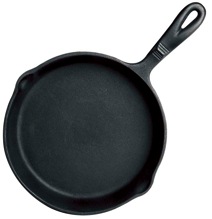 A heavy, but essential, addition to the kitchen, cast-iron cookware is dependable and full of history.
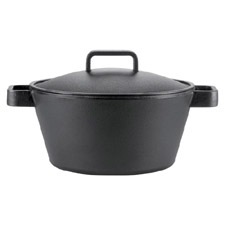
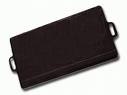
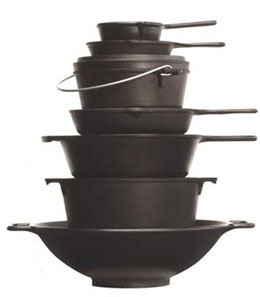
The other day someone asked me how I cooked eggs or hash browns without a non-stick skillet. I told them I used my 100 year old cast-iron skillets, wonderfully non-stick because I keep them seasoned correctly, never, ever use soap in them…eggs and hash brown slide right out. I have a 6 inch skillet, 2 12 inch skillets, a 12 inch round griddle with a handle, a 30 year old 12 inch Dutch oven with a lid and an antique cast iron waffle maker with a iron ring to use on the stove top.
They all perform beautifully. There is no reason to pay more for a pre-seasoned pan, or pans such as La Crueset with enamel that cost a small fortune. These pan are non-stick when seasoned, and kept that way.
Besides being an ideal heat conductor, cast iron heats evenly and consistently, it is inexpensive and will last a lifetime (actually several lifetimes) with proper care, and it is an old-fashioned way to cook non-stick. When well seasoned, a cast-iron pan will be stick resistant and require no additional oil.
The benefits of cast-iron pans are terrific: Foods glide out of it as from no pan made with Teflon; it goes from stove to oven; no special utensils are needed to cook in it and cleanup is a cinch. It’s time people realize the culinary wonder that a cast-iron pan can be!
As a chef, I consider cast-iron pans to be precision cooking tools, as these dependable pans enable precise control of cooking temperatures. Their heat retention qualities allow for even cooking temperature without hot spots. Cast-iron pans can be used on top of the stove or to bake in the oven. All our grandmothers had cast iron skillets and stove-top griddles. In fact, your grandmother swore by it and the pioneers depended on it.
If you don’t own a cast-iron skillet, it’s well worth the time and money to invest in one. You can find them for sale on the internet, at cook stores everywhere, thrift stores, flea markets, or you can scour the tag and yard sales for one that might look as if it has seen better days. If the pan is rusty or encrusted with grease, buy it anyway. Don’t worry! I’ll tell you how to get that new or old one into shape so you can enjoy it for a lifetime of non-stick cooking. You’ll be able to pass the pan on to your own children and grandchildren.
To season a new pan, or re-season one you have been abusing;
All new (not old pots) cast-iron pots and skillets have a protective coating on them, which must be removed. American companies use a special food-safe wax; imports are covered with a water-soluble shellac. In either case, scrub the item with a stainless steel scouring pads (steel wool), using soap and the hottest tap water you can stand.
If the pan was not seasoned properly or a portion of the seasoning wore off and food sticks to the surface or there is rust, then it should be properly cleaned and re-seasoned. Seasoning a cast iron pan is a natural way of creating non-stick cookware. And, like you cook and clean the modern non-stick cookware with special care to avoid scratching the surface, your cast iron cookware wants some special attention too.
You season a cast iron pan by rubbing it with a relatively thin coat of neutral oil (I stress a light coat of oil).
NOTE: NEVER use vegetable oils (canola, sunflower, etc.), or shortening (like Crisco shortening) to season your pan. These oils get very sticky when heated (the same as they do in your arteries!!) Use coconut oil or lard for seasoning your cast iron pans. You can also use butter.
Place the cast iron pan, upside down, in the oven, with a sheet of aluminum foil on the bottom to catch any drips. Heat the pan for 2 hours in a 250 degree oven. Once done, let the pan cool to room temperature. Repeating this process several times is recommended as it will help create a stronger "seasoning" bond.
The oil fills the cavities and becomes entrenched in them, as well as rounding off the peaks. By seasoning a new pan, the cooking surface develops a nonstick quality because the formerly jagged and pitted surface becomes smooth. Also, because the pores are permeated with oil, water cannot seep in and create rust that would give food an off-flavor.
Your ironware will be slightly discolored at this stage, but a couple of frying jobs will help complete the cure, and turn the iron into the rich, black color that is the sign of a well-seasoned, well-used skillet or pot.
Never put cold liquid into a very hot cast iron pan or oven. They will crack on the spot!
Be careful when cooking with your cast-iron pots on an electric range, because the burners create hot spots that can warp cast iron or even cause it to crack. Be sure to preheat the iron very slowly when using an electric range and keep the settings to medium or even medium-low.
Important:
Unless you use your cast-iron pans daily, they should be washed briefly with warm (not hot) water and a green scrubbie, then rinsed and thoroughly dried in order to rid them of excess surface oil. If you do not do this, the surplus oil will become rancid within a couple of days. After you clean the skillet (and this is easiest if you clean it while warm), rub a small amount of coconut oil over the surface.
Remember – Every time you cook in your cast-iron pan, you are actually seasoning it again by filling in the microscopic pores and valleys that are part of the cast-iron surface. The more you cook, the smoother the surface becomes!
Cast iron is 50 percent pig iron and 50 percent steel. It’s cooking properties have been championed and cherished for generations.
I use only cast iron or triple bottom stainless steel to cook. Cast iron for frying or scrambling eggs, frying bacon or steaks, sautéing onions or other veggies. Never cook acidic food such as tomatoes in cast iron, you will remove the seasoning.
I use my cast iron Dutch oven for sautéing roasts or other cuts of meat that I need to brown first, then finish in the oven. My favorite is a Provencal Chicken that I make a little bit of dough to seal the lid to the pot. It seals it completely and when the seal is broken the steam coming out with the smell of chicken, herbs and garlic is amazing!
The technology for making cast-iron cookware has come a long way in the last 100 years, but each piece is still cast in sand moulds. Yes, sand. This method goes back to the Chinese. At Lodge, the biggest cast iron company in the United States, the iron/steel mixture is melted with electro-magnetic heat to 2,500°F. The pouring of the molten metal into the sand moulds has been automated. It’s this automation that has made Lodge the industry leader–and survivor. They were also the first, and only, cast-iron company to offer a pre-seasoned pan. This means the pan is ready to go when you buy it.

Choose Wines with Real Cork Stoppers
Posted: November 24, 2011 Filed under: Food and it's Impact on Our Health, Going Green; How and Why..., Non-Toxic Choices 2 Comments
What is "Real Cork Inside"?
Understanding that the screw cap and plastic are not environmentally sound closures, thousands of people across the country have made a commitment to support wineries that use natural cork.
Not buying a screw cap wine is easy; it can be seen right on top of the bottle. But how do you know what’s inside a bottle with a capsule cover, plastic or natural cork? Unless you’ve had that wine before, you can’t actively choose to buy natural cork, until now.
The Real Cork Inside assurance program eliminates that guesswork. By displaying the acorn logo on the bottle, a winery lets consumers know that the wine they are choosing has been closed with natural cork.
Why the Acorn?
The cork tree is a member of the oak family (Quercus suber), and as such produces beautiful large acorns. These acorns are a valuable source of food for the insects and animals that inhabit the cork forests, as well as containing the next generation of cork oak trees.
Why Participate?
Your winery has made the commitment to use the most sustainable, renewable and recyclable closure, natural cork. With consumers’ heightened awareness for products that are sustainable, the Real Cork Inside assurance program gives them another reason to support your winery. Please contact Patrick Spencer for details of the Real Cork Inside assurance program.
What Does Gardening Have to Do with the #Occupy Movement?
Posted: November 23, 2011 Filed under: Gardening, Non-Toxic Choices Leave a comment Colleen Vanderlinden
November 21, 2011


My colleagues here at TreeHugger have done an amazing job covering the #Occupy movement. Chris has looked into the idea of #Occupy being a building block to a Constitutional Convention. Lloyd has discussed the issue of police brutality, and Sami has looked at the misconceptions people have about the movement.
I’m here, as always, to look at it with a gardener’s eye. (Stay with me.)
A few weeks ago, my friend and fellow garden writer Mr. Brown Thumb started the #OccupyGardens hashtag on Twitter, kind of as a joke. But the more I looked at it, the more it made sense. Occupy is about fighting greed, about taking control from the corporations and their government cronies and bringing it back to we the people, the 99%.
What is more basic to all of our needs than food?
In Jenna Woginrich’s excellent book, Made from Scratch, she argues that:
"Vegetable gardening has been called ‘the peaceful sedition’ because at the most basic level, when a person can feed and shelter herself, she doesn’t require a government to provide for her. … It’s not about pride or independence, or even connecting with nature. It’s about wanting hash browns on a Saturday morning and being able to run out to the backyard in your bathrobe to grab some potatoes from the garden."
I would argue that, even more, it means that she doesn’t need a corporation to provide for her. And when we don’t need the corporations, they cease to have the ability to exist — or at least cease to have so much power that the will of the people means nothing. Look at the way we’re fighting for something as simple, as self-explanatory, as GMO labeling. 87 percent of Americans want to know if they’re eating GMOs or not. The hubris of corporate America, and their Congressional lapdogs, is what is keeping us from that knowledge.
"Certain gardens are described as retreats when they are really attacks." — Ian Hamilton Finlay
This is how I’ve come to see my garden, bit by bit, over the years. Where others see a peaceful place to while away a summer afternoon, I see a full arsenal in my fight against corporatocracy. The shake of a seed packet is my chant; rows of chard and beds of potatoes are my weapons.
Roger Doiron, of Kitchen Gardeners International, recently gave a TEDx talk about the power of gardening. It is definitely worth a look:
Every bite of food we grow ourselves, every forkful that comes from our own labor instead of from the troughs of corporate food, is a statement that we are taking our power back. We don’t need them to feed us. Whether from our garden, our farmer’s market, or our local CSA, we can feed ourselves.
#Occupy Wall Street, and L.A., and Detroit. But #Occupy the garden, as well.
Want to get started?
- 66 Things You Can Grow Yourself, in Containers10 Most Nutritious Crops, and How to Grow ThemGrowing a Garden to Feed a FamilyThree Easy to Grow Veggies10 Veggies You Can Grow in Shade
Coca Cola Wins Again: American Idol Abandons REFUSE Plastic Message After Pressure From Sponsor
Posted: November 17, 2011 Filed under: Going Green; How and Why..., Non-Toxic Choices Leave a commentRachel Cernansky
Business / Corporate Responsibility
November 14, 2011
Millie- Perhaps a BOYCOTT is in order for all of their 3,500 product lines??


Plastic Pollution Coalition/Screen capture
It’s the second strike against Coca-Cola in under a week. Not only did the company play a likely role in dissuading the Grand Canyon from banning disposable plastic water bottles in the park, but it has also been pressuring American Idol to dissociate itself from a Plastic Pollution Coalition message featuring 11 Idol finalists speaking out against disposable plastics.
Forbes reports that the public service announcement had just started to get some traction—a mention by USA Today, some teen pop blogs, and about 5,000 views on YouTube—when the news broke that the show had been "pressured by a sponsor to have the PSA and any association with it removed."
The Forbes story reports the following conversation:
“One of the show’s sponsors was very angry at seeing the piece and demanded that the show have it removed,” says Plastic Pollution Coalition executive director Daniella Russo. “When I asked if the sponsor in question was Coca-Cola, they said, ‘You didn’t hear it from us.’ But even before all of this we were told that the PSA could only launch after the American Idol concert tour because Coca-Cola was a sponsor and might get upset.”
It gets worse. According to the Plastic Pollution Coalition:
Shortly after the PSA was posted online, we received a letter from [American Idol production company] 19 Entertainment’s parent company, demanding that we pull the PSA down. The stated reason was that we did not have appropriate permissions. We were threatened that if we did not comply by pulling the PSA down, they would contact You Tube directly and our YouTube channel may be shut down.
The coalition refused to take down the PSA, which it says was an eight-month collaboration between the coalition, 19 Entertainment management, and all of the season’s Top 11 finalists. The coalition says, "We sought and have obtained written approvals to launch the PSA. In fact, Haley’s Wish was recorded by 19 Entertainment themselves."
Forbes quotes Russo again, refuting any legal claims: “This is not a matter of us not obtaining permissions,” she says. “It is a matter of withdrawing permissions, AFTER a major sponsor was upset.”
A commenter said it best:"All this fawning over recycle, while we throw "reduce" and "reuse" under the bus."
Posted: November 8, 2011 Filed under: Going Green; How and Why..., Non-Toxic Choices Leave a commentOr….What You Don’t Want For Christmas: A Single Serve Pod Coffee Maker
Lloyd Alter
Sustainable Product Design

Nestle/Promo image
There are some things that I will never understand, and near the top of the list is pod coffee products like Nespresso and Tassimo. That’s where people buy coffee makers that lock them in to the purchase of pods from the manufacturer at surprisingly high prices. When I first reviewed the Tassimo I called it a design for unsustainability.
Now, instead of having the choice of whatever coffee you want you pay almost a buck per hit of their choice of brand, and a little plastic and paper turd to throw in the garbage after. In the end, in the name of convenience, we have a machine that creates a captive audience for an overpriced coffee system that creates unnecessary waste.
This shopping season, there is a big push to sell them in North America. Why now? According to the Wall Street Journal, it saves people money because it keeps them out of coffee joints:
The onslaught of advertising comes as consumers remain cautious about spending. Single-cup coffee typically costs less than $1 a serving, but consumers have to spend between $100 and $400 on the machines. There are also upscale models that cost well above $500….Still, food companies and analysts say consumers may be more willing to make coffee at home rather than buying it from local cafes.
Edward Tenner at the Atlantic thinks that’s ridiculous.
But does cost saving really explain it? In high-rent Princeton, N.J. Starbucks is still charging only $1.50 plus tax for a cup of drip coffee, slightly more for a single-shot espresso. That makes the $1.00 pods not such a convincing bargain, unless you prefer the taste of pod coffee to coffee house brew. And if you’re willing to do a little grinding you can buy a one-cup filter cone, including travel mug, for under $5.00
It is just another example where convenience trumps economy or concern for the environment; it is just easier. As far as the environment is concerned, people are happy to be greenwashed. In Britain, where they never knew how to make a good cup of coffee, the Nespresso machine is hugely popular. The have sold 26.9 billion coffee capsules and 13 million coffee machines since 1986. They make a huge deal of their ecological performance, building a whole website promoting ecolaboration. They will actually pick up your used pods at your door when they deliver your next batch of pods. Because under the normal recycling system, they are an unrecyclable mix of aluminum and plastic. According to a press release I just received:
Nespresso’s new initiative provides a ‘Doorstep Collection Service’ picking up all used coffee capsules with the home delivery of each new order of Grands Crus coffees direct to Club Members. Furthermore, select Nespresso Boutiques have a collection point in Selfridges stores where used capsules can be deposited and will soon be rolled out across other Nespresso Boutiques.
All Natural Mosquito Repellent
Posted: August 17, 2011 Filed under: Gardening, Non-Toxic Choices Leave a commentYa’ll probably know that garlic juice and oil in water sprayed around your yard or patio does an amazing job of warding off mosquitoes… Here’s a method when you can’t spray, or it’s raining…
I read an article about Lemon Eucalyptus oil being as effective a bug repellant as DEET. Wal-Mart was sold out of it today but they did have these cute little yellow coils you put on your wrist or ankle with oil of Citronella, Indonesian Lemongrass Oil, Philippine Geranoil Oil, They are .39 apiece and each one lasts about 200 hours. I test drove on my back porch late this afternoon and I have to say they really worked… Amazon has them for $14.99 for 10 of them. Almost 1/5 the price at Wal-Mart.


 Meal Delivery Service by Millie Barnes