Chicken Stock 101
Posted: August 12, 2009 Filed under: Food and it's Impact on Our Health, In The Kitchen with Millie- How To's 4 CommentsFrom; Mother Linda’s
I used to make pathetic soups. This was all due to the fact that I didn’t know how to make a good chicken stock. Oh, I tried. I bought the best chickens and organic vegetables and threw (no, gently placed) them in a pot to simmer. The results were always the same. After a couple of hours, I would pick the diluted chicken off the bones, and return the bones to the pot for some more simmering. I could never really stomach the pale, now tasteless chicken, and never found dishes it worked well in. And all my great organic vegetables never seemed to do the trick to create a tasty stock. And only on occasion would my stock, when reduced and cooled, become gelatinous like it should. I knew that the perfect stock must past the Jell-O® test, but mine rarely did.
I improved my stocks when I learned that adding a small amount of acid to the pot and letting it sit for a while before heating helps draw the calcium out of the bones. After trying this method, I felt my stocks were more nourishing, but they still did not always become firm when cooled.
But I recently had a revelatory moment when I realized how incredibly easy and double tasking it was to make homemade soup stock by starting with the leftover carcass from a roast chicken. Now my chickens have two lives. First, they are roasted to perfection in the oven and served as a nourishing main dish. Then, their bones are used to make a perfect stock.
But the bones are not the only important and part of the carcass, the cartilage is also key. In fact, during the slow simmering process, it is the chicken cartilage, that flexible and plastic-like white stuff along the breast bone and in the joints, which becomes part of the broth. This process is the primary factor in whether the stock will set up or not. Adding a few chicken feet to the pot will also produce a more gelatinous stock.
Good thick chicken stock is full of cartilage-building proteins and amino acids we all need. Commercial chicken stock, even organic, is just no replacement. For more information on the health benefits of good stock or broth, see “Broth is Beautiful” by Sally Fallon and "Why Broth is Beautiful—"Essential" Roles for Proline, Glycine and Gelatin” by Kaayla Daniel.
Perfect Chicken Stock

It is amazingly easy to make good chicken stock with almost no effort.
The carcass of one roasted chicken
Raw necks, backs, gizzards and other innards
2-3 chicken feet
Water to cover all chicken parts, plus 2 finger’s width
2 tsp. apple cider vinegar or lemon juice
2 medium onions, peeled and quartered
2 medium carrots, peeled and cut into 2-inch pieces
Leafy tops of 2 celery ribs
After serving the meal, I pick off the remaining meat, as much as possible, and reserve it for sandwiches or another dish. Next, I break the carcass into pieces and place them in a pot big enough to hold the carcass plus two finger widths of water. Breaking the bones does two things: it releases the marrow, which is where a lot of the flavor hides, and it exposes more of the bone to the calcium-extracting acid. Be sure to throw the necks, backs, gizzards and other innards into the pot as well.
Wash all the raw parts well under cold running water. Place everything into a 4-quart or larger pot and fill with COLD water to cover bones, plus 2 finger widths. Add a couple of tsp. of vinegar or lemon juice and let the brew sit for at least 30 minutes before placing on the stove. Do not go overboard on the acid or you will ruin the stock.
After 30 minutes, bring to boil over high heat. While waiting for the water to boil, prepare the vegetables. When the water just boils, add the vegetables to the pot and when the water returns to a boil, quickly reduce the heat and partially cover the pot. Adjust the heat to allow the stock to slowly simmer. (Sometimes I even move the pot halfway off the burner.)
If need be, skim off any foam that begins to form. This will leave you with a much clearer broth. When the foam is pretty much gone, sprinkle with a teaspoon of seasoned salt, and reduce heat to medium-low. You want just the barest hint of a simmer while the pot is covered.
Let simmer very gently, without stirring, for 3 to 4 hours—or even overnight. Let cool slightly and then remove the big bones and vegetable parts. Carefully pour the remaining liquid and small bones through a large, fine-meshed sieve, catching the liquid in another pot. Discard all bones and vegetables.
Cover and place your clear stock in the refrigerator 5-6 hours or overnight. In the winter, I put the stock out on my porch to cool. After several hours, all the fat will rise to the top and solidify. Chicken fat is rather soft so you should carefully skim it off with a spoon.
Now it is time to reduce the stock, which will give it more concentrated flavor and make a firmer gel. Boil the stock in an uncovered pot. Taste occasionally until you find the strength of stock you are looking for. I usually reduce mine at least by half.
Making Coconut Milk Yogurt
Posted: August 12, 2009 Filed under: In The Kitchen with Millie- How To's Leave a commentI made this yesterday, using the thermos method and it was very easy.
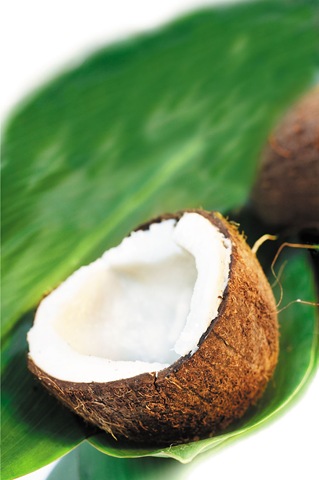
Coconut Milk Yogurt
2 cans (15 oz.) Thai Kitchen coconut milk (the reason I don’t use organic is because the only brands I can find locally here in Jacksonville, Fl have preservatives or emulsifiers, which will keep the yogurt culture from developing)
heaping 1/4 t. dairy free probiotic*
1 packages Knox gelatin OR a few T. of yogurt from last batch
3 T.organic sugar, or to taste.
Tools Needed:
2 half-quart Mason jars (I used cleaned salsa jars) and a few quart jars to hold hot water.
2 large/medium stainless steel pots
kitchen thermometer
a large bath towel
Another method; make yoghurt in a wide neck thermos flask. Put warm water in the flask for 5 minutes to warm it up. Do not use water which is too hot or the thermos will be too hot. I pour my heated milk and yoghurt into the flask and leave for 8 hours. It works every time.
Basics:
1) First, take one can of coconut milk and pour it into the microwave-safe bowl, and pour the second can into your glass pitcher. Next, sprinkle the gelatin evenly over the milk in the bowl, and let it sit. Then microwave the milk in the glass pitcher for approximately 60 seconds. Take it out to check the temperature. It should be 110 degrees. If it has not yet reached the correct temperature, microwave it on 15 second intervals until it is. Now you can go back to the coconut milk in the bowl, and stir it until it dissolves completely. Add the desired amount of sugar at this point and whisk to dissolve. Then place the bowl in the microwave and heat to 120 degrees. After it has cooled to 110 degrees, pour most of the milk out of the glass pitcher into the bowl, and leave only a small amount in the pitcher. Add the store-bought coconut yogurt or probiotic starter to the heated coconut milk left in the pitcher and stir until it dissolves, and then add it to the coconut milk in the glass bowl. Recheck the temperature, and if it is not still 110 degrees, place the bowl in the microwave, and bring it back to 110 degrees.
2) Now that you have the properly mixed yogurt base at the correct temperature, you are ready to pour it into the mason jars, while pouring steaming hot water into the larger jars, and then to place them both into your largest pot on the stove (surround them with towels you’ve warmed up in your dryer to help with the insulation),
3) I then leave it for 12 hours to incubate. You can sit the whole pot on a heating pad and it will stay at the right temp for the whole time. Yogurt will be runny until after you refrigerate it.
Once a week I make a batch of blueberry sauce to eat with my yogurt by placing 1 1/2 cups blueberries in a saucier (or small pot) and simmering it with a T. of sugar until the blueberries burst and get juicy. I simmer it a few minutes to thicken it and them keep it in a jar in the fridge. I add it to my yogurt when I eat it..mmmmmmm
TORTILLA WITH FLANK STEAK WITH CHIPOTLE HONEY SAUCE
Posted: August 10, 2009 Filed under: In The Kitchen with Millie- How To's Leave a comment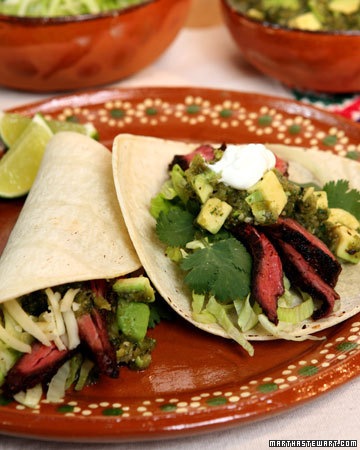
Flank Steak
2 Chipotle Peppers in Adobo
2 garlic cloves
3 T. Cilantro
1 T. Coconut Oil
1 1/2 T. Honey
3 T. Lime juice
2 T. Rice Vinegar
2 T. Dijon Mustard
1 t. cumin
1 pound flank steak
salt and fresh ground pepper to taste
3 cups Masa Harina
1/3 chipotle pepper
1 medium garlic clove
2 T. cilantro
For the sauce, mince chipotle, garlic and cilantro in a food processor. Add honey, oil, vinegar, mustard, lime juice, cumin, including 1 tsp salt and 1/2 tsp pepper; pulse to combine. Set aside.
For the steak, mix chipotle, garlic, cilantro, and lime juice in a large nonreactive baking pan to make a marinade. Place flank steak in the marinade; turn to coat. Cover with plastic wrap and refrigerate overnight.
Heat the grill. Sprinkle flank steak with 1/2 tsp pepper. Grill, turning once, until browned; about 8 minutes for medium rare. Transfer steak to a carving board and let stand for 5 minutes.
Holding the knife on a slight angle, slice the flank steak across the grain into 1/4-inch-thick slices. Transfer a portion of the steak slices to each warm dinner plate. Drizzle a portion of the Chipotle-Honey Sauce over the grilled flank steak slices and serve immediately. Serve the slices of flank steak on a fresh off the stove tortilla with slices of avocado and red onion.
To make fresh Corn Tortillas;
equal parts water and Masa Harina less a bout 2 T. water. I figure a cup about 1 serving.
1) Mix masa flour with hot water. Let stand about 10 minutes.Heat iron skillet to medium high. Us 2 pieces of wax paper or parchment paper that you have coated lightly with coconut oil or butter, place a slightly larger than golf ball size ball of dough between wax papers. using a pan that has a flat bottom, gently press tortilla flat. Peel off into your hand and place in skillet.
2) cook until edges begin to turn up, flip over and cook on other side. the first side should take about 5 minutes, the other side; about 4 minutes. Place on oven racks in COLD oven,oven door ajar. When ready to reheat, turn oven on 350 degrees and warm for a short length of time. If you leave them in too long, they’ll get very hard.
Making Butter in the Food Processor
Posted: August 7, 2009 Filed under: In The Kitchen with Millie- How To's Leave a commentMaking butter is easy with a food processor, and it produces a light fresh taste.
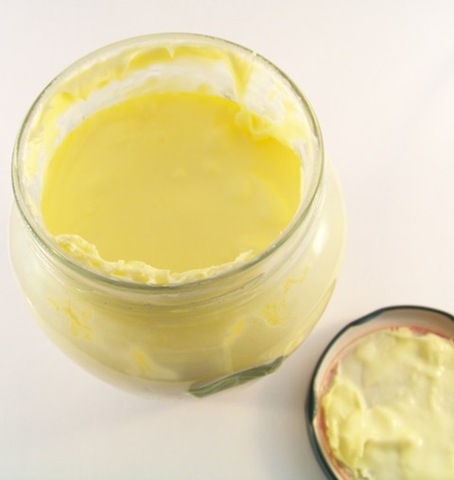

Stages of buttermaking in the food processor, and bowl.
You will need:
1-2 cups heavy whipping cream, or double cream (1/3 liter)
(preferably without carrageenan or other stabilizers)
Fit food processor with plastic blade, whisk, or normal chopping blade. Fill food processor about 1/4 – 1/2 full. Blend. The cream will go through the following stages: Sloshy, frothy, soft whipped cream, firm whipped cream, coarse whipped cream. Then, suddenly, the cream will seize, its smooth shape will collapse, and the whirring will change to sloshing. The butter is now fine grained bits of butter in buttermilk, and a few seconds later, a glob of yellowish butter will separate from milky buttermilk. Drain the buttermilk.
You can eat the butter now — it has a light taste — though it will store better if you wash and work it. Add 1/2 cup (100 mL) of ice-cold water, and blend further. Discard wash water and repeat until the wash water is clear. Now, work butter to remove suspended water. Either place damp butter into a cool bowl and knead with a potato masher or two forks; or put in large covered jar, and shake or tumble. Continue working, pouring out the water occasionally, until most of the water is removed. The butter is now ready. Put butter in a butter crock, ramekins, or roll in waxy freezer paper.
Yield: About half as much butter as the amount of cream you started with.
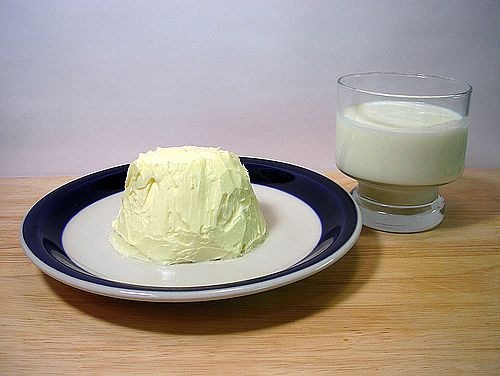 Various options:
- Salt to taste before working, a few pinches.
- Have the cream around 60°F/15°C before churning. (55°F/13°C for goat milk)
- Obtain the freshest cream you can. So-called "vat pasteurized cream" tastes better than ultra heat treated (UHT) or HTST pasteurized. Try calling your state Department of Agriculture, and asking the Milk Control office who sells vat pasteurized cream.
- Shake in a jar instead of a food processor. Shake about once a second. Add a marble to speed things up. This is fun with kids, but expect it to take between 5-30 minutes, depending on the shaking.
- Culture the cream before churning. Add a few tablespoons (50 mL) store-bought cultured yogurt, buttermilk, sour cream, clabbered cream, or creme fraiche, and let sit about 12 hours at warm room temperature (75°F/24°C is ideal) to thicken and ferment before churning. It should taste delicious, slightly sour, with no aftertaste. If it is bubbly, or smells yeasty or gassy, discard.
- Use some butter making tools, such as a churn, paddle for working, or molds for forming the finished butter.
Japanese Ginger Dressing
Posted: July 29, 2009 Filed under: In The Kitchen with Millie- How To's 1 Commentmakes 8 servings
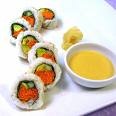
3 large carrots- sliced
1/2 large onion- large diced
1 cup orange juice
1 T. tahini
3 T. honey
1/3 cup lemon juice
fresh pepper to taste
1 t. fresh ginger
3 T. rice vinegar
2 T. tamari
1 T. Dijon mustard
1 t. toasted sesame oil or to taste
1) blend all ingredients together in blender all the way to a smooth liquid.
Pear Blueberry Crisps (gluten free of course!)
Posted: July 22, 2009 Filed under: In The Kitchen with Millie- How To's Leave a comment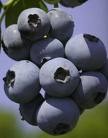 These desserts are a long time favorite of my clients..they are crispy, chewy and buttery…mmmmm….
1 cup fresh blueberries
4 fresh Bartlett pears
2 T. sugar
5 slices Ezekiel bread
3 T. honey
1 T arrowroot
1/3 t. ginger
a few drops of brandy extract
4 T. organic butter
1 cup pear nectar
1) Cut Ezekial bread in small cubes, toast in oven until crisp. toss with butter .
2) combine pears, cut in small cubes, with honey, ginger, arrow root, brandy extract and nectar.
3) caramelize sugar in dry pan on stovetop; Use a small, clean, dry saucepan. Put a half-cup of sugar in the pan and stir slightly to allow the sugar to rest in an even layer on the bottom of the pan. Turn the burner on to medium heat. Add a little water to the pan and stir constantly with a wooden spoon. You can include anything you typically use with candy making in this process. Keep scraping down the sides of the pan to keep the sugar cooking consistently. Stir the mixture until it reaches a boil. Swirl the pan around to keep the syrup moving until it begins to turn amber brown. Take the pan from the heat just before it has reached the desired color. If you are making a dark brown caramel or are worried about over-cooking, put the pan in an ice bath after removing it from the burner. This will stop the cooking process immediately.
3) Butter muffin tins, pour in caramelized sugar and let it sit until it hardens. Then strain pears, retaining liquid, toss bread cubes with 2/3 of the liquid. line bottom of each tin with one layer of bread cubes, top with one T. of pears, 1 teaspoon of blueberries, then more bread cubes. it will stick up above the top of the tins. drizzle the remaining pear nectar on each "muffin".
4) In a 350° preheated oven, place the tins on middle shelf, cover with foil, put a cookie sheet on top with something heavy on top to weigh the crisps down. 5) bake for 30 minutes, then remove whatever you have sitting on top and bake 10 more minutes. cool COMPLETELY before removing from tins or they will fall apart.
you should eat eggs, every day even!!
Posted: July 9, 2009 Filed under: Food and it's Impact on Our Health, In The Kitchen with Millie- How To's 3 CommentsI hear all the time, “I only eat eggs once a week or so”, or, “I eat only the egg whites”.
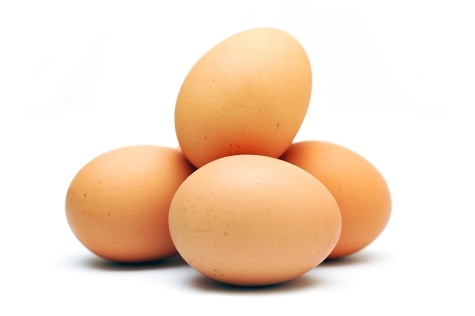 People are scared of eggs.
Let’s take a look at the health benefits of free range, organically grown chicken eggs.
We have been brainwashed about the dangers of this fabulous food. The whole cholesterol scare turned out to be false, high cholesterol does not lead to heart disease. We now know that there is a difference between HDL (high density lipoprotein) and LDL (low density lipoprotein). HDL is known as the "good cholesterol" because it protects against heart attacks, while LDL is known as "bad cholesterol" because it creates plaque that can clog arteries, contributing to heart attack and stroke.
Further research is showing that there are different types of LDL cholesterol, not all of which are responsible for clogging arteries. This makes a difference in determining what foods to avoid.
Studies show that eating eggs does raise LDL cholesterol, but NOT the type responsible for heart disease.
Man has always eaten the eggs of all animals that produced them: chicken, duck, goose, turtles. Called caviar and roe the eggs from fish are very special foods. Eggs are a wonderful source of nutrition and can greatly strengthen your health. A great source of protein, Vitamins A and D and Folic acid. and the adrenal-building minerals: choline, sodium and potassium. Eggs are a rich source of phosphorus and also sulfur.
 Improve heart health. Choline converts homocysteine into harmless material. Homocysteine is the substance that can damage your blood vessels and is a precursor to heart disease. Eggs can also decrease your risk for heart attacks and stroke thanks to the anti-clotting agent found in yolks.
Enhance your vision. The lutein found in eggs can help prevent macular degeneration.
Nourish expecting mothers and their babies. Egg yolks contain high levels of biotin, a B vitamin that can prevent birth defects. Egg yolks should be a baby’s first animal food and can be introduced around six months.
Aid in fat assimilation. Eggs yolks contain lecithin. In fact, lecithin is the precursor to choline, which helps lower serum cholesterol.
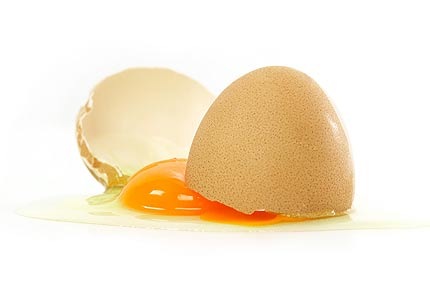
Guidelines for choosing eggs:
- Organic. Organic chickens eat feed and grains that were not grown with pesticides. The animals are not given hormones or antibiotics, but "organic" on the label does not tell us if the chickens were able to exercise, nor does it tell us what they were fed.
 Free range vs. Cage free.
- Free-range chickens usually have a covered shelter and access to an outside scratch yard. They are pasture-fed and can get worms and bugs, which is the ideal feed for health and strong immunity.
- Cage free chickens do not live in cages but typically live inside a hen house without access to the outdoors.
- Vegetarian eggs are not necessarily good for you. Chickens need protein to develop properly (that’s why bugs are a part of their natural diet) so chickens that are vegetarian may be fed genetically modified soy and other unhealthy grains.
- Conventional eggs. These eggs come from chickens fed conventional food, which includes GM (genetically modified) grains, GM soy and pesticides.
-
- The toxins from pesticides and herbicides are stored in the fat of these chickens and their tightly packed living conditions make exercise difficult. It’s no surprise that these chickens are unhealthy and can harbor diseases like salmonella.
- Antibiotics are often needed to rid conventional chickens of diseases.
- Conventional eggs have abnormally high levels of omega-6 fatty acids. High levels of omega-6 fatty acids increase your risk for cancer, obesity and heart disease.
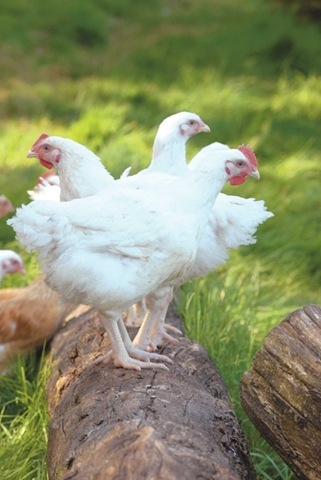
Putting it all together: Look for organic, free-range (or pasture-fed) eggs for the most health benefits.
I recommend cooking your eggs "softly." You never want to overcook proteins or they become difficult to digest. Eat the whole egg, not just the white, that is where all the nutrition is that is so good for you.
Dairy, Pork and Gluten Free Eggs Benedict;
Sauce for Eggs;
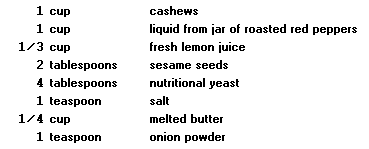
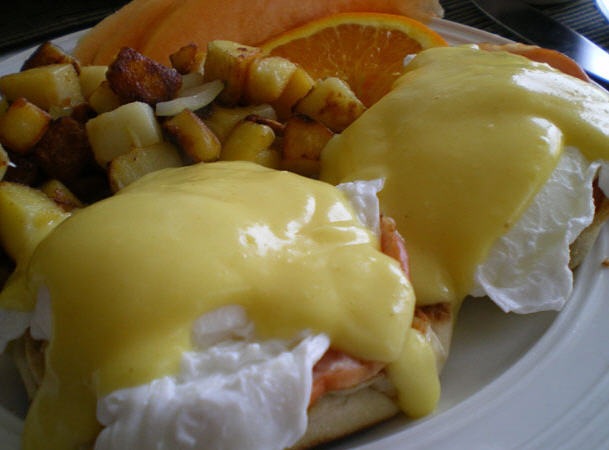

Blend cashews to a fine powder in blender, scraping down bowl and under blades a few times. Then add water and blend well. Blend remainder of ingredients until smooth. Heat gently when ready to serve over eggs.
I use Ezekiel bread instead of English muffins, but Kinnikinnick makes them gluten-free, but I do not care for them. I don’t like foods that “seem kinda like the real thing”. If I can’t make it perfect in taste and texture, I’m not going to make it! I do, however, ADORE thier rice bagels, and think that they are better than “the real thing”. Topped with real butter, s schmear of fresh mayonnaise, smoked salmon, a slice of tomato, a few slices of paper thin onions…and my mouth is happy!!!!
Anyway, back to the eggs benedict…poach the eggs until just the whites are set, the yellow still runny, as the bread is toasting. Heat or brown the Turkey Canadian bacon.
Butter the bread, lay the Canadian bacon on the bread, slide on the egg, top with warmed sauce…. My favorite Sunday Brunch food with lots of fruit.
I have been looking for a source of Organic Turkey Canadian Bacon, but so far have only found Oscar Meyer, Please let me know if you know where to get it!!
Enjoy those eggs each morning!
Debunking the Low-Fat Myth
Posted: June 2, 2009 Filed under: Food and it's Impact on Our Health, In The Kitchen with Millie- How To's Leave a commentIf you want to live a long, healthy life, forget about modern recommendations to eat like a rabbit and avoid fat. The best diet for man is the one we were eating for eons.
You have a natural desire for a diet rich in protein and fat. When you fuel your body with the foods for which it was designed, you will find that losing weight comes easier and faster and you will wake up with energy that will last the whole day.
The American Heart Association claims that the path to good health is a low-fat diet. This is exactly the wrong advice, and their "solution" has actually made the problem worse.
A low-fat diet is a prescription for losing vital muscle and turning your body into flab. When you eat low-fat, you neglect the most important nutrient, protein. Even worse, low-fat diets are loaded with the real saboteur of modern diets, processed carbohydrates.
 It’s time to put an end to counting calories and grams of fat. So now I am going to tell you:
- Why avoiding dietary fat is dangerous.
- Why carbohydrates increase your body fat.
- How protein makes you strong, lean, and disease-resistant.
- Why cholesterol is not the threat you’ve been told.
I’ve helped hundreds of people use this approach, and I’ve watched them make a remarkable transition to become lean, healthy, and disease-free.
There are certain fats that are essential to every cell in your body, which is why they’re called "essential" fatty acids. Your body cannot manufacture these fats. You must consume them in your diet or you will suffer disease. But there are many other reasons why low-fat intake can be detrimental. Fat is also critical to help your body absorb certain vitamins and nutrients – such as CoQ10 and vitamins A, D, E, and K – which cannot be properly absorbed without fat.
So, what are the origins of the modern dietary nightmare? About 10,000 years ago, people began to domesticate plants and animals. There was a gradual switch from hunting and gathering to farming and raising livestock. These methods could support a larger population, but quality was traded for quantity.
When humans made the switch from hunter-gatherers to farmers, their protein intake went down, while carbohydrate intake went up. And the incidence of malnutrition and disease began to rise.
Archaeologists can even identify the Agricultural Revolution in fossil records. Hunter-gatherer skeletons in Greece show the average height for men was about 5′9". Upon the advent of agriculture, the height of the average Greek man suddenly shrank to a mere 5′3".
The record of native people in the Illinois and Ohio River valleys also show the health consequences of agriculture. In an article for Discover Magazine, Jared Diamond elaborates on a study by the University of Massachusetts of 800 skeletons excavated there. He writes: ". . . when a hunter-gatherer culture gave way to intensive maize farming. . . the farmers had a nearly 50% increase. . . in malnutrition, a fourfold increase in iron-deficiency anemia. . . [and] a threefold rise in infectious disease."
The Over-Consumption of Carbohydrates Gets Worse
In 1977, a Senate Committee led by George McGovern released its "Dietary Goals for the United States." Without real evidence, it identified fat as the culprit. They didn’t know that native diets contained more fat than modern diets do.
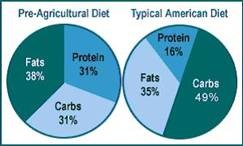
Information from The Paleo Diet (2002) by L. Cordain
The National Institutes of Health jumped on the "ban fat" wagon. In 1984, the NIH announced that Americans must cut their fat intake. The food industry quickly produced a slew of "low-fat" products. But without the tasty fat, the food produced was bland, and high amounts of sugar became a common additive. Americans replaced fat with refined carbohydrates and sugar.
The Real Cause of American Obesity
There is no question that Americans now face a health crisis. We’re too fat. But why? Any plausible answer would have to explain why rates of obesity were constant at about 13% through the 60’s and 70’s, and then suddenly began to rise. Today, 25% of the U.S. population is considered obese, while 70% of Americans are considered overweight. These rates began rising at the time the health authorities told us we must eat low-fat. There was an explosion not only of obesity, but also of related diseases like diabetes, hypertension, and heart disease.
The Growing Percentage of Overweight and Obese American Adults
Add to this mistaken low-fat theory the reality of economics, and you get a recipe for a health disaster. How much profit can you make selling an egg when everyone else can sell the exact same product? But carbs can be processed into proprietary blends. The mark-up can be much greater.
If we can divorce ourselves from the prejudice about dietary fat, it’s really quite simple. Your body controls fat building, and hormones are used to set the controls. The hormone that controls fat is insulin. And how much insulin do you secrete in response to a fat-laden meal? Zero. Insulin is secreted in response to carbohydrates, not fat. Eat more carbohydrates and you will secrete more insulin and build more fat, all other things being equal.
The Solution: Using Modern Science to Emulate the Past
The good news is that fixing this mess is not as hard as you might think. Follow a few simple rules for selecting your food, and you will be able to eat better-tasting foods, reduce your risk of disease, and feel more satisfied.
And don’t worry that eating meat is going to drive up your cholesterol. Recent studies have proven that the incorporation of lean grass-fed meat into the diet helps reduce bad LDL cholesterol and raise good HDL cholesterol levels. And it didn’t matter if it was white or red meat.
Your Simple Plan for Healthy Eating
- Make quality protein the centerpiece of every meal. This should include non-contaminated fish such as wild salmon, sardines, or young tuna, as well as grass-fed meats, poultry, and eggs.
- Eat a wide variety of herbs, leafy greens, and vegetables every day, and a moderate amount of fruit.
- Eat plenty of healthy fats. The best fats is coconut oil. Nuts, eggs, and grass-fed beef also have good fats. Use coconut oil for sautéing, searing and braising. Use raw butter for flavor and for baking., Use olive oil or coconut oil for dressings and mayonnaise. Avoid ALL vegetable oils.
- Avoid processed carbohydrates. You can make this simple: Don’t eat anything made from grains. Period.
The notion that all of us should consume lowfat diets with the same ratios of macronutrients is ridiculous. If you suffer from hypoglycemia or diabetes, or are prone to seizures, you will need more fat in your diet to keep blood sugar levels stable. If you want to lose weight, you will need to cut back on carbs. This will be easier to do if you eliminate a large portion of the carbohydrates and keep the fat percentage relatively high. If you are an athlete, farmer or laborer burning up large amounts of energy, you can eat more carbohydrates than the rest of us without gaining weight.
If you are eliminating most carbohydrate foods from your diet, then it is important to consume plenty of fat. Several researchers have reported that a diet of lean meat leads to nausea in three days, symptoms of starvation and ketosis in 7-10 days, severe debilitation in 12 days and possibly death in a few weeks. Vilhjalmur Stefansson lived for many years among the Eskimos and thrived in a diet that was 20 percent protein and 80 percent fat. When he and his colleagues tried to eat lean meat, they quickly developed diarrhea and a lack of energy.
We are a nation of severely malnourished people. Our cancer rates, heart disease, obesity, degenerative disease are all related to our very poor nutrition.
The latest research shows that we need to return to the traditional diets we have eaten for thousands of years, a diet dense in proteins, fats and lowered carbs. When the foods we eat are dense in nutrients, fewer calories are needed to maintain optimum health. Humans are not designed to exist on purified macronutrients, but need a wide variety of nutrients found in the proteins, carbohydrates and fats in real foods. In fact, animal fats are the most important of all.
Benefits of Animal Fats
Foods containing transfats sell because the American public is afraid of the alternative—saturated fats found in butter, palm and coconut oil, fats traditionally used for frying and baking. Yet the scientific literature delineates a number of vital roles for dietary saturated fats—they enhance the immune system, are necessary for healthy bones, provide energy and structural integrity to the cells, protect the liver and enhance the body’s use of essential fatty acids. Stearic acid, found in butter, has cholesterol lowering properties and is a preferred food for the heart. As saturated fats are stable, they do not become rancid easily, do not call upon the body’s reserves of antioxidants, do not initiate cancer, do not irritate the artery walls.
Your body makes saturated fats, and your body makes cholesterol—about 2000 mg per day. In general, cholesterol that the average American absorbs from food amounts to about 100 mg per day. So, in theory, even reducing animal foods to zero will result in a mere 5% decrease in the total amount of cholesterol available to the blood and tissues. In practice, such a diet is likely to deprive the body of the substrates it needs to manufacture enough of this vital substance; for cholesterol, like saturated fats, stands unfairly accused. It acts as a precursor to vital corticosteroids, hormones that help us deal with stress and protect the body against heart disease and cancer; and to the sex hormones like androgen, testosterone, estrogen and progesterone; it is a precursor to vitamin D, a vital fat-soluble vitamin needed for healthy bones and nervous system, proper growth, mineral metabolism, muscle tone, insulin production, reproduction and immune system function; it is the precursor to bile salts, which are vital for digestion and assimilation of fats in the diet. Recent research shows that cholesterol acts as an antioxidant. This is the likely explanation for the fact that cholesterol levels go up with age. As an antioxidant, cholesterol protects us against free radical damage that leads to heart disease and cancer. Cholesterol is the body’s repair substance, manufactured in large amounts when the arteries are irritated or weak. Blaming heart disease on high serum cholesterol levels is like blaming firemen who have come to put out a fire for starting the blaze.
Cholesterol is needed for proper function of serotonin receptors in the brain. Serotonin is the body’s natural "feel-good" chemical. This explains why low cholesterol levels have been linked to aggressive and violent behavior, depression and suicidal tendencies. Dietary cholesterol plays an important role in maintaining the health of the intestinal wall, which is why low-cholesterol vegetarian diets can lead to leaky gut syndrome and other intestinal disorders.
Putting together this information and applying it will help you heal and give you high clear energy for the rest of your life. It has allowed me to heal, get rid of allergies, and gain very high energy. People find their relationships improving, their sex lives get better, they return to that high, playful energy they had as a child.
I have a cookbook called In The Kitchen with Millie. It has 780 lactose, gluten and soy free recipes, and a 62 day meal. It is in software form, it lets you scale recipes and menu plans, gives nutrition analysis of each recipe and meal plan, lets you add a cookbook and recipes. Check it out here.
Microwaves are a great way to conserve in the kitchen
Posted: May 23, 2009 Filed under: Going Green; How and Why..., In The Kitchen with Millie- How To's Leave a commentI have worked at several natural foods kitchens over the years who refused to use microwaves. They considered then unnatural, dangerous, harmful to food.
I disagree. Microwaves are a great way to cut down on energy use and heat in the kitchen. That’s because its energy goes straight into heating the food, not the air or a pan which surrounds it. Now, don’t get me wrong, I am not cooking tender greens in there, nor trying to bake weird microwavable brownies, or food in plastic bags (yecchhh)..
But a microwave is awesome for; melting chocolate, heating up a cup of water for tea (then the mug is warm, too!), softening butter or coconut oil. It is also great for getting a baking potato or sweet potato piping hot to then finish in the oven. Same for winter squashes, or eggplant for Baba Ganoush. But never for cooking broccoli, tender greens, cooking meats.
How to Make your Own Mayonnaise
Posted: May 17, 2009 Filed under: In The Kitchen with Millie- How To's Leave a commentMillie’s Mayonnaise Collection
Mayo takes 3 minutes in the blender and tastes heavenly. You will never be able to eat that junk in a jar made with soy oil again!
5 Egg Yolks
1 teaspoon Dijon Mustard
! Tablespoon Fresh Lemon Juice
3/4 cup organic extra virgin olive oil
salt and pepper to taste
Put all ingredients in the food processor on the blender except the egg yolks, blend on low. Then drizzle the oil in a slow steady stream into the blender. Store in the fridge it a airtight container, preferably glass.
Variations;
Roasted Garlic mayo
same recipe as above, but add 4 heads roasted garlic.
Zesty Mayo
same recipe as above, but add a dash of Worcestershire and a dash of Tabasco.
Pesto Mayo;
same recipe as above, but add 1 cup of fresh basil, 1 teaspoon garlic.
Cajun Mayo;
same recipe as above, but add oregano, cumin, cayenne pepper and smoked paprika.
Asian Mayo;
same recipe as above, but add 1/2 cup of cilantro, a few drops of toasted sesame oil, 1/2 teaspoon of ginger and garlic.
Southwestern mayo; same as above but add lemon zest, lime zest, a dash of smoked paprika and a pinch of cumin.


 Meal Delivery Service by Millie Barnes