Stay Healthy with the power of garlic
Posted: December 10, 2008 Filed under: Food and it's Impact on Our Health Leave a comment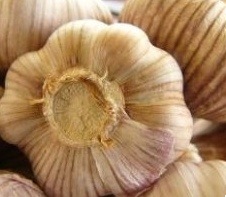 A diet rich in garlic can have a significant positive effect on your health, according to the New York Times. It seems that garlic increases the production of hydrogen sulfide in your blood, which—in the short term—relaxes your blood vessels and increases blood flow. In the long term:
The power to boost hydrogen sulfide production may help explain why a garlic-rich diet appears to protect against various cancers, including breast, prostate, and colon cancer, say the study authors. Higher hydrogen sulfide might also protect the heart, according to other experts.
The downside (if you can call it that)? Benefits from garlic consumption in studies required an equivalent of two medium-sized cloves of garlic per day, and while some countries—namley Italy, Korea, and China—average as high as eight to twelve cloves a day—it may be a lot of garlic by your standards. Then again, if two cloves a day keeps the doctor away, I can deal with the bad breath in other ways.
Unlocking the Benefits of Garlic [NYT]
Eat Heavy at Morning, Light at Night to Sleep Better
Posted: December 6, 2008 Filed under: Food and it's Impact on Our Health | Tags: breakfast, sleep Leave a comment The Dumb Little Man blog posts a condensed wealth of tips and tactics for getting yourself up and at ’em, including a tip that might make you reconsider that toast-and-coffee morning routine. Guest-poster Alex Shalman notes that eating a bigger breakfast gives you energy that burns off all day, while a lighter meal at night has its own benefits:
Eating like a pauper, meaning small light meals, in the evening allows us to go to sleep on an empty stomach. If your body is functioning normally, and you don’t have stomach ulcers, going to sleep on a mostly empty stomach will allow you to sleep better. This nightly fast allows your body to take its focus away from digestion and put it towards repair and rejuvenation of the body’s cells.
Check out our Top 10 Ways to Sleep Smarter and Better for more eating-for-sleep tips. How do you slot your food and resting hours for maximum energy and rest? Share the secret in the comments.
Freeze Ground Meat in Small Portions with a Chopstick
Posted: December 3, 2008 Filed under: Food and it's Impact on Our Health 1 CommentFreeze Ground Meat in Small Portions with a Chopstick
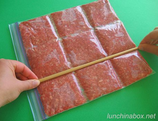 Food blog Lunch in a Box has a brilliant, simple tip for freezing meat in small portions easily and without wasting too much plastic wrap.
First put the food into a large freezer bag and press it out as flat as possible, eliminating air pockets. (Making it thin speeds up defrost time due to the increased surface area, and pressing out excess air guards against freezer burn.) Use a long chopstick or ruler to create divisions within the food, forming individual portions. This way when you freeze the entire bag, you’ll be able to quickly break off just as much as you want to use, no more.
If you don’t have chopsticks handy, any straight edge will work, like a ruler.
How To Cut Onion Like a Pro
Posted: December 3, 2008 Filed under: Food and it's Impact on Our Health | Tags: onions Leave a commentClick here to see video- http://www.thekitchn.com/thekitchn/video/how-to-dice-an-onion-the-video-048681
Food Cravings, Getting In Touch With Your Bodies Signals
Posted: December 3, 2008 Filed under: Food and it's Impact on Our Health | Tags: food cavings Leave a commentFood Cravings, Getting In Touch With Your Bodies Signals
 By Millie Barnes
What and how to eat are two of the many questions concerning health that we deal with on a day to day basis. I should say that these are two of the questions we SHOULD deal with. However many of us do not stop
and ask ourselves; we eat on automatic or the way we grew up eating. Most of us never stop and really examine our diet objectively! We please our palate as opposed to building health. Now I’m not saying you can’t do both! But lets step back a few minutes and look and the way we need to plan our diets.
Our bodies are continually giving us information. We are far more intuitive than we think. But our vision has been clouded along the way; by our emotional ties that we have to food, by the fact that we crave the foods we are allergic or sensitive to, because our culture is obsessed with food , because we all get in food “ruts”. We make compromises for convenience , for social reasons. We are brainwashed by the food industry, we are bombarded by commercials that give us false information. These things get in the way of us making healthy choices. But the main reason we continue to make poor choices is because we have a high degree of toxicity. Very few of us know what it feels like to live in a body that is running at top form. By the time we are 30 or 40, most people have various aches, pains or symptoms that they think are inevitable as we move into the middle years of our lives. But these symptoms are our bodies way of letting us know that we need to make changes, not take medications to mask the symptoms!
Another reason we have food cravings is because most of us do not meet our nutrient needs. We do not nourish ourselves well. When we do not take in enough nutrients and calories that the body can burn efficiently, then we crave sugars, empty carbs, caffeine. The reason is your that your body wants high energy. We resort to artificial forms of energy or sweets or carbs and sugars when we are not getting energy from a healthy diet. But when we get the energy we crave from these sources it only lasts short term. Then we pay a price later in the day and on a day to day basis. We feel tired all the time because we are not building health overall. We are exhausted at the end of the day, physically and mentally. So, what do we do? Do we get out and take a walk, run, bike, lift weights, practice yoga? Of course not! We are worn out. We collapse in front of the television. And the next day we begin this vicious cycle all over again.
If you look in the dictionary, the word nourish means to promote the growth of. In other, words it doesn’t just mean food. Growth encompasses the physical, mental, emotional and spiritual areas of our life. Unless we are addressing all of these parts of ourselves, it is difficult to be really tuned in to what our body is telling us. Most of us wake up, stumble to the kitchen , and grab some form of caffeine to help us get out of the fog we feel. In reality, if we are nourishing ourselves well, we should wake up at dawn raring to go, experience high energy all day while enjoying mental clarity and emotional poise. This in turn, allows us to achieve the objectivity to make choices about our day to day habits that affect our health and energy.
But all of this is impossible when we live in a body that is full of toxins; medications, food additives, preservatives, food dyes. In other words, all the non-food items plus the food items that we should not consume because they are not good for us. These items interfere with the absorption of vitamins and minerals, they also use a lot of the calories we consume as the body tries to detoxify. And most importantly, all of these things cause a break down in our immune and digestive systems, clogs our arteries, causes a build up of toxins in our tissues and joints. So it is not surpassing, looking at all these factors, that we are out of touch with what our body is trying to tell us.
When we begin to follow a diet that gives us more energy and better meets our nutrient needs, many things begin to happen. We begin the process of returning to health. We begin to detoxify the body, we lose weight, energy increases dramatically, allergy symptoms abate, digestion improves. You stop having those energy fluctuations all day, you are not worn out at the end of the day. You feel an overall sense of well being. You are able to step back and ask yourself what you should eat that day based on how you want to feel, that day and the next.
OK, you say, how do I get started? There are two approaches. Dive right in or make slow steady changes. There are advantages and disadvantages to both approaches. Diving right in means that you detox faster, feel better sooner and the food cravings go away faster. But it’s a little more challenging emotionally. Slow and steady means you begin removing the things that aren’t good for you (pasturized dairy, junk food, sugar, processed food) and increasing your intake of healthy fats and proteins, vegetables and seafood. Eat more salads. Change from tea, coffee and soft drinks to vegetable juices and water. This will help you detoxify the body faster and protect the kidneys.
Begin exercising regularly. This too speeds the process of healing and greatly increases your energy level. Have more fun, stop and smell the roses, go walk on the beach, try yoga. Live as if you aren’t guaranteed tomorrow. These things, too, help us heal. All of these things will help us achieve balance. You will begin to crave foods that make you feel better, not the ones that that please your palate for 10 minutes and then have to be paid for in less energy and more weight.
And last, but not least, have fun with it. Keep the focus on the benefits of making these changes, not on the foods you are giving up. Results come quickly. You should notice that within a week to ten days you wake up easier, feel happier, your body feels lighter, you have less bloating and your skin looks better. Your taste buds begin to change, you’ll actually begin to crave the foods that are causing you to feel better. Smoothies or mangoes will satisfy your sweet tooth better than processed sweets that are high in fat. Fried food will begin to lose it’s appeal. The old way of eating will seem too heavy. Think of making these changes as an experiment. Give it your best for 4 to 6 weeks. You will be thrilled with the results.
Ten Best Foods You Should Be Eating!
Posted: December 3, 2008 Filed under: Food and it's Impact on Our Health | Tags: anti-aging, anti0xidents, super foods 1 Comment
 The 10 Best Foods You (Probably) Aren’t Eating
Want to do your body a world of good? It’s as easy as expanding your grocery list
By: Jonny Bowden, Ph. D.
There are many superfoods that never see the inside of a shopping cart. Some you’ve never heard of, and others you’ve simply forgotten about. That’s why we’ve rounded up the best of the bunch. Make a place for them on your table and you’ll instantly upgrade your health — without a prescription.
Beets
These grungy-looking roots are naturally sweeter than any other vegetable, which means they pack tons of flavor underneath their rugged exterior.
Why they’re healthy: Think of beets as red spinach. Just like Popeye’s powerfood, this crimson vegetable is one of the best sources of both folate and betaine. These two nutrients work together to lower your blood levels of homocysteine, an inflammatory compound that can damage your arteries and increase your risk of heart disease. Plus, the natural pigments — called betacyanins — that give beets their color have been proved to be potent cancer fighters in laboratory mice.
How to eat them: Fresh and raw, not from a jar. Heating beets actually decreases their antioxidant power. For a simple single-serving salad, wash and peel one beet, and then grate it on the widest blade of a box grater. Toss with 1 tablespoon of olive oil and the juice of half a lemon.
You can eat the leaves and stems, which are also packed with vitamins, minerals, and antioxidants. Simply cut off the stems just below the point where the leaves start, and wash thoroughly. They’re now ready to be used in a salad. Or, for a side dish, sauté the leaves, along with a minced clove of garlic and a tablespoon of coconut oil, in a sauté pan over medium-high heat. Cook until the leaves are wilted and the stems are tender. Season with salt and pepper and a squeeze of lemon juice, and sprinkle with Rice Parmesan.
Cabbage
Absent from most American kitchens, this cruciferous vegetable is a major player in European and Asian diets.
Why it’s healthy: One cup of chopped cabbage has just 22 calories, and it’s loaded with valuable nutrients. At the top of the list is sulforaphane, a chemical that increases your body’s production of enzymes that disarm cell-damaging free radicals and reduce your risk of cancer. In fact, Stanford University scientists determined that sulforaphane boosts your levels of these cancer-fighting enzymes higher than any other plant chemical.
How to eat it: Put cabbage on your burgers to add a satisfying crunch. Or, for an even better sandwich topping or side salad, try an Asian-style slaw. Here’s what you’ll need.
4 Tbsp coconut
Few drops of toasted sesame oil
Juice of two limes
1 Tbsp sriracha, an Asian chili sauce you can find in the international section of your grocery store
1 head napa cabbage, finely chopped or shredded
1/4 cup toasted peanuts
1/2 cup shredded carrots
1/4 cup chopped cilantro
Whisk together the oil, lime juice, and sriracha. Combine the remaining ingredients in a large mixing bowl and toss with the dressing to coat. Refrigerate for 20 minutes before serving. The slaw will keep in your fridge for 2 days.
Guava
Guava is an obscure tropical fruit that’s subtly acidic, with sweetness that intensifies as you eat your way to the center.
Why it’s healthy: Guava has a higher concentration of lycopene — an antioxidant that fights prostate cancer — than any other plant food, including tomatoes and watermelon. In addition, 1 cup of the stuff provides 688 milligrams (mg) of potassium, which is 63 percent more than you’ll find in a medium banana. And guava may be the ultimate high-fiber food: There’s almost 9 grams (g) of fiber in every cup.
How to eat it: Down the entire fruit, from the rind to the seeds. It’s all edible — and nutritious. The rind alone has more vitamin C than you’d find in the flesh of an orange. You can score guava in the produce section of higher-end supermarkets or in Latin grocery stores. It’s also wonderful made into guava butter or jelly!
Swiss chard
Hidden in the leafy-greens cooler of your market, you’ll find this slightly bitter, salty vegetable, which is actually native to the Mediterranean.
Why it’s healthy: A half cup of cooked Swiss chard provides a huge amount of both lutein and zeaxanthin, supplying 10 mg each. These plant chemicals, known as carotenoids, protect your retinas from the damage of aging, according to Harvard researchers. That’s because both nutrients, which are actually pigments, appear to accumulate in your retinas, where they absorb the type of shortwave light rays that can damage your eyes. So the more lutein and zeaxanthin you eat, the better your internal eye protection will be.
How to eat it: Chard goes great with grilled steaks and chicken, and it also works well as a bed for pan-seared fish. Wash and dry a bunch of Swiss chard, and then chop the leaves and stems into 1-inch pieces. Heat a tablespoon of coconut oil or butter in a large sauté pan or wok, and add two garlic cloves that you’ve peeled and lightly crushed. When the oil smokes lightly, add the chard. Sauté for 5 to 7 minutes, until the leaves wilt and the stems are tender. Remove the garlic cloves and season the chard with salt and pepper.
Cinnamon
This old-world spice usually reaches most peoples stomachs only when it’s mixed with sugar and stuck to a roll.
Why it’s healthy: Cinnamon helps control your blood sugar, which influences your risk of heart disease. In fact, USDA researchers found that people with type-2 diabetes who consumed 1 g of cinnamon a day for 6 weeks (about 1/4 teaspoon each day) significantly reduced not only their blood sugar but also their triglycerides and LDL (bad) cholesterol. Credit the spice’s active ingredients, methylhydroxychalcone polymers, which increase your cells’ ability to metabolize sugar by up to 20 times.
How to eat it: You don’t need the fancy oils and extracts sold at vitamin stores; just sprinkle the stuff that’s in your spice rack (or in the shaker at Starbucks) into your coffee or on our French toast (made with Ezekiel bread!).
Purslane

Although the FDA classifies purslane as a broad-leaved weed, it’s a popular vegetable and herb in many other countries, including China, Mexico, and Greece.
Why it’s healthy: Purslane has the highest amount of heart-healthy omega-3 fats of any edible plant, according to researchers at the University of Texas at San Antonio. The scientists also report that this herb has 10 to 20 times more melatonin — an antioxidant that may inhibit cancer growth — than any other fruit or vegetable tested.
How to eat it: In a salad. Think of purslane as a great alternative or addition to lettuce: The leaves and stems are crisp, chewy, and succulent, and they have a mild lemony taste. Look for it at your local farmer’s market, or Chinese or Mexican market. It’s also available at some Whole Foods stores, as an individual leafy green or in premade salad mixes.
Pomegranate juice
A popular drink for decades in the Middle East, pomegranate juice has become widely available only recently in the United States.
Why it’s healthy: Israeli scientists discovered that men who downed just 2 ounces of pomegranate juice daily for a year decreased their systolic (top number) blood pressure by 21 percent and significantly improved bloodflow to their hearts. What’s more, 4 ounces provides 50 percent of your daily vitamin C needs.
How to drink it: Try 100 percent pomegranate juice from Pom Wonderful. It contains no added sugars, and because it’s so powerful, a small glassful is all you need. (Publix carries it!)
Goji berries
These raisin-size fruits are chewy and taste like a cross between a cranberry and a cherry. More important, these potent berries have been used as a medicinal food in Tibet for over 1,700 years.
Why they’re healthy: Goji berries have one of the highest ORAC ratings — a method of gauging antioxidant power — of any fruit, according to Tufts University researchers. And although modern scientists began to study this ancient berry only recently, they’ve found that the sugars that make goji berries sweet reduce insulin resistance — a risk factor of diabetes — in rats.
How to eat them: Mix dried or fresh goji berries in a salad, or sprinkle them or enjoy a handful by themselves. You can find them at specialty supermarkets or at gojiberries.us.
Dried plums
You may know these better by the moniker “prunes,” which are indelibly linked with nursing homes and bathroom habits. And that explains why, in an effort to revive this delicious fruit’s image, producers now market them under another name.
Why they’re healthy: Prunes contain high amounts of neochlorogenic and chlorogenic acids, antioxidants that are particularly effective at combating the “superoxide anion radical.” This nasty free radical causes structural damage to your cells, and such damage is thought to be one of the primary causes of cancer.
How to eat them: As an appetizer. Wrap a paper-thin slice of prosciutto around each dried plum and secure with a toothpick. Bake in a 400°F oven for 10 to 15 minutes, until the plums are soft and the prosciutto is crispy. Most of the fat will cook off, and you’ll be left with a decadent-tasting treat that’s sweet, savory, and healthy.
Pumpkin seeds
These jack-o’-lantern waste products are the most nutritious part of the pumpkin.
Why they’re healthy: Downing pumpkin seeds are the easiest way to consume more magnesium. That’s important because French researchers recently determined that people with the highest levels of magnesium in their blood have a 40 percent lower risk of early death than those with the lowest levels.
How to eat them: Whole, shells and all. (The shells provide extra fiber.) Roasted pumpkin seeds contain 150 mg of magnesium per ounce; add them to your regular diet and you’ll easily hit your daily target of 420 mg. Look for them in the snack or health-food section of your grocery store, next to the peanuts, almonds, and sunflower seeds.
Antioxidants, Explained
The science is clear: Plant foods are good for you. And the credit often goes to chemicals they produce called antioxidants. Just as the name suggests, antioxidants help protect your cells against oxidation. Think of oxidation as rust. This rust is caused by free radicals, which are unstable oxygen atoms that attack your cells, inducing DNA damage that leads to cancer. Thankfully, antioxidants help stabilize free radicals, which keeps the rogue atoms from harming your cells.
So by eating more antioxidant-rich foods, you’ll boost the amount of the disease-fighting chemicals floating in your bloodstream. The result: Every bite fortifies your body with all-natural preventive medicine.
Seven More Superfoods You Should Eat
Want to build more muscle, prevent disease, and live longer? It’s as easy as changing your diet: Take out the packaged, processed foods, and add fresh ingredients to your meals.
Try one of these foods below tonight. They’re easy to prepare, and they are all in Cookbook. Click Here for details; Optimum Nutrition; In The Kitchen with Millie Barnes
Salmon – Grilled Salmon with Pineapple Salsa
Blueberries – Rice Waffles with Blueberries and Honey
Quinoa – Crab Quinoa Salad
Walnuts – Gluten Free Carrot Muffins with Walnuts
Spinach – Sautéed Spinach with Cherry Tomatoes and Garlic
Artichokes – Artichoke and Spinach Dip
Tomatoes- Tomatoes Stuffed with Avocado, Black Olives, Pine Nuts and Raisins
Eat Real Food, Not "Recovery" Products, After Serious Exercise
Posted: December 3, 2008 Filed under: Food and it's Impact on Our Health Leave a comment
Eat Real Food, Not “Recovery” Products, After Serious Exercise
By Kevin Purdy, 8:40 AM on Thu Jun 5 2008, 13,653 views
 The New York Times interviews experienced athletes and researchers and finds that the wealth of so-called “recovery” drinks and protein bars are mostly over-hyped. During and after a long exercise period, like a marathon or lengthy bike ride, you don’t need specialized products, or a four-to-one carbohydrate/protein mix, to boost your performance:
Dr. Rennie said that 10 to 15 grams of protein is probably adequate for any adult. And you don’t need a special drink or energy bar to get it. One egg has 6 grams of protein. Two ounces of chicken has more than 12 grams.
Fruit, water, and fruit juice also work well after hard workouts, the article notes, and don’t have to be taken within any certain window after the exercise. Photo by epimetheus.
Real Thought for Food for Long Workouts [New York Times]
First Post and…why I am starting this blog.
Posted: December 1, 2008 Filed under: Food and it's Impact on Our Health Leave a commentop·ti·mum- 1 : the amount or degree of something that is most favorable to some end; especially : the most favorable condition for the growth and reproduction of an organism. 2 : greatest degree attained or attainable under implied or specified conditions
nour·ish – 1.to promote the growth of 2 : to furnish or sustain with nutriment
We think of food when someone says the word nourish, but there are numerous ways to nourish ourselves; emotionally, spiritually, physically. This blog will explore food, healing, gardening, non-toxic skin care…all the ways we can heal ourselves while helping to heal the planet.
I am a Chef, Nutrition Coach, avid organic gardener, author, skin care consultant, Lifestyle Coach and yoga practitioner. I was will be sharing what I have learned in this blog….
For more info on what I do Click here to go to my webpage- http://ezchef.net/spacuisine


 Meal Delivery Service by Millie Barnes