Just how long?
Posted: January 29, 2010 Filed under: Food and it's Impact on Our Health Leave a commentJanuary 28, 2010 · From http://ecowomen.net/
The Eco Women are constantly encouraging their fellow Eco Warriors to recycle, recycle, recycle. If, for some reason, you haven’t been recycling — or perhaps you have a weak moment in which you decide to trash that glass bottle — here’s a list of easily-recyclable materials and how long it takes for them to break down in a landfill:
Glass bottle — 1 million years
Styrofoam container — 1 million years
Plastic bag — 500+ years
Plastic bottle — 500+ years
Aluminum can — 80-200 years
Sobering, no?
“Vege”-tarian Diets?
Posted: January 28, 2010 Filed under: Food and it's Impact on Our Health, Non-Toxic Choices 1 CommentI was in a debate online with some vegetarians about nutrition this morning, and one of them suggested that I go to the site GoVeg.com. So I did.
Here’s the first image on thier site;

Here’s the one labeled “transitions”…all products, no food.
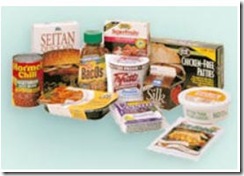 hhhmmmm..no veggies here..
On thier site I took one of thier meal plans for one day ands analyzed it. I copied thier recipes exactly and used software to get the nutrition info for the day. Here are the results. Hhhmmmm, lots more “products”, nothing I would consider real food…and still no vegetables in site…looks like mostly soy and seitan (pure wheat gluten- a component of some grains that humans cannot digest)…
So, here is thier menu for one day;
Breakfast
Banana Muffins
Fresh fruit
Lunch
Avocado Reuben
Sumptuous Spinach Salad With Orange-Sesame Dressing
Dinner
Mama’s Mock Meatloaf
Creamy Chive Mashed Potatoes With Brown Gravy
Here’s the nutrition info for this day;
2583 calories- too high
Calories from fat- 47%
Calories from carbs- 47%
Calories from Protein- 9%
Protein is dangerously low.
Fat % would be fine except that most of the fat is mono-unsaturated fats, which leads to cancer, stoke and heart disease. And who recommends margarine anymore…haven’t you heard that hydrogenated fats and trans-fats are UNHEALTHY?
Vitamin C was 391 mg. too low
Vitamin D was only 21640 IU, way low, you need a minimum of 50,000 IU a day.
Calcium was at 87% of the RDA, a figure which is too low anyway.
Cholesterol was only 3% of what the governments recommendations are!
This is NOT good nutrition; too many carbs, not enough protein, no high quality protein whatsoever, no vital amino acids and CLA, not enough healthy fats for building an immune system, not enough fiber from veggies.
And, why are they calling this a vegetarian diet…I see no almost no veggies here. Most of the carbs come from white flour and sugar. Soy is a highly toxic food for humans, it’s not a good replacement for grass fed meats.
Here’s what thier FAVORITE “PRODUCTS’ page looks like;
So grab a shopping cart, stroll down the aisle of your local supermarket or health food store, and add these great vegan vittles to your grocery list: 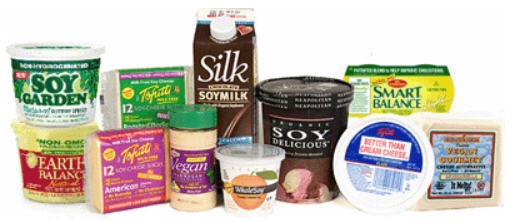
Dairy Substitutes
Earth Balance Natural Buttery Spread
Soy Garden Natural Buttery Spread
Tofutti Soy-Cheese Slices
Organic Soy Delicious Non-Dairy Frozen Dessert
Tofutti Non-Dairy Frozen Dessert
Soyco—Soymage Vegan Grated Parmesan
WholeSoy Creamy Cultured Soy Yogurt
WhiteWave—Silk Chocolate Soymilk
Tofutti—Better Than Cream Cheese
Smart Balance 37% Light Buttery Spread
Follow Your Heart—Vegan Gourmet Cheese Alternative
Rice Dream Non-Dairy Beverages
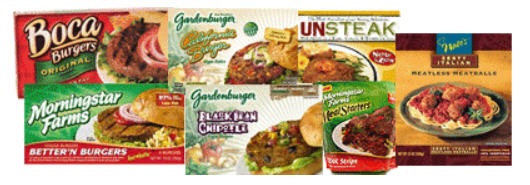
Beef Substitutes
Boca Original Vegan Burgers
Gardenburger California Burgers
Now & Zen—Unsteak
Nate’s Meatless Meatballs
Morningstar Farms—Better ’n Burgers Veggie Burgers
Gardenburger Black Bean Chipotle Burgers
Morningstar Farms Meal Starters Steak Strips
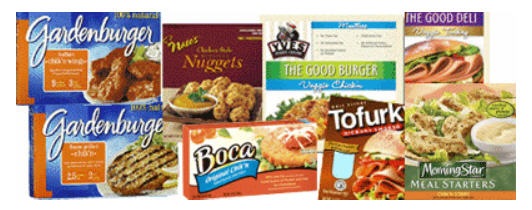
Chicken and Turkey Substitutes
Gardenburger Flame Grilled Chik’n
Gardenburger Buffalo Chik’n Wings
Nate’s Chicken Style Nuggets
Yves Veggie Cuisine—Veggie Chick’n Burgers
Tofurky Deli Slices
Yves Veggie Cuisine—Veggie Turkey Slices
Boca Chik’n Patties
Boca Chik’n Nuggets
Morningstar Farms Meal Starters Chik’n Strips
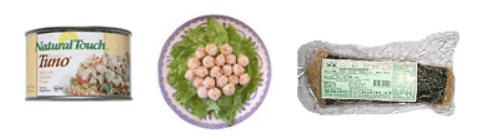
Seafood Substitutes
Vegieworld.com—Vegetarian Lobster Balls
Vegieworld.com—Vegetarian Salmon
Natural Touch—Tuno
I have yet to find any mention of fruits and vegetables, or real food on this site….jeeez, ya think someone selling “products” might be behind all this??
I eat 2000 calories a day. (See the post before this one for a typical day for me)Every single calorie I eat comes from REAL FOOD! NOT products, nothing processed, all of it needs no labels, it’s whole food. I eat on about 40 bucks a week, grow almost all my own veggies and herbs. No packaging to throw away to fill up our landfills, plenty of great compost to grow more veggies with. I am able to eat almost all locally grown and produced food.
Which diet looks healthier to you AND our planet???
Cholesterol, "High"
Posted: January 28, 2010 Filed under: Food and it's Impact on Our Health 1 CommentHere is an article from The Weston Price Foundation;
Question: I have a female patient in her thirties who has been following your recommended regimen of eating mostly raw dairy (or at least non-homogenized), complex carbohydrates, bone broths, moderate amounts of various types of organic meat and organic vegetables and fruits. She avoids all processed foods and is healthy and of normal weight. However, she is concerned about her latest lipid panel, which showed a total cholesterol of 290, LDL of 200 and HDL of 79. The rest of her blood work looks all within normal limits. Hypothyroidism was ruled out but she does have a family history of hypercholesterolemia and coronary heart disease.
I have made similar observations with other patients. With the introduction of healthy unprocessed foods they are getting healthier, however, some patients’ lipid panels become more elevated while others are lowered.
While I have reviewed the research analysis in The Cholesterol Myths by Uffe Ravnskov, MD, PhD, and I agree with him that the current interpretations of lipid panels are overrated, but what should a practitioner say to his patients who are told that their cholesterol is too high? It is still unclear which mechanisms raise or lower cholesterol, particularly LDL cholesterol, and what the consequences are, if any. Unfortunately, we currently live in a world of the lowfat paradigm where patients are inundated with cholesterol-free and lowfat food choices and easy prescriptions for statin drugs. Perhaps you can offer an answer to these complex questions.
—Dagmar Ehling, DOM, Durham, NC
Answer: Thank you for your very interesting question. This same issue also comes up a lot in my practice, and is probably on the minds of many of our readers. As Dr. Ehling suggests, the first step in answering this question is to read the book The Cholesterol Myths by Dr. Uffe Ravnskov. In it he describes all the recent studies on the connection between heart disease and cholesterol. His basic conclusion is that there is no connection between cholesterol, lipid levels, coronary artery disease and intake of traditional fats. Interestingly, even in orthodox medical circles one hears a lot of moaning about how "nonspecific" these numbers are in predicting coronary artery disease. What that means is that the various cholesterol levels measured in the blood do not tell us whether or not the patient is prone to heart disease. Those with low total levels of cholesterol are just as likely to have a heart attack as those with high total cholesterol.
I do, however, feel it is good to go over the lipid panels with my patients from a "conventional" point of view, mostly to show them that by assuming the numbers are relevant, we can show that, in fact, their "diet" is working. This is also the case with the patient you presented. What we are taught in the most contemporary school of lipidology is that there are four independent ways of reading these numbers, each with increasing relevance. For each marker you can divide people into "no risk," "low risk," "medium risk," and "high risk." So for total cholesterol you have the following assessment:
Total Cholesterol
- No risk: less than 150
- Low risk: 150 – 200
- Medium risk: 200 – 250
- High risk: greater than 250
Your patient’s level of 290 would put her in the "high risk" category. Please remember, though, that having a total cholesterol of less than 150 puts you in the highest risk category for cancer and early death and lots of people with cholesterol levels over 250 live long healthy lives. This is an extremely insensitive test.
The next, slightly more specific test is for total Low Density Lipoprotein or LDL, the so-called "bad" cholesterol. This type of lipid is thought to be made in your liver and to contribute to the development of coronary artery disease. Here, we have the following:
LDL Cholesterol
- No risk: less than 100
- Low risk: 100 -130
- Medium risk: 130 – 160
- High risk: greater than 160
Your patient’s level of 200 again puts her in the highest risk category. What this probably means is that her liver senses a need for a lot of this type of lipid in her system. Sometimes, this can arise from a liver imbalance or some sort of chronic oxidative stress.
The third way of evaluating lipids are the levels of High Density Lipoproteins or HDLs, the so-called good guys. These compounds are said to direct supposedly atherogenic fats away from the blood vessels and to the liver for processing. It is generally conceded that the HDLs are more specific for risk assessment than the above two values. Here we see the following:
HDL Cholesterol
- No risk: greater than 75
- Low risk: 60 -75
- Medium risk: 40 – 60
- High risk: less than 40
Here we find that your patient’s level of 79 puts her in the lowest risk category. The final and by far the most sensitive way of assessing these numbers is the ratio of total cholesterol/HDL. This gives you a sense of how much of a contribution the good HDL is to the total. This is considered the gold standard of evaluating lipid levels. Here we have the following:
Total Cholesterol/HDL
- No risk: less than 3.5
- Low risk: 3.5 – 4.5
- Medium risk: 4.5 – 5.5
- High risk: greater than 5.5
Your patient’s ratio is 290/79 or 3.7. Thus, the best test that we have for assessing your patient’s risk puts her in the low risk category even on her supposedly high-fat, atherogenic diet. In other words, your patient is fine, and, in fact, has an enviable lipid profile. I find this again and again with my patients. This dietary approach seems to put their physiology in balance, leading to true robust health.
Just a final few words on lipid levels and their "management." The most important thing for your patient and many others is their positive protective HDL levels. It is known and has been repeatedly borne out in my personal experience that the HDL level is inversely related to the triglyceride level. For me, the triglyceride level is a key indicator because it is directly related to the amount of carbohydrates consumed as a function of exercise. The more carbohydrates, of any kind, the patient consumes, the higher the triglyceride levels and the lower the HDL. So, I use lipid panels to tell me whether my patients are consuming too many carbohydrates for their activity level. If they are, the total cholesterol level will be more than double the triglycerides and the HDL will be low. I vigorously correct this by suggesting lower carbohydrate intake (yes, even grains and fruit) and encouraging more exercise or physical activity.
Finally, while I am not convinced this is related to coronary artery disease, very high LDL levels often tell me there is oxidative stress or a liver imbalance in the patient. For this condition I give 1 capsule per day of OPC synergy, a food-based antioxidant, from Standard Process and 1 teaspoon/day of an herbal bitter tonic, the best being Globe Artichoke Extract from MediHerb. This intervention will usually lower the LDL by 10-20 percent.
Note:
- The Cholesterol Myths by Uffe Ravnskov is available from New Trends Publishing, (877) 707-1776 or www.newtrendspublishing.com.
- Standard Process supplements are available through health care practitioners.
- Globe Artichoke Extract from MediHerb is available from Standard Process.
This article appeared in Wise Traditions in Food, Farming and the Healing Arts, the quarterly magazine of the Weston A. Price Foundation, Winter 2001.
 Thomas Cowan, MD, discovered the work of the two men who would have the most influence on his career while teaching gardening as a Peace Corps volunteer in Swaziland, South Africa. He read Nutrition and Physical Degeneration by Weston Price and a fellow volunteer explained the arcane principles of Rudolf Steiner’s biodynamic agriculture. These events inspired him to pursue a medical degree. Cowan graduated from Michigan State University College of Human Medicine in 1984. After his residency in Family Practice at Johnson City Hospital in Johnson City, New York, he set up an anthroposophical medical practice in Peterborough, New Hampshire. Dr. Cowan has served as vice president of the Physicians Association for Anthroposophical Medicine and is a founding board member of the Weston A. Price Foundation.
Dr. Cowan is the author of The Fourfold Path to Healing (New Trends Publishing), a companion book to Nourishing Traditions by Sally Fallon. He a board member of the Weston A. Price Foundation, a regular contributor to our "Ask the Doctor" column and the Foundation’s quarterly journal, and has lectured throughout the US and Canada. He has three grown children and currently practices medicine in San Francisco where he resides with his wife Lynda Smith Cowan.
His book The Fourfold Path to Healing is now available from NewTrends Publishing, http://www.newtrendspublishing.com/. Visit Dr. Cowan’s website at http://www.fourfoldhealing.com.
How to Protect Yourself Against Cancer With Food (The Only Way, Actually!)
Posted: January 28, 2010 Filed under: Food and it's Impact on Our Health, In The Kitchen with Millie- How To's 1 CommentI was reading an article on cancer in the New York Times the other day when this paragraph jumped out at me.. I did a double take. The last part of the sentence made me mad.
“So some researchers are taking a fresh look at ideas that were dismissed as folklore — a blow to the breast might spur cancer, an infection might fuel cancer cells, a weak immune system might let cancer spread.”.
Folklore that a weak immune system lets cancer spread? They have to be kidding! What ELSE would let a cancer spread?
Our protection against disease is a healthy immune system. A healthy immune system is maintained by meeting our nutrient needs.
A vegetarian diet does NOT protect us from cancer; it is devoid of the proper fats we need to build an immune system. It is also far too high in carbohydrates. It takes 2000 calories a day from whole foods, not grains, products, sugar, food colorings, added hormones.
Those 2000 calories a day should be composed of approximately 50% fat, of which 75% of that fat should be from organic saturated fats. 30% should be from HIGH QUALITY protein; grass fed meat, free range chickens, eggs. It should include rich meat stocks, coconut oil, raw butter. The amount of carbohydrates (and I mean ONLY vegetables and fruit, NOT grains)) should make up 20% of our daily intake.
THIS is the only way to protect ourselves from cancer, and it is the only way to heal from cancer. Our medical system (notice I do not call it a healthcare system!), has no idea what great nutrition is; they are still screaming low-fat, vegetarianism, caloric restriction, eating high amounts of vegetables and fruits. We are a nation of fat, sick, unhealthy people. The only way to change this is to stop eating products and get back to eating real, whole, unprocessed food.
Here’s what The Weston Price Foundation has to say about preventing cancer;
How to Protect Yourself Against Cancer With Food
Once a rare disease, cancer is now widespread, affecting as much as one-third of the population. The rise in cancer in the West has paralleled the rise in factory farming and the use of processed foods containing vegetable oils and additives.
Orthodox methods for treating cancer (radiation and chemotherapy) do not prolong life. The best approach to cancer is prevention.
Traditional diets, containing animal and plant foods farmed by nontoxic methods, are rich in factors that protect against cancer. Many of these protective factors are in the animal fats.
Vegetarianism does not protect against cancer. In fact, vegetarians are particularly prone to cancers of the nervous system and reproductive organs.
Nutrients in Whole Foods that Protect Against Cancer
Vitamin A: Strengthens the immune system. Essential for mineral metabolism and endocrine function. Helps detoxify. True vitamin A is found only in animal foods such as cod liver oil; fish and shellfish; and liver, butter and egg yolks from pasture-fed animals. Traditional diets contained ten times more vitamin A than the typical modern American diet.
Vitamin C: An important antioxidant that prevents damage by free radicals. Found in many fruits and vegetables but also in certain organ meats valued by primitive peoples.
Vitamin B6: Deficiencies are associated with cancer. Contributes to the function of over 100 enzymes. Most available from animal foods.
Vitamin B12: Deficiencies are associated with cancer. Found only in animal foods.
Vitamin B17: Protects against cancer. Found in a variety of organically grown grains, legumes, nuts and berries.
Vitamin D: Required for mineral absorption. Strongly protective against breast and colon cancer. Found only in animal foods such as cod liver oil, lard, shellfish and butterfat, organ meats and egg yolks from grass-fed animals. Traditional diets contained ten times more vitamin D than the typical modern American diet.
Vitamin E: Works as an antioxidant at the cellular level. Found in unprocessed oils as well as in animal fats like butter and egg yolks.
Conjugated Linoleic Acid (CLA): Strongly protective against breast cancer. Found in the butterfat and meat fat of grass-fed ruminant animals.
Cholesterol: A potent antioxidant that protects against free radicals in cell membranes. Found only in animal foods.
Minerals: The body needs generous amounts of a wide variety of minerals to protect itself against cancer. Minerals like zinc, magnesium and selenium are vital components of enzymes that help the body fight carcinogens. Minerals are more easily absorbed from animal foods.
Lactic Acid and Friendly Bacteria: Contribute to the health of the digestive tract. Found in old fashioned lacto-fermented foods.
Saturated Fats: Strengthen the immune system. Needed for proper use of the essential fatty acids. The lungs cannot function without saturated fats. Found mostly in animal foods.
Long-Chain Fatty Acids: Arachidonic acid (AA), eicosapentaenoic acid (EPA) and docosahexaenoic acid (DHA) help fight cancer on the cellular level. They are found mostly in animal foods such as butter, organ meats, cod liver oil and seafood.
Co-enzyme Q10: Highly protective against cancer. Found only in animal foods.
Compounds in Processed Foods that Can Cause Cancer
Trans Fatty Acids: Imitation fats in shortenings, margarines and most commercial baked goods and snack foods. Strongly associated with cancer of the lungs and reproductive organs.
Rancid fats: Industrial processing creates rancidity (free radicals) in commercial vegetable oils.
Omega-6 fatty acids: Although needed in small amounts, an excess can contribute to cancer. Dangerously high levels of omega-6 fatty acids are due to the overuse of vegetable oils in modern diets.
MSG: Associated with brain cancer. Found in almost all processed foods, even when "MSG" does not appear on the label. Flavorings, spice mixes and hydrolyzed protein contain MSG.
Aspartame: Imitation sweetener in diet foods and beverages. Associated with brain cancer.
Pesticides: Associated with many types of cancer. Found in most commercial vegetable oils, fruit juices, vegetables and fruits.
Hormones: Found in animals raised in confinement on soy and grains. Plant-based hormones are plentiful in soy foods.
Artificial Flavorings and Colors: Associated with various types of cancers, especially when consumed in large amounts in a diet of junk food.
Refined Carbohydrates: Sugar, high fructose corn syrup and white flour are devoid of nutrients. The body uses up nutrients from other foods to process refined carbohydrates. Tumor growth is associated with sugar consumption.
So here, is what a perfect day ,nutritionally ,would look like;
2 organic eggs, fried or scrambled with butter
2 slices turkey bacon
½ cup blueberries
3 chicken legs
1 cup chicken stock
2 cups Swiss chard, sautéed with onions and butter
2 slices tomato
7 ounce grass fed steak
1 cup sweet potato with butter
1 cup French onions soup made with beef stock
2 cups beet greens sautéed with onions and coconut oil
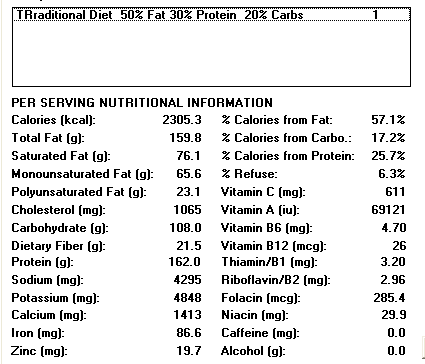
Here is the nutrient levels for this day. As you can see, there is slightly more than 600 mg. of Vitamin C just from food, almost 70,000 IU of Vitamin A, 141% of needed calcium, 481% of needed iron! I challenge you to show me a perfect day from a Standard American Diet (SAD), or a vegetarian diet that can stack up to this amount of great nutrition!

I recently took our governments Food Pyramid and composed a day based on thier recommendations. They say emphasize plant based proteins and keep our saturated fats to a minimum,they recommend 5 servings of grains a day, tell us to limit red meat and butter. I could not keep the calories to 1800 (thier recommendation) AND come anywhere near getting enough nutrition! Carbs came out to 60% of the calories, vegetable fats made up far too much of the fat content (almost 80%), Vitamins A, D, E and C were all low.
It takes fats and proteins from healthy, organic choices to build an immune system. Americans are unhealthy and drastically overweight on our governments recommendations. Lacking enough nutrition in our daily food intake leaves us hungry and without enough energy to run on. It causes us to crave more food, the wrong foods.
We cannot build healthy bodies with intact immune systems on a low fat diet. The fats are crucial, they contain the depth of nutrients we need; enough Vitamins A,D and E to build that immune system that will protect us from cancer.
More awful “dietary” Advice from the NYTimes
Posted: January 26, 2010 Filed under: Food and it's Impact on Our Health Leave a commentFrom the advice to get your Vitamin D from supplements to condoning a cereal for breakfast, and still pushing low fat…this author is WAY off base.
Dietary Dilemma
Q. Since vitamin D is a fat-soluble vitamin, is the supplement I take with my low-fat breakfast being absorbed? I eat half a grapefruit, shredded wheat with banana, nonfat yogurt and nonfat milk.
A. “Yes, so long as you continue to include the yogurt and milk,” said Dr. Sheldon S. Hendler, co-editor of the “PDR for Nutritional Supplements,” the standard reference in the field.
Vitamin D binds to certain proteins as well as to fats, Dr. Hendler said by e-mail, and yogurt and milk fill the bill. These are the same proteins that bind to vitamin D in D-fortified nonfat milk, he said. D supplements are well absorbed when accompanied by foods rich in oils, including fatty fish like salmon and tuna and olive oil dressings.
“Typically,” he said, “a generous splash of olive oil would be enough to promote good absorption.”
There is wisdom in including healthy fats even in a low-fat diet, he said. “Although fats typically are thought of negatively (e.g., trans fats), there are some that are truly healthy and that may decrease the risk of cardiovascular and other degenerative diseases,” he said. “These include the omega-3 fish oils DHA (docosahexaenoic acid) and EPA (eicosapentaenoic acid); the omega-3 plant fats such as alpha-linolenic acid (ALA), found in flaxseed oil; olive oil; and phytosterols and phytostanols, derived from plants, which are known to lower cholesterol levels.”
Millie; This is such an important, and complex subject that I am going to refer you to the article written by Krispin Sullivan, CN, on the Weston Price Foundation website;
Here’s an article about supplements;
Dietary Supplements: What the Industry does NOT want you to know
Here’s an article about the dangers of a low fat diet;
Taking the Fear out of Eating Fat
An article I wrote about Cereals;
Breakfast Cereals (and grains in general) are Not Fit for Human Consumption
7 Foods So Unsafe Even Farmers Won’t Eat Them
Posted: January 26, 2010 Filed under: Food and it's Impact on Our Health, Non-Toxic Choices Leave a comment-
Grocery stores may sell them, but experts won’t touch them; what you should know about your food.
-
 By Laurel House
  Dick Luria/Getty Images

Smoking was proven to be cancer-causing, tanning beds were shown to be on par with arsenic, but what about canned tomatoes, corn-fed beef, conventionally grown potatoes? What would it take to convince you to clean out your pantry and change your eating habits? Scientists, doctors, even simple farmers were asked what foods they refuse to eat. The responses had nothing to do with things like donuts due to fat content, or white bread because of the concentration of empty carbs. We’re talking seemingly healthy things like tomatoes, beef, popcorn, potatoes, salmon, milk, and apples. For them, it’s all about how they are produced and packaged.
7 experts in fields pertaining to both food and the environment answered one simple question: "What foods do you avoid?." Their answers, published in an article entitled "7 Foods the Experts Won’t Eat" on Yahoo! Shine, will make you re-think food. When it comes to food and its affect on your health and the health of this planet, this is what they answered:
1. Canned Tomatoes
The Expert: Fredrick vom Saal, PhD, an endocrinologist at the University of Missouri who studies bisphenol-A.
The Reason: Tin cans are lined with a resin that contains the synthetic estrogen bisphenol-A, which has been linked to a slew of health problems including heart disease, diabetes, reproductive problems, and obesity. But that’s not the biggest problem. The acid in tomatoes breaks down that bisphenol-A, leaching it into the food, and not just in insignificant amounts. According to the article, Saal comments that "you can get 50 mcg of BCA per liter out of a tomato can, and that’s a level that is going to impact people, particularly the young." That’s why he’s not touching the stuff.
The Solution: If you lo0ve the taste of "canned" tomatoes but prefer to skip the bisphenol-A, select glass bottles instead.
2. Corn-Fed Beef
The Expert: Joel Salatin, co-owner of Polyface Farms and author of half a dozen books on sustainable farming.
The Reason: Cattle are naturally grass eaters… not grain eaters. In order to fatten the animals (and profit margins), farmers feed them corn and soybeans. And while the farmers are beefing up their earnings, they are minimizing the nutritional benefits. The article mentions the findings from a recent USDA-conducted study comparing corn-fed beef and grass-fed beef showing that grass-fed beef is "higher in beta-carotene, vitamin E, omega-3s, conjugated linoleic acid (CLA), calcium, magnesium, and potassium; lower in inflammatory omega-6s; and lower in saturated fats that have been linked to heart disease."
The Solution: Pretty straight forward: Opt for grass-fed beef instead.
3.Microwave Popcorn
The Expert: Olga Naidenko, PhD, a senior scientist for the Environmental Working Group.
The Reason: It’s not the popcorn itself, but the chemically-saturated lining of the bag including a compound called perfluorooctanoic acid (PFOA) that, according to a recent study from UCLA, may be linked to infertility. Microwaving vaporizes the chemicals as they move from coating the bag to lining the popcorn. But it’s not like this fact is un-acknowledged. In fact the article points out that DuPont, as well as other manufacturers, have "promised to phase out PFOA by 2015 under a voluntary EPA plan, but millions of bags of popcorn will be sold between now and then."
The Solution: Pop your own popcorn the way they did it in the olden days–in a pot.
4. Nonorganic Potatoes
The expert: Jeffrey Moyer, chair of the National Organic Standards Board
The problem: Root vegetables absorb herbicides, pesticides, and fungicides that wind up in soil. In the case of potatoes—the nation’s most popular vegetable—they’re treated with fungicides during the growing season, then sprayed with herbicides to kill off the fibrous vines before harvesting. After they’re dug up, the potatoes are treated yet again to prevent them from sprouting. "Try this experiment: Buy a conventional potato in a store, and try to get it to sprout. It won’t," says Moyer, who is also farm director of the Rodale Institute (also owned by Rodale Inc., the publisher of Prevention). "I’ve talked with potato growers who say point-blank they would never eat the potatoes they sell. They have separate plots where they grow potatoes for themselves without all the chemicals."
The solution: Another no-brainer— Only buy organic potatoes. Washing isn’t good enough if you’re trying to remove chemicals that have been absorbed into the flesh.
5. Farmed Salmon
The Expert: David Carpenter, MD, director of the Institute for Health and the Environment at the University at Albany and publisher of a major study in the journal Science on contamination in fish.
The Reason: When salmon is crammed into pens, fed soy, poultry litter, and hydrolyzed chicken feathers (obviously an unnatural environment for the up-stream swimmers), they’re levels of healthy vitamin D lowers as the contaminants increases. Those contaminants include carcinogens, PCBs, brominated flame retardants, and pesticides (like DDT). The article points out that DDT has been linked to both diabetes and obesity, quoting Carpenter in saying that "You can only safely eat one of these salmon dinners every 5 months without increasing your risk of cancer… It’s that bad."
The Solution: Avoid farmed salmon and instead select wild-caught Alaskan salmon. But make sure the packaging reads "wild." If it just says "fresh Atlantic," according to the article, "it’s farmed."
6. Milk Produced with Artificial Hormones
The Expert: Rick North, project director of the Campaign for Safe Food at the Oregon Physicians for Social Responsibility and former CEO of the Oregon division of the American Cancer Society.
The Reason: Unlike in the olden days when fresh milk was some of the purest nutrients you could get, dairy cows today are fed growth hormones like rBGH and rBST to increase milk production. Problem is, while they may be making more milk, they are also increasing their chances of udder infections (which can lead to pus in the milk). More than that, the article points out that high levels of IGF-1 from the rBGH may play a role in the development of breast, prostate, and colon cancers… which is why North says that "it’s banned in most industrialized countries."
The Solution: Read the labels and be sure that your milk doesn’t contain rBGH or rBST and that it is labeled organic or "produced without artificial hormones."
7. Conventional Apples
The Expert: Mark Kastel, former executive for agribusiness and co-director of the Cornucopia Institute, a farm-policy research group that supports organic foods
The Reason: Apples are the recipient of the most pesticides of all Fall fruits. Chemical producers swear that the residue is not harmful for human consumption, but the Yahoo! Article goes on to quote Kastel in saying that "Farm workers have higher rates of many cancers."
The Solution: Buy organic apples where available or at least thoroughly wash and peel apples before eating them.
Behavior: Too Much Sitting Shortens Lives, Study Suggests
Posted: January 26, 2010 Filed under: Food and it's Impact on Our Health Leave a comment
By RONI CARYN RABIN
Published: January 19, 2010 in the NYTimes
A new study from Australia suggests that couch potatoes live shorter lives.
The study followed 8,800 adults ages 25 and older for six and a half years and found that each daily hour of television viewing was associated with an 18 percent increase in deaths from heart disease and an 11 percent increase in overall mortality.
Those who watched television four hours or more a day were 80 percent more likely to die of cardiovascular disease than those who watched two hours or less, and 46 percent more likely to die of any cause. And it did not matter whether they were overweight, according to the study, which appeared Jan. 11 in the online edition of Circulation: Journal of the American Heart Association.
Although it is possible that people who were already ill watched more television than those who were healthy, the researchers tried to rule that out by excluding subjects who already had heart disease and by adjusting for differences in risk factors like diet and smoking.
While the benefits of physical activity have been well studied, there is growing interest among researchers in assessing the effects of being sedentary.
“For many people, on a daily basis, they simply shift from one chair to another — from the chair in the car to the chair in the office to the chair in front of the television,” said the study’s lead author, David Dunstan of the Baker IDI Heart and Diabetes Institute in Victoria, Australia. “Even if someone has a healthy body weight, sitting for long periods still has an unhealthy influence on blood sugar and blood fats.”
Blueberries Pack a Nutritional Wallop
Posted: January 26, 2010 Filed under: Food and it's Impact on Our Health, In The Kitchen with Millie- How To's Leave a commentFrom the NYTimes;
By MARTHA ROSE SHULMAN
 Published: January 25, 2010
Blueberries are the king of fruits when it comes to micronutrients. They may not have the vitamin C of oranges and grapefruit, or the potassium found in bananas. But blueberries do have an abundance of phytonutrients, whose strong antioxidant and anti-inflammatory properties, some scientists believe, may help protect against heart disease, colon cancer and other maladies.
The beneficial phytonutrients in blueberries are anthocyanins, a type found in other fruits and vegetables with red, blue and purple pigments. Scientists use a test called the O.R.A.C. (short for oxygen radical absorbance capacity) to rate the antioxidant capacity in foods, and by this measure blueberries always come out on top. So if red wine is off limits and beets just aren’t your thing, try adding a half cup of blueberries to your cereal or yogurt in the morning, throw a half cup of frozen blueberries into your breakfast smoothie.
Millie; I think a smoothie is far too many carbs at once, especially for breakfast. I usually have a handful of blueberries with my organic eggs and turkey bacon. That way the carbs in your breakfast are balanced with enough fat and protein…always a great thing, especially if you struggle with your weight. I also cook down a few cups of blueberries and use a tablespoon or so in the coconut milk yogurt I make. Click here for the very easy recipe for making coconut milk yogurt.
H&M and Wal-Mart Caught Destroying Clothing, Deny It Is Policy
Posted: January 17, 2010 Filed under: Food and it's Impact on Our Health Leave a commentFrom Treehugger

Cynthia Magnus with destroyed clothing, Suzanne DeChillo/The New York Times
The New York Times is having a hard time these days, and the mainstream media are taking a lot of hits. But you have to admit, there is still a lot of power in those presses. Just yesterday Jim Dwyer wrote A Clothing Clearance Where More Than Just the Prices Have Been Slashed, about how graduate student Cynthia Magnus discovered that piles of clothes from Wal-Mart and H&M were being destroyed and thrown out. Dwyer keeps it short:
It is winter. A third of the city is poor. And unworn clothing is being destroyed nightly.
H&M did not return the reporter’s ten calls but he ran the story anyways. And today?
A different headline in the Times: Clothing Retailer Says It Will No Longer Destroy Unworn Garments
A spokesperson responded quickly this time.
"It will not happen again," said Nicole Christie, a spokeswoman for H & M in New York. "We are committed 100 percent to make sure this practice is not happening anywhere else, as it is not our standard practice."
A Wal-Mart spokesperson said that the company typically donated or recycled such items, and did not explain how the store just happened to have a giant hole-punching machine.
One has to wonder, how long it would have taken if Consumerist or even TreeHugger had been the one to break this story. Would the blogs have got a call back in a day? Could they even find a number?
There is still such a big role to be played by the big papers like the Times. If only they had not become so timid with respect to other issues.
Tips for Being Productive- Home Office
Posted: January 3, 2010 Filed under: Food and it's Impact on Our Health Leave a comment
1. Start out organized! Know what you need to accomplish, set goals, keep lists. The best piece of advice I have is to read and follow Stephen Covey’s advice on setting goals in Seven Habits for Highly Effective People. The book changed my life!
2. Do NOT wake up and go straight to work! Start the day properly. Have a good breakfast, spend some time alone to just sit and do whatever. Relax, let your mind wander. Pray. Just make sure that your mind isn’t in the “I hate working” frame of mind.
3. Don’t work an eight hour day. Work in four blocks of an hour and a half, with a 20 minute gap between each. If you do more than that, your attention might start to wander, you’ll be restless and your work won’t have it’s normal level of quality.
4. No turning on the computer for a quick email check or to do 1 little thing until you’ve gotten “ready for work” as mentioned above. The nuance is if you have nowhere to be, that 1 little thing leads to showering at 2 in the afternoon with a splitting headache because you’ve forgotten to eat etc.
5. Begin forming diligent work habits from Day 1: if you allow yourself to lay on the couch and watch TV instead of working, this will become
your habit. Instead, develop a routine that will find a balance between getting the work done and enjoying your home office. That routine might include:
- Showering and dressing before you work (you’re more productive that way).
- Making a list of the 3 things you want to accomplish today.
- Starting on the first thing on that list before you check email.
- When you finish a task on your list, reward yourself with something fun.
6. Put an old fashioned egg timer on the desk. When I start a long or boring project, I’ll set the timer at 15 minutes, and no matter what happens, I’ll force myself to take a break when the alarm goes off. At first I thought the timer will (a) stress me out or (b) distract me. But it turned out to be a great idea. I often procrastinate because I hated doing long and boring projects. But if I promise myself a 15 minute break no matter what, I’m much more likely to be productive.
7. Firewall your attention. Depending on your sensitivity to interruptions, this could be as simple as closing a door, or as complex as configuring software to keep you from browsing the World Wide Time Sink when you’re supposed to be working. Get a door you can close. Make sure you can shut yourself off from the daily grind at home. It’s very tempting to work in the living room or have your spouse or kids come in every time for some fun or little questions. Make the agreement that when the door is closed, no one is allowed in.
8. You have to approach it like a “real” job. If you wouldn’t wear your pajamas to work, you probably shouldn’t wear them to work in your home office.
9. Have a good lunch. Puts you in the mood for the second half of the day.
10. Define your spaces; separate work from home. Have a room dedicated to working. Don’t do it wherever you happen to be. Set aside some space, preferably a room (it doesn’t have to be big) to be your workspace. That way, when you enter it, you know consciously what you’re there to do: go to work. It changes the state of mind from “I’m at home” to “I’m at work”.
11. Set regular hours, and stick to the schedule.
12. Close the door. It’ll be very easy to leave the door to whatever room or space you set apart to be your workplace open. Don’t do it. If the door is open, that represents something to you, and to your family. To you, it represents the idea that if it’s a bit tough, or you don’t feel like working today, you don’t have to. To your family, it represents the idea that Dad is around, and I can go and talk to him.
13. Keep your desk and general work area tidy. A tidy workspace helps keep a tidy mind, which helps make your day more productive.
14. Turn off the telephone when you need to work without distraction. Turn off IM and email notifications too. In fact, if possible, shut off the Internet.
15. Don’t go back to work when you’ve finished. Had a great idea for a post? Fantastic, write down the basics on a note, and pin it up. Don’t go back to work when you’ve finished.
16. Don’t allow work to consume your life. Easier said than done when working from home. Make sure you set limits for the amount of time you will work. Be grateful you’re working from home and not in some cubicle! That gratitude will motivate you to work harder, so you can continue to work from home.


 Meal Delivery Service by Millie Barnes