Posted: April 6, 2012 Filed under: Food and it's Impact on Our Health Leave a comment

Building this out of bamboo growing in my yard for cucumbers to grow on…
Link between Fast Food and Depression Confirmed
Posted: April 6, 2012 Filed under: Food and it's Impact on Our Health Leave a commentLink between Fast Food and Depression Confirmed
Awesome, Free Potting Bench Plans..
Posted: April 6, 2012 Filed under: Food and it's Impact on Our Health Leave a commentAwesome, Free Potting Bench Plans..
Butter vs. Margarine
Posted: April 6, 2012 Filed under: Food and it's Impact on Our Health Leave a commentMONSANTO THREATENS TO SUE VERMONT IF LEGISLATORS PASS A BILL REQUIRING GMO FOOD TO BE LABELED
Posted: April 6, 2012 Filed under: Food and it's Impact on Our Health Leave a commentMONSANTO THREATENS TO SUE VERMONT IF LEGISLATORS PASS A BILL REQUIRING GMO FOOD TO BE LABELED
Lowering Saturated Fats CAUSES Heart Disease!
Posted: April 6, 2012 Filed under: Food and it's Impact on Our Health Leave a commentLowering Saturated Fats CAUSES Heart Disease!
Margarine vs. Butter
Posted: April 5, 2012 Filed under: Food and it's Impact on Our Health Leave a comment
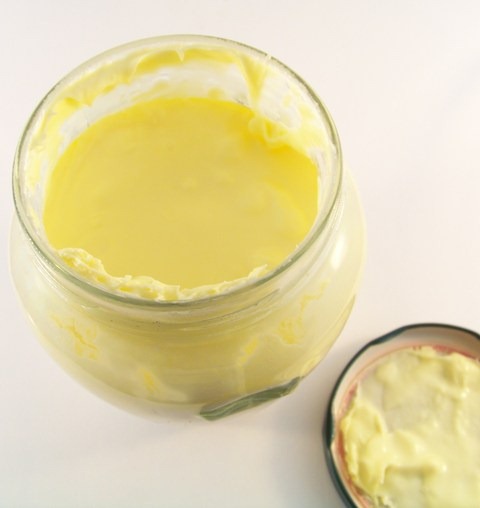
Heather Burke-Huyghue’s Photos
MARGARINE OR BUTTER?
by Dr H.H.Nehrlich
Margarine was invented in France at the instigation of Napoleon III who wanted to find a cheap substitute for butter to feed the poor, the soldiers and the other ‘common’ people. When first marketed sales were slow as margarine was in direct competition with butter and it looked and tasted inferior. The main advantage seemed to be that it spread easily straight out of the cool house (later the refrigerator). However, in the early fifties when the “Cholesterol Bogeyman” was invented by Dr.Ancel Keyes, things began to improve. Margarine was then marketed as a health food. Eating it promised a longer life free of heart and blood vessel disease.
Today, the propaganda continues and supermarket shelves are overflowing with many different kinds of margarine. Shelf life is very long and it still spreads easily straight from the fridge. However, while in the early days it was made from whale oil, tallow or lard (and thus had considerable nutritional value), today it starts its life as cheap vegetable oil (often pesticide-soaked cottonseed oil); it is processed aggressively by repeated heating to extreme temperatures, by the addition of toxic chemicals and coloring agents. It is degummed, bleached and deodorized. However, during processing several undesirable things happen: While adding hydrogen gas to the oil mixture in order to ‘hydrogenate’ it, meaning to chemically change it into a more solid state, the natural cis configuration of fatty acids is changed to an unnatural ‘trans’ configuration. These high trans fat margarines have a higher melting point and practically keep forever. Since our bodies are not able to deal with these trans-fats properly the ‘funny fats’ or ‘phony fats’ do much serious damage to cell membranes, blood cells, blood vessels and they interfere with prostaglandin production. When trans fats are ingested the body responds by mounting an immune defensive reaction, practically creating a state of war in the system. As long ago as 1974 it was proven that margarine is a significant cause of atherosclerosis (blood vessel disease), high blood pressure and cancer. In Germany, trans fats are limited by law to less than 1% in any food, including fast foods. In Australia, some products contain over 40% trans fats.
Place a tub of margarine outside your house and you will find that no animals or insects show any interest. As to the health claims made – this cocktail of damaged, unnatural oils with a high content of toxic chemicals is in no way conducive to good health. As to its alleged positive effects on cholesterol: Some margarines do lower cholesterol in some people, however, the benefits of lowering cholesterol have been – to put it mildly- obscenely overstated.
BUTTER has been used for centuries. Because is a saturated fat, it is very stable. It also is totally natural, nutrient-rich product made up of a mix of many different fatty acids. It contains antimicrobial and antifungal substances as well as a very potent anti-cancer agent called conjugated linoleic acid (CLA). Butter contains lecithin and antioxidants including Vitamins A and E, also selenium. All are strong health-promoting nutrients.
Butter contains cholesterol, also a powerful antioxidant, which protects against heart disease (Yes, that is true!). Butter contains nearly 500 different fatty acids; each has its own role in nourishing the body. Thus, the nutrients in butter protect against heart disease, cancer and other degenerative diseases.
Butter helps to protect the thyroid gland as it contains iodine, it fights fat storage through CLA, and butter contains several growth factors and plays a critical role in the development of the nervous system and the brain. All the nutrients in butter make it an essential food, capable of supplying many of our daily nutrient needs.
Butter is not man-made, it is natural, of extremely high biological value and –compared to margarine-in a league that’s light years ahead. Butter can be made from just about any milk, e.g. buffalo, goat, sheep, camel…. In Canada and many parts of Europe goat butter is available in stores.
Butter tastes good, looks good and it sustains life.
Now you know. Margarine or butter – the choice is yours!
[Dr Nehrlich practices Chiropractic and Clinical (Orthomolecular) Nutrition in Bongaree, Bribie Island Queensland. He is chapter leader of the Weston A. Price Foundation, a worldwide organization whose goal it is to tell people the truth about Nutrition and Health.]
Soda Sales Way Down
Posted: April 4, 2012 Filed under: Food and it's Impact on Our Health Leave a comment
REPUBLISHED FROM; 
Soda sales here in the U.S. of A were down again last year. We’re back down to—get this—1996 levels of soda consumption.
The Aughts will truly go down in history as "The lost generation" of soda. For all you Southerners out there, allow me to translate: "Folks are drinkin less Coke these days." Heh.
It also says here that "U.S. pop consumption" is down by exactly the same amount. No idea what that means.
Millie; In the south a lot of older people call soda “pop:…
[Photo: Like_the_Grand_Canyon/ Flickr]
The Link Between Fast Food and Depression Confirmed
Posted: April 3, 2012 Filed under: Food and it's Impact on Our Health Leave a commentAccording to a recent study headed by scientists from the University of Las Palmas de Gran Canaria and the University of Granada, eating commercial baked goods (fairy cakes, croissants, doughnuts, etc.) and fast food (hamburgers, hotdogs and pizza) is linked to depression.
Published in the Public Health Nutrition journal, the results reveal that consumers of fast food, compared to those who eat little or none, are 51% more likely to develop depression.
Furthermore, a dose-response relationship was observed. In other words this means that “the more fast food you consume, the greater the risk of depression,” explains Almudena Sánchez-Villegas, lead author of the study, to SINC.
The study demonstrates that those participants who eat the most fast food and commercial baked goods are more likely to be single, less active and have poor dietary habits, which include eating less fruit, nuts, fish, vegetables and olive oil. Smoking and working more than 45 hours per week are other prevalent characteristics of this group.
A long-term study
With regard to the consumption of commercial baked goods, the results are equally conclusive. “Even eating small quantities is linked to a significantly higher chance of developing depression,” as the university researcher from the Canary Islands points out.
The study sample belonged to the SUN Project (University of Navarra Diet and Lifestyle Tracking Program). It consisted of 8,964 participants that had never been diagnosed with depression or taken antidepressants. They were assessed for an average of six months, and 493 were diagnosed with depression or started to take antidepressants.
This new data supports the results of the SUN project in 2011, which were published in the PLoS One journal. The project recorded 657 new cases of depression out of the 12,059 people analyzed over more than six months. A 42% increase in the risk associated with fast food was found, which is lower than that found in the current study.
Sánchez-Villegas concludes that “although more studies are necessary, the intake of this type of food should be controlled because of its implications on both health (obesity, cardiovascular diseases) and mental well-being.”
The impact of diet on mental health
Depression affects 121 million people worldwide. This figure makes it one of the main global causes of disability-adjusted life year. Further still, in countries with low and medium income it is the leading cause.
However, little is known about the role that diet plays in developing depressive disorders. Previous studies suggest that certain nutrients have a preventative role. These include group B vitamins, omega-3 fatty acids and olive oil. Furthermore, a healthy diet such as that enjoyed in the Mediterranean has been linked to a lower risk of developing depression.
Posted: April 1, 2012 Filed under: Food and it's Impact on Our Health Leave a comment

joshschutz: Summertime Hiking


 Meal Delivery Service by Millie Barnes