Link between Fast Food and Depression Confirmed
Posted: April 6, 2012 Filed under: Food and it's Impact on Our Health Leave a commentLink between Fast Food and Depression Confirmed
Awesome, Free Potting Bench Plans..
Posted: April 6, 2012 Filed under: Food and it's Impact on Our Health Leave a commentAwesome, Free Potting Bench Plans..
Butter vs. Margarine
Posted: April 6, 2012 Filed under: Food and it's Impact on Our Health Leave a commentMONSANTO THREATENS TO SUE VERMONT IF LEGISLATORS PASS A BILL REQUIRING GMO FOOD TO BE LABELED
Posted: April 6, 2012 Filed under: Food and it's Impact on Our Health Leave a commentMONSANTO THREATENS TO SUE VERMONT IF LEGISLATORS PASS A BILL REQUIRING GMO FOOD TO BE LABELED
Lowering Saturated Fats CAUSES Heart Disease!
Posted: April 6, 2012 Filed under: Food and it's Impact on Our Health Leave a commentLowering Saturated Fats CAUSES Heart Disease!
Awesome Potting Bench Plans
Posted: April 6, 2012 Filed under: Gardening Leave a commentClick here- Potting Bench Plans

Monsanto Threatens to Sue Vermont if Legislators Pass a Bill Requiring GMO Food to Be Labeled
Posted: April 5, 2012 Filed under: Gardening, Non-Toxic Choices Leave a commentApril 4, 2012 |

The world’s most hated corporation is at it again, this time in Vermont.
Despite overwhelming public support and support from a clear majority of Vermont’s Agriculture Committee, Vermont legislators are dragging their feet on a proposed GMO labeling bill. Why? Because Monsanto has threatened to sue the state if the bill passes.
The popular legislative bill requiring mandatory labels on genetically engineered food (H-722) is languishing in the Vermont House Agriculture Committee, with only four weeks left until the legislature adjourns for the year. Despite thousands of emails and calls from constituents who overwhelmingly support mandatory labeling, despite the fact that a majority (6 to 5) of Agriculture Committee members support passage of the measure, Vermont legislators are holding up the labeling bill and refusing to take a vote.
Instead, they’re calling for more public hearings on April 12, in the apparent hope that they can run out the clock until the legislative session ends in early May.
What happened to the formerly staunch legislative champions of Vermont’s “right to know” bill? They lost their nerve and abandoned their principles after Monsanto representative recently threatened a public official that the biotech giant would sue Vermont if they dared to pass the bill. Several legislators have rather unconvincingly argued that the Vermont public has a “low appetite” for any bills, even very popular bills like this one, that might end up in court. Others expressed concern about Vermont being the first state to pass a mandatory GMO labeling bill and then having to “go it alone” against Monsanto in court.
What it really comes down to this: Elected officials are abandoning the public interest and public will in the face of corporate intimidation.
Monsanto has used lawsuits or threats of lawsuits for 20 years to force unlabeled genetically engineered foods on the public, and to intimidate farmers into buying their genetically engineered seeds and hormones. When Vermont became the first state in the nation in 1994 to require mandatory labels on milk and dairy products derived from cows injected with the controversial genetically engineered Bovine Growth Hormone, Monsanto’s minions sued in Federal Court and won on a judge’s decision that dairy corporations have the first amendment “right” to remain silent on whether or not they are injecting their cows with rBGH – even though rBGH has been linked to severe health damage in cows and increased cancer risk for humans, and is banned in much of the industrialized world, including Europe and Canada.
Monsanto wields tremendous influence in Washington, DC and most state capitals. The company’s stranglehold over politicians and regulatory officials is what has prompted activists in California to bypass the legislature and collect 850,000 signatures to place a citizens’ Initiative on the ballot in November 2012. The 2012 California Right to Know Act will force mandatory labeling of GMOs and to ban the routine practice of labeling GMO-tainted food as “natural.”
All of Monsanto’s fear mongering and intimidation tactics were blatantly on display in the House Agriculture Committee hearings March 15-16.
During the hearings the Vermont legislature was deluged with calls, letters, and e-mails urging passage of a GMO labeling bill – more than on any other bill since the fight over Civil Unions in 1999-2000. The legislature heard from pro-labeling witnesses such as Dr. Michael Hansen, an expert on genetic engineering from the Consumers Union, who shredded industry claims that GMO’s are safe and that consumers don’t need to know if their food is contaminated with them.
On the other side of the fence, Monsanto’s lobbyist and Vermont mouthpiece, Margaret Laggis employed inaccurate, unsubstantiated, fear-mongering claims to make Monsanto’s case. She warned during the hearings that if this law were passed, there would not be enough corn, canola, and soybean seed for Vermont farmers to plant.
Laggis lied when she said that the U.S. Food and Drug Administration (FDA) had done exhaustive feeding tests on genetically modified foods. Hansen corrected her, testifying that all of the GMO feeding tests submitted to the FDA were conducted by Monsanto and other GMO corporations and that the FDA had not done any GMO testing of its own.
Laggis lied again when she claimed that a recent Canadian study showing that more than 90% pregnant women had high levels of a genetically modified bacterial pesticide in their blood resulted from them “eating too much organic food” during pregnancy. Again, Hansen refuted this nonsense by pointing out that the Bacillus thuingensis (Bt) bacterium spray used by organic growers is chemically and materially different from the GMO Bt bacterium which showed up in the pregnant women’s blood and the umbilical cords of their fetuses. Hanson pointed that the high levels of Monsanto’s mutant Bt in the women’s blood was due to the widespread cultivation of GMO corn, cotton, soy, and canola.
The committee heard testimony that European Union studies have been conducted which showed that even short-term feeding studies of GMO crops caused 43.5% of male test animals to suffer kidney abnormalities, and 30.8% of female test animals to suffer liver abnormalities. Studies also have shown that the intestinal lining of animals fed GMO food was thickened compared to the control animals. All of these short-term results could become chronic, and thus precursors to cancer.
Studies like these have prompted 50 nations around the world to pass laws requiring mandatory labels on GMO right foods.
In the end, none of the scientific testimony mattered. Monsanto operatives simply reverted to their usual tactics: They openly threatened to sue the state.
Unfortunately in the US, industry and the government continue to side with Monsanto rather than the 90% of consumers who support labeling. Monsanto’s biotech bullying is a classic example of how the 1% control the rest of us, even in Vermont, generally acknowledged as the most progressive state in the nation.
Vermont activists are organizing a protest at the state capital on April 12 to coincide with the next round of hearings on H-722, and are asking residents to write letters, make calls, and e-mail their legislators and the Governor. For more information, please go to the website http://www.vtrighttoknow.org or the Facebook page http://www.facebook.com/vtrighttoknow of the Vermont Right to Know Campaign.
Will Allen is the co-manager of Cedar Circle Farm in East Thetford, Vermont. He is also the Author of The War on Bugs, a history of farm pesticides and fertilizers since 1810. He is on the policy advisory boards of The Organic Consumers Association and Willing Hands. He has attended all of the agriculture committee hearings on H-722, where the testimony referred to above was delivered.
Ronnie Cummins is the National Director of the Organic Consumers Association and its Millions Against Monsanto campaign. He also is a member of the Steering Committee of the California Ballot Initiative to Label Genetically Engineered Foods, and co-author of the book, Genetically Engineered Food: A Self-Defense Guide for Consumers.
Margarine vs. Butter
Posted: April 5, 2012 Filed under: Food and it's Impact on Our Health Leave a comment
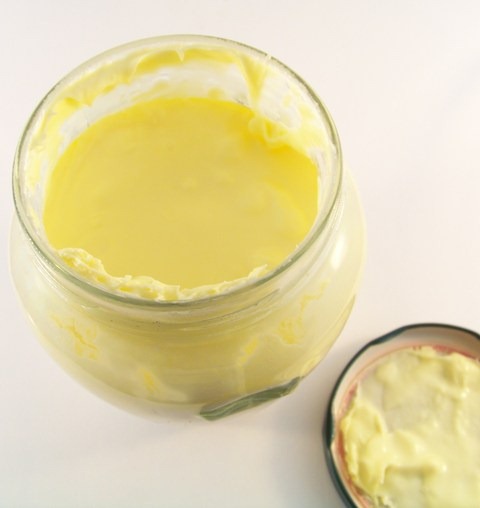
Heather Burke-Huyghue’s Photos
MARGARINE OR BUTTER?
by Dr H.H.Nehrlich
Margarine was invented in France at the instigation of Napoleon III who wanted to find a cheap substitute for butter to feed the poor, the soldiers and the other ‘common’ people. When first marketed sales were slow as margarine was in direct competition with butter and it looked and tasted inferior. The main advantage seemed to be that it spread easily straight out of the cool house (later the refrigerator). However, in the early fifties when the “Cholesterol Bogeyman” was invented by Dr.Ancel Keyes, things began to improve. Margarine was then marketed as a health food. Eating it promised a longer life free of heart and blood vessel disease.
Today, the propaganda continues and supermarket shelves are overflowing with many different kinds of margarine. Shelf life is very long and it still spreads easily straight from the fridge. However, while in the early days it was made from whale oil, tallow or lard (and thus had considerable nutritional value), today it starts its life as cheap vegetable oil (often pesticide-soaked cottonseed oil); it is processed aggressively by repeated heating to extreme temperatures, by the addition of toxic chemicals and coloring agents. It is degummed, bleached and deodorized. However, during processing several undesirable things happen: While adding hydrogen gas to the oil mixture in order to ‘hydrogenate’ it, meaning to chemically change it into a more solid state, the natural cis configuration of fatty acids is changed to an unnatural ‘trans’ configuration. These high trans fat margarines have a higher melting point and practically keep forever. Since our bodies are not able to deal with these trans-fats properly the ‘funny fats’ or ‘phony fats’ do much serious damage to cell membranes, blood cells, blood vessels and they interfere with prostaglandin production. When trans fats are ingested the body responds by mounting an immune defensive reaction, practically creating a state of war in the system. As long ago as 1974 it was proven that margarine is a significant cause of atherosclerosis (blood vessel disease), high blood pressure and cancer. In Germany, trans fats are limited by law to less than 1% in any food, including fast foods. In Australia, some products contain over 40% trans fats.
Place a tub of margarine outside your house and you will find that no animals or insects show any interest. As to the health claims made – this cocktail of damaged, unnatural oils with a high content of toxic chemicals is in no way conducive to good health. As to its alleged positive effects on cholesterol: Some margarines do lower cholesterol in some people, however, the benefits of lowering cholesterol have been – to put it mildly- obscenely overstated.
BUTTER has been used for centuries. Because is a saturated fat, it is very stable. It also is totally natural, nutrient-rich product made up of a mix of many different fatty acids. It contains antimicrobial and antifungal substances as well as a very potent anti-cancer agent called conjugated linoleic acid (CLA). Butter contains lecithin and antioxidants including Vitamins A and E, also selenium. All are strong health-promoting nutrients.
Butter contains cholesterol, also a powerful antioxidant, which protects against heart disease (Yes, that is true!). Butter contains nearly 500 different fatty acids; each has its own role in nourishing the body. Thus, the nutrients in butter protect against heart disease, cancer and other degenerative diseases.
Butter helps to protect the thyroid gland as it contains iodine, it fights fat storage through CLA, and butter contains several growth factors and plays a critical role in the development of the nervous system and the brain. All the nutrients in butter make it an essential food, capable of supplying many of our daily nutrient needs.
Butter is not man-made, it is natural, of extremely high biological value and –compared to margarine-in a league that’s light years ahead. Butter can be made from just about any milk, e.g. buffalo, goat, sheep, camel…. In Canada and many parts of Europe goat butter is available in stores.
Butter tastes good, looks good and it sustains life.
Now you know. Margarine or butter – the choice is yours!
[Dr Nehrlich practices Chiropractic and Clinical (Orthomolecular) Nutrition in Bongaree, Bribie Island Queensland. He is chapter leader of the Weston A. Price Foundation, a worldwide organization whose goal it is to tell people the truth about Nutrition and Health.]
Food on the Table Builds Meal Plans and Grocery Lists To Go on Android, iPhone, and Online
Posted: April 4, 2012 Filed under: In The Kitchen with Millie- How To's Leave a commentI read about this one on Lifehacker;

It’s beautiful, lets me save the stores I shop at, alerts me when I set it to when I needed to shop, lets me know when I items I use are on sale..and it’s beautiful and easy to navigate. It was easy to set up online then sync with my Android phone.
Available in the Google Play Store.
Soda Sales Way Down
Posted: April 4, 2012 Filed under: Food and it's Impact on Our Health Leave a comment
REPUBLISHED FROM; 
Soda sales here in the U.S. of A were down again last year. We’re back down to—get this—1996 levels of soda consumption.
The Aughts will truly go down in history as "The lost generation" of soda. For all you Southerners out there, allow me to translate: "Folks are drinkin less Coke these days." Heh.
It also says here that "U.S. pop consumption" is down by exactly the same amount. No idea what that means.
Millie; In the south a lot of older people call soda “pop:…
[Photo: Like_the_Grand_Canyon/ Flickr]


 Meal Delivery Service by Millie Barnes