More Ridiculous Obesity “Research”…
Posted: April 14, 2012 Filed under: Food and it's Impact on Our Health Leave a commentScience Daily published this article’
Heightened Sensitivity to Cheap, High-Calorie Food Is Linked With Obesity
ScienceDaily (Apr. 5, 2012) — Obesity is increasing worldwide in adults and children and is currently viewed by many as one of the most serious threats to public health. It is likely that solutions to the obesity pandemic will require changes in public policy and that scientific insight into obesity will be invaluable for guiding those changes. Now, a new review of human brain imaging studies published by Cell Press in the journal Trends in Endocrinology and Metabolism suggests that a major reason for the dramatic increase in obesity may be a heightened sensitivity to heavily advertised and easily accessible high-calorie foods. to READ MORE…
Their statement that “Trends in Endocrinology and Metabolism suggests that a major reason for the dramatic increase in obesity may be a heightened sensitivity to heavily advertised and easily accessible high-calorie foods” is so absurd it is hard not to laugh…
Don’t they mean, a heightened degree of EATING high calorie, cheap junk food devoid of nutrients causes obesity???
Have these researchers lost all common sense about what causes obesity? The simple truth is that obesity is caused by the intake (NOT sensitivity to) of too many carbs, not enough of the fats and proteins of high quality that we need to be well nourished, taking in too little calories thus keeping the body in starvation mode…in other words, being malnourished.
Freeform Meringue Shells with Strawberries and Blueberries
Posted: April 14, 2012 Filed under: Food and it's Impact on Our Health 1 Comment
These are easy to make, are elegant to serve and have no fat… I have no objection to fat but as a nice light dessert this can’t be beat!
To form these meringue shells, you don’t need a pastry bag or decorating tips, just a regular tablespoon. Once made, these meringue shells make an impressive, quick dessert filled with fruit.
Serves 8
4 Tablespoons granulated sugar
2/3 cup confectioners’ sugar
1/2 cup large egg whites from about 4 eggs, at room temperature
1/4 teaspoon ground ginger
1/3 cup granulated sugar
1/8 teaspoon ground cinnamon
1 pint fresh strawberries , hulled and sliced lengthwise
2 Tablespoons granulated sugar
1 teaspoon orange zest from 1 small orange
1 cup blueberries
1. Adjust oven rack to lower middle position and preheat oven to 225 degrees.
2. Sift 2 tablespoons granulated sugar with confectioners’ sugar; set aside.
3. Place egg whites in large bowl of electric mixer. Using whisk attachment, whip them on low speed just until frothy. Increase speed to medium, sprinkle in 2 tablespoons reserved granulated sugar, and continue whipping to soft peaks. Gradually add 1/3 cup reserved granulated sugar; continue whipping to stiff, glossy peaks. Stop mixer; rub some meringue between your fingers. If smooth, proceed to next step. If still grainy, continue beating until smooth.
4. Sprinkle sifted powdered-sugar mixture over meringue; fold in with rubber spatula until just incorporated. Fold in ginger and cinnamon.
5. FOR FREEFORM MERINGUE SHELLS — Use a compass or large bowl or glass to trace 4-inch circles on parchment paper. Lay parchment on baking sheet and dab a small quantity to tack down corners of parchment paper while you work. Use the back of a spoon to carefully spread about 1/2 cup meringue inside each traced circle. Still using the spoon, form an indentation in the center, forming a decorative cup about 1/4 inch thick in the center and 1-inch high around the edge. Shape a couple of 1 1/2 inch disks with the spoon and remaining meringue. These extra meringues are use to test for doneness.
6. Bake meringues, switching positions of baking sheets after 30 minutes, until one of test samples releases easily from paper and snaps crisply after 5 minutes of cooling, 60 to 80 minutes. Once sample is crisp when tested, remove baking sheets from oven and place on cooling racks until meringues are room temperature, about 30 minutes. Carefully remove cooled meringues from paper. Set aside until ready to fill. (Can be stored in an airtight container up to 2 weeks.)
7. Toss berries, sugar, and orange zest in small bowl; let stand until light syrup forms, about 30 minutes. Add papaya and toss gently.
8. Place one meringue shell on each serving plate. Divide fruit and syrup among shells. Serve immediately.
Anytime Cookies- (fruit-sweetened and grain-free)
Posted: April 11, 2012 Filed under: Food and it's Impact on Our Health Leave a commentMillie; This cookie recipe were published on Nourished Kitchen. they are made with Coconut flour and almond flour, both are low glycemic. The dried fruits in them are offset with the nuts and low glycemic non-grain flours.
This recipe calls for coconut flour and dried, unsweetened coconut. If you live near a well-stocked health food store, you should be able to find coconut flour; however, you can also purchase coconut flour and dried, unsweetened shredded coconut online. Coconut is a unique, highly absorbent flour with unique properties. It is favored by those on grain-free diets like the GAPS diet, and you can learn more about baking with coconut flour here.

- YIELD: 1 dozen
These simple cookies acquire their sweetness not from sugar or honey, but from dried fruit: dates, currants and cherries. They’re good for breakfast or any time you need quick bite or boost of energy. The only thing I would add is a touch of coconut cream, replace half the applesauce with it…
INGREDIENTS
- 1/4 cup coconut flour
- 1/2 cup almond butter
- 6 pitted dates (soaked in warm water for 15 minutes)
- 3/4 cup shredded unsweetened coconut
- 1/2 cup unsweetened apple sauce
- 2 eggs (beaten)
- 1 1/2 tsps. cinnamon
- 1 tsp. vanilla extract
- 1/4 tsp. unrefined sea salt
- 1/2 tsp. baking soda
- 2 Tablespoon dried cherries
- 2 Tablespoon chopped walnuts
- 3 Tablespoon currants
Preheat your oven to 350 degrees. Line a baking sheet with parchment paper.
- Combine the coconut flour, almond butter, and dates in a food processor or blender. Process until well combined and the dates have broken up into really small pieces, about a minute.
- Add the shredded coconut, applesauce, eggs, cinnamon, vanilla, salt and baking soda and process for 30 seconds until a wet dough forms.
- Add in the remaining ingredients, and pulse once or twice until the fruit is incorporated into the dough but not chopped up.
- Using an ice cream scoop or large tablespoon, drop the dough in heaping spoonful’s onto a baking sheet lined with parchment paper.
- Dip a metal spatula in water, and use the bottom to lightly press down each ball of dough. These cookies will not spread or rise so make sure to make them the shape you want them prior to baking.
- Bake for 12 to 15 minutes, until they are golden on top and slightly brown along the edges. Serve immediately or store in the freezer, thawing for 15 to 20 minutes before you plan to serve them
Eau Good Water Bottle
Posted: April 10, 2012 Filed under: Going Green; How and Why..., Non-Toxic Choices Leave a comment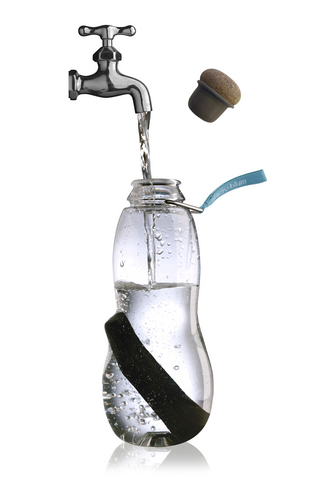
Binchotan active charcoal has been used in Japan as a water purifier since the 17th century. It reduces chlorine, mineralises the water and balances the pH. The binchotan active charcoal can be used for up to 6 months and amazingly recycles for many different uses after this.
Over 22 billion plastic water bottles are discarded around the world every year. We want to reduce this by making tap water taste better and encourage people to stop buying bottled water.
BPA free tritan, cork, stainless steel, silicon
includes x1 binchotan active charcoal filter (6 months life)
8.5 x 24cm – 800 ml / 27 floz


Tuna Tonnato
Posted: April 10, 2012 Filed under: Food and it's Impact on Our Health Leave a comment1 pound fresh tuna steaks
1 teaspoon butter
1 can tuna in water
1/2 yellow pepper
1/2 red pepper
1/3 teaspoon dill
1/2 cup red onion
few drops toasted sesame oil
1/3 cup relish
2 Tablespoons Dijon mustard
1/3 cup lemon juice
1) Sprinkle tuna with salt and pepper, sear in butter until just tender. Break apart with fork.
2) Drain canned tuna well.
2) Place drained can of tuna, Dijon mustard, lemon juice, dill and toasted sesame oil in food processor. Blend until creamy.
3) Mix all ingredients together.
Hollandaise Sauce
Posted: April 10, 2012 Filed under: Food and it's Impact on Our Health, In The Kitchen with Millie- How To's Leave a commentHollandaise Sauce
Set up a double boiler (or a glass or stainless steel bowl over hot water, just shy of simmering..
For one serving use 1 egg.
Whisk yolk in bowl over hot but not boiling water. When egg gets hot but still runny, add 1-2 Tablespoons butter. Keep whisking.
When it starts to thicken, remove from heat and add a few squeezes of lemon juice. Add salt and pepper to taste. Douse your breakfast or veggies or salmon with it.
If it gets too thick, whisk in a bit of hot water.
Coeliac Disease- A Disease or a Simple Case of Poisoning?
Posted: April 10, 2012 Filed under: Food and it's Impact on Our Health Leave a comment
We are all creatures of habit. In this complex age, we never give a second thought to electricity, television, even the internet. Let alone running water, roads, wheels, and houses. Few of us ponder about what life was like without them. Even fewer of us ask the same questions about the very food that we eat. What was life like before the supermarket, the refrigerator, tinning and preserving, and how about before intensive agriculture, or before farming itself- indeed where did our food all start? Yet the history of food is exactly the topic of most interest to scientists in the relatively new field of Paleolithic diet, and it gives some startling insights into what we eat and how if affects our health.
The New Year always brings a rush of friends pronouncing that they are going on to a “detoxification diet” whatever that is. For many of us though, avoiding toxins is a very real daily necessity, fraught with potential danger. These are people who have coeliac disease. People with coeliac disease must avoid food which contains gluten- a substance found in cereals such as wheat rye and barley. Gluten is toxic to them. At first blush this seems a strange thing, as we all eat cereals and take them for granted. But if we scratch a bit harder, we soon see that cereals are not the innocent foods they appear to be.
For millions of years, humans and their relatives have eaten meat, fish, fowl and the leaves, roots and fruits of many plants. One big obstacle to getting more calories from the environment is the fact that many plants are inedible. Grains, beans and potatoes are full of energy but all are inedible in the raw state as they contain many toxins. There is no doubt about that- please don’t try to eat them raw, they can make you very sick.
Around 10,000 years ago, an enormous breakthrough was made- a breakthrough that was to change the course of history, and our diet, forever. This breakthrough was the discovery that cooking these foods made them edible- the heat destroyed enough toxins to render them edible. Grains include wheat, corn, barley, rice, sorghum, millet and oats. Grain based foods also include products such as flour, bread, noodles and pasta. These foods entered the menu of New Stone Age (Neolithic) man, and Paleolithic diet buffs often refer to them as Neolithic foods.
The cooking of grains, beans and potatoes had an enormous effect on our food intake- perhaps doubling the number of calories that we could obtain from the plant foods in our environment. Other advantages were soon obvious with these foods:
· they could store for long periods (refrigeration of course being unavailable in those days)
· they were dense in calories- ie a small weight contains a lot of calories, enabling easy transport
· the food was also the seed of the plant- later allowing ready farming of the species
These advantages made it much easier to store and transport food. Of most critical importance, it enabled food to be stored for the winter. It also made it much easier for nomads and travellers to carry supplies. Food storage also enabled surpluses to be stored, and this in turn made it possible to free some people from food gathering to become specialists in other activities, such as builders, warriors and rulers. This in turn set us on the course to modern day civilization. Despite these commercial advantages, our genes were never developed with grains, beans and potatoes and were not in tune with them, and still are not. Man soon improved further on these advances- by farming plants and animals.
Instead of being able to eat only a fraction of the animal and plant life in an area, farming allows us to remove all the inedible plants in a particular area and replace them with a large number of edible plants and animals. This in turn increases the number of calories that we can obtain from an area by some 10 to 100 fold or more. Then followed the harnessing of dairy products, which allow man to obtain far more calories from the animal over its lifetime than if it were simply slaughtered for meat.
Paleolithic Diet buffs refer to the new foods as Neolithic foods and the old as Paleolithic Diet foods. In simple terms we see Neolithic as bad and Paleolithic as good. Since then, some other substances have entered the diet- particularly salt and sugar, and more recently a litany of chemicals including firstly caffeine then all other additives, colourings, preservatives, pesticides etc.
Grains, Beans and Potatoes (GBP) share the following important characteristics:
· They are all toxic when raw- there is no doubt about this- it is a fact that no competent source would dispute- they can be extremely dangerous and it is important never to eat them raw or undercooked. These toxins include enzyme blockers, lectins and other types.
· Cooking destroys most but not all of the toxins. Insufficient cooking can lead to sickness such as acute gastroenteritis.
· They are all rich sources of carbohydrate, and once cooked this is often rapidly digestible-giving a high glycemic index (sugar spike).
· They are extremely poor sources of vitamins (particularly vitamins A, B-group, folic acid and C), minerals, antioxidants and phytosterols.
Therefore diets high in grains beans and potatoes (GBP):
· Contain toxins in small amounts
· Have a high glycemic index (ie have a similar effect to raw sugar on blood glucose levels)
· Are low in many vitamins, minerals, antioxidants and phytosterols- i.e. they are the original “empty calories”
· Have problems caused by the GBP displacing other foods
As grains, beans and potatoes form such a large proportion of the modern diet, you can now understand why it is so common for people to feel they need supplements or that they need to detoxify (i.e. that they have toxins in their system)- indeed both feelings are absolutely correct. Unfortunately, we don’t necessarily realize which supplements we need, and ironically when people go on detoxification diets they unfortunately often consume even more Neolithic foods (soy beans) and therefore more toxins than usual (perhaps they sometimes benefit from a change in toxins).
So there we have it. Gluten is not the only potential toxin in wheat, there are many others- but these others tend to be reduced by cooking. Cereals have many other inferior aspects as a food, and they certainly ere not one foods that we evolved with (or created with if you prefer). For over 2 million years all food was gluten free, but now for the past 10,000 years Caucasians, Africans and Asians have eaten foods containing gluten, but for Native Americans, Australian Aborigines and Pacific Islanders, cereals have only been available for 100 to 500 years. Scarcely any time at all. Wheat and other cereals are at best second rate foods, which were introduced as emergency foods to prevent starvation in winter, but whose high productivity lead to their wholesale introduction, like many of the cheap substitutes that we use today.
So, gentle reader, to answer your question “why can’t I eat cereals”, it would appear that we were all never meant to eat them in the first place.
Dr Ben Balzer, general practitioner with a special interest in the Paleolithic diet.
Chocolate, Wine And Tea Improve Brain Performance- Oh Yeah!
Posted: April 9, 2012 Filed under: Food and it's Impact on Our Health Leave a comment From Science Daily
ScienceDaily (Dec. 23, 2008) — All that chocolate might actually help finish the bumper Christmas crossword over the seasonal period. According to Oxford researchers working with colleagues in Norway, chocolate, wine and tea enhance cognitive performance.
The team from Oxford’s Department of Physiology, Anatomy and Genetics and Norway examined the relation between cognitive performance and the intake of three common foodstuffs that contain flavonoids (chocolate, wine, and tea) in 2,031 older people (aged between 70 and 74).
Participants filled in information about their habitual food intake and underwent a battery of cognitive tests.Those who consumed chocolate, wine, or tea had significantly better mean test scores and lower prevalence of poor cognitive performance than those who did not. The team reported their findings in the Journal of Nutrition.
The role of micronutrients in age-related cognitive decline is being increasingly studied. Fruits and beverages such as tea, red wine, cocoa, and coffee are major dietary sources of polyphenols, micronutrients found in plant-derived foods. The largest subclass of dietary polyphenols is flavonoids, and it has been reported in the past that those who consume lots of flavonoids have a lower incidence of dementia.
The latest findings seem to support the theory, although the researchers caution that more research would be needed to prove that it was flavonoids, rather than some other aspect of the foods studied, that made the difference.The effect was most pronounced for wine.
However, say the researchers, those overdoing it at Christmas should note that while moderate alcohol consumption is associated with better cognitive function and reduced risk of Alzheimer’s disease and dementia, heavy alcohol intake could be one of many causes of dementia – as well as a host of other health problems.
THE CASE AGAINST GLUTEN: FOR EVERYONE
Posted: April 9, 2012 Filed under: Food and it's Impact on Our Health Leave a commentTHE CASE AGAINST GLUTEN: FOR EVERYONE
TRADITIONAL BONE BROTH IN MODERN HEALTH AND DISEASE
Posted: April 9, 2012 Filed under: Food and it's Impact on Our Health Leave a commentTRADITIONAL BONE BROTH IN MODERN HEALTH AND DISEASE


 Meal Delivery Service by Millie Barnes