More Fiber, but Not Necessarily Less Fat, Good for Teen Diets
Posted: May 29, 2012 Filed under: Food and it's Impact on Our Health Leave a commentScienceDaily (Nov. 10, 2011) — A diet high in fiber — but not necessarily one low in saturated fat or cholesterol — is tied to a lower risk of heart disease and type-2 diabetes in teenagers, according to new findings from Michigan State University.
A study led by Joseph Carlson of MSU’s Division of Sports and Cardiovascular Nutrition suggests to reduce metabolic syndrome — a collection of risk factors including high blood pressure and a large waistline — it is more important to emphasize diets including fiber-rich, nutrient-dense, plant-based foods than focus on restricting foods high in cholesterol or saturated fat.
The research is published in Journal of the American Dietetic Association.
"What we found is that as fiber intake increases, the risk for metabolic syndrome decreases," said Carlson, a registered dietitian and associate professor at MSU. "High-fiber, nutrient-dense foods are packed with heart healthy vitamins, minerals and chemicals that can positively affect many cardiovascular risk factors.
"It may be better to focus on including these foods than to focus, as is commonly done, on excluding foods high in saturated fat."
Children’s Body Fat Linked to Vitamin D Insufficiency in Mothers
Posted: May 29, 2012 Filed under: Food and it's Impact on Our Health, Non-Toxic Choices Leave a comment“The findings from this study showed that the children who were born to mothers who had low vitamin D status in pregnancy had more body fat when they were six years old. These differences could not be explained by other factors such as mother’s weight gain in pregnancy, or how physically active the children were”.
ScienceDaily (May 23, 2012) — Children are more likely to have more body fat during childhood if their mother has low levels of Vitamin D during pregnancy, according to scientists at the Medical Research Council Lifecourse Epidemiology Unit (MRC LEU), University of Southampton.
Low vitamin D status has been linked to obesity in adults and children, but little is known about how variation in a mother’s status affects the body composition of her child.
In new research, published in the American Journal of Clinical Nutrition on May 23 2012, scientists at the MRC LEU, University of Southampton, have compared the vitamin D status of 977 pregnant women with the body composition of their children. The findings from this study showed that the children who were born to mothers who had low vitamin D status in pregnancy had more body fat when they were six years old. These differences could not be explained by other factors such as mother’s weight gain in pregnancy, or how physically active the children were. The 977 women are part of the Southampton Women’s Survey, one of the largest women’s surveys in the UK.
Dr Siân Robinson, Principal Research Fellow, at the University, who led the study, says: "In the context of current concerns about low vitamin D status in young women, and increasing rates of childhood obesity in the UK, we need to understand more about the long-term health consequences for children who are born to mothers who have low vitamin D status.
Millie; The answer is NOT to supplement, that is not the correct form from which our body can assimilate it. You need saturated fats from grass fed, free roaming animals, plenty of butter and go out to play in the sun!! At least an hour a day with sun on your skin and NO SUNSCREEN…it is far too toxic.

Americans Find Doing Their Own Taxes Simpler Than Improving Diet and Health
Posted: May 29, 2012 Filed under: Food and it's Impact on Our Health Leave a comment
ScienceDaily (May 23, 2012) — Most Americans (52 percent) have concluded that figuring out their income taxes is easier than knowing what they should and shouldn’t eat to be healthier, according to the International Food Information Council (IFIC) Foundation’s 2012 Food & Health Survey.
The Survey found that people think a great deal about the healthfulness of their diets and want to make improvements. Yet, 76 percent agree that ever-changing nutritional guidance makes it hard to know what to believe. And when it comes to making decisions about food, consumers today rely most often on their own research rather than third-party experts. Six out of 10 Americans have given a lot of thought to the foods and beverages they consume (58 percent) and the amount of physical activity they get (61 percent). Yet, only 20 percent say their diet is very healthful and 23 percent describe their diet as extremely or very unhealthful; less than 20 percent meet the national Physical Activity Guidelines.
Calcium Supplements Linked to Significantly Increased Heart Attack Risk, Study Suggests
Posted: May 28, 2012 Filed under: Non-Toxic Choices Leave a comment
ScienceDaily (May 23, 2012) — Calcium supplements might increase the risk of having a heart attack, and should be "taken with caution," concludes research published in the online issue of the journal Heart.
Furthermore, boosting overall calcium intake from dietary sources confers no significant advantage in terms of staving off heart disease and stroke, the findings indicate.
Previous research has linked higher calcium intake with a lowered risk of high blood pressure, obesity, and type 2 diabetes, all of which are risk factors for heart disease and stroke.
And calcium supplements are commonly recommended to elderly people and women who have gone through the menopause to prevent bone thinning
Millie; Calcium nor iron should ever be supplemented, too hard on the inner organs and can cause deficiencies…only if death is imminent from the deficiencies should they be taken. You CAN get these nutrients by eating correctly!
Grill Smoked Salmon
Posted: May 27, 2012 Filed under: Food and it's Impact on Our Health Leave a comment
This smoked salmon recipe combines the best elements of cold-smoked salmon (it’s cooked very slowly over a low fire to yield supple, moist fish) and hot-smoked salmon (it’s cooked over a hotter fire to yield a flaky, drier fish with tons of smoke flavor). To prepare the salmon for smoking, quick-cure the fish with a mixture of salt and sugar to draw moisture from the flesh, which firms it up, and season it inside and out. Then cook the fish indirectly over a gentle fire with ample smoke to produce salmon that is sweet, smoky, and tender.
- 2 tablespoons sugar
- 1 tablespoon kosher salt
- 6 (6- to 8-ounce) center-cut skin-on salmon fillets
- 2 cups wood chunks soaked in water for 15 minutes and drained (if using charcoal)
- 2 cups wood chips (if using gas)
1) Combine sugar and salt in bowl. Set salmon on wire rack set in rimmed baking sheet and sprinkle flesh side evenly with sugar mixture. Refrigerate, uncovered, for 1 hour. With paper towels, brush any excess salt and sugar from salmon and blot dry. Return fish on wire rack to refrigerator, uncovered, while preparing grill.
2) Clean and oil cooking grate. Fold piece of heavy-duty foil into 18 by 6-inch rectangle. Place foil rectangle over cool side of grill and place salmon pieces on foil, spaced at least 1/2 inch apart. Cover grill (positioning lid vent over fish if using charcoal) and cook until center of thickest part of fillet registers 125 degrees and is still translucent when cut into with paring knife, 30 to 40 minutes. Transfer to platter and serve, or allow to cool to room temperature
FOR A CHARCOAL GRILL: Open bottom vent halfway. Light large chimney starter one-third filled with charcoal briquettes (2 quarts). When top coals are partially covered with ash, pour into steeply banked pile against side of grill. Place wood chunks on top of coals. Set cooking grate in place, cover, and open lid vent halfway. Heat grill until hot and wood chunks begin to smoke, about 5 minutes.
FOR A GAS GRILL: Combine soaked and un-soaked chips. Use large piece of heavy-duty aluminum foil to wrap chips into foil packet and cut several vent holes in top. Place wood chip packet directly on primary burner. Turn primary burner to high (leave other burners off), cover, and heat grill until hot and wood chips begin to smoke, 15 to 25 minutes. Turn primary burner to medium. (Adjust primary burner as needed to maintain grill temperature of 275 to 300 degrees.)
Crispy Curried New Potatoes
Posted: May 27, 2012 Filed under: Food and it's Impact on Our Health Leave a commentHere’s another recipe using turmeric, a healthy immune system builder; Sweet new potatoes get a boost of flavor from curry powder and fried shallots. First, shallots are fried until they’re brown and crunchy; then boiled potatoes are smashed, seasoned with curry powder, and fried in the same pan as the shallots until they’re crusty and golden.

1 1/2 pounds new potatoes, all about the same size
1/3 butter
1 medium shallot, thinly sliced
1 teaspoon curry powder
1/2 teaspoon kosher salt, plus more as needed
1) Place the potatoes in a large saucepan and cover them with water by 1 inch. Season generously with salt, cover with a tightfitting lid, and bring to a boil over high heat. Remove the lid and cook the potatoes until a sharp knife easily pierces them and they easily fall off the knife, about 10 to 15 minutes.
2) Using a slotted spoon, transfer the potatoes to a baking sheet. Use the bottom of a measuring cup to smash each potato until it bursts and is flattened to about 1/2 inch thick; set the potatoes aside.
3) Heat the butter in a large frying pan over medium-high heat until bubbly. Meanwhile, line a small plate with paper towels and set it aside. Add the shallots to the pan and fry, stirring often, until browned, about 3 to 5 minutes (be careful not to burn the shallots, as some pieces may brown faster than others). Remove with the slotted spoon to the prepared plate, season with salt, and set aside.
4) Add the curry powder to the pan and stir until fragrant, about 20 seconds. Using your hands, carefully add the smashed potatoes to the pan. Use a metal spatula to flatten them into an even layer. Season with the measured salt and cook undisturbed until browned and crusty on the bottom, about 6 to 8 minutes. Flip, press into an even layer, and cook undisturbed until browned on the other side, about 4 minutes more.
5) Sprinkle the fried shallots over the potatoes and toss to combine. Taste and season with additional salt as needed. Serve immediately
Baked Salmon with Dry Rub
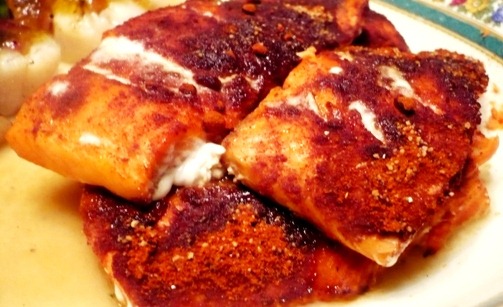
Posted: May 27, 2012 Filed under: Food and it's Impact on Our Health Leave a commentHere is my dry rub recipe used on baked Salmon;
1 cup Brown Sugar
1/2 teaspoon chili powder
1 Tablespoon smoked paprika
2 teaspoons Granulated Garlic
1 Tablespoon turmeric
1 Tablespoon cumin
1-1/2 teaspoon dry thyme
1-1/2 teaspoon dry oregano
1 teaspoon dry mustard
1/2 teaspoon cayenne pepper
1-1/2 tsp. salt
Combine all ingredients in a bowl. Store in an airtight container.
Salmon;
Rub a very generous amount of rub on salmon filets. It should be about 1/4 inch thick, I don’t rub it in, just place on top.
Bake at 350 degrees in a preheated oven for exactly 15 minutes.
Turmeric Has a Strong Immune System Building Properties
Posted: May 27, 2012 Filed under: Food and it's Impact on Our Health Leave a comment
ScienceDaily (May 25, 2012) — Oregon State University scientists just identified a new reason why some curry dishes, made with spices humans have used for thousands of years, might be good for you.
New research has discovered that curcumin, a compound found in the cooking spice turmeric, can cause a modest but measurable increase in levels of a protein that’s known to be important in the "innate" immune system, helping to prevent infection in humans and other animals.
This cathelicidin antimicrobial peptide, or CAMP, is part of what helps our immune system fight off various bacteria, viruses or fungi even though they hadn’t been encountered before. Prior to this, it was known that CAMP levels were increased by vitamin D.
Nearly 1 in 4 U.S. Teens Has Diabetes or Prediabetes
Posted: May 27, 2012 Filed under: Food and it's Impact on Our Health Leave a comment
From Time News Feed
In less than a decade, the proportion of kids ages 12 to 19 with diabetes or prediabetes has jumped from 9% in 1999-2000 to 23% in 2007-2008.
Cardiovascular disease is the top cause of death among U.S. adults, often leading to stroke and heart attacks. While heart attacks and strokes typically don’t occur until adulthood, CDC researchers found that in many cases, the 3,400 teens studied had an alarming number of cardiovascular risk factors. Most unnerving was the conclusion that 37% of normal-weight teens had at least one risk factor. “I was a little surprised given they are at normal weight,” says Ashleigh May, a CDC epidemiologist and the study’s lead author. “It just speaks to the fact that we have to promote health and wellness for all youth and not just those we know are overweight or obese.”
Millie; Everyone thinks of refined sugars when they think of diabetes but it’s an over abundance of ALL carbs that cause the condition; grains, fruit, high carb veggies (white potatoes, carrots) and fruit juice. Too many carbs, not near enough healthy saturated fats, inactivity…all of these things contribute to diabetes.
Fresh Mayonnaise Takes 3 Minutes to Make…
Posted: May 23, 2012 Filed under: Food and it's Impact on Our Health, Non-Toxic Choices 2 CommentsThe difference between fresh mayonnaise and that horrible jarred stuff is amazing.
Health wise the difference is just as profound. The oil in most commercial mayonnaises is either soy oil (Hellman’s and Miracle Whip) or canola oil. Neither oil is safe for human consumption, both are highly toxic.
And OMG the taste difference! There is no comparison!

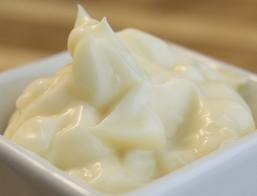
Fresh mayo Hellman’s mayo
So how many egg yolks do you think Hellman’s mayo has in it? The yolk, along with a great fruity olive oil is where all the flavor and nutrition comes from!
If you have a blender or food processor you can make mayo in about 3 minutes. But it is easy to over whip it and the mayo will break. If you have a whisk you can do the same with a little arm workout at the same time…my best time is just under a minute.
This is from the Culinary Institute of America’s Cookbook; A little water physically broadens the space between fat droplets, helping them stay separate, If the oil droplets don’t stay distinct from one another and evenly dispersed in the oil, the mayonnaise will break.
Lemon juice and vinegar accomplish the same thing, but if you add too much you run the risk of ending up with mayo that is too tart. A dollop of mustard can help create and hold an emulsion, too, which, beyond flavor, is why many mayonnaise recipes call for it. Adding water also heightens the fluffy factor.
Here is a collection of my favorite mayonnaise recipes;
Mayonnaise
5 large egg yolk
1 teaspoons salt
pinch of black pepper
1 teaspoon Dijon mustard
2 teaspoons lemon juice from 1 small lemon
1 teaspoon white wine vinegar
1 teaspoon water
3/4 cup extra virgin olive oil
1) Using a whisk (my recommendation) or a blender on LOW setting break 5 egg yolks into a bowl or the blender. Add salt and pepper, mustard, lemon juice, vinegar and water.
2) Either whisking or in blender; SLOWLY pour olive oil in a steady stream directly into the middle of the yolk mixture. If you are whisking by hand either use a heavy bowl or sit a wet dish cloth under it to keep it from moving.
Roasted Garlic Mayo– Same recipe as above but add 4 cloves of roasted garlic.
Pesto Mayonnaise – Same recipe as above but add one cup fresh basil and roasted garlic.
Smoked Paprika Chipotle Mayonnaise
16 ounces fresh mayonnaise
1 to 3 chipotle peppers in adobo sauce (La Costena is a gluten-free brand)
3 tablespoons smoked paprika
2 cloves garlic, peeled
1/8 lemon zest- use a microplaner
Combine all the ingredients in a blender and let it run. Adjust seasonings to your taste.


 Meal Delivery Service by Millie Barnes