Your Microbiome May Determine Whether Your Diet Succeeds Or Fails
Posted: January 12, 2017 Filed under: Food and it's Impact on Our Health Leave a commentAll health begins in the gut. Americans have poor gut flora, moist deal with yeast issues, impaired immune function and weight ands energy issues. Without an adequate gut microbes of the healthy type, you cannot achieve abundant health. Weight loss will not occur as you are not properly digesting foods, therefore you cannot assimilate vitamins and minerals.
I begin working with clients by eliminating junk, processed food “products from their diet. We eliminate gluten containing grains and begin probiotics. I lead them through a detox and then begin teaching them how to heal their leaky gut while beginning to get them on a diet that truly meets their nutrient needs.

From Huffington Post– Switching to a healthier diet won’t get you too far unless you have the right gut bacteria.
A gut bacteria makeover may not be at the top of your list of resolutions for 2017, but you’d be wise to consider it if your goals have anything to do with improving your diet or losing weight.
New research finds that dietary sacrifices ― say, giving up pizza and hamburgers in favor of a healthy, low-calorie diet ― may be for naught if your intestinal flora are out of whack from a lifetime of eating a standard American diet.
The study, published last week in the journal Cell Host & Microbe, finds that switching from a diet high in calories and processed foods to a plant-based diet may not be very effective (at least initially) if there is still an overgrowth of unhealthy bacteria in the gut. This is because the microbiota already living in your gut determine how well you absorb and processes nutrients, which can affect weight loss, digestion and overall health.
But it’s not all bad news. Over time, a healthy diet will lead to a healthier microbiome ― it just may take longer than you’d like.
“If we are to prescribe a diet to improve someone’s health, it’s important that we understand what microbes help control those beneficial effects,” Dr. Jeffrey Gordon, a biologist at Washington University in St. Louis and senior author of the paper, said in a press release. “And we’ve found a way to mine the gut microbial communities of different humans to identify the organisms that help promote the effects of a particular diet in ways that might be beneficial.”
The gut microbiome ― the community of trillions of bacteria living in the digestive tract ― plays a significant role in the health of the digestive, nervous and immune systems, among other biological systems. These microbes can either aid or prevent weight loss. Diet is one of the main lifestyle factors influencing the makeup of bacteria in the gut, and research has shown that even short-term dietary changes (switching to either a meat-based or plant-based diet) can alter the gut microbial community.
A Tale Of 2 Microbiomes
For the study, the researchers first compared fecal samples of people who followed a calorie-restricted, plant-based healthy diet with those of people with a high-calorie, standard American diet.
As expected, they found that those with the standard American diet had less diverse microbiota, and that people with a plant-based diet had a more diverse (and therefore healthier) microbiome. A diverse bacterial community is beneficial because it helps with digestion, nutrient absorption and immune system function, while an unhealthy microbiome can contribute to inflammation, anxiety, depression, poor digestion and even autoimmune diseases.
Next, the researchers colonized groups of mice with human gut bacteria using the fecal matter samples. The mice were then fed either the native diet of their human donor, or the opposite diet.
Analyzing the microbial communities of the mice revealed that the gut bacteria of both groups of mice changed in response to their new diets. However, the mice with the bacteria of the American diet showed a weaker response to the plant-based diet ― their microbial communities didn’t increase and diversify as much as the mice colonized with the bacteria of the humans who ate a plant-based diet.

CELL HOST MICROBE
The illustration above depicts how gut bacterial communities change in response to dietary interventions.
The researchers did find a way to improve the response of the mice to plant-based diets. When the American-diet mice were co-housed with the plant-diet mice, some of the microbes from the plant-based mice made their way into the microbial community of the mice with the less healthy gut bacteria. With the addition of the bacteria from the plant-based mice, the American-diet mice showed a stronger response to their new, healthier diet. It’s not clear whether bacteria in humans can be transferred from others in the same way.
“Many of these bacteria that migrated into the American diet-conditioned microbiota were initially absent in many people consuming this non-restricted diet,” study author Dr. Nicholas Griffin said in a press release.
All of this isn’t to suggest that your gut won’t benefit from a plant-based diet ― it just may take a little longer than you’d hope to see results. Dietician Meghan Jardine told The New York Times that adopting a more plant-based, high-fiber diet is probably the best way to build a healthier microbiome.
“When you look at populations that eat real food that’s high in fiber, and more plant-based foods, you’re going to see they have a more robust microbiota, with more genetic diversity, healthier species and fewer pathogenic bacteria living in the gut,” Jardine said, according to the Times.
Managing stress levels, eating more fermented foods and exercising also can help boost the level of healthy bacteria in the gut. If you follow a gut-healthy lifestyle, your bacteria will catch up soon enough.
Sweet and Spicy Roast Chicken
Posted: January 11, 2017 Filed under: Recipes Leave a comment
Sweet and Spicy Roast Chicken
1 lemon, plus 3 tablespoons freshly squeezed lemon juice
2 ½ teaspoons kosher salt, more for pot
3 tablespoons freshly squeezed orange juice
4 tablespoons butter
1 ½ tablespoons whole grain mustard
3 tablespoons honey
1 bay leaf
½ to 1 teaspoon crushed red pepper flakes, to taste
Black pepper, to taste
1 4-pound chicken, cut into 8 pieces
3 cups sliced carrots (1/4-inch thick)
1 onion, halved and thinly sliced
⅔ cup sliced dates
1 tablespoon fresh thyme leaves
¼ cup chopped cilantro or parsley, for garnish
2 scallions, thinly sliced, for garnish
¼ cup chopped toasted pistachio nuts, for garnish
1. Quarter the lemon lengthwise, removing any seeds. Thinly slice crosswise into small wedges and add to small pot of boiling, salted water. Blanch for 2 minutes and drain. Reserve slices.
2. In a saucepan, whisk together lemon juice, orange juice, oil, mustard, honey, salt, bay leaf, red pepper flakes and black pepper to taste. Bring to a boil and simmer for 5 minutes. Let cool.
3. Put chicken in a bowl and add honey mixture. Add carrots, onion, dates, thyme and blanched lemon slices. Turn mixture several times to coat. Let marinate for at least 30 minutes at room temperature, but preferably overnight in the refrigerator.
4. Heat oven to 425 degrees. Transfer all ingredients, including marinade, to a sheet pan with a rim. Chicken should be skin side up. Roast until chicken is browned and cooked through, about 20 to 30 minutes for breasts and 30 to 40 for legs and wings (remove the pieces as they are done cooking). When the chicken is done, give the carrot mixture in the pan a stir; if the pan looks dry add 2 to 3 tablespoons water. Continue roasting the carrots until they are tender, about 7 to 12 minutes longer.
5. Spoon carrots over chicken and top with cilantro, scallions and pistachio nuts.
These 9 Foods Are Loaded With B-12, And Here’s Why That Matters
Posted: January 11, 2017 Filed under: Food and it's Impact on Our Health Leave a commentThis time of year, when the days are short and the weather is cold, we’re all looking for ways to summon more energy. Most people think of vitamin B-12 as a great source for that. While taking a supplement of B-12 won’t give you a boost of energy, a deficiency in this vitamin can cause fatigue so you’ll want to be sure you’re getting enough. Plus, this vitamin is actually vital for so much more. It regulates the nervous system, reduces depression and stress (also important during the winter months), and it helps keep your skin, hair and nails healthy.
The average adult needs about 2.4 micrograms of vitamin B-12 a day. For folks who love seafood, reaching this goal is not a problem. In fact, most 2.5 ounce servings of seafood will more than meet that requirement. (Lucky for you, the body can store vitamin B-12 in the liver, so the excess intake does not go to waste.) High amounts of B-12 can also be found in meat.
If you’re looking to load up on the vitamin, below are the foods leading the charge.
(The B-12 mcg amounts below were sourced from a database from the Dieticians of Canada and are based on 2.5-ounce serving.)

HALF BAKED HARVEST
Clams – They’re a top source of vitamin B-12. We’re talking almost 75 mcg found in just 2.5 ounces of clams.
Liver – It turns out there’s a reason our grandparents ate liver, it’s chock-full of good nutrients. The liver of a lamb, veal or cow contains anywhere between 52 to 64 mcg for just 2.5 ounces. Chicken or pork liver contains 12 to 16 mcg. And paté, which can be made with goose or chicken liver, contains about 7 mcg.
Oysters – Oysters contain anywhere between 18 to 26 mcg.
Mussels – Mussels offer 18 mcg.
Bluefin Tuna – Raw or cooked, a 2.5-ounce serving contains 8 to 9 mcg of B-12.
King crab – One serving contains 8.6 mcg, plus it gives you a great excuse to eat more crab.
Trout – One serving averages between 3.7 to 5.6 mcg.
Salmon – Wild Atlantic salmon contains 2.3 mcg.
Beef – Different cuts of beef vary in their B-12 amount. Ground beef will average 2.5 mcg and other cuts can range between 1.3 to 2.5 mcg.
Those are not the only foods that will supply you with B-12 vitamins. Dairy, such as milk and cheese, contains more than 1 mcg per 2.5-ounce serving. And so do eggs. If you follow a vegan diet, it can be harder to get your daily recommended dose of B-12. It’s recommended to look for foods such as cereal fortified with this vitamin, or taking a daily supplement if your doctor recommends it.
For you B-12 lovers who need some recipe inspiration, here are a few ideas that will more than satisfy your needs.
-
Basil Coconut Curry Pasta With Clams, Mussels And Corn
Half Baked Harvest
Get the Basil Coconut Curry Pasta with Clams, Mussels and Corn recipe from Half Baked Harvest
-
Coconut Curry Mussels
How Sweet It Is
Get the Coconut Curry Mussels recipe from How Sweet It Is
-
Spicy Seared Tuna Roll Bowl
Half Baked Harvest
Get the Spicy Seared Tuna Roll Bowl recipe from Half Baked Harvest
-
Chicken Liver Pâté
Simply Recipes
Get the Chicken Liver Pâté recipe from Simply Recipes
-
Crab Spaghetti With Lemon Gremolata
Foodie Crush
Get the Crab Spaghetti With Lemon Gremolata recipe from Foodie Crush
-
Fresh New England Chowder With Brown Butter Croutons
How Sweet It Is
Get the Fresh New England Chowder with Brown Butter Croutons recipe from How Sweet It Is
-
Seafood Stew With Mussels
Feasting at Home
Get the Seafood Stew With Mussels recipe from Feasting at Home
-
Honey Beer Steamed Mussels

How Sweet It Is
Get the Honey Beer Steamed Mussels recipe from How Sweet It Is
-
Grilled Clams With Charred Jalapeño Basil Butter
Half Baked Harvest
Get the Grilled Clams With Charred Jalapeño Basil Butter recipe from Half Baked Harvest
The Case for Eliminating Sugar. ALL of It.
Posted: January 11, 2017 Filed under: Food and it's Impact on Our Health Leave a comment
Author Gary Taubes argues “our consumption of sugar over the centuries may have changed the species.” He doesn’t mean in a good way. Paper Boat Creative/Getty
For years, the conventional wisdom about diet has been that we get fat because we eat too many calories.
Gary Taubes, the enfant terrible of nutrition writing, has long been making the case that that’s wrong. In his newest book, The Case Against Sugar, he argues that it’s actually the sweet stuff in our food that’s the most probable cause of the parallel obesity and diabetes epidemics today (as well as contributing to heart disease, cancer, stroke, high blood pressure, and even dementia). Sugar, he argues, is making us sick. It’s making us fat. And it’s “very likely” toxic.
Ideally, Taubes says, we should eliminate sugar from our diets — or at least treat the decision to munch on sweets with the same gravity as smoking or drinking alcohol. (By sugar, he’s mainly focused on the refined crystals and high-fructose corn syrups that sweeten much of our food and drink these days.)
Taubes is no stranger to pushing controversial ideas about nutrition: He has championed the high-fat, low-carb diet — an approach scientists are fervently debating but one that has already had a big impact. (As Michael Pollan put it: “I can’t think of another journalist who has had quite as profound an influence on the conversation about nutrition.”) He built his reporting career on being skeptical of the research community, particularly researchers in nutrition science. In 2012, he moved into advocacy by co-founding a nonprofit, the Nutrition Science Initiative, with the aim of supporting high-quality nutrition studies to give us firmer answers to questions like the ones he explores in the book.
But the NuSI work has been more difficult than Taubes anticipated, and he has attracted criticism for what some view as reductionist arguments and cherry-picked science. In his new book, even Taubes acknowledges that his case isn’t ironclad. But he sees sugar as the primary suspect. And “when large numbers of Americans are dying from diet-related diseases, leaps of faith can be justified if the odds seem good that they will save lives,” he writes.
I talked to Taubes about how we got so hooked on sugar, why he chose to single it out in a junk food–filled landscape, and what he’d like to tell policymakers and his critics about his case. Our conversation follows, edited for length and clarity.
If you ask the question, “What would we be if we had never consumed sugar?” I can’t answer it. That’s where that line comes from. Because the evidence for effects passed on from mother to child in the womb is compelling.
You can see this particularly clearly when you look at Native American populations like the Pima Indians — populations that go from being relatively isolated to completely Westernized in a very short period of time. You see these dramatic generation-to-generation changes [in diabetes and obesity]. What would have happened if they never consumed sugar, or if they never had any more than a few pounds of sugar per capita [in a year]? I can’t tell you what the population would look like or be like, but I would bet that it would be significantly different than what we see today.
When did our sugar consumption get out of control?
Sugar consumption exploded in the 19th century, and particularly the second half of the 19th century, with the launch of the beet sugar industry, which continued the process of reducing cost that was started by the Industrial Revolution, and the creation of the candy, ice cream, chocolate and soft drink industries beginning in 1840s.
By 1920, already 100 pounds of sugar per capita [is being consumed] in this country [annually]. But there are still two more waves to come in the form of fruit juice, which more or less becomes a staple of American diets beginning in the 1930s, and then the sugary cereal industry, which cranks up in the late 1940s. By the 1960s, you can say American breakfasts have been transformed into desserts, in effect.
The most recent increases in sugar consumption began in the late 1970s. It was sparked by two phenomena: One was the low-fat movement, which had the paradoxical effect of bestowing a generally benign reputation on sugar. Plus a whole world of low-fat products appeared on the super market shelf that often removed a little bit of fat from the product — yogurt is the iconic example — and replaced the fat calories with some variation on sugar.
/cdn0.vox-cdn.com/uploads/chorus_asset/file/7017225/obesity_charts-02.0.jpg) Javier Zarracina/Vox
Javier Zarracina/Vox
The second phenomenon was the introduction, at the end of that decade, of high-fructose corn syrup [HFCS]. By the mid-1980s, HFCS had replaced a good part of the sugar we consumed, particularly in sugary beverages. With HFCS in the mix, our total caloric sweetener consumption — technically the amount the industry makes available — increased from around 110 pounds per capita [per year] in the late 1970s to over 150 in 1999, when it peaked.
This was a lengthy process, driven by the ever-decreasing cost of sugar. In the 13th century, a pound of sugar would have cost the equivalent of about 360 eggs. Today it’s the equivalent of two.
People eat too much sugar today, and that’s bad for our health — there is no argument against that, really. But our diet and lifestyles have changed in a lot of other ways in the last 50 years that may have contributed to obesity. There are plenty of cheap, convenient processed foods packed with calories — but no sugar — that people are overconsuming. So why single out sugar?
We want to know what causes those epidemics [of obesity and diabetes], because they’re out of control, they’re happening all over the world, and they’re devastating health care systems. As the World Health Organization director general put it, these are “slow-motion disasters.” Public health authorities have no clue how to stop them. That’s what we are trying to figure out.
So what’s causing these epidemics? There are two conventional answers. One is that these are multifactorial complex diseases. It’s a perfect storm of factors that come with Western living — processed foods, sleep deprivation, not enough exercise, and a dozen other factors. The other answer is that we’re eating too much and exercising too little. I’m saying there is another simple hypothesis.
“IF YOU ASK THE QUESTION, ‘WHY NOT SUGAR AND REFINED GRAINS?’ PARTICULARLY CONSIDERING MY OTHER BOOKS, THE ANSWER IS SIMPLE. WELL, LARGELY BECAUSE OF SOUTHEAST ASIA.”
I am a huge believer in Occam’s razor, which says you cannot make progress in science without beginning with the simplest possible hypothesis, and you only reject that simple hypothesis because you have no choice. So here the simplest hypothesis is sugar, and there’s significant evidence, both circumstantial and direct, to implicate it.
If you ask the question, “Why not sugar and refined grains?” particularly considering my other books, the answer is simple. Well, largely because of Southeast Asia — an entire continent of people who consume a lot of refined grains [i.e., white rice] and had low levels of obesity and diabetes until, like everyone else, they start eating a Western diet. Science is about explaining observations, and that’s an observation that requires explanation. One possibility is that I’m just wrong about the carbs. A second obvious possibility is that it’s the sugar, because these are populations that have, again, until recently, consumed exceedingly little sugar. And then, of course, there’s a host of other possible explanations as well.
If we removed sugar from our diet, do you really think all the diet-related diseases we are suffering from would simply go away?
That’s another issue. No, I don’t. I think we would curb the epidemics [of obesity and diabetes]. But two questions get conflated here. One is what’s causing the epidemics — what’s the dietary or lifestyle trigger, because there must be one, or more. Another is what do you have to do for people who are already afflicted with these disorders and diseases to make them healthy again. The argument for the cause — to me, it’s sugar first, followed by highly processed grains second.
But now you’ve got the second issue: You’ve got a whole world of obese and diabetic people, and I’m confident that many of them don’t eat sugar anymore or highly processed flour — they’re suitably health-conscious — and yet they’re still obese and/or diabetic. I’m not willing to assume everyone who is obese and diabetic is an unhealthy eater. So the question is whether there’s a dietary intervention that will work in a great majority of those people. I happen to believe that low-carb, high-fat diets are the best medical intervention, but clearly that’s open to quite vitriolic debate.
If we took sugar out of the food supply, what would we replace it with?
Now that’s the issue — that’s what makes sugar so difficult. Should you replace it at all, and if you replace it with artificial sweeteners, are you doing just as much harm or at least some harm by doing so? Plus, sugar is extraordinarily useful in food preparation for reasons other than sweet taste, and that might be more of a challenge.
So one question is whether we have to replace sugar in sugary beverages. Can we just drink water instead? Another question is what do we eat to replace the sugar calories, assuming we’ll be hungry otherwise, which gets into a world of issues about what we mean by replacing calories and overconsumption. Clearly people can eat more of foods without added sugar and do fine, because we did that, for the most part, throughout all of human history until just a few hundred years ago.
In the perfect world, what does the food landscape look like?
The outside aisles of the supermarket would dominate, and the inside aisles would shrink down. You get rid of what Michael Pollan famously called the “food-like substances” and eat real food. Rare is the diet doctor — from Ornish to Atkins — who doesn’t recommend avoiding packaged and processed foods. Some huge proportion contain sugar, and by avoiding them — sugary beverages, snacks, and candies are also in these aisles — you’re avoiding most of the sugar.
/cdn0.vox-cdn.com/uploads/chorus_asset/file/7763417/Screen_Shot_2017_01_06_at_12.38.51_PM.png) Javier Zarracina/Vox
Javier Zarracina/Vox
But that’s also wishful thinking because it also means we’d all have to go back to cooking our own meals, and that’s a luxury many of us can’t afford. So I’m hoping for a landscape in which we know for sure what foods or macronutrients are driving or triggering obesity and diabetes, and then a food environment that includes packaged and processed foods but excludes whatever that triggering ingredient is. If it’s sugar, as I’m arguing, we can make foods without it, but we’ll have to recalibrate our tastes to do so.
Are you really arguing that everyone should aim to eliminate sugar from their diets? What about all the people who have tried and failed to cut out sugar in their diets? Or all the people for whom moderation works well, and who live very long and healthy lives with some sugar in their diets? There is huge variability in how people respond to food, and for some — myself included — going cold turkey is counterproductive.
This gets back to my point about smoking. If I’m right about sugar, then it’s more harmful ultimately than smoking. And now I’m going to assume that my experience with smoking is relevant to at least some significant portion of humanity and their experience with sugar.
When I smoked, and I suspect this is true of every smoker, I couldn’t imagine my life without it. Smoking, too, was integrated into every aspect of my life, a component in every emotion I experienced. But when I decided the harm outweighed whatever benefits there might be, I committed myself to quitting, and I tried to quit effectively every day.
If I were to fall off the wagon tomorrow and smoke a cigarette, I wouldn’t just assume I’m going to go back to smoking. I would hope that the day after I would once again wake up with the resolution to quit. I assume the same is true for alcoholics and drug addicts who fall off the wagon.
But with sugar, we swear off it, and then we slip and binge and we forget we ever tried or that the benefits of not eating sugar might outweigh the benefits of eating it. I just don’t get that attitude. If it is as bad for us as I, for one, think, then you fall off the wagon [and] you get back on the next day.
The other point you make is also very important. Clearly there are people who live very long, happy lives eating significant amounts of sugar. Maybe it even makes them healthier, who knows. Anything is possible. I get emails from these people regularly now, often explaining that they are living proof that my theory, as one such [correspondent] put it two days ago, is bullshit. If I’m in a punchy mood, I write them back and say something along the lines of, “My Uncle Max smoked two packs of cigarettes a day, lived to be in his nineties, and died of old age. Does that mean cigarettes don’t cause lung cancer?”
And the same logic holds. The fact that some people clearly tolerate sugar, if not thrive on it, is simply not evidence that those of us who are obese and/or diabetic didn’t get that way because of the sugar we, or our mothers, or our mothers’ mothers consumed.
Where does whole fruit fit into your case against sugar? Or carrots, which are also high on the glycemic index? Is fruit okay for people to eat?
The fructose component of sucrose and high-fructose corn syrup — also known as fruit sugar — is what makes sugar sweet, fruit sweet, even white bread in the US taste sweet. Again, the conventional thinking is fruit is healthy, full of vitamins and minerals. But if you take fruit and turn it into a fruit smoothie, you’ve increased the glycemic index of the fruit, the speed at which you can digest it, and the amount of sugar from that fruit you can consume in one sitting [because you’ve broken down the fiber].
“EVEN AN APPLE MAY NOT BE A GOOD THING”
So if you believe, as the conventional thinking has it, that a food is beneficial if it has vitamins and minerals attached, then the smoothie is good for you for that reason. The same logic allows us to justify giving chocolate milk to our kids, because the chocolate entices them to drink the milk and then they get the calcium and vitamins in the milk.
The flip side, the other paradigm, the one I happen to believe in, is that the sugar in the smoothie or the sugar in the chocolate milk does more damage than the vitamins do good. And by that logic, even an apple may not be a good thing. And while it might be fine for someone who’s lean and healthy, it may very well not be for people predisposed to gain weight easily or who are already obese and/or diabetic.
There’s been a push in the nutrition community to move away from singling out and vilifying nutrients and focus instead of eating patterns. Your book goes in the opposite direction.
Focusing on eating patterns is a way of approaching the problem that violates Occam’s razor. Moreover, it doesn’t answer the question we want to answer. Remember, what we need to explain is what caused the obesity and diabetes epidemics. Only by knowing what the trigger is do we know what has to be removed to begin to solve the problem.
Javier Zarracina/Vox
So if we have a population of Inuit, say, in which every other adult is diabetic, and we do, they didn’t get that way because they didn’t eat a Mediterranean diet. And the same is true effectively for every other population with high levels of obesity and diabetes. When we think about eating patterns, we’re thinking about what to tell people to eat, regardless of their culture, that might make them healthier. And that might be true, although we don’t know if eating a Mediterranean diet is inherently healthier than eating some other diet relatively absent refined grains and sugars, because those studies have never been done.
If we want to know what caused these epidemics, we can’t look at eating patterns. We have to ask what’s added to every or any eating pattern that triggers obesity and diabetes, because that’s what we’ve witnessed worldwide. We have to identify the cause. When looking at the cause of obesity and diabetes, sugar is at least a prime suspect, if not theprime suspect, and that’s why I wrote the book.
You acknowledge in the book that the scientific case that sugar is the main driver of the obesity and diabetes epidemics isn’t ironclad, and, as someone who has thought a lot about the importance and value of the scientific process, I wondered if you’re concerned about putting rhetoric ahead of the science here. You didn’t present this as one hypothesis among others; you presented your data like a lawyer prosecuting a case.
This is clearly an issue. I can imagine some members of the anti-sugar movement thinking I did the argument and the movement a disservice by making such a statement, and members of the calorie-is-a-calorie crowd who will insist I did science a disservice by writing the book. It’s a tightrope that has to be walked between making the argument that I believe, from my research, has to be made and not acting as a scaremonger.
So while prosecuting a case, I also tried to be rigorously honest about what I believe the evidence does and does not allow us to say. Whether I’m scaremongering, I suppose, is only something that can be established in retrospect, if the research is ever done to establish definitively whether I’m right or not.
What would you like to tell policymakers? Since you are basically arguing that sugar is toxic and that we should treat it the same way we do tobacco and alcohol, do you think sugar should be more heavily regulated?
I don’t like the idea of regulation. If regulators feel the evidence is sufficient to go after my sugar, they might decide next week that [the evidence] exists to go after my pastrami. And I’m one of those people who happen to think pastrami is healthy. Still, I wrote my book in part to help drive the policy discussions and get them away from the “empty calories” arguments that have dominated for the past century. If policymakers do decide to regulate sugar, at least, I think, they’ll be doing it for the right reasons.
I live near Berkeley and Oakland and have seen them pass sugary drinks taxes, and I’m still not sure if they’re beneficial because they raise the price of [soda] or because they make people think more [about the health effects of sugary drinks]. On one hand, though, this just isn’t my area of expertise. On the other, I worry about unintended consequences of the taxes, and I’d like to see better data about their ultimate effects. Still, I voted for the Oakland [soda] tax, so I’m willing to take a chance.
I think the first thing is education, which is why I wrote this book. We should understand at least what the stakes are. Education is key, and I don’t see unintended consequences to anyone understanding these issues better and what the stakes really are.
But we know that a lot of what influences what people chose to eat is environmental — the glut of sugar that surrounds us. And now you’re essentially leaving it up to the individual here, saying that he or she needs to self-regulate. People know sugar is bad, but we still eat it all the time — so do you really think education is the answer?
Good point. I think the food environment has to be fixed, as we discussed, such that it’s effectively effortless to buy good-tasting food that has minimal sugar, but you can’t regulate away major sources of sugar — candy bars, sugary beverages, pastries, desserts, etc. So a large part of what we accomplish has to be because of knowledge.
Yes, people may know that sugar’s bad for them, but the message up until now has been that sugar is just empty calories, so you can balance it out by eating less of other foods or exercising more. If that’s not true, if sugar is not just empty calories but harmful beyond the calories, then people will have to change the way they think about it.
As I say in the book, we all decide as adults how much alcohol we’re going to drink and how many cigarettes we’ll smoke, knowing those are harmful. I think the same will be true of sugar. But it helps to know, with confidence, precisely how harmful it is and whether a 32-ounce bottle, say, of sugary Gatorade is really balanced by the hour sweating on the treadmill that made you thirsty to begin with.
You’ve long been a great critic of flawed nutrition research, and you set up a nonprofit, the Nutrition Science Initiative, to support better nutrition science. I know you’ve run into funding issues lately, and disagreements with the researchers you were working with interpreting findings from the work. Are you discouraged? Is doing nutrition science more difficult than you imagined?
I could probably write a book just to address all the issues raised by these questions.
On the one hand, anyone who tries to do what we’re trying to do — assuming my arguments are correct and so we’re really on the right side of the force and not just quacks — has to expect that it isn’t going to be easy.
Anyone who wants to support us financially has to make the decision to trust our judgments about the state of the science and some really fundamental scientific issues over what amounts to the entire research and public health community. And that’s a tough thing to ask of anyone. Even if they happen to think we’re most likely right, they’re going to ask their “experts,” and their experts are going to come out of the research community that we’re implying is most likely very wrong. So their experts are going to be — and rightfully so — exceedingly skeptical, at best, of what we’re saying and hoping to do.
We try to get around that by making the argument that we are trying to get the best possible science done and that science is agnostic to bias — as the best possible science always is — but if we’re arguing with the scientists about how to do that science, as we were and assuredly will be in the future, who do you believe? It’s just a hell of a tricky situation.
One thing that has been a revelation, and one that perhaps shouldn’t have been, was my assessment of the quality of the researchers we could enlist. In the epilogue of my first book on nutrition, Good Calories, Bad Calories, I pointed out that I never used the word “scientists” in relationship to the individuals who did research in this confluence of nutrition, obesity, and diabetes, with a very few notable exceptions, because I didn’t think they acted as scientists have to act to establish reliable knowledge.
I noted that the field lacked a culture of rigorous, methodical skeptical thinking that could produce reliable knowledge, which is what science has to do. I think I even understand why this is. Then we co-found NuSI and assume we can recruit influential researchers who believe something I think is inane — that a calorie is a calorie and obesity is an energy balance disorder — and they’ll still be able to do the kind of first-rate research necessary to rigorously test this potentially inane idea.
Well, if I’m right about the inanity of the idea, then this was clearly a mistake in judgment on my part. If I’m wrong about the inanity of the idea, then I can’t trust my judgment in any case, and maybe these researchers really are first-rate. Again, it’s a tricky situation and difficult even for me to know what to believe. In three of my books I quote Richard Feynman’s line that the first principle of science is you must not fool yourself and you’re the easiest person to fool. That’s the challenge, and I’m not sufficiently confident to say I’ve avoided this fate.
New Science Is In on the Benefits of Juice Cleansing
Posted: January 9, 2017 Filed under: Food and it's Impact on Our Health Leave a commentEmerging science proves that intermittent fasting though juice cleansing is a powerful way to keep out body’s systems in check. We’re talking to Dr. Lisa Davis about the facts…
 From The Chalkboard\
WE DON’T HAVE DOUBTS about how good we feel after juice cleansing, but are always delighted to read new research that backs our experience with science. We’re exited to share a few significant findings here; read on for some fascinating facts about the whole-body benefits of juicing and intermittent fasting from Dr. Lisa Davis of Pressed Juicery’s Medical Board and jump into your own juice cleanse here!
Have you heard about ‘intermittent fasting?’ The concept is simple: You eat what you want on some days, then fast for others. Depending on the regimen, this can mean that on ‘fast’ days, you’re taking in no calories at all or cutting back to about 20 percent of a normal day’s intake — about 300 to 400 calories. Using fresh raw juices for the fasting periods can provide healthy fiber and vitamins while you’re limiting your calories. It’s not just a fad: For those looking for another approach to shedding pounds, there’s scientific evidence that when you eat is as important as what you eat. Scientists are looking at intermittent fasting as a viable method for limiting calorie intake.
CUT CALORIES, STACK BENEFITS
Restricting your calories is the way to manage your weight, and science understands that calorie restriction is about a lot more than looking good in your yoga pants.
In fact, research studies have shown that cutting calories by 15 to 40 percent is associated with a number of health benefits, including: lower risk of cardiovascular disease, protection against certain forms of cancer; healthier brain; healthier kidneys; and a longer life.
GIVE YOUR BODY A BREAK
Taking an occasional juice fast is one way to cut calories and improve biomarkers (physiological evidence) associated with cardiovascular health.
A small clinical study performed by UCLA found that a three-day juice fast using Pressed Juicery’s products reduced body weight for at least two weeks among 20 subjects. The participants showed a decrease in lipid peroxidation and increased nitric oxide, both of which are associated with heart health.
A brief juice cleanse can benefit you in other ways, including breaking some of the automatic eating habits we acquire over time. Without that automatic stop at the coffee shop or the vending machine, you can subtract calories and bring more mindfulness into your nutrition.
And, unlike other regimens, drinking juices — especially vegetable varieties — supplies your body with a wealth of vitamins and minerals, including vitamins A and C, potassium and other nutrients such as fiber.
KNOW IT’S NOT A DIET
Conventional diets aren’t for everyone. Most are hard to sustain for the long term, especially the ones that call for avoiding whole groups of food, such as carbohydrates, day in and day out.
Because it enables people to eat a range of foods on most days, intermittent fasting with juices can work for those who want to decrease their overall calorie intake and get healthier.
GET INTO GUT HEALTH
If you think overeating is an issue of mind over matter, you may be overlooking a potential ally in your struggles to lose weight: the bacteria in your intestines. Here’s how to get your gut healthier and optimize your weight-loss program.
Your digestive system is filled with bacteria (‘flora’) that help you digest and break down the food you eat, turning it into energy. Think of your digestive flora as a garden. Some of the bacteria, like Bacteriodetes and Cyanobacteria are like roses and daisies — things you want to grow. Nutrients from fruits and vegetables feed and support these good bacteria.
Then there are the undesirables like Firmicutes and Proteobacteria, the ‘weeds’ that can take over your digestive garden, literally crowd out the good bacteria and lead to illness, impaired metabolism, and even obesity.
RESTORE BALANCE
The gut-unfriendly U.S. diet, heavy on refined carbohydrates, is associated with the overgrowth of bad bacteria.
In a small clinical study performed by UCLA evaluated Pressed Juicery’s 3-day juice fast regimen, researchers found significant decreases in participants’ body weight, and something else: a better balance of good-to-bad gut flora.
The stool (poop) of the study’s subjects showed significant increases in Bacteriodetes and Cyanobacteriaand decreased amounts of two baddies, Firmicutes and Proteobacteria.
PEEK INTO THE FUTURE
The role of intestinal flora in weight loss is an exciting new frontier for researchers. It appears to be a two-way street: Weight loss has been shown to restore the optimal ratio of gut bacteria (1-3).
And, even more interesting, the reverse may be true as well: The introduction of certain bacteria to the intestines may assist in weight loss.
One mouse study by Dr. Lee Kaplan’s team at the Massachusetts General Hospital in Boston suggests that weight loss after bypass surgery is in part due to the change metabolism due to the presence of gut microbes, not solely by the smaller stomach size created by the surgery.
Using specially-bred mice who were unexposed to any bacteria, the scientists were able to mimic the weight-loss effect of obese mice who got bypass surgery simply by introducing the beneficial microbes into the guts of mice who did not get the procedure.
TAKE ACTION NOW
While these exciting theories continue to be tested by scientists, it makes sense to:
+ Incorporate beneficial bacteria by eating yogurt or taking probiotics.
+Feed those good bacteria by boosting your consumption of vegetables and fruits, either by eating whole foods or drinking juice if you’re on the go.
+ Avoid sugar and processed foods.
+ Stay alert for more news about how gut health can keep you slimmer and healthier.
References:
Varady KA, Hellerstain MK. Alternate-day fasting and chronic disease prevention: a review of human and animal trials; 2007: http://ajcn.nutrition.org/content/86/1/7.full
R.E. Ley, F. Bäckhed, P. Turnbaugh, et al.Obesity alters gut microbial ecologyProc Natl Acad Sci U S A, 102 (31) (2005), pp. 11070–11075
W. Shen, H.R. Gaskins, M.K. McIntoshInfluence of dietary fat on intestinal microbes, inflammation, barrier function and metabolic outcomesJ Nutr Biochem, 25 (3) (2014), pp. 270–280
R.E. Ley, P.J. Turnbaugh, S. Klein, et al.Microbial ecology: human gut microbes associated with obesity
Nature, 444 (7122) (2006), pp. 1022–1023
A.P. Liou, et al. Conserved shifts in the gut microbiota due to gastric bypass reduce host weight and adiposity. Sci Transl Med. 2013 Mar 27;5(178):178ra41. doi: 10.1126/scitranslmed.3005687.
Sugar is the ‘Alcohol of the Child’, Yet we Let it Dominate the Breakfast Table
Posted: January 4, 2017 Filed under: Food and it's Impact on Our Health Leave a comment“With kids consuming half their sugar quota first thing, it’s no wonder they’re getting diabetes and liver disease. We have to fight corporate interests”.
Breakfast is considered by most nutrition experts, including Public Health England, to be the most important meal of the day. It gets your brain and your metabolism going, and it suppresses the hunger hormone in your stomach so you won’t overeat at lunch. But in our busy lives, it’s easy to turn to what is quick, cheap, or what you can eat on the go. Cold cereal. Instant oatmeal. For those die-hard “I’m gonna serve something hot for breakfast” types, it’s microwaveable breakfast sandwiches. Gotta get out the door now? Granola bars. Protein bars. Yoghurt smoothies.
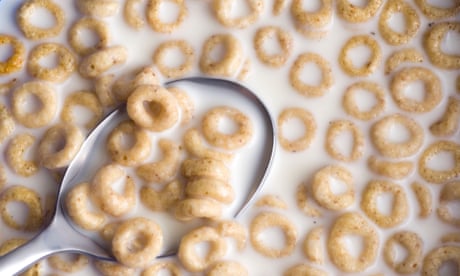
Children consume half of daily sugar quota at breakfast – study
Sadly, as the National Diet and Nutrition Survey found, what you’re really doing is giving your children a huge sugar load while sending them on their way: half of their daily intake on average. There’s a reason that the World Health Organisation and the United States Department of Agriculture have provided upper limits of sugar – because dietary sugar fries your kids’ liver and brain; just like alcohol.
Alcohol provides calories (7kcal/g), but not nutrition. There’s no biochemical reaction that requires it. When consumed chronically and in high dose, alcohol is toxic, unrelated to its calories or effects on weight. Not everyone who is exposed gets addicted, but enough do to warrant taxation and restriction of access, especially to children. Clearly, alcohol is not a food – it’s a dangerous drug, because it’s both toxic and abused.
Dietary sugar is composed of two molecules: glucose and fructose. Fructose, while an energy source (4kcal/g), is otherwise vestigial to humans; again, there is no biochemical reaction that requires it. But fructose is metabolised in the liver in exactly the same way as alcohol. And that’s why, when consumed chronically and at a high dose, fructose is similarly toxic and abused, unrelated to its calories or effects on weight. And that’s why our children now get the diseases of alcohol (type 2 diabetes, fatty liver disease), without alcohol. Because sugar is the “alcohol of the child”. Also similar to alcohol, sugared beverages are linked to behavioural problems in children.
On average, cereal contains a whopping 12g of sugar, all added, in a typical serving. In the US, the Environmental Working Group (EWG) in 2011 identified 17 breakfast cereals marketed to children in which added sugar constituted more than 50% of calories, and 177 with 40% or more. Despite the notoriety of that disclosure, the EWG follow-up study in 2014 noted that not one of these breakfast cereals on the top 10 worst list had reduced its sugar content.
Here are two examples of the corporate ploy to ply our kids with sugar. Consider Raisin Bran. Just raisins and bran, right? There are 19g of sugar in a serving; but the raisins only account for 11g. That’s because the raisins are all dipped in a sugar solution to make them much sweeter. Second, my favourite – Lucky Charms – they’re “magically delicious”. Why are there marshmallows in the box? Because oats cost more than marshmallows. They take up room in the box, yet the company gets to charge more. A great business strategy.
But it doesn’t end there. Consider a pot of pomegranate yoghurt, which has 19g of sugar. A plain yoghurt has 7g of sugar, all lactose (milk sugar), which is not a problem. Thus, each pomegranate yoghurt has 12g of added sugar. Plus, the industry hides the sugar well. There are 56 different names for sugar; by choosing different sugars as the fifth, sixth, seventh and eighth ingredients, sugar can rapidly add up to be the dominant ingredient. The US Food and Drug Administration has promised labelling changes to abolish this practice, but the EU has yet to follow suit.
Perhaps the most pernicious danger is that of infant and toddler food. In 2015 the US Centers for Disease Control examined the nutritional information of 1,074 infant and toddler food products. It found 32% of toddler dinners, the majority of child-orientated snacks, and infant-aimed juices contained at least one source of added sugar, with 35% of their calories coming from sugar.
Don’t let your child be a loser by succumbing to corporate interests. Make sure they eat a real breakfast of champions.
Does a Vegan Diet Affect your Ability to Heal?
Posted: January 4, 2017 Filed under: Food and it's Impact on Our Health Leave a commentThe answer is yes. I have seen this several times with clients. An older vegan friend of mine had a tummy tuck, it wouldn’t heal, it’s been 4 years, 3 more surgeries…and she is near death. Her surgeon and I have begged her for years, even before the surgery, to add high quality protein. She will not do so.
On September 19, 2008, just before midnight, two pilots attempted to abort their takeoff from the Columbia Metropolitan Airport in South Carolina. The pilots, who thought that they had blown a tire, were unable to stop the plane on the remaining runway they had left.
Four people died in the resulting fiery crash, including both pilots. Only two people survived: celebrity disc jockey DJ AM and Blink-182 drummer Travis Barker.
Travis Barker, a vegan at the time, suffered second- and third-degree burns over his torso and lower body. He was taken to the Joseph M. Still Burn Center in Augusta, Georgia, where, he told the Guardian in an interview several weeks after the crash, he had to eat 6,000 calories a day in order to speed his recovery.

Go flexitarian: A three-week plan to eat less meat
“Obviously, they didn’t have a vegan chef for me,” Barker told the paper, “so I had to eat whatever. I ended up eating a lot of beef jerky.” Giving up veganism, in this case, came with an added health benefit: Early in his hospital stay, his doctors reportedly had trouble getting his skin grafts to take, which Barker said in interviews was due to his low levels of protein; after a while on his new high-calorie diet, they had more success.
Are vegan diets healthy for babies and pregnant women?
Was his vegan regimen really to blame, though? Whether or not a plant-based diet hinders the body’s ability to healing is a matter of ongoing debate, but some research seems to suggest that it does. One 2013 review in the Journal of the American College of Nutrition, for example, found milk protein is better able to support muscle-protein synthesis after exercise than soy protein. Researchers speculated that this may be because milk proteins contains more of the 20 amino acids (compounds that help the body create new proteins) that humans need.
But Neal Barnard, an adjunct associate professor of medicine at the George Washington University and the president of the Physicians Committee for Responsible Medicine, calls this argument “really old-fashioned thinking.”
Barnard, who extolled the virtues of a low-fat, plant-based diet, acknowledged the importance of protein to recovery. But “the amount of protein that is in vegetables and beans and grains is much more than enough,” he said, pointing to animals like bulls, stallions, elephants, and giraffes — all of which are vegan, and all of which “build their massive bodies and repair them every day entirely from plant-based foods.”
In fact, Barnard argued, a plant-based diet may actually be optimal during the healing process, helping the body regulate levels of inflammation (characterized by the enlargement of blood vessels, the leaking of blood into tissues, and the release of antibodies that occur after injury). While inflammation may be designed to protect the body, it can easily get out of control, Barnard said, adding that veganism may help to keep it in check:. “The closer you get to no animal products at all, the better off you’ll be.”
Still, not everyone agrees that animal products are the greatest culprit in inflammation. Other studies indicate that foods rich in carbohydrates may contribute more strongly. And as Barker’s case illustrates, the anti-inflammatory benefits of a plant-based diet may be counteracted by the fact that vegans do have to be more vigilant about getting enough protein, which research suggests may play a key role in speeding injury recovery. A 1998 study in the Journal of Burn Care and Research, for instance, found that increased protein intake helped burn patients increase both their body weight and muscle strength. Another study, published in 2006 in the Journal of Bone and Joint Surgery, looked at the recovery of adult male rats with bone fractures; five weeks after injury, the animals with the highest-protein diets had the greatest body mass, muscle mass, and bone mineral density.
So how can we define the optimal diet for recovery in the face of such conflicting advice?
The short answer is: Maybe we can’t, at least not yet. Charles Keith Ozaki, director of vascular surgery research at Brigham and Women’s Hospital and a professor of surgery at Harvard Medical School, noted that more research is needed before we fully understand the long-term relationship between what we eat and how we heal.
“However, as a clinician and an active surgeon,” he said, “I believe there are enormous opportunities for lessening complications in surgery by manipulating diet,” even for short periods of time — temporarily adjusting what a person eats may still affect the body’s response to injury. In fact, many studies support the notion of increasing protein intake after an acute injury, as Barker did. (Barker eventually made a full recovery, and returned to his vegan diet upon leaving the hospital.)
“There’s a fascination in America right now about how what you eat impacts your health,” Ozaki said, and the limited knowledge we do have is better than nothing at all: “Short-term interventions could help, even if we have trouble adhering to long-term dietary guidelines.”
Eggs Don’t Cause Heart Attacks — Sugar Does
Posted: January 3, 2017 Filed under: Food and it's Impact on Our Health, Non-Toxic Choices Leave a comment99.9% of Americans do not meet their caloric or nutrient levels daily. When you do not take in the proper amount of nutritious food, you WILL crave sugar…your poor brain needs energy! Sugar does an amazing amount of damage, helps grow cancers, leads to all sort of health problems. Let thos year be the year you wean off of sugar and get healthy!

Mark Hyman, MD Practicing physician
It’s over. The debate is settled.
It’s sugar, not fat, that causes heart attacks.
Oops. Fifty years of doctors’ advice and government eating guidelines have been wrong. We’ve been told to swap eggs for cereal. But that recommendation is dead wrong. In fact, it’s very likely that this bad advice has killed millions of Americans.
A rigorously done new study shows that those with the highest sugar intake had a four-fold increase in their risk of heart attacks compared to those with the lowest intakes. That’s 400 percent! Just one 20-ounce soda increases your risk of a heart attack by about 30 percent.
This study of more than 40,000 people, published in JAMA Internal Medicine, accounted for all other potential risk factors including total calories, overall diet quality, smoking, cholesterol, high blood pressure, obesity and alcohol.
This follows on the heels of decades of research that has been mostly ignored by the medical establishment and policy makers. In fact, the Institute of Medicine recommends getting no more than 25 percent of your total calories from added sugar. Really? This study showed that your risk of heart attacks doubles if sugar makes up 20 percent of your calories.
Yet more than 70 percent of Americans consume 10 percent of their daily calories from sugar. And about 10 percent of Americans consume one in every four of their calories from sugar.
Failed Dietary Guidelines
U.S. Dietary Guidelines provide no limit for added sugar, and the U.S. Food and Drug Administration (FDA) still lists sugar as a “generally regarded as safe” (GRAS) substance. That classification lets the food industry add unlimited amounts of sugar to our food. At least the American Heart Association recommends that our daily diet contain no more than 5 percent to 7.5 percent added sugar. Yet most of us are eating a lot more. Most of us don’t know that a serving of tomato sauce has more sugar than a serving of Oreo cookies, or that fruit yogurt has more sugar than a Coke, or that most breakfast cereals — even those made with whole grain — are 75 percent sugar. That’s not breakfast, it’s dessert!
This is a major paradigm shift. For years, we’ve been brainwashed into thinking that fat causes heart attacks and raises cholesterol, and that sugar is harmless except as a source of empty calories. They are not empty calories. As it turns out, sugar calories are deadly calories. Sugar causes heart attacks, obesity, Type 2 diabetes, cancer and dementia, and is the leading cause of liver failure in America.
The biggest culprit is sugar-sweetened beverages, including sodas, juices, sports drinks, teas and coffees. They are by far the single biggest source of sugar calories in our diet. In fact, more than 37 percent of our sugar calories come from soda. The average teenage boy consumes 34 teaspoons of sugar a day, or about 544 calories from sugar. Even more troubling, this isn’t just putting kids at risk for heart attacks at some remote later date in their lives. It’s killing them before their 20th birthday.
This new research syncs with decades of data on how sugar causes insulin resistance, high triglycerides, lower HDL (good) cholesterol and dangerous small LDL (bad) cholesterol. It also triggers the inflammation we now know is at the root of heart disease.
And fats, including saturated fats, have been unfairly blamed. With the exception of trans fats, fats are actually protective. This includes omega-3 fats, nuts and olive oil, which was proven to reduce heart attack risk by more than 30 percent in a recent large randomized controlled study.
Here’s the simple fact: Sugar calories are worse than other calories. All calories are not created equal. A recent study of more than 175 countries found that increasing overall calories didn’t increase the risk of Type 2 diabetes, but increasing sugar calories did — dramatically.
How to Cure Our Sugar Addiction
America lags far behind the rest of the world in addressing this problem. Mexico, for example, responded after learning that when soda consumption increased to 20 percent of calories for the average citizen, their rates of obesity and Type 2 diabetes skyrocketed. Public health officials there researched effective solutions to combat obesity and diabetes from around the world.
The key interventions they implemented included taxing soda, banning junk food television advertising, and eliminating processed foods, junk food and sugar-sweetened beverages from schools. More than 15 countries have targeted sugar-sweetened beverages by taxing them — a strategy that’s proven successful.
Another effective strategy is revamping food labeling to make it clear if a food is good, should be consumed with caution, or is bad for you. In the United States, even someone with a Ph.D. in nutrition has trouble deciphering food labels. How can the average person be expected to know?
Recent and mounting scientific evidence clearly proves that sugar — and flour, which raises blood sugar even more than table sugar — is biologically addictive. In fact, it’s as much as eight times more addictive than cocaine.
The average American consumes about 152 pounds of sugar and 146 pounds of flour a year. It’s imperative that we revamp our outdated and dangerous national dietary guidelines. And we need clear strategies and medical programs to help people understand and address the health risks and addictive nature of sugar and refined carbohydrates.
That’s how we can reverse this tsunami of obesity and chronic disease that is robbing us of our health and crippling our economy.
Wishing you health and happiness,
Mark Hyman, MD
In my new book, The Blood Sugar Solution 10-Day Detox Diet, which will be released on February 25, I provide an easy, step-by-step plan to rid yourself of sugar addiction and reverse your risk of heart attacks. To download a sneak preview of this book, go to www.10daydetox.com and pre-order the book on Amazon
Mark Hyman, MD is a practicing physician, founder of The UltraWellness Center, a six-time New York Times bestselling author, and an international leader in the field of Functional Medicine. You can follow him on Twitter, connect with him on LinkedIn, watch his videos on YouTube, become a fan on Facebook, and subscribe to his newsletter.
Follow Mark Hyman, MD on Twitter: www.twitter.com/markhymanmd
High Blood Pressure Diet That Can Save Your Life
Posted: January 2, 2017 Filed under: Food and it's Impact on Our Health 3 Comments
Christopher Jan Benitez
If you or your loved one ever experienced the symptoms of high blood pressure, you know you don’t want to go through it again. High blood pressure can go by unnoticed for many years, but it doesn’t make it any less dangerous. So if you know that you suffer from high blood pressure, you need to try to keep it in check to avoid such dangerous consequences as heart attack, stroke, dementia, kidney failure and disability.
People with high blood pressure need to pay close attention to what they eat since the right high blood pressure diet can save their lives. Some foods can dangerously increase your blood pressure while others can help you maintain it.
Food You Must Avoid
The next time you go over your grocery list, you need to make sure to exclude the following items since they can significantly increase your blood pressure as far as this is concerned for most of the people who like it.
- Lunch meat – processed meats contain large amounts of salt since it’s an essential part of their preparation process. One ounce of deli meat can contain more than 300 mg of sodium which is a blood pressure booster.
- Chinese take-out – The ingredients might sound healthy, but all the salt contained in soy and teriyaki sauces make the Chinese meal include double the allowed daily dose of sodium.
- Frozen Pizza – Large amounts of cheese, cured meats, tomato sauce contain plenty of salt on their own. Meanwhile, the preservatives added to keep the pizza fresh while frozen are very high in sodium.
- Baked Goods and Pastries – Most sweet baked goods contain leavening agents that are high in sodium. At the same time, sweet and baked goods can lead to excess weight which can lead to more blood pressure problems.
- Red Meat – Only a small amount of red meat is allowed as part of high blood pressure diet. It’s a fatty food which is dangerous for the heart and blood vessel health. Steaks cooked at restaurants must be avoided since they contain high amounts of sodium.
- Sauerkraut – While being low in calories, this food is high in sodium and must be prevented.
- Alcohol – Liquor consumption causes blood pressure to rise dramatically. Alcohol also damages the blood vessel walls and increases risks of heart disease.
- Bacon – It’s mostly fat. One slice of bacon contains 1.5 grams of fat and about a 100 mg of sodium.
Foods You Should Eat
While it seems that all the tasty stuff is prohibited, it’s far from being so. There are plenty of delicious foods out there that are not just allowed for people with high blood pressure but are recommended since they can keep it at bay.
- Fruits and vegetables – They are high in magnesium and potassium that help lower blood pressure levels. Pay special attention to apples, bananas, apricots, broccoli, carrots, melons, oranges, peaches, potatoes and tangerines.
- Leafy greens – They are also high in potassium and help your kidneys get rid of extra sodium. Pay attention to arugula, kale, collard greens, and spinach.
- Berries – Most berries but especially blueberries are rich in flavonoids. One study found that this compound leads to decrease in blood pressure.
- Salmon and Tilapia – This white fish contains plenty of magnesium and potassium. It’s tasty too.
Dietary Magnesium Tied to Lower Risk of Heart Disease and Diabetes
Posted: January 2, 2017 Filed under: Food and it's Impact on Our Health Leave a commentEveryone should supplement Magnesium while healing and detoxing. At the same time improve gut health and begin adding magnesium rich foods daily. High magnesium foods include dark leafy greens, nuts, seeds, fish, beans, whole grains, avocados, bananas, dried fruit, dark chocolate.
Some of the major functions that require magnesium are:
- Protein synthesis
- Nerve function
- Blood sugar control
- Neurotransmitter release
- Blood pressure regulation
- Energy metabolism
- Production of the antioxidant glutathione
(Reuters Health) – A diet rich in magnesium – found in foods like leafy greens, fish, nuts and whole grains – may help lower the risk of chronic health problems like heart disease and diabetes, a research review suggests.
Some previous studies linked insufficient magnesium levels to a greater risk of developing a wide range of health problems including chronic obstructive pulmonary disease (COPD), diabetes, Alzheimer’s disease, and cardiovascular disease, said lead study author Dr. Xuexian Fang, a nutrition researcher at Zhengzhou University in China.
For the current study, Fang and colleagues analyzed data on dietary magnesium and chronic disease from 40 studies published from 1999 to 2016 on more than one million people across nine countries.
Compared with people who had the lowest levels of magnesium in their diets, people who got the most magnesium were 10 percent less likely to develop heart disease, 12 percent less likely to have a stroke and 26 percent less likely to develop diabetes.
“Magnesium plays an important role in maintaining human health,” Fang said by email.
Combined, the studies in the analysis included 7,678 cases of cardiovascular disease, 6,845 cases of coronary heart disease, 701 cases of heart failure, 4,755 cases of stroke, 26,299 cases of type 2 diabetes and 10,983 deaths.
When researchers looked at the effect of increasing dietary magnesium by 100 milligrams a day, they didn’t find a statically meaningful impact on the total risk of cardiovascular disease or coronary heart disease.
But they did find that increasing dietary magnesium by this amount was tied to a 22 percent reduction in the risk of heart failure, and a 7 percent decrease in the risk of stroke, researchers report in the journal BMC Medicine.
Increasing magnesium intake was also associated with a 19 percent reduction in the risk of diabetes and a 10 percent drop in the odds of death from all causes during the study period.
The analysis is based on observational studies and can’t prove magnesium directly prevents disease, the authors note.
Studies in the analysis also relied on participants to accurately recall and report what foods they consumed and may not have accurately reflected the true amount of dietary magnesium, the researchers point out.
It’s also impossible to rule out the potential for lifestyle factors that impact people’s eating habits to also influence how much magnesium they get in their diets and how prone they are to develop chronic diseases.
Still, the study findings suggest that increased consumption of magnesium-rich foods may have health benefits, the authors conclude.
While the exact way magnesium improves health isn’t clear, it’s possible it may help curb inflammation, which in turn may lower the odds of developing a variety of chronic diseases, Fang said.
There are many ways people may increase their magnesium intake, noted Dr. Andrea Romani, a researcher at Case Western Reserve University in Cleveland, Ohio, who wasn’t involved in the study.
Magnesium is present in high levels in all green, leafy vegetables, whole grains, nuts, and salt-water fish, Romani said by email. It’s less clear how much magnesium is in meat and poultry because this depends on what the animals eat.
“Magnesium retention in these foods depends on how the food is processed,” Romani said. “The longer it is boiled or cooked, the less magnesium is retained.”
SOURCE: bit.ly/2hfzK2U BMC Medicine, online December 8, 2016.


 Meal Delivery Service by Millie Barnes