Unity Student Trials Family-Size Hoophouse
Posted: March 30, 2009 Filed under: Gardening Leave a comment

This 8’ x 8’ hoophouse was built from scrap materials and $50 worth of new materials at Unity College, to see if that area could supply greens through the winter. The College’sregulation-sized hoophouse, used in an herbaceous gardening class, is in the background. English photo.
Troubleshooting on the Ground
by Holli Cederholm
Situated in the center of the Unity College campus in Unity, Maine, a rainbow-shaped swath of vegetable beds offers more than just produce for the college student center. This potpourri is designed to show students how food grows, from seed to seed. Included in this growing area is a production hoophouse, which teaches students how to get a jump on the spring season or fight back the encroaching fall frost. The arching, 24’ x 26’ metal structure, manufactured by Ed Person of Moultonborough, New Hampshire (www.ledgewoodfarm.com), is covered with greenhouse-grade plastic. It offers an impressive opportunity to extend the growing season in cold northern New England.
But, according to Unity student and garden volunteer Sara Trunzo, its size and seamless structure might be more intimidating than inspiring to a novice grower or home gardener. Trunzo and Doug Fox, Professor of Landscape Horticulture, wanted to see the college install a less ambitious hoophouse – something that anybody could build, inexpensively.


The entrance is simply a piece of plastic that rolls and is held up by twine. English photos.
The back wall.
Rebar bends over the top of the house.
A cross piece lends support.


U-bolts hold rebar in place.
Pieces of plastic milk jugs keep the greenhouse plastic from being torn by staples.
Last year, Trunzo and Fox created a new demonstration garden. Trunzo says she found her inspiration in the food philosophies of Eliot Coleman, commercial market gardener and author of The New Organic Grower. Coleman argues the economics and environmental benefits of extended season gardening, and he claims that one person needs only 8’ by 8’ to grow enough greens to last through the winter.
Trunzo decided to demonstrate how easily Coleman’s theory could become practice. “I wanted to take his idea really literally, and have it be really cheap,” says Trunzo. And, she did.
Unity College administrators offered a budget of $50 and permission to experiment. That, Trunzo says, is all it takes.
With the help of Fox and Jason Reynolds (a Unity student at the time; now a graduate), Trunzo built a hoophouse with an 8’ x 8’ footprint. They started by gathering reusable materials, including scrap cedar from local mills and plastic left over from construction of the first hoophouse. The allotted budget went to purchasing rebar for the frame.
The construction was based more on intuition than engineering. Without even sketching a design, Trunzo, Fox and Reynolds began piecing things together.
“First we bent four lengths of rebar so that each one was house-shaped. Then we dug holes and set posts for the end walls,” says Trunzo.

View from outside, back. English photo.
The four rebar arcs provide most of the structure but are complemented by a ridge-beam, end walls and hip boards of scrap lumber, which provide support for the heavy plastic sheeting. The rebar is secured to the hip boards by U-bolts.
After the frame was up, the plastic was stretched and held in place by staples, with an interface of plastic cut from recycled milk jugs to prevent the staples from tearing the greenhouse plastic.
The trio completed the miniature hoophouse in two afternoons, but Trunzo believes it could be done faster, especially with pre-planning on paper.
A full year after completion, the hoophouse is living up to Trunzo’s ambitions – and then some. It survived a full winter, along with several snowfalls of over 20 inches each. Its plastic is now rust-stained in places and flaps in the breeze, but that’s fine, says Trunzo. The occasional gust of wind exposes a quickly crafted frame of rebar and scrap lumber, along with a love for local food production. Housed beneath this thin sheet of salvaged plastic, spinach broke ground last spring as testimony to an experiment in season extension.
“This hoophouse offers a lot of lessons,” says Trunzo. One concerns fine-tuning Coleman’s theory for a very small structure, which may gain and lose heat faster than a larger hoophouse. Trunzo says that Coleman’s 8’ by 8’ footprint might have been intended as part of a larger hoophouse.

In spring, the tiny hoophouse is bordered by a garden of garlic, asparagus and other vegetables and herbs. English photo.
Still, she has had some success extending the season with this miniature model. “We’ve had the survival of some things, like mustard greens and kale,” Trunzo notes.
This prototype also taught Trunzo about the importance of design details. Having worked with the hoophouse through a full growing season, she says she might make a few changes, such as fashioning roll-up sides. But, overall, she says she’s satisfied in its demonstration of how a little time and a slight investment can help any household garden through the seasons.
“I like that this hoophouse is homemade,” concludes Trunzo. “People can look at it and say, ‘It doesn’t even look like it’s made that well … I can make it better.’ And then they can go do it.”

The proof is in the spinach. English photo.
About the author: Holli Cederholm is a 2007 graduate of the Environmental Writing program at Unity College.
Night Shift Makes Metabolism Go Haywire
Posted: March 6, 2009 Filed under: Food and it's Impact on Our Health 1 CommentBy Brandon Keim

By closely monitoring people with disrupted sleep patterns, researchers have documented the metabolic disarray produced by working at night and sleeping during the day.
As soon as their circadian rhythms became separated from a day-night cycle, test subjects’ levels of key metabolic hormones went haywire — the most compelling evidence yet that shift work isn’t just an inconvenience, but an occupational hazard.
“Normally, the body clock prepares the body for certain activities at a certain time of day,” said study co-author Frank Scheer, a Harvard Medical School neuroscientist. “But when it’s out of synchronization, it doesn’t prepare it properly.”
For years, scientists have known that people who work night shifts — about 15 million people in the United States — are unusually prone to heart disease, bone fractures, cancer, diabetes and obesity.
The patterns were initially explained as a function of poor nutrition and low exercise, but night workers don’t necessarily live less healthy lives than their day shift counterparts. Risks remained high even when lifestyle was removed from the equation.
That left hypotheses about links between biological clocks and metabolic hormone regulation. Studies on animals suggest a connection, but relatively little research has been conducted on people engaged in shift work.
The latest findings, published Monday in the Proceedings of the National Academy of Sciences, chart a clear path from work-sleep cycles to metabolic disregulation to disease.
“It’s an excellent study,” said University of Chicago endocrinologist Eve Van Cauter, who was not involved in the research. “It’s groundbreaking in some ways.”
To create circadian disruption, Scheer’s team put test subjects on a 28-hour cycle for eight days, each day waking them four hours later than on the previous day. The researchers took hourly blood samples when test subjects were awake, and monitored their blood pressure, heart rate, body temperature and oxygen consumption around the clock.
The subjects’ bodies soon produced less leptin, a hormone secreted from fatty tissue that signals a body to stop eating by triggering feelings of satiety. They experienced increases in blood glucose and insulin, which are linked to diabetes. Levels of cortisol, a hormone released during periods of stress and linked to nearly every disorder in which night work has been implicated, shot up. Test subjects’ blood pressure also rose.
“The surprising finding for us is that even so brief a misalignment caused quite impressive changes,” said Scheer.
Night shift workers often attempt to keep semi-normal hours on their off days, said Scheer, preventing their circadian rhythms from ever becoming settled. Van Couter added that even a small exposure to daylight while commuting could continually re-set their biological clocks.
Scientists are not yet certain how circadian rhythms regulate metabolism, said Van Cauter, but animal studies have found circadian machinery in the hypothalamus — a brain structure linking the nervous and endocrine systems — and other parts of the body, including the glucose-regulating pancreas and leptin-releasing fatty tissue.
But Scheer cautioned that the experiment only approximated shift work.
“The future question is whether changes in these mechanisms would be maintained after chronic exposure and observed in a more lifelike situation,” he said. “Our study was highly controlled and mechanistic. Now it’s time to do something less controlled and more realistic.”
If the findings are replicated, researchers will try to find therapies capable of restoring metabolic order. The best therapy of all, said Van Cauter, would be a permanent move to night work.
“That’s better than shifting between day and night work constantly,” she said, “but very few people want to always be a night worker.”
My Square Foot Garden
Posted: February 14, 2009 Filed under: Gardening 1 CommentIt has been a week or so since I posted…so sorry! Life has been a bit hectic, a week of a hard freeze every night…and this in Florida!! My new job started and in the middle of it all I had to get row covers and blankets for the garden. Here is what my garden looked like for a week.
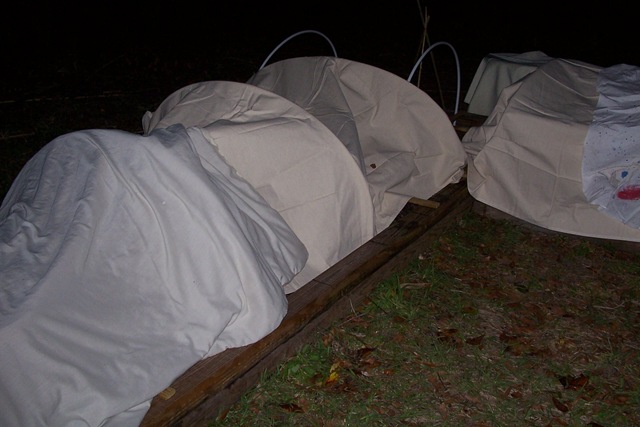
I made it through, only lost one sweet potato plant. Here is a pic of my row covers;
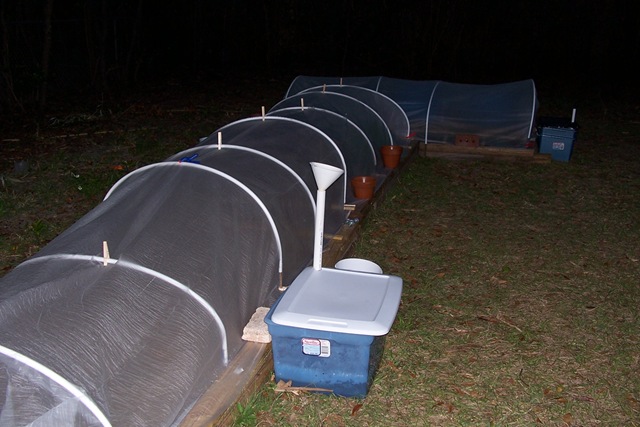 Last July I went to work at a health food store here in Jacksonville. Everything served in the deli there is organic, so I began bringing home some seeds and scraps home. I sprouted peppers, then an onion. Then I started bringing home huge bags of veggie and fruit scraps and put them in my compost. It was about this time that I discovered Bokashi composting. It is a way to take kitchen scraps and get compost from them in 4 weeks! You may not know that normal outdoor composting can take up to a year to get ready to be put into the soil. This method is odor free and can be done indoors.
In August I laid out my garden, in an L-shape. I got garden timbers and put them in place, covered the soil and weeds with unwaxed cardboard. I got potting soil, put it about 4 inches deep and started adding ground egg shells,coffee grounds, compost, manure and vermiculite.
In August I planted sweet potatoes, onions, and bell peppers in one end of the garden and started building up the soil in the longer section. In September I planted flowering kale, Swiss chard, basil and red potatoes. This week I planted tomato seedlings, nasturtiums, lavender. I have been going to a produce market near my house few times a week and getting veggie scraps for compost. I am getting coffee grounds from Starbucks each day. My soil is looking great!
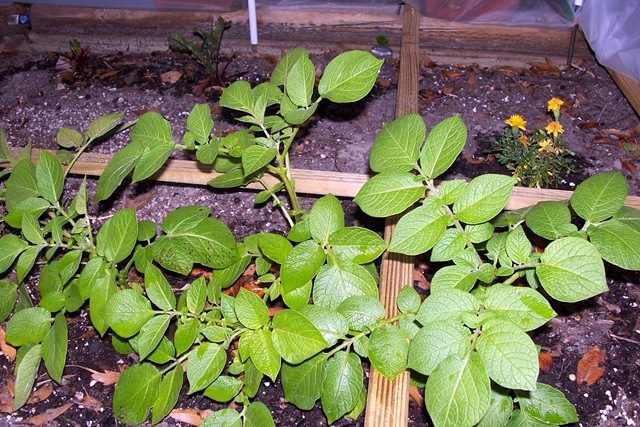
Peppers, Marigolds and beets I have been eating greens from since September!

Lettuce in homemade grow box
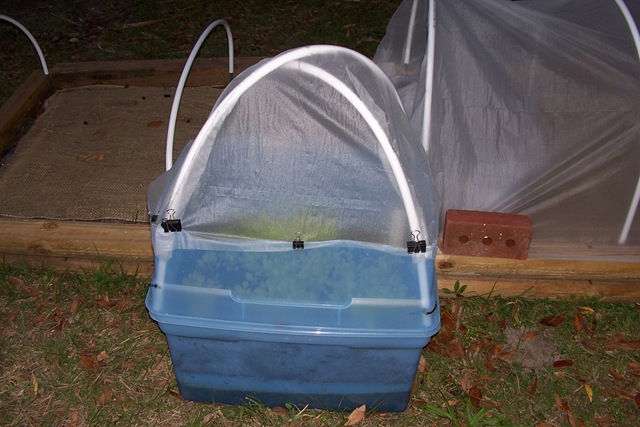
Lettuce with cover

Compost Bin is mostly for grass and yard stuff as I compost all kitchen scraps by the Bokashi method of composting. For the outdoor bin I add coffee grounds and boxes of veggie scraps from a local produce store.
Victory Gardens: War on Waste
Posted: February 9, 2009 Filed under: Gardening, Going Green; How and Why... 1 CommentFrom Treehugger;
by Bonnie Alter, London on 05.30.08
 I
I
It’s not quite war time, although sometimes it feels like it… Endless articles on the “credit crunch”, cutbacks and soaring food prices are putting a chill in the air. During WW2 the British were digging Victory gardens in squares and public parks across the country. They were growing their own food in very tight compact spaces as a response to food shortages due to the wartime restrictions on food imports. Wartime principles of eating seasonal food grown locally and organically have a message for us now.
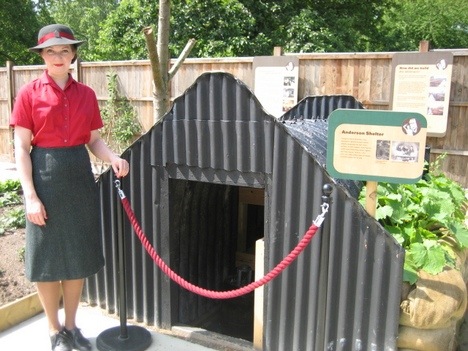
In the heart of historic St. James’s Park, the Dig for Victory allotment garden has been created to bring back the flavour of those times and encourage people to embrace the idea of growing your own. For the second year running, a small allotment garden has been created in the spirit of those from the war. Included is an Anderson Shelter (pictured), a bomb shelter made of prefab. metal sheets and secured with bags of sand. Zucchinis are growing around and over it as camouflage. The beds are raised to allow for deep rooting. Companion planting was encouraged–different plants side by side can repel insects or attract them. The approach was quite organic, although the intent was to produce crops with the highest nutritional value.

The plots made use of discarded household items. Egg cartons and toilet paper rolls could be used as planters and old window frames made good cold frames. Net curtains provide protection from birds and hot sun by deflecting rays away from the plants.
By 1945, 1.5 million allotments were being cultivated in the UK, supplying 10 per cent of food needs. To supply meat, communities were encouraged to rear their own livestock with the opportunity to join a pig or rabbit club. Rationing forced people to cook with leftovers.
There were recycling campaigns to encourage people to collect paper to be recycled into containers for shells, cartridge packs, log books and military maps. Garbage cans were placed at the ends of streets for householders to deposit unwanted food to be used to feed pigs. Rags, bottles and bones were collected, too – meat bones were used for making explosives. Metal was recycled to build tanks and planes and for munitions.
According to historians from the Churchill Museum: “Clothes rationing was introduced in June 1941 due to a shortage of imported fabric and the need for cloth for uniforms, parachutes and hospital bedding. Reuse and recycling tips included reproofing raincoats by rubbing beeswax over the inside, then ironing.
Leather looks as good as new when treated with sour milk rubbed in with cloth. Old shoes could be revived by rubbing them with banana skin – the perfect accessory for a “new” skirt made out of men’s old trousers.”
Recycling was born of necessity. With the changing world that we live in, it looks like it is going to become a necessity again. :: The Independent Via :: Churchill Museum and Cabinet War Rooms
Caffeine And Exercise Can Team Up To Prevent Skin Cancer
Posted: January 24, 2009 Filed under: Food and it's Impact on Our Health, Skin Care 1 Comment Regular exercise and little or no caffeine has become a popular lifestyle choice for many Americans. But a new Rutgers study has found that it may not be the best formula for preventing sun-induced skin damage that could lead to cancer. Low to moderate amounts of caffeine, in fact, along with exercise can be good for your health.
According to the National Cancer Institute, sunlight-induced skin cancer is the most prevalent cancer in the United States with more than 1 million new cases each year. A research team at Rutgers, The State University of New Jersey, showed that a combination of exercise and some caffeine protected against the destructive effects of the sun’s ultraviolet-B (UVB) radiation, known to induce skin cancer. The caffeine and exercise seemingly conspire in killing off precancerous cells whose DNA has been damaged by UVB-rays.
The studies, conducted in the Susan Lehman Cullman Laboratory for Cancer Research at Rutgers’ Ernest Mario School of Pharmacy, appear in the July 31 Proceedings of the National Academy of Sciences (PNAS).
Groups of hairless mice, whose exposed skin is vulnerable to the sun, were the test subjects in experiments in which one set drank caffeinated water (the human equivalent of one or two cups of coffee a day); another voluntarily exercised on a running wheel; while a third group both drank and ran. A fourth group, which served as a control, didn’t run and didn’t caffeinate. All of the mice were exposed to lamps that generated UVB radiation that damaged the DNA in their skin cells.
Some degree of programmed cell death, also known as apoptosis, was observed in the DNA-damaged cells of all four groups, but the caffeine drinkers and exercisers showed an increase over the UVB-treated control group. Apoptosis is a way in which cells with badly damaged DNA commit suicide – UVB-damaged cells in this case. “If apoptosis takes place in a sun-damaged cell, its progress toward cancer will be aborted,” said Allan Conney, director of Rutgers’ Cullman Laboratory and one of the paper’s authors.
To determine the extent of programmed cell death among the four groups of UVB-treated mice, the Rutgers team looked at physical changes in the cells. The scientists also relied on chemical markers, such as caspase-3 – an enzyme that is involved in killing DNA-damaged cells – and p53, a tumor suppressor.
“The differences between the groups in the formation of UVB-induced apoptotic cells – those cells derailed from the track leading to skin cancer – were quite dramatic,” Conney said.
Compared to the UVB-exposed control animals, the caffeine drinkers showed an approximately 95 percent increase in UVB-induced apoptosis, the exercisers showed a 120 percent increase, while the mice that were both drinking and exercising showed a nearly 400 percent increase.
“The most dramatic and obvious difference between the groups came from the caffeine-drinking runners, a difference that can likely be attributed to some kind of synergy,” Conney said. The authors suggested several mechanisms at the biochemical level that might be responsible for the protective effects of caffeine and exercise, but acknowledged that what is happening synergistically is still somewhat of a mystery.
“We need to dig deeper into how the combination of caffeine and exercise is exerting its influence at the cellular and molecular levels, identifying the underlying mechanisms,” Conney said. “With an understanding of these mechanisms we can then take this to the next level, going beyond mice in the lab to human trials. With the stronger levels of UVB radiation evident today and an upward trend in the incidence of skin cancer among Americans, there is a premium on finding novel ways to protect our bodies from sun damage.”
Organically Grown Foods Higher In Cancer-fighting Chemicals Than Conventionally Grown Foods
Posted: January 24, 2009 Filed under: Food and it's Impact on Our Health 2 Comments

Fruits and veggies grown organically show significantly higher levels of cancer-fighting antioxidants than conventionally grown foods, according to a new study of corn, strawberries and marionberries. The research suggests that pesticides and herbicides actually thwart the production of phenolics — chemicals that act as a plant’s natural defense and also happen to be good for our health. Fertilizers, however, seem to boost the levels of anti-cancer compounds.
The findings appear in the Feb. 26 print edition of the Journal of Agricultural and Food Chemistry, a peer-reviewed journal of the American Chemical Society, the world’s largest scientific society. The article was initially published Jan. 25 on the journal’s Web site.
Flavonoids are phenolic compounds that have potent antioxidant activity. Many are produced in plants in response to environmental stressors, such as insects or competing plants.
“If an aphid is nibbling on a leaf, the plant produces phenolics to defend itself,” says Alyson Mitchell, Ph.D., a food scientist at the University of California, Davis, and lead author of the paper. “Bitter or harsh phenolics guard the plant against these pests.”
The need for these natural safeguards decreases with the use of herbicides and pesticides in conventional agriculture. This decrease is reflected in the total amount of antioxidants the plants produce. “This helps explain why the level of antioxidants is so much higher in organically grown food,” Mitchell says. “By synthetically protecting the produce from these pests, we decrease their need to produce antioxidants. It suggests that maybe we are doing something to our food inadvertently.”
Mitchell measured antioxidants found in corn, strawberries and a type of blackberry called a marionberry. “We started with these three due to plant availability,” Mitchell explains, “but we intend to widen our search to include tomatoes, peppers, broccoli and a variety of other vegetables. We expect these results to be transferable to most produce.”
The investigation compared the total antioxidants found in foods grown organically (using no herbicides, pesticides or fertilizers) to foods grown sustainably (in this study fertilizers but no herbicides or pesticides were used) and conventionally (using synthetic chemicals to protect the plants and increase yield).
The results showed a significant increase in antioxidants in organic and sustainably grown foods versus conventionally grown foods. The levels of antioxidants in sustainably grown corn were 58.5 percent higher than conventionally grown corn. Organically and sustainably grown marionberries had approximately 50 percent more antioxidants than conventionally grown berries. Sustainably and organically grown strawberries showed about 19 percent more antioxidants than conventionally grown strawberries.
Antioxidant levels were highest overall in sustainably grown produce, which indicates that a combination of organic and conventional practices yields the highest levels of antioxidants. “This may reflect the balance between adequate nutrition in the form of fertilizers and external pest pressures because of the lack of pesticides and herbicides,” Mitchell explains.
“Originally, the question was just really intriguing to me,” says Mitchell, whose research grew naturally from a personal interest in organic foods. “I found that the higher level of antioxidants is enough to have a significant impact on health and nutrition, and it’s definitely changed the way I think about my food.”
Antioxidants: Preventing Diseases, Naturally
Posted: January 24, 2009 Filed under: Food and it's Impact on Our Health Leave a comment


When it comes to boosting antioxidant intake, recent research indicates there’s little benefit from taking diet supplements. A better way, according to a report in the September issue of Mayo Clinic Health Letter, is eating a diet rich in antioxidant-containing foods.
Antioxidants such as vitamins C and E, carotene, lycopene, lutein and many other substances may play a role in helping to prevent diseases such as cancer, cardiovascular disease, Alzheimer’s disease and macular degeneration. Antioxidants are thought to help because they can neutralize free radicals, which are toxic byproducts of natural cell metabolism. The human body naturally produces antioxidants but the process isn’t 100 percent effective and that effectiveness declines with age.
Research is increasingly showing that those who eat antioxidant-rich foods reap health benefits. Foods, rather than supplements, may boost antioxidant levels because foods contain an unmatchable array of antioxidant substances. A supplement may contain a single type of antioxidant or even several. However, foods contain thousands of types of antioxidants, and it’s not known which of these substances confer the benefits.
Some of the better food sources of antioxidants are:
- Berries: Blueberries, blackberries, raspberries, strawberries and cranberries
- Beans: Small red beans and kidney, pinto and black beans
- Fruits: Many apple varieties (with peels), avocados, cherries, green and red pears, fresh or dried plums, pineapple, oranges, and kiwi
- Vegetables: Artichokes, spinach, red cabbage, red and white potatoes (with peels), sweet potatoes and broccoli
- Beverages: Green tea, coffee, red wine and many fruit juices
- Nuts: Walnuts, pistachios, pecans, hazelnuts and almonds
- Herbs: Ground cloves, cinnamon or ginger, dried oregano leaf and turmeric powder
- Dessert: Dark chocolate
Though supplements containing antioxidants are generally considered safe, two recent studies have suggested that taking higher than recommended doses of supplements such as vitamin E over time may actually be harmful and possibly toxic.
In contrast, many foods higher in antioxidants offer an array of health benefits, such as being high in fiber, protein and other vitamins and minerals and low in saturated fat and cholesterol.
Largest USDA Study Of Food Antioxidants Reveals Best Sources
Posted: January 24, 2009 Filed under: Food and it's Impact on Our Health Leave a comment
 ScienceDaily (June 17, 2004) — Artichokes and beans may not be at the top of your list of favorite foods, but when it comes to antioxidants, these veggies earn a coveted place. They are among a growing variety of foods found to contain surprisingly high levels of these disease-fighting compounds, according to a new USDA study, which researchers say is the largest, most comprehensive analysis to date of the antioxidant content of commonly consumed foods.
In addition to confirming the well-publicized high antioxidant ranking of such foods as cranberries and blueberries, the researchers found that Russet potatoes, pecans and even cinnamon are all excellent, although lesser-known, sources of antioxidants, which are thought to fight cancer, heart disease and Alzheimer’s. The study appears in the June 9 print edition of the Journal of Agricultural and Food Chemistry, a peer-reviewed publication of the American Chemical Society, the world’s largest scientific society.
“The bottom line is the same: eat more fruits and veggies,” says Ronald L. Prior, Ph.D., a chemist and nutritionist with the USDA’s Arkansas Children’s Nutrition Center in Little Rock, Ark., and lead author of the study. “This study confirms that those foods are full of benefits, particularly those with higher levels of antioxidants. Nuts and spices are also good sources.”
The new study is more complete and accurate (thanks to updated technology) than previous USDA antioxidant data and includes more foods than the previous study, the researchers say. They analyzed antioxidant levels in over 100 different foods, including fruits and vegetables. In addition, the new study includes data on spices and nuts for the first time.
Among the fruits, vegetables and nuts analyzed, each food was measured for antioxidant concentration as well as antioxidant capacity per serving size. Cranberries, blueberries, and blackberries ranked highest among the fruits studied. Beans, artichokes and Russet potatoes were tops among the vegetables. Pecans, walnuts and hazelnuts ranked highest in the nut category.
Although spices are generally consumed in small amounts, many are high in antioxidants. On the basis of antioxidant concentration, ground cloves, ground cinnamon and oregano were the highest among the spices studied.
Prior says that the data should prove useful for consumers seeking to include more antioxidants in their diet. But he cautions that total antioxidant capacity of the foods does not necessarily reflect their potential health benefit, which depends on how they are absorbed and utilized in the body. Researchers are still trying to better understand this process, he adds.
Currently, there are no government guidelines for consumers on how many antioxidants to consume and what kind of antioxidants to consume in their daily diet, as is the case with vitamins and minerals. A major barrier to such guidelines is a lack of consensus among nutrition researchers on uniform antioxidant measurements. Scientists will soon attempt to develop such a consensus at the First International Congress on Antioxidant Methods, held June 16-18 at the Caribe Royale Hotel and Conference Center in Orlando, Fla., with the ultimate goal of developing better nutritional data for consumers. ACS is the principal sponsor of the meeting.
For now, USDA officials continue to encourage consumers to eat a variety of fruits and vegetables for better health.
The 16 Healthiest Foods for Under $1
Posted: January 22, 2009 Filed under: Food and it's Impact on Our Health Leave a commentFood prices are climbing, and some might be looking to fast foods and packaged foods for their cheap bites. But low cost doesn’t have to mean low quality. In fact, some of the most inexpensive things you can buy are the best things for you. At the grocery store, getting the most nutrition for the least amount of money means hanging out on the peripheries—near the fruits and veggies, the meat and dairy, and the bulk grains—while avoiding the expensive packaged interior. By doing so, not only will your kitchen be stocked with excellent foods, your wallet won’t be empty.
1. Eggs- You can get about a half dozen of eggs for a dollar, making them one of the cheapest and most versatile sources of protein. They are also a good source of the antioxidants lutein and zeaxanthin, which may ward off age-related eye problems.
Serving suggestions: Huevos rancheros for breakfast, egg salad sandwiches for lunch, and frittata’s for dinner.
2. Kale- This dark, leafy green is loaded with vitamin C, carotenoids, and calcium. Like most greens, it is usually a dollar a bunch.
Serving suggestions: Chop up some kale and add to your favorite stir-fry; try German-Style Kale or traditional Irish Colcannon.
3. Potatoes – Because we often see potatoes at their unhealthiest—as fries or chips—we don’t think of them as nutritious, but they definitely are. Eaten with the skin on, potatoes contain almost half a day’s worth of Vitamin C, and are a good source of potassium. If you opt for sweet potatoes or yams, you’ll also get a good wallop of beta carotene. Plus, they’re dirt cheap and have almost endless culinary possibilities.
Serving suggestions: In the a.m., try Easy Breakfast Potatoes; for lunch, make potato salad; for dinner, have them with sour cream and chives.
4. Apples- I’m fond of apples because they’re inexpensive, easy to find, come in portion-controlled packaging, and taste good. They are a good source of pectin—a fiber that may help reduce cholesterol—and they have the antioxidant Vitamin C, which keeps your blood vessels healthy.
Serving suggestions: Plain; as applesauce; or in baked goods like Pumpkin-Apple Breakfast Bread.
5. Nuts –Though nuts have a high fat content, they’re packed with the good-for-you fats—unsaturated and monounsaturated. They’re also good sources of essential fatty acids, Vitamin E, and protein. And because they’re so nutrient-dense, you only need to eat a little to get the nutritional benefits. Remember that a mere teaspoon is a serving! Although some nuts, like pecans and macadamias, can be costly, walnuts, and almonds, especially when bought in the shell, are low in cost.
Serving suggestions: Raw; roasted and salted; sprinkled in salads.
6. Bananas- At a local Trader Joe’s, I found bananas for about 19¢ apiece; a dollar gets you a banana a day for the workweek. High in potassium and fiber (9 grams for one), bananas are a no-brainer when it comes to eating your five a day quotient of fruits and veggies.
Serving suggestions: In smoothies, by themselves, in cereal and yogurt.
7. Lentils – With lentils, you’re getting your money’s worth and then some. Not only are they a great source of protein and fiber, but ’bonzos are also high in fiber, iron, folate, and manganese, and may help reduce cholesterol levels.
Serving suggestions: In salads, curries, and Orange Hummus.
8. Broccoli- Broccoli contains tons of nice nutrients—calcium, vitamins A and C, potassium, folate, and fiber. As if that isn’t enough, broccoli is also packed with phytonutrients, compounds that may help prevent heart disease, diabetes, and certain cancers. Plus, it’s low in calories and cost.
Serving suggestions: Throw it in salads, stir fries, or served as an accompaniment to meat in this Steamed Ginger Chicken with Asian Greens recipe.
9. Watermelon- Though you may not be able to buy an entire watermelon for a dollar, your per serving cost isn’t more than a few dimes. This summertime fruit is over 90 percent water, making it an easy way to hydrate, and gives a healthy does of Vitamin C, potassium, and lycopene, an antioxidant that may ward off cancer.
Serving suggestions: Freeze chunks for popsicles; eat straight from the rind; squeeze to make watermelon margaritas (may negate the hydrating effect!).
10. Wild Rice– It won’t cost you much more than white rice, but wild rice is much better for you. Low in fat and high in protein and fiber, this gluten-free rice is a great source of complex carbohydrates. It packs a powerful potassium punch and is loaded with B vitamins. Plus, it has a nutty, robust flavor.
Serving suggestions: Mix with nuts and veggies for a cold rice salad; blend with brown rice for a side dish.
11. Beets- Beets are my kind of vegetable—their natural sugars make them sweet to the palate while their rich flavor and color make them nutritious for the body. They’re powerhouses of folate, iron, and antioxidants.
Serving suggestions: Shred into salads, roast in the oven with orange juice, . If you buy your beets with the greens on, you can braise them in coconut oil like you would other greens.
12. Butternut Squash- This beautiful gourd swings both ways: sometimes savory, sometimes sweet. However you prepare the butternut, it will not only add color and texture, but also five grams of fiber per half cup and chunks and chunks of Vitamin A and C. When in season, butternut squash and related gourds are usually less than a dollar a pound.
Serving suggestions: Try Pear and Squash Bruschetta; cook and dot with butter and salt.
13. Sardines
As a kid, I used to hate it when my dad would order sardines on our communal pizzas, but since then I’ve acquired a taste for them. Because not everyone has, you can still get a can of sardines for relatively cheap. And the little fish come with big benefits: calcium, iron, magnesium, zinc, and B vitamins. And, because they’re low on the food chain, they don’t accumulate mercury.
Serving suggestions: Mash them with parsley, lemon juice, and olive oil for a spread; eat them plain on crackers; enjoy as a pizza topping.
14. Spinach- Spinach is perhaps one of the best green leafiest out there—it has lots of Vitamin C, iron, and trace minerals. Plus, you can usually find it year round for less than a dollar.
Serving suggestions: Sautéed with eggs, as a salad, or a Spinach Frittata.
15. Pumpkin Seeds- When it’s time to carve your pumpkin this October, don’t shovel those seeds into the trash—they’re a goldmine of magnesium, protein, and trace minerals. Plus, they come free with the purchase of a pumpkin.
Serving suggestions: Salt, roast, and eat plain; toss in salads.
16. Coffee- The old cup-o-joe has been thrown on the stands for many a corporeal crime—heart disease, cancer, osteoporosis—but exonerated on all counts. In fact, coffee, which is derived from a bean, contains beneficial antioxidants that protect against free radicals and may actually help thwart heart disease and cancer. While it’s not going to fill you up like the other items on this list, it might make you a lot perkier. When made at home, coffee runs less than 50¢ cents a cup.
Serving suggestions: Just drink it. But make it organic!
Although that bag of 99¢ Cheetos may look like a bargain, knowing that you’re not getting much in the way of nutrition or sustenance makes it seem less like a deal and more like a dupe. Choosing one of these sixteen items, or the countless number of similarly nutritious ones, might just stretch that dollar from a snack into a meal.
Five ‘Healthy’ Snacks That Aren’t So Healthy
Posted: January 22, 2009 Filed under: Food and it's Impact on Our Health Leave a comment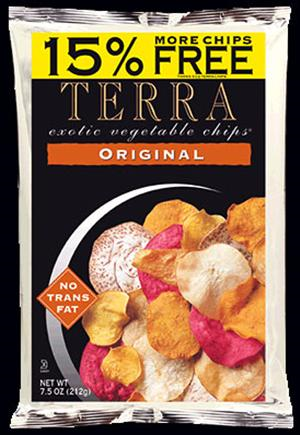
In some cases, it might be better for your health to reach for the Doritos.
By Tina Peng | Newsweek Web Exclusive
Dec 29, 2008 | Updated: 3:12 p.m. ET Dec 29, 2008
Don’t be so quick to feel virtuous when you reach for dried fruit instead of chocolate, or veggie chips instead of Pringles. Many snacks that are marketed as being great for your waistline actually aren’t that much better—and, in some cases, are worse—than some popular notoriously indulgent treats. A few offenders:
1. Dried Veggies: Snapea Crisps are made from sun-dried peas and contain all of the peas’ natural nutrients, according to manufacturer Snack Salad. But don’t think that means they’re light on the calories: a one-ounce serving, or about 22 crisps, has 150 calories and 8 grams of fat, according to snacksalad.com. Calorie- and fatwise, that’s just as bad as the unhealthiest bags of Doritos on the market (that spread includes the Hot Wings and Blue Cheese flavor). So think twice before dipping them in your favorite ranch dressing.
2. Veggie Chips: Terra Chips, those colorful, gourmet slices of sweet potato, parsnip and yucca, contain 150 calories and 9 grams of fat in each one-ounce, 14-chip serving, according to Terrachips.com. And Utz’s Natural Exotic Medley Vegetable Chips have 160 calories and 10 ounces of fat per ounce, according to the company’s Web site.
3. Granola Bars: Though granola bars do contain healthy grains, they’re often doused in enough sugar and syrup to obviate at least some of the health value. Nature Valley’s vanilla nut granola bars, for example, contain 190 calories and 7 grams of fat in each two-bar serving. Each serving also contains 11 grams of sugar, or as much as a 3/4-cup bowl of Lucky Charms, according to General Mills.
4. Dried Fruit: That dried apricot may taste as healthy as a fresh one, but it pales in comparison to the real thing. It takes more dried fruit to feel full (the natural water in fruit is filling) and that means more calories. On top of that, many dried fruits are covered in added sugar. One fistful of raisins contains as many calories as a whole pound of fresh grapes, according to the Web site of nutritionist and diet consultant Anne Collins, annecollins.com; five dried pear halves hold 229 calories, according to dietbites.com.
5. Bran Muffins: They might beat out chocolate chip muffins in the health race, but bran muffins are full of refined flour and sugar. One medium muffin contains 305 calories, 8.4 grams of fat and 9.3 grams of sugar, according to caloriecount.about.com. An old-fashioned cake doughnut from Dunkin’ Donuts has 280 calories, 18 grams of fat and 6 grams of sugar, according to dunkindonuts.com.


 Meal Delivery Service by Millie Barnes