What Effect Does Exercise have on Obesity and Weight Loss?
Posted: April 29, 2009 Filed under: Food and it's Impact on Our Health Leave a comment Exercise hardly helps you lose any weight. You can lose the weight that you want and get fairly healthy through diet alone. But you will never have the level of health and energy that you want unless you are willing to exercise on a daily basis.
I had someone tell me today that he works out two hours a day, is incredibly strong (I guess so!) and cannot lose weight. He showed me the “healthy” snack he had with him; a granola crunch type thing. I read the ingredients. Rice flour, out flour, fructose. So far we are at all carbs. Next comes soy oil. Yuck. And about 20 more ingredients from there…So we talk, really talk. I explain to him what a great breakfast, nutritionally speaking, looks like; organic eggs for breakfast, cooked in coconut oil or butter. Three strips of turkey bacon, crispy. Two cups of pineapple, a handful of blueberries, some organic coffee and I am out the door. With a third of my calories for the day, RARING to go for 5-6 hours without even thinking about food. Enough fat, protein and nutrient packed carbs (fruits and veggies!) at every meal, 3 times a day. 2000 calories a day, every day. Healthy rapid weight loss occurs, energy quickly returns, you sleep better, feel wonderful upon awakening…and get in some play time each day. THAT is the way too lose weight. The ONLY healthy way there is. Period.
Let’s look at trying to exercise enough to lose weight;
Be forewarned, however, that the pounds won’t melt off magically. It takes 35 miles of walking or jogging to burn the calories in one pound of fat. Losing weight requires both exercise and optimum nutrition; a balance of healthy fats, protein, fruits, and vegetables. In addition, if a person exercises but doesn’t diet any actual pounds lost may be minimal because dense and heavier muscle mass replaces fat. Also bear in mind that vigorous exercise such as jogging or running on hard surfaces is essentially unnatural to the body and can lower the immune response. Human beings in virtually every culture have typically, throughout time, engaged in anaerobic functional exercise common to regular labor or work functions on the farm, at sea or while hunting wild game, punctuated by occasional bursts of intense activity. Getting on the treadmill, running, or jogging is not that affective for weight loss, is hard on the joints, and wears you out. Use that same energy for weight training, bursts of hard work such as gardening, surfing, dancing, yoga or sex! You will be in better shape, get toned faster…and save a lot of time that is wasted on the treadmill!
That young man bounced out my door, excited, saying he could not wait to get started on eating right. Knowing he isn’t going to have to be hungry to be healthy.
What a silly notion, we are afraid to eat anymore.
How safe are your skin care products.
Posted: April 25, 2009 Filed under: Skin Care 1 Comment
Reduce your cancer risk by cutting toxin exposure in your home and on your body.
Remember- what you put on your skin is the same as eating it! Our bodies absorb very effectively through our skin!
It might make you mad to know that you are a guinea pig for the effects of carcinogen exposure and its effects on the human body. You would be shocked to learn how many known – and suspected – carcinogens are you are using in your home and on your body!
A five-year EPA study of over 600 households revealed that contaminant levels in the average home are up to 70 times higher than those found outdoors!
The Environmental Working Group, a public interest research and advocacy organization, has revealed that more than one third of all personal care products contain at least one known carcinogen. The average woman is exposed to approximately 126 such chemicals on a daily basis. In combination, these products are even worse; some “penetration enhancing” skin care products, for example, allow harmful ingredients to be drawn further into the body.
Penetration enhancers have been used to effectively deliver patch drugs deeper and faster through the skin and into the blood vessels. Although rarely added to cosmetics for the purpose of enhancing penetration, many ingredients used in cosmetics are found to have penetration-enhancing properties. The concern with penetration enhancers in cosmetics lies not in the toxicity of the enhancer itself but in the fact that the enhancers open the skin to greater absorption of carcinogens, toxins, and other harmful chemicals that the product may contain.
.EveryDay Minerals – Great powders, average packaging. GREAT prices!! And free samples, so you can try them. They let you order FIVE generous samples in different colors so you can find a match. I loved the three colors of powders and the two blushes I tried.
Evans Garden– ineffective cleansers and chalky powders, but GREAT moisturizers.
Burt’s Bees has the best lip gloss with color and Lip Balm I’ve ever found.
Aubrey Organics has wonderful Rosa Mosqueta Nourishing Shampoo and Conditioner. They are awesome for permed or colored hair. Their Rosa Mosqueta body lotion is the most luxurious and wonderful body lotion I have ever used! However a VERY close second is Burt’s Bees Carrot Moisturizer Lotion (the smell is a heavenly vanilla scent!)
Toms of Maine are wonderful non-toxic toothpastes. But then so is baking soda!
UVNaturals is the only sunscreen I have found that I am willing to put on my skin! I can even wear it under makeup. recent medical research is indicating that certain sunscreen ingredients are in fact having a detrimental effect through cumulative use.
These ingredients can mimic oestrogen, create free radicals, or accelerate the production of free radicals in the body. The can also damage DNA within the cells.
Sunscreens are divided up into two groups: Chemical (toxic) and Physical (safe).
The Chemical sunscreens work by absorbing the UV radiation – this process creates extremely dangerous and active free radicals. The Physical sunscreen work by reflecting the UV light.
Zinc and Titanium are classed as the only Physical sunscreens, in fact, Titanium only reflects 30% of UV light and ABSORBS 70%. It functions more as a Chemical sunscreen rather than a Physical one. So it should not be grouped with Zinc at all. Titanium also acts as a “photoactivator” meaning, that in the presence of light, it will activate (catalyse) free radical activity and production, including cancerous and precancerous activity.
So next time you see a natural sunscreen labeled “safe and natural for your Baby” have a close look at the ingredients.
When you go read the label on most of the personal care products that you are probably using, you will find parabens and phthalates. These chemicals have been definitively linked to breast cancer. Here are two excellent articles on the subject.
Cosmetics, Parabens, and Breast Cancer
Here is a direct link to EWG’s page that will let you see what products are highest in toxic chemicals.
Can we get the nutrients we need through supplements?
Posted: April 25, 2009 Filed under: Food and it's Impact on Our Health Leave a commentBy Millie Barnes
 You rush out the door in the morning after grabbing orange juice, two pieces of toast with margarine, and a handful of vitamins. Have you had a healthy breakfast? Gotten the vitamins you needed for the day? Lets take a look….
You consumed 303 calories, 9.5 grams of fat (one of them saturated). Unfortunately, no vitamin C, because your source of C was from concentrate. Vitamin C, being one of the water-soluble vitamins is extremely light and heat sensitive. Twenty minutes after you have squeezed fresh orange juice, half the vitamin C is gone. So how much is left in the concentrate? None. Plus there was very little nutrients in the toast, a highly refined food. Also the margarine contains hydrogenated fats, chemicals and additives. Hydrogenation is a process that chemically treats fats or oils to make them stay hard at room temperature. You took in 10% of the Vitamin A you needed, 8% of the calcium, 10% of the iron. 58% of what you took in were carbohydrates.
You should have taken in about 1/3 of the calories and nutrients you need for the day. Your breakfast is going to leave you very hungry. In a short time, you will probably crave something sweet to get your blood sugar back up and by lunch time you will be very hungry.
Breakfast could have been eggs cooked with coconut oil or organic butter, bacon, fresh fruit.
“But I took my vitamins!”, you say. Yes, that is true, but our absorption of vitamins and minerals when they are from chemical sources is very low. We need to get these precious nutrients in the food they occurred in to begin with. Let’s look at why. Fruits and vegetables are rich in vitamins and minerals, but they are also rich in enzymes. On a molecular level, you cannot absorb a vitamin or mineral molecule without a live enzyme attached to it! Enzymes are the catalyst that allow our body to assimilate the nutrients we need. Notice that I said a live enzyme. Live enzymes occur in foods that are ALIVE! Not processed or cooked. Because these processes kill the enzymes. Notice that every culture in the world begins or ends meals with a salad or some fruit. It was observed over time that this aided digestion and improved health.
You need real food, NOT products or refined foods. Meats, healthy fats, fruits veggies…nothing out of boxes, cans..
So the next time you go to the grocery store. Head to the produce aisle, stay away from boxed and canned food. Find and frequent a good seafood and meat market. A good rule of thumb is to remember you should be able to hold the food in your hands and tell how it grew! If you buy foods that needs labels, make sure you know what the items listed really are, and that you can pronounce them! Read labels! And when you eat out, eat ethnic…Japanese, Chinese, Thai, Greek, Indian. These diets are based more on vegetables with meat as a condiment. Each meal should be composed of organic grass fed meat, healthy fats (40% of your calories should come from fat!) Avoid dairy, grains, your intake of processed carbohydrates. Remember that 95% of the calories from fruits and vegetables are from carbohydrates, and they are loaded with nutrients and enzymes. A $5.00 box of cereal has no vitamins and minerals, only what they have enriched it with! I consider the term “enrichment” as they use it. It’s like I bonk you on the head, steal your dollar then give you back a nickel. I have enriched you! But $5.00 worth of sweet potatoes will last you a week and are packed with nutrients.
There are many benefits from following these recommendations. In a few weeks you will notice that your energy is higher. Getting up in the morning is easier, you’ll have slept better. Your allergies and sinus problems will improve dramatically. Your skin will look better. You will lose weight, if needed. Your stomach will get flatter as your digestion improves. You will attain more emotional poise. When you feel way better, life gets way funner!!! So what are you waiting on?
Slow Food USA
Posted: April 23, 2009 Filed under: Going Green; How and Why... Leave a comment
Slow Food is a non-profit, eco-gastronomic member-supported organization that was founded in 1989 to counteract fast food and fast life, the disappearance of local food traditions and people’s dwindling interest in the food they eat, where it comes from, how it tastes and how our food choices affect the rest of the world.
Today, we have over 100,000 members in 132 countries.
Find out more about us and what we do.
Our philosophy
We believe that everyone has a fundamental right to pleasure and consequently the responsibility to protect the heritage of food, tradition and culture that make this pleasure possible. Our movement is founded upon this concept of eco-gastronomy – a recognition of the strong connections between plate and planet.
Slow Food is good, clean and fair food. We believe that the food we eat should taste good; that it should be produced in a clean way that does not harm the environment, animal welfare or our health; and that food producers should receive fair compensation for their work.
We consider ourselves co-producers, not consumers, because by being informed about how our food is produced and actively supporting those who produce it, we become a part of and a partner in the production process.
Antarctic Wilkins ice shelf breaks away
Posted: April 22, 2009 Filed under: Going Green; How and Why... Leave a comment
An ice bridge linking a shelf of ice the size of Jamaica to two islands in Antarctica has snapped.
Scientists say the collapse could mean the Wilkins Ice Shelf is on the brink of breaking away, and provides further evidence of rapid change in the region.
Sited on the western side of the Antarctic Peninsula, the Wilkins shelf has been retreating since the 1990s.
Researchers regarded the ice bridge as an important barrier, holding the remnant shelf structure in place.
Read the whole article- click here.
Thank you NoImpactMan for sharing this!
Plastic, or Not?
Posted: April 22, 2009 Filed under: Going Green; How and Why... Leave a commentI had a long debate yesterday about plastics. He is selling biodegradable car litter bags. He says they break down in 3 or 4 years in the landfill. I fell like we should avoid using plastics at all. My stance is that I buy nothing new that is plastic if I can help it. I have plastic items, like the shower curtain, but it is 16 years old, is no longer bleeding off toxins. When or if I need to replace it I will buy a hemp one. I do not use plastic to store food in, I do not cook in the microwave except in glass, I do not have carpet (polyester is plastic!), I use, at the most, one trash bag a week, sometimes not even that; I compost all paper, food scraps, any food containers. I take bags I made from used clothing to shop with. I have muslin bags for produce or bulk items. I use no polyester clothing, only hemp, cotton, silk.
I think the answer is not to use recycled bags for a litter bags. I purchased a car litter container 16 years ago and still use it. Buying biodegradable plastic is better than buying the other choices, but not buying any is better!! The only reason that I use a trash can liner is that I am required to have it for the trash service to pick it up. But there is very little I have to throw away. Many times I have NO TRASH to take to the curb for the whole week! And I use recyclable bags- Bio-Bags. They are available online or in most health food stores.
My friend says that most people are not going to use or buy a cloth litter bag for the car. I would rather do everything I possibly can to show and educate people on how to do without disposable anything, as much as possible. The above post about the ice shelf melting should motivate you!
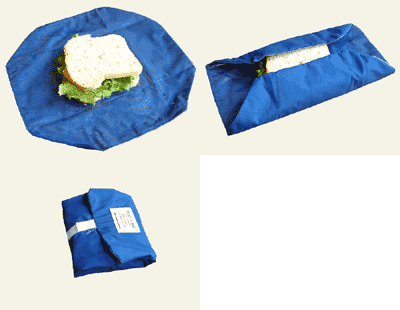
Some other products that will help you avoid disposables;

Turn off the TV Week!
Posted: April 21, 2009 Filed under: Food and it's Impact on Our Health 5 CommentsIt’s TV Turnoff Week, so just do it. From April 20 to 26 join millions of people worldwide and switch off your set. Find a more rewarding and active life–at least for a week.
Last year 5 million people in the USA alone turned off the box and found that they had all sorts of extra time to do things they had been meaning to do. Like talk to their friends, read a book, take a walk…

Image from indymedia.org
The founder of the campaign which he started thirteen years ago, David Burke, sums it up: “The odd thing is that it wasn’t until I stopped watching TV that I started feeling really strongly about it. Suddenly you walk into a room and everyone is watching TV and you think, ‘Why isn’t anyone talking?'”
The statistics about television watching are scary. According to the Financial Times, here in the UK, “84 per cent of men and 85 per cent of women rate television viewing as their most popular leisure activity. By comparison, “Spending time with family or friends” was chosen by 75 per cent of men and 82 per cent of women. People watched an average of 3.88 hours of TV a day, so by the age of 75 the average Briton will have spent more than 12 years of his or her life watching television.” The average child by the time they are six will have watched a whole year’s worth of television. More than half of three year olds now have televisions in their bedrooms.
Now that you are completely horrified and convinced that you will never watch the box again,
here’s what to do instead of watching the tube:
* Invite over friends or family you haven’t seen
* Pick up your local what’s on guide and get out to see live entertainment
* Fix up your bike and take it out for a ride
* Walk around the neighborhood, go to places you have never been to before
* Go to bed really early with your lover, partner – or a book
* Go though your stuff and sell things on ebay or do a garage sale
* Listen to some new music
* Pay someone a surprise visit
* Dust off your cook books and cook something amazing
* Get a new piece of technology e.g. An MP3 Player and work out how to use it
* Participate in a local event
* Join a political party

Read more about living without TV at Whitedot.org
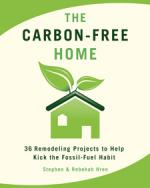
The Carbon-Free Home 36 Remodeling Projects to Help Kick the Fossil-Fuel Habit
Posted: April 21, 2009 Filed under: Going Green; How and Why... Leave a commentby Rebekah Hren and Stephen Hren
 Click here to order
You probably know that energy used in your home produces more global-warming pollution than your car, but what can you do to reduce your reliance on fossil fuels? Maybe you daydream of starting from scratch, building a new, super-efficient, passive-solar, off-grid house—but in reality you’ve got a roof (and a mortgage) over your head already. How can you turn your existing house into an environmental asset? One that simultaneously saves you money on utilities and insulates you from the possible shocks of Peak Oil?
Read this book—then grab your handsaw, tape measure, and drill, and get started! A life powered by the sun is waiting for you. Meant as a guide for renovating existing homes, The Carbon-Free Home gives you the hands-on knowledge necessary to kick the fossil-fuel habit, with projects small and large listed by skill, time, cost, and energy saved. For every aspect of your life currently powered by fossil fuels, The Carbon-Free Home offers alternatives you can accomplish yourself to get started using renewable and sustainable sources of power.
Having weaned themselves completely from fossil fuels in their conventional 1930s urban house, Rebekah and Stephen Hren provide a map for others to do the same. Their book shows first how to reduce energy consumption, then to retrofit existing homes to obtain all heating, cooling, cooking, refrigeration, hot water, and electricity from renewable sources. The Hrens also provide advice on renewable methods of transportation and home gardening. These practical approaches fit anyone’s budget and can be implemented over time to progressively liberate a home from fossil-fuel dependency.
About the Authors
Rebekah Hren
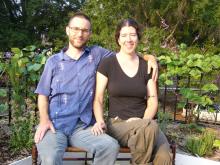
Stephen and Rebekah Hren live in Durham, North Carolina, where they are both actively involved with renewable energy, natural building, and edible urban gardening. Rebekah works with Honey Electric Solar, Inc., as a professional designer/installer of photovoltaic systems and domestic solar hot-water systems. Stephen is a professional restoration carpenter, focusing on antebellum houses. He teaches natural-building classes and workshops at the local community college, and in any spare time works with Bountiful Backyards, an edible-landscaping cooperative. …
View Rebekah’s full profile page >
Stephen Hren
Stephen and Rebekah Hren live in Durham, North Carolina, where they are both actively involved with renewable energy, natural building, and edible urban gardening. Rebekah works with Honey Electric Solar, Inc., as a professional designer/installer of photovoltaic systems and domestic solar hot-water systems. Stephen is a professional restoration carpenter, focusing on antebellum houses. He teaches natural-building classes and workshops at the local community college, and in any spare time works with Bountiful Backyards, an edible-landscaping cooperative. …
How to Shop for the Right Food in Your Regular Grocery Store in 10 Easy Steps
Posted: April 21, 2009 Filed under: Food and it's Impact on Our Health 1 Commentby Millie Barnes
Your health is the most important thing you own, so investing in it through the right foods is the best investment you can make. However, I realize that finding the “right” foods can be challenging for some. If you:
- Can’t always order the healthy products recommended online
- Don’t have access to a natural health food store
- Have a very tight budget and are restricted to a regular supermarket
… then the following steps will help you to find the best possible foods no matter where you are or what your budget. It will help if you take a new approach to the way you look at buying food. American consumers make their food choices based on the following five food criteria: taste, price, convenience, appearance and shelf life. Notice that these have nothing to do with health.
If you are making all your food choices based on these [criteria] you may be indulging your taste buds, staying within your budget and minimizing your trips to the grocery store but your cells may all be starving for nutrients that they aren’t getting because they are not in those foods. I am not saying to ignore taste, price, convenience, appearance and shelf life. Go ahead and consider those, but consider those after you consider the nutritional value because nutritional value is the real reason we need to eat–the body needs nutrients and it is important to wake up to that and the sooner you wake up to that the better.
So where do you go once you commit yourself to focusing on a food item’s nutritional value? Whether you live in a rural area with no access to a health food store or are simply on a very tight budget, there are ways to weed through the offerings in any grocery store to come out with the most nutritious food available, and the following principles should help to guide you along your way.
Buy the Freshest Items
The fresher the food, the more nutritious it will be. Only buy produce that is fresh and firm, otherwise you are wasting your money on food that has passed its prime, in terms of both nutrition and taste. This also applies to meat, poultry and fish. If it’s not fresh, don’t buy it.
Pick the Leanest Cut of Beef, or Request Bison
Free-range meats and poultry are always the best choice, but there are other options if these are not available to you. In terms of beef, choose the leanest cuts as most of the toxins from hormones and antibiotics will settle in fattier tissue, so the fatter cuts tend to have more toxins. Lean cuts of beef include flank steak and round steak.
Another option is to ask the butcher to order some bison. In general, bison are raised much more naturally than other livestock, which means they’re not given antibiotics or hormones and the meat is very lean. If you haven’t ever tried it I suggest you give it a try, as in my opinion it’s one of the best tasting of all meats. Its flavor is similar to prime beef, but sweeter and more tender.
If the Chicken is From a Factory Farm, Don’t Eat the Skin
Most chicken sold in typical grocery stores is raised in factory farms. Each full-grown chicken in a factory farm has as little as six-tenths of a square foot of space. These extremely overcrowded conditions pave the way for disease. Many are also genetically modified, and due to genetic manipulation, 90 percent of broiler chickens have trouble walking. If you don’t have access to free-range, organic or cage-free chicken, be sure to remove the skin before eating. Also be sure to follow the white meat/dark meat guidelines based on your metabolic type.
Fresh Food is Always Better Than Frozen, but Frozen is Better Than Canned
There is some confusion over whether frozen vegetables are as healthy as fresh vegetables, but you can rest assured that fresh vegetables are always preferable to frozen ones. The freezing process causes damage to the cells in the food, which compromises its nutritional value. Eating pre-frozen food is acceptable, however, but be careful to not overload your diet with pre-frozen foods. If you have no choice and must choose between frozen or canned, frozen would be the better option.
Avoid Processed Foods
Processed foods, including canned and boxed goods, are among the most nutritionally devoid foods. Plus, they tend to be expensive, especially when you get into all of the packaged, name-brand junk foods. Save the money that you’d normally spend on pricey and unhealthy items like potato chips, cereals, cookies, ice cream and frozen pizzas, and spend it on some fresh vegetables, fruits or meat instead.
Check Prices on Organic Food–It’s Not Always More Expensive
If you have access to organic food, don’t just pass it up because you assume it’s too expensive. Sometimes organic food is actually less expensive than traditionally grown food, especially when it’s on sale. It may also be only slightly more expensive than a comparable regular item, and in that case the increased nutritional value (and lack of pesticides, etc.) would be well worth the extra price. So be sure to compare prices and choose the best value, which may in fact be organic.
Ocean-Caught Fish is Better Than Farm-Raised Fish
I don’t recommend that you eat any fish unless you can be certain that it does not contain toxins like mercury and PCBs.
If you do choose to eat fish from your grocery store, don’t eat farm-raised fish, as numerous studies have found it may be harmful to your health. Instead, your best choices would be fresh, ocean-caught Alaskan salmon, arctic Char (similar to salmon), fresh sardines and anchovies. Remember that these may still contain toxins, though probably a lesser amount than the other options. Sardines and anchovies are likely fine to eat, as they are small enough to have minimal contamination. As fish is not typically labeled thoroughly, you may have to ask the fishmonger where the fish came from (farm, lake or ocean) to be sure.
Adjust to Your New Way of Eating, and Enjoy the Feeling
Once you become accustomed to eating the best-quality foods and start to experience the increased energy, weight normalization and other health benefits, you may find that you’re inspired to seek out even more of the healthiest foods. You may want to ask your grocer to start carrying some of the healthier foods mentioned in this article or be inspired to try some of the products recommended online.
The habit can become quite addictive and I suspect you’ll discover that healthy foods are available in places you hadn’t thought of before. Local farmers, farmers’ markets, and health-food coops represent some great potential places to find healthy, and likely inexpensive, food.
Monsanto trying to make backyard gardening illegal
Posted: April 21, 2009 Filed under: Food and it's Impact on Our Health Leave a commentTake action again this here;
|
|


 Meal Delivery Service by Millie Barnes