Posted: May 7, 2009 | Author: Millie Barnes | Filed under: Skin Care |
I wanted to tell you also about a mall company that makes small batches of amazing skin care products.

Evan’s Garden
I use their light moisturizer for day, La Crème de la Crème at night. I use The Perfect rose about once a week. It is a very nourishing oil for the skin.
The ingredients are amazing, look at the ingredients for their light moisturizer;
aloe vera gel, apricot kernel oil, black currant seed oil, calendula extract, callophyllum inophyllum oil, Co-Enzyme Q-10, comfrey extract, cucumber hydrosol, DMAE (amino acid), emulsifying wax, Ester-C© Topical Concentrate* (Mineral Ascorbate [Vitamin C] Complex in natural vegetable glycerin & sorbital), evening primrose oil, fragrance (pure essential oils), German chamomile hydrosol, citrus seed extract, grapeseed oil, gravel root extract, hazelnut oil, horsetail extract, jojoba oil, lavender hydrosol, liquid trace minerals complex, lipoic acid, lobelia extract, marshmallow root extract, Montmorillonite clay, mountain spring water, mullein extract, neem leaf extract, neem oil castor oil, neroli hydrosol, oak bark extract, oat tops powder, palm stearic, Roman chamomile hydrosol, rose hip seed oil, rose hydrosol, rosemary extract, skullcap extract, Swedish Flower Pollen Extract, sweet almond oil, vitamin E ( mixed tocotrienols & mixed tocopherols), walnut bark extract, walnut oil, witch hazel hydrosol, wormwood extract, yarrow hydrosol.
Ingredients so clean you could eat them! I have very oily skin and this moisturizer is great for daytime, either under makeup or by itself.
I do not care for thier Dream Soap, it is waxy and doesn’t leave my skin feeling clean. And the mineral make-up is not good; too powdery and doesn’t apply evenly. But, their moisturizers are the best thing that ever happened to my skin. (other than great nutrition!)
Posted: May 7, 2009 | Author: Millie Barnes | Filed under: Skin Care |
 Some of you asked where I got some of the ingredients I use.
I use salicylic acid from The Personal Formulator. I also buy Hyaluronic Acid, and some oils from them. I get ascorbic acid from the health food store, I like Solgar. Be sure to not get the buffered kind.
I get Xantham gum from the health food store, it is used in gluten free baking, but is a great thickener.
I also make my own flower waters by distilling organic flowers. I mostly use lavender and rose. I get them from Southern Nutrition here in Jacksonville, they have a huge selection of dried herbs and flowers. I have recently planted lavender though, so will soon use fresh. I add essential oils and use it as a perfume, and use them to nourish my skin. Use as you would a toner.
To make flower waters;
Set a 2 quart saucepan on the stove. Put a one cup Pyrex measuring cup in the pot. Carefully pour 3 cups of water outside the cup, leaving the cup empty. Now place about a half a cup of flowers in the water.
Take you pot lid and turn it upside down on top of the pot. Now turn on the heat, gently bring it to a simmer, then dump a tray of ice cubes into the pot lid.
The water will steam and stick to the lid and then drip into the cup. Replace the ice as it melts, when you have about a half cup of liquid in the measuring cup, your done. Cool and keep in refrigerator until use..
You have just made a stove top still!
Posted: May 6, 2009 | Author: Millie Barnes | Filed under: Skin Care |
One of the things I realized years ago when studying skin care, was that it made no sense to use a product packed with active ingredients for washing your face. Glycolic cleansers, vitamin c cleansers…seems they always cost 20.00 a bottle. I could never find a cleanser I loved. Either it stripped my skin of essential oils, or was too creamy and didn’t clean.
Then 4 years ago my daughter, Rachel, became an esthetician. She brought me home info on parabans and their link to breast cancer. Even my cleansers from the health food store had them. I gave up, decided to make my own. I wanted it to clean, didn’t want my skin to feel dry or tight. I wanted it clean enough to eat.
Here is the recipe, I have a few clients who purchase it from me, I make it for my 3 lovely daughters and myself. I make about a quart at a time, keep a small amount in the bathroom, the rest I put in the fridge. It keeps for months.
WONDERFUL CLEANSER
3 cup water
2 cups baking soda
1/2 teaspoon almond oil
2 drops lavender essential oil
1 ½ cup honey
1 Tbsp. Dr. Bonners Almond liquid soap
2 teaspoon glycerin
1 teaspoon Vitamin C
1 teaspoon Salicylic acid
3 Tablespoons Xantham gum
On low heat, combine water, honey, almond, Dr. Bonners, oils. Remove from heat and let cool about a minute. Add honey. Whisk. While whisking, add ascorbic acid and salicylic acid. Whisk slowly, do not inhale powders. Now add baking soda, a little at a time, it will thicken this mix a tad. Add xantham gum a tablespoon at a time to thicken. Let sit a few minutes, adjust thickness. I like it to be kind of thick, like a hair conditioner. Apply to the skin like a soap and rinse off with tepid water.
You will notice your skin feels incredibly clean, soft with no tightness or dryness. The honey is a humectic, a good moisturizer and an natural preservative.
Posted: May 5, 2009 | Author: Millie Barnes | Filed under: Going Green; How and Why... |
You Grow Girl had this to to say about camping- Camping is a reminder of how easy we have it, a demonstration in the excesses in our modern lives that we can probably do without. I learned that baking soda really is the miracle powder. You can use it to scrub dishes, wash hair, brush teeth, and remedy bee stings. It really doesn’t taste that bad when used as toothpaste. Check out here gardening blog, it is delightful.
I grew up using baking soda to brush my teeth with. I have been using it to clean with now for 30 years. She’s right, it is great for lots of things! My favorite use for it is an exfoliatant; it is a fruit acid. I use it in my skin cleanser that I make myself using honey, baking soda, almond oil, rose oil, a few drops of Dr. Bonners, and lavender oil. Mixed with fresh lemon juice it will fade brown spots on your face (hydroquinone is soo toxic!). I have had fifty dollar facials that did not work as well as these simple, non-toxic recipes! I quit using Retin-a and glycolic about 6 years ago, and do not miss them at all. And my skin still looks amazing for 55!
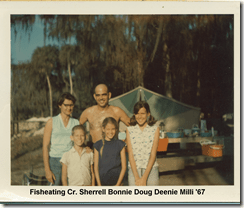
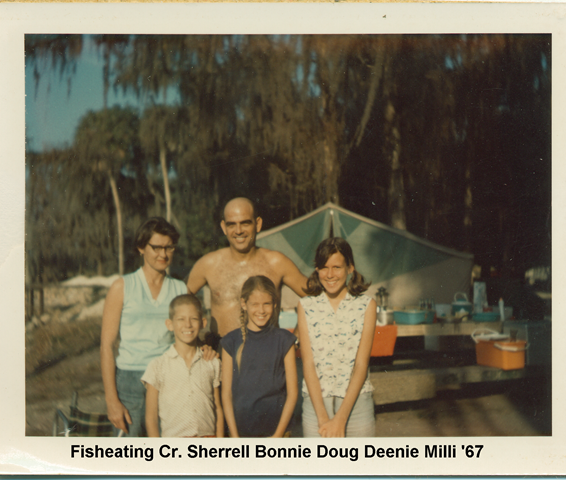
I grew up camping in central Florida 3 months out of the year, every year from age 5 until I was 20. We started out camping at Juniper State Parks for a few weeks at a time. Then after that we camped on the banks of the Okeechobee from the time school got out until it started again in early September. We used no running water, no electric, no TV, no radios. Primitive camping in a tent.
I have always been an environmentalist, but last year I was finally able to begin growing veggies and fruit, begin using greywater for all my flowers, built the rain barrels, work in the yard more. My youngest child turned 18, as I nudged him out on his own, I began having way more time to do all this. But as I get more radical (doesn’t feel radical to me, but I guess it is by the raised eyebrows I see!) about conserving it strikes me that growing up the way I did prepared me to see these changes as, not inconvenient, but deeply satisfying.
Us kids learned how to cook bread over coals, how to dinner, how to brush your teeth with just 8 ounces of water, how quickly to yank the oars in when alligator scraped the bottom of the boat, how to take off all day alone in a john boat and always find our way back, how to avoid snakes. For years our toilet was a shovel and a roll of toilet paper. A bath was plunging into the creek no matter what the temperature, and watching the red eyes of the gators on the other side of the creek, about 50 feet away. We learned how to never be bored, same as at home. We had no TV at home either, so we didn’t miss it a bit. I fact, even at home we lived in the woods. Our homes, at my grandparents and our parents, were in subdivisions, but were surrounded by miles of woods (this was southern Florida in the fifties and early sixties), huge Norfolk pines to play under and build forts, oak trees to climb and swing in, a citrus grove to play in. We would eat oranges all day and not even go home til dinner..
I love living more primitively. We all need to be acutely aware where our resources come from, how fragile it all is, what damage we are causing with our greed.
Next time, hang the clothes on the line. Consider a sawdust toilet, Install a bidet, stop using all that toilet paper. Brush your teeth with one cup of water. Use the dish water that has nontoxic soap in it on the flower beds. Xeroscape. Dust off that bicycle. Get a Kleen Kanteen. Route your shower water outside to the trees or non-edible shrubs. Better yet, yank those azaleas and put in berries!
Consider going camping just for the weekend, it will open your eyes to how wasteful we can be when we have all the amenities.
Posted: May 3, 2009 | Author: Millie Barnes | Filed under: Gardening |
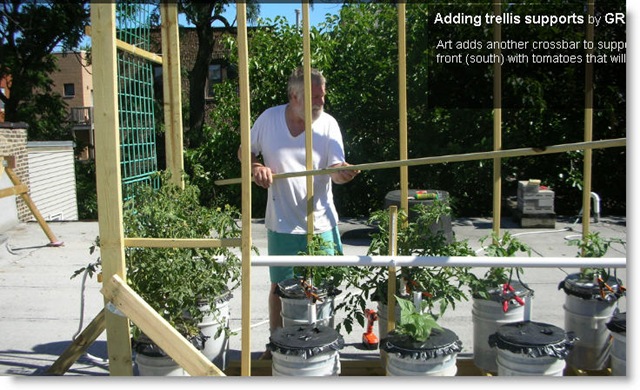
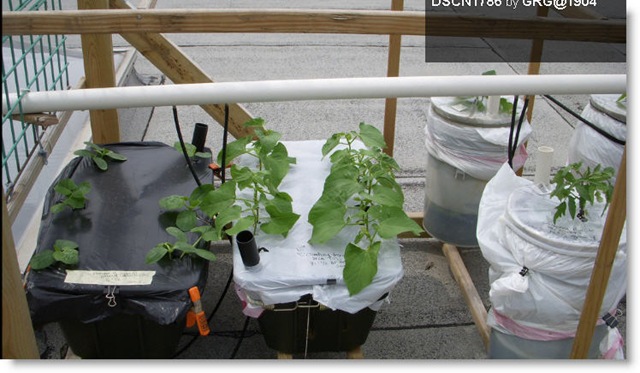
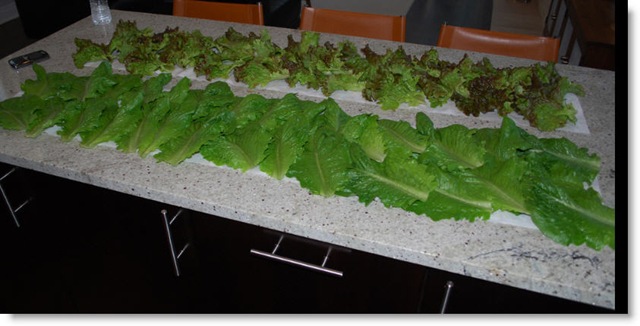
I was on the website fav of mine again this morning- HomeGrownEvolution and found a link they had to a rooftop garden in Chicago. I got sooo many great ideas here, I hope you feel as inspired by this as I do!
Click here to see all the photos. RoofTiopGrowers
Here’s the pics I was most inspired by;
 What a great idea, cover the top to slow evaporation and keep out bugs!
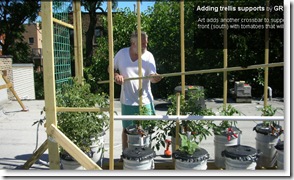 Tomato supports.
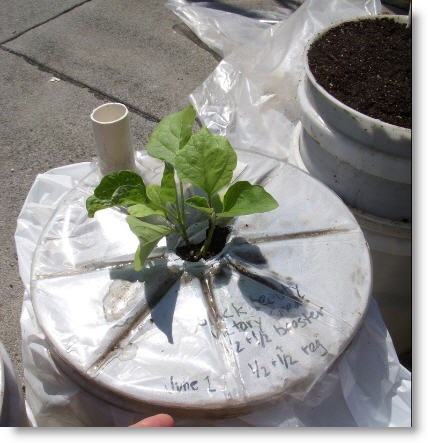
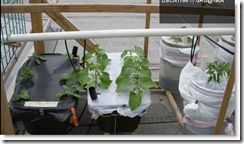 Self watering containers are awesome! And very cheap to build yourself!
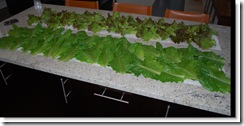 Lettuce in hydro set-up.
Posted: May 3, 2009 | Author: Millie Barnes | Filed under: Gardening |
I was watering the flower bed tonight, now that it has cooled off outside. This entails carrying the 3 gallon bucket from the bathtub out to the flowerbed about 10 times. I had a conversation with a young man who told me, “Of course I re-use my grey water, I pay for it!” Good point, sending it down the drain, even when I have taken my quick 3 minute showers, feels so wasteful. This way I get to use it as much as possible.
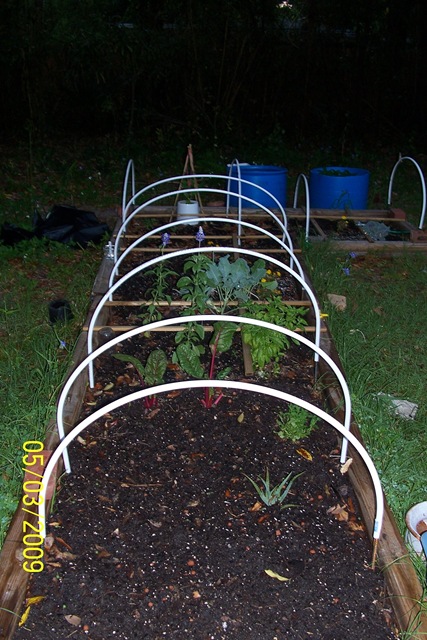
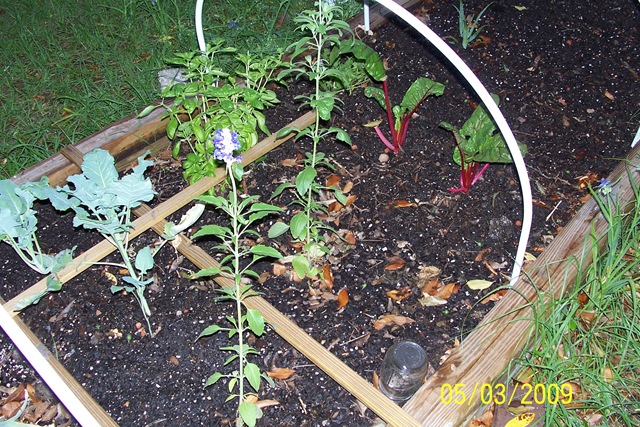
I realize I have stopped lifting weights, with iron dumbbells anyway, since I started gardening. I don’t need them; I haul dirt, shovel compost, use a hand saw for all woodworking (gives blisters, but is great for the back, shoulders and arms!)…. What a natural way to stay in shape. Along with yoga, and much much dancing…it all works! I never expected to find such a deep, primal connected-to-the-earth feeling that I have found. This tiny plot of rented earth is a little system that is growing me much food. I found much inspiration from a website called HomeGrownRevolution and PathToFreedom. My goal is to be growing all of my own vegetables by the end of this year. Right now I have sweet potatoes, red potatoes, Swiss chard, broccoli, flowering kale, green leaf lettuce, nasturtiums, 10 tomato plants, cucumbers, 2 year old banana tree, a strawberry plant I get one strawberry a week from (and it is heavenly!), aloe, basil. Some tomato plants are outside in the square food garden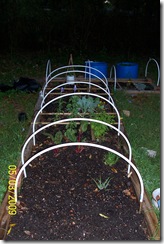 Aloe in foreground, then Swiss chard, broccoli.
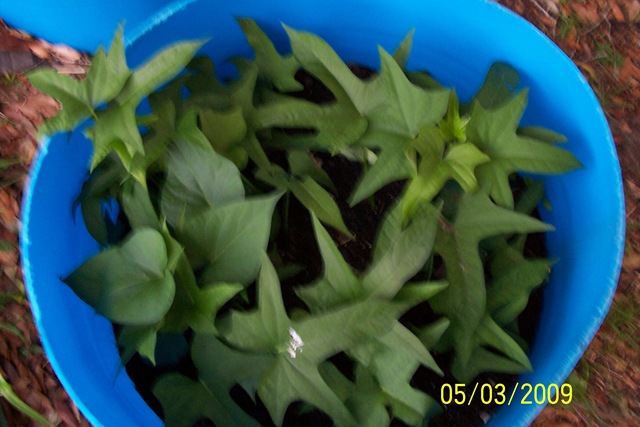
I have been seriously gardening since last July. At that point, I began bringing huge amounts of kitchen scraps home from a health food store deli, where I was a Chef. When I say huge, I mean it; Big black trash bags full of lettuce leaves, 3 gallon buckets of kitchen scraps, ALL ORGANIC! Twas heaven! I just threw the bags in the sun for a day or two, then poured the glop into the raised beds, along with organic dirt, some topsoil, perlite, peat moss, compost, coffee grounds. Then I planted sweet potatoes and peppers. The sweet potatoes didn’t do well, but when I put then in 1/2 barrels, they took off.
I built an L shaped raised bed using garden timbers, untreated.
Before going into the compost, I culled seeds, these pepper plants were the first thing to get planted.
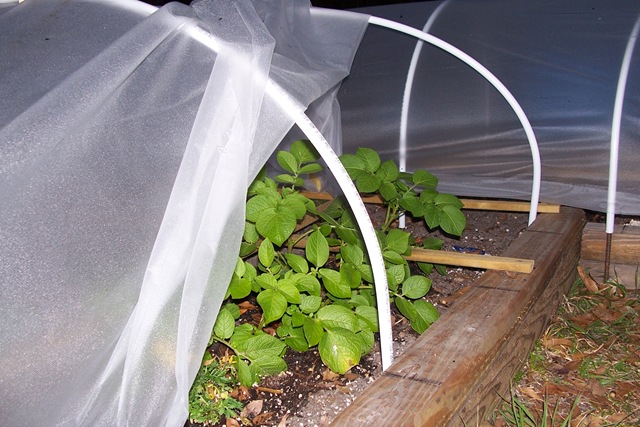
Then I installed an outdoor solar shower, a compost bin, two rain barrels. The wood all came from a friend who has a lawn business, all pallets or fencing I used as is, or taken apart. Then I put up row covers. Now it doesn’t require much work on a day to day basis. Except for hauling buckets of water from the rain barrels, and hauling it from inside to water trees and flowers. Sigh! I wish my landlord would let me set up a grey water system. I tried. Maybe it’s better for me to have to haul it. I am acutely reminded with every drop that I conserve that it is precious. We are all stewards of our earth. It is inevitable that we all have to conserve. To take on the challenge to commit to this degree seemed daunting, but I have found so much joy and satisfaction in it. Isn’t it that way at anything you have to truly work at, develop discipline for?
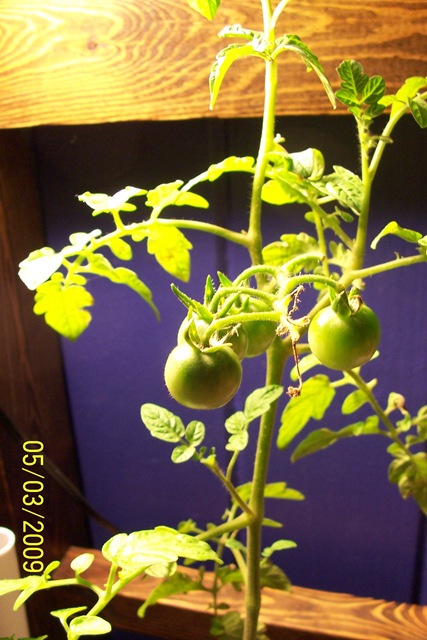
The funny thing is that as much as I love digging in the dirt, composting, gardening in general.. I have found that the hydro stuff inside is feeding me the most, it just thrives. The tomatoes, planted at the same time, are three times as big and already producing inside in the grow box and in the deep water culture set up. The water farm I turned into a hybrid set up grows my one strawberry plant. I need about three plants to feed me strawberries. I’m getting one a week now…..
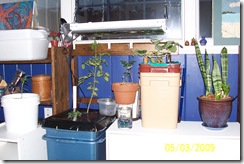 Tomatoes are in the grow box and white bucket, strawberries are in the WaterFarm.
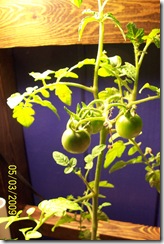 My first tomatoes!! 🙂
Outside;
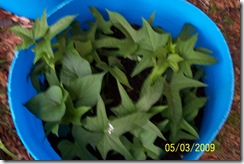 Sweet Potatoes
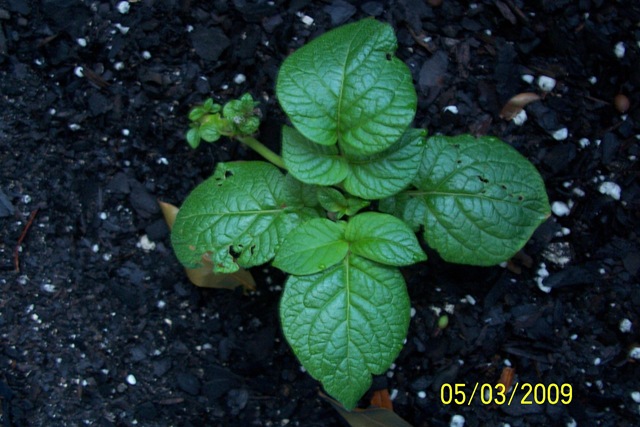
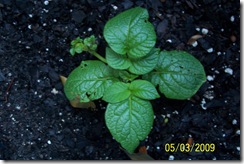 Red Potatoes
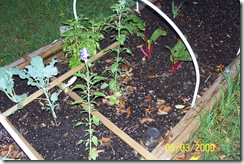 Swiss chard, Blue Bonnets,
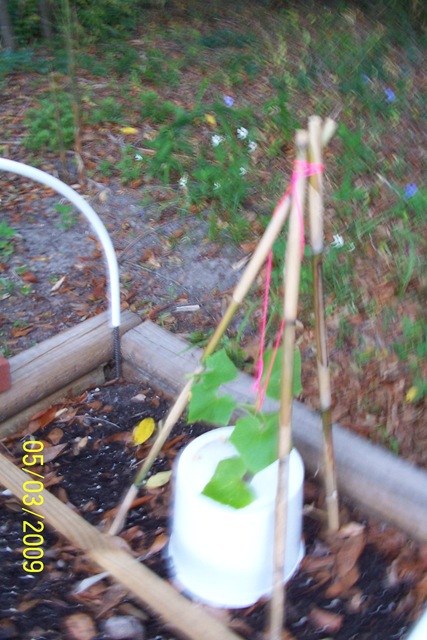
 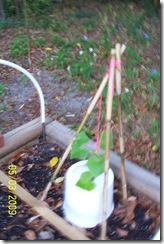 Cucumbers
Posted: May 1, 2009 | Author: Millie Barnes | Filed under: Food and it's Impact on Our Health |
Cholesterol and Health — Functions and Foods
by Chris Masterjohn
 Cholesterol is a health-promoting substance. It is a critical component of cell membranes, the precursor to all steroid hormones, a precursor to vitamin D, and the limiting factor that brain cells need to make connections with one another called synapses, making it essential to learning and memory.
Some of the most nutritious foods like egg yolks and liver are also the foods richest in cholesterol. The anti-fat, anti-cholesterol campaign has demonized these foods for decades without any evidence they cause disease. To the contrary, they promote health.
Does Cholesterol Really Cause Disease?
The medical establishment blames cholesterol for everything from heart disease and stroke to Alzheimer’s. It has long blamed saturated fat for raising cholesterol levels, and now claims saturated fat interferes with blood vessel function as well.
On the other hand, many "cholesterol skeptics" claim that blood lipids have absolutely or virtually nothing to do with disease.
Which is correct?
I argue that it is not lipids such as fats and cholesterol in and of themselves that cause these diseases, but the degeneration these lipids, especially the oxidation of the polyunsaturated fatty acids found in the vegetable oils that we have been told for decades are healthier for us than animal fats.
|
Coenzyme Q10 (Ubiquinone)
Statins Inhibit Coenzyme Q10 Synthesis
Since coenzyme Q10 (CoQ10) and cholesterol are both synthesized from the same substance, mevalonate, statin drugs (Lipitor, Zocor, etc) also inhibit the body’s synthesis of coenzyme Q10. This is not a "side effect," of statins, but a direct, inherent function of the drugs.
In fact, the use of statins can decrease the body’s synthesis of coenzyme Q10 by as much as 40%!1
Functions of Coenzyme Q10
Coenzyme Q10 is a fat-soluble antioxidant that is found in virtually all cell membranes, hence its alternative name "ubiquinone." The antioxidant activity of vitamin E requires the CoQ10 to be available, to which vitamin E will pass on the unpaired electron (free radical) that it has scavenged. CoQ10 also acts as an anti-oxidant independently, protecting against DNA damage and other forms of oxidative damage caused by the consumption of excess polyunsaturated fatty acids.
Coenzyme Q10 is also an essential component of the mitochondria (the "power-house" of the cell), playing a critical role in the formation of ATP, the body’s fundamental energy unit, from carbohydrate and fatty acid metabolism.
It appears that Coenzyme Q10 might be involved in maintaining the proper pH of lysosomes, which are a digestive component of cells, as well.2
Coenzyme Q10 and the Heart
In his book, The Doctor’s Heart Cure, Dr. Al Sears, MD, director of the south Florida Center for Health and Wellness, devotes an entire chapter to the importance of CoQ10 to the heart.
According to Dr. Sears, coenzyme Q10 prevents arteriosclerosis by reducing the accumulation of oxidized fats in blood vessels, eases high blood pressure, regulates the rhythm of the heart, and improves chest pain and exercise toleration in angina patients.
He describes one woman who came to his Center on statins and two additional blood pressure medications, also suffering from memory loss. A blood test revealed her CoQ10 levels were in the lowest 95% of the population. Supplementing with 200 mg of coenzyme Q10 allowed her to stop both blood pressure medications. She felt "energized," and her memory recovered. Her cardiologist, upon hearing the good news, reacted angrily and threw her bottle of CoQ10 in the trash.3
According to the Linus Pauling Institute’s review of coenzyme Q10, controlled intervention studies have shown improvement of congestive heart failure with the administration of coenzyme Q10, although there is conflicting evidence. Animal evidence suggests a significant role for coenzyme Q10 in reducing myocardial damage due to heart attack or open-heart surgery, and collective evidence shows a promising role in reducing high blood pressure.2
Coenzyme Q10 and the Brain
Brain levels of coenzyme Q10 begin declining at the age of 20, and are lowest in the victims of stroke and neurodegenerative diseases.3 Animals with with a Huntington’s gene experience fewer brain lesions with CoQ10, but motor improvement and survival benefit is not significant. Evidence is, however, promising for CoQ10 in therapy for Parkinson’s.2
Perhaps, if both cholesterol and CoQ10 are important to the function of the brain, coenzyme Q10 deficiency as well as cholesterol depletion might play a role in the side effects sometimes seen from statins associated with memory loss, such as transient global amnesia (TGA).
Coenzyme Q10 in Food
Coenzyme Q10 is found in the highest amounts in red meat products. It is especially high in organ meats such as liver and heart, from which it was first isolated.3 Thus, the combination of cholesterol-lowering statin drugs and a so-called "heart-healthy" regimen free of red meat could dramatically compromise coenzyme Q10 status.
Coenzyme Q10 is also destroyed by heat, so meat should not be overcooked to obtain maximum CoQ10 benefit. Boiling has been found to have negligible effect on the survival of CoQ10, while frying substantially reduces CoQ10, from 14 to 32 percent.4
According to The Doctor’s Heart Cure, the organs of wild, grass-fed animals have up to ten times more CoQ10 than the organs of grain-fed animals. "Unless you regularly consume wild game or eat internal organs of grass-fed animals," Dr. Sears writes, "it is difficult to maintain good blood levels of CoQ10 from dietary sources alone."3
If you are interested in finding a source of grass-fed animal products local to you, you can do so by clicking on your state at EatWild.com.
The table below shows the distribution of CoQ10 in 98 different foods. Certain oils, such as soybean, rapeseed, and sesame, have substantial amounts of CoQ10, but samples were taken from Japanese and Finnish retail stores, and it’s possible that the oils currently available in the U.S. may be processed in ways that are more injurious to the CoQ10 content. Pending further information, oils shouldn’t be considered a reliable source of coenzyme Q10.
Reindeer muscle meat was found to have dramatically higher coenzyme Q10 levels than beef or pork, rivaling those found in the hearts of other animals. The studies from which the data were drawn did not give information on feed, so perhaps this is attributble to the feed of the animal, as Dr. Sears claims.
The table below draws from two different studies. It will be updated soon when I am able to obtain more information.
Supplementing with Coenzyme Q10
Since coenzyme Q10 synthesis declines with age, it becomes more important to obtain it from the diet. For the Standard American Diet (SAD), this essentially means from supplements. Dr. Sears has measured the CoQ10 status of hudreds of patients at the Center for Health and Wellness and reached the following conclusions:
- Young people (those in their twenties and younger) almost always have adequate levels of CoQ10.
- CoQ10 deficiencies are common in people in their forties and beyond.
- Long-duration endurance exercisers tend to have lower levels of CoQ10.
- Deficiencies in CoQ10 are very common in patients with heart disease, high blood pressure, diabetes, or low HDL cholesterol.
- CoQ10 levels are often low in those avoiding red meat and extremely low in vegans.
"If you are in one of these categories, as hundreds of patients discovered, CoQ10 supplements can make a dramatic difference in your energy level and cardiovascular health."
Dr. Sears recommends using gel caps or chewables, and not tablets, and taking the CoQ10 with some fat or oil to increase absorption. More information can be found in his book, The Doctor’s Heart Cure
Coenzyme Q10: Hero of the Heart, Victim of the "Heart-Healthy" Establishment
The story of coenzyme Q10 is an ironic one. Coenzyme Q10 is vitally important for the entire body, but has proven especially important to the heart. Yet the "heart-healthy" establishment guidelines hit CoQ10 with a double-whammy: statin drugs hit the body’s own synthesis of CoQ10, while red meat and organ meats have both been ridiculed as unhealthy "artery-clogging" foods, yet are the primary source of dietary CoQ10.
Coenzyme Q10 deficiency is not only a "side effect" of statins, it’s a side effect of obeying dietary guidelines as well.
Appendix: Food Composition Table — The Distribution of Coenzyme Q10 in Foods
|
Food Item
|
Coenzyme Q10 (mcg/g)
|
|
Reindeer
|
157.9
|
|
Beef heart
|
113.3
|
|
Sardine
|
64.3
|
|
Mackerel
|
43.3
|
|
Beef liver
|
39.2
|
|
Beef
|
31.0 – 36.5
|
|
Sesame oil
|
32.0
|
|
Chicken
|
14.0 – 21.0
|
|
Yellow tail fish
|
20.7
|
|
Horse mackerel
|
20.7
|
|
Pistachios, roasted
|
20.1
|
|
Walnuts, raw
|
19.0
|
|
Hazelnuts, roasted
|
16.7
|
|
Tuna fish, canned
|
15.9
|
|
Baltic herring
|
15.9
|
|
Pollack, frozen
|
14.4
|
|
Sweet almond, roasted
|
13.8
|
|
Spinach
|
10.2
|
|
Lard
|
10.0
|
|
Broccoli
|
8.6
|
|
Rainbow trout
|
8.5
|
|
Butter
|
7.1
|
|
Chestnuts, raw
|
6.3
|
|
Flat fish
|
5.5
|
|
Egg
|
1.2 – 3.7
|
|
Sweet Potato
|
3.6
|
|
Blackcurrant
|
3.4
|
|
Sweet pepper
|
3.3
|
|
Garlic
|
2.7
|
|
Pea
|
2.7
|
|
Cauliflower
|
1.4 – 2.7
|
|
Carrot
|
1.7 – 2.2
|
|
Egg plant
|
2.1
|
|
Cheese
|
2.1
|
|
Bean
|
1.8
|
|
Cabbage
|
1.6
|
|
Strawberry
|
1.4
|
|
Orange
|
1.4
|
|
Apple
|
1.3
|
|
Chinese cabbage
|
1.0
|
|
Onion
|
1.0
|
|
Potato
|
0.5 -1.0
|
|
Clementine
|
0.9
|
|
Tomato
|
0.9
|
|
Orange juice
|
0.3
|
|
Cholesterol and Health.com- Visit this website to learn more about why you need healthy, grass fed meats, eggs, and cholesterol. To sum it up, saturated fats do not become oxidized as readily as mono and polyunsaturated fats. Never, never, never heat vegetable fats. Period!
Please click here for a copy of my book, Optimum Nutrition by Millie Barnes. You will find many articles on fats, protein and why we need cholesterol.
Posted: May 1, 2009 | Author: Millie Barnes | Filed under: Going Green; How and Why... |
Thank you, again, NoImpactMan
On April 23, Andrew Revkin of the New York Times published a story proving conclusively that the so-called Global Climate Coalition, a group representing industries with profits tied to fossil fuels, knew that they were lying when they ran "an aggressive lobbying and public relations campaign against the idea that emissions of heat-trapping gases could lead to global warming."
According to Revkin:
… a document filed in a federal lawsuit demonstrates that even as the coalition worked to sway opinion, its own scientific and technical experts were advising that the science backing the role of greenhouse gases in global warming could not be refuted.
“The scientific basis for the Greenhouse Effect and the potential impact of human emissions of greenhouse gases such as CO2 on climate is well established and cannot be denied,” the experts wrote in an internal report compiled for the coalition in 1995.
A working democracy requires a correctly informed electorate. Deliberately lying to the public is a direct assault on the American system of democracy. To use power and money to lie to the American public is to distort our electoral process.
And to do it knowing what is at stake is just unfathomable. We are now at the point where we are near the climate tipping point. Without the efforts of the so-called Global Climate Coalition (GCC), and other organizations like it, we may have been able to get to work on this planetary problem a decade or even 20 years ago.
This is like a health insurance company refusing treatment to a child with cancer, except that we are talking about refusing treatment to billions of children–an entire planet’s worth. In the course of it’s work, according to SourceWatch, the GCC spent tens of millions of dollars on ad campaigns trying to stop action on global warming and made millions of dollars of contributions to politicians to influence their decisions.
The companies who exhibited this gross disregard for human life continue to wield power in the ongoing discussion about how to ameliorate the climate crisis. It is important to know, therefore, exactly which companies are prone to lie and distort the truth so we know not to believe them in the future.
For that reason, here, according to SourceWatch, is the list of members of the so-called Global Climate Coalition, who tried for so long to mislead us. I hope you’ll digg or stumble or email this post around to make sure it is seen and read and to show these companies that we won’t accept this kind of this behavior:
- Air Transport Association
- Allegheny Power
- Aluminum Association, Inc.
- American Automobile Manufacturers Association
- American Commercial Barge Line Co.
- American Farm Bureau Federation
- American Forest & Paper Association
- American Highway Users Alliance
- American Iron and Steel Institute
- American Petroleum Institute
- American Portland Cement Alliance
- Amoco
- Association of American Railroads
- Association of International Automobile Manufacturers
- Atlantic Richfield Coal Company
- Baker Refineries
- Bethlehem Steel
- BHP Minerals
- Chamber of Shipping of America
- Chemical Manufacturers Association
- Chevron
- Chrysler Corporation
- Cinergy
- CONRAIL
- Consumers Energy
- Council of Industrial Boiler Owners
- CSX Transportation, Inc.
- Cyprus-Amax
- Dow Chemical Company
- Drummond Company
- Duke Power Company
- DuPont
- Eastman Chemical
- Edison Electric Institute
- ELCON
- ExxonMobil
- Fertilizer Institute
- Ford Motor Company
- General Motors
- Goodyear Tire & Rubber Co.
- Greencool
- Hoechst Celanese Chemical Group
- Illinois Power Company
- Kaiser Aluminum and Chemical Corp.
- McDonnell-Douglas
- Mobil Corporation
- National Association of Manufacturers
- National Lime Association
- National Mining Association
- National Ocean Industries Association
- National Petrochemical and Refiners Association
- Natural Rural Electric Cooperative Association
- Norfolk Southern
- Northern Indiana Public Serv. Co.
- Ohio Edison
- Parker Drilling Company
- Process Gas Consumers
- Shell
- Society of the Plastic Industry
- Southern Company
- Steel Manufacturers Association
- TECO Energy Inc.
- Texaco
- U.S. Chamber of Commerce
- USX Corporation
- Union Carbide
- Union Pacific
- Virginia Power
- Western Fuels Association
Posted: April 30, 2009 | Author: Millie Barnes | Filed under: Food and it's Impact on Our Health |
 I wrote yesterday about the impact of exercise on weight, or lack thereof I should say. While exercise has little impact on weight loss (that comes from eating enough calories that contain all the nutrients you need on a day to day basis) a fit body will look more toned and be healthier. And exercise even without dieting adds benefit. For example, one study found that overweight but fit people have half the death rate of overweight and unfit people. And, studies suggest that people who have trained for a long time develop more efficient mechanisms for burning fat and are able to stay leaner.
Exercise is vitally important, it helps us stay in shape, stimulates and improves cardiovascular health, helps make us happier and gets us into the sunshine we need so badly. This should include cardiovascular and resistance training. Every type of exercise that you do for resistance should be balanced with stretching exercises. This is called cross training. Most types of resistance training or repetitive movements cause some of our muscles to shorten. You need to balance this with stretching these muscles very well. I mean serious stretching, not what we usually do for five minutes before we run! I mean a true warm up. When we try to stretch without warming the muscles up, we can pull muscles or tendons. We only are able to stretch effectively when our muscles are truly warmed up.
I think yoga is the perfect cross training for almost every other form of exercise. Plus, it is also tones muscles, helps us detox, aids digestion and stills the mind. It is a perfect way to learn to meditate. If someone told me I had to choose just one type of exercise, then yoga would be my first choice. It is also important that find something that you love to do every day that will help you gain cardiovascular health. I mean something that will make you work up a serious sweat! Notice I say find something you love to do. Very few people really love aerobics classes. They are not that effective in toning muscles. You are better off riding a bike, running, rollerblading, surfing, dancing,playing soccer or tennis, . These things are so much fun that they tend to be things you love to do, instead of things you make yourself do in order to get in shape. You’re more likely to do them more often.
 Weight training should be practiced 3 to 4 times a week in order to build bone and muscle mass. You may find it very effective to work with a personal trainer or find a workout buddy in the first few months. This will keep you motivated. The hardest part of getting on a regular schedule of exercising is getting started. In the beginning, it seems harder to fit it into our schedules. We get sore and tired. But after a few weeks you reach the point where you see results, you’re sleeping better, feeling energized. You notice that you don’t feel as good on the days you don’t exercise. You feel edgy. I love those endorphins!
Posted: April 30, 2009 | Author: Millie Barnes | Filed under: Gardening |
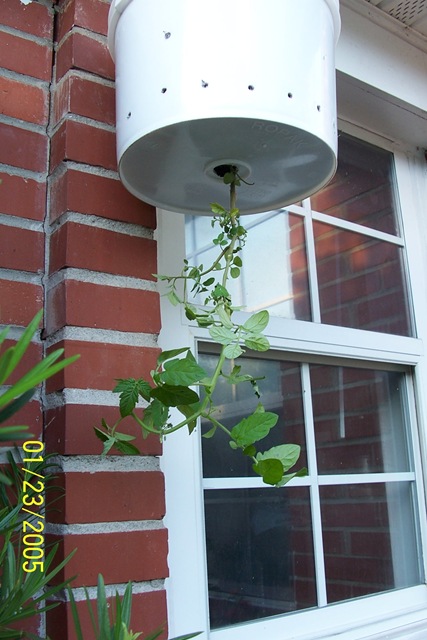
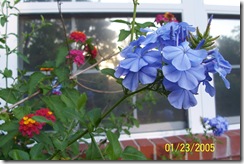 I took the row covers off the garden today, planted an upside down tomato plant, hung it from the overhang right outside my kitchen window. I brought the tomato and cucumber plants inside under the grow lights.
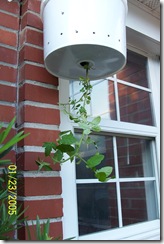 Here’s the tomato plant, just starting to flower.
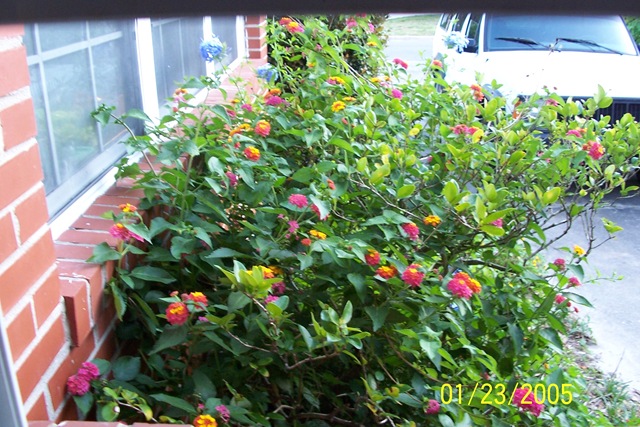
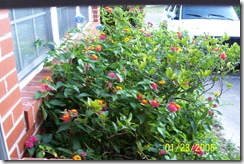 View from the kitchen window, the flowers are looking great!
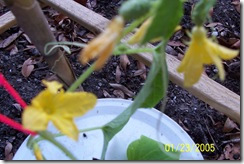 The first cucumber flowers!
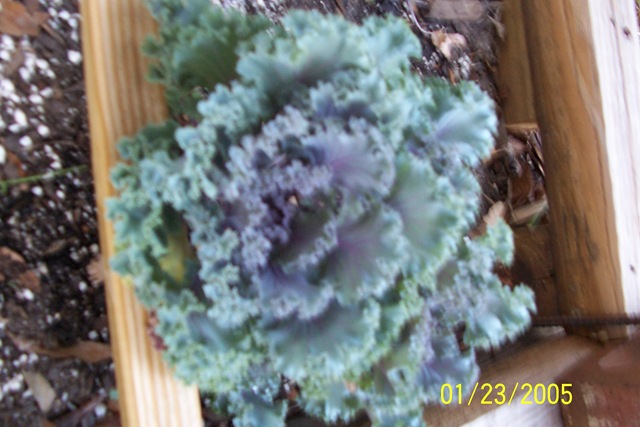
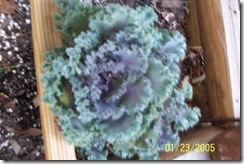 Flowering kale.
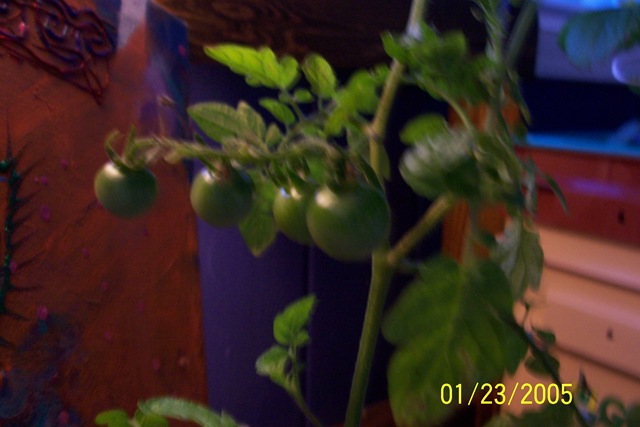
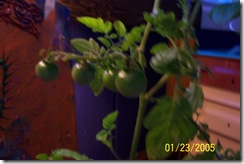 The cherry tomatoes, inside under grow lights.
I know, the dates are wrong on pics….
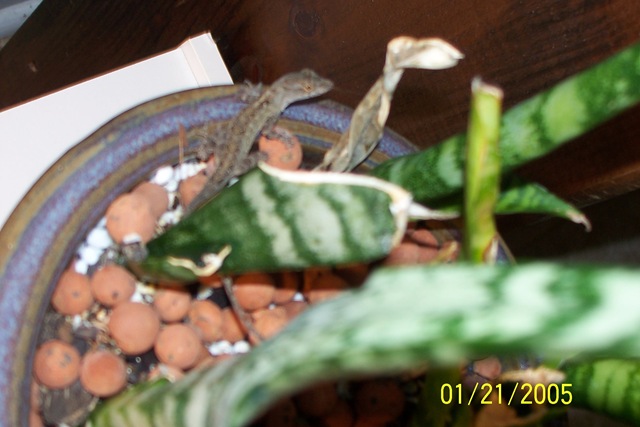
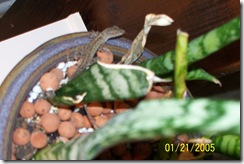 This little guy moved in a few months ago, I finally gave up trying to catch him…just hopes he stays in the sunroom…haha!








 Meal Delivery Service by Millie Barnes